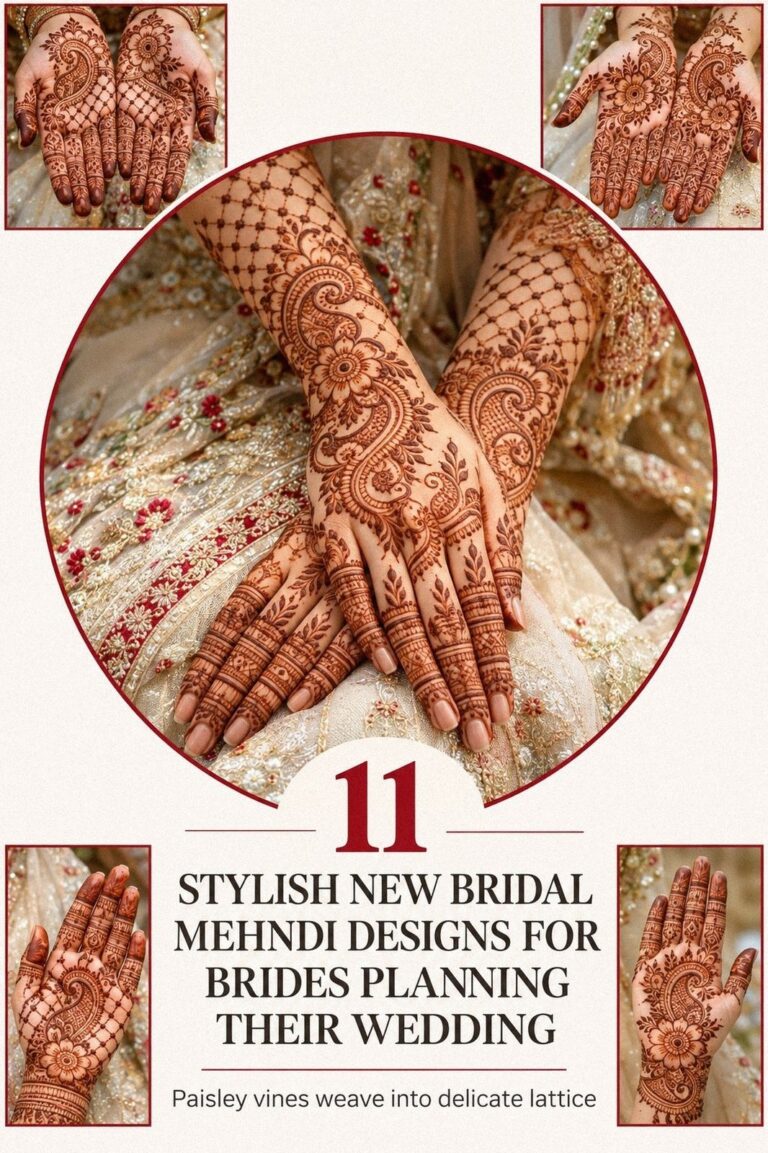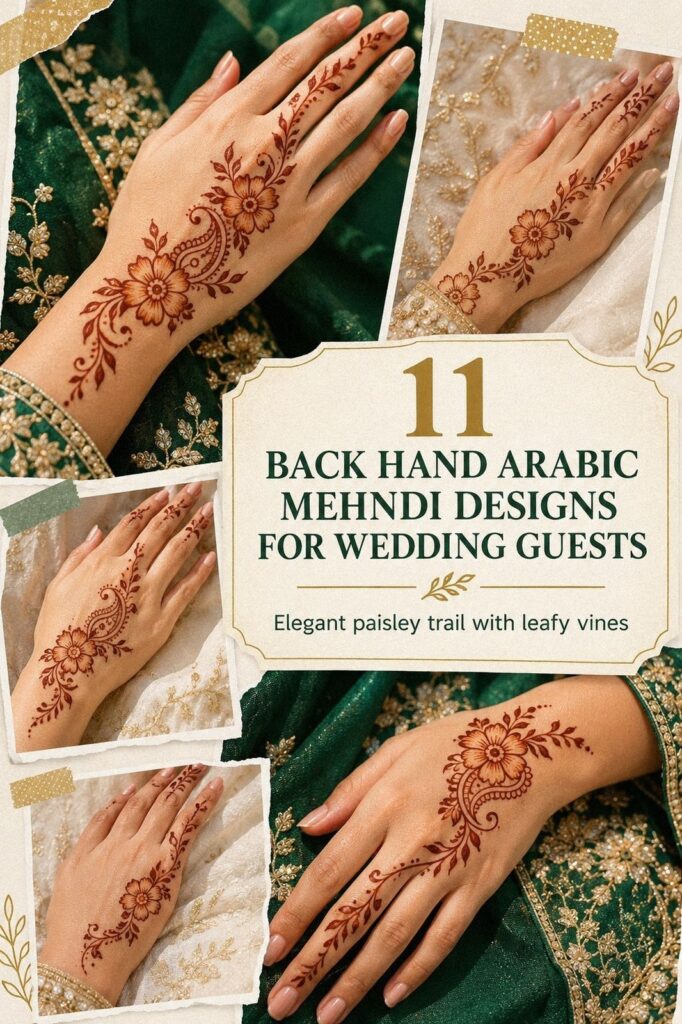
To style back hand Arabic mehndi designs for a sangeet, start with one elegant, flowing vine, leave breathing space, and let the paste dry for 1 to 2 hours. I learned this after covering every gap on one hand. The design looked heavy instead of graceful. Keep the movement clear, and your pattern will deepen beautifully on day two!
- Start With Simple Arabic Back Hand Mehndi Designs: The Simple Sweep Rule
- Let Flowing Vines Carry the Design
- Build the Center Around Three Strong Motifs
- Keep Finger Details Delicate and Balanced
- Why Meaningful Arcs Work Around the Knuckles
- Which Latest Inspirations Still Feel Personal?
- Which Edge Should Your Eye Follow First?
- Pair Dainty Florals With Strong Arabic Forms
- Can Skin Tone Guide the Contrast Balance?
- Protect Fresh Mehndi While It Dries
- Make Back Hand Designs Personal With One Motif
1Start With Simple Arabic Back Hand Mehndi Designs: The Simple Sweep Rule

Begin with a single henna cone and sketch one graceful, curved stem from the wrist toward the index finger. This simple sweep gives your design direction before you add petals, leaves, or dots. You’ll want the first curve to feel personal rather than perfectly measured.
If it bends slightly, that’s fine. Hand-drawn work should feel expressive.
For a small sangeet design, keep the main trail narrow and leave open skin around it. A terracotta-brown paste will look crisp against that space as it dries. I’d choose one large flower and three small leaves over five crowded flowers, because the larger shape will still read clearly while you dance.
Use this vine-first order: vine first, flower second, leaves third, dots last. Your hand won’t feel overloaded, and you can still stop before the pattern becomes ornate. If you’re comparing options, browse these simple back hand mehndi designs before deciding whether the extra detail is worth the cost.
And don’t rush the first curve. A bold beginning can still be delicate when the empty skin around it has room to show!
2Let Flowing Vines Carry the Design

Choose a vine that travels diagonally instead of sitting like a centered sticker. For both hands, mirror the direction loosely, but don’t copy every leaf.
One hand can carry a fuller paisley motif, while the other uses a smaller flower trail. That slight difference makes the pair feel romantic, lively, and handmade.
You’ll get the prettiest movement when each leaf points toward the next section. Keep the tips crisp, and avoid placing every leaf at the same angle. I’ve found that three close leaves followed by one wider gap creates a sleek rhythm rather than a continuous chain.
For a sangeet, the diagonal trail can begin near the wrist and finish beside the middle finger. If you’re working on both hands, keep the central area less crowded so your gestures remain visible. The traditional Arabic mehndi designs collection has useful examples if you’re weighing design complexity against a fuller booking.
But don’t make both hands identical. Matching forms can look stiff, while related but slightly different vines feel expressive and personal.
3Build the Center Around Three Strong Motifs

Anchor the center with one bold flower, one small paisley, and a short leaf cluster. That three-shape combination gives your back hand a clear focal point without covering every inch. A round-tipped cone helps you control the paste while you draw.
Your central flower should sit slightly below the knuckles, not directly on top of them. The skin moves constantly there, and a motif placed too high can look cramped when you bend your fingers.
I’d skip a huge mandala in this position. It’s striking in isolation, but it can swallow the lighter Arabic flow around it.
If your outfit uses plum, grey, and rose-gold accents, keep the mehndi itself brown-red and let those colors come through in your bangles or clothing. The contrast can feel powerful without pretending the paste will stain plum or metallic.
Add two tiny dots between the flower and wrist trail. Those dots create a crisp pause, and they’re easy to repair with a cotton swab if one spreads. You can compare this placement with royal back hand mehndi designs before deciding whether the extra coverage fits your budget.
What matters most is balance, not symmetry. Your center should catch the eye first, then guide it outward along the vine.

4Keep Finger Details Delicate and Balanced

Treat each finger as its own narrow path. Use short bands, tiny leaves, or separated dots instead of filling every finger from base to tip. A fine cone opening gives you cleaner details, but you’ll still need a gentle hand.
Too much pressure makes the paste puddle at the edges.
For golden tan skin, a simple finger design can look especially vibrant after the second day. If your jewelry includes navy-and-white accents, keep the mehndi pattern lighter so the details remain visible beside them. I prefer one open finger to five identical strips every time.
If you’re drawing across the hand, stop the finger details before they meet the central flower. Your eye needs a small pause there. The easy back hand mehndi designs page includes light patterns that use this spacing well.
And remember that fingers bend, wash, and rub against fabric more than the back of the hand. A three-finger detail with room around it will stay readable longer than a dense block. That can make a lighter appointment better value than a more expensive full-coverage option.
5Why Meaningful Arcs Work Around the Knuckles

Plan the knuckle area with soft arcs rather than a solid band. A mandala center can sit lower on the hand while small petals cross the knuckles one at a time. This keeps the pattern connected without making the joints look crowded when you move or dance.
For feet and ankles, use the same principle on a wider scale. A peacock motif can begin near the ankle and trail toward the toes, while tiny leaves fill the turns.
I’d avoid placing the busiest section directly over the ankle crease. It looks fierce when still, but movement can break the shape into fragments.
If your celebration clothing includes emerald, gold, and cream accents, let the henna remain a warm brown-red. The palette can support the symbolic design without changing how natural henna stains the skin.
Ask yourself what you want the pattern to carry. A paisley may suggest fertility or continuity in some families, while flowers, vines, and peacock forms can reflect beauty, celebration, or family tradition. Your meaning doesn’t need to be explained to everyone at the sangeet.
The Indo-Arabic back hand mehndi designs page can help you compare symbolic forms. Choose one symbolic feature and let the rest stay understated.
If your artist charges by coverage, this approach can also improve value. You’re paying for a clear focal point rather than paste spread across every available area.
6Which Latest Inspirations Still Feel Personal?

Look at newer designs for structure, not for a pattern to copy line by line. A forest-green and rust accent palette can inspire your outfit, while the henna remains its natural brown-red shade.
Notice whether the design has one clear direction, a few open spaces, and a memorable motif. The most iconic ideas usually have a simple foundation with one unusual turn, leaf cluster, or paisley.
Borrow the rhythm, then change the flower, spacing, or finger details. That small adjustment makes the result more personal and keeps your sangeet design from feeling borrowed.
7Which Edge Should Your Eye Follow First?

What should your eye see first, the center motif or the outer curve? For an elegant back hand design, I’d let the outer curve lead.
Start beside the thumb, travel toward the wrist, and finish with a small leaf near the little finger. A smooth cone tip keeps that border crisp.
Fair cool-toned skin can show fresh paste clearly, so you’ll notice every uneven section while you work. That’s useful. Stop, wipe the cone, and continue when the flow becomes steady.
A tiny wobble near a leaf is less distracting than a thick accidental line across the entire edge.
If your accessories use dusty-rose and charcoal accents, keep the outer curve sharp and the interior lighter. That contrast feels stylish without making the hand look crowded.
Keep the curve slightly open at the wrist. A closed loop can make the pattern feel heavy, while an unfinished trail looks sleek and intentional. If you’re matching the design to bracelets, leave enough skin visible for the jewelry to sit without covering the main shape.
A clear bracelet line can also shorten the drawing time. If your artist quotes by the hour, that may be a smart budget choice without making the result feel plain.
The Arabic stylish mehndi designs for front hand page has useful curve ideas, even when you’re adapting them for the back of the hand.
8Pair Dainty Florals With Strong Arabic Forms

Pair one large flower with several dainty buds instead of using flowers at one scale. The larger form gives your hand presence, while the smaller buds soften the transition toward the fingers. A small floral cluster works especially well on both hands because it creates rhythm without forcing a perfect mirror image.
For medium warm skin, try a strong central paisley with light petals branching away from it. I’d keep the petals slightly open so the stain doesn’t merge into a dark patch. Dense paste can look bold while wet, but the shapes may lose their edges once the color deepens.
If your clothing uses warm-white, camel, and black accents, allow some skin to show between the floral forms. That keeps the arrangement elegant and prevents the accessory colors from competing with the henna.
Use the two-scale rule on forearms, too. One fierce Arabic form near the wrist, two medium leaves through the middle, and three tiny buds near the elbow can create a graceful path. Your design will feel intricate without becoming overwhelming.
Before your artist begins, show the reference and point to the exact part you want repeated. A reference may contain several motifs, but your request should name the one that feels meaningful to you. That clarity can protect your budget from unexpected extra detail.
If you want a more ornate result, ask what the added cost includes. You may prefer to spend on a symbolic centerpiece instead of paying for small marks nobody will notice during the sangeet.
9Can Skin Tone Guide the Contrast Balance?

Match the density and spacing to your skin tone, but don’t assume one design belongs to one complexion. Natural henna develops as a brown-red stain, with the final contrast depending on skin, paste quality, drying time, and aftercare.
You can use midnight-blue, copper, and ivory accents in clothing or jewelry to frame the design. Those shades should guide the styling around your hands, not replace the natural color of the henna.
On deeper skin, open spacing and confident curves can help the design stay readable. On lighter skin, very fine details may stand out immediately, so a few larger motifs can create better balance.
Ask your artist to show you a mature stain on skin close to yours. That gives you a more useful idea of the finished result than judging wet paste alone.
10Protect Fresh Mehndi While It Dries

Let the paste dry undisturbed for about 1 to 2 hours before brushing it away. This is the part where patience matters. A lemon-sugar seal can help keep the dried paste attached, but it should be used lightly.
Too much liquid can make the pattern run.
Once the paste feels dry, avoid washing the area immediately. Gently lift it with your fingers or a dry paper towel, then keep the stain away from water for as long as your artist recommends. You’ll notice the color change gradually, and it often looks deeper on the second day.
Use mild care afterward. A little eucalyptus oil may be part of some traditional mixtures, but don’t apply anything your skin hasn’t tolerated before. Skip swimming and long soaking while the stain is developing, especially if you want the richest result for the sangeet.
The timing usually looks like this:
And don’t panic if the fresh pattern looks orange-brown at first. That shift is part of the process!
If your artist includes aftercare guidance, I’d consider that useful value. A beautiful pattern is worth protecting once you’ve paid for the time and skill.
11Make Back Hand Designs Personal With One Motif

Choose one personal detail and build the design around it. That might be a peacock motif for celebration, a paisley connected to family tradition, or a vine that echoes a floral detail in your sangeet outfit. One meaningful element often feels more empowering than a page full of unrelated symbols.
For feet and ankles, keep the clean central form wider and the outer details simple. Feet experience more rubbing, so a clear motif can remain easier to recognize as the stain fades. I’d skip extremely tiny details in areas covered by tight straps or shoes.
Write down the three-point brief before the appointment: placement, main motif, and coverage. You’ll feel less scattered when your artist asks what you prefer.
Bring two references, not twelve. Too many images can make the final design lose its personal direction.
You can borrow structure from traditional Arabic mehndi designs, then change the flower, curve, or spacing. That’s how a familiar form becomes expressive, symbolic, and yours.
For another comparison, browse simple back hand mehndi designs and notice which motifs still feel personal instead of merely stylish.
When you discuss the quote, ask whether changing one motif affects the price. You may get better value by refining the center rather than adding more coverage.
If your outfit includes terracotta, stone, and olive accents, repeat one of those tones in your jewelry or bangles rather than trying to alter the henna stain. The result can feel cohesive, classic, and polished.
The Sangeet Brief I’d Set First
I’ve seen the same mistake repeatedly: someone chooses a pattern because it looks impressive in isolation, then realizes it competes with every bangle, sleeve, and movement of the celebration. I’d rather see one striking vine, one meaningful flower, and enough open skin to let the hand move.
If you’re sending a brief to an artist, keep it specific. Say that you want a diagonal Arabic vine, one central flower, light finger details, and open space near the knuckles. Your artist can interpret that direction without guessing.
You can mention your outfit colors, jewelry, and whether you want one hand or both. I wouldn’t ask for every motif in a reference. A focused request usually gives you a more polished and personal result.
If you’re comparing quotes, ask how much time the brief requires. A slightly higher price may be worth paying when it includes thoughtful planning and clean execution.
A Quick Placement Check
Your wrist-to-finger trail should have a clear beginning, middle, and finish. I like a curved wrist stem that opens into a flower near the center, then breaks into leaves toward the index finger.
Your fingers don’t need matching bands. You can leave one nearly bare, place dots on two fingers, and use a short paisley on another. That uneven rhythm feels playful without becoming messy.
For a more daring arrangement, let the thumbward vine travel toward the thumb instead of the index finger. You’ll create a different visual path, and your hand may feel less predictable.
Check the placement while your hand is relaxed and while it’s moving. If the design only works in one pose, I’d simplify it before you pay the final amount.
The Arabic stylish mehndi designs for front hand page has useful examples for testing an unusual direction.
What to Ask Before You Book
Ask whether the artist uses fresh, skin-safe natural henna paste and how long the paste should remain in place. You’ll want clear answers before you commit your time or money.
Ask whether the price covers one hand, both hands, the wrist, the fingers, or additional motifs. Clear coverage boundaries prevent a quote that changes when you add details.
Ask to see mature stains, not only wet designs. I’d look for crisp edges, even color, and graceful spacing. Those details tell you more than a dramatic reference ever will.
Finally, ask how far ahead you should arrive. You don’t want to rush the cone work before the sangeet begins, especially when a little extra preparation can improve the final value.
The Indo-Arabic back hand mehndi designs page may help you explain whether you want a lighter Arabic flow or a more ornate hybrid.
How the Color Changes
Fresh paste often looks orange-brown at first. After removal, the stain develops gradually, then usually reaches its deeper shade on the second day. That’s when your brown-red stain will show the design’s real contrast.
Don’t judge the result too quickly. I’ve had fresh paste look delicate and then become much richer overnight. You’ll want to protect the area from water and friction while the color is developing.
Hands can fade faster than less-used areas because you wash, bend, and rub them throughout the day. Your fingers may soften first, while the center of the back hand stays visible longer.
The stain usually lasts 1 to 3 weeks. If you’re paying for mehndi before a specific celebration, schedule it so the color is mature when you actually want to show it.
For more comparisons, browse simple Arabic mehndi designs and traditional Arabic mehndi designs with the stain timeline in mind.
The Cost and Value Check
There isn’t one fixed price for Arabic back hand mehndi. Artists may charge by coverage, time, travel, event size, or design complexity. Your best budget question is simple: what exactly does the quote include?
A light back hand vine may cost less than a full design across both hands, fingers, wrists, and forearms. That doesn’t make it less stylish. A minimal arrangement can be more readable and may offer better value for your sangeet.
As a rough US planning guide, individual appointments often fall into ranges like these:
These are planning ranges, not fixed prices. Travel, location, timing, and the artist’s experience can change the total.
If you’re booking a specialist, ask whether consultation, aftercare advice, and touch-ups are included. I’d pay more for clean, consistent work when the difference protects the final result.
You can also set a maximum before choosing motifs. Tell your artist your maximum budget, then ask which single upgrade would matter most. I’d usually choose a more intricate centerpiece over extra dots everywhere.
A Few Things Worth Answering
How much do back hand Arabic mehndi designs usually cost?
There isn’t one fixed US price for mehndi, because artists may quote by coverage, event, travel, or time. Ask for an artist’s current quote before booking and confirm whether the cone, design planning, and sangeet appointment are included. I’d also ask whether both hands cost twice as much.
– Coverage: one hand or both hands – Timing: individual appointment or event booking – Artist: local specialist or traveling mehndi artist
Are back hand Arabic mehndi designs a good idea for a first mehndi application?
Yes, I think they’re a strong choice because the placement lets you see the design easily and the flowing shapes don’t require full-hand coverage. A simple vine can feel elegant, meaningful, and manageable for a first occasion. You can also control the cost by keeping the fingers lighter.
– Open negative space – Clear central motif – Easy wrist-to-finger movement
How do I choose a mehndi artist for back hand Arabic mehndi designs?
Choose an artist whose portfolio shows clean cones, even curves, and examples of finished stains rather than only wet paste. I’d ask about ingredients, hygiene, timing, and whether they regularly create Arabic patterns. You’ll get better value when the artist understands the style you actually want.
– Dried-stain examples – Fresh henna paste examples – Clear appointment details
How long does back hand Arabic mehndi usually take to dry?
Most fresh paste needs about 1 to 2 hours to dry before you gently remove it. The color can deepen on the second day, so don’t judge the finished result while the paste is still sitting on your skin. I’d protect your schedule so you’re not tempted to wash it early.
– Dry surface: 1 to 2 hours – Darker color: second day – Gentle removal: no scrubbing
How long does back hand Arabic mehndi last?
A mehndi stain usually lasts about 1 to 3 weeks, depending on washing, friction, skin type, and placement. Hands often fade sooner than protected areas because they’re washed and used throughout the day. If you need the design for your sangeet, I’d plan around the second-day color rather than the first hour.
– Richest color: first few days – Gradual fading: 1 to 3 weeks – Faster wear: palms, fingers, and high-friction areas
What’s the best placement for back hand Arabic mehndi designs?
The back of the hand with a wrist-to-finger trail is the easiest placement for a readable Arabic design. I’d choose a wrist-to-index curve if you want classic movement, or a side-of-hand vine if you prefer something more daring.
– Wrist-to-index curve – Side-of-hand vine – Forearm extension
Where I’d Start First
If I had to pick one step to start with, I’d choose the single flowing vine. It gives every flower and paisley a direction, while open skin keeps the design crisp after the color deepens. Save that reference, show it to your mehndi artist, and build the rest around its curve.
For a sangeet, I’d choose reddish-brown paste, a diagonal vine, and one motif connected to your family or outfit. I wouldn’t copy a full bridal pattern unless you genuinely want that level of detail. A lighter design can feel just as festive, especially when the lines are sharp and the spacing is deliberate.
Your best design doesn’t need every available detail. It needs a clear path, a meaningful center, and enough room for your hands to move. That combination can be both memorable and worth your budget!