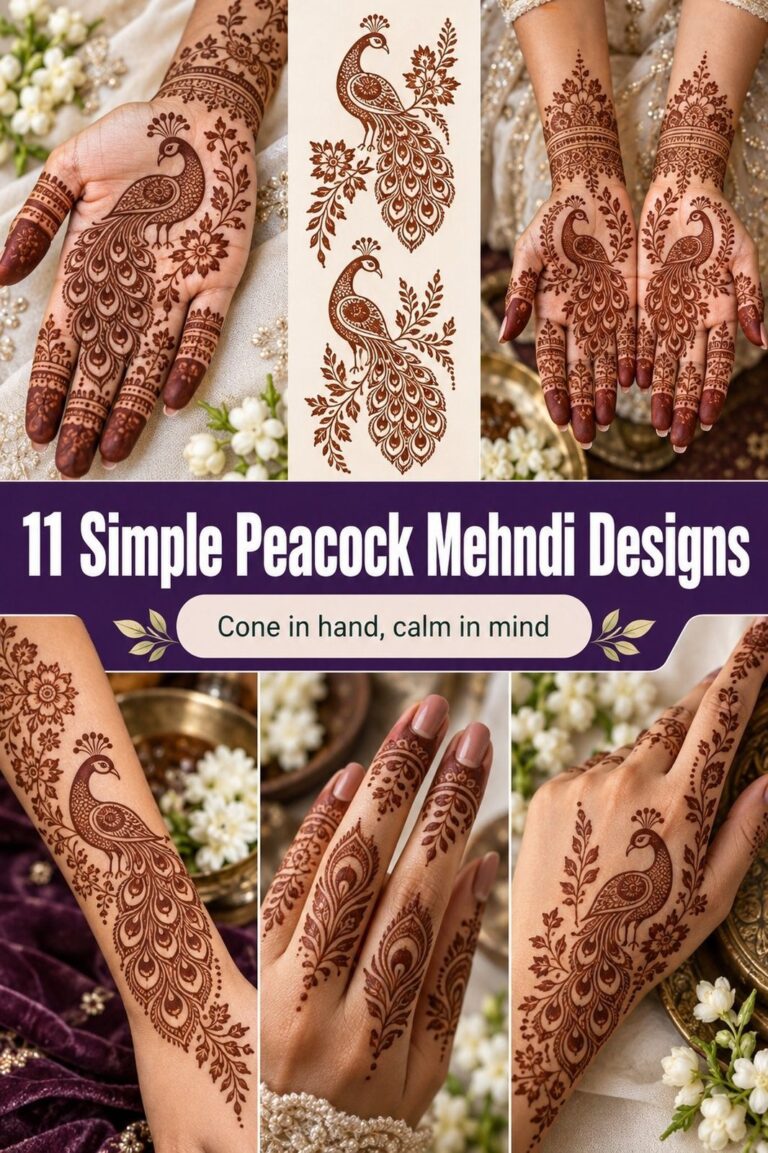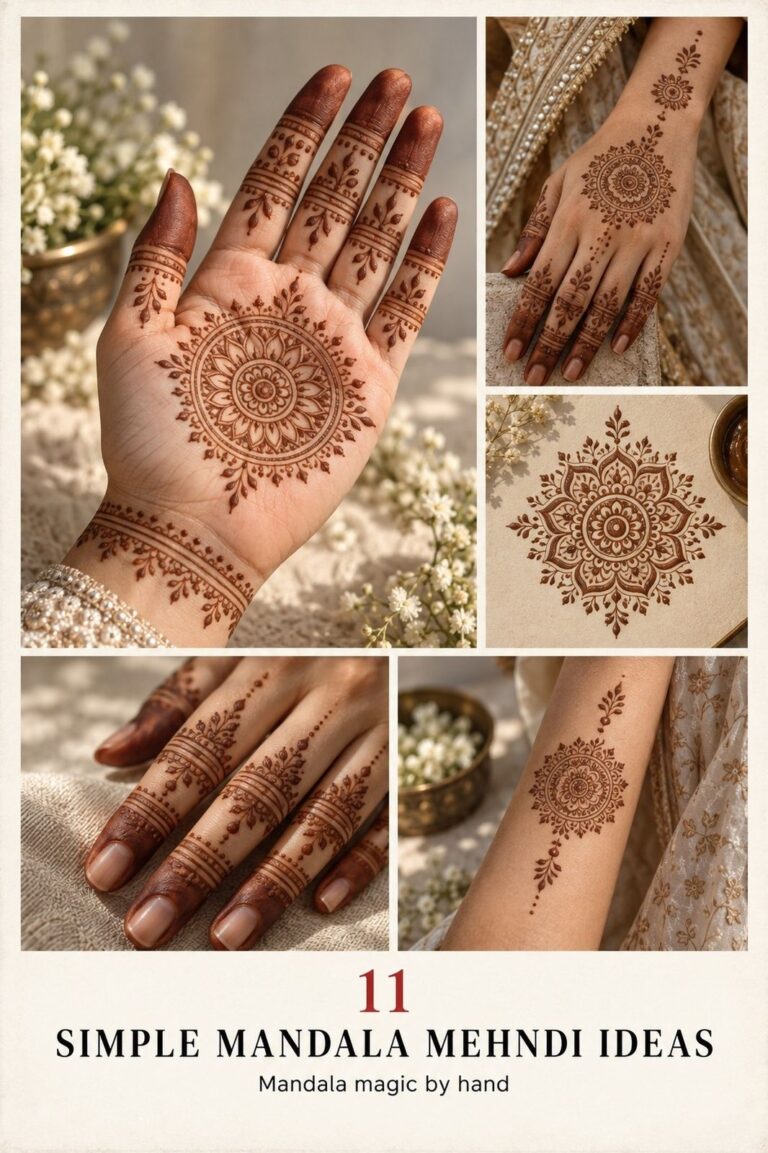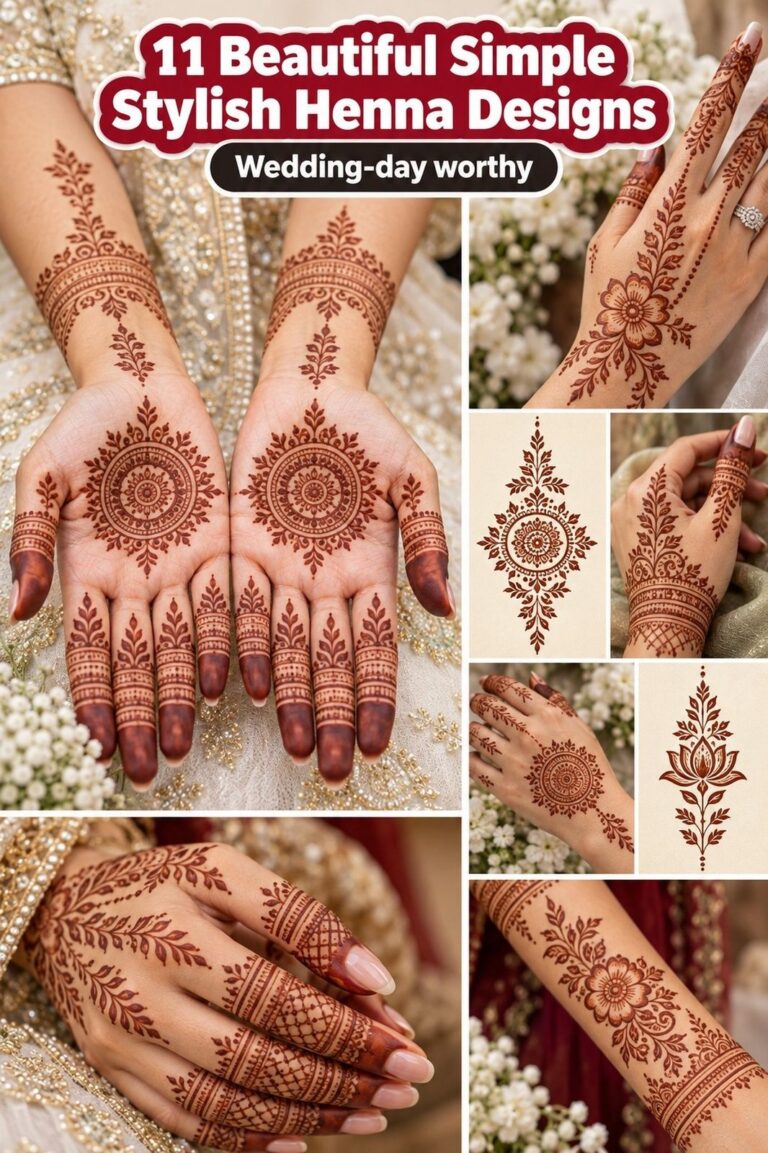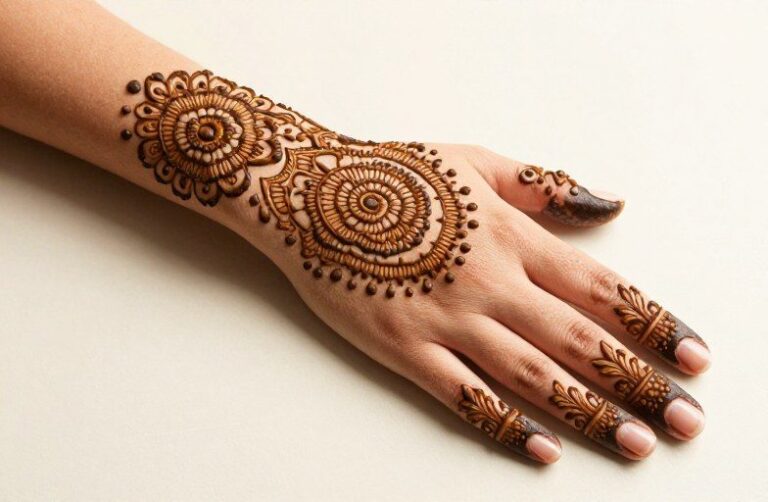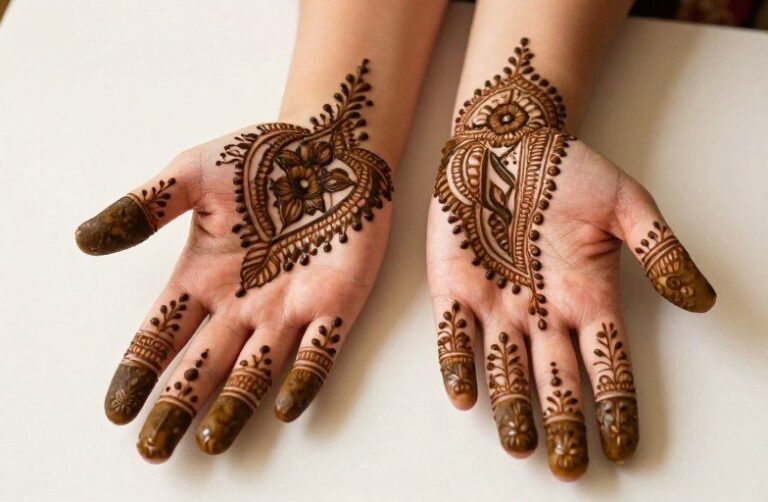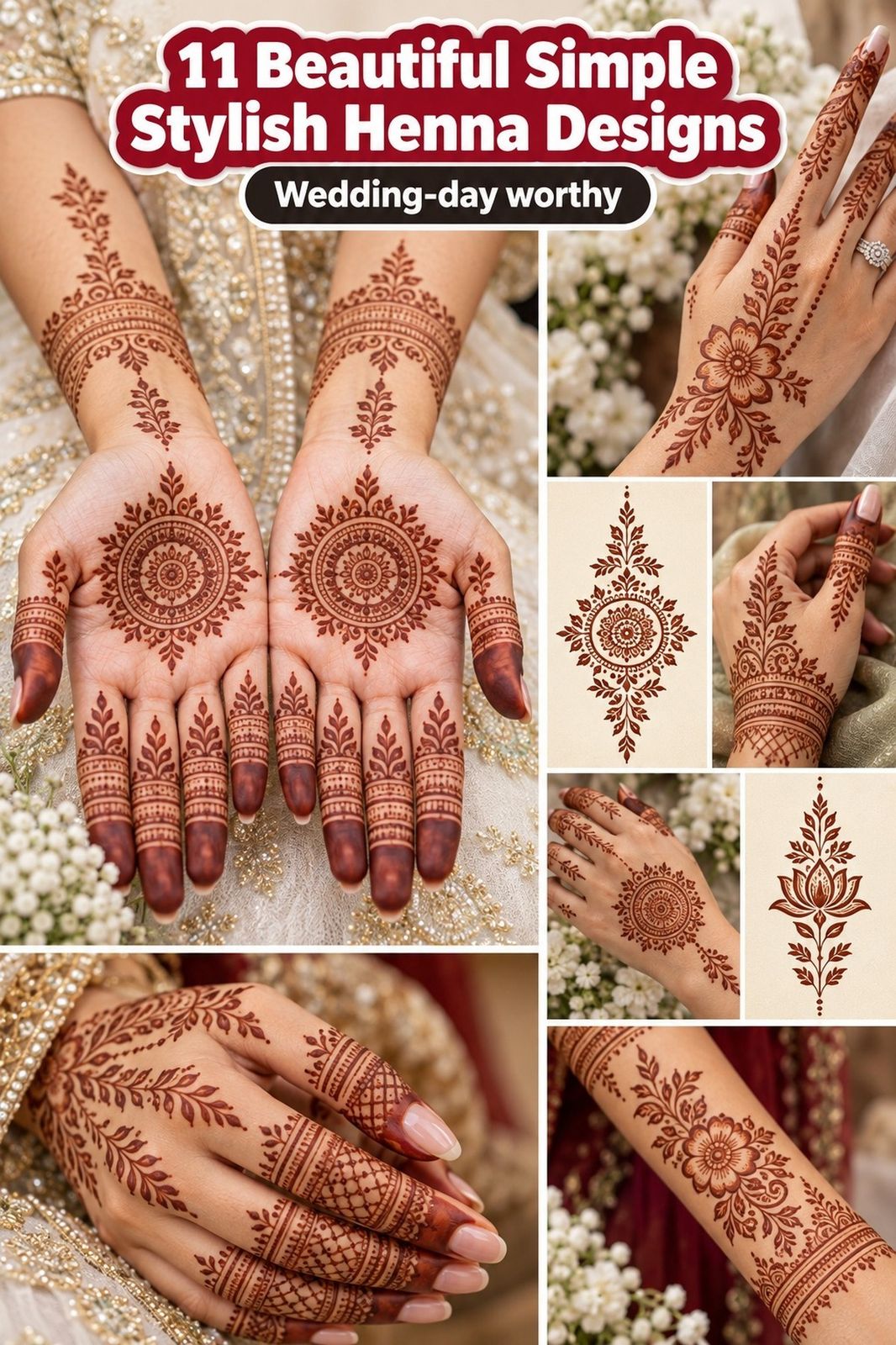
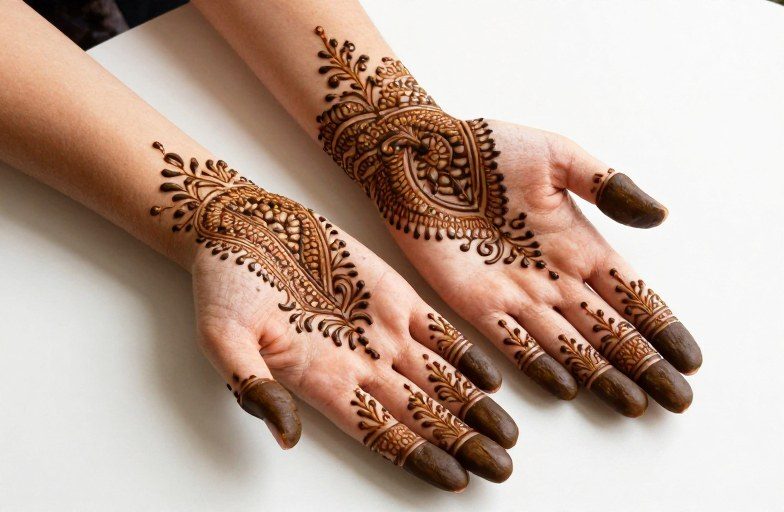
Arabic mehndi designs translate beautifully to permanent ink. The tradition favors bold floral trails, vine-like movement, and generous negative space, qualities that keep a tattoo readable for decades. Where Indian mehndi often fills every inch with dense pattern, Arabic work breathes. That breathing room becomes your ally as the tattoo ages and lines soften.
Popular Styles
Three core approaches dominate when clients bring mehndi reference photos into shops. Each has distinct technical demands and aging characteristics worth understanding before you commit.
Flowing Vine and Floral Trails
The signature Arabic look: a single stem that curves and splits, bearing stylized flowers, buds, and occasional leaf shapes. Lines vary from hair-fine to bold, creating rhythm through contrast. These designs wrap naturally around arms, legs, or ribs, following the body’s cylinder shape rather than fighting it.
Related reading: Arabic mehndi tattoos | Indo Arabic mehndi tattoos | mehndi henna tattoo meaning | Pakistani henna designs
- Best executed with a mix of line weights, thick main stems, medium branches, delicate detail lines
- Ages gracefully because the eye reads the overall flow even as fine lines blur slightly
- Works at almost any scale, though forearm-to-hand versions need careful planning for finger longevity
Geometric Panel Work
Some Arabic mehndi incorporates lattice frameworks, diamond repeats, or hexagonal cells that flower motifs inhabit. As tattoo work, these read more architectural and less organic. The geometry demands precision; wobbly lines in a repeating pattern become obvious fast. Artists often stencil these carefully and work slowly.
Trending Variations
Contemporary adaptations push the traditional form in directions that suit modern placement preferences and mixed cultural backgrounds.
Minimalist Single-Stem Pieces
A stripped-down vine with reduced flower detail, sometimes just silhouette or heavy black fill with no interior linework. These read almost like brush strokes. The trend works because it carries the mehndi DNA, flow, asymmetry, botanical reference, without demanding large skin real estate. A wrist-to-forearm single stem takes under two hours and heals with minimal complication.
Mixed Script Integration
Arabic calligraphy woven into or alongside traditional mehndi florals. This requires genuine linguistic expertise; copying characters from Pinterest without verification risks embarrassing or unintended meanings. Reputable artists collaborate with native speakers or decline the script element if uncertain. The visual effect, when done right, layers cultural depth onto the decorative framework.
Standout Design Ideas
Certain motifs within the Arabic mehndi vocabulary carry specific visual weight and technical considerations.
The Paisley (Boteh): Teardrop-shaped with internal curling detail, the paisley appears constantly in reference images. As tattoo work, it functions as a focal point or repeating motif. Large paisleys with clean interior negative space age better than micro-detailed versions. A 2-inch paisley on a shoulder cap holds crisp edges; a half-inch version on a finger becomes a blob in five years.
Negative Space Flowers: Petals defined by surrounding black fill rather than outline. The flower itself remains skin-tone, creating dramatic contrast. This technique demands confident black saturation, patchy fill ruins the effect immediately. Touch-ups are common as the black settles and heals unevenly.
Dotted Trails and Lace Edges
Some designs use stippled dots or tiny diamond chains as borders or connectors. These age poorly if too fine. Request dots no smaller than 1mm, or accept that lace-edge detail will soften into texture within a few years. Many experienced artists subtly thicken these elements during design to preempt blurring. Arabic mehndi tattoos pair naturally with certain companion pieces and carry specific coordination challenges. Matching sister or mother-daughter sets work well because the style inherently accommodates variation. Two people can share a vine structure, starting from wrist, wrapping to elbow, while differing in flower type, density, or minor motif choices. The coordination reads as intentional without requiring identical replication. Pairing with jewelry tattoos (bracelet bands, ring replacements) requires spacing discipline. A mehndi vine flowing into a solid bracelet band creates a visual traffic jam; the eye doesn’t know where to rest. Better separation: vine ending with breathing room, then a distinct band element elsewhere on the wrist or finger. Alternatively, let the mehndi itself suggest jewelry through its natural trail, skipping actual band work entirely. Existing tattoos in Japanese, Polynesian, or geometric styles present compatibility questions. Arabic mehndi’s curvilinear, asymmetrical nature clashes with rigid geometric sleeves. It can, however, transition gracefully from a floral Japanese piece if the color palette and line quality align. Black-and-grey mehndi bridges more easily than attempts to match colored traditional work. First tattoo clients gravitate toward mehndi-inspired work for understandable reasons, familiarity from cultural practice, perceived femininity, the decorative rather than symbolic nature. Some practical realities deserve upfront attention. Hand and finger tattoos, the most culturally traditional placement, present the highest maintenance burden. Palm-side ink rarely holds; dorsal hand tattoos fade fast and blur from sun exposure and constant use. Many artists decline finger work entirely for first-timers. A forearm or upper arm placement offers the visual aesthetic with far better longevity. Moderate-sized mehndi work (forearm wrap, shoulder-to-elbow trail) typically runs 2-4 hours. The style involves extensive linework with occasional solid fill, creating varied sensation, scratching, burning, vibration depending on body location. The flowing nature means the needle rarely stays in one zone long, which some clients find easier than concentrated shading in a single spot. Aftercare follows standard protocol with one note: the fine lines common in mehndi work can scab heavily if overworked. Follow your artist’s aftercare exactly; premature scab picking pulls out delicate detail that won’t return. Where the design lives determines how it’s read and how long it lasts. Forearm (inner or outer): The classic canvas. Outer forearm shows easily, tans uniformly with the arm, and allows the vine to follow natural muscle flow. Inner forearm offers more privacy and slightly less sun exposure, though the softer skin there can blur fine lines faster. Ribcage and side: The body’s natural curve complements mehndi flow. Designs here often run vertically, starting near the hip and trailing toward the bra line or beyond. The placement hurts more due to thin skin over bone, and stretching from breathing requires the artist to design with some tension tolerance. Upper arm/shoulder cap: Excellent for larger, more detailed pieces that need room to develop. A shoulder cap paisley with trailing vines extending toward elbow or chest creates a natural frame. The skin quality here is generally cooperative, moderate thickness, reasonable sun exposure if clothed normally. Ankle and foot: Culturally resonant but technically demanding. Ankle bone protrusion makes smooth linework difficult. Foot tops hold ink poorly; sides and back of heel worse. If you want this placement, expect touch-ups and accept that some fading is inevitable. Back of neck/nape: Small trailing vines or single paisley motifs work here. The visibility is high, hair up, it’s seen; hair down, hidden. Consider professional context and if you’re prepared for constant visibility or committed to strategic hairstyling. Arabic mehndi tattoos occupy a cultural space that deserves respect. The form carries centuries of practice across multiple regions, North Africa, the Middle East, South Asia, with variations in motif and meaning. If you’re not from these backgrounds, the work remains aesthetically available, but thoughtful reference matters. Avoid copying specific ceremonial designs (bridal patterns, Eid-specific motifs) without understanding their context. Generic florals and vines carry less cultural weight; specific regional symbols may not. Technical execution varies enormously by artist. Mehndi-inspired work demands confident, fluid linework and understanding of how botanical forms translate to skin. Review portfolios for actual healed results, not just fresh photos. The style’s reliance on fine detail makes it unforgiving of shaky hands or rushed sessions. A skilled artist with relevant portfolio work charges accordingly; bargain hunting here produces disappointing results that are expensive to fix or remove. Consider also the aging trajectory. What reads as delicate and lace-like fresh will soften. Design with that future in mind, slightly bolder lines, slightly more space between elements than the reference image suggests. The best mehndi tattoos look intentional at ten years, not merely faded versions of their former selves. A flowing forearm vine typically runs 2.5 to 4 hours depending on density and detail level. Geometric panel work with tight repetition often takes longer due to setup and precision demands. Book the full session your artist estimates, rushing this style shows in the line quality. Lines soften but don’t disappear if properly executed. Hair-fine detail (under 0.5mm) may blur into indistinct texture within 5-10 years. Well-placed medium-weight lines hold readable form for decades. The generous negative space in Arabic-style work helps maintain legibility even as some detail softens. Absolutely, and it’s a smart move. Book a professional henna artist using natural paste (not black “henna” which can scar). Live with the placement for two weeks as the stain fades. Note where you bump it, how it works with your clothing, whether you tire of the visibility. This test run informs size, placement, and density decisions for the permanent piece. Yes, with thoughtful adaptation. The high-contrast negative space technique reads differently on deeper skin, often more subtly, which many clients prefer. Solid black areas heal rich and dark. Very fine stippled detail may not show as distinctly. An experienced artist adjusts line weight and contrast levels to your specific skin tone rather than copying a reference designed for lighter skin.Matching & Pairing Ideas
For First-Timers
Commitment Level by Placement
Session Length and Sensation
Best Placements
Before You Decide
Frequently Asked Questions
How long does an Arabic mehndi-style forearm tattoo take to complete?
Will the fine lines common in mehndi designs blur completely over time?
Can I get a henna tattoo first to test the placement before committing to permanent ink?
Do Arabic mehndi tattoos work on darker skin tones?