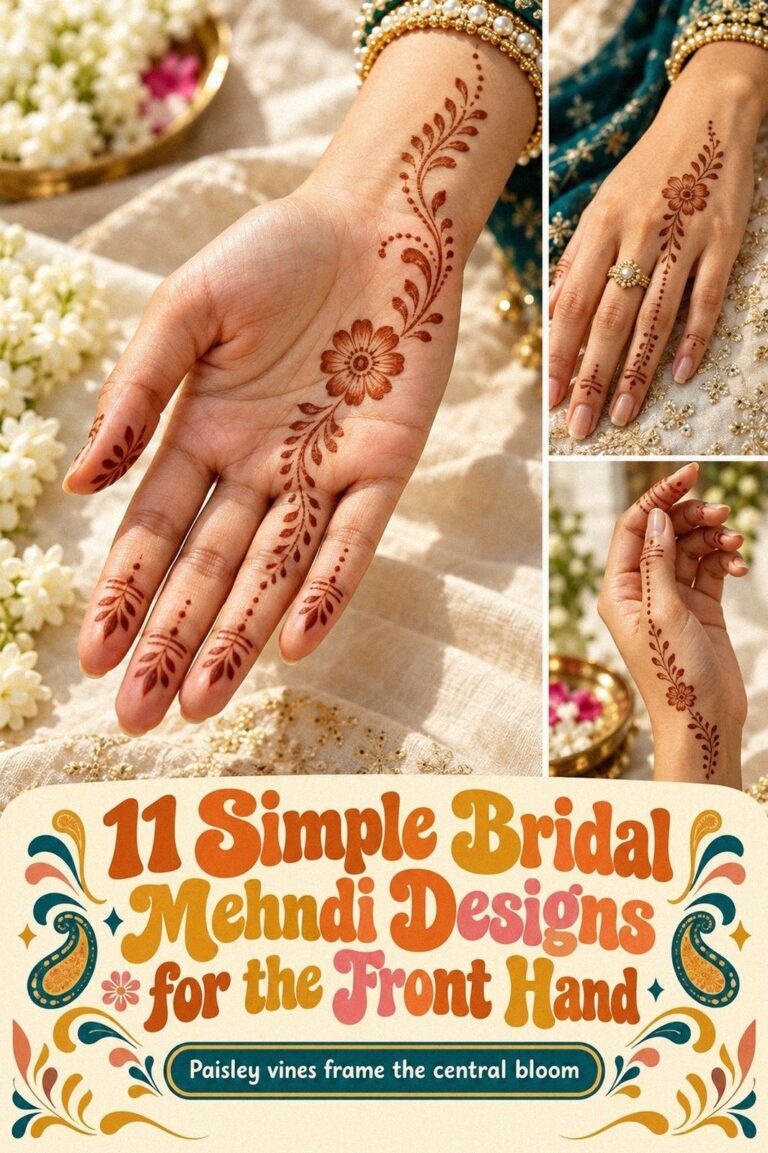
Modern Arabic mehndi looks most striking when every stroke has room to breathe. I learned that after crowding a palm with too many paisleys and losing the graceful flow completely. This guide shows you how to plan a delicate, meaningful pattern with a cone, a few clear motifs, and enough open skin to keep it crisp. Start simple!
- Start with Simple Arabic Modern Mehndi Designs
- Which Latest Arabic Modern Mehndi Designs Are Worth Copying?
- Place Arabic Mehndi Along the Fingers
- Why Keep Arabic Modern Mehndi Lines Delicate?
- Plan Bold Arabic Mehndi for Hands
- The Flowing Vine Across the Palm
- Add Striking Arabic Motifs Near the Wrist
- Minimal Knuckles, Maximum Clarity
- How Intricate Flowers Stay Crisp
- Match Symbolic Arabic Patterns to Your Style
- Finish with Elegant Arabic Mehndi Details
1Start with Simple Arabic Modern Mehndi Designs
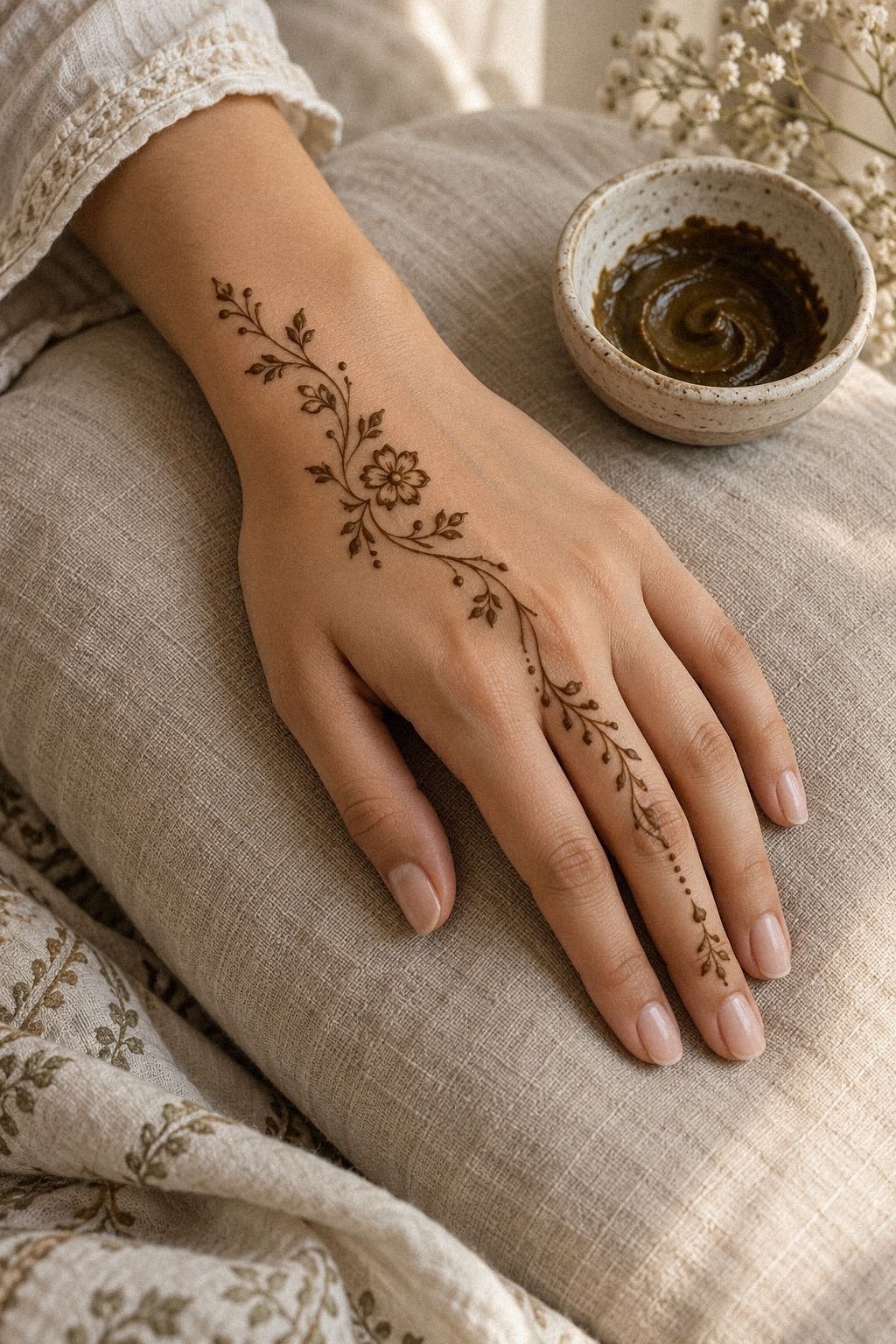
Begin with one flowing trail from the wrist toward the index finger. Keep your first design minimal: one paisley, two leaves, and a small floral cluster.
Your organic henna cone should create a steady reddish-brown line, not a thick rope of paste. If you’re new to mehndi, practice the same curve on paper first, then repeat it on the back of your hand.
I’d choose reddish-brown paste with a narrow tip because it gives you more control over small turns. Your first attempt doesn’t need to look ornate. It needs to feel balanced.
The negative space around the motif is part of the design, and that open skin makes a simple Arabic pattern look polished rather than unfinished.
A natural henna cone should be fresh, clearly labeled, and easy to control. Avoid unknown black paste or products that promise an instant stain. Safe mehndi takes patience, and that slower process is worth it.
Your stain usually deepens on the second day and lasts about one to three weeks. For restrained references, compare these simple modern mehndi designs before sketching your own layout.
2Which Latest Arabic Modern Mehndi Designs Are Worth Copying?

Choose a recent reference by looking for movement, not decoration overload. A reference board with three or four related motifs is more useful than saving dozens of random examples.
Look for one modern Arabic mehndi idea with a clear beginning, a strong center, and an intentional ending. If every section competes for attention, simplify it before you apply the paste. The most stylish designs often use fewer elements than expected.
A design can still feel vibrant without covering every inch of skin. Browse these simple Arabic mehndi designs and notice how the best examples use open gaps as part of the composition.
3Place Arabic Mehndi Along the Fingers
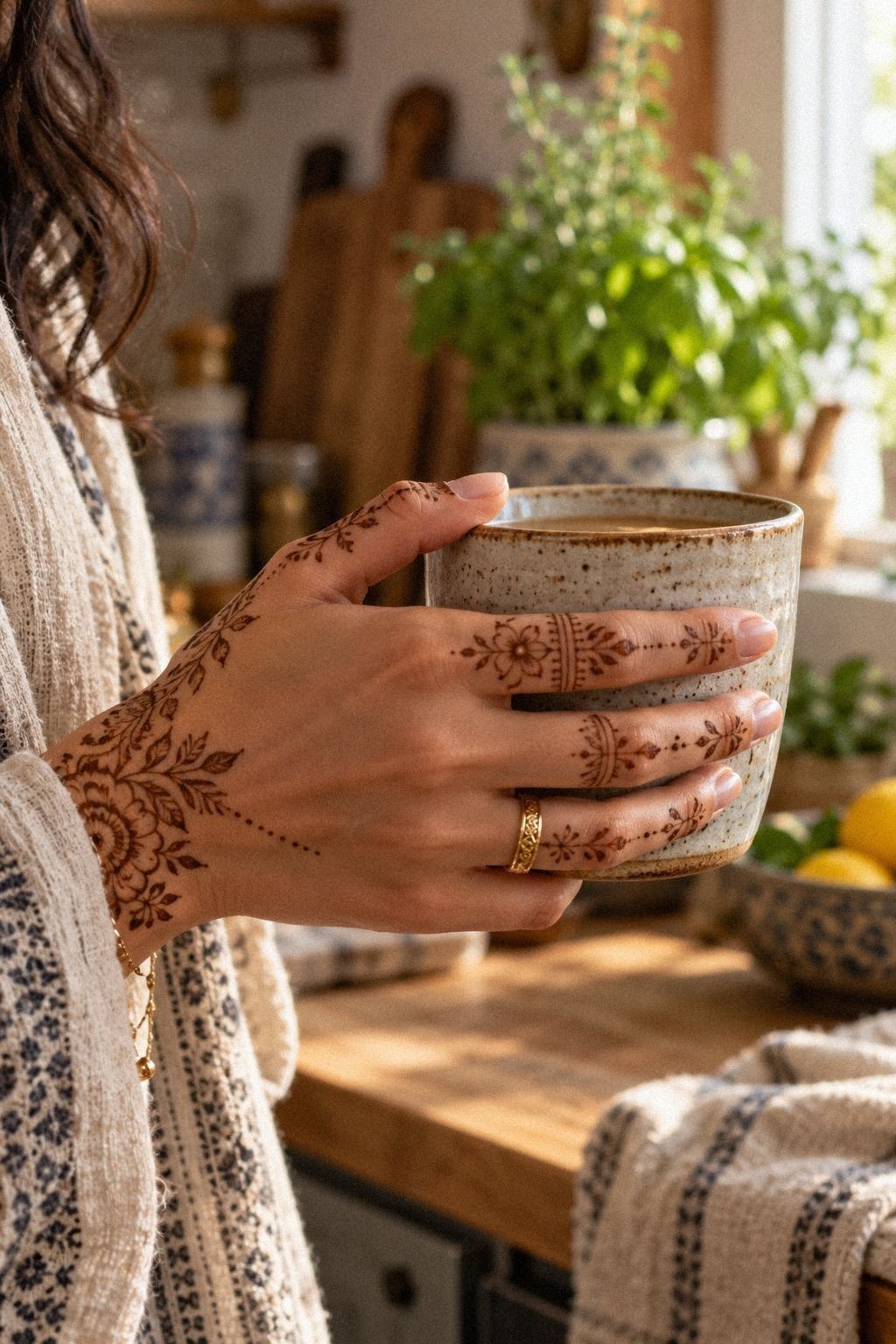
Use the index finger as a narrow path rather than a separate drawing area.
A slender paisley can travel along one side of the finger, while small dots or short arches keep the opposite side quiet. This placement feels sleek and intentional when the marks follow the finger’s length instead of wrapping it with heavy bands.
Leave a small gap near each joint. The finger joints bend constantly, so dense paste there can blur the design as it dries and flakes away. A few crisp marks will usually remain clearer than a full row of detail.
Try repeating one shape on two or three fingers, then leave the others mostly open. That contrast creates a playful rhythm and keeps the hand from looking crowded. If you’re preparing for a wedding, sangeet, Eid, or Diwali, match the finger details to the larger palm motif.
4Why Keep Arabic Modern Mehndi Lines Delicate?

Thin strokes are the fastest way to make a mehndi pattern feel delicate, but thin doesn’t mean weak. A fine cone tip lets you control curves, dots, and tiny petals without forcing every mark to look identical.
Try drawing one line slowly, then pause before adding another. The goal isn’t speed. It’s a crisp edge that remains readable after the paste dries and flakes away.
Use a fresh paste and test its flow on paper first. If the line breaks, the cone may be too dry or the opening may be too narrow. If it spreads, reduce pressure and let the tip glide rather than drag.
A sharp curve can make a simple paisley feel daring. That small change often gives a restrained design enough personality without adding another flower.
5Plan Bold Arabic Mehndi for Hands

Bold Arabic mehndi can still look modern when the strongest areas are planned before the cone touches your skin. Choose one large floral sweep for the center of your hand, then keep the fingers and wrist lighter. If you cover every area with thick paste, you’ll lose the contrast that makes Arabic patterns recognizable.
For a large floral sweep, use three rounded petals, pointed leaves, and a broken outer border. Your palm can carry more visual weight than your fingers, but your design still needs open skin around the cluster. That breathing room keeps the pattern readable.
If you’re decorating both hands, don’t mirror every curve. One hand can carry the main paisley while the other uses a floral trail.
That asymmetrical layout feels personal and daring, especially for a wedding, sangeet, Eid, or Diwali gathering. Matching everything exactly can make your hands look stiff.
A dried paste layer should remain undisturbed for the recommended time. The second-day color usually becomes deeper after careful removal, so don’t scrub or rush the process. Your strongest design will look better when its edges stay intact.
For more ideas, compare royal Arabic mehndi designs and notice how rich patterns still preserve visible skin.

6The Flowing Vine Across the Palm

A flowing vine gives your palm direction, which is why it’s one of the most useful Arabic motifs to learn.
Start with a gently bending stem and add leaves at unequal intervals. A curved palm trail feels more natural when the leaves change size instead of lining up like repeated stamps.
Keep one side of the vine open. You can add a paisley near the base, then let the stem lead toward the fingers without filling every space between them.
A vine can feel sacred, romantic, or expressive depending on the flowers and symbols you attach to it. For a more personal result, choose one repeated leaf shape that reminds you of a family garden, a celebration, or a meaningful place.
7Add Striking Arabic Motifs Near the Wrist
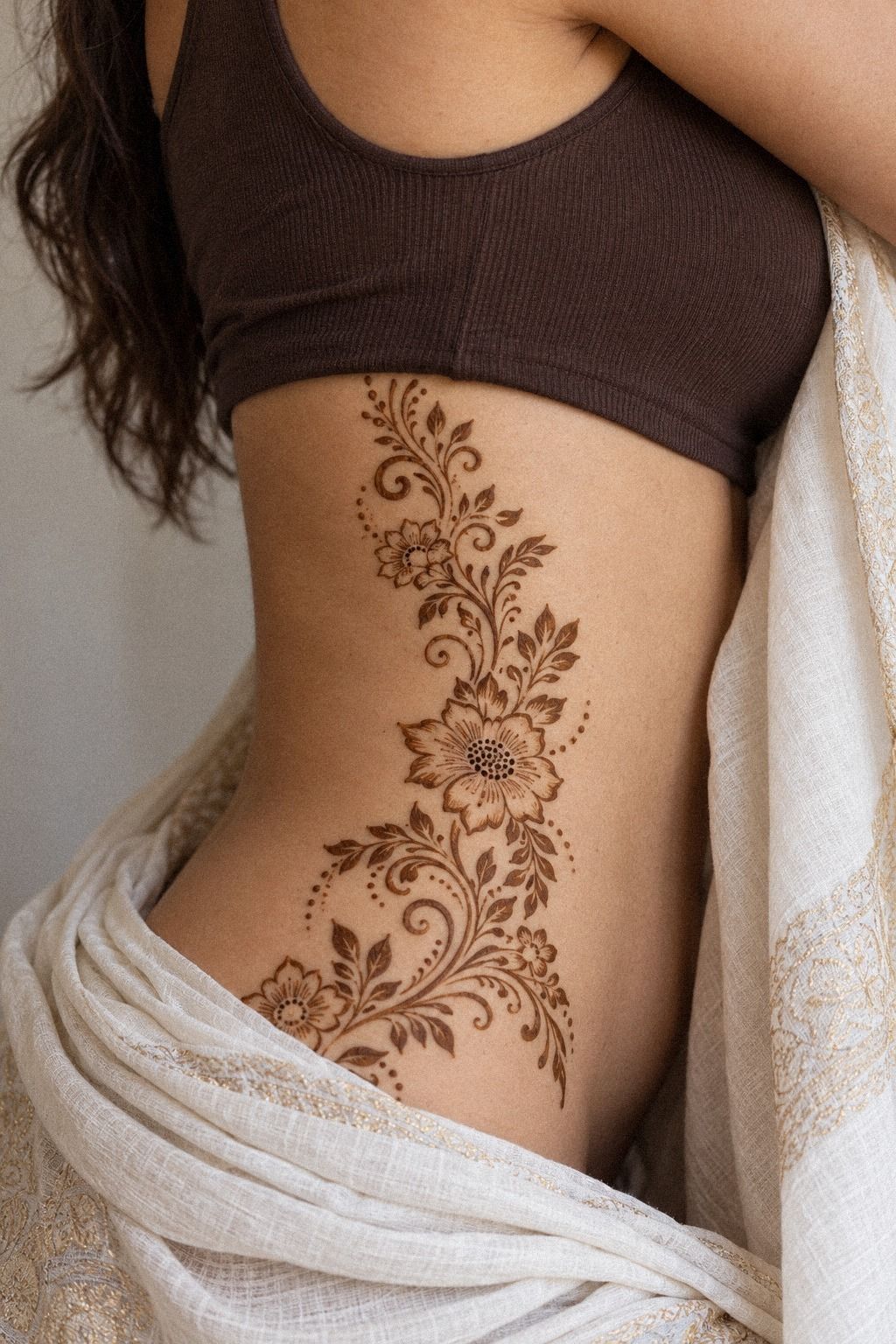
The wrist is where your design can gain a strong ending. Add a small floral band, a pointed paisley, or three connected leaves rather than stopping the main trail without direction. Your Arabic floral wrist border should support the hand, not compete with it.
I’d choose an open wrist section instead of a completely closed band. That gap keeps the design clear and gives your skin a visual pause. If you’re wearing bangles or bracelets, leave enough clearance so the dried paste won’t rub against metal during the first few hours.
Your wrist also gives you a useful place to test scale. Draw the smallest leaf first, then increase the size toward the back of the hand. This creates a gentle transition from dainty to bold.
For a more ornate direction, look at these royal Arabic mehndi designs. Rich patterns can still feel elegant when the wrist has room around them.
A wrist ending can be meaningful too. You might use a repeated leaf for growth, a paisley for abundance, or a simple flower connected to a family celebration. Choose the motif because it means something to you.
8Minimal Knuckles, Maximum Clarity

Knuckles need a light touch because they bend, crease, and move all day. Use tiny diamonds and dots that connect visually without forming a thick block. A minimal finger motif should still look complete when your hand is relaxed or gently curled.
I’d avoid placing a large flower directly over a knuckle. It can become visually broken when your hand moves. Careful knuckle placement works better when it follows the natural width of the finger.
Try pairing one small shape on each knuckle with a longer trail below it. Your fingers will look decorated, but the design won’t compete with the palm. This is also a comfortable option if you’re applying the paste yourself.
Could one tiny cluster really carry enough personality? Yes! The contrast between minimal fingers and a fuller center creates a refined balance.
For more placement references, browse these easy modern mehndi designs. Your goal isn’t to copy every dot. It’s to understand how small marks finish a larger shape.
9How Intricate Flowers Stay Crisp
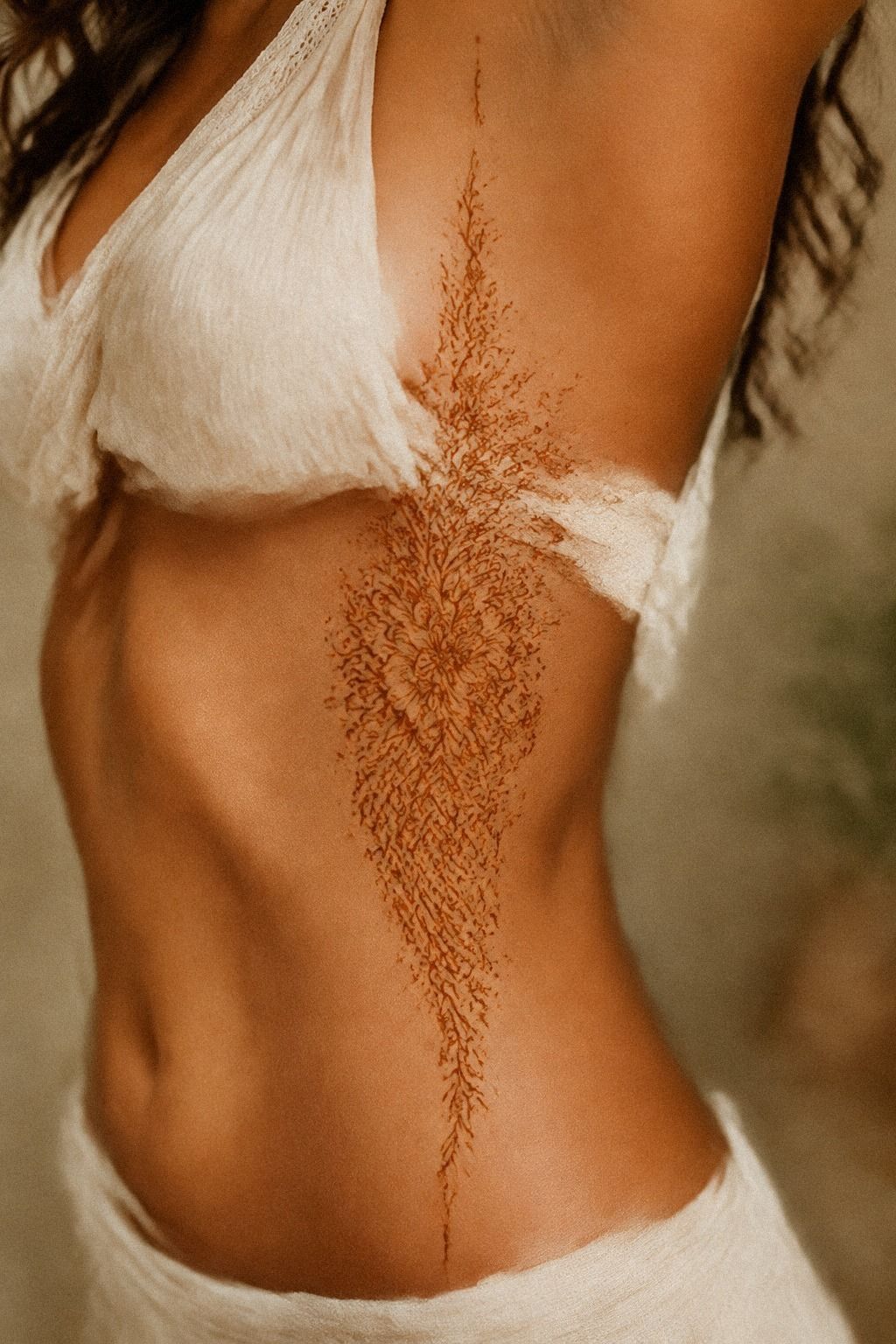
Intricate flowers need a clear hierarchy. Choose one main bloom, then surround it with smaller petals, leaves, and short curved marks. Your flower should have a visible center, readable outer petals, and enough open skin around it to preserve the shape.
Use a hand-drawn floral motif for the centerpiece and keep the surrounding details sharper and smaller. I’d make the main flower slightly wider than the leaves, then use three dots to guide the eye toward the wrist. That structure gives your design an elegant focal point.
If you’re working from a reference, simplify before you copy. Remove one row of petals, shorten a few curls, and keep only the details that survive at a normal viewing distance. Your hand isn’t a flat page, so overly tiny decoration can disappear into movement.
A good flower has rhythm: one full petal, one narrow petal, one open gap. Repeat that pattern with small changes, and the result feels whimsical rather than stamped. Compare these Indo-Arabic back-hand mehndi designs before planning your flower placement.
Intricate doesn’t mean every inch needs attention. It means the important details are chosen carefully.
10Match Symbolic Arabic Patterns to Your Style
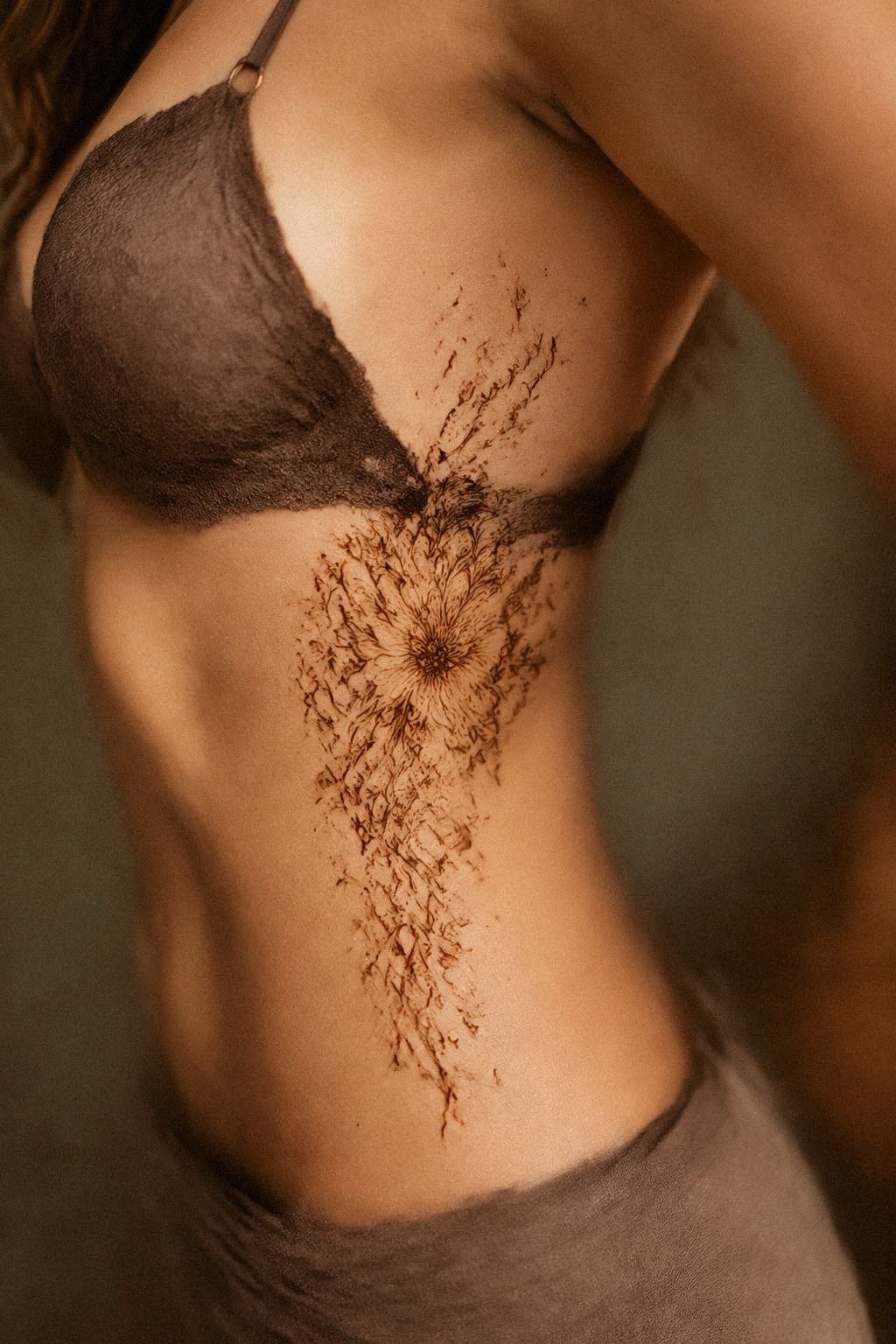
Choose symbols that fit your story before choosing the exact placement. A paisley can suggest abundance, a vine can suggest growth, and a flower can mark joy, devotion, or a family celebration. Your pattern becomes more meaningful when the motif and occasion agree.
I’d keep a symbolic paisley slightly open rather than filling it with dense curls. Your eye can recognize the shape immediately, and the empty center gives you room to add crisp dots or a tiny leaf.
You can also match the design to your comfort level. A fierce palm pattern may suit a lively celebration, while an understated wrist trail might feel better for everyday wear. There’s no rule that says your mehndi must be ornate to matter.
If you’re unsure, sketch three versions on paper: minimal, balanced, and ornate. Look at each one from about an arm’s length away. The version you can still read clearly is usually the strongest choice.
For more symbolic references, explore these easy Arabic mehndi designs. Let the motif guide the pattern instead of adding symbols randomly at the end.
11Finish with Elegant Arabic Mehndi Details

Finish by checking the transitions, not by adding more decoration. The transition check should cover the wrist, palm, fingers, and the spaces between motifs.
Look for a clear start and ending. Add final details only where the pattern feels visually unfinished: perhaps three dots, one leaf, or a short curve. More paste isn’t automatically better!
After the paste dries for one to two hours, remove it gently. A little citrus-sugar seal can help keep the dried paste attached if your mehndi artist recommends it. Don’t wash the area immediately.
A small amount of eucalyptus oil may be used after removal if it suits your skin and the product instructions. Stop if you feel burning or irritation. Safe, natural henna shouldn’t blister or cause intense discomfort.
For another finishing reference, compare simple modern mehndi designs and pay attention to how the smallest marks complete the pattern.
Why Fewer Lines Make Arabic Mehndi Feel More Modern
I’ve come to prefer Arabic mehndi with fewer lines because restraint gives the pattern a stronger voice. Dense designs can be impressive, but they ask the eye to process every flower, curl, and dot at once. A simpler trail gives you somewhere to look first.
The open-skin balance is what makes the arrangement feel modern. A classic paisley still works, but I’d give it a cleaner outline, a confident direction, and one personal path across the hand.
The modern feeling doesn’t come from removing tradition. A vine can still feel sacred and expressive without covering the entire palm. Your design becomes more personal when you decide what deserves attention and what can stay quiet.
I also think fewer lines make the process kinder for beginners. You’re less likely to drag wet paste through a finished flower, and you can see whether your proportions are working before the design spreads too far. That’s the trick!
That’s why I’d rather see one striking paisley with delicate leaves than six crowded flowers competing across the same hand. Your mehndi can be bold, ornate, or playful, but it should still let the skin show through.
Build a Three-Tier Layout for Clearer Designs
Think of the design in three levels: one center motif, a few supporting marks, and small accents. This approach keeps the composition polished without making it rigid.
Your center motif might be a paisley, flower, or long vine. Supporting marks can include leaves and curved stems, while accents include dots, tiny petals, and short arches.
Keep the strongest shape on the palm or back of the hand. Use fingertip accents sparingly, especially if you want a clear design that remains readable as the stain develops.
This hierarchy is useful when your budget is limited because a smaller application can still have a strong focal point. You’re paying for intention, not simply for more paste.
For more layout inspiration, browse simple Arabic mehndi designs and compare how each pattern moves from large shapes to small ones.
Timing, Paste, and Aftercare
Most paste needs about one to two hours of drying time before gentle removal. Your artist may recommend longer depending on the paste, weather, and desired depth. Keep the hand still while it sets.
The color often reaches its deepest point on the second-day stain. It may look orange at first, then shift toward reddish brown during the following day. That change is normal.
Once the dried paste flakes away, avoid immediate washing when possible. A little warmth can help the stain develop, but don’t use harsh scrubbing or strong cleaning products.
A lemon-sugar mixture may help the paste remain attached, while a small amount of eucalyptus oil can support aftercare if your skin tolerates it. Never use a product that causes burning, swelling, or blistering.
For practical examples, see these easy modern mehndi designs and notice how much of the final effect comes from spacing rather than extra detail.
Cost, Value, and Budget Choices
The cost of Arabic mehndi depends on the artist, location, occasion, design size, and time required. A smaller pattern can offer excellent value when its composition is thoughtful. A larger design may be worthwhile when you want more coverage for a wedding or celebration.
These are broad estimates, not fixed prices. Ask whether the small motif includes the cone, design planning, and aftercare advice. The cheapest option isn’t always the best value if the paste is questionable or the application feels rushed.
For a tighter budget, choose one memorable palm motif and leave the fingers lighter. A full-hand design can look rich without covering every available space.
If you’re comparing quotes, ask what the price includes, how long the paste should stay on, and whether the artist uses fresh natural henna. Worth it? Absolutely, when the materials and skill match the cost.
For additional inspiration before booking, compare modern Arabic mehndi designs and decide which level of coverage actually suits your occasion.
Choosing an Artist and Safe Natural Henna
Look for a mehndi artist whose portfolio shows clean curves, consistent paste lines, and fully developed stains rather than only wet applications. Their work should feel timeless, vibrant, and recognizably their own.
Ask about the portfolio and the occasion before booking. An artist who regularly creates bridal patterns may approach a small modern design differently from someone known for quick festival motifs.
Choose a safe natural henna product with a clear ingredient label. Avoid unknown black paste, especially if it promises an instant dark result. Natural henna takes time and shouldn’t cause burning or blistering.
A good artist will explain drying time, removal, color development, and aftercare in plain language. If they can’t answer basic safety questions, keep looking.
You can also bring a reference, but let the artist adapt it to your hand. A slightly different curve may produce a more iconic and comfortable result than an exact copy.
Before deciding, review simple modern mehndi designs and easy Arabic mehndi designs to identify the artist’s closest style.
The Questions Worth Answering First
How long does Arabic modern mehndi last?
Arabic modern mehndi usually lasts about one to three weeks, depending on your skin, washing habits, placement, and sun exposure. I’ve found that the color often deepens on the second day before gradually fading. Gentle washing and limited sun exposure can help the design stay readable longer.
How much does Arabic modern mehndi usually cost?
The price varies by artist, location, event, and design size. I’d expect a small design to cost less than a full hand or bridal pattern, while detailed work takes more time. Ask whether the quote includes the cone, planning, application, and aftercare advice.
Is Arabic modern mehndi a good first design?
Yes, I think it’s a strong first choice because the flowing structure lets you begin with a simple paisley, vine, or floral trail. You can keep the design minimal while still getting a graceful result. Clear open space also makes it easier to judge your proportions.
How do I choose a mehndi artist?
I look for clean curves, consistent paste lines, and fully developed stains rather than only wet applications. Your artist should explain the paste ingredients, drying time, and care instructions clearly. Choose someone whose style feels expressive and crisp.
How long should Arabic mehndi paste dry?
I usually allow one to two hours for henna paste to dry before gentle removal, although your artist may recommend longer. Keep your hand still while the paste sets. A darker second-day stain usually comes from patience, warmth, and careful aftercare.
Where should I place Arabic mehndi?
I’d consider the back of your hand, fingers, wrist, palms, and feet. The back of the hand offers clear visibility, while the palm can produce a deeper stain. Feet and ankles suit flowing patterns, but movement and rubbing can affect how long the design remains crisp.
Can I create Arabic mehndi at home?
Yes, I’ve found that a simple design is manageable at home with a fresh cone, paper practice, and a steady surface. Start with one vine or paisley instead of a full palm composition. Avoid unknown black paste, since safe natural henna should be clearly labeled.
Where I’d Start First
If I had to pick one step, I’d start with the single flowing vine across the palm. It gives your hand direction, leaves room for the stain to breathe, and lets you add a paisley without crowding the design.
Choose one fresh cone, practice the curve twice, and stop before the design becomes crowded. A meaningful motif with clear spacing will usually feel more empowering than a complicated pattern added under pressure.
Save that layout for later, then build your details around its curve. Your mehndi should feel personal, classic, and entirely yours.