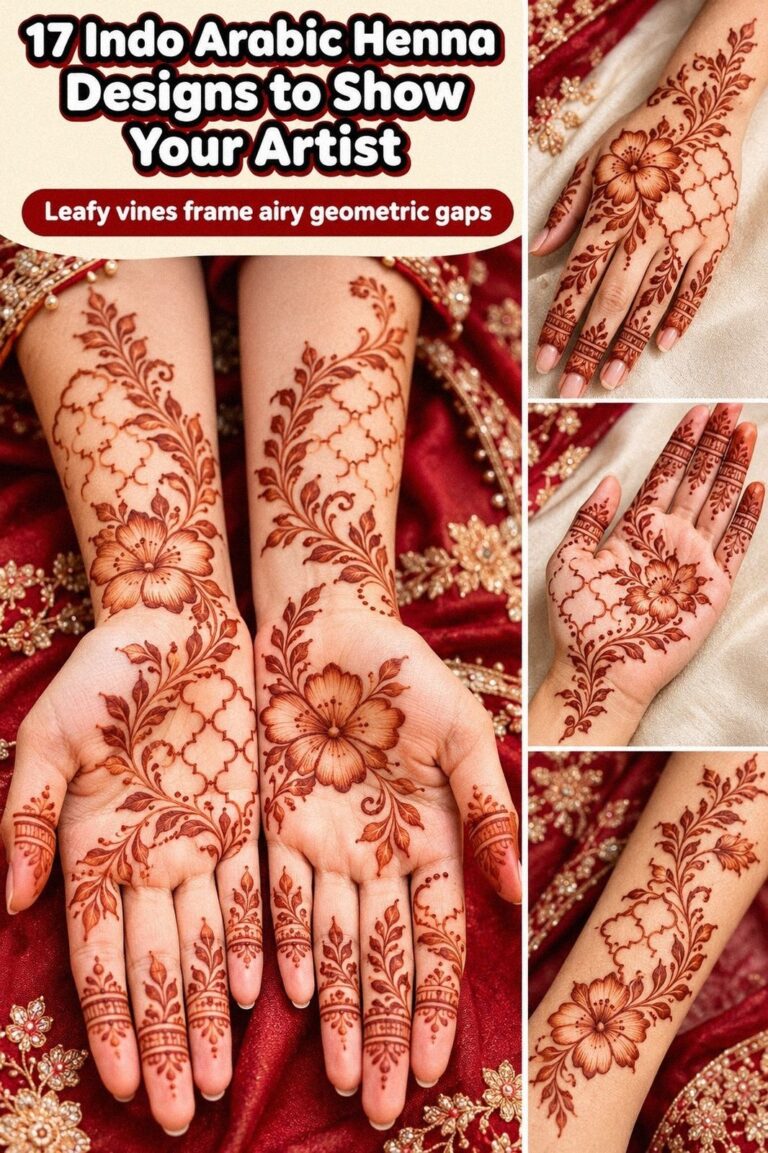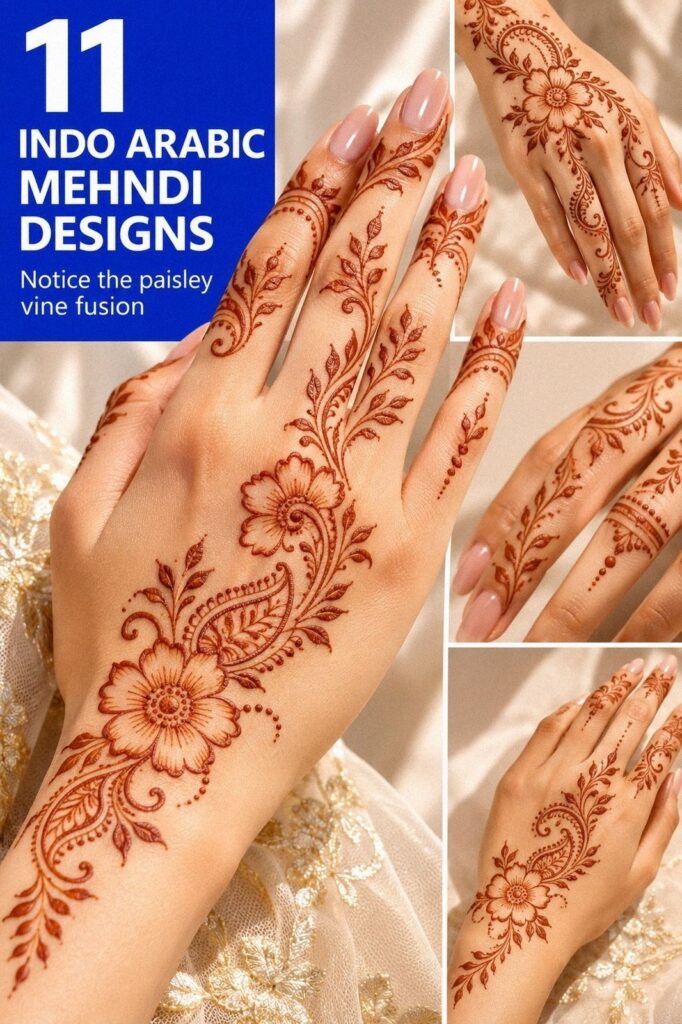
Indo Arabic fancy mehndi designs can dry in about 1 to 2 hours when the paste is applied in clean, moderate lines. I once used too much paste before a family gathering, and every intricate pattern smudged.
Now I choose open spacing, a stable cone, and a lemon-sugar seal. Your design can still look striking without slowing your evening down!
Editor’s note: the best last-minute choice isn’t always the smallest one. It’s the motif that gives you clear movement, enough bare skin, and a realistic drying window.
- Start with Simple Indo Arabic Fancy Mehndi Designs for Fingers
- What Makes Latest Indo Arabic Fancy Mehndi Designs Work on Palms?
- Build Indo Arabic Fancy Mehndi Designs for Hands
- Delicate Indo Arabic Fancy Mehndi Designs on Wrists
- Bold Indo Arabic Fancy Mehndi Designs with Floral Vines
- Choose Minimal Indo Arabic Fancy Mehndi Designs for Backhands
- Why Do Intricate Indo Arabic Fancy Mehndi Designs Need Mandala Centers?
- Eid, Diwali, and Elegant Indo Arabic Fancy Mehndi Designs for Bridal Hands
- Fierce Indo Arabic Fancy Mehndi Designs with Geometric Borders
- Dainty Indo Arabic Fancy Mehndi Designs on Ankles
- Symbolic Indo Arabic Fancy Mehndi Designs with Peacock Motifs
1Start with Simple Indo Arabic Fancy Mehndi Designs for Fingers
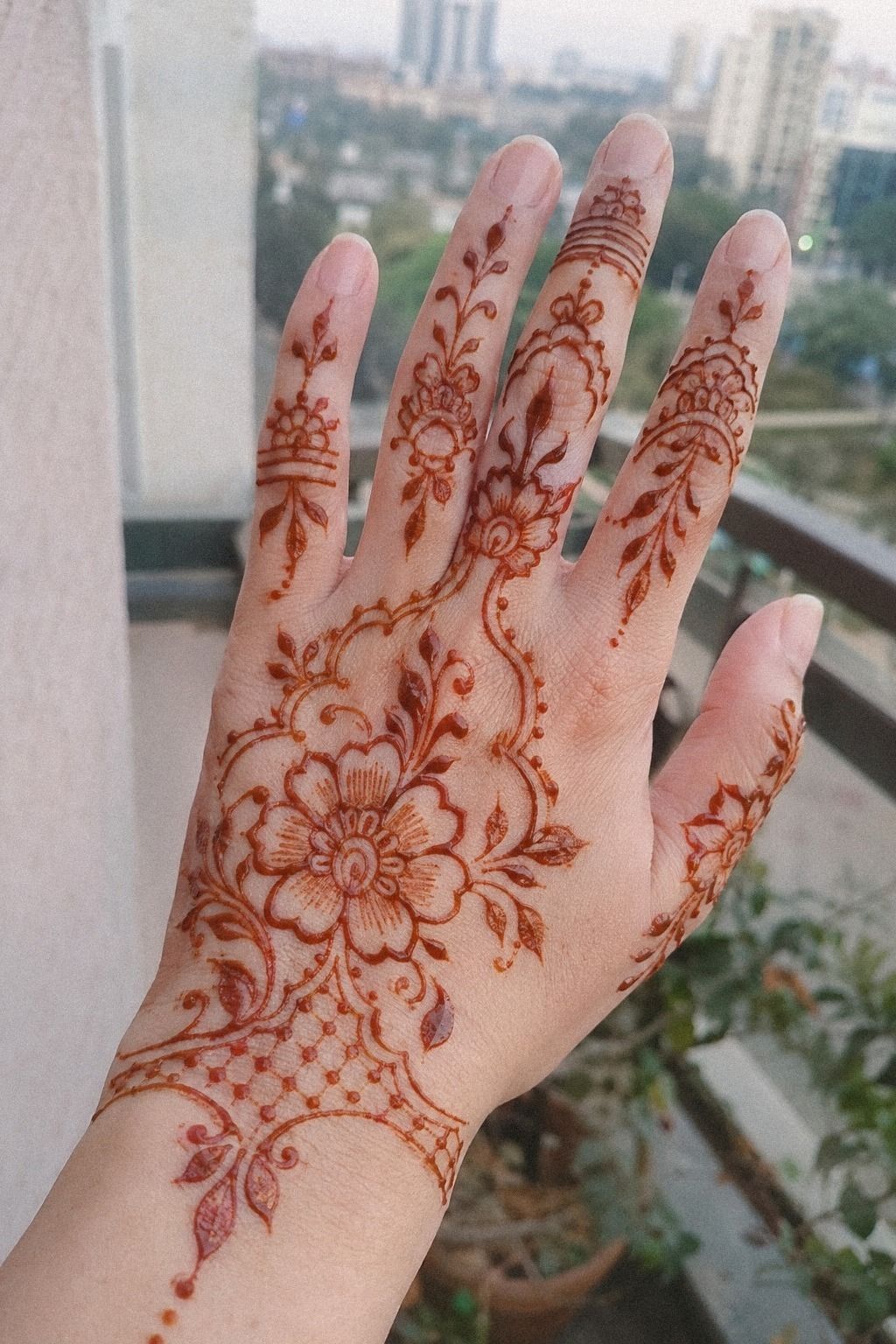
Start with the fingers if you want an elegant finger design that won’t take your whole evening. Use slim paisley shapes, three-dot clusters, and one open leaf on each finger.
A natural henna cone gives you better control than thick paste, so your pattern can stay delicate and crisp while it dries. I’d keep the back of your hand mostly clear, because that empty skin makes each finger detail look more polished.
For a quick version, repeat one small motif instead of creating five different ones. A curved leaf near your index finger, a tiny floral trail on your middle finger, and a narrow band around the ring finger can look ornate without feeling busy.
Your hand will still read as stylish, but you won’t be trapped in one position for hours. If you’re comparing options for value, these very simple Indo Arabic mehndi designs show how much impact comes from spacing.
Use a fresh cone with a narrow opening and test the flow on paper first. If the paste breaks, your lines will look uneven; if it pours too quickly, your cotton swab will become your closest friend.
Keep one nearby for quick cleanup, especially around the knuckles. And don’t cover every fingertip. Leave small gaps near the nails so the design can breathe and dry faster.
This is where a simple Indo Arabic style beats a dense pattern for a last-minute night. It feels understated, but the repeated rhythm still looks stylish. If you’re working on your own hand, rest your elbow on a folded towel so your wrist doesn’t wobble.
For another low-cost starting point, browse these simple Indo Arabic mehndi designs. You can save the motif that feels most personal before you open the cone.
2What Makes Latest Indo Arabic Fancy Mehndi Designs Work on Palms?
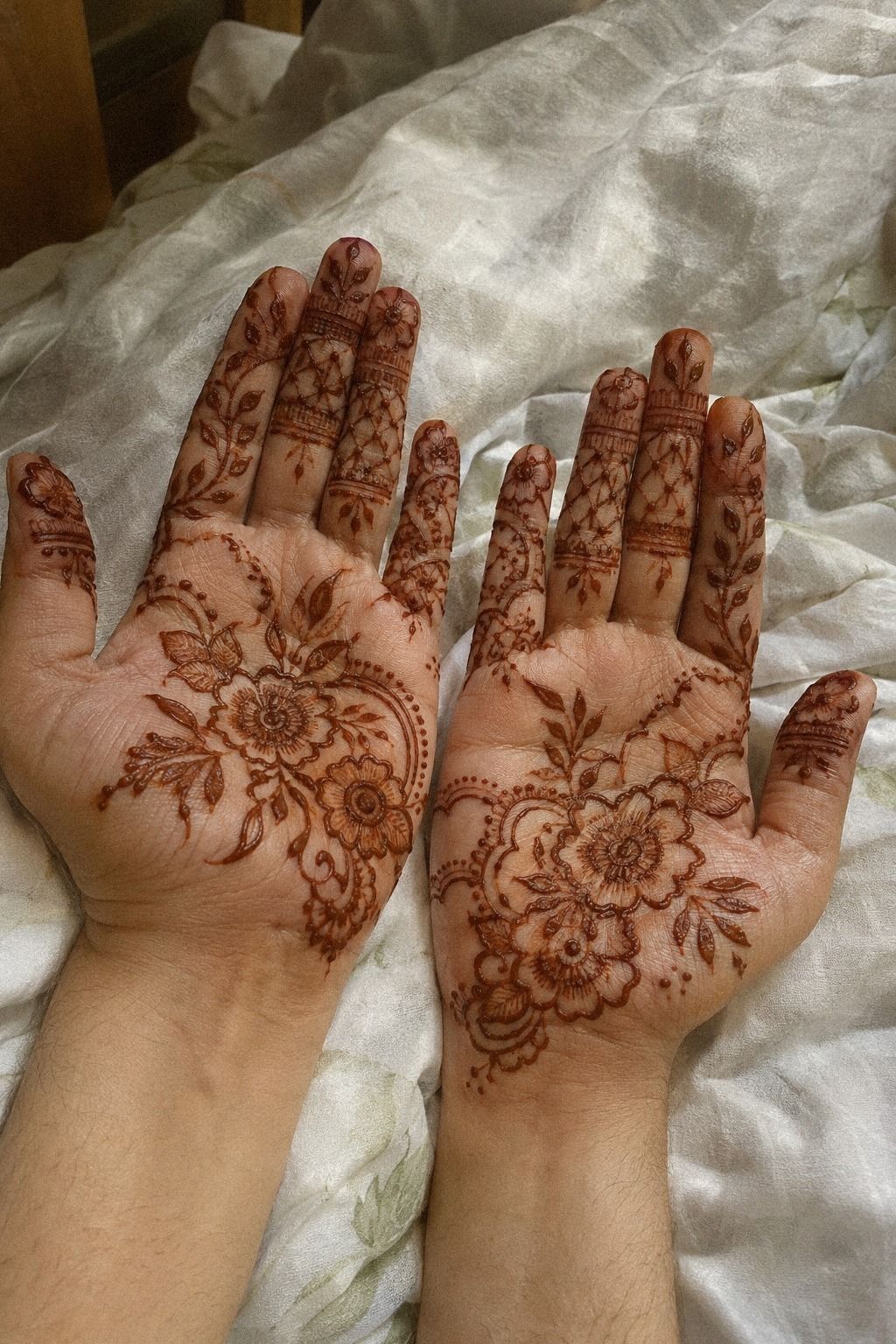
Palm designs need a little more planning because your skin folds, bends, and touches everything.
For a quick palm version, place one clear paisley near the center and leave the surrounding skin open. A clear palm motif gives the reddish-brown stain room to develop without forcing you into a dense application.
Use three curved leaves, a few dots, and one narrow trail toward the wrist. That combination feels flowing and expressive while keeping the drying window realistic.
3Build Indo Arabic Fancy Mehndi Designs for Hands
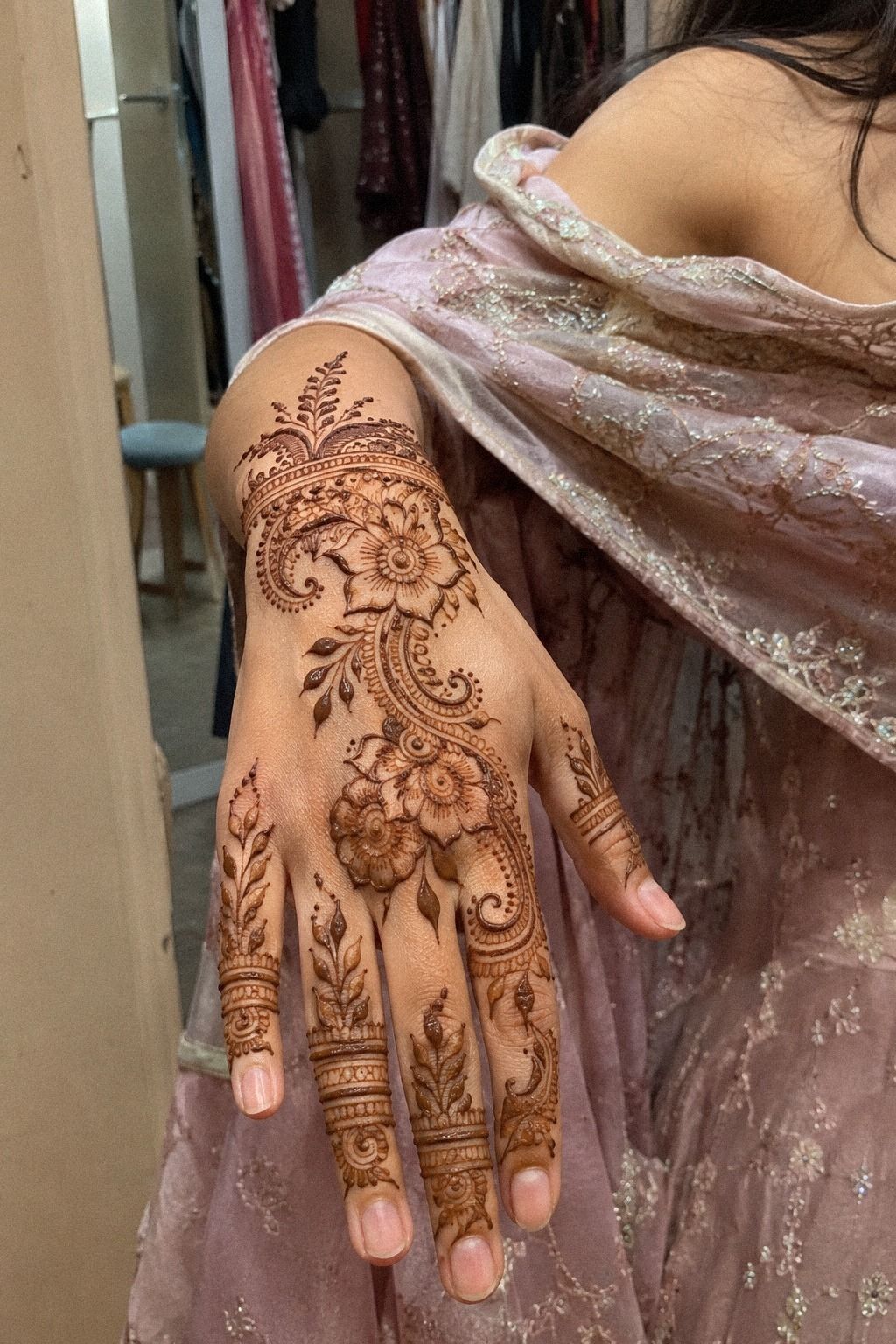
For a complete hand, build from the wrist upward instead of filling the center first. Begin with one flowing vine, add two large leaves, and finish with small dots near your fingers.
This gives your Indo Arabic fancy mehndi designs for hands a direction that your eye can follow. The result can look powerful without requiring a solid layer of paste.
I prefer bold paisley shapes over dozens of tiny flowers when time is short. A paisley dries as one clear form, while small petals can blur if your paste is too wet.
Your design will look meaningful and expressive without needing a crowded palm. If you’re deciding whether a more detailed design is worth it, count the motifs first and be honest about your available drying time.
Create a soft transition at the wrist with three bands of different widths. The lowest band can be plain, the middle one can carry dots, and the upper one can hold a small leaf.
Your hand then looks connected to the wrist rather than ending abruptly at the palm. That structure is a good value choice because a few deliberate motifs can carry the entire design.
And if your first attempt looks uneven, don’t erase the entire design. Turn the irregular spot into a dot cluster or add one leaf beside it.
I’ve saved more than one mehndi pattern this way. The result often feels raw and personal because it isn’t trying to look machine-made!
For another direction, look through these simple Indo Arabic mehndi designs. You can borrow their spacing and then add your own fine floral paste details.
Keep your cone tip clean between motifs, because dried paste inside the opening can make the next curve jagged. A clean cone tip is a small detail that protects the whole pattern.
These very simple Indo Arabic designs are useful when you want a crisp result on a realistic budget.
4Delicate Indo Arabic Fancy Mehndi Designs on Wrists
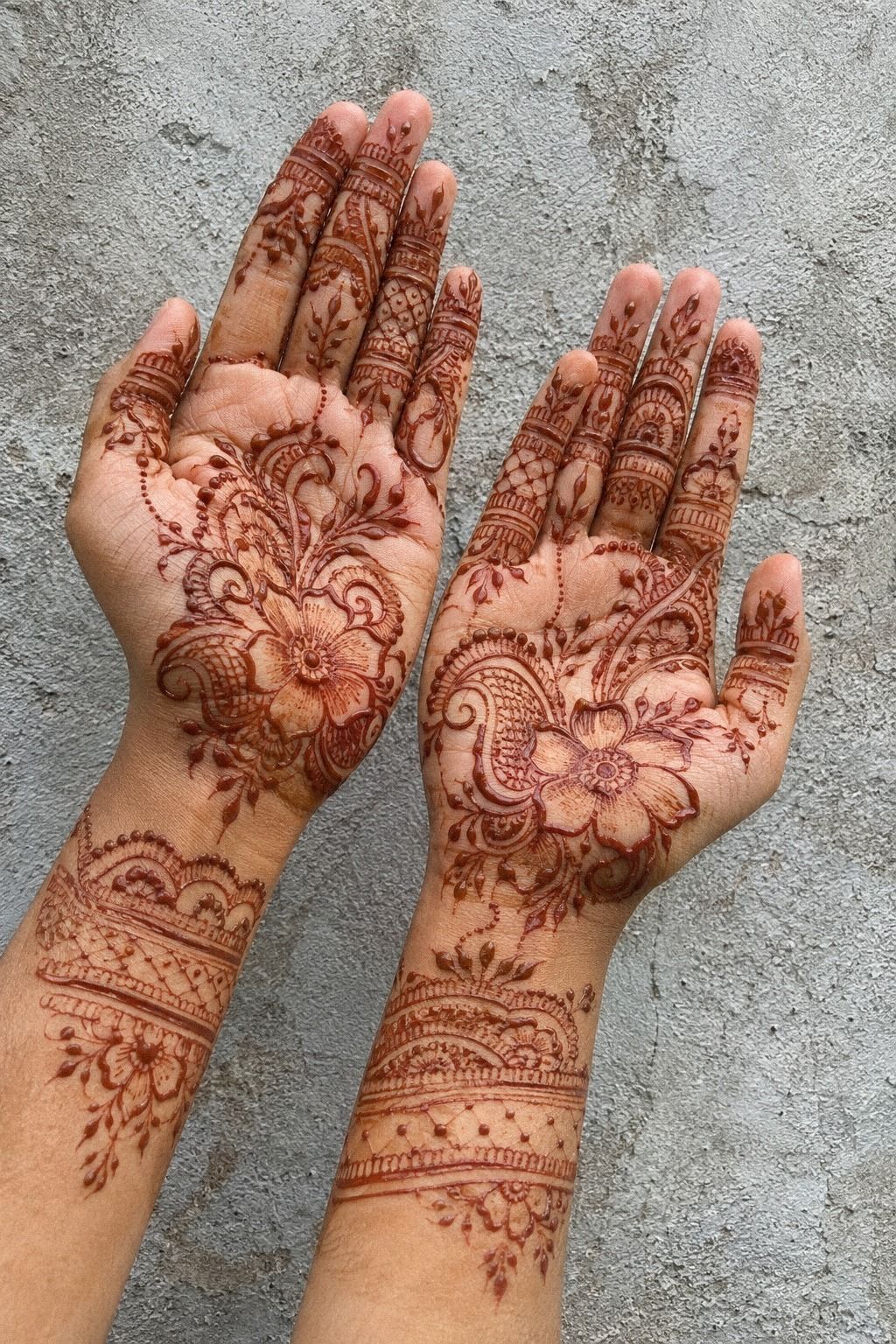
A wrist design works best when it feels like a narrow bracelet made from vines, dots, and one central flower. Keep your delicate wrist band slightly open so the pattern won’t crack when you move.
A fine-tip mehndi cone helps you create a clean edge. Start with the center motif and work toward each side.
Your left and right ends don’t need to match exactly, but they should carry the same visual weight. I’d choose one graceful leaf shape and repeat it rather than mixing several styles.
That repetition gives the design a polished finish. It also makes the application more cost-effective because you won’t need to invent a new motif every few inches.
For a dainty result, leave a strip of bare skin between the wrist band and your palm. The pause makes the pattern look lighter, and your paste will dry with fewer accidental smears.
If you’re wearing bangles later, that gap keeps the design visible instead of hiding it beneath every accessory. This is a sleek wrist detail with a surprisingly strong effect.
Use a small amount of sugar-lemon mixture after the paste has formed a skin. Too much liquid can soften your edges, especially around the wrist where your hand keeps moving.
Dab, don’t drag. This tiny choice makes a sharp finish without increasing your materials cost.
Would you rather have one heavy band or three narrow trails? I’d choose the trails for a last-minute mehndi night because they look lighter and need less drying time.
For a similar approach, save these easy Indo Arabic front-hand designs before you start. The open trails are often worth it when your budget includes both paste and an artist’s time.
5Bold Indo Arabic Fancy Mehndi Designs with Floral Vines
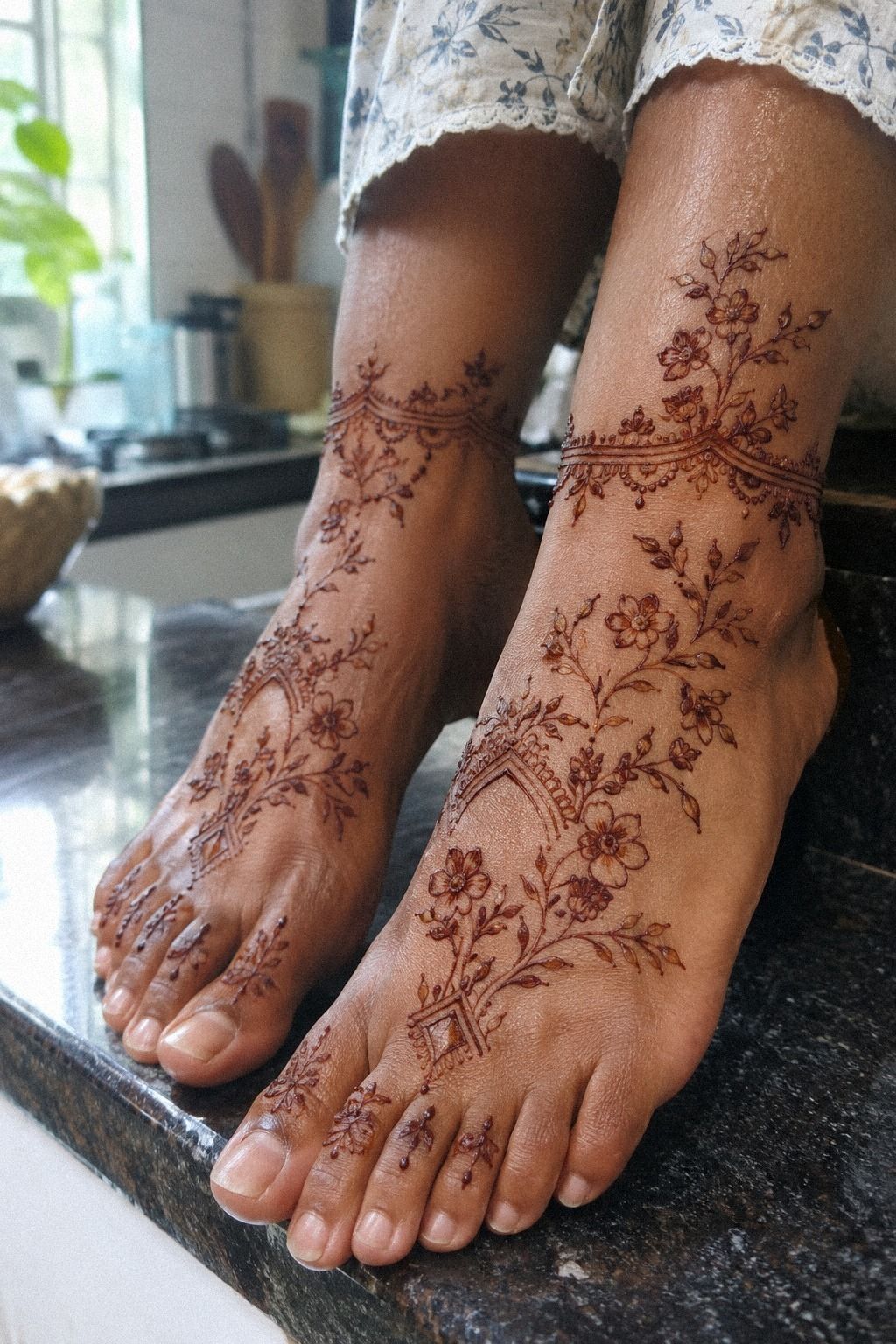
Move the floral vines to your feet and ankles if you want a fierce floral design with strong movement. Begin near the ankle, then let two large vines travel toward the toes.
The deep reddish-brown paste against skin creates a vibrant shape, especially when the center stays open. That contrast can make a modest amount of paste look more valuable.
I’d use large floral paisleys here, not tiny petals. Feet can be difficult to keep still, and small details may smudge before they dry.
Your bold flowers will remain readable even if the design shifts slightly while you sit. A few crisp dots around each vine add rhythm without crowding the pattern.
Keep a folded cloth beneath your ankle so you can relax your leg. You’ll want the cone to move smoothly, and that’s hard when your foot is tense.
I made the mistake of drawing with my ankle unsupported once, and the final vine wandered halfway toward my heel. A steady ankle position costs nothing, but it can save the whole design.
Avoid applying paste immediately before putting on socks or closed shoes. Let the design dry for 1 to 2 hours, then follow the care advice from your mehndi artist.
Loose sandals are easier on the surface, and your floral shapes will have less chance of rubbing away. That patience is worth it when you’ve chosen an expressive foot motif.
For more foot-focused inspiration, see these Indo Arabic peacock mehndi designs. You can replace the peacock with a flower while keeping the same rich floral paste pattern.
This option is powerful, but it still feels graceful when you leave bare space around the ankle. If you’re paying for an artist, that open composition can also keep the application cost reasonable.
6Choose Minimal Indo Arabic Fancy Mehndi Designs for Backhands
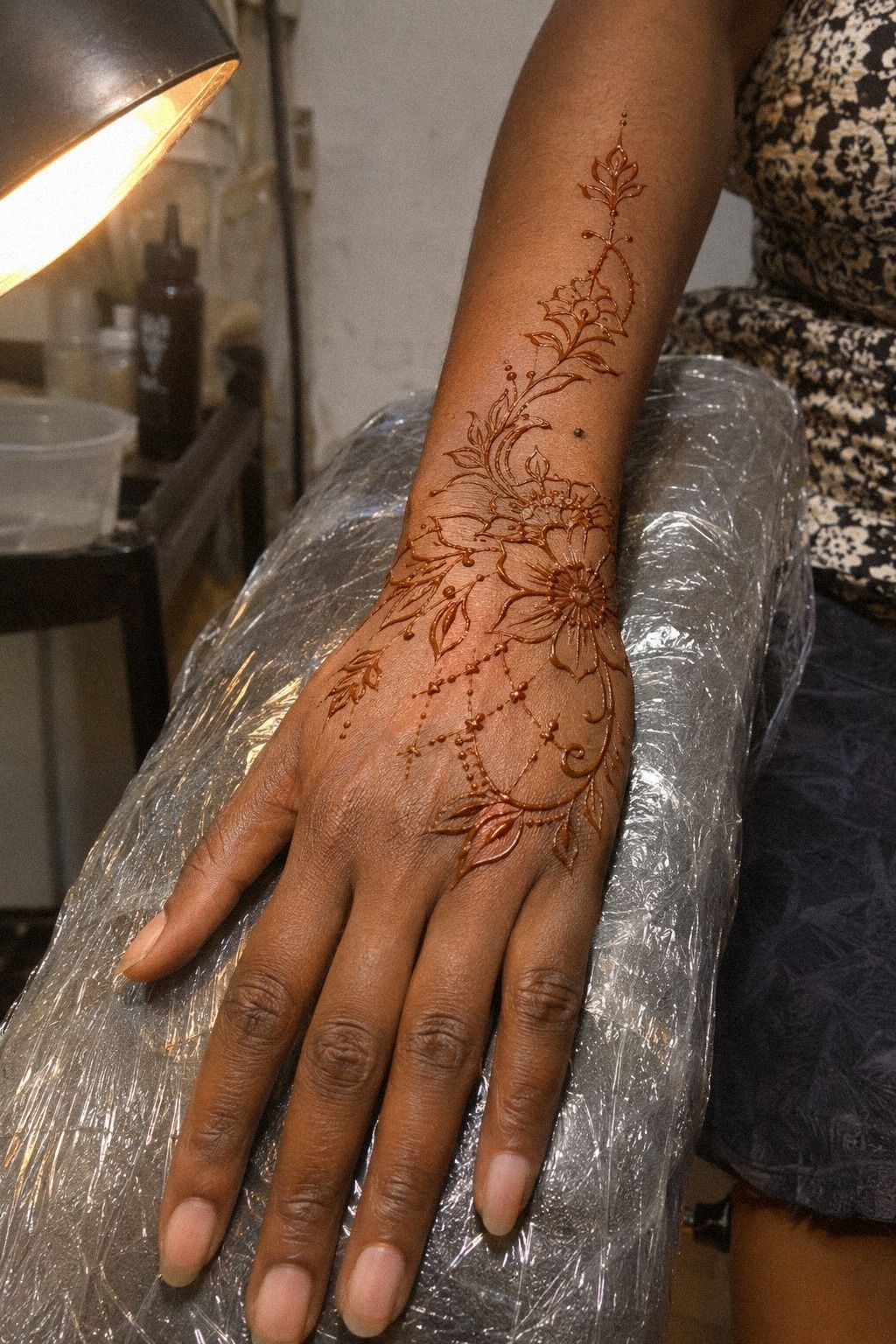
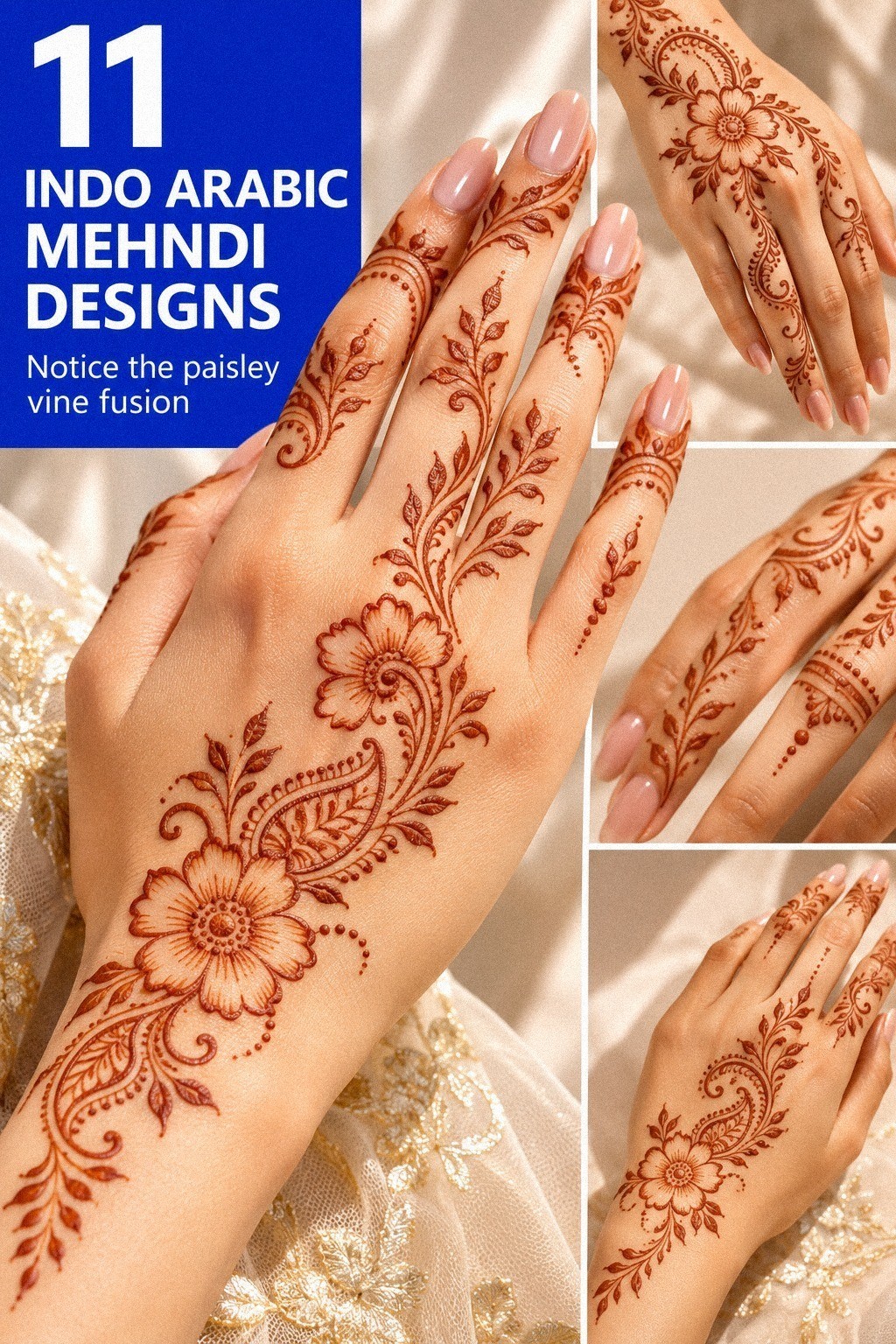
A minimal backhand design can look sleek when one central vine does all the work.
Choose a narrow trail from the wrist toward the index finger, then add two leaves and a few dots. The open backhand spacing keeps the design quick to apply and easy to protect while the paste dries.
7Why Do Intricate Indo Arabic Fancy Mehndi Designs Need Mandala Centers?
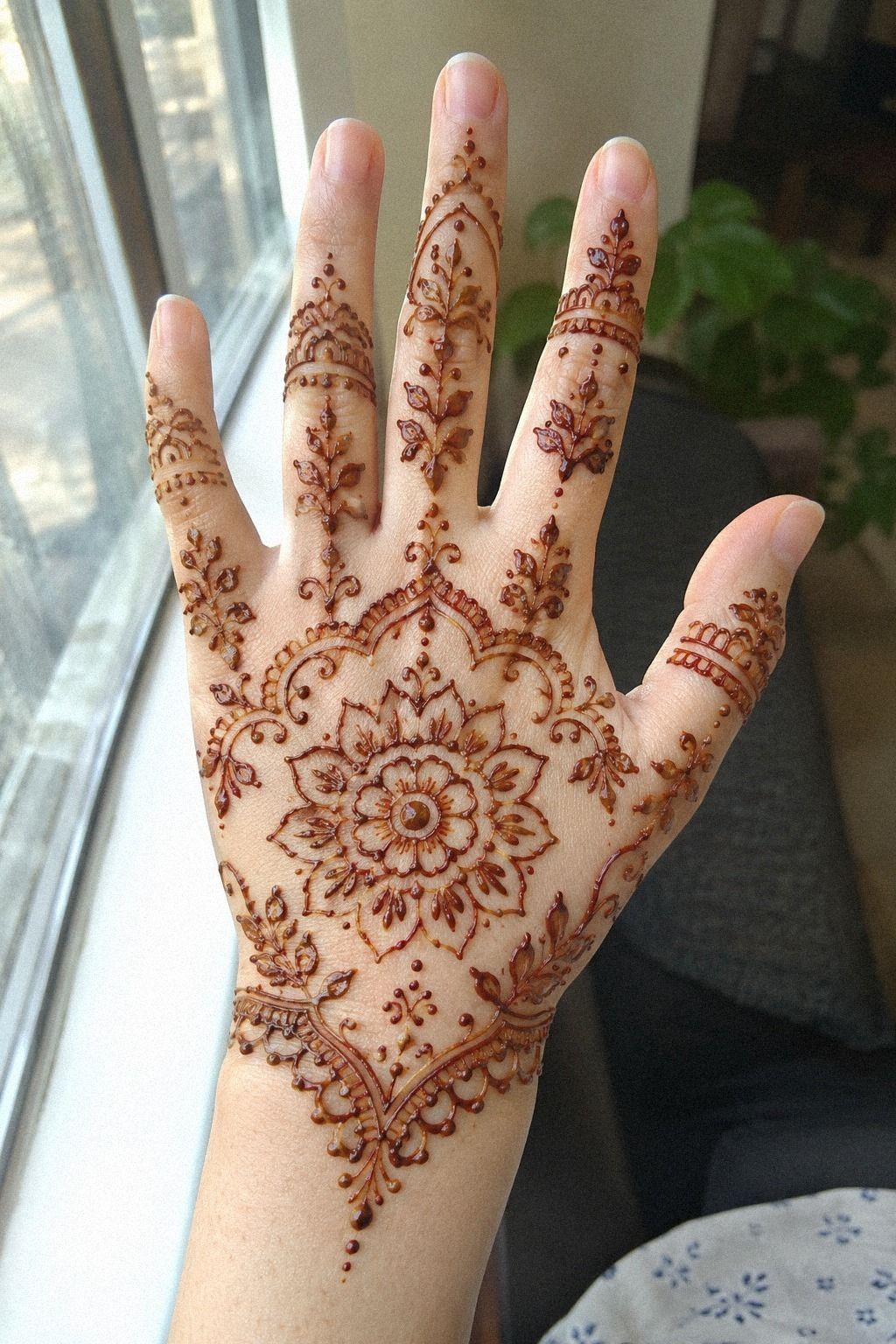
A mandala gives your hand an intricate center, but it doesn’t have to become a solid circle. Draw a small flower first, surround it with scallops, and finish with four open petals.
Your mandala will look sacred and balanced without needing endless detail. The open center also leaves room for the stain to develop clearly.
Use natural henna paste with a consistent flow for the mandala. If your cone is too thick, the inner rings can merge; if it’s too thin, the center may look weak.
Test one small spiral before you begin, and adjust your pressure until the line feels steady. A consistent paste flow is often worth more than an expensive tool.
Build outward in rings, but pause between each ring. Your hand needs time to stay relaxed, and your eye needs a moment to check the spacing.
I like adding leaf pairs between the mandala and the fingers because they make the center feel connected rather than pasted onto the palm. This gives the design an ethereal quality without making it too dense.
A small mandala can be more timeless than a giant one. It leaves room for fine dot clusters, curved vines, and a bare border near the thumb.
That mix gives you an elegant balance and reduces the chance of smudging during the drying period. If you’re comparing bridal options, consider whether the extra detail is worth the higher cost.
The pattern may look delicate while the paste is wet, then deepen on the second day. Don’t judge the final color too early.
If you’re choosing a related design, these new Indo Arabic bridal mehndi designs show how mandalas can sit beside larger motifs without losing their clarity. This is a timeless choice when you want detail with structure.
8Eid, Diwali, and Elegant Indo Arabic Fancy Mehndi Designs for Bridal Hands
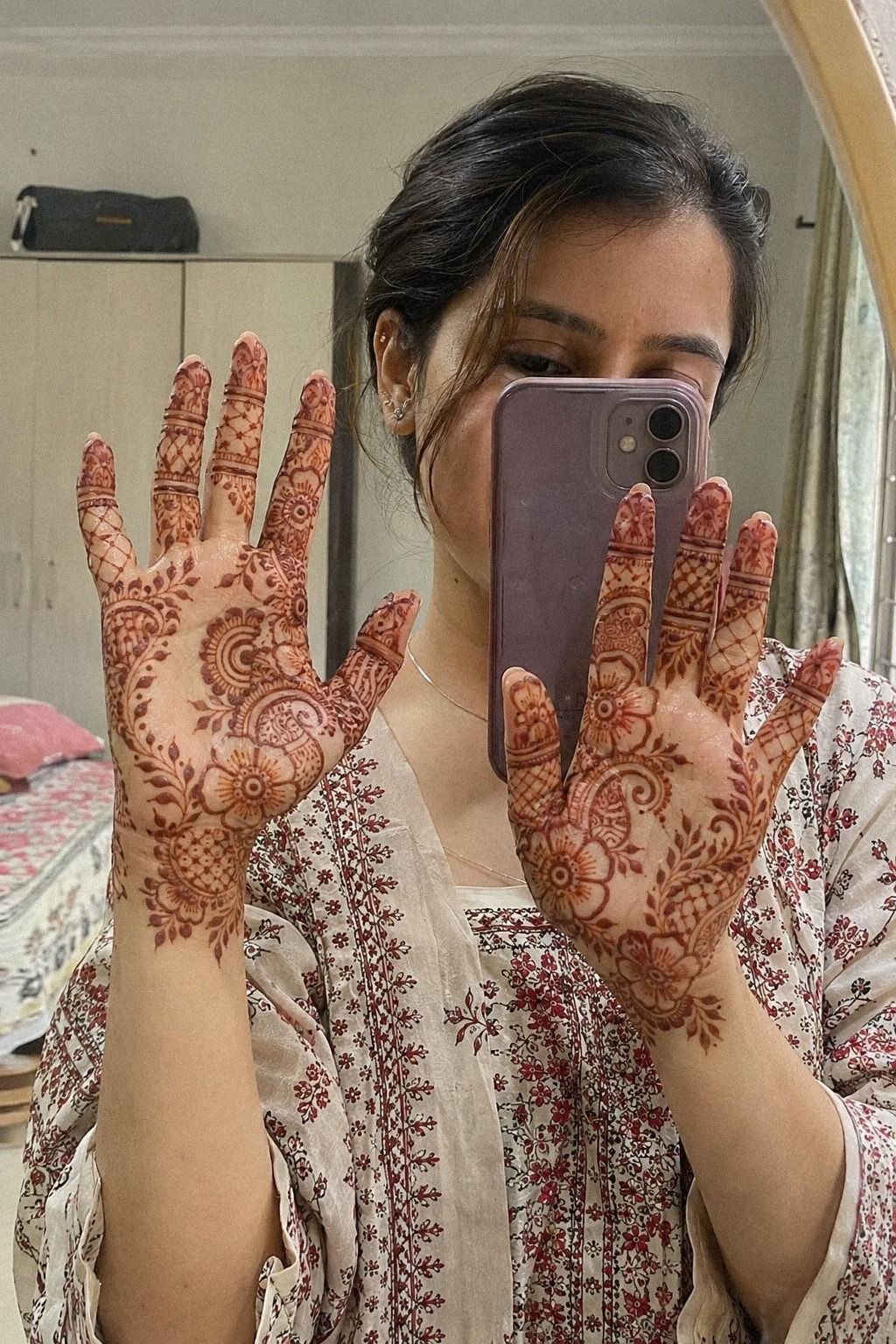
For bridal hands, let one large motif carry the story.
A peacock, mandala, or flowing paisley can become the center, with leaves extending toward the fingers. Choose one ornate bridal motif and repeat only its smallest detail elsewhere.
That approach keeps the design connected without demanding a full palm of paste. It also gives you room to let the color deepen naturally on the second day.
9Fierce Indo Arabic Fancy Mehndi Designs with Geometric Borders
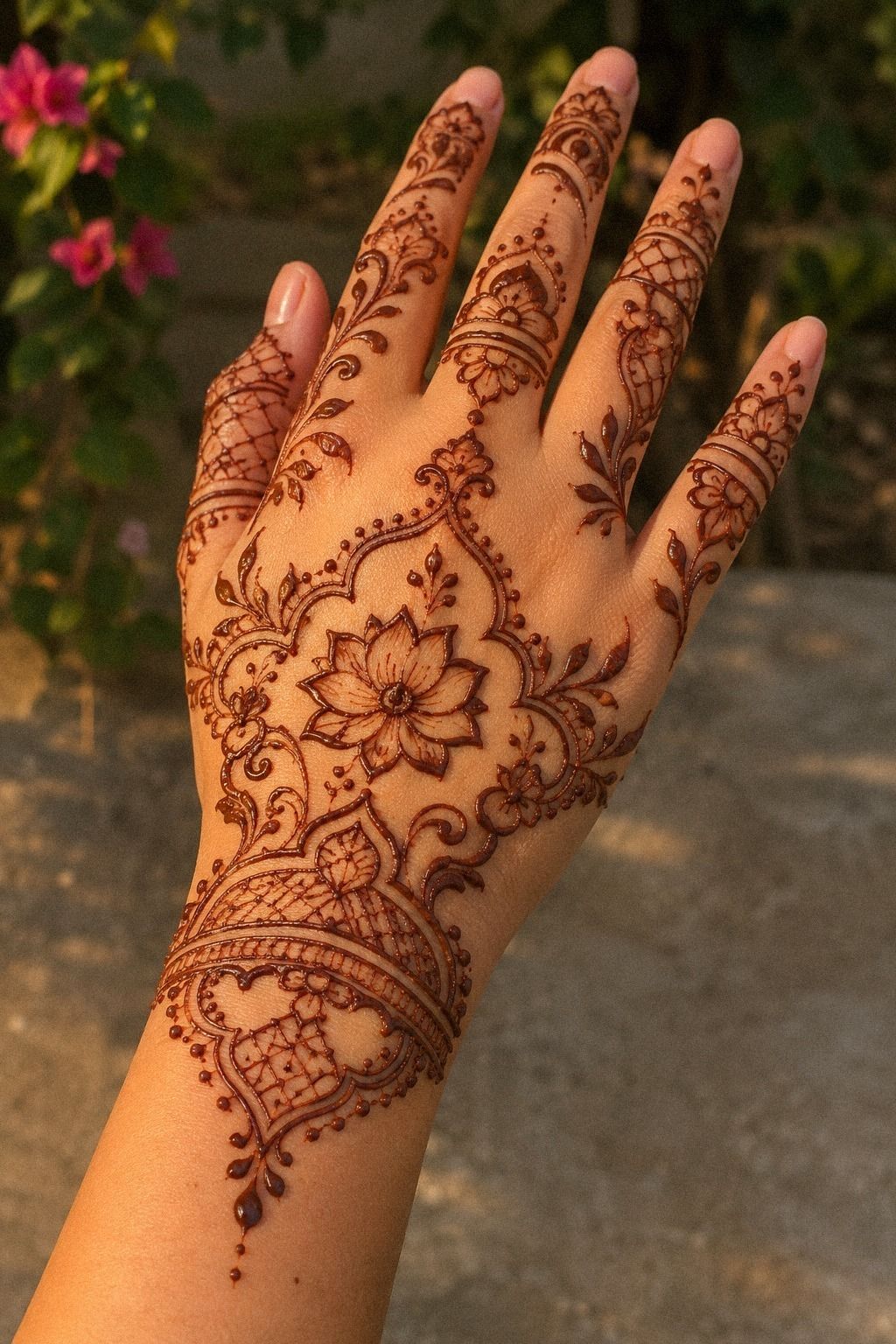
Use crisp geometry when you want a daring geometric pattern that looks different from the usual vine. Build a diamond near the wrist, add two open triangles, and soften the edges with leaves.
Your design can feel edgy without losing the flowing character of Indo Arabic mehndi. The key is to leave enough space between each border so the paste doesn’t merge.
Choose smooth henna paste lines with enough room between them. A geometric shape needs clean borders, and crowded paste can make the design look muddy once it dries.
I’d work from the largest diamond outward, checking each side before adding dots or small petals. This approach protects your budget because corrections use less paste.
Don’t chase perfect measurement. Your hand isn’t graph paper, and a tiny difference between two triangles will make the design feel handmade.
Use the same cone pressure on both sides, then let the natural shape of your wrist guide the pattern. That balance looks sharp without becoming stiff.
A restrained geometric border can also frame a floral center. Your design then has contrast: crisp corners beside soft leaves, a bold edge beside an understated palm.
Add one deep reddish-brown stain focus near the wrist so the eye has somewhere to rest. That defined wrist accent matters!
Could you use geometric shapes on one hand and vines on the other? Yes, but keep one repeated detail between them, such as a four-dot cluster or a narrow band.
These modern Indo Arabic mehndi designs can help you find that connection. It’s a playful contrast, but the finished pattern still looks deliberate.
10Dainty Indo Arabic Fancy Mehndi Designs on Ankles
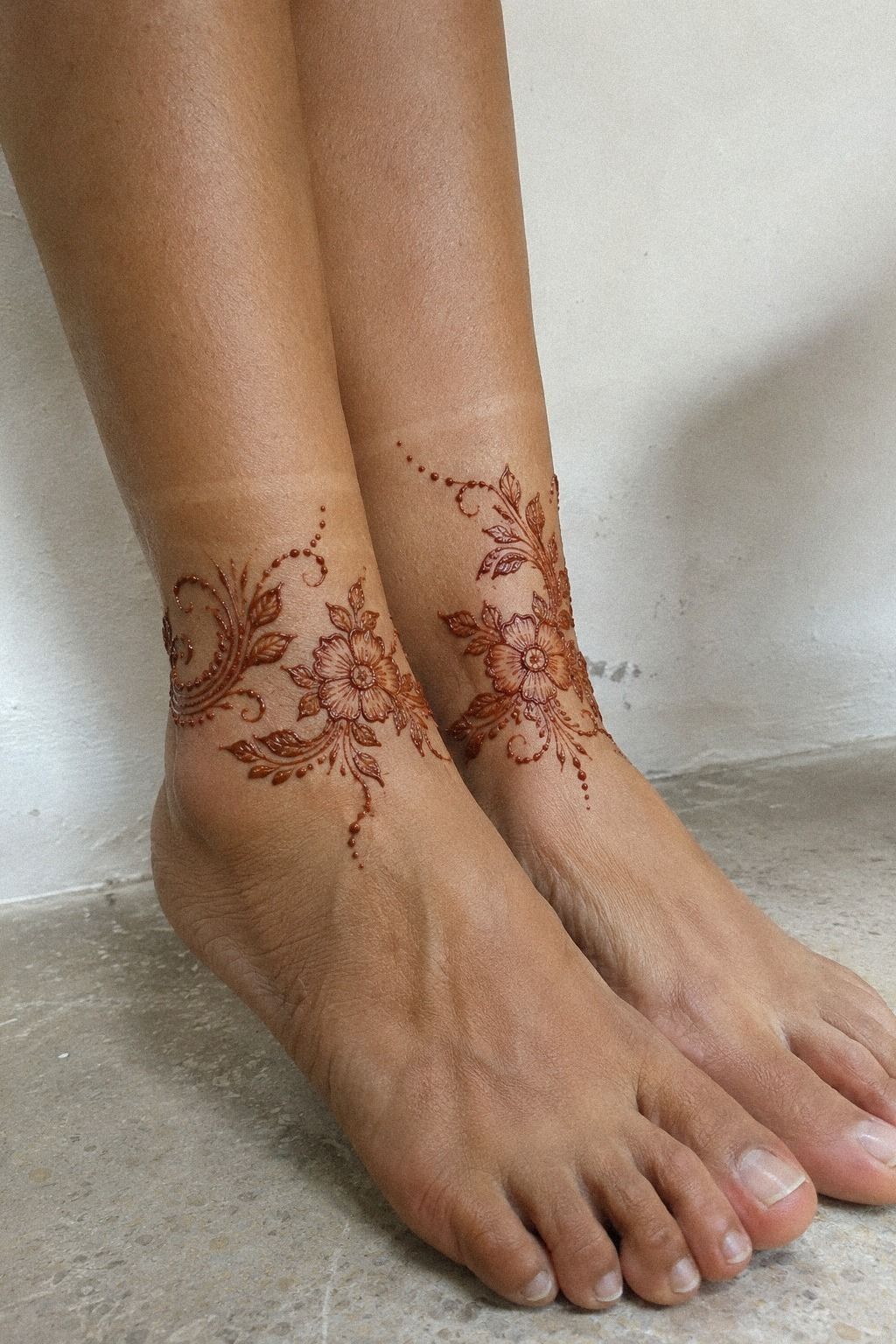
Ankle mehndi looks dainty when the design follows the natural curve of the foot. Start with a narrow band, then let one vine drop toward the toes.
Your ankle design will feel whimsical and delicate when the outer edge stays lighter than the center. This placement gives you a lot of visual value from a small amount of paste.
Use thin floral paste trails instead of a solid ankle ring. The open spaces keep the pattern comfortable to look at, and they give the reddish-brown stain a clear shape once the paste is removed.
I’d add two small leaves near the outer ankle, then stop before the design reaches the heel. A lighter pattern can be worth it when you need to move around during the evening.
Feet move constantly, so plan your evening before you begin. Keep sandals nearby, move pets away from your resting place, and choose a spot where your leg can stay supported without bumping anything.
You’ll protect your pattern more easily if you don’t have to stand up halfway through. A careful drying setup can save both time and paste.
Don’t apply oil or lotion before the cone touches your skin. A clean, dry surface helps the paste sit where you draw it.
After the paste dries, follow the care instructions from your mehndi artist, especially if this is your first time using that particular formula. The result should feel understated, not rushed.
For a richer ankle idea, look at these Indo Arabic peacock mehndi designs. You can reduce the peacock to one curved feather and two dots.
That gives you a classic ankle detail without losing the graceful shape around your ankle. It’s a strong value choice for a last-minute occasion.
11Symbolic Indo Arabic Fancy Mehndi Designs with Peacock Motifs
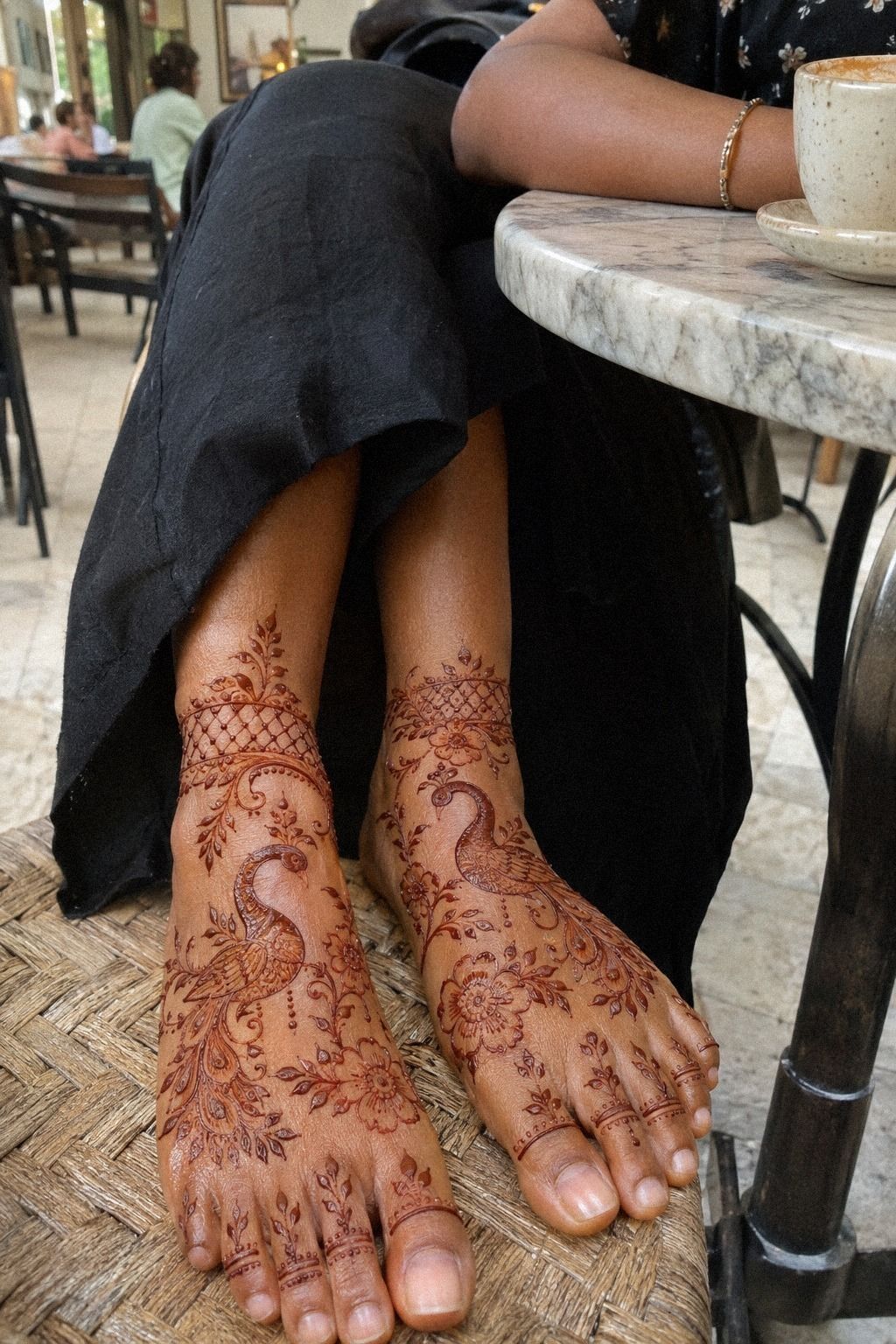
A peacock motif gives your design a symbolic center with a naturally expressive shape.
Keep the body open, then use curved feathers and a few dots to suggest movement. This creates a personal peacock detail without covering the entire hand.
If you are short on time, place the peacock on the backhand or near the wrist rather than building a complete palm design. Leave the tail spacious so each curve can dry cleanly.
Quick Choices by Time
If you’ve got 30 minutes for application, choose fingers, one wrist vine, or a single ankle motif. A quick finger trail gives you a polished result without committing to a long drying routine.
With about 60 minutes, you can build a backhand paisley, small mandala, or floral wrist band. These options are often worth the cost when you want more presence without a full palm.
With 90 minutes or more, consider a connected hand design with one large paisley and several leaves. You’ll still need 1 to 2 hours for the paste to dry, so plan the full evening rather than just the drawing time.
How to Keep the Paste on the Skin
Let the paste dry naturally and avoid pressing your hands together. A lemon-sugar seal can help the paste stay in place, but use only a light amount so the surface doesn’t become sticky or soft.
The color often deepens on the second day. Don’t scrape the paste off early just because the stain looks pale at first.
When the paste has dried, remove it gently according to your mehndi artist’s advice. Avoid unnecessary friction, harsh washing, and heavy lotion during the first part of the stain’s development.
What to Buy on a Budget
For a DIY design, choose a fresh natural cone, a paper test sheet, cotton swabs, and a small amount of lemon-sugar mixture. A fresh henna cone matters more than a large collection of tools.
If you’re hiring an artist, ask about the design size, placement, paste ingredients, and aftercare before agreeing to the price. A clear quote helps you compare value instead of guessing.
Avoid formulas with unclear ingredients. Your skin deserves a trusted natural paste, especially when the design will remain visible for 1 to 3 weeks.
Before Your Mehndi Night
Clean and dry the skin before application, and skip lotion or oil beforehand. Wear loose clothing that won’t brush against your wet mehndi paste.
Keep your phone, water, snacks, and anything else you need within reach. You won’t want to stand up while the design is drying.
Choose your occasion and placement together. An ornate bridal motif may suit a wedding, while a minimal Eid design or a crisp Diwali vine may be easier for a shorter evening.
The Honest Mehndi Choices I’d Make
I’ve learned that a quick mehndi night isn’t about drawing the smallest possible design. It’s about choosing a pattern whose structure matches the time you’ve got.
If you’ve got one hour, a finger trail or wrist vine is smarter than a full bridal palm. If you’ve got two hours, you can build a mandala or peacock with room for the paste to set.
I’d also choose the cone before choosing the motif. A fresh cone with a steady opening can make a simple design look polished, while a clogged cone can make an intricate reference feel impossible.
Your tools don’t need to be elaborate. You need clean paste, a stable support, a cotton tip, and patience for the drying period. That basic kit is usually the best value.
The biggest mistake I made was adding detail because the first palm looked too empty. It wasn’t empty.
It had space, and that space made the paisley readable. Now I ask myself one question: will this extra flower improve the pattern, or am I adding it because I’m nervous?
Usually, the answer tells me to stop. That decision creates a more confident composition and keeps the cost under control.
For a last-minute event, I’d prioritize the back of the hand, fingers, or wrist over both full palms. Those placements can look empowering with fewer motifs, and you can keep your hands more functional while the paste dries.
Your occasion matters too. A wedding, sangeet, Eid, or Diwali gathering may call for ornate details, while a casual evening may suit a crisp floral trail.
Choose a pattern that feels meaningful to you, then adjust the size and spacing instead of forcing a style that doesn’t match your hands. That’s where the design starts to feel personal.
Quick Mehndi Timing and Cost Guide
The final stain usually begins lighter, deepens on the second day, and fades gradually over 1 to 3 weeks. Your skin, care routine, paste, and placement all affect the result.
What People Always Want to Know
How long does Indo Arabic mehndi paste take to dry?
Most mehndi paste needs about 1 to 2 hours to dry on the skin, depending on the thickness of your design and your surroundings. Keep your hands still, avoid clothing friction, and use a gentle lemon-sugar seal only if your mehndi artist recommends it.
How long does an Indo Arabic mehndi stain last?
An Indo Arabic mehndi stain usually lasts about 1 to 3 weeks. Your color often deepens on the second day, then gradually fades as your skin naturally sheds. Keep your reddish-brown stain away from harsh rubbing when you can.
Which placement works best for a quick mehndi night?
Fingers, wrists, backhands, and ankles work well when your time is limited because open motifs can dry more easily. Your palm can still work, but choose one central open paisley design rather than a dense pattern.
Can I apply mehndi myself on a budget?
Yes, you can create a polished design yourself with a natural henna cone, a paper test sheet, and a cotton tip for cleanup. Start with a simple vine or finger pattern, because your control will matter more than the number of motifs.
Where should I buy a mehndi cone?
Choose a cone from a trusted mehndi artist or a reputable natural henna supplier, and check the ingredients before applying it. Avoid formulas with unclear contents. A fresh natural henna cone should flow smoothly and give you enough control for crisp curves.
What color will my mehndi be?
Your stain will usually begin as a lighter orange-brown and deepen on the second day into a richer reddish-brown tone. The final result depends on your skin and care. Your deepening henna color is normal, so don’t scrape the paste and judge the result too soon.
Where I’d Start First
If I had to pick one, I’d start with the finger design. It dries faster, reads clearly, and still looks polished when your evening is rushed.
For another compact option, save these simple Indo Arabic mehndi designs and keep one fresh cone ready for the next celebration. If you want slightly more coverage, these easy front-hand designs are a practical next step.
Trust the pause! Let the paste dry, let the color deepen, and choose the design that still feels like you.