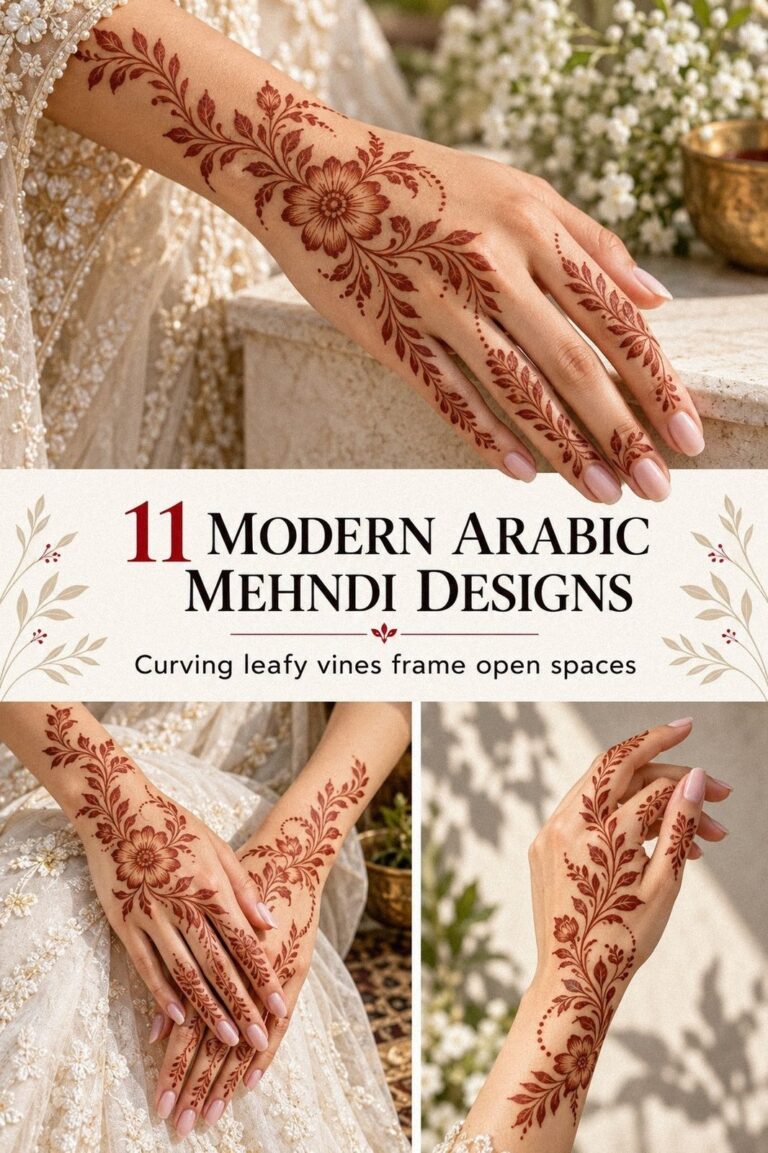
You want Arabic new bridal mehndi designs that feel intricate without becoming crowded. I’ve learned that the most striking patterns begin with one flowing vine, then grow through deliberate spacing, meaningful motifs, and patient drying time. Your cone matters, but your order matters more. Start there!
- Start With Simple Arabic Bridal Mehndi Linework
- Which Arabic Bridal Motif Should Lead?
- Place Arabic Mehndi Across Both Hands
Editor’s note: Arabic bridal mehndi looks most symbolic when the pattern has room to move. Choose one meaningful motif, protect the open gaps, and let the reddish-brown stain become part of the celebration.
- Start With Simple Arabic Bridal Mehndi Linework
- Which Arabic Bridal Motif Should Lead?
- Place Arabic Mehndi Across Both Hands
- Keep Arabic Bridal Details Delicate
- Finger Patterns: Separate Panels or One Flowing Route?
- Choose Bold Arabic Bridal Florals
- Negative Space or Full Coverage?
- Add Symbolic Arabic Bridal Elements
- Match Arabic Mehndi With Wrist Placement
- Before the Cone: Refine Every Major Line
- Reveal Your Finished Arabic Bridal Mehndi
1Start With Simple Arabic Bridal Mehndi Linework

Begin with a slim vine across the back of your hand, then let two or three leaves branch toward your index finger. This natural paste should leave a crisp reddish-brown line after it dries. Keep your first curve graceful and open.
If you’re drawing on your own, sketch the route lightly with a washable cosmetic pencil before touching the cone. That preliminary route gives your pencil layout a clear direction without locking you into every detail.
The Open Vine Rule keeps your pattern expressive without making it heavy. You don’t need every inch covered, especially if your sangeet outfit already has ornate embroidery. I’d skip a solid palm block because it can hide the delicate movement that makes Arabic mehndi feel elegant.
Your eye should travel from wrist to fingertip. That movement is what gives a vine its Arabic trail and polished quality.
Use a narrow cone tip and test the paste on paper first. You’ll notice immediately if the line breaks, spreads, or feels gritty. A smooth line gives you more control around the fingers, where even a tiny wobble can change the direction of the design.
For restrained references, compare your draft with these simple new bridal mehndi designs and easy new bridal mehndi designs. You’ll see how a few leaves can look more stylish than a crowded collection of unrelated shapes.
2Which Arabic Bridal Motif Should Lead?

Choose your main motif before you begin filling both hands. A paisley, peacock, floral spray, or open jaal can anchor your design, but you shouldn’t use all four at the same size. I like one large paisley on each palm, with smaller leaves and petals repeating around it.
The Motif Ladder gives your pattern a clear hierarchy. Your largest shape comes first, your medium florals support it, and your smallest dots finish the edges. This keeps the result vibrant and meaningful instead of visually noisy.
If you’re planning a modern sangeet look, a sharp paisley with two soft flowers can feel more expressive than a traditional full-hand fill. The contrast between a strong center and dainty edges makes the pattern easier to read.
Look at both palms before you choose. Skin tones can show reddish-brown paste differently, so judge the scale in natural light. Your design should remain personal and expressive without depending on extreme contrast.
I’d choose a motif you can explain in one sentence. “A peacock for joy” feels meaningful. “A peacock, three mandalas, vines, initials, and eight flowers because they all looked nice” usually becomes cluttered.
Browse the latest new bridal mehndi designs and Arabic bridal mehndi designs for ideas you can simplify before making a final choice.
3Place Arabic Mehndi Across Both Hands

Plan both hands together before the cone touches your skin. Decide whether the palms will mirror each other, share one route, or carry related motifs with different details.
A mirrored design can feel iconic and ceremonial. A related pair often feels more expressive because each hand has room for a slightly different palm arrangement.
Keep one visual connection between both sides. It might be a repeated paisley, matching wrist curve, or shared row of dots. That link gives the full design a polished rhythm.
Don’t force perfect symmetry if it makes the paste application uncomfortable. A little variation can look daring, especially when the main motifs remain balanced.
Start with the palm route, then move toward the fingers and wrist. That order protects your hand-to-hand balance and keeps the most important shapes easy to recognize.
4Keep Arabic Bridal Details Delicate

Use delicate details where they’ll be seen clearly, especially around the fingers and the center of the palm. Small dots, fine petals, and short scalloped edges can make your pattern feel refined, but they need enough space to remain readable after the paste dries.
The Fine Detail Limit is simple: if two lines nearly touch on paper, they’ll probably merge on your skin. Leave a narrow gap around each floral detail, then check the design from arm’s length.
I learned this after drawing a tiny chain of petals too close together. It looked graceful for the first few minutes, then the wet paste softened the gaps and turned the border into one dark ribbon.
You don’t need to repeat that mistake. Use fewer details and give each one a clear edge. A clean empty strip can be more elegant than another row of dots.
For a feminine finish, let your fingertips stay partly open. A completely covered fingertip can look dramatic, while a patterned fingertip with one clean strip feels more playful and understated.
Study simple Arabic mehndi designs before choosing your final density. Ask yourself whether each mark will still be recognizable once the paste settles.
5Finger Patterns: Separate Panels or One Flowing Route?
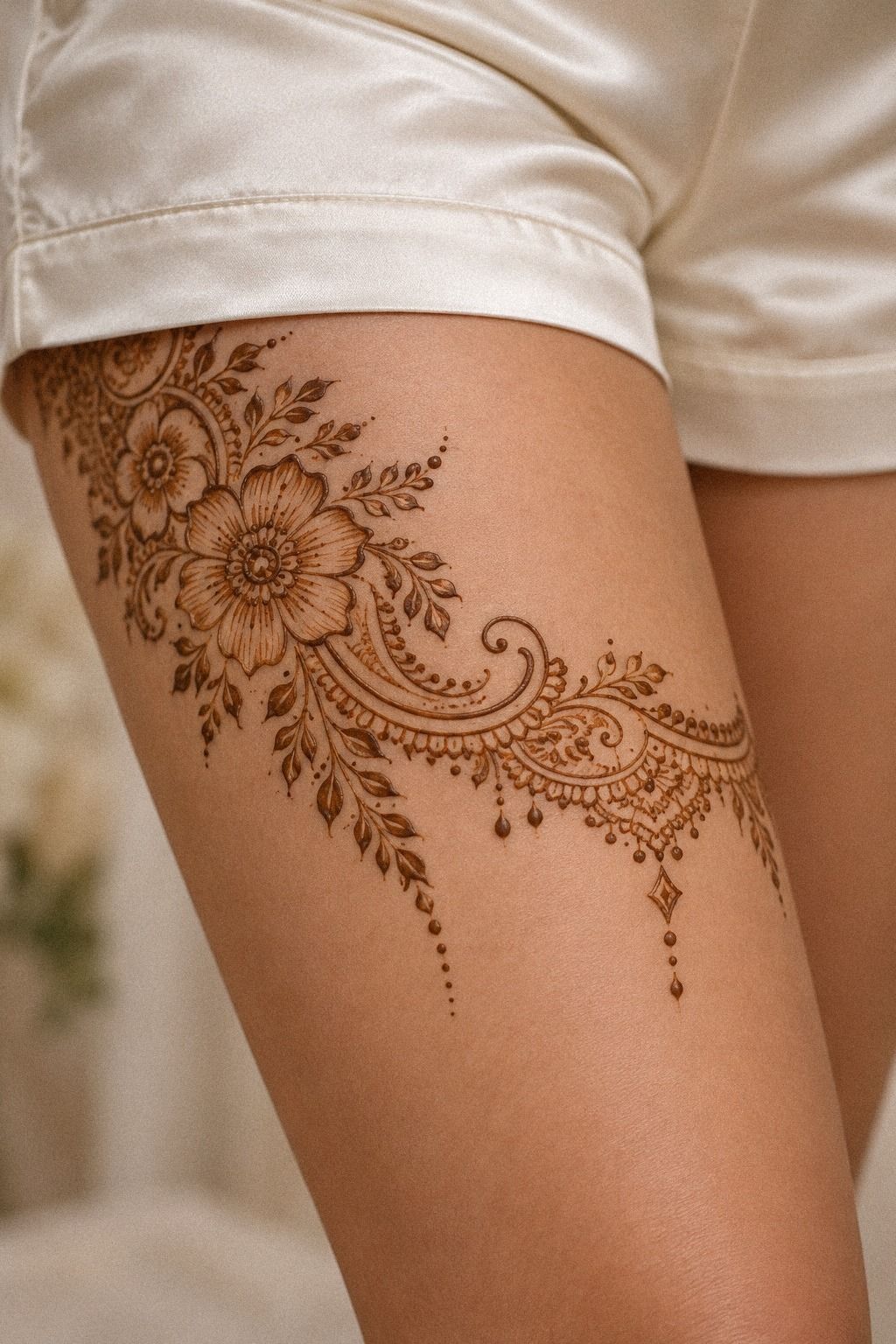
Treat your fingers as separate little panels rather than one continuous strip. Each finger can carry a leaf, a chain of dots, a scallop, or a narrow paisley detail.
Repeating the exact same design on every finger can look rigid. I prefer an alternating finger pattern: perhaps dots on the index and ring fingers, then leaves on the middle and little fingers.
Keep the strongest finger detail near the central motif. That creates a visual path without making every fingertip compete for attention.
A narrow blank strip between two patterns gives your hands a sleek finish. It also makes the final stain easier to read during movement.
If your fingers are short, use vertical movement rather than broad horizontal bands. A slim vine can make the arrangement feel graceful without requiring dense coverage.
You can find more finger-focused ideas among these easy new bridal mehndi designs. Save the examples where the fingers support the palm instead of distracting from it.

6Choose Bold Arabic Bridal Florals

Choose one bold floral shape to carry the design, then let smaller leaves guide the eye toward it.
A large flower can feel powerful, but it should not compete with every other mark. Give it a clear place near the palm center, wrist, or outer hand.
For a romantic result, pair one open flower with a few pointed leaves. For an edgy result, use sharper petals and a stronger outline.
The best floral anchor is the one that remains recognizable after the paste dries and the stain begins to deepen.
A daring flower can work beautifully for a sangeet, especially when the surrounding details stay minimal. Choose it boldly!
7Negative Space or Full Coverage?

Leave negative space intentionally, especially around a central mandala or large paisley. Open skin is not an unfinished part of the design; it is what gives the surrounding pattern room to breathe.
The negative-space route should be planned before you add details. Mark the areas you want to preserve, then build the motifs around them.
A minimal palm can look incredibly elegant when the central shape has a clear outline. A denser palm can feel more ornate, but it requires stronger hierarchy and cleaner spacing.
Try this test: hold your hand at arm’s length and soften your attention. If the main motif disappears into a dark mass, remove one border or two filler details.
Your sangeet setting will show the hands from several feet away. Strong open spaces help the pattern remain recognizable while you dance, greet guests, or hold fabric.
For more restrained references, browse simple new bridal mehndi designs before deciding how much coverage feels right.
8Add Symbolic Arabic Bridal Elements

Add symbols only after your main structure is finished. A peacock can suggest joy, a paisley can suggest growth, and a mandala can give the palm a sacred center.
Choose one or two symbols that connect to your celebration. Too many meanings can make the design feel scattered, even when every individual detail is beautiful.
A small initial, date, or family sign can be meaningful when it fits naturally into the surrounding pattern. Keep it readable rather than hiding it beneath layers of paste.
The strongest symbolic detail should support the main design, not demand attention from every direction.
If your motif has a personal story, let that story guide the placement. The result can feel sacred, empowering, and unmistakably yours.
9Match Arabic Mehndi With Wrist Placement

Match the wrist placement to the way you’ll move during your sangeet. If you’ll be dancing, lifting your dupatta, or holding a bouquet, an outer-wrist trail will show more often than a design hidden beneath the palm.
Your lemon-sugar sealant can help keep dried paste in place while you wait. Ask your mehndi artist whether the mixture suits the fresh paste and your planned drying time.
The Wrist Direction Rule is about movement. A vine pointing toward your fingers feels light and flowing, while a vine pointing toward the forearm creates a stronger, more dramatic line.
Keep the wrist border narrow if you want an understated look. A thicker band can feel fierce, but it may interrupt the open Arabic movement that makes the design distinctive.
I’d choose one curved border and let the rest of the wrist remain visible. That simple decision can make the final arrangement feel more polished and personal.
Paste needs time to dry without friction. Don’t wrap your hand tightly or press it against patterned fabric while the design is fresh. Your drying advice is worth following, especially when both hands are being decorated close together.
For another placement reference, review simple latest new bridal mehndi designs before finalizing the wrist trail.
10Before the Cone: Refine Every Major Line
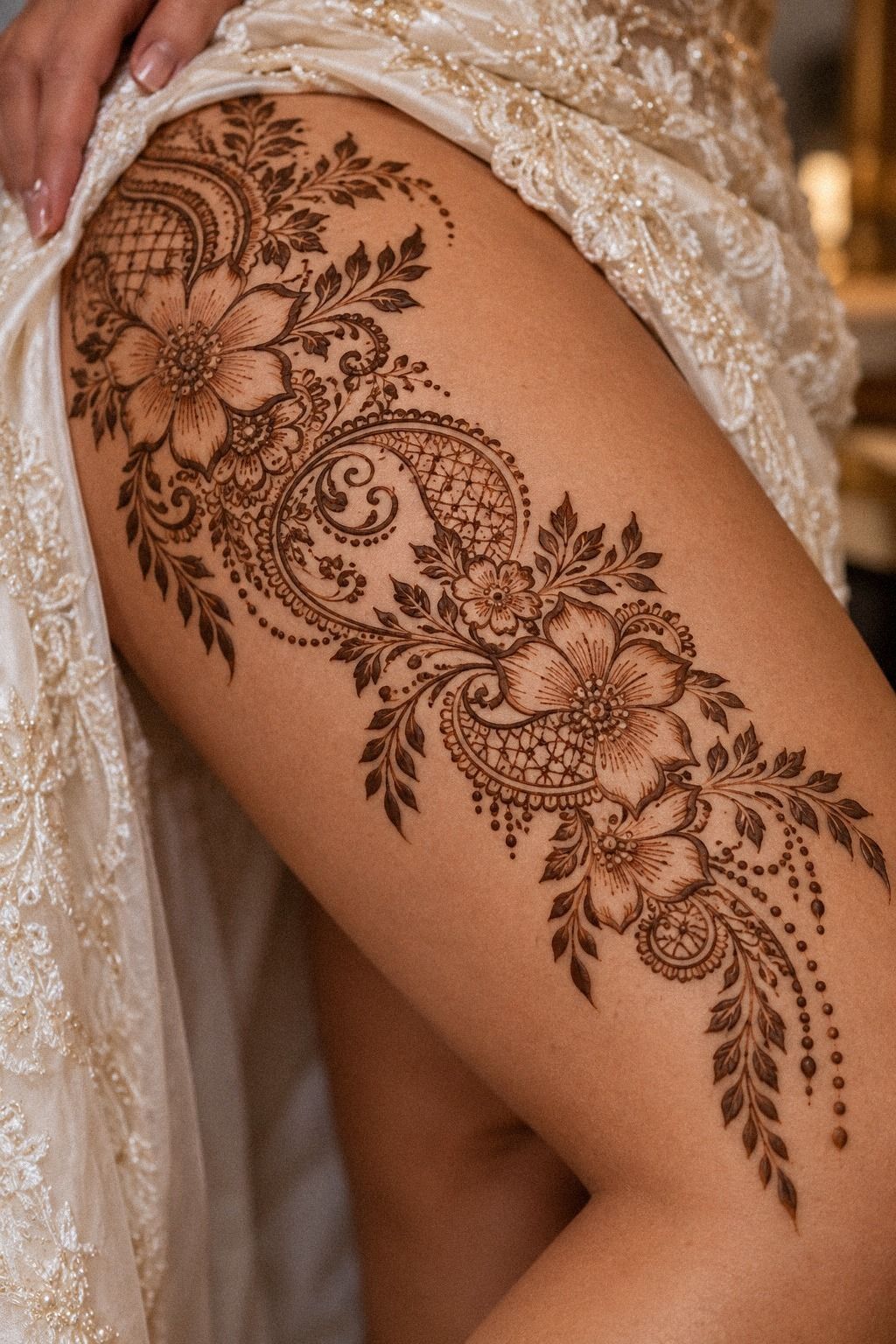
Refine every major line on paper before applying paste to your skin. You can trace a pencil layout first, check the curve from different directions, and remove any leaf that feels unnecessary.
This small pause gives your design a sharper direction before the wet paste makes changes harder. It also saves time, which can improve the value of an application.
The Three-Check Method is practical. First, check the route from wrist to fingertip.
Second, check the balance between both hands. Third, check the spaces around your largest motifs.
If one section feels heavy, you’ll usually fix it by removing a detail rather than adding another one. Editing is often the most empowering part of the process.
Use a clean cone with a smooth flow and keep a tissue nearby. Your line should arrive in one controlled movement whenever possible.
If you stop halfway through a petal, the join can look thick, so practice the motion on paper before you begin the final pattern. A smooth cone flow improves both precision and value.
Honestly, I’d rather see a slightly minimal design with confident lines than an ornate design full of hesitant marks. Your application should feel personal, polished, and calm.
For another comparison point, review latest new bridal mehndi designs before you finalize your sketch.
11Reveal Your Finished Arabic Bridal Mehndi
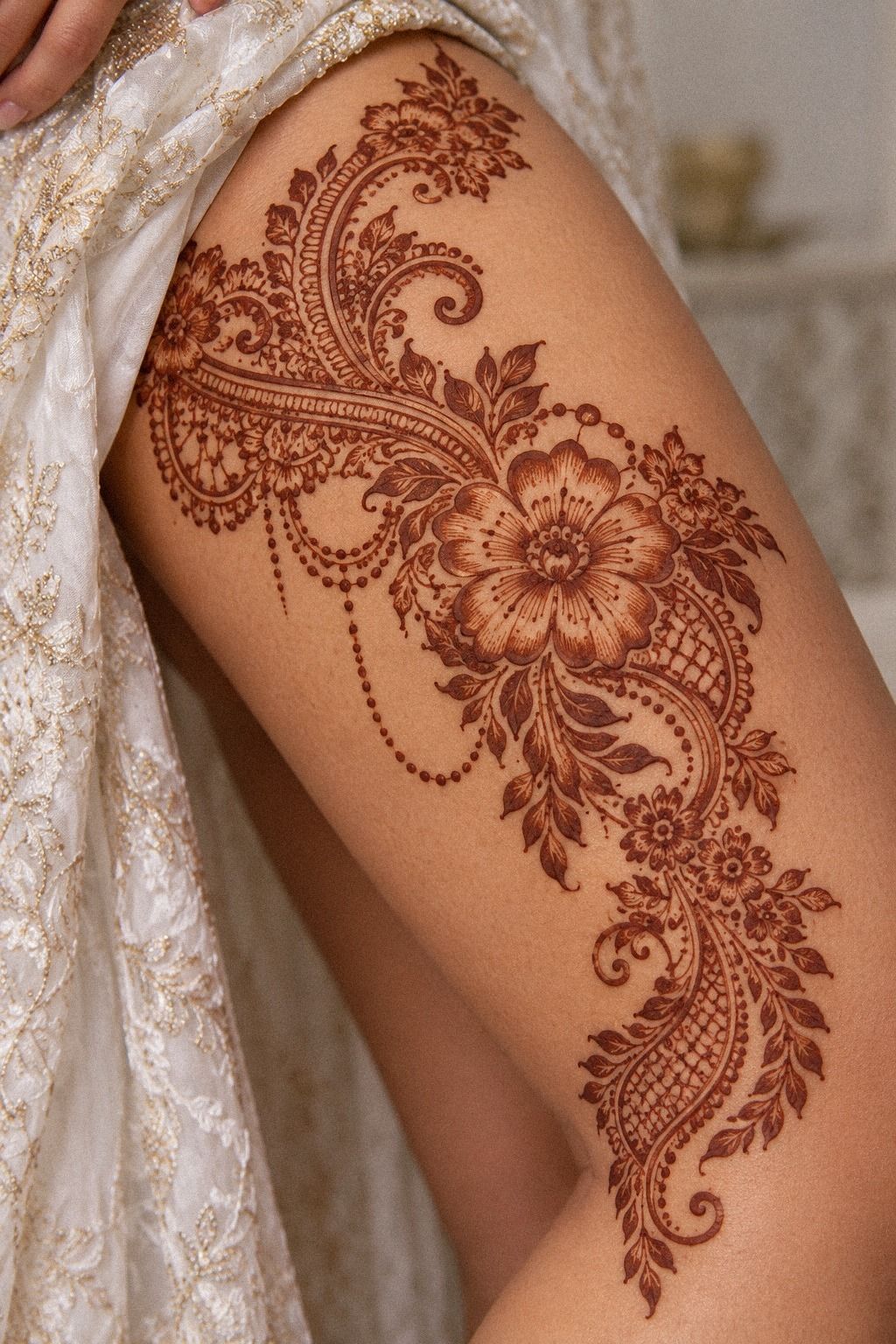
Reveal your finished mehndi after the paste has dried and the color begins to develop. Keep your hands relaxed, let the full route from fingertips to wrist remain visible, and avoid rubbing the design against fabric.
Your natural reddish-brown stain will look clearest after the paste flakes away. A natural stain color often appears lighter at first and deepens during the second day.
Notice how the design behaves when your hands rest together, separate, bend, and move. This simple check can show whether the finger density and wrist direction work as planned.
Your pose should look relaxed. Curling your fingers too tightly can hide the pattern, while spreading them rigidly can make the arrangement feel forced.
Try a gentle bend at the knuckles and let your wrists rest naturally. A small piece of sangeet fabric can add context without covering the design.
Don’t judge only the wet paste. The color often deepens on the second day, so wait before deciding whether the final result feels right.
If you’re saving references for future occasions, organize them by palm, wrist, finger, and feet so you can find the placement you want quickly. The simple new bridal mehndi designs page is useful for building that reference folder.
A Quick Cost Guide for Bridal Mehndi
The price of Arabic new bridal mehndi depends on coverage, location, travel, timing, and the artist’s experience. Ask for a written quote before booking so you can compare value rather than choosing from a vague starting price.
These are broad planning figures, not a universal price list. The best budget choice is the one that gives you clean spacing, fresh paste, and enough time before the sangeet.
Ask whether the quote includes both sides of the hands, the cone application, drying guidance, and travel. Those coverage details can change the final cost.
A lower price may be worth it for a simple design, while a detailed bridal arrangement deserves an artist whose work shows consistent finished stains. That is where practical value matters most.
For another planning reference, compare the coverage shown in easy new bridal mehndi designs before you request a quote.
How the Color Develops
Fresh paste usually dries into a raised, textured layer before it begins to flake away. Keep the raised paste in place according to your artist’s instructions, often around one to two hours or longer for deeper color.
The color may look lighter at first and deepen on the second day. This gradual change is one of the most expressive parts of the mehndi process.
Avoid scraping, soaking, or judging the result too quickly. A second-day stain often looks warmer and richer than the first visible color.
The final mark commonly lasts about one to three weeks, depending on washing, friction, skin type, and placement. Palms and fingertips may fade sooner because they receive more contact.
You can protect the result by washing gently and avoiding unnecessary pool exposure. Your artist can recommend whether a light oil is suitable after the dried paste has released.
The timing and color are also visible in many simple bridal mehndi designs, especially when the references show finished stains rather than only fresh paste.
What to Pack for the Sangeet
Bring loose clothing that will not drag across the fresh design. Sleeves and bracelets should be easy to move away from your wrists.
Pack tissues, a soft scarf, and a small container for snacks or drinks that you can manage without pressing your hands together. The goal is to protect the dried mehndi surface while keeping the evening comfortable.
If your application finishes close to the event, plan how you’ll fasten jewelry without touching the palms. Ask someone to help with bangles, clasps, or dupatta adjustments.
Keep your reference designs available if you want to compare the finished placement with the original plan. You may notice that the final Arabic arrangement looks even more personal than the sketch.
Most importantly, leave a little extra time. Rushing the drying stage can reduce the value of an otherwise careful application. Don’t rush it!
Save one or two Arabic bridal mehndi designs on your phone so your artist can quickly understand the direction you want.
The One-Page Placement Check
Before the appointment, write down the coverage you want: palms, backs of hands, fingers, wrists, feet, or a combination. Clear instructions make it easier to receive an accurate quote.
Mark which motifs matter most. You might choose a peacock, a paisley, a mandala, or a small family symbol as your priority motif.
Decide whether both hands should match exactly or simply belong together. A related pair often feels more natural and less mechanical.
Finally, show the artist how you usually hold your hands during the sangeet. Movement and jewelry both affect which wrist placement will provide the best value.
What I’ve Learned From Designing Bridal Mehndi
I used to think the most impressive bridal mehndi had to cover every visible inch of skin. I’ve changed my mind. The designs I remember are the ones with a clear route, a few meaningful symbols, and enough open space for the reddish-brown stain to breathe.
Your hand shouldn’t look like a competition between motifs. A clear Arabic composition usually feels more timeless than maximum coverage.
The strongest Arabic patterns begin with restraint. A flowing vine gives you direction. A paisley gives you weight.
A peacock or mandala gives you a point of interest.
After that, your job is editing. If you’re tempted to add another flower, ask what it contributes to the story and whether it improves the balance.
Timing affects the emotional experience, too. When you’re sitting with wet paste for one to two hours, an overcomplicated design can feel difficult to protect.
A cleaner pattern gives you more freedom to keep your hands steady, especially before a long sangeet evening. That matters more than copying the densest reference design.
The second-day color deserves patience. You may see a lighter stain at first, then a deeper tone as the color develops. Don’t scrape, scrub, or judge too quickly.
Your final result will last roughly one to three weeks, depending on wear and washing, so enjoy the shift from raised paste to soft stain. What a difference!
Most of all, choose a pattern that feels like yours. You can borrow a jaal from one reference, a paisley from another, and a wrist trail from a third, but your final arrangement should have one clear point of view.
That’s why I’d start with the Arabic bridal mehndi designs and then simplify until the pattern feels personal, elegant, and easy to wear.
The Questions Worth Answering First
How much do Arabic new bridal mehndi designs usually cost?
There isn’t one fixed price because coverage, location, occasion, and the mehndi artist’s experience all affect the quote. Ask for a price based on both hands, palms, feet, or a smaller design, and send a reference design before booking.
For your sangeet, clarify whether the quote includes cone application, drying guidance, and both sides of the hands. A simple pattern may offer better budget value, while detailed palms and feet require more time. A written bridal mehndi quote should make those details clear.
Are Arabic new bridal mehndi designs a good first application?
Yes, Arabic new bridal mehndi designs can be an excellent first choice because the flowing structure is easy to personalize. Your design can stay minimal on the fingers, become bold at the wrist, or grow into an ornate palm arrangement.
Start with one clear vine and a meaningful motif rather than requesting maximum coverage. You’ll have a more comfortable first mehndi application, and the finished stain will remain easier to read as it gradually fades.
How do I choose a mehndi artist?
Choose an artist whose portfolio shows clean cones, balanced spacing, and examples of finished stains rather than only fresh paste. You’ll want to see hands, palms, fingers, and wrists in natural light before you book.
Ask what paste they use, how long you should keep it on, and how they recommend protecting it. A clear answer is part of the service’s value, especially for a bridal appointment.
Is Arabic bridal mehndi comfortable to apply?
Arabic bridal mehndi is applied as mehndi paste on the skin. The main challenge is holding your hands still while the design is placed and the paste dries.
Keep your wrists supported, avoid touching fabric, and plan enough time before your event so you’re not rushing through the drying stage. A less crowded design can make the appointment feel easier.
How long do Arabic new bridal mehndi designs take to fade?
Arabic bridal mehndi usually remains visible for about one to three weeks, with the color changing as it wears. The stain may deepen on the second day before gradually becoming lighter through washing and daily movement.
You can help preserve the design by washing gently, keeping the skin moisturized, and avoiding unnecessary pool exposure. Fingers and palms may fade sooner because they receive more contact. Expect a one-to-three-week stain, not a permanent mark.
What’s the best placement for Arabic new bridal mehndi designs?
The best placement depends on how visible you want the pattern to be during your sangeet. The back of your hand and outer wrist remain easy to notice, while palms create a more traditional and intimate bridal effect.
For a delicate design, choose one flowing wrist trail with open fingers. For a more dramatic arrangement, connect both palms through matching paisleys, florals, or peacock details while keeping finger density varied.
Where I’d Start First
If I had to pick one step, I’d start with the open vine. It gives your design direction, leaves room for meaningful motifs, and won’t bury the natural reddish-brown stain under too much paste.
Sketch it first, keep the gaps deliberate, and let your sangeet pattern grow from there. A simple beginning can lead to an intricate, symbolic, and truly personal result!