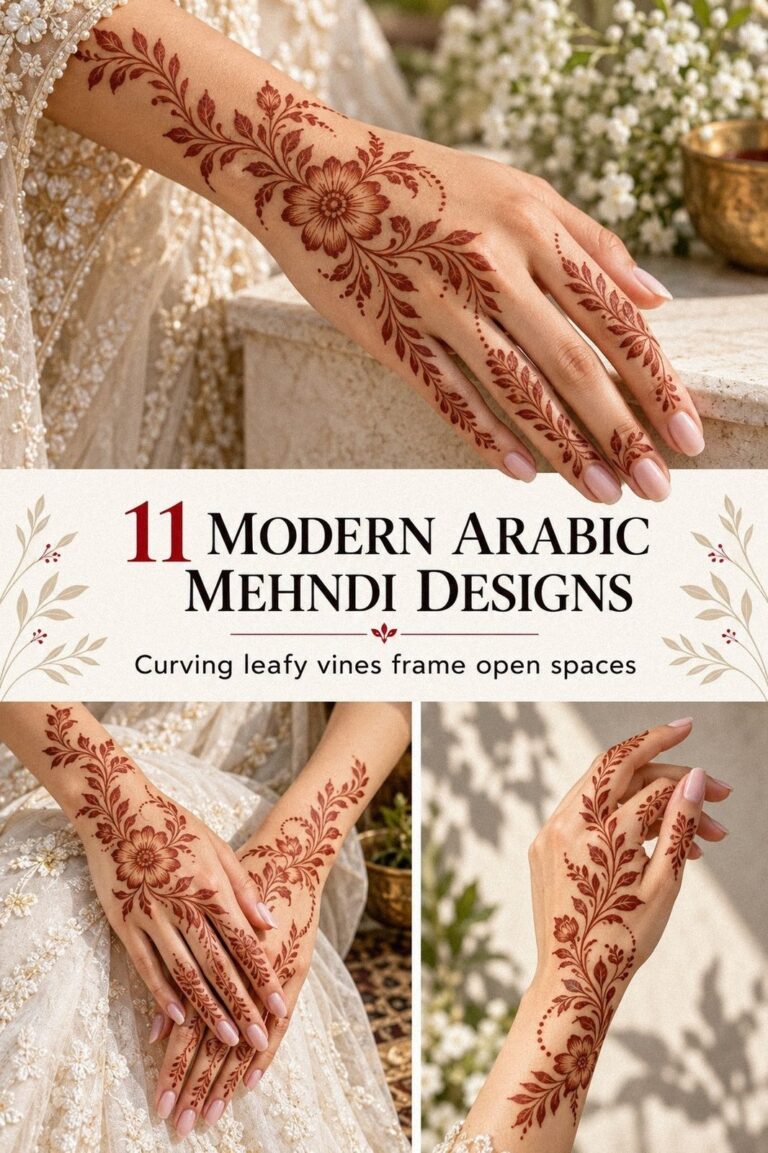
The freshest full hand mehndi designs often look richest on day two, not while the paste is wet. I learned that after rinsing too early and losing the deep reddish-brown stain I wanted. Now I protect the paste, let it dry for 1 to 2 hours, and judge the result later. That small change matters!
Before You Choose a Full-Hand Pattern
Your occasion should guide the density, placement, and mehndi paste color you choose. A wedding may call for an ornate pattern with peacocks and paisleys, while Eid, Diwali, or a family celebration might suit something more minimal.
Think about your budget, too. A full-hand application may cost more when it includes both palms, fingertips, wrists, or feet. Asking about the expected price before the cone touches your skin helps you decide whether the design suits your plans.
If you’re comparing styles, start with these latest stylish mehndi designs for front hand. They show how one strong motif can guide the rest of the pattern without making every space equally dense.
Your artist should also know whether you want a feminine, masculine, or completely personal result. The best design feels expressive on your hands, not simply popular in someone else’s gallery.
- Build an Intricate Floral Jaali Pattern
- Why Arabic Mehndi Still Feels So Expressive
- Let a Mandala Anchor the Palm
- Keep a Delicate Finger-to-Wrist Flow
- Choose Bridal Peacocks With One Clear Focal Point
- Choose Minimal Negative Space for a Sharp Result
- What Makes Moroccan Mehndi So Distinctive?
- Can Both Hands Share One Mehndi Story?
- Use Jewelry-Style Mehndi Without Overcrowding It
- Give a Symbolic Lotus Room to Open
- Add a Vibrant Glitter Accent Carefully
1Build an Intricate Floral Jaali Pattern

This floral jaali pattern covers the back of the hand with tiny flowers, curved vines, and fine openings between each motif. The effect is striking without looking crowded. If you like intricate designs, ask your mehndi artist to keep the center flowers slightly larger than the surrounding leaves.
The fingers continue the same rhythm with slim bands and small petals. Your hand will look more balanced if the wrist border echoes one detail from the palm, such as a scalloped edge or repeated dot cluster. I’d skip random finger motifs because they’d interrupt the graceful flow.
The strongest features include:
– Fine floral petals. – Open jaali spaces. – A rounded wrist border. – A darker second-day stain.
For a simpler version, browse these simple full hand mehndi designs. You’ll still get a meaningful floral center, but your hand won’t feel visually heavy.
Keep the paste on until it flakes away naturally. Lemon-sugar dabbing can help it stay attached, but don’t soak your hand immediately afterward. You’ll want the deepening color to develop gradually, especially around the fingertips where the stain often turns darkest.
2Why Arabic Mehndi Still Feels So Expressive
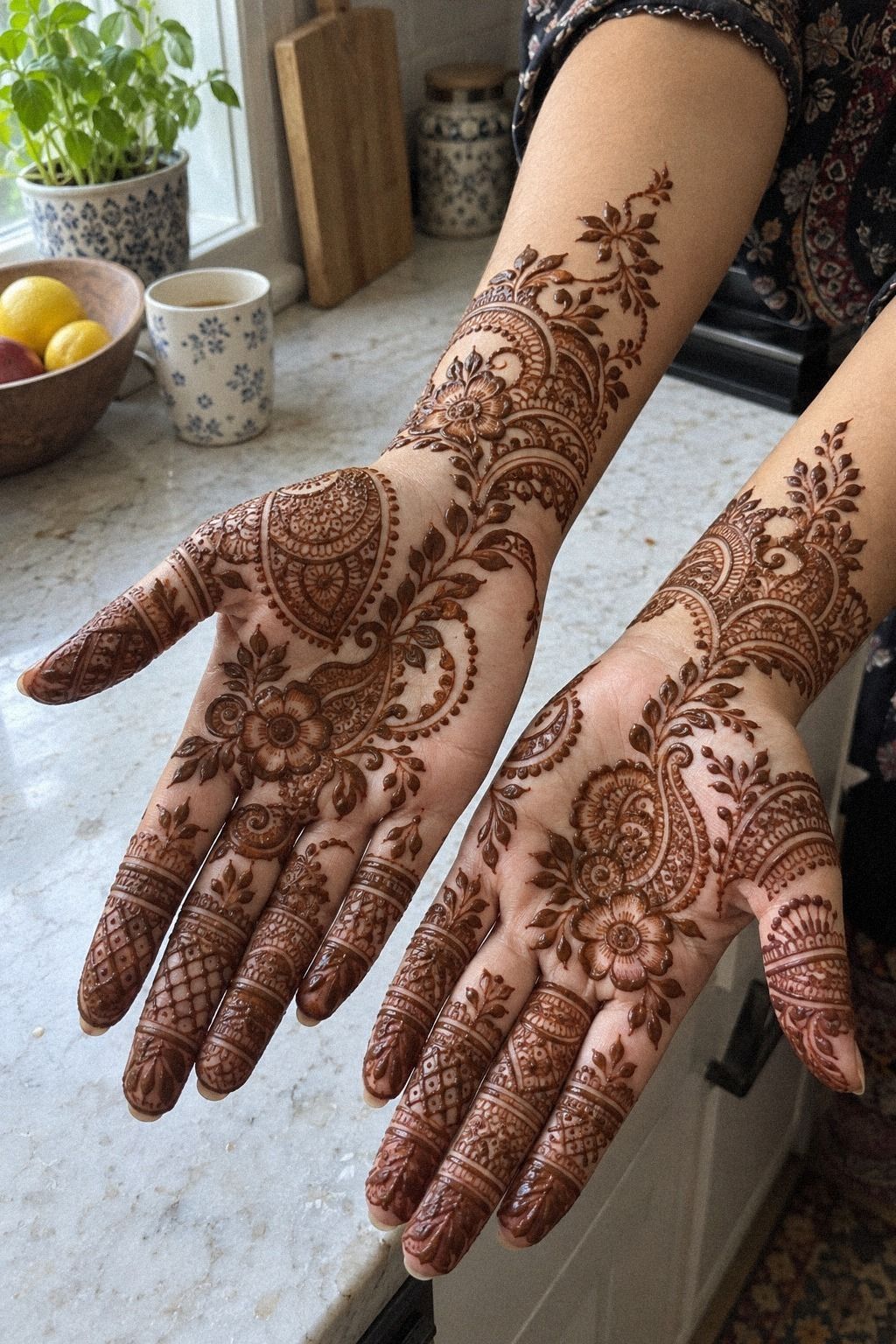
Arabic-inspired mehndi gives you bold, sweeping flowers across both hands, with more breathing space between the larger motifs. The style feels daring because the composition moves diagonally instead of filling every inch.
Ask for one dominant Arabic floral trail that begins near the wrist and travels toward the index or middle finger. Smaller leaves can support it, but they shouldn’t compete with the central movement.
I wouldn’t add dense filler simply because an open area looks unfinished. That negative space is part of the design’s identity. For more inspiration, compare it with these simple stylish mehndi designs for front hand.
3Let a Mandala Anchor the Palm

A mandala center gives your palm a clear focal point, then builds outward through rings of petals, dots, scallops, and geometric borders. This version is bold and powerful. Your eye lands on the circular center first, then follows the smaller details toward the wrist.
The best mandala designs don’t rely on one enormous flower. They use several crisp rings with small changes in texture.
I made the mistake of choosing a center that was too dense once, and the paste blurred into one dark patch. Leave narrow spaces between rings so the stain stays legible after it darkens.
This pattern usually includes:
– Layered petals. – Fine dot work around the palm. – A strong wrist band. – Short fingertip motifs.
For an easier application, show your mehndi artist these easy full hand mehndi designs and explain which parts you want simplified. You can keep the mandala while reducing the tiny filler marks around the fingers.
Don’t judge the pattern by the wet paste. The deeper color usually arrives on the second day, and a mandala’s contrast becomes much clearer then. If you’re impatient, compare the wet design with the stain after 24 hours so you can see how the color changes!
4Keep a Delicate Finger-to-Wrist Flow

This finger-to-wrist trail travels from the fingertips down to the wrist in a narrow, controlled path. It’s dainty, understated, and ideal if you want full-hand coverage without a solid block of paste.
The fingers carry slim trails, tiny paisleys, and separated dots. The palm stays partly open, which gives your hand a lighter visual rhythm when you move it. I’d keep the wrist finish simple here.
A thick border would compete with the delicate center.
Your mehndi artist can vary the finger details while keeping the same central flow. That makes the result feel personal rather than copied. You’ll also have an easier time protecting the paste because fewer raised areas are likely to rub against one another.
Notice these details:
– Fine paisley marks. – Slim floral trails. – Open palm spaces. – A narrow wrist frame.
If you’re drawn to this lighter approach, these simple stylish mehndi designs for front hand offer similar spacing. Choose a design with clear negative areas if you want the final stain to look delicate after a full day.
Delicate doesn’t mean weak. A crisp, well-spaced pattern can look more refined than a crowded one, especially when your fingers are moving.
5Choose Bridal Peacocks With One Clear Focal Point

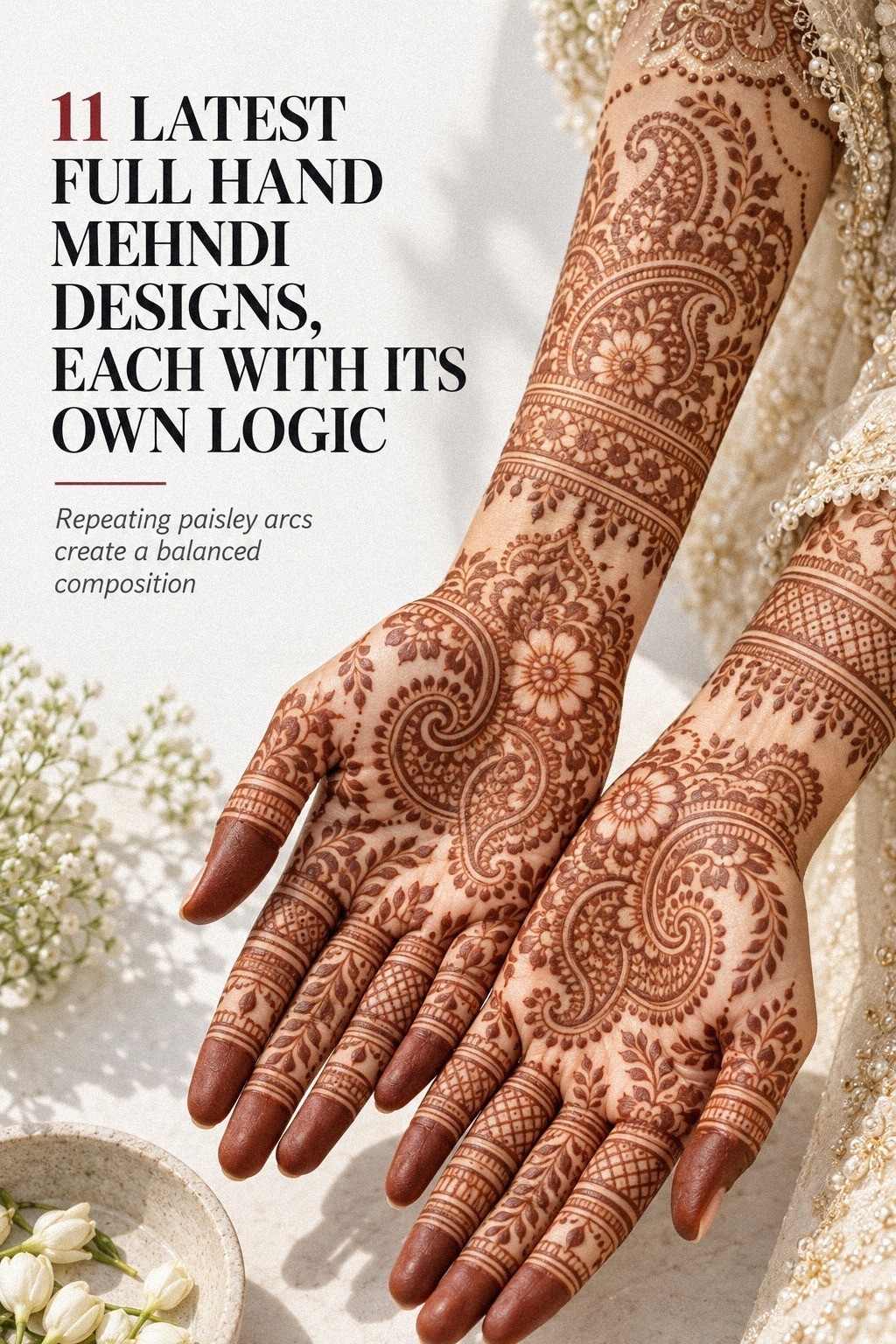
Peacocks bring a romantic, iconic quality to bridal mehndi. Their curved necks, patterned feathers, and expressive posture can make one hand feel symbolic without covering it in identical birds.
For your own version, ask for one larger bridal peacock instead of several tiny birds. Let the tail curve toward a paisley, lotus, or floral border so the composition has a clear direction.
The feathers can be intricate, but the surrounding filler doesn’t need to be. I’d leave small openings around the body and tail. Those gaps help the design remain sharp when the stain grows darker.
This approach works beautifully for a wedding, sangeet, or engagement celebration. If you want fewer details, these latest stylish mehndi designs for front hand can help you compare simpler focal-point patterns.
6Choose Minimal Negative Space for a Sharp Result

Minimal negative space makes the pattern feel sharp because the bare skin becomes part of the composition. This design moves from the forearm into the hand and leaves broad open areas between its geometric shapes. The result is edgy without looking unfinished.
The key is restraint. Use one central motif, two or three supporting bands, and enough uncovered skin for the edges to breathe.
I’d avoid adding filler dots everywhere. They might seem harmless while the paste is wet, but they can make the design lose its clean structure after the stain deepens.
Build the pattern with:
– Open geometric panels. – Crisp diagonal bands. – Small floral accents. – A strong forearm-to-hand connection.
You can adapt this look through these simple mehndi designs front hand easy if you want fewer details. Your version doesn’t need to copy the whole forearm placement. The same negative-space idea works across a palm, wrist, or two fingers.
But don’t confuse minimal with unfinished. Every empty area should support a nearby shape, and your mehndi artist should plan the spacing before applying the paste. The final result can feel sleek, expressive, and surprisingly dramatic without dense coverage!
7What Makes Moroccan Mehndi So Distinctive?

Moroccan-inspired mehndi uses graphic borders, diamonds, angular petals, and repeating bands instead of relying only on soft floral curves. This approach feels raw and gritty beside more traditional patterns, which is precisely why it stands out.
Your fingers can carry small geometric ladders, while the back of the hand holds one larger central shape. Keep the wrist border slightly wider than the finger bands so the composition has a firm ending.
I’d skip mixing too many rounded flowers into this version because the contrast would weaken its expressive character. A few curved corners can soften the pattern without changing its graphic identity.
Expect details such as:
– Angular diamond shapes. – Repeated border bands. – Clear finger divisions. – Small geometric wrist marks.
If you want a more approachable starting point, compare this with simple latest simple mehndi designs. You’ll find ways to reduce the number of bands while keeping the recognizable Moroccan structure.
8Can Both Hands Share One Mehndi Story?

Matching both hands creates a timeless, classic effect, especially when the palms share a central motif and the backs use related borders. Your hands look connected without needing identical drawings.
Ask your mehndi artist to mirror the major shapes first, then vary the smaller fillers. Completely identical hands can look mechanical, while loosely related patterns feel more personal. I’d use the same flower or paisley on both palms and let the fingers carry different small marks.
A coordinated pair may use:
– Mirrored palm compositions. – Related floral borders. – Alternating fingertip bands. – Matching wrist endings.
For a softer pair, browse these simple full hand mehndi designs and choose one design for the left hand and a simplified version for the right. You’ll get harmony without spending as long on every tiny detail.
The practical side matters, too. You’ll need help with cups, phones, and door handles while the paste dries. Plan for 1 to 2 hours of drying time, and don’t schedule a rushed errand immediately afterward.
Your stain will be stronger if the paste stays undisturbed. If both hands are covered, prepare snacks, water, and anything else you’ll need before the cone is opened.
9Use Jewelry-Style Mehndi Without Overcrowding It

Jewelry-style mehndi creates the impression of rings, cuffs, chains, and delicate hand ornaments through connected motifs. The result can feel elegant and polished while still keeping the skin visible.
Ask for one main jewelry-style chain across the back of the hand, then connect it to a finger ring or wrist cuff. Repeating dots and fine petals can suggest tiny charms without making every section equally dense.
I’d avoid adding several unrelated ornaments. One connected idea usually looks more graceful than a collection of separate bands, especially when the stain becomes darker on the second day.
The most effective details include:
– Linked chain motifs. – Ring-like finger patterns. – Fine wrist cuffs. – Small hanging petals.
For a lighter version, browse these simple full hand mehndi designs and choose one ornament as the main focus. That keeps the application manageable while preserving the stylish jewelry effect.
10Give a Symbolic Lotus Room to Open

A symbolic lotus gives this design a meaningful center, with layered petals opening across the palm and smaller motifs traveling toward the fingers. The result is graceful and slightly haunting once the color deepens.
Your lotus can represent renewal, devotion, family, or simply a motif you’ve always liked. Ask for petals with visible spacing rather than one dark cluster. I’d keep the surrounding vines flowing in the same direction so the design appears to open naturally across your palm.
Build around:
– Layered lotus petals. – Curved leaf trails. – Small dot clusters. – A narrow wrist border.
For a more accessible version, look through these simple full hand mehndi designs and ask for larger, clearer motifs. Mehndi is temporary paste that fades in about 1 to 3 weeks, so you can experiment with a meaningful idea without a permanent decision.
Would you rather have a motif that carries a story or one chosen only for its shape? If meaning matters to you, write down the feeling you want before the application. Your mehndi artist can then build the surrounding pattern around that idea.
A sacred lotus doesn’t need excessive detail to feel powerful. Give it space, and the eye will notice the petals before the smaller marks.
11Add a Vibrant Glitter Accent Carefully

Glitter accents can make a full-hand design feel vibrant and playful, especially when placed near the feet and ankles.
Ask your mehndi artist to use a small glitter accent over fully dried paste or beside the main motif. A touch of shimmer can highlight a paisley, lotus, or fingertip band without hiding the stain beneath it.
I’d keep glitter away from areas that rub constantly against footwear or clothing. The accent should support the mehndi rather than become the only detail anyone notices.
This approach can suit weddings, sangeet celebrations, Eid, or Diwali. If you want a more understated result, choose one glitter color that echoes the warmth of the developing stain.
How to Plan the Paste Time
The drying stage affects both the comfort of the application and the final stain depth. Keep your hands supported, avoid rubbing the paste against fabric, and arrange anything you’ll need before the cone is used.
Most designs need about 1 to 2 hours to dry. Dense bridal patterns or designs that extend toward the feet may require more patience. If you’re paying by the hour, include drying and application time in your budget conversation so the final cost doesn’t surprise you.
For a shorter application, these easy latest simple mehndi designs can help you choose fewer details without losing the main motif. That can be a smart value choice when you want a stylish result within a limited budget.
If you’re doing the design at home, place your cone, tissues, lemon-sugar mixture, and aftercare oil within reach. You won’t want to search through drawers with wet paste on your fingers.
What Should a Full-Hand Mehndi Application Cost?
A full-hand mehndi application commonly costs around $100 to $300 in the United States, depending on coverage, occasion, artist, and region. Small boutique minimums may be about $50 to $100, while hourly rates can sit near $100 to $250.
The cost is worth it when the artist understands spacing, uses fresh paste, and can create the style you actually want. Ask whether both palms, fingertips, wrists, or feet change the quote. Those details can make a major difference in the final value.
These are general US ranges, not fixed prices. A simpler design may be more budget-friendly, while detailed bridal work can cost more. Request a quote before the application begins.
You can reduce the cost by choosing one detailed focal point instead of dense coverage everywhere. A polished mandala, peacock, or lotus may have more impact than dozens of unrelated fillers.
How to Protect the Paste Before It Flakes
The lemon-sugar mixture can help keep paste attached when used lightly. Your mehndi artist may dab it over the dried surface, but too much moisture can make the pattern smear or feel uncomfortable.
Let the paste dry naturally, then allow the flakes to fall away. Don’t scrub, soak, or wash them off immediately. Heat, friction, and repeated handwashing can all affect how dark the final stain becomes.
If your skin reacts easily, ask about the ingredients before application. Fresh natural henna paste usually has a herbal scent and a greenish-brown appearance. Avoid unknown black paste or products with a harsh chemical smell.
Some artists recommend a small amount of eucalyptus oil after the flakes fall away. Follow your artist’s guidance, and patch-test unfamiliar products if your skin is sensitive.
Keep your hands warm during the first evening if that feels comfortable. Don’t force heat or use anything that irritates your skin. Gentle aftercare is enough.
Why Day Two Wins Over Wet Paste
I used to judge mehndi while the paste was still sitting on my skin, which is almost useless. Wet paste looks bright, raised, and dramatic, but the real color appears only after it dries, flakes away, and develops.
The second day is when I decide whether the spacing worked and whether the center feels strong. The day-two stain often reveals details that weren’t obvious during application.
The best results come from treating the paste gently. I keep my hands still while it dries for 1 to 2 hours, then let the flakes fall away instead of scrubbing them.
There’s also a cultural difference between choosing temporary mehndi and choosing a design that lasts only for an occasion. Mehndi is paste placed on the skin, and its stain fades naturally in about 1 to 3 weeks.
That makes it a playful choice for a wedding, sangeet, Eid, Diwali, or an ordinary weekend when you want something expressive. A temporary design can still feel meaningful, sacred, or empowering.
I’m especially drawn to designs that leave a little skin visible. Dense patterns can be ornate and breathtaking, but open spacing often shows the artist’s decisions more clearly.
If every gap is filled, the eye has nowhere to rest. A striking lotus, peacock, or mandala needs space around it. This is where a stylish design becomes truly personal.
So choose your pattern for the way it will look tomorrow, not just for the way it appears during application. Your favorite version may be the one with fewer marks, stronger borders, and a stain that darkens into a rich natural brown!
A Few Things Worth Answering
How much do latest full hand mehndi designs usually cost?
A full-hand mehndi application usually falls around $100 to $300 in the US, depending on coverage, occasion, artist, and region. Small boutique minimums may be about $50 to $100, while hourly rates often sit near $100 to $250. Ask for a quote before the paste is applied so you can decide whether the design suits your budget.
Are latest full hand mehndi designs a good choice for a first mehndi occasion?
Yes, especially if you choose clear spacing and manageable placement. Temporary color lets you try floral, mandala, Arabic, or geometric motifs without a permanent commitment. A first design can still feel meaningful, and a simpler pattern may offer better value if you’re unsure about the time or cost.
How do I choose a mehndi artist for these designs?
Look for examples showing a fully developed mehndi stain, clean detail, balanced spacing, and experience with the style you want. A strong portfolio matters more than a large follower count. Ask about cone ingredients, hygiene, drying time, and whether the artist uses safe skin products.
How long does the mehndi stain last?
Most mehndi stains last about 1 to 3 weeks. The deepest color usually appears around day two, then fades gradually as your skin naturally sheds. Frequent washing, swimming, strong products, and friction can make the pattern fade sooner.
How long should the paste dry?
Plan on about 1 to 2 hours before the paste is fully dry enough to protect comfortably. Longer contact usually helps color, but you shouldn’t force a long wear time if your skin feels irritated. Let flakes fall away gently instead of washing them off immediately.
Where can you get supplies for a DIY design?
Choose a reputable local mehndi artist or a supplier that clearly lists cosmetic-safe ingredients. Fresh henna paste should have a natural herbal scent and a greenish-brown appearance, not a harsh chemical smell. Avoid unknown black paste, especially for sensitive skin.
What is the best placement for a full hand mehndi design?
The back of the hand gives strong visibility, while the palm often develops a deeper stain. Palms and fingertips darken well, but they also experience more washing and friction. Wrists, forearms, feet, and ankles offer different proportions, so choose based on the occasion and how long you want the pattern noticed.
Where I’d Start First
If I had to pick one, I’d start with the floral jaali design. Its open spacing keeps intricate details readable after the stain darkens, and the pattern works for weddings, Eid, Diwali, or a quiet weekend.
If you want to compare simpler options first, browse these easy back hand mehndi designs. Then ask your mehndi artist which version fits your timing, budget, and preferred level of detail.
My second choice would be the mandala if you want something more powerful, or the finger-to-wrist trail if you prefer a dainty, understated result. Either way, judge the design after day two. That’s when the real mehndi story appears.