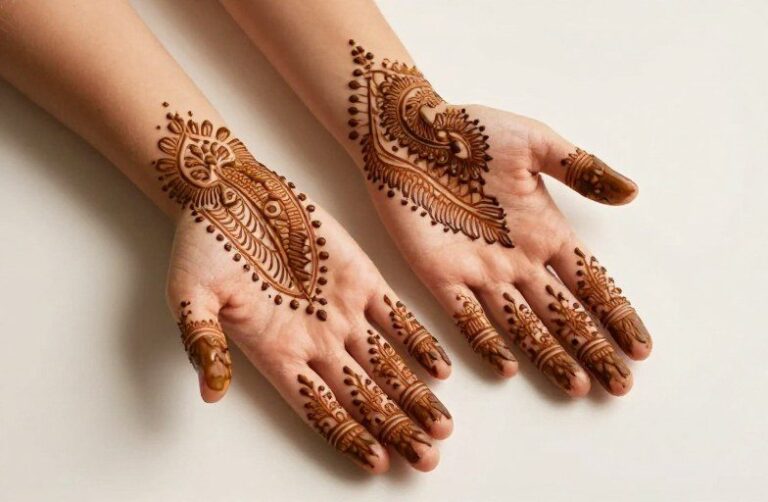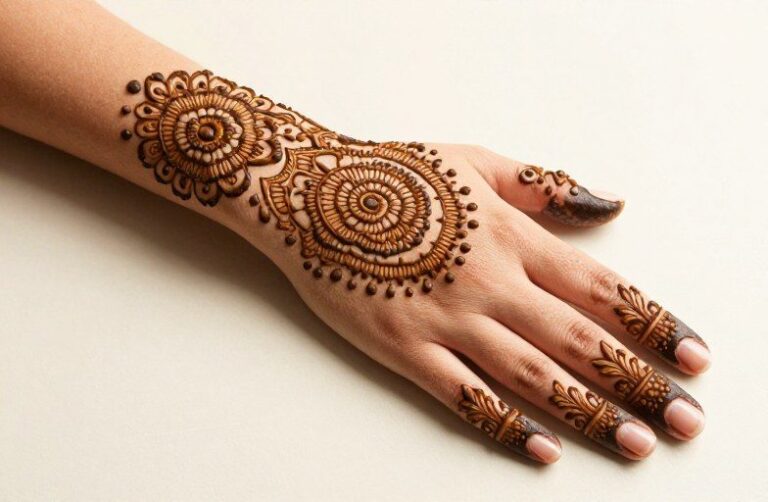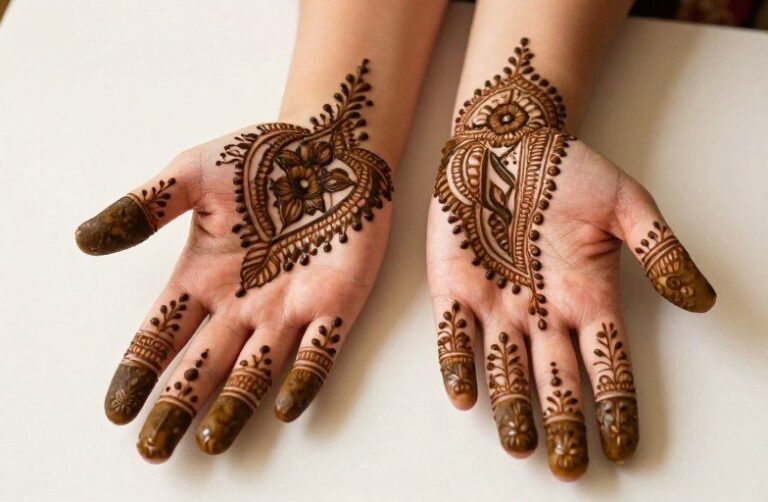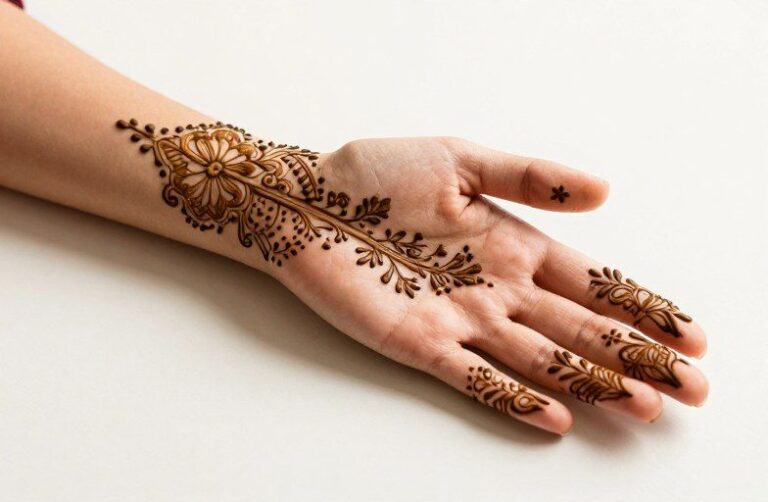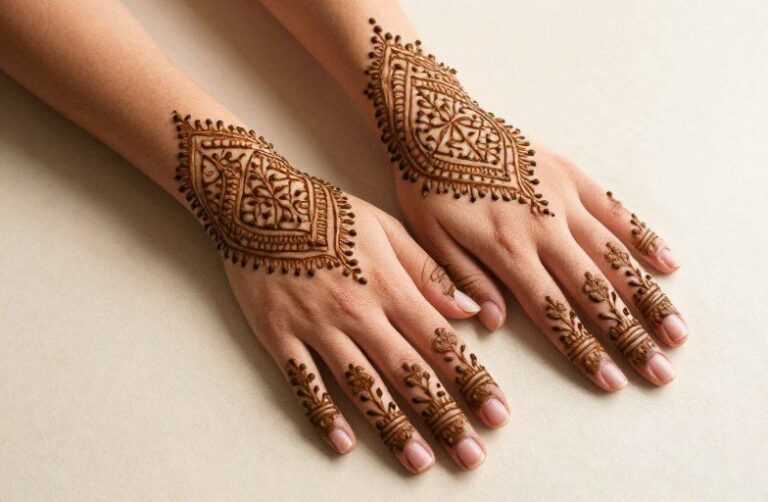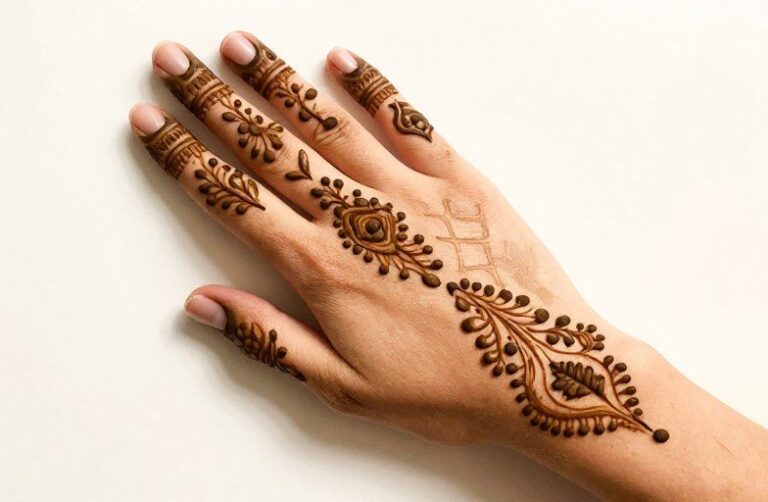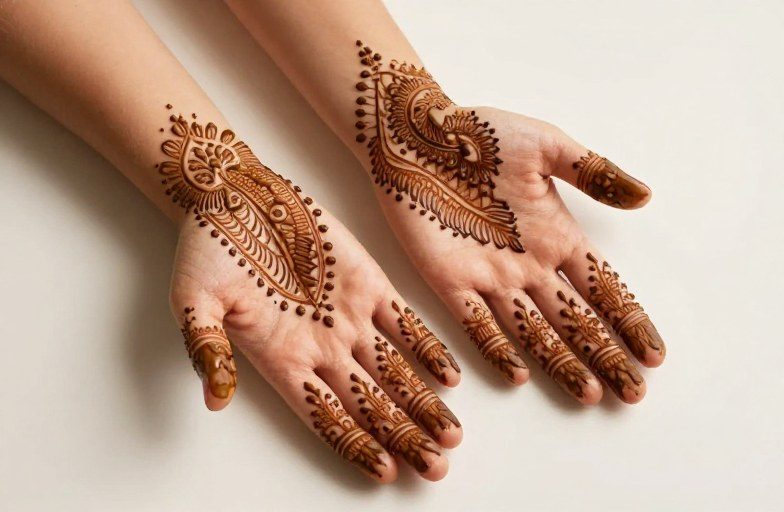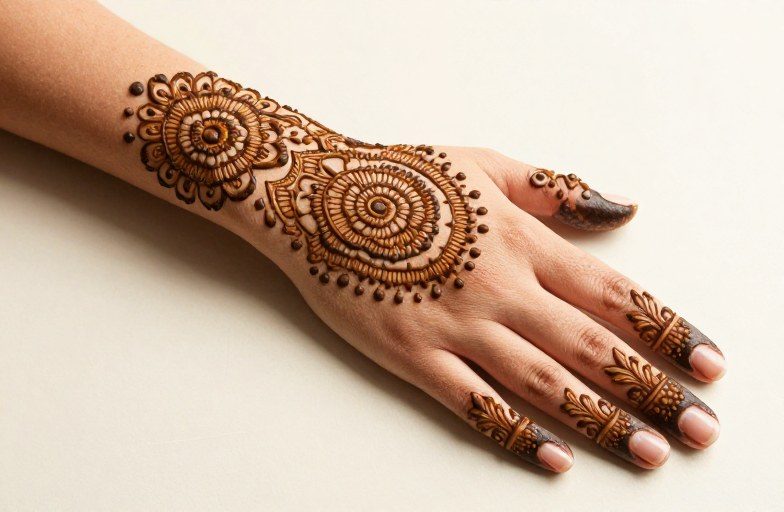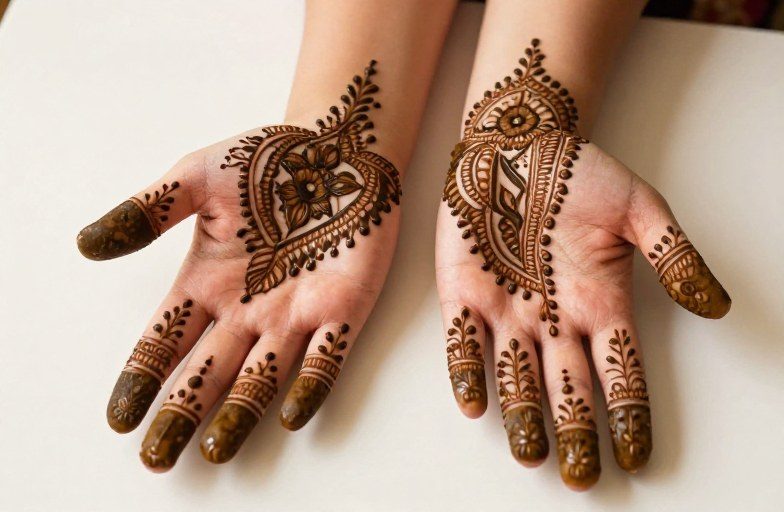
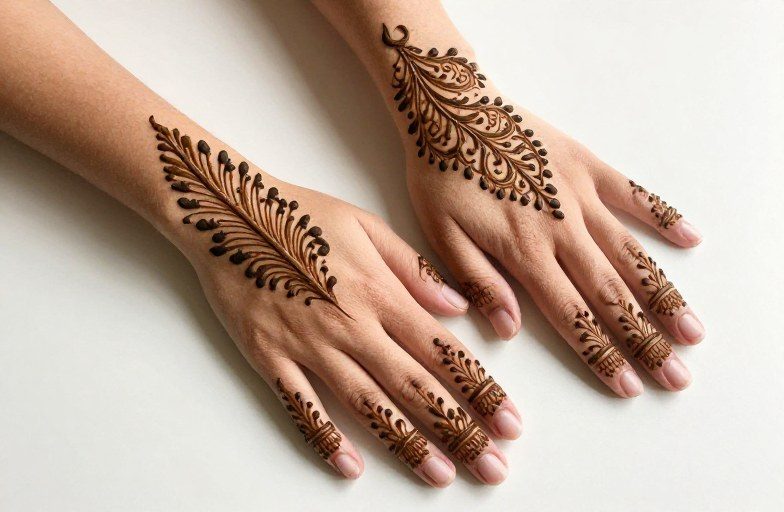
A henna feather tattoo borrows the visual language of mehndi, flowing filigree, dotwork, and botanical curves, to fill or frame a permanent feather shape. The combination layers two separate systems of meaning: the feather’s long associations with flight, freedom, and spiritual ascent, and henna’s cultural ties to celebration, blessing, and transition. Unlike actual henna, which stains skin temporarily and fades in days, this tattoo commits the pattern to skin for life. The choice asks you to consider why these two symbols belong together, and whether the combination speaks to something you actually need to carry.
What the Symbol Means
Freedom and Lightness
The feather’s most immediate reading is unburdened movement. Birds travel where they will, carried by currents they do not control but ride with skill. A henna-styled feather pushes this further: the ornamental, almost weightless quality of henna linework emphasizes delicacy over brute strength. Placements on the wrist, ankle, or behind the ear reinforce this. These spots are visible in motion, catching light, never heavy or dense. The tattoo becomes part of how you move through space, not a badge you display.
Spiritual Ascent and Protection
Across many cultures, feathers mark connection to what lies above the earthly. The henna style adds a specific inflection. Henna itself is applied at thresholds, weddings, births, religious observances, as protective blessing. Combining the two creates a talismanic quality without needing explicit religious imagery. You carry a symbol of elevation that also carries the visual memory of ritual marking, even if you do not practice the rituals themselves.
- Single feather: personal journey, individual freedom
- Falling feather: release, letting go, acceptance of impermanence
- Feathe with trailing henna vines: growth, continuity, connection to living systems
- Peacock henna feather: pride transformed into self-expression, beauty as armor
Religious and Spiritual Context
Hindu and Islamic Traditions
Henna, or mehndi, holds deep ritual significance in South Asian and Middle Eastern practice. In Hindu tradition, it is often linked to Lakshmi and blessing. In Islamic contexts, it is associated with Eid and wedding celebrations, with some hadith often cited as encouraging henna use. A permanent tattoo in this style steps outside actual religious practice. Tattoos are generally prohibited in Islam, and some Hindu interpretations discourage them. But the visual language remains recognizable. The feather specifically connects to Garuda in Hindu iconography, the divine eagle vehicle, and to the Quranic concept of birds as signs of God’s provision.
Contemporary Spiritual Use
Many wearers today draw on these associations without claiming religious adherence. The henna feather functions as spiritual shorthand: the intricate, hand-drawn quality suggests intention and care, while the feather itself points toward aspiration. You will see this among people in transitional periods, graduation, divorce, recovery, relocation, who want a symbol of upward movement grounded in something that looks crafted rather than mass-produced. Whether this describes your own situation is worth honest examination before you commit.
Mythology and Folklore
The Peacock Feather’s Double Nature
In Greek myth, the peacock’s tail holds the eyes of Argus, the hundred-eyed giant Hera set to watch Io. The feathers see everything, a symbol of vigilance that doubles as vanity. Henna peacock feathers in tattoo form often play with this tension: the eye patterns become decorative mandalas, beautiful but slightly unsettling, watching and being watched. The peacock’s association with immortality is often linked to Christian and Egyptian symbolism rather than the Argus myth directly, though the layers blur in contemporary usage.
Feathered Messengers Across Cultures
Native American traditions, particularly Plains cultures, hold feathers as sacred gifts earned through action and service. The specific meaning varies by nation and bird type. Eagle feathers carry different weight than crow or owl. A henna-style rendering of these feathers can be read as respectful homage or problematic appropriation depending on context. The henna style itself is South Asian; the feather might reference Native American, Egyptian (Ma’at’s truth-weighing feather), or Celtic traditions. This layered borrowing is common in contemporary tattooing but worth understanding rather than ignoring. You should know what you are combining, and why.
Related Symbols and How They Differ
Arrows, Birds, and Dreamcatchers
Arrows and feathers share flight but differ in intent. The arrow is directed, aggressive, purposeful; the feather is receptive, carried, responsive to wind. Birds in flight show the whole creature; the isolated feather emphasizes what is left behind, the trace of passage. Dreamcatchers with feathers combine protection with aspiration, but have become heavily commercialized and sometimes carry problematic associations when worn outside Native contexts.
Botanical Pairings
Botanical elements, vines, lotuses, mandalas, pair naturally with henna feathers because they share the same visual grammar of continuous line and organic growth. The lotus specifically echoes the feather’s emergence-from-mud narrative, but grounded in water rather than air. Butterflies offer another transformation symbol with more explicit life-cycle stages; feathers suggest transformation without showing the process, just the result.
Design Tips and Practical Concerns
Line Weight and Aging
Henna style relies on extremely fine linework, hair-thin strokes, stippled dots, delicate hatching. This ages poorly if not planned. A tattoo needle deposits ink in a blob that spreads slightly over decades. What reads as filigree at age 25 becomes muddy gray at 55. Smart design builds in negative space: the feather’s central shaft should be bold enough to remain readable, with henna details concentrated in areas that can blur without destroying the whole. The outer edge needs a clean contour, not dissolving into pure pattern.
Black ink ages to blue-green; brown henna tones in tattoo ink are actually diluted black or specialized pigments that shift unpredictably. Many artists now use a “henna brown” mix of black and red that settles to a warmer tone, but this varies by skin chemistry and sun exposure. White highlights, popular in henna-style tattoos, disappear entirely within 5-10 years on most skin types.
Placement and Scale
Forearm and calf offer the flat planes this style needs; curves distort the geometric precision. The top of the foot, despite its cultural association with actual henna application, is a poor tattoo location. Ink blurs rapidly there, and the healing process is complicated by shoe friction. Rib placements work for larger pieces but require the artist to stretch skin taut during application. The feather’s central shaft must follow the body’s natural lines, not fight them.
- Pair with script: the feather’s shaft can integrate a word or short phrase, but the font must match the line weight. Heavy block letters destroy the delicacy.
- Watercolor backgrounds: popular but risky; the unstructured color pool competes with henna’s controlled precision.
- Multiple feathers: best arranged in actual falling motion, not static symmetry; staggered spacing reads as movement.
- Dotwork mandalas behind the feather: extends the henna reference but can become visually noisy; limit to one dominant element.
Common Variations and Styles
Ornamental, Hybrid, and Geometric Approaches
Strictly ornamental henna feathers stay entirely within the visual vocabulary of mehndi: paisley teardrops, floral spirals, net-like mesh patterns, and fine parallel lines. These read as decorative first, symbolic second. The feather shape is almost an excuse for the pattern.
Hybrid styles incorporate realistic feather texture, barbs, afterfeather, the slight iridescence of certain species, within the henna framework. This requires an artist comfortable with both naturalistic observation and stylized reduction. The central shaft might be rendered with dimensional shading while the vanes stay flat pattern.
Geometric henna feathers replace organic curves with straight lines and angles, creating a more contemporary, less culturally specific look. This appeals to wearers concerned about appropriation but drawn to the visual complexity. The trade-off is warmth. The geometric version can feel cold, architectural, more digital than handmade.
Minimalist Reduction
Minimalist approaches reduce the henna element to a few strategic dots and a single trailing vine, letting the feather shape dominate. These age better, heal faster, and suit smaller scales. The meaning shifts slightly, less about cultural reference, more about the essential symbol of lightness.
What to Remember
A henna feather tattoo works best when you understand what you are combining: not just two pretty things, but two systems of meaning with actual histories. The henna style brings ritual, celebration, and painstaking hand-craft; the feather brings transcendence, travel, and the specific weight of different cultural traditions. The tattoo succeeds when you have done the work to know why both speak to you, and when your artist has the technical skill to make the fine lines survive the years.
The permanence matters. Actual henna fades, which is part of its poetry: blessing, then release. A tattoo demands that you want this particular blessing to stay visible, to become part of how you are seen and how you see yourself. Choose the placement knowing how it will age. Choose the style knowing what cultures you are referencing. Choose the moment knowing that the feather, once given, does not return to the bird.
Frequently Asked Questions
Is a henna feather tattoo culturally appropriative?
It depends on your relationship to the symbols. Henna itself is South Asian and Middle Eastern; the feather might reference Native American, Egyptian, or other traditions. The combination is common in contemporary tattooing, but understanding the histories matters. Avoid treating either element as mere decoration. If you have no connection to these cultures, consider whether a geometric or minimalist approach better fits your situation, or consult with artists from the relevant traditions.
How well do henna-style tattoos age?
The fine linework that defines henna style ages poorly without careful planning. Hair-thin strokes blur to gray mush over decades. Smart design builds in negative space, bold central shafts, and clean outer contours. White highlights disappear within 5-10 years. Black ink shifts to blue-green; “henna brown” tones are actually mixed pigments that vary by skin chemistry and sun exposure. Discuss aging explicitly with your artist.
What is the best placement for a henna feather tattoo?
Flat planes work best: forearm, calf, upper back. Curves distort the geometric precision. The top of the foot, culturally associated with actual henna, is actually poor for tattooing: ink blurs rapidly and shoe friction complicates healing. Rib placements work for larger pieces but require the artist to stretch skin taut. The feather’s central shaft should follow natural body lines, not fight them.