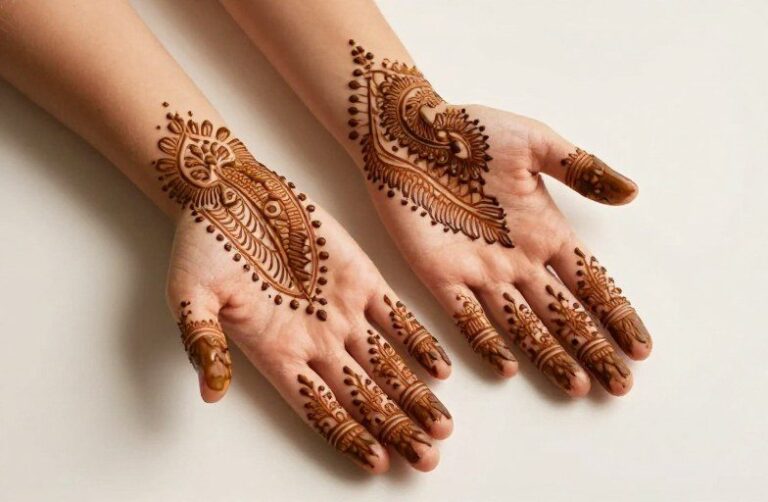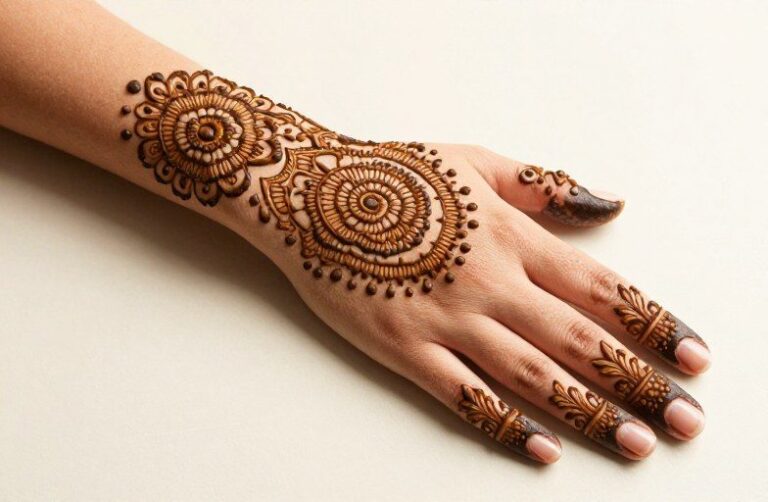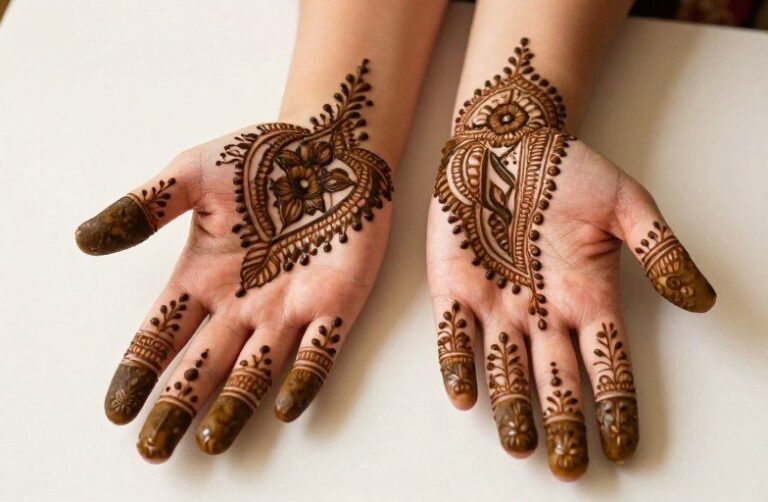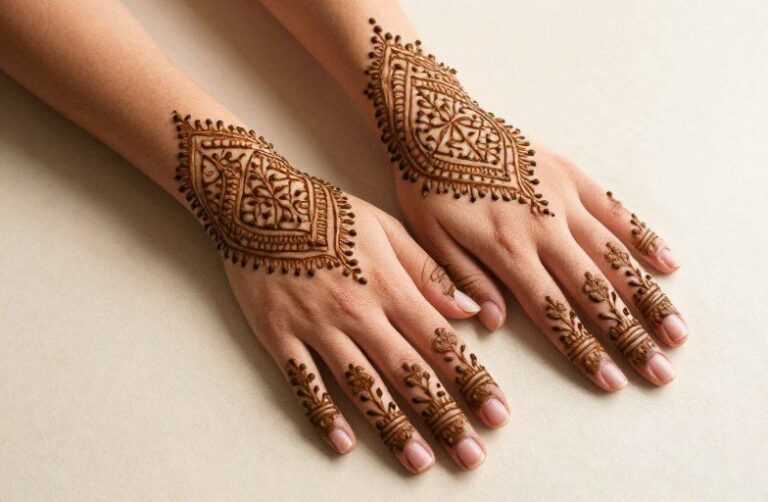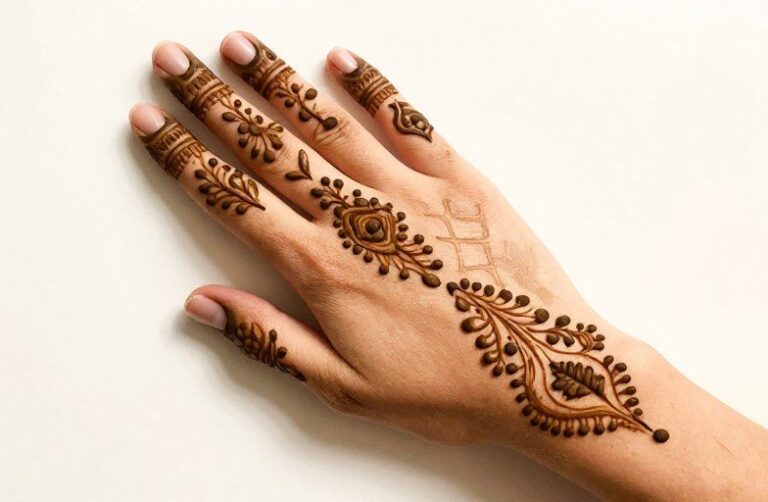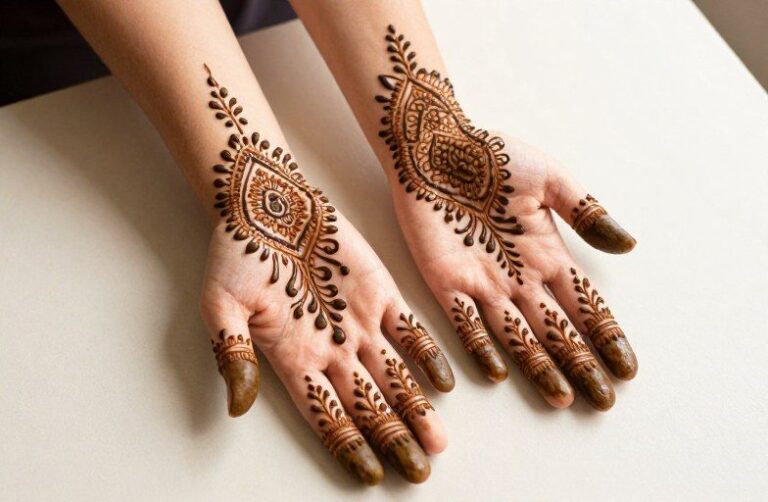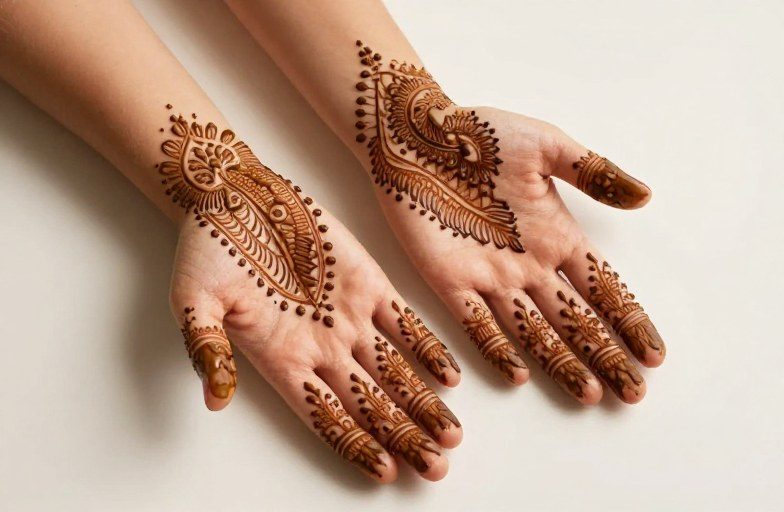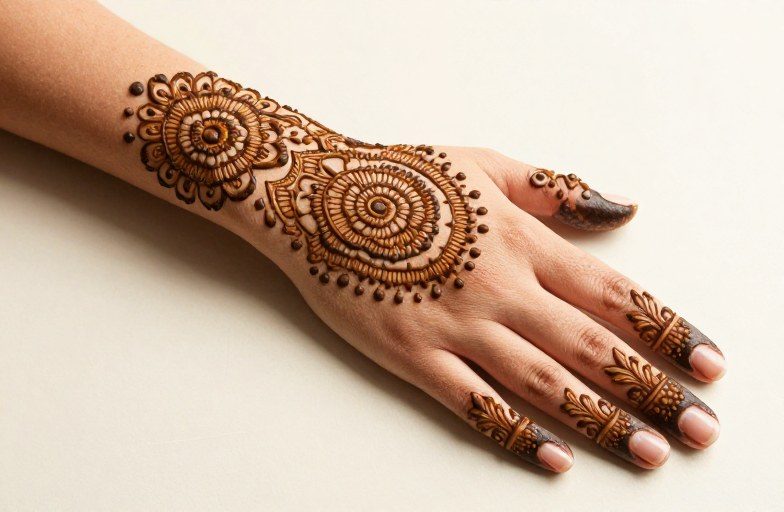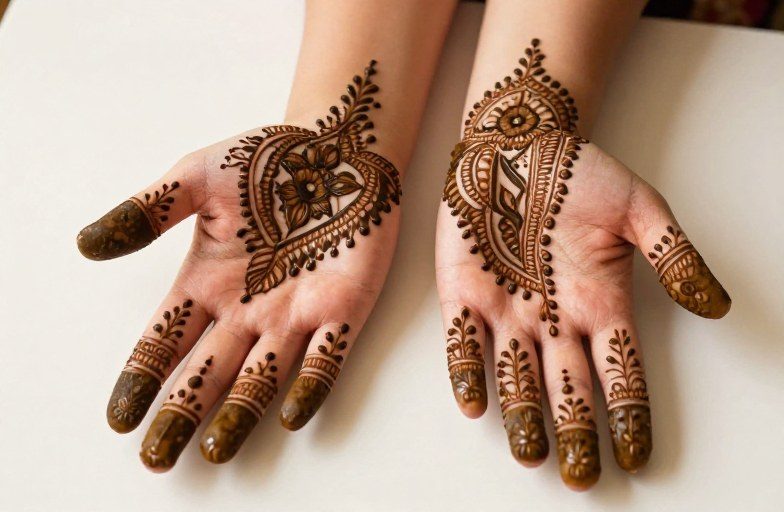
Simple palm mehndi designs strip the traditional art down to its most readable elements: fine lines, negative space, and geometry that fits the hand’s natural architecture. Unlike full bridal mehndi, these tattoos stay minimal enough for daily life but carry enough detail to reward close inspection. The palm presents a specific challenge, skin here sheds faster, blurs more readily, and moves constantly, so the design choices matter more than on a shoulder or forearm.
How to Personalize It
Adapting Traditional Motifs
Mango shapes, paisley teardrops, and central mandala cores all translate cleanly to tattoo form when simplified. The key is reducing fill-in patterns to outlines or dotwork. A traditional mehndi vine might carry hundreds of tiny henna dots; in ink, that becomes stippled shading or gets removed entirely. Finger segments work well as individual bands rather than connected webs. Some people carry family patterns, a specific paisley orientation, a repeating border their grandmother used, and these adapt beautifully to permanent linework when mapped to palm creases.
Integrating Personal Symbols
Constellation dots, initials hidden in negative space, or a single meaningful numeral placed at the wrist junction keep the mehndi frame while adding private reference. The palm’s limited real estate forces discipline: one extra element, not five. A small moon phase tucked into a mandala quadrant reads clearly without breaking the overall traditional feel.
Tips for Choosing
Line weight separates amateur from refined palm work. Single-needle lines look delicate fresh but blur fastest on palm skin; 3rl or 5rl groupings hold better while still reading as fine. Black-only heals most predictably here, colors, especially reds and yellows, fade unevenly on palm callus and can heal to muddy tones.
- Ask to see healed palm work from your artist, not just fresh photos. What looks crisp at week two may have spread by month six.
- Plan for touch-ups. Palm tattoos commonly need one or two reinforcement sessions.
- Avoid heavy solid fills near the thumb web, this area stretches and cracks constantly, breaking up solid black into patchy gray.
- Consider your work environment: palm tattoos are nearly impossible to hide and read immediately as decorative rather than professional in most Western contexts.
Working with Your Artist
Bring reference images of both traditional mehndi and tattoo linework you admire. The translation between henna paste and needle requires adjustment, henna artists build darkness through repeated application and time; tattoo artists must achieve the same visual weight in a single pass. A good artist will map the design to your specific crease patterns, not apply a stencil blindly.
Size & Scale
Palm tattoos occupy an awkward middle ground. Too small, and the detail collapses into blur within months. Too large, and the design fights the hand’s natural movement lines, distorting when you grip or stretch. The sweet spot for simple mehndi-inspired work covers the central palm in a 2-3 inch mandala or vine cluster, with optional finger extensions no narrower than 3mm.
Finger-only bands read as jewelry substitutes and age better than complex fingertip patterns. A single horizontal band across the proximal finger segment (just above the knuckle) stays more stable than wraps that cross joints. Central palm pieces with radiating elements, lotus, eight-pointed stars, or sunbursts, use the natural depression of the palm as their anchor, which helps the design hold its shape as skin shifts.
Best Placements
Central Palm
The meat of the palm, below the fingers and above the wrist, offers the most stable canvas. Designs here benefit from radial symmetry that echoes the finger lines. A mandala mehndi tattoo placed slightly above true center reads balanced when the hand is held up. This area sees less direct friction than the finger bases, though grip pressure still stresses the ink.
Finger Extensions and Backs
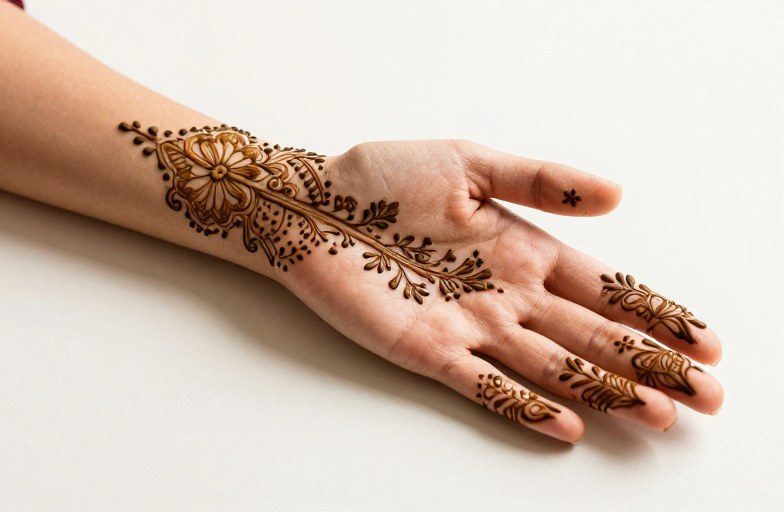
Running a vine or dot trail from the central palm onto the index or middle finger creates flow, but stop at the first joint for longevity. Simple finger mehndi designs work well as standalone bands that complement this approach. The back of the hand, while technically not palm, pairs naturally with palm work and holds ink better, many people extend their simple mehndi motif across the dorsal surface for a complete hand piece without the palm’s durability issues.
Wrist Gateway
A small paisley or geometric gateway at the wrist, where palm meets forearm, frames central palm work and provides a natural stopping point. Simple wrist mehndi tattoo designs show how this transition zone works as a standalone piece too. This placement also offers easier touch-up access than full finger coverage.
Standout Design Ideas
These approaches keep the mehndi spirit while respecting tattoo constraints:
- Single-line mandala: One continuous weighted line forming a six or eight-petal flower, no fill, approximately 2 inches diameter. The negative space does the work.
- Dot constellation: Scattered stipple points following traditional mehndi density patterns but abstracted into a loose constellation rather than dense fill.
- Paired paisleys: Two facing teardrops at the thumb-forefinger junction, mirroring the natural hollow there. Simple, readable, traditional.
- Broken vine: A central stem with three to five leaves, not touching fingers, using palm creases as implied continuation lines.
- Geometric finger bands: Alternating line and dot patterns on two adjacent fingers, connected by a thin wrist line when the hand is flat.
Each of these avoids the common pitfall of over-detailing. Palm skin has roughly 3-4 years of sharp life for fine work before soft blur sets in; starting simple extends that timeline.
Matching & Pairing Ideas
Complementary Body Placements
Simple palm mehndi pairs naturally with matching forearm bands, same line weight, same motif family, but simplified further for the arm’s larger scale. Some people mirror the palm design on the opposite hand’s back for visual dialogue when hands are held together. Ankle mandalas in identical style create a cohesive set without repetition fatigue.
Layering with Existing Work
For those with existing tattoos, the simple palm piece can reference line weights or geometric vocabulary already present. A sleeve with dotwork shading gains a hand piece that feels continuous rather than separate. The palm becomes punctuation, not a new language. Those starting fresh might plan the palm as anchor point, building wrist and forearm work outward in the same visual register over time.
The Takeaway
Simple palm mehndi tattoos succeed when they accept the palm’s limitations rather than fight them. Bold lines, strategic negative space, and placement that works with natural creases outperform intricate detail every time. The tradition offers centuries of tested motifs, your job is choosing which ones survive translation to permanent ink on this particular, demanding canvas. Go in expecting maintenance, choose an artist with healed palm examples in their portfolio, and let the simplicity be the point, not a compromise.
Frequently Asked Questions
How long does a simple palm mehndi tattoo typically last before needing a touch-up?
Most palm tattoos start softening within 12-18 months, with central palm pieces holding better than finger work. Plan for a first touch-up around the two-year mark, though individual skin chemistry and daily hand use vary this timeline significantly.
Can I get a palm tattoo if I work with my hands constantly?
Heavy manual labor accelerates palm tattoo fading and can complicate healing. The constant friction, moisture exposure, and minor abrasion from tools or materials all stress the ink. If your work is non-negotiable, consider the back of the hand or a less central palm placement.
Why do palm tattoos hurt more than arm tattoos?
Palm skin has a high concentration of nerve endings and lacks the fat padding found in most tattoo areas. The thin, tight skin over bone and tendon also means the needle vibration transmits more directly. Most people find palm work significantly more intense than forearm or shoulder sessions.
Will a simple black palm tattoo turn green or blue as it ages?
Quality black ink on palm skin typically ages to a soft charcoal or gray rather than showing color shifts. The bigger issue is blur and patchiness from skin shedding and movement, not hue changes. Carbon-based blacks hold most reliably in this placement.