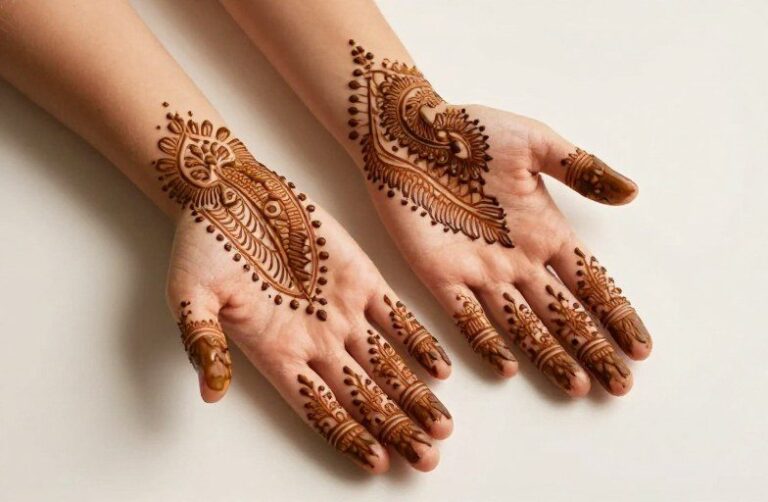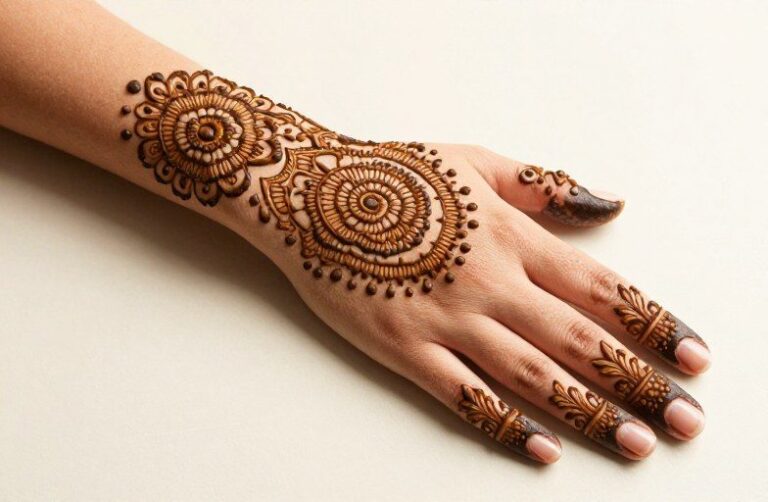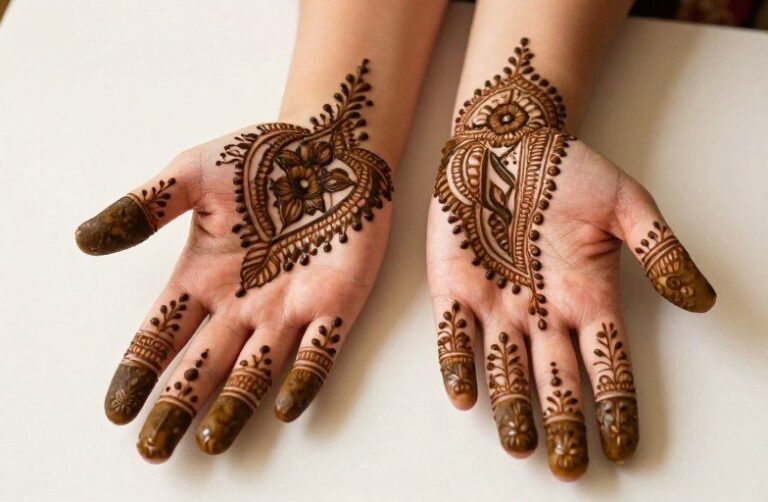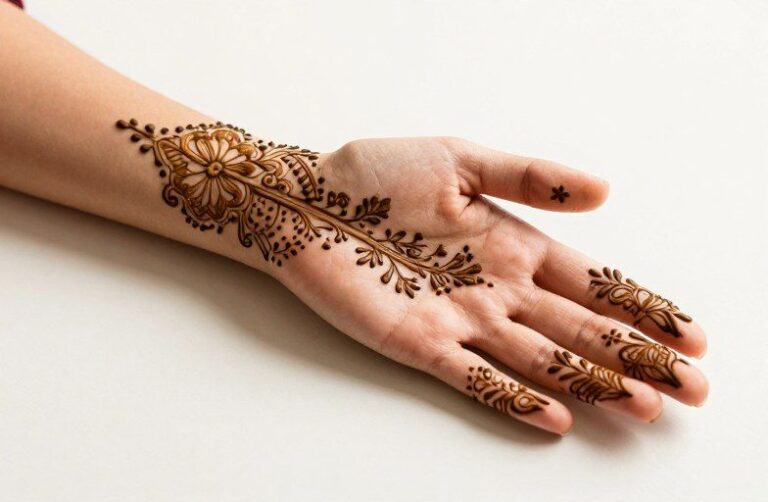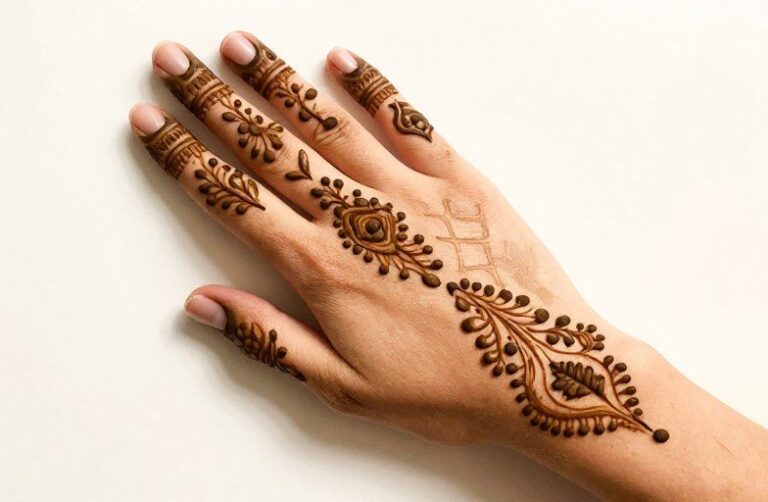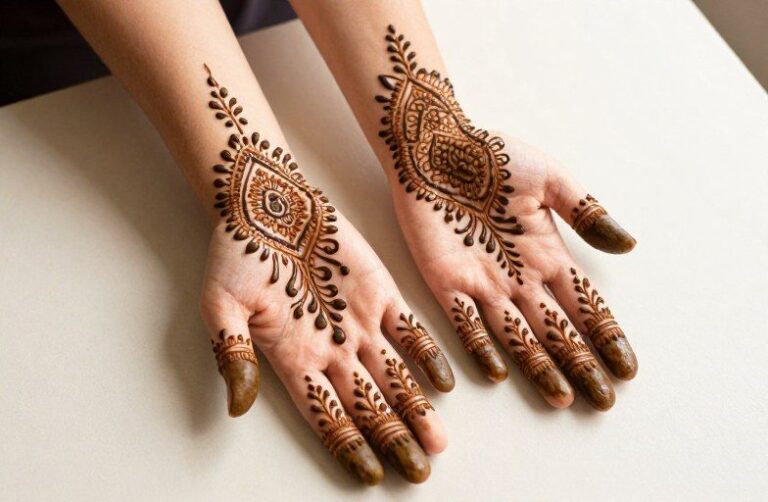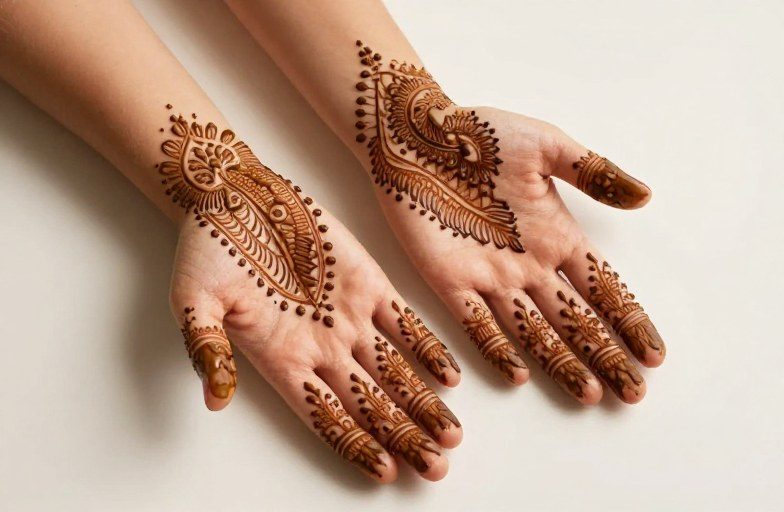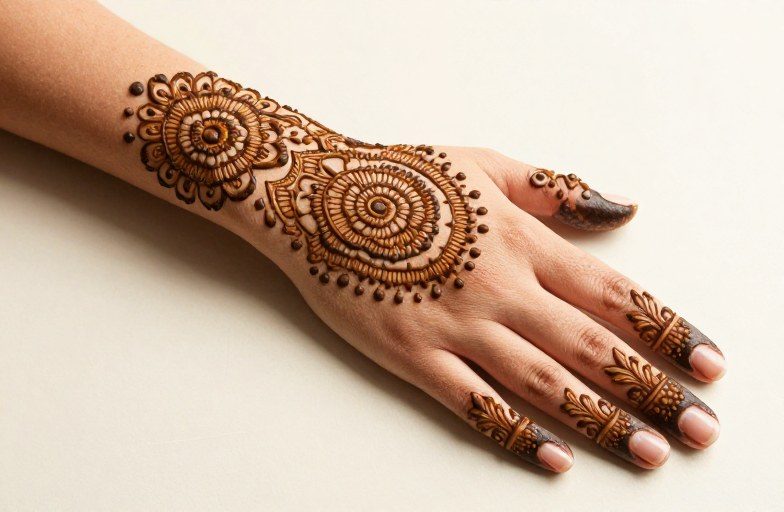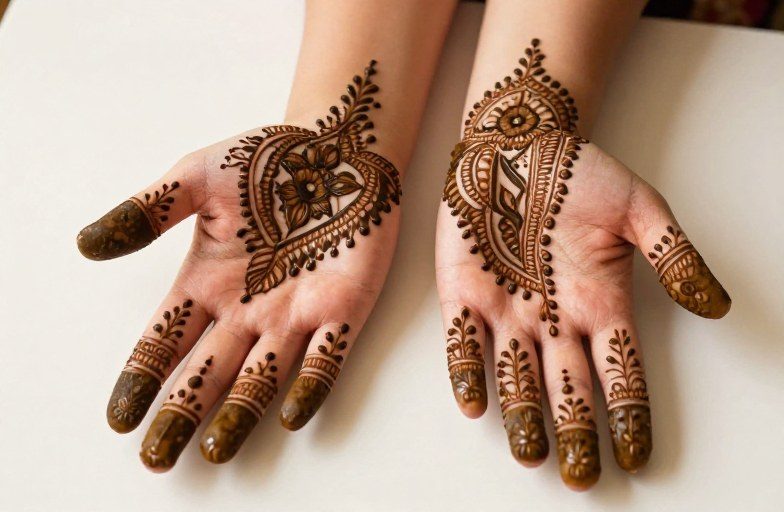
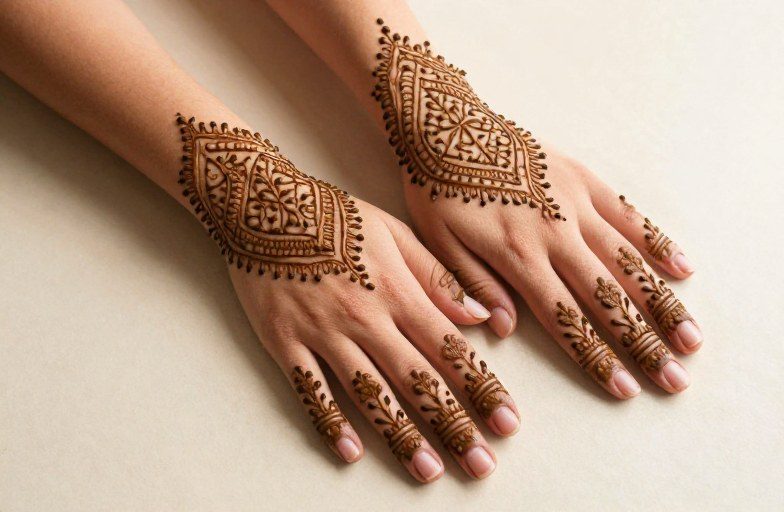
Wrist mehndi tattoos distill the dense, flowing patterns of traditional henna into something leaner and more permanent. The appeal is straightforward: you get the visual language of paisleys, vines, and geometric frames without the commitment to full-hand coverage. On a wrist, the design lives in a narrow band, which forces every line to earn its place. Done well, these tattoos read as jewelry. Done poorly, they blur into indistinct gray within a few years. The difference comes down to placement precision, line weight, and knowing how much detail will actually hold.
Best Placements
The wrist offers surprisingly varied real estate for such a small area. Where you situate the design changes how it ages, how visible it remains, and how it interacts with movement.
The Inner Wrist
Soft skin here takes ink crisply at first, but sun exposure and friction from keyboards, desks, and watch straps accelerate fading. Inner wrist placements suit designs with slightly heavier line weight, thin single-needle work tends to blow out or disappear entirely within three to five years. If that restraint appeals to you, minimalist mehndi tattoo designs address this placement challenge directly. A small mandala centered over the pulse point, or a vine that wraps from the inner wrist toward the thumb base, holds up better than isolated fine dots or micro-lettering.
The Outer Wrist and Side
More durable by a noticeable margin. The outer wrist catches less direct sun if you wear long sleeves, and the skin structure differs, slightly tougher, with less dramatic stretching during healing. Bracelet-style bands work beautifully here: a continuous pattern that wraps the wrist bone like a cuff. Side-of-wrist placements, running from the outer edge toward the pinky, create an unexpected angle that reads differently than the standard face-forward inner wrist tattoo.
Standout Design Ideas
Mehndi vocabulary translates to tattoo form best when simplified. Traditional henna contains hundreds of interlocking elements; a wrist piece needs to communicate the same heritage with a fraction of the information.
- Paisley teardrops: A single bold paisley, or two mirrored, anchors a wrist band without clutter. Best at thumbnail size or slightly larger, too small and the internal curves muddy together.
- Vine wraps: A stem with alternating leaves, sometimes with tiny buds, that traces the wrist circumference. Works as a full bracelet or a three-quarter wrap with deliberate gap.
- Mandala centers: A small circular mandala placed on the inner wrist, with optional thin rays extending toward the forearm or toward finger mehndi designs on the hand. The radial symmetry draws the eye and ages evenly since wear distributes around the circle.
- Geometric negative space: Diamond or hexagon grids that use skin tone as part of the pattern. This technique requires an experienced hand, too shallow and the “cut out” areas fill with ink during healing; too deep and they scar.
- Floral clusters: Three to five small flowers connected by dotted trails. The dotwork must be consistent in depth; irregular dots heal patchy and require touch-ups.
What to Avoid in Small Spaces
Finger extensions from wrist tattoos, those thin lines that run onto the hand, almost always fade fastest and look broken within two years. If you want hand connection, a simple palm mehndi tattoo planned as a separate piece with its own touch-up schedule works better than a single continuous design. Similarly, lettering in mehndi style (Hindi script, Arabic calligraphy) at wrist scale often becomes illegible; the characters need more space than the wrist comfortably provides.
Color Choices
Traditional mehndi is reddish-brown, but tattoo ink offers permanent alternatives that behave differently over time.
Black ink delivers the highest contrast and the cleanest aging for line-based mehndi work. A solid black bracelet band stays readable for a decade with minimal sun protection. Dark brown offers a closer approximation to actual henna stain, but brown pigments sometimes shift warmer (redder) or cooler (grayish) depending on brand and skin chemistry. This unpredictability matters less in large pieces, but on a wrist where the whole design is visible at once, uneven color shift draws attention.
Some artists offer “henna color” mixes, typically diluted black or specific brown formulations. These fade faster than saturated black and may require earlier refresh sessions. Red ink, while evocative of fresh henna, has a documented higher reaction rate and tends to fade patchily on wrist skin. If you want color, consider a single accent element rather than full red coverage.
Tips for Choosing
Reference photos of actual healed tattoos, not fresh work or henna application images. Fresh tattoos look darker, sharper, and more saturated than they will in six months. Henna photographs show surface stain on skin, not ink embedded in dermis, the visual similarity is misleading for predicting tattoo results.
Artist Selection Criteria
Look for portfolios with healed fine-line work at small scale, not just bold traditional pieces. Ask specifically about their experience with dotwork and geometric patterns; these techniques require machine control that differs from shading or whip-shading. An artist who only does American traditional or black-and-gray realism may execute clean lines, but the ornamental precision of mehndi patterns demands a specific practiced hand.
Design Consultation Approach
Bring three to five reference images that share a common quality, line weight, density, or motif type, rather than one exact image you want copied. This gives the artist direction while leaving room for adaptation to your wrist structure. During the stencil phase, move your wrist through full range of motion: flex, extend, rotate. A design that looks centered at rest may twist awkwardly with movement, and the stencil stage is your last chance to adjust before commitment.
Size & Scale
Wrist mehndi tattoos occupy a narrow range where too small fails technically and too large overwhelms anatomically. The sweet spot for most bracelet-style designs: 1.5 to 2.5 inches in width for the decorative band itself, with optional thinner accent lines above or below.
Individual elements need minimum sizes to hold. A paisley’s internal curve requires at least dime-scale width or the center fills in during healing. Dots in dotwork patterns should be no smaller than a pinhead; smaller dots frequently disappear entirely or expand into indistinct blobs. Negative-space “cutouts” within patterns need surrounding lines thick enough to prevent ink bleeding into the open area, generally, the enclosing line should be at least 2mm wide for gaps of similar dimension.
Height from wrist crease toward forearm matters too. Designs extending more than 1.5 inches up the forearm read as forearm pieces with wrist involvement, not wrist tattoos. This distinction affects how you dress around them, how they interact with watches and bracelets, and how they age relative to sun exposure patterns.
Matching & Pairing Ideas
Wrist mehndi tattoos pair naturally with several approaches, though restraint usually outperforms accumulation.
Symmetrical Pairs
Matching designs on both wrists create intentional balance. Identical pieces work; mirrored designs (same motif, reversed orientation) read more sophisticated. For bracelet bands, identical wraps are expected; for inner wrist placements, mirroring often suits the asymmetry of how we present our hands.
Complementary Asymmetry
A detailed mandala on one wrist with a simple vine or single paisley on the other avoids the “bracelet set” aesthetic while maintaining thematic connection. This approach suits people who want visible ink on both arms without identical commitment.
Existing tattoos nearby require consideration. A forearm piece with bold black shading makes a delicate wrist mehndi look tentative; either commit to consistent density throughout, or maintain clear separation between styles. Transition zones, where a detailed wrist piece meets a different forearm style, benefit from deliberate gap or connecting element planned from the start, not added later as afterthought.
Key Takeaways
Simple wrist mehndi tattoos succeed when they respect the constraints of small scale and high-visibility placement. Choose outer wrist or side placement for longevity, inner wrist only if you accept faster fading and plan for touch-ups. Prioritize bold enough line weight that the design survives healing and the first years of sun exposure. Select motifs that communicate mehndi heritage without requiring the density of actual henna application, paisley, vine, mandala, and geometric grid all translate well at wrist scale. Work with an artist whose portfolio proves experience with ornamental fine-line work, not just general tattooing skill. And plan for the reality that this tattoo will be seen constantly: by you, by others, in every photograph and video. The simplicity should be deliberate, not a default.
Frequently Asked Questions
How long does a simple wrist mehndi tattoo take to heal?
Surface healing takes two to three weeks, with full settling around six weeks. Wrists move constantly, so keeping the area clean and minimally flexed during the first week prevents ink loss in the design’s fine lines.
Can I cover a wrist mehndi tattoo with watches or bracelets?
Fresh tattoos need air and should not be covered with tight accessories during healing. Once fully healed, metal bracelets can cause friction fading over time; leather or fabric bands are gentler on the ink.
Will a wrist mehndi tattoo stretch if I gain or lose weight?
The wrist has minimal fat deposits, so moderate weight changes rarely distort these tattoos noticeably. Significant muscle building in the forearms can slightly alter bracelet bands that wrap toward the lower arm.
How often do wrist tattoos need touch-ups?
With proper sun protection, a well-executed black wrist tattoo holds for five to eight years before significant refresh. Brown inks and finer line work may need attention at three to five years.