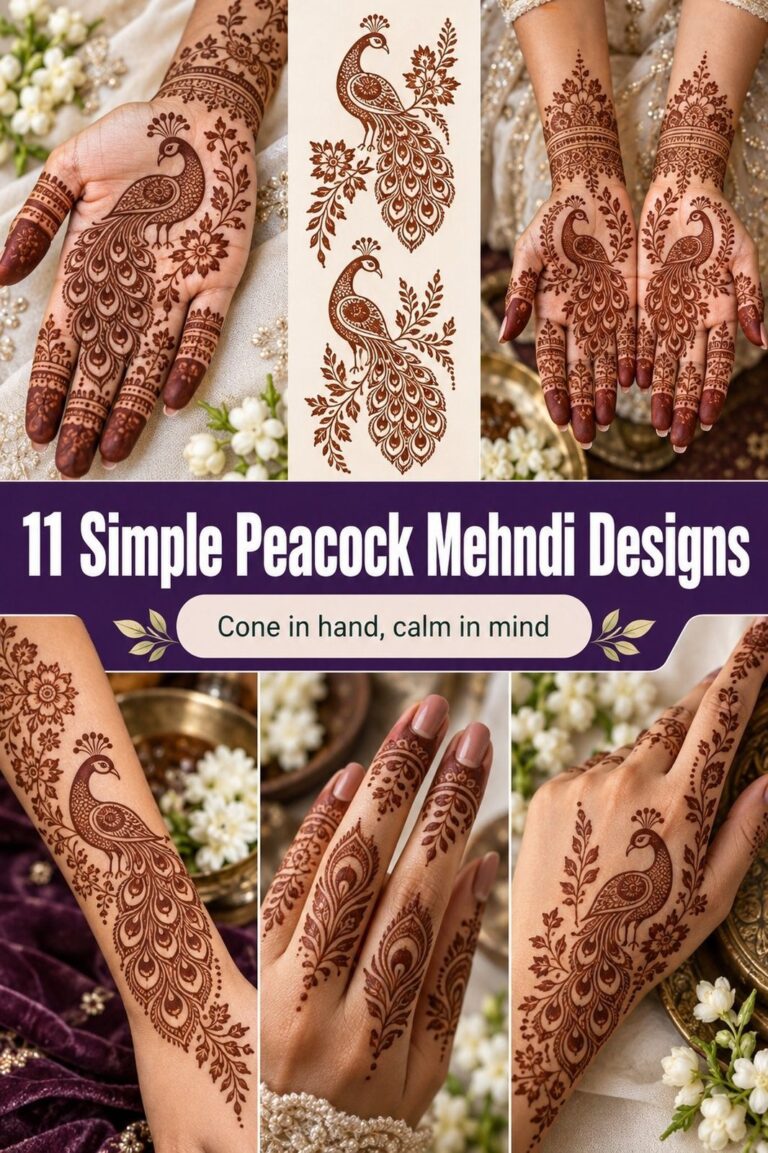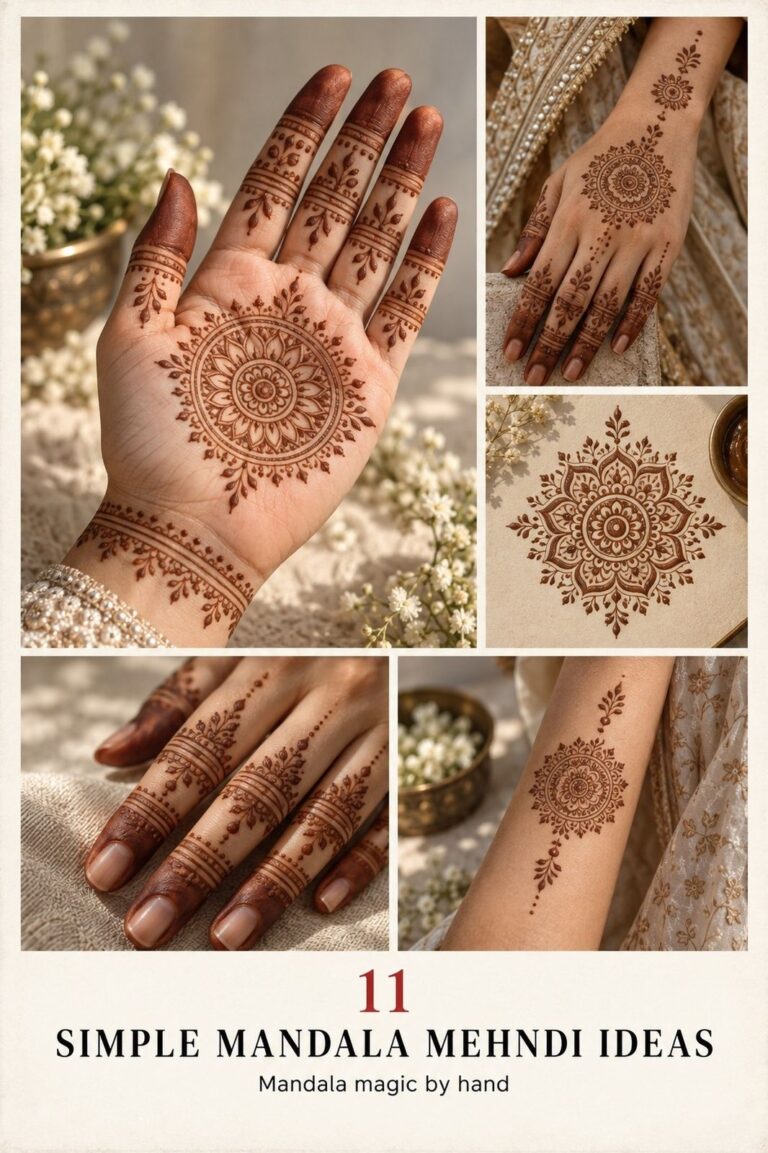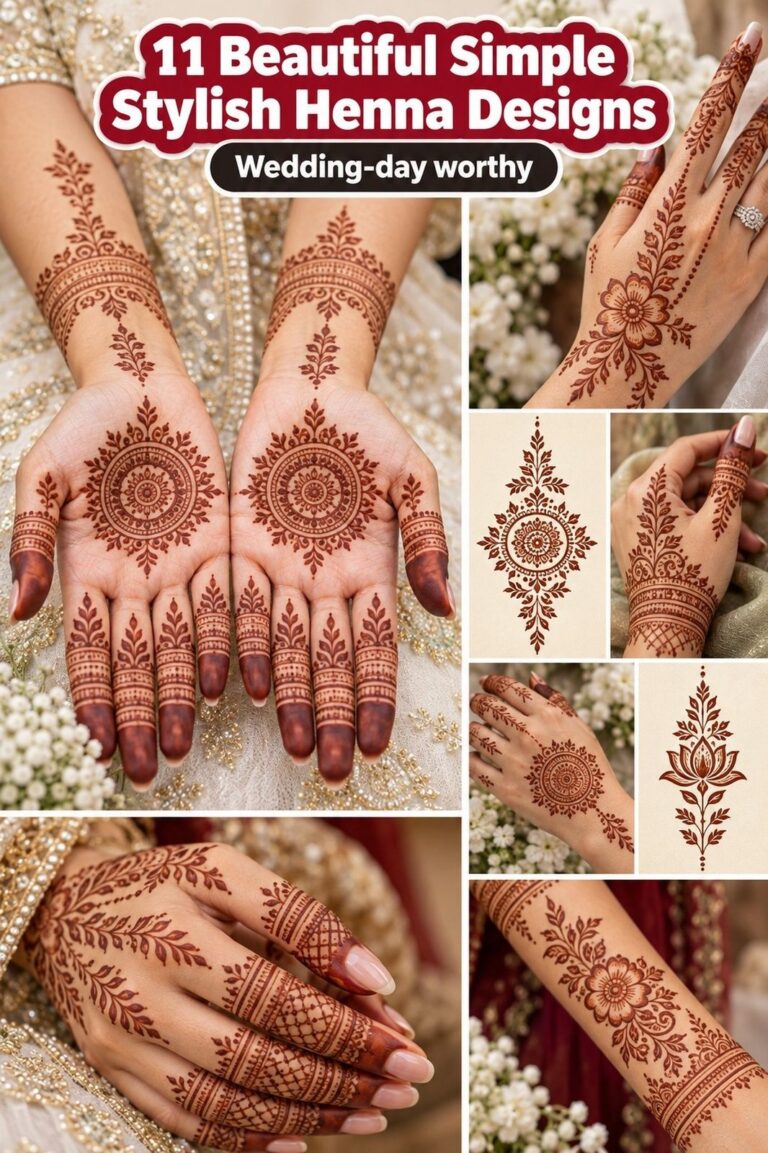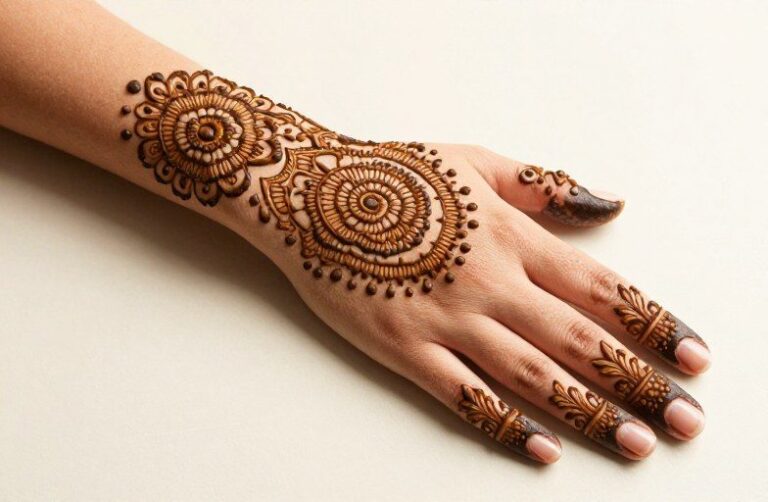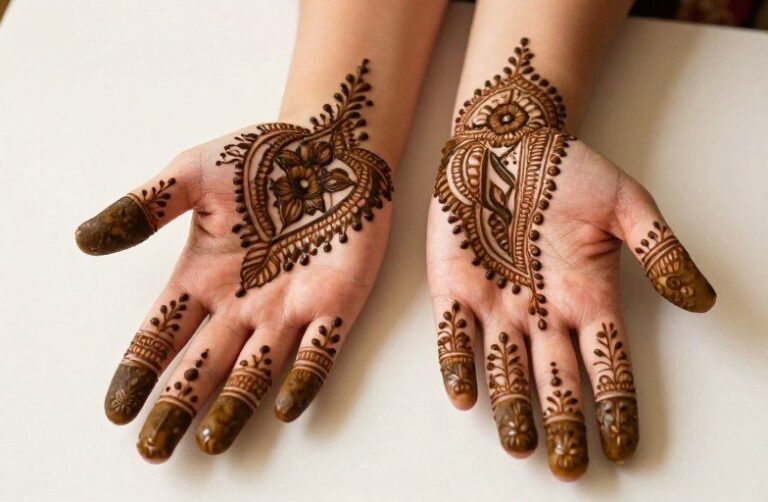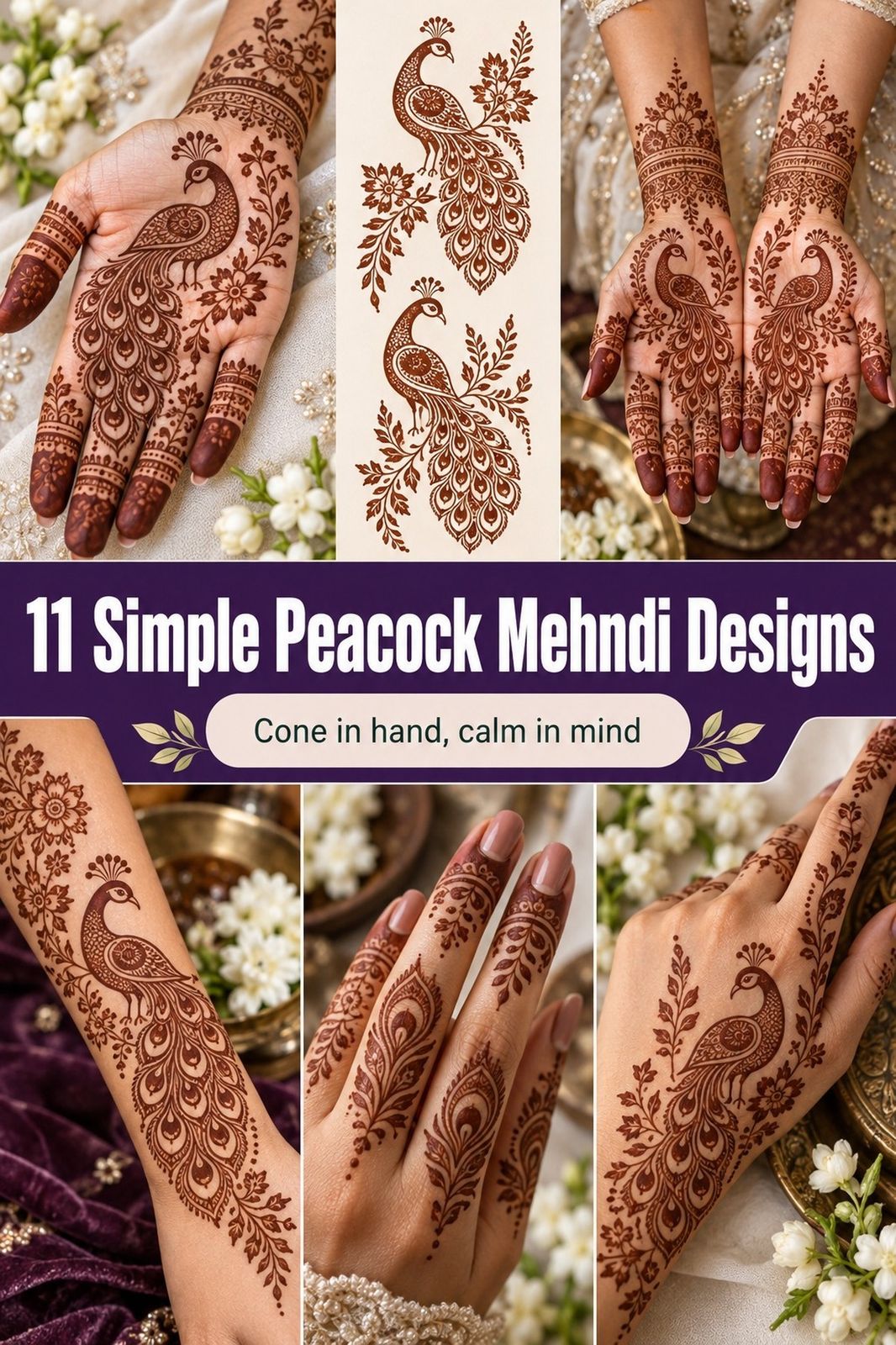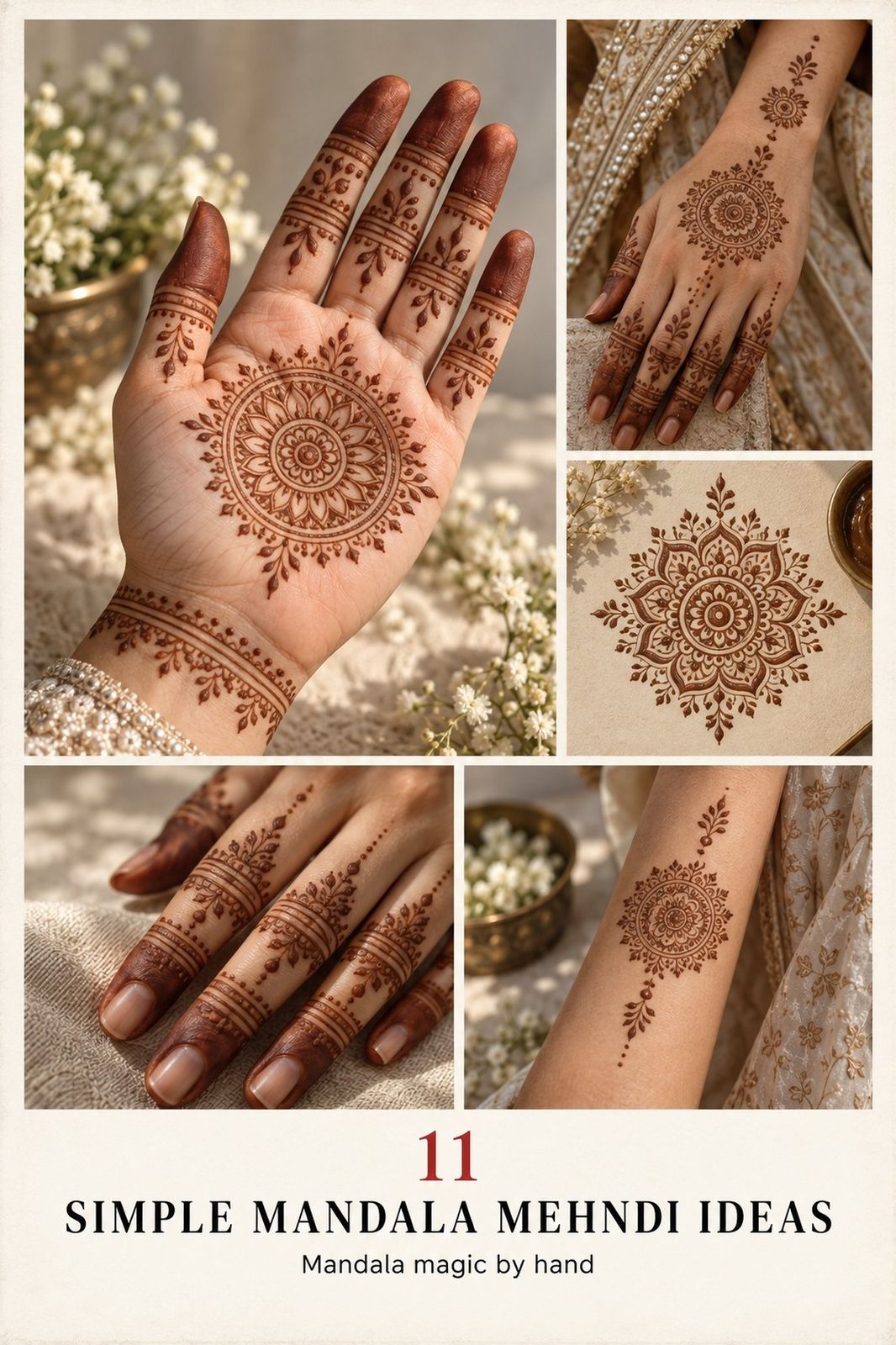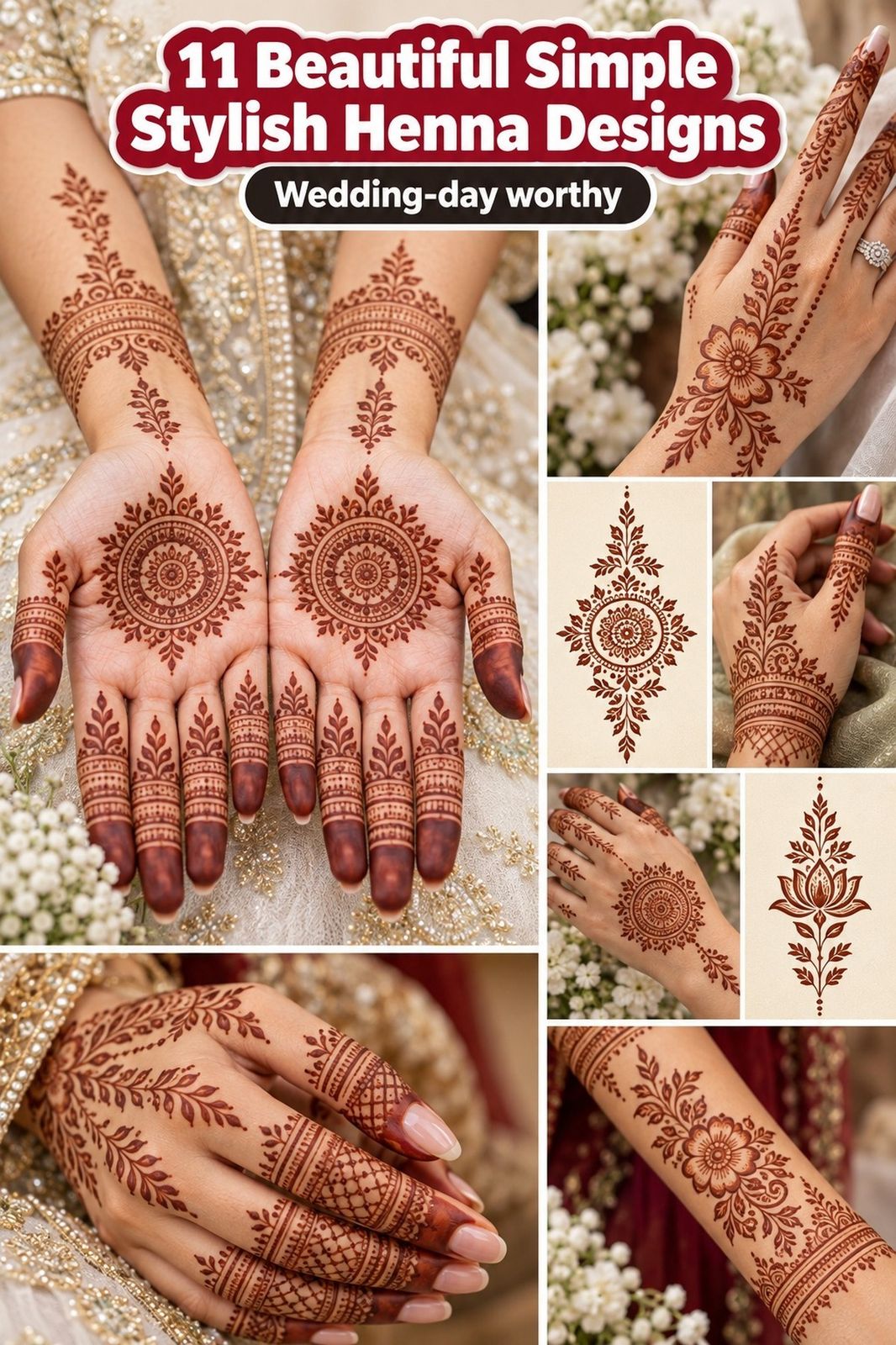
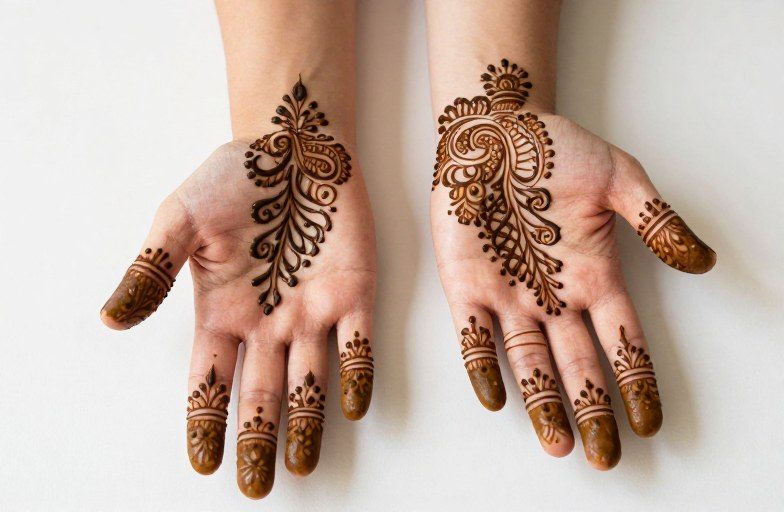
Minimalist mehndi tattoos pull the flowing geometry and botanical motifs of henna body art into permanent ink with restraint. Instead of dense, palm-filling coverage, these designs isolate single elements, an unbroken vine, a paisley teardrop, a fingertip accent, scaled to fit modern placement preferences. The result reads as mehndi DNA without the full ceremonial weight. For people drawn to the visual language but not the cultural context of bridal henna, or those who want the aesthetic portable across seasons and outfits, this approach offers a specific middle ground.
Trending Variations
Current demand clusters around a few stripped-back approaches. Each solves a different visual problem: some maximize longevity, others prioritize discretion or adaptability.
Single-Element Isolation
Taking one traditional motif, a lotus, a mango shape (kairi), a chevron band, and rendering it at 1-2 inches without supporting filler. The line weight stays consistent, usually 3-5 needle groupings, and the design relies on the negative space around it to suggest the larger tradition. This works best when the original motif has strong silhouette recognition; abstract filler patterns lose their reference when isolated.
Interrupted Bands
Wrist and finger bands that break at specific points rather than circling fully. A common execution: three-quarters of a bracelet line with a deliberate gap at the inner wrist, or two parallel lines that stop short of meeting. This accommodates wrist movement and watch-wearing without the “cuff” effect that can feel heavy on smaller frames.
Dot-Grid Mapping
Minimalist mehndi occasionally borrows the stippling technique from other tattoo genres, using dense dot clusters to suggest traditional henna’s tonal variation without linework. The healing reality here: dots can spread slightly more than clean lines, especially on finger or foot skin, so artists typically space them looser than the final intended density.
Best Placements
Not all skin accepts fine-line work equally. The thinner epidermis and higher movement in some areas create predictable challenges.
High-Retention Zones
- Inner forearm: flat surface, moderate sun exposure, easy to show or cover
- Upper arm (inner bicep): stable skin, minimal daily abrasion
- Side of ribcage: low movement, though sun protection requires attention
- Upper back/shoulder blade: excellent for horizontal band compositions
High-Risk Zones
Fingers, sides of hands, and feet present the standard fine-line challenges: constant use, faster cell turnover, and thinner dermis. A minimalist mehndi finger accent can look crisp at six months and blurry by year two. Some artists won’t do finger-only bookings for this reason, or they’ll pre-emptively thicken lines slightly. Feet share similar turnover rates plus shoe friction. If you want the mehndi foot aesthetic permanently, the ankle and lower calf offer better longevity with similar visual logic.
Matching & Pairing Ideas
Minimalist mehndi compositions pair well with certain other tattoo families because of their linear, non-figurative nature. The pairing logic matters more than the specific secondary design.
Adjacent to script or lettering: the flowing curves of mehndi vines can echo or frame straight text lines without competing for attention. The key is matching line weight, thin script with thin mehndi, not a heavy blackletter block beside hairline botanicals.
With geometric work: mandala-derived tattoos and minimalist mehndi share mathematical structure, but combining them risks visual redundancy. Better contrast comes from pairing mehndi curves with harder-edged geometry, triangles, straight grids, or architectural lines.
Multiple mehndi pieces on one limb: spacing matters more than symmetry. Traditional henna flows continuously across the hand and up the arm. Replicating that in permanent ink requires planning negative space between discrete tattoos, or committing to a larger connected piece from the start. Scatter-placement without foresight can look like stickers rather than a developed composition.
Color Choices
Traditional henna paste yields an orange-brown stain that darkens over days. Tattoo ink doesn’t replicate this chemistry, but several approaches approximate or reimagine the palette.
Black and Gray
The default choice for longevity. Carbon black holds crisply, and gray wash can suggest the tonal variation of henna’s natural fade pattern. Over decades, black lines soften to a blue-gray cast, less “henna-like” in color but still legible as the original design.
Brown Inks
Some studios stock brown-black mixes specifically for henna-style requests. These read warmer immediately after healing but face two issues: brown pigments often fade faster than black, and the warm undertone can shift unpredictably based on skin undertone. On cool/pink skin, brown ink can read ashy or muddy; on warm/olive skin, it may hold truer. Test patches help, though not all artists offer them for small pieces.
White and Negative Space
White ink mehndi exists but functions more as scarification-adjacent texture than color. It yellows on most skin tones within months and rarely stays visible enough to read as a deliberate design. Negative space, letting skin tone form the “light” areas of a pattern, achieves similar contrast without the white ink longevity problem.
Popular Styles
Within the minimalist constraint, several regional mehndi vocabularies translate better than others.
Arabic/Persian Gulf: Naturally favors bold, flowing vines with large floral nodes and significant empty space. This tradition requires the least reduction to work as minimalist tattoo, often just scaling down and removing finger/palm filler. The vine logic already exists.
Indian/Pakistani bridal: Dense, full-coverage style with fine detail layers. Translating this minimally means selecting one structural layer, usually the outer border or the primary motif, and discarding the interior fill. The result references the tradition without pretending to replicate it.
Moroccan: Geometric, angular patterns with less floral content. Adapts well to band and bracelet formats, and the straight-line geometry holds up better to aging than extreme curves on small scales.
Indo-Arabic hybrid: Increasingly common in contemporary henna practice, mixing dense floral centers with flowing outer vines. For tattoo translation, the hybrid structure offers built-in modularity, you can extract either the center or the flow depending on placement size.
For First-Timers
Minimalist mehndi appeals to first tattoo clients for understandable reasons: it looks less aggressive than bold blackwork, carries cultural resonance without requiring deep personal symbolism, and photographs well. But the same delicacy that attracts creates specific first-timer vulnerabilities.
- Research the artist’s healed work, not just fresh photos. Fine lines blur; portfolios showing one-year-healed pieces reveal whether an artist’s “minimalist” work stays minimal.
- Expect touch-ups. Single-needle and tight linework often need reinforcement at 6-12 months, especially in high-movement placements. Budget for this.
- Healing requires more discipline than bold tattoos. Thick scabs can pull fine lines out of registration; the temptation to pick or scrub is higher when the tattoo looks “almost healed” at day five. It isn’t.
- Size minimums exist for a reason. A 2-inch mehndi piece with 1mm detail won’t hold. If your reference image is palm-sized, scaling it to finger-sized loses the information that makes it readable.
Before You Decide
Minimalist mehndi occupies a specific cultural position: it borrows from a living tradition without necessarily participating in its ritual function. That doesn’t disqualify it, but it demands honest self-assessment. Are you drawn to the visual pattern, the association with celebration and adornment, or something else? The tattoo will outlast the initial aesthetic impulse by decades.
Practically: bring reference images that show scale (a coin or ruler in frame helps), ask to see healed fine-line work from your specific artist, and discuss placement trade-offs directly. A good consultation for this style should spend more time on “where not to place it” than on design enthusiasm. The mehndi tradition itself emphasizes temporary beauty, permanent translation requires accepting that the crisp, stained quality of fresh henna will soften into something else entirely. The question is whether the softened version still appeals.
Frequently Asked Questions
Do minimalist mehndi tattoos hurt more than regular tattoos?
Pain depends on placement and your personal sensitivity, not the design style. Finger and foot placements, common for mehndi-inspired work, tend to hurt more than forearm or shoulder work due to nerve density and thin skin. The fine needles used for minimalism don’t necessarily increase pain.
How long does a minimalist mehndi tattoo take to heal?
Surface healing runs 2-3 weeks, but the fine lines continue settling for 6-8 weeks. During this window, avoid swimming, sun exposure, and picking at flakes. The delicate nature means any disruption during healing shows permanently in the line quality.
Can I get a brown tattoo that actually looks like real henna?
Brown inks exist but rarely match henna’s orange-brown stain accurately, and they fade faster than black. Most artists recommend black or dark gray for longevity, accepting that the tattoo reads as ‘inspired by’ rather than ‘replica of’ henna.
Will a minimalist mehndi tattoo blur over time?
All tattoos spread slightly as skin ages, but fine lines show this sooner. Expect some softening after 2-5 years, especially in high-movement areas. Strategic placement on stable skin and avoiding extremely thin single-needle work helps delay this.