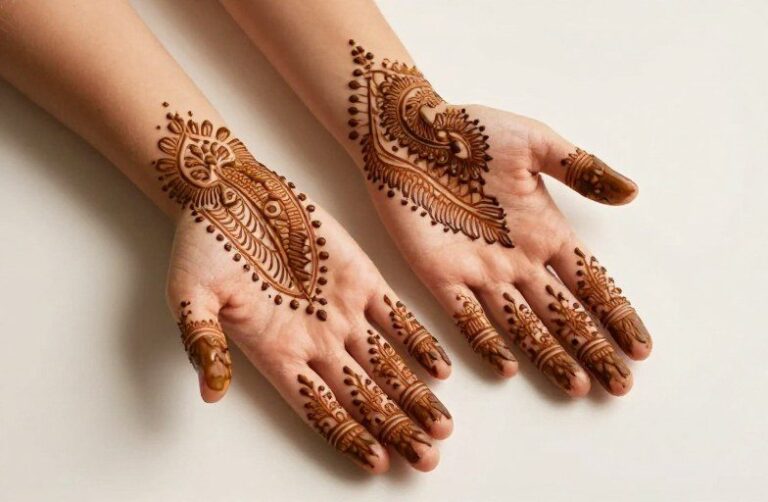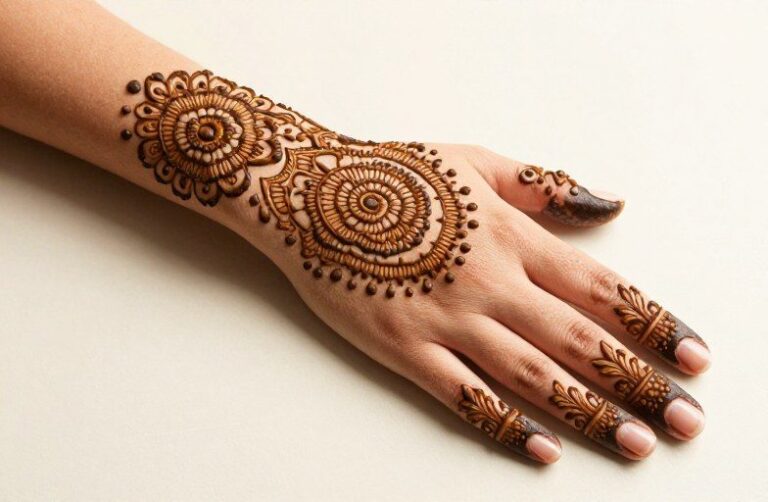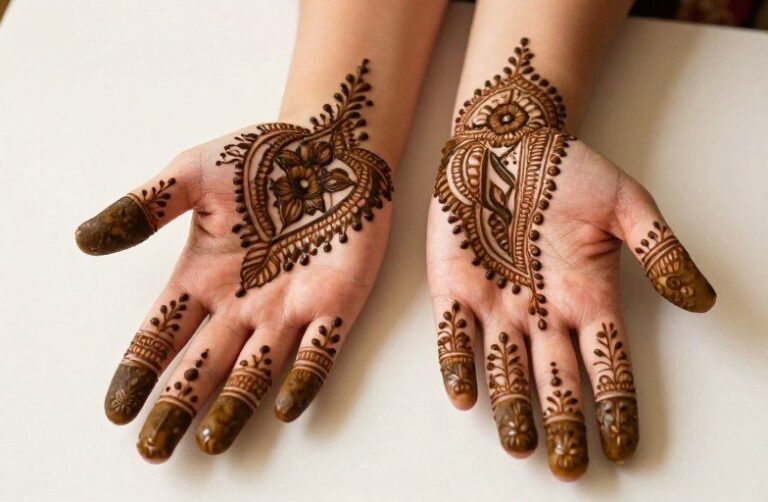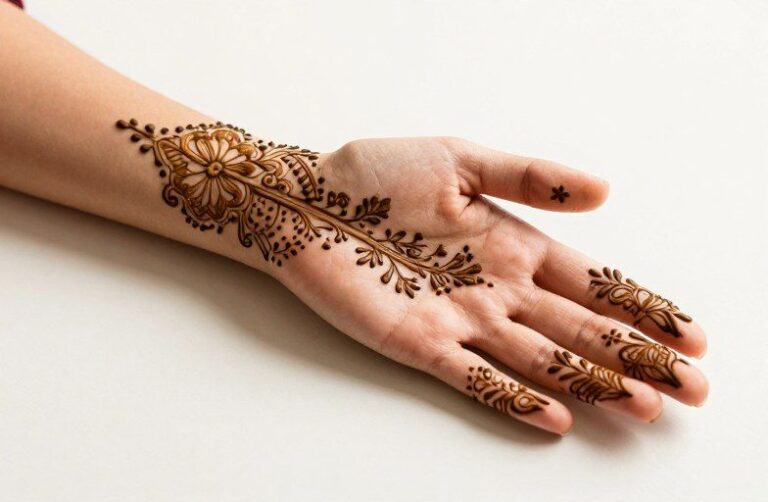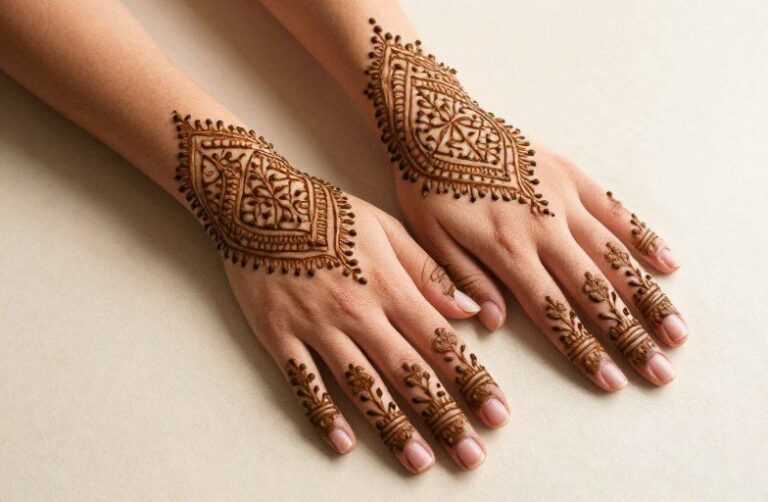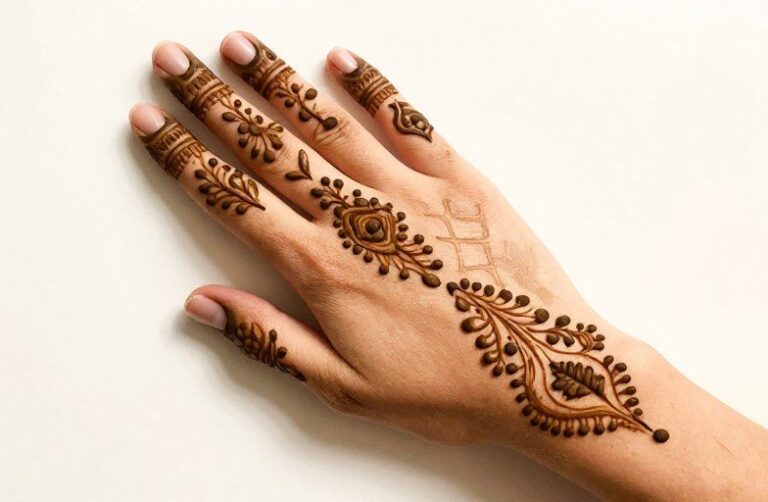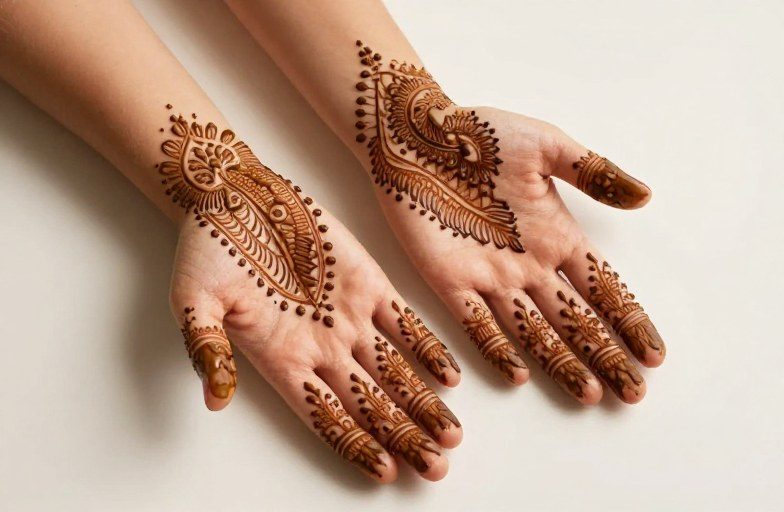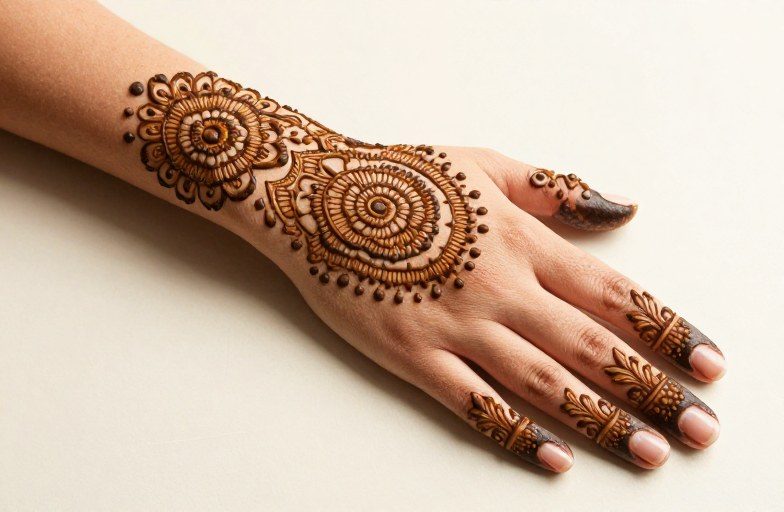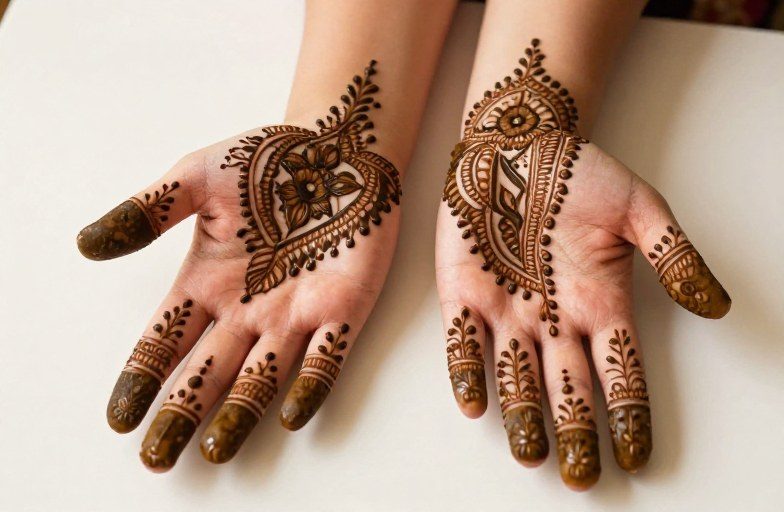
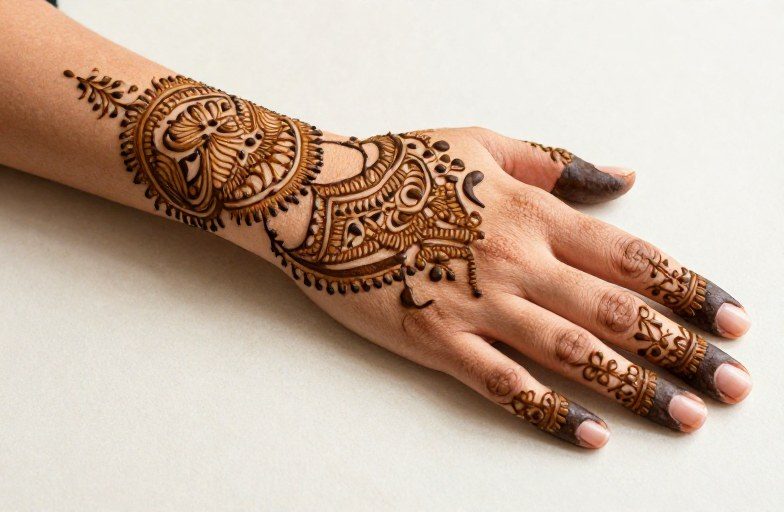
Pakistani henna, mehndi, differs from Indian or Arabic styles in specific ways that translate beautifully to permanent ink. The designs run denser than Arabic flowing vines but leave more negative space than full Indian bridal coverage. You’ll see teardrop paisleys, fine line florals, and geometric borders that wrap fingers, flow across hands, or climb forearms. Understanding these structural habits helps you adapt henna’s temporary patterns into tattoos that age well and stay legible.
For First-Timers
Starting with henna-inspired tattoo work means respecting the original medium. Henna paste sits on skin’s surface, creating a stain that darkens over days. Ink, by contrast, lives below the epidermis. This difference determines what transfers and what fails.
Placement That Holds Detail
Fingers and palms seem obvious since henna centers there, but palm skin sheds rapidly and finger tattoos blur within a few years. Better first placements: the back of the hand, outer wrist, forearm, or upper foot. These areas take fine lines more reliably and let you test whether you want fuller coverage later.
Start small. A single paisley on the wrist back, a geometric band, or a floral cluster near the inner forearm gives you the aesthetic without committing to a full hand piece. You can always build outward.
What to Expect from the Needle
- Linework dominates; shading is minimal or absent in traditional reference
- Sessions run shorter than realism or heavy blackwork
- Multiple fine lines close together create the “filled” look without solid saturation
- Healing involves more peeling than usual because line-dense areas crust differently
Trending Variations
Contemporary Pakistani mehndi has absorbed influences from geometric art, minimalist tattoo culture, and even architectural motifs. These hybrids travel well into permanent ink because they simplify the original complexity without losing recognizability.
Negative-Space Dominant Pieces
Rather than replicating henna’s dense fill, some artists now map the pattern’s skeleton, outlines, key paisleys, border turns, leaving skin tone to do the work. The result reads as Pakistani-influenced from distance but reveals its precision up close. This approach ages exceptionally; missing ink from future fading matters less when the design was never fully solid.
Mixed-Style Fusion
Combining Pakistani floral density with Turkish geometric rosettes or Persian miniature borders creates pieces that feel collected rather than copied. The fusion works best when one tradition leads and the other accents. Let the Pakistani paisley or teardrop shape anchor the composition, then thread foreign geometry through gaps.
Popular Styles
Certain motifs recur across Pakistani mehndi because they carry structural logic: they fill awkward spaces, frame other elements, or guide the eye along a path. Understanding these lets you request specifics instead of vague “henna style.”
- Paisleys (kairi/boteh): The teardrop with internal curl, often repeated in mirrored pairs. In tattoos, they work as standalone wrist pieces or knee/elbow framing.
- Floral jaali: Lattice-like flower networks, each bloom connected by thin stems. Adapts to armbands, sternum pieces, or upper back panels.
- Domed arch borders: Resembling mosque archways or the top of a hand piece’s wrist cuff. Excellent for forearm bands that need a top-heavy visual weight.
- Peacocks: Less common than in Indian bridal mehndi but present in Pakistani festival work. Simplified to line work, they become striking shoulder or thigh pieces.
- Mandala centers: Circular radiating patterns placed in palms or, for tattoos, over sternum, back of neck, or elbow ditch.
Color Choices
Traditional henna yields orange-brown to deep burgundy depending on skin chemistry and paste quality. Tattoos obviously don’t replicate this organic variation, so color choices become deliberate design decisions rather than chemical accidents.
Black Line Work
Black remains the most common and practical choice. It holds contrast against all skin tones and mimics the darkest henna results. Over decades, black lines soften to blue-gray but maintain readability better than color alternatives. For dense Pakistani patterns with many intersecting lines, black prevents the visual muddle that brown or red tones can create as they age.
Brown and Red Tonal Options
Some artists offer reddish-brown or warm sepia inks specifically for henna-inspired work. These read immediately as “mehndi” to observers but require touch-ups more frequently. The pigments often contain iron oxide bases that can shift unpredictably. If you want this route, request a test patch or small initial piece before committing to large coverage.
White ink and “henna-colored” tattoo pigments exist but generally perform poorly. White yellows or disappears; henna-matched oranges rarely settle to natural-looking tones. Most experienced artists will steer you toward black or dark brown for longevity.
Standout Design Ideas
Specific compositions that translate well from temporary henna to permanent tattoo:
- Back-of-hand panel with finger extensions: The classic bridal placement, but tattooed on the hand back only, with thin lines trailing toward the base of fingers without wrapping them. Preserves the visual rhythm without the palm/finger durability problem.
- Forearm sleeve with wrist cuff: A dense band at wrist level, then sparser motifs traveling upward. The cuff references Pakistani henna’s typical wrist concentration; the upward spread adapts to tattoo-friendly real estate.
- Sternum mandala with paisley drops: Central circular motif, with paired paisleys descending toward the abdomen. The symmetry flatters the torso’s natural structure.
- Upper foot/ankle band: Less common in Western tattooing but directly borrowed from Pakistani mehndi practice. The foot’s top surface takes line work reasonably well if you avoid the sides and sole.
- Behind-ear floral cluster: Small, socially concealable, but visibly Pakistani-influenced through the specific curl of the paisley-derived shapes.
How to Personalize It
Generic henna stencils circulate online and in tourist markets. Personalization requires moving beyond these.
Incorporating Text or Numerals
Urdu calligraphy, rendered in Nastaliq script, integrates naturally into the flowing spaces of Pakistani mehndi. Names, significant dates in Arabic numerals, or single meaningful words can replace a paisley’s internal curl or form the center of a mandala. The script’s diagonal movement complements the organic curves surrounding it.
Alternatively, Roman numerals or English words in a thin serif can contrast against the curvilinear pattern, creating deliberate visual tension.
Geographic or Familial References
Specific flowers associated with regions, Sindhi rose motifs, Kashmiri chinar leaf shapes, Punjabi wheat sheaf stylizations, ground the design in actual heritage rather than generic “South Asian aesthetic.” If you have family roots in a specific area, researching its traditional mehndi variations yields motifs most artists won’t have in their standard flash.
I once watched an artist integrate a grandmother’s actual handwritten recipe notation into a wrist cuff’s border turns. The personal element was invisible to strangers, unmistakable to family.
What to Remember
Pakistani henna designs reward patience in both their original form and tattoo adaptation. The density that makes them striking also makes them technically demanding, fine lines must be precise, spacing must breathe, and the artist needs steady hand speed to maintain consistency across repetitive motifs.
Choose an artist with demonstrated line-work portfolio, not just “ornamental” or “mandala” generalism. Ask to see healed photos of fine-line pieces at one year minimum. Fresh tattoos always look sharper; you need evidence of how those hair-thin stems and delicate paisley interiors hold.
Respect the source without appropriating ceremony. Bridal mehndi has specific ritual contexts; festival mehndi carries different social meaning. A tattoo can honor the visual tradition without claiming the cultural moment. Discuss your intentions with your artist, and if you have no Pakistani heritage, consider whether your design choices veer into religious or ceremonial territory that should be avoided.
Finally, plan for touch-ups. Dense line work, however well-executed, settles and softens. Budget for a refinement session at 12-18 months, especially on high-movement placements like wrists or feet. The best Pakistani henna tattoos look intentional at every stage of their life, not just the day they heal.
Frequently Asked Questions
How long does a fine-line henna-style tattoo last before needing touch-up?
On good placements like forearms or upper back, five to eight years before noticeable softening. Fingers, wrists, and feet need refinement every two to four years due to movement and friction.
Can I get a henna tattoo that actually looks brown like real mehndi?
Some artists offer brown or reddish-brown inks, but these fade faster and shift color unpredictably. Most recommend black for longevity, which heals to a softer blue-gray over decades.
What’s the difference between Pakistani and Indian bridal mehndi for tattoo purposes?
Pakistani work tends toward denser geometry with more negative-space borders, while Indian bridal often covers the entire hand solidly. Pakistani paisleys also have a tighter, more elongated curl.
Is it appropriate to get Pakistani henna designs if I’m not South Asian?
Ornamental geometric patterns and general floral mehndi are widely shared across regions. Avoid specific religious symbols, bridal ritual motifs, or family-crest elements tied to particular communities. Discuss with your artist.