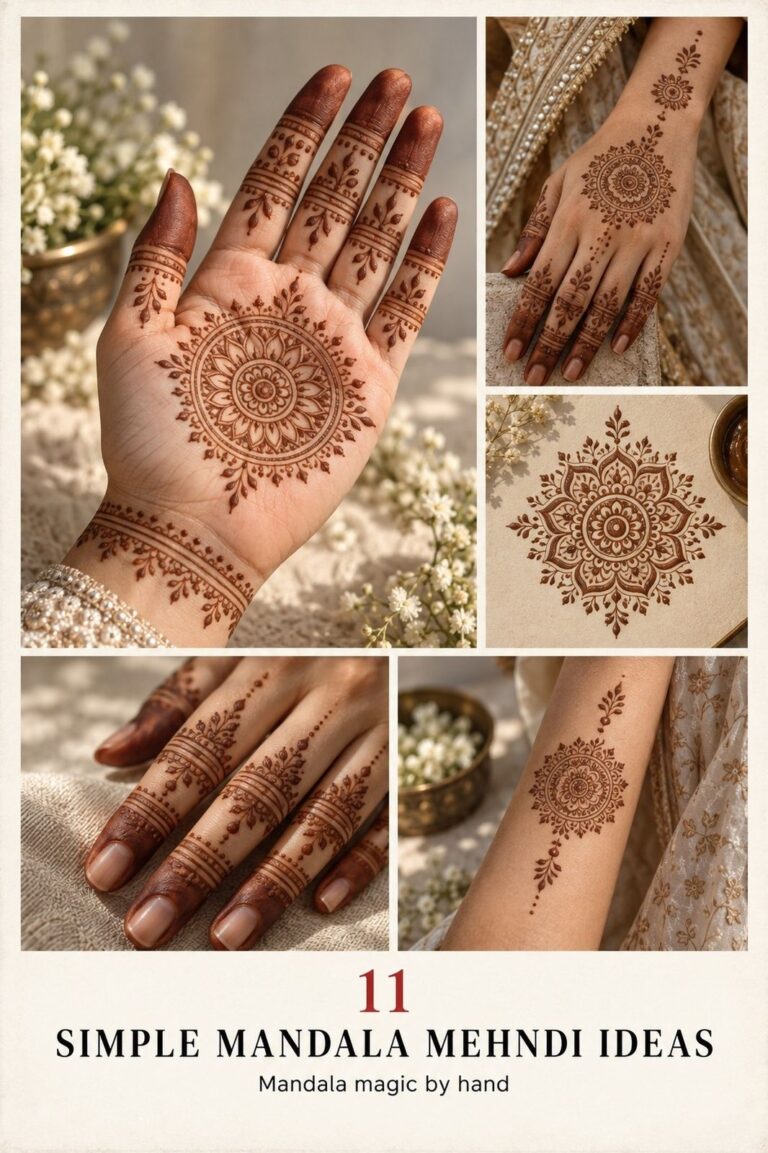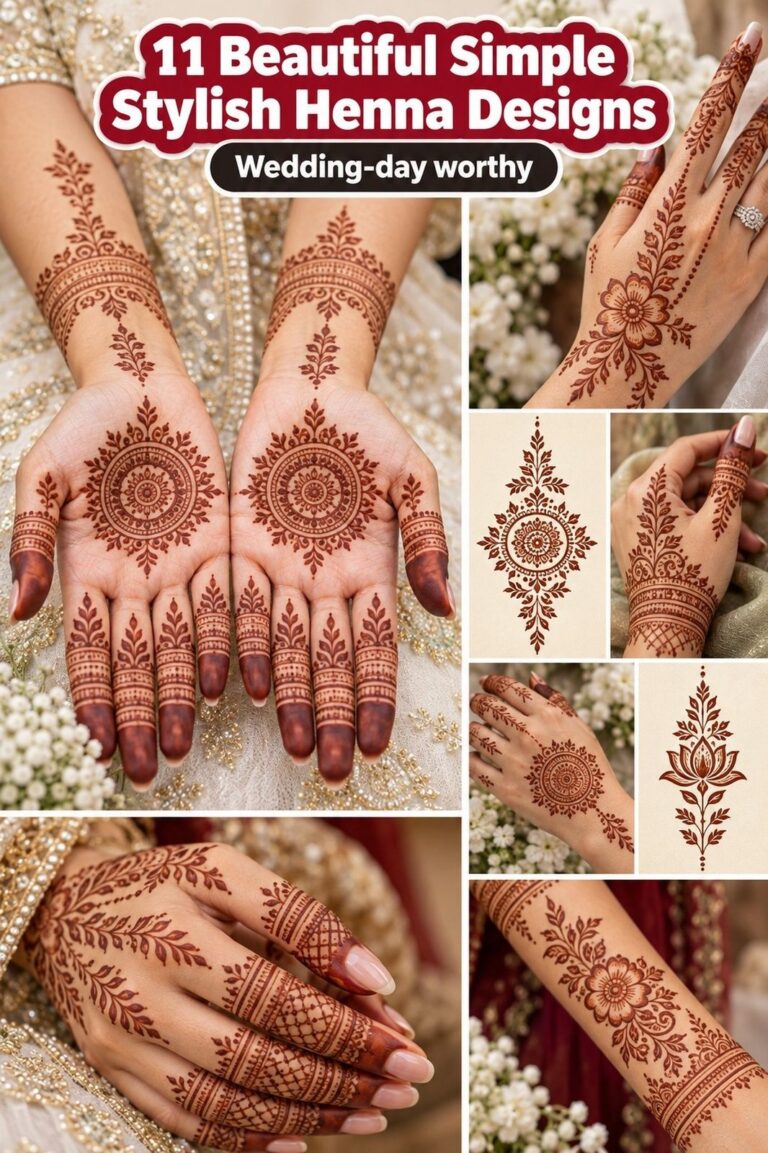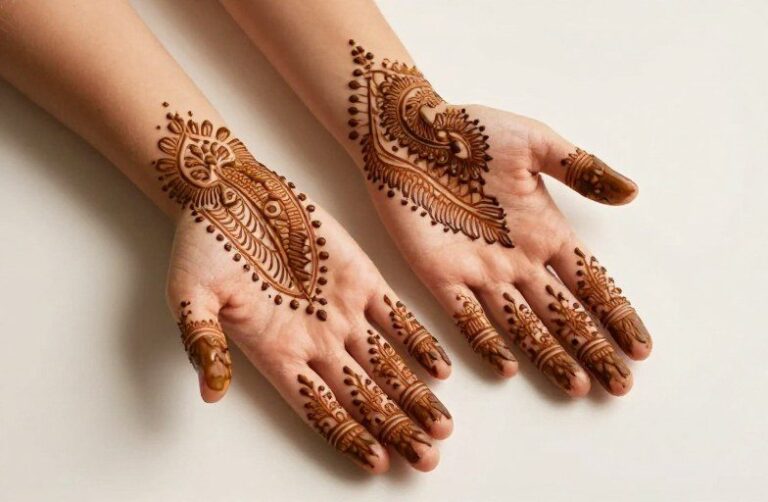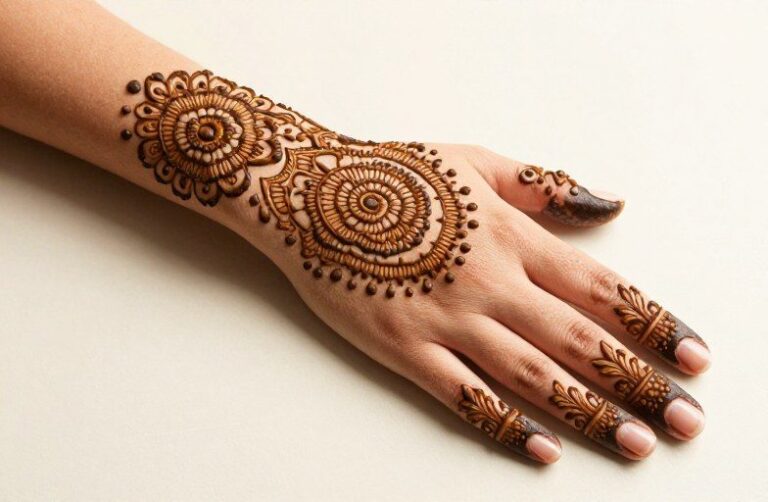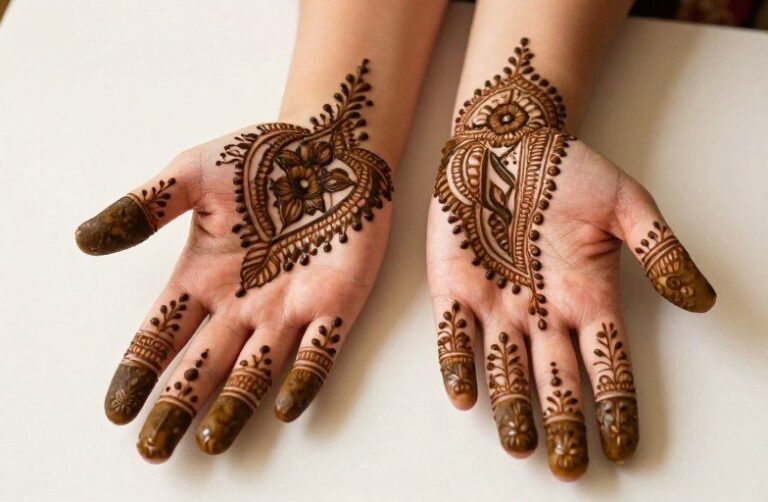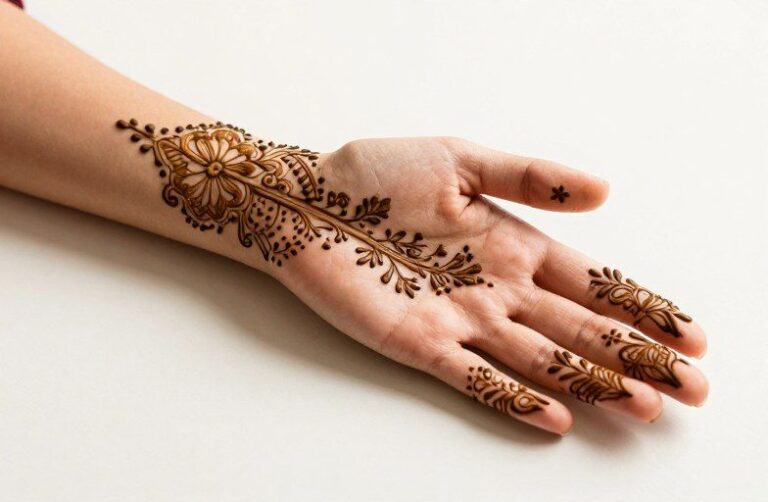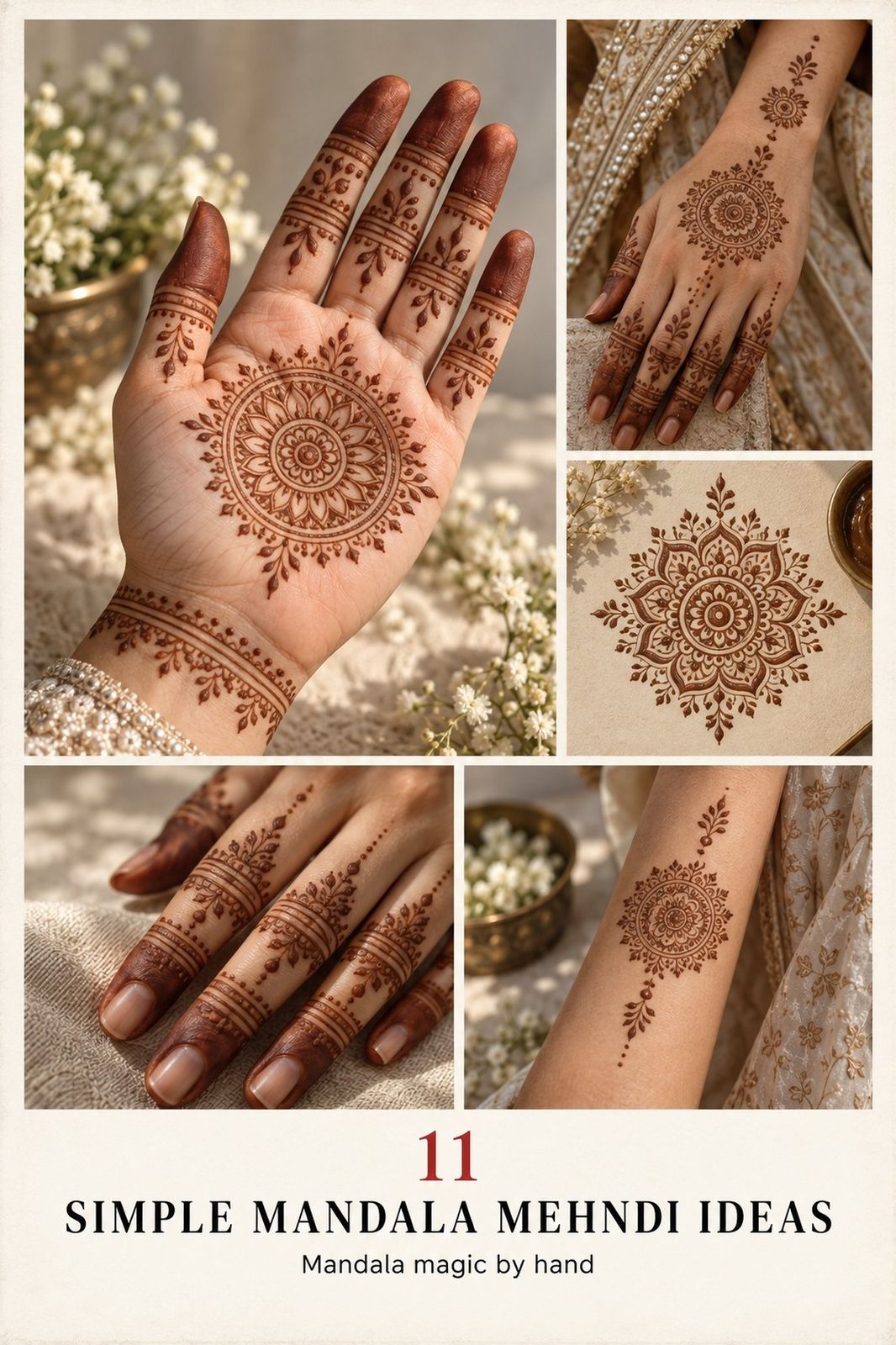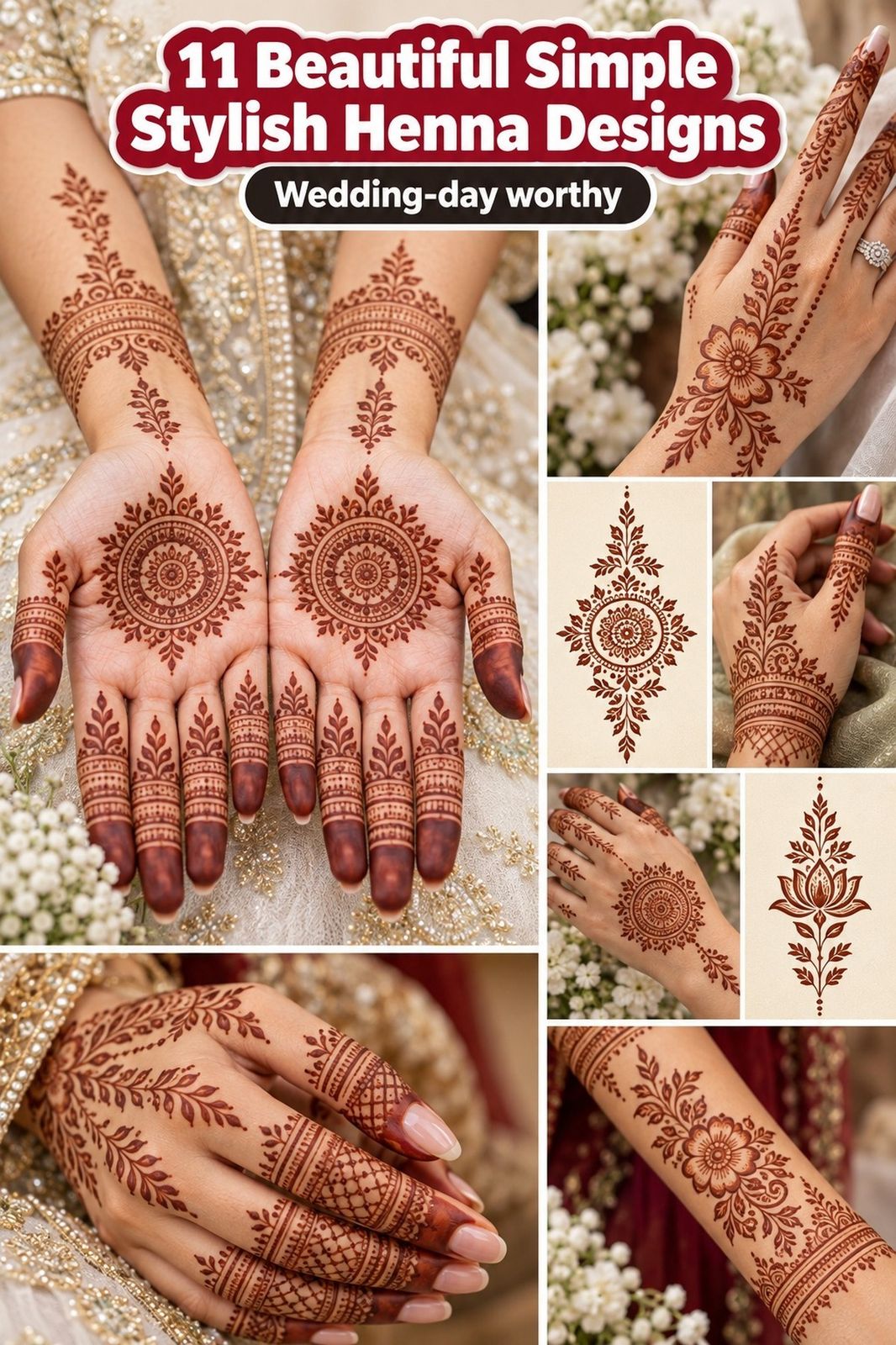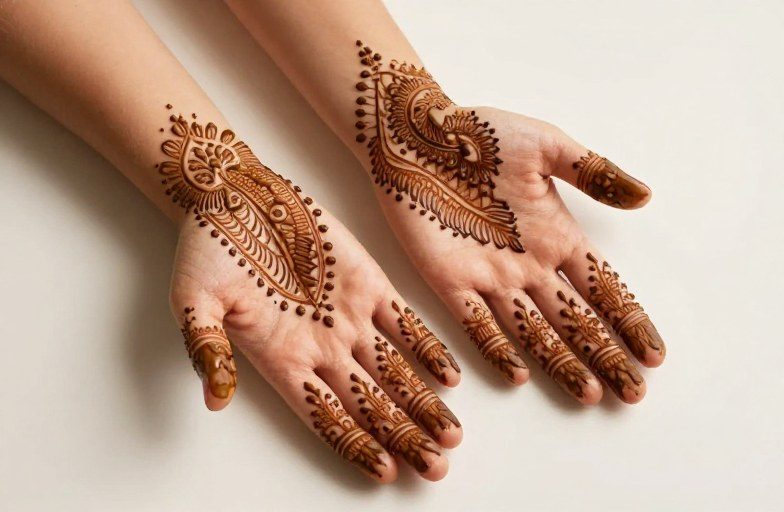
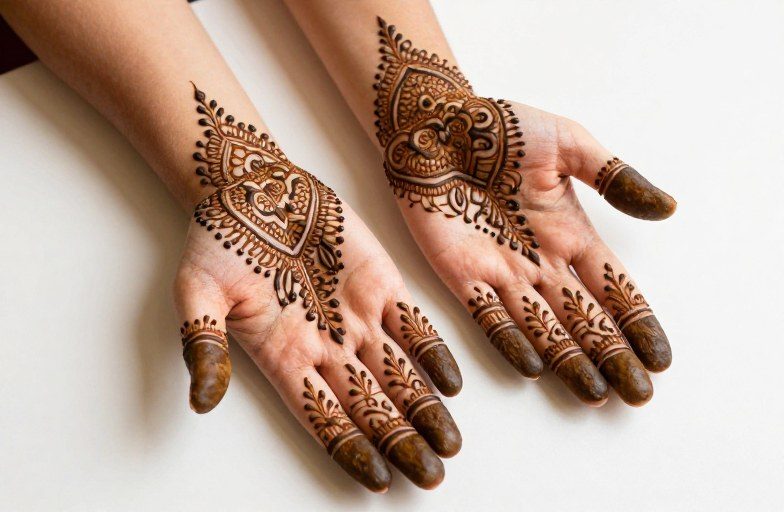
Indo-Arabic henna tattoos occupy a sweet spot between two traditions: the airy, negative-space-heavy flow of Arabic mehndi and the packed, jewel-like detail of Indian bridal work. The fusion isn’t just about mixing motifs, it’s about balancing breathing room with ornament, calligraphic movement with geometric precision. These designs translate beautifully to permanent tattoo form, but they demand specific technical decisions to hold up over time.
Size & Scale
The density of Indo-Arabic patterns makes scale decisions critical. Too small, and the filigree collapses into muddy gray; too large without enough variety, and the eye loses interest.
Hand and Foot Placements
Backs of hands and tops of feet remain the classic canvas. A palm-sized medallion with radiating paisleys works at 4, 5 inches across. Fingers can carry vertical vine strips or tiny teardrop accents, but keep these to 2, 3mm wide, any finer, and blowout turns them into soft blurs within a year. The webbing between thumb and index finger suits a small blooming lotus or a single unfolding leaf, but expect faster fading there from constant movement and sun exposure.
Arm and Leg Bands
Forearm bands at 3, 4 inches tall let you stack a calligraphic upper register above a paisley lower border. Calf pieces can stretch to 6, 8 inches, where a central mandala anchors trailing vines that wrap slightly toward the shin. Thighs offer the most real estate for a full Indo-Arabic garden scene, peacocks, architectural arches, cascading florals, but budget for multiple sessions; rushing dense packing in a single sitting swells the skin and compromises line quality.
For First-Timers
Starting with Indo-Arabic work means respecting the learning curve of both style and skin.
Start with Open Patterns
Choose designs with visible skin breaks between elements. A pure Indian bridal-style fill with 90% coverage looks stunning in henna paste, but as a tattoo, that much saturated black overwhelms most complexions and ages to a flat blue-gray slab. Arabic-influenced pieces with 40, 50% negative space adapt better to tattoo ink and heal more predictably. Ask your artist to map the design with a single-needle pass on the finest lines before building up thicker strokes or fills.
Placement That Hides the Learning Curve
First tattoos on the outer forearm or shoulder blade let you observe how your body handles ink without committing to a highly visible spot. These areas also photograph well for portfolio shots, which matters if you plan to build a collection. Avoid ribs, sternum, or inner bicep for your first Indo-Arabic piece, the pain can make you flinch, and these designs reward absolute stillness during long linework sessions.
Standout Design Ideas
Moving beyond the Pinterest-standard lotus-and-mandala combo opens up territory that actually feels personal.
- Architectural frames: A Mughal archway with scalloped edges, filled with a single oversized paisley and flanked by parrots or mango leaves. The arch gives the eye a resting point amid the ornament.
- Broken bracelet: A wrist cuff that deliberately gaps at the inner wrist, where a small Urdu word or Hindi character sits in negative space. The discontinuity feels modern without abandoning tradition.
- Mirror-image ankles: Matching designs on both ankles, but one rendered in fine-line black and the other with dotwork shading. The asymmetry creates conversation without clashing.
- Spine vine: A vertical stem running from nape to mid-back, with alternating Arabic calligraphy panels and Indian floral bursts. Requires a body that reads vertical well, taller frames carry this more naturally.
One detail that separates memorable Indo-Arabic tattoos from generic ones: the deliberate use of jaali (lattice) patterns as transitional elements between dense and open areas. A skilled artist weaves these net-like breaks to let the composition breathe.
Color Choices
Traditional henna is a single rusty brown. Translating to permanent tattooing, you have options, but not as many as Instagram filters suggest.
Black and Gray Realism
Most Indo-Arabic tattoos live in black ink. The question is how many tones. Pure black linework with no shading reads crisp and graphic, closest to fresh henna paste. Adding gray wash for petal depth or background haze softens the look but risks muddying fine patterns after five years. For jaali work, stick to single-pass black; any shading in lattice sections turns them to gray soup.
Accents of Color
Subtle wine red or saffron yellow in select petals, never full fields, can evoke henna’s natural stain without looking like a different tattoo style entirely. These pigments fade faster than black, so place them in low-friction areas (upper arm, back) rather than hands or feet. Green, often associated with henna leaves, tends to heal toward a murky olive on most skin tones and rarely justifies the extra session cost.
Popular Styles
Indo-Arabic isn’t monolithic. These substyles help you communicate with artists who might not know the terminology.
- Khaleeji-influenced: Heavy floral sprays, often roses or jasmine, with long trailing stems. Less geometric than other substyles; suits flowing placements like ribs or outer thigh.
- Rajasthani dense: Packed with peacocks, mango motifs, and figurative elements. Demands larger scale and more sessions. Best for committed collectors with high pain tolerance.
- Indo-Persian hybrid: Combines Arabic calligraphy bands with Safavid-style botanicals. The calligraphy usually carries religious or poetic text, verify meaning with a native speaker, not just an online translation.
- Contemporary minimal: Single paisley, single stem, single word. Reduces the vocabulary to essentials. Heals beautifully, ages gracefully, but requires an artist with genuine understanding of the tradition to avoid looking like a generic flash piece.
Trending Variations
The style keeps moving. These directions feel current without being gimmicks.
Mixed Media Approaches
Some collectors pair a black Indo-Arabic linework base with actual henna staining for special occasions. The tattoo provides permanent structure; the henna adds temporary color variation. Others experiment with white ink highlights over healed blackwork, though white fades to invisibility on deeper skin tones and yellows unpredictably on lighter ones.
Scar Integration
Designing around or through surgical scars, stretch marks, or self-harm recovery marks. The organic irregularity of paisley shapes adapts well to skin that isn’t perfectly smooth. A skilled artist traces the scar’s path with a vine, letting the body’s history become part of the pattern’s flow rather than fighting it.
What to Remember
Indo-Arabic henna tattoos reward patience at every stage. Research your artist’s portfolio for actual mehndi-inspired work, not just geometric mandalas marketed under the name. Expect longer sessions than comparable-size Western-style pieces, the line density demands it. Budget for touch-ups, especially on hands and feet where ink faces constant friction and UV exposure. And respect the cultural lineage: this isn’t a trend to grab and discard, but a living tradition that asks for some homework before you wear it permanently.
Frequently Asked Questions
How long does an Indo-Arabic hand tattoo take compared to a simpler design?
A dense Indo-Arabic back-of-hand piece typically runs 3, 4 hours versus 1, 2 hours for a simpler Western floral. The fine linework and packed detail require slower needle passes and frequent wiping to check pattern integrity.
Will the fine lines in jaali patterns blur together over time?
Single-needle jaali under 2mm wide can spread slightly, especially on oily skin or high-movement areas. A good artist builds lattice with staggered dotwork rather than continuous lines, giving the pattern structural backup if individual strokes soften.
Is it disrespectful to get Arabic calligraphy if I don’t read the language?
Religious phrases without understanding carry risk of misappropriation. If you want the aesthetic, commission a poet or native speaker to craft a personal, non-religious phrase, or use abstract calligraphic flourishes that read as decorative rather than textual.
Why do some Indo-Arabic tattoos look gray and flat after healing?
Over-packing black ink in dense patterns causes the body to reject excess pigment, leaving a dusty gray cast. The best work leaves deliberate skin breaks and builds darkness through layered sessions rather than one heavy pass.