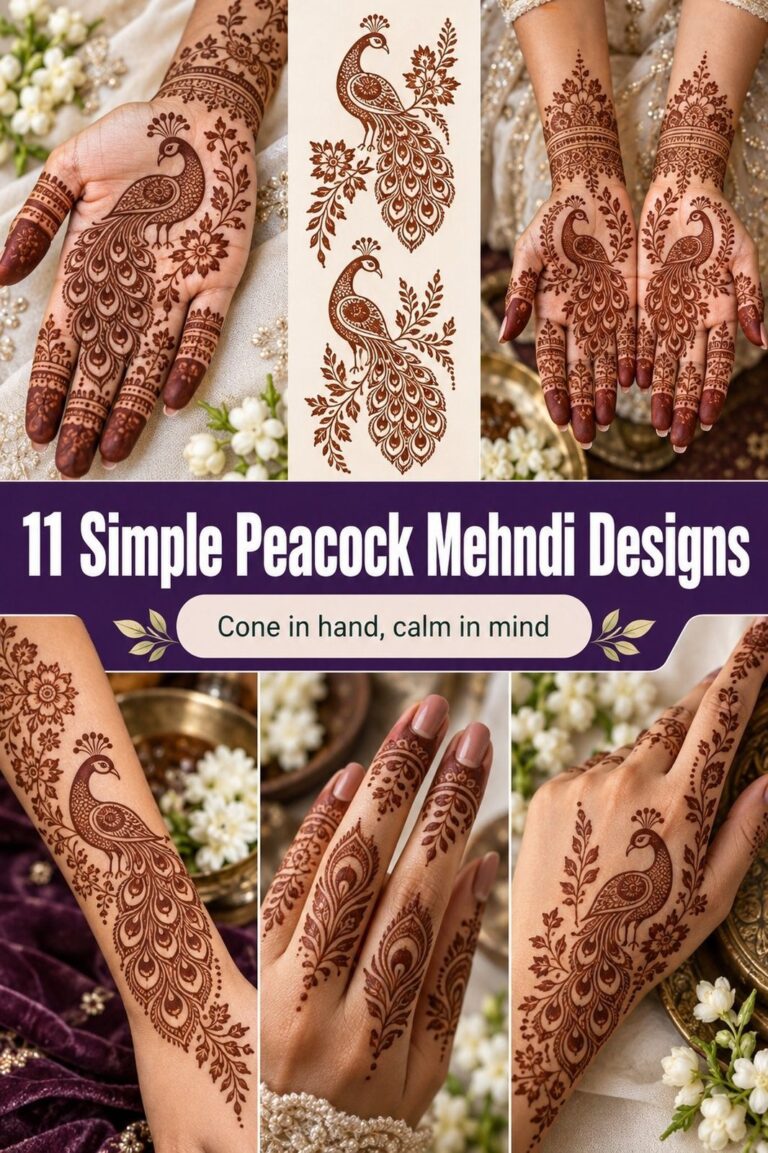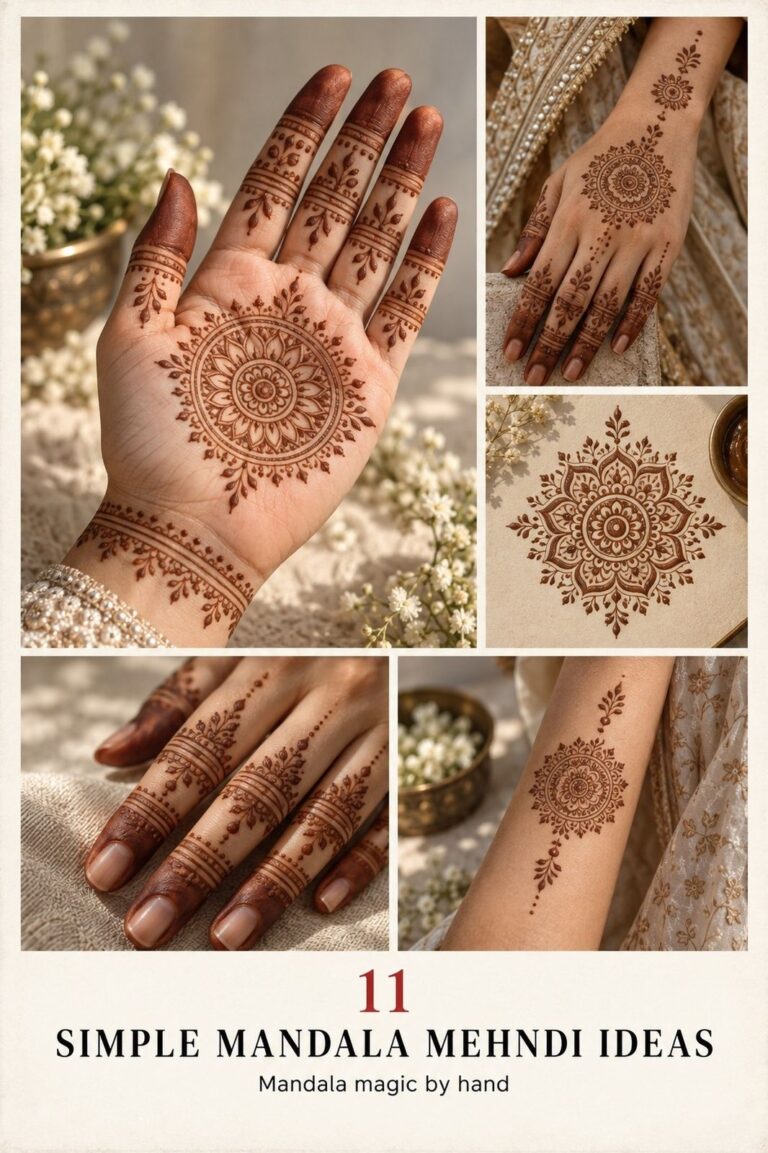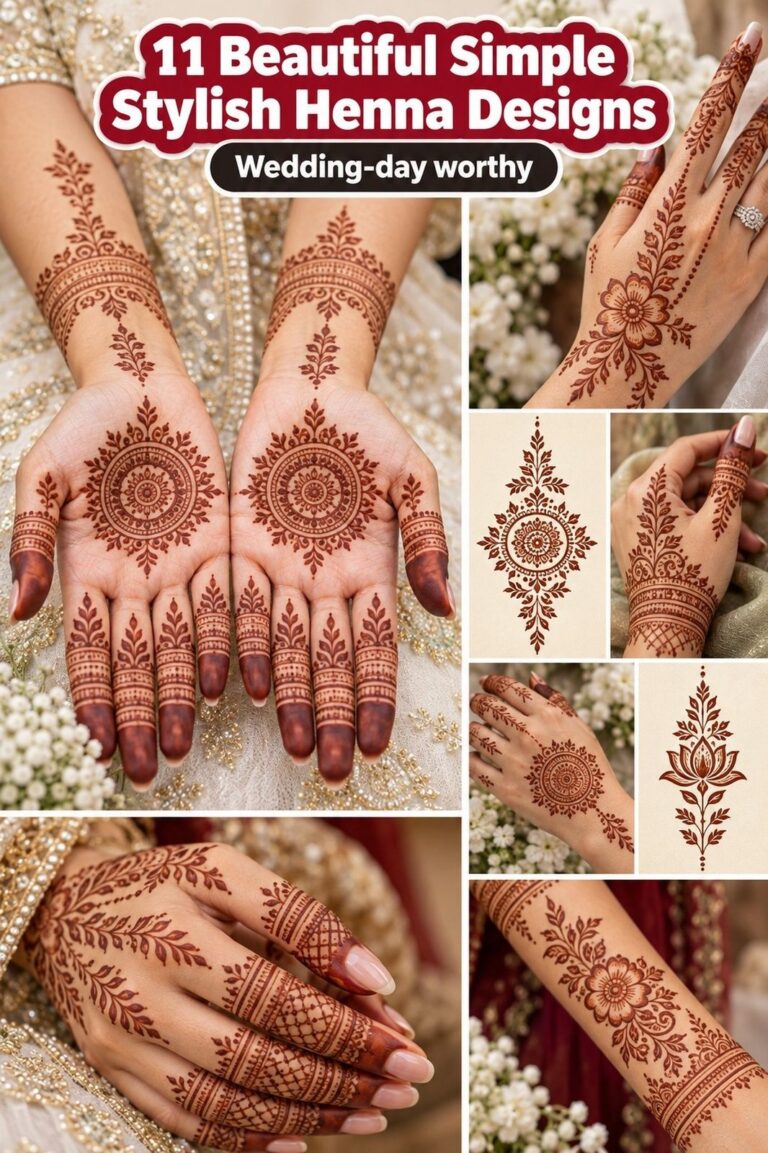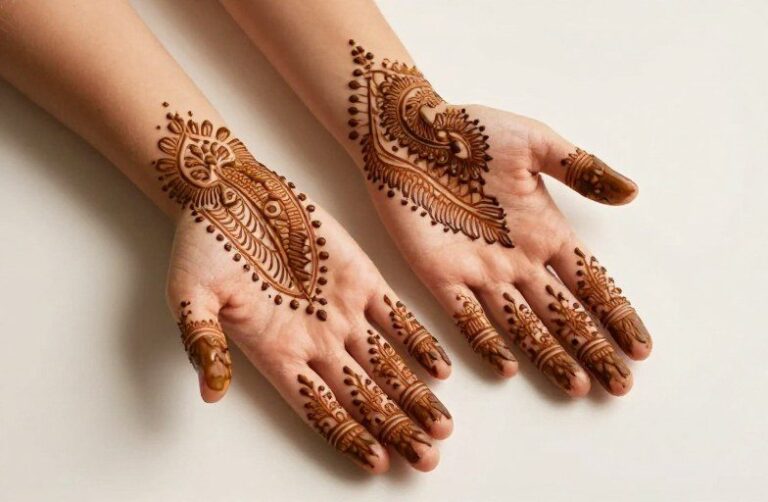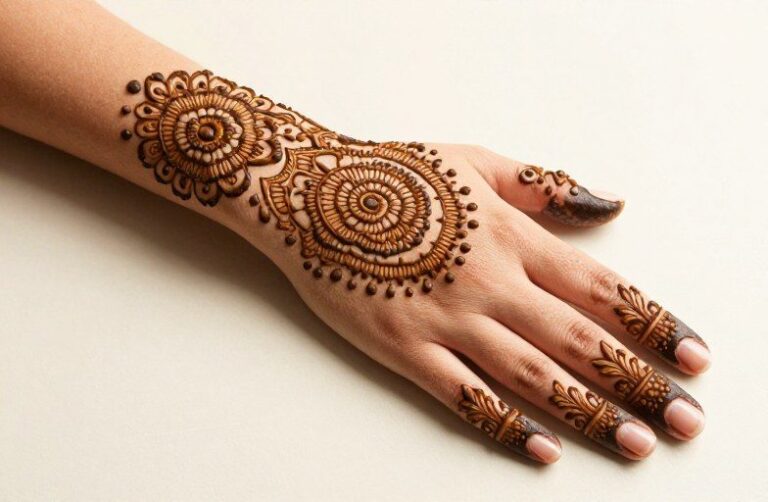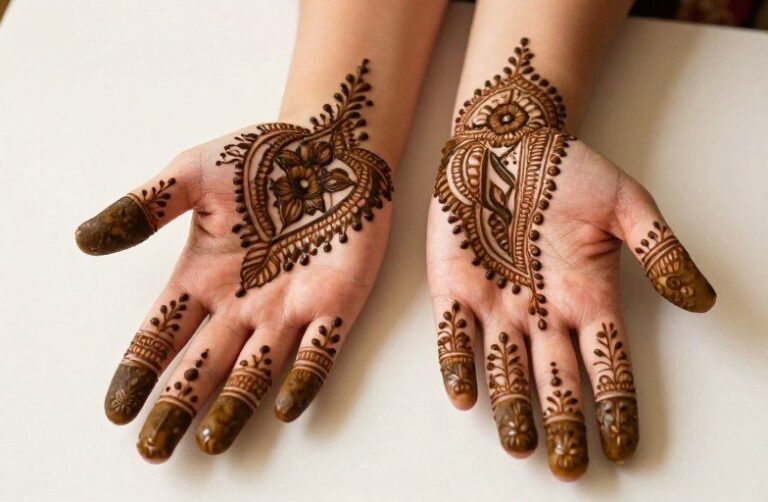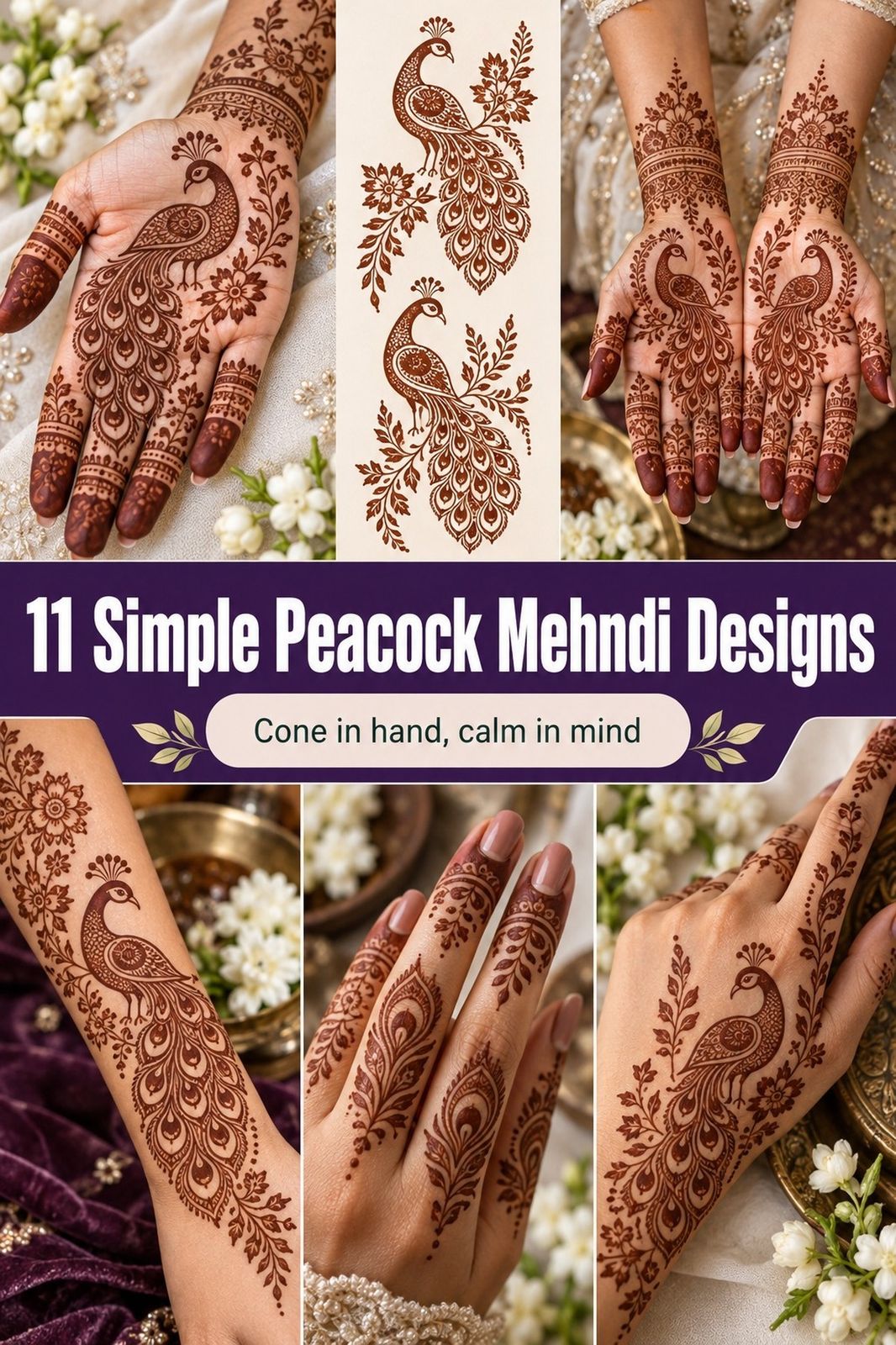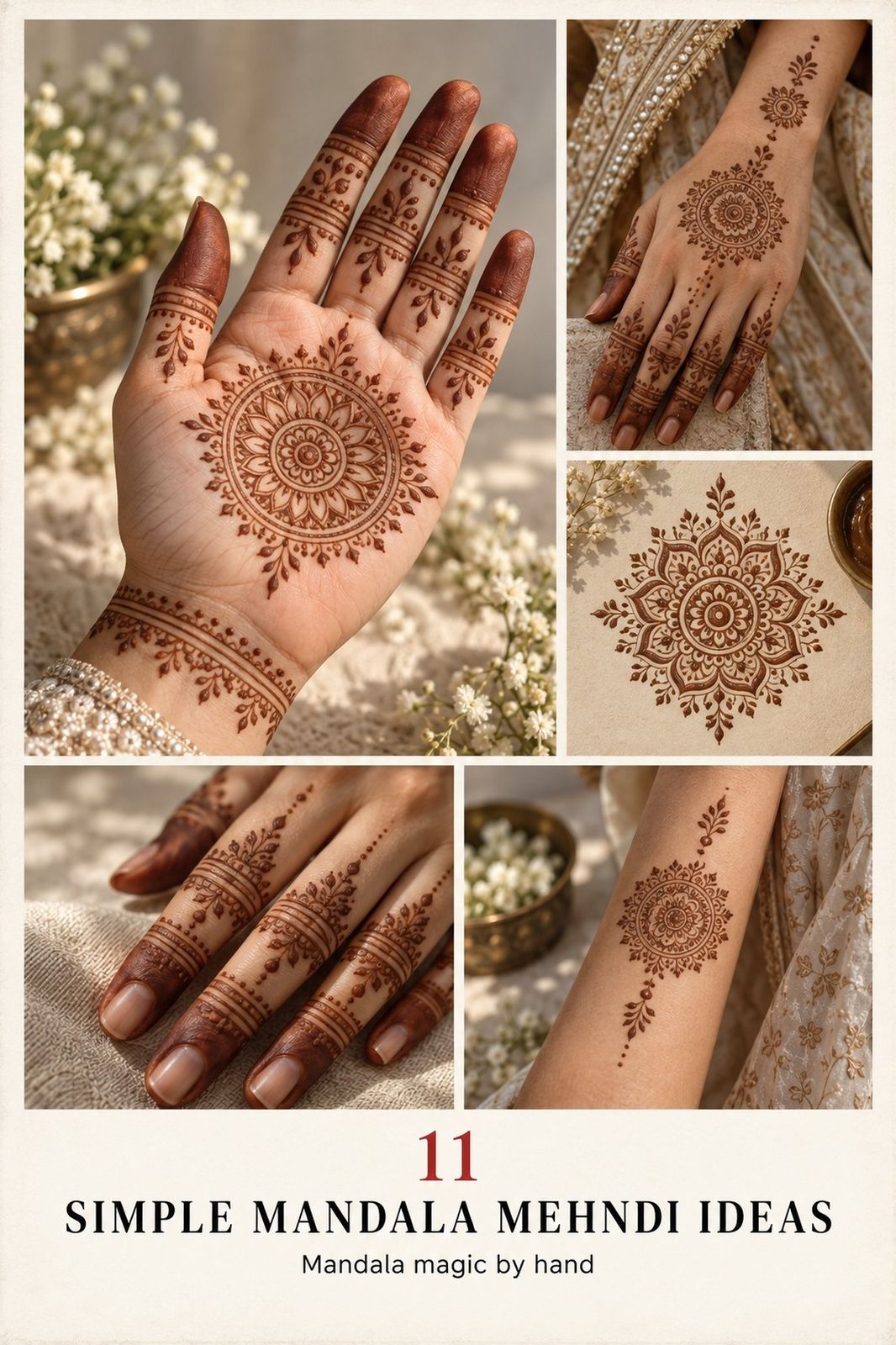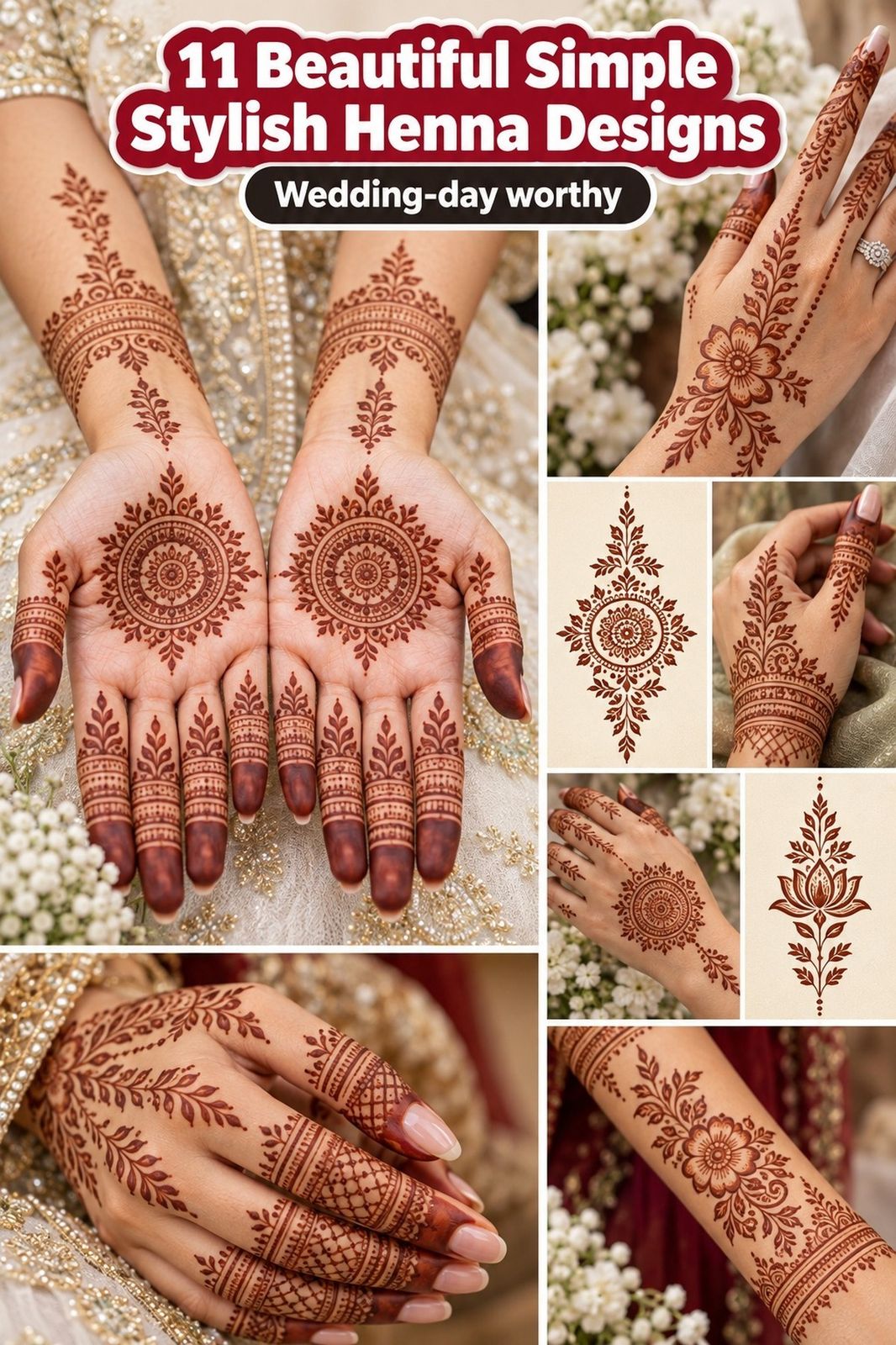
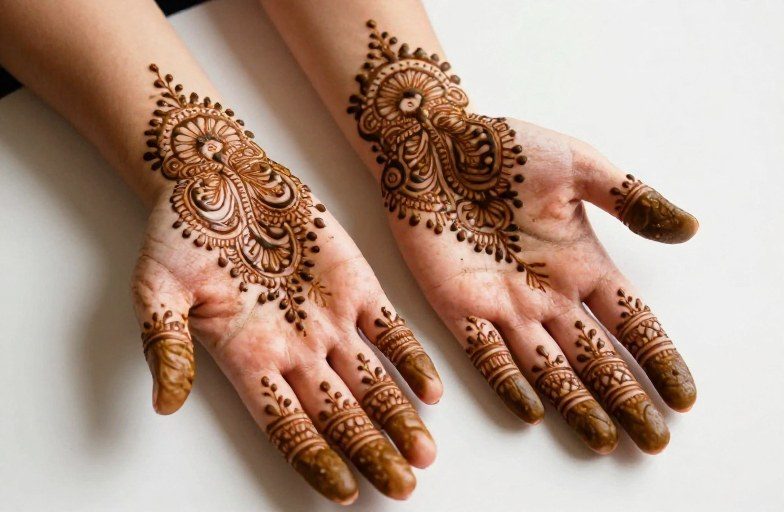
Mehndi-inspired tattoos occupy a fascinating middle ground. They’re rooted in centuries of South Asian, Middle Eastern, and North African tradition, yet increasingly requested by people who want the visual language of henna without its temporary nature. The shift to permanent ink raises real design and technical questions. Traditional henna stains the skin’s top layers in organic, unpredictable ways. Ink sits deeper, holds sharper edges, and ages differently. That gap between mediums is where modern mehndi tattooing gets interesting.
Color Choices
Authentic henna yields a reddish-brown stain, while “black henna” (often PPD-based and genuinely hazardous) has created confusion about what mehndi “should” look like. In tattoo form, color becomes a deliberate choice rather than a chemical reaction.
The Case for Brown and Red Tones
Earth-toned pigments, sienna, rust, warm sepia, read as mehndi immediately. They age gracefully, fading toward softer versions of themselves rather than turning muddy. Red-based browns particularly suit medium to deeper skin tones, where they create subtle contrast without the harshness of pure black. On lighter skin, these same tones can look almost sun-kissed, a whisper rather than a declaration.
Related reading: modern mehndi tattoo ideas | minimalist henna designs | trendy minimalist mehndi tattoo | geometric mehndi tattoo designs
When Black Ink Works
Black linework offers precision that henna simply can’t match. Fine paisley spirals, geometric grids, and negative-space florals all benefit from the control black provides. The trade-off: black mehndi-style tattoos age into a softer gray, and dense black fill can obscure the delicate lacework that defines the style. Strategic use works best. Black outlines with skin-tone negative space, or selective dotwork rather than solid fill, preserves readability for years.
- White ink: heals to a subtle, almost scar-like quality; rarely stays truly white
- Metallic gold or silver: technically possible with certain pigments, but most reputable artists avoid them due to instability and potential reactions
- Muted purples and blues: increasingly popular for a contemporary twist, though they read less as traditional mehndi
Popular Styles That Translate Well
Not every traditional henna motif transfers to permanent ink. Some patterns rely on the slight blurriness of natural stain. Others depend on the hand’s curved surfaces for their full effect. Here are the approaches that consistently succeed.
Geometric and Architectural
Islamic geometric patterns, girih tiles, arabesques, interlacing stars, transfer beautifully to tattoo. Their mathematical precision suits the medium. These designs hold up at smaller scales than florals, and their symmetry makes placement forgiving. Common requests include single repeating units, a six-point star, a section of interlace, that can stand alone or expand into larger pieces.
Floral and Paisley
The classic mehndi flow, vines, lotuses, mango-shaped paisleys, requires more space to breathe in ink. At small sizes, the linework blurs together within a few years. Successful floral mehndi tattoos typically run palm-sized or larger, with deliberate spacing between elements. The paisley itself, that teardrop-with-curl, has become common in flash art. Modern interpretations often fragment it, overlap it with geometric frames, or reduce it to a single clean line.
What Is Changing in Contemporary Work
Artists are pushing mehndi-inspired work in directions traditional henna never went. These aren’t gimmicks. They’re responses to how people actually want to wear these patterns.
Partial Coverage and Fade-Outs
Rather than the full-hand or full-foot coverage of ceremonial henna, many now request designs that dissolve at the edges. A dense mandala on the shoulder that breaks into scattered dots and single lines toward the collarbone. A forearm cuff that doesn’t fully close. This acknowledges the difference between stain, which always has soft, organic edges, and ink, which can but doesn’t have to.
Mixed Media Approaches
Some artists combine mehndi linework with dotwork shading, creating depth that henna can’t achieve. Others incorporate single-word calligraphy in Arabic, Urdu, or Devanagari script, framed by traditional floral borders. The script itself becomes a design element, its curves echoing the surrounding paisleys.
New Placements
Traditional henna goes on hands, feet, forearms. Modern mehndi tattoos appear on ribs, along the spine, wrapping ankles, even as sternum pieces. The rib placement particularly works. The curved surface echoes the hand’s topography, and the substantial pain is accepted as part of the commitment that temporary henna doesn’t require.
Size and Scale Decisions
Scale should be driven by detail density and aging, not by trends toward maximalism or minimalism.
Small and Delicate
Single mandalas under two inches, tiny finger bands, miniature paisleys behind the ear, these are technically achievable but demand exceptional needle control. Single-needle or very tight three-needle groupings are necessary. The reality: even perfect linework spreads slightly over time. A design that looks crisp at month three may be fuzzy at year five. For small pieces, simpler is smarter. A clean geometric flower with eight petals and a center dot ages better than a twenty-petal layered mandala at the same size.
Large and Flowing
Full sleeves, back pieces, or thigh compositions allow the mehndi vocabulary to fully expand. Here, the artist can vary line weight, incorporate true negative space, and build visual rhythm through repetition and variation. Large-scale work also permits the stain gradient effect, areas of heavier ink that read as darker henna, fading to lighter linework that mimics worn stain. This requires planning the entire composition before any ink touches skin, not improvising session by session.
Planning Your First Piece
First tattoo and drawn to mehndi aesthetics? A few specific considerations apply.
Placement for Longevity
Palms and soles of feet, traditional henna territory, are poor choices for permanent ink. Palm skin regenerates rapidly, and tattoos there fade dramatically within months. The tops of hands and feet fare better, though still high-wear. For a first piece, consider the forearm, inner or outer, upper arm, calf, or shoulder. These locations balance visibility with stability, and the skin texture accepts fine linework more predictably.
Finding the Right Artist
Not every artist who can do bold American traditional or photorealistic portraits can execute convincing mehndi-style linework. Look for portfolios showing consistent needle-thin lines, geometric precision, and actual healed results, not just fresh photos. Ask specifically about healed photos of fine linework. Some artists photograph beautifully fresh but their lines blow out over time. Cultural fluency matters too. An artist who understands the difference between a lotus and a peacock motif, who knows why certain patterns are associated with bridal versus festival henna, will produce more authentic work.
Healing Considerations
Fine linework heals differently than bold traditional pieces. The thin lines are more vulnerable to moisture and friction during healing. You’ll need to be more careful about submersion, about sleeping position, about clothing that rubs. The aftercare isn’t complicated, but it is specific. Ask your artist for their protocol, and follow it precisely. A blown-out line in a geometric piece is much harder to correct than in a softer, more organic style.
Fresh Combinations Worth Considering
Specific combinations that currently feel fresh rather than derivative:
- Split composition: A dense mandala on one shoulder, mirrored by scattered single elements, a dot, a short line, a tiny paisley, trailing down the arm. Negative space as active design choice.
- Architectural frame: A geometric border containing a single word or date in script, the border itself built from traditional mehndi motifs.
- Broken bracelet: A wristband design that intentionally doesn’t connect, with the gap placed at the wrist’s inner side where a real bangle would sit.
- Overlapping systems: A geometric grid partially obscured by flowing florals, the two layers in slightly different tones, brown grid and black florals, for instance.
- Single-finger extensions: A small hand-top design with one thin line extending to the base of a single finger. References henna’s finger-tip tradition without the palm problem.
What to Remember
Modern mehndi tattoos work best when they respect the gap between temporary stain and permanent ink rather than pretending there isn’t one. The most successful pieces don’t simply replicate henna photographs. They translate the aesthetic’s priorities, intricacy, flow, and symbolic weight, into a medium with its own constraints and strengths. Brown ink will always read as more authentic to the tradition, but black linework offers possibilities henna never could. The choice between them, like the choice of motif and placement, should be deliberate rather than default.
These tattoos also carry a responsibility that purely ornamental designs don’t. Mehndi is not a generic pattern set. It carries specific cultural meanings, regional variations, and ceremonial associations. If you don’t come from a tradition that practices henna, approach this work with respect. Research the motifs you want. Understand their origins. Credit your sources. Consider whether your design choices might dilute or misrepresent something meaningful to living communities. The best modern mehndi tattoos honor this context rather than ignoring it. They don’t claim to be traditional, but they don’t pretend tradition doesn’t exist either. That balance, between personal expression and cultural awareness, is perhaps the most important design decision you’ll make.
Frequently Asked Questions
How long does a fine linework mehndi tattoo take to heal?
Expect 2-3 weeks for surface healing, with full settling at 6-8 weeks. Fine lines are more vulnerable during healing than bold work, so strict aftercare matters more.
Can I get a mehndi-style tattoo on my palm?
You can, but it won’t last. Palm skin regenerates too rapidly. Most artists will advise against it, and those who agree should explain the near-certain fading within months.
What’s the difference between brown and black ink for this style?
Brown reads as more authentic to henna tradition and ages toward softer tones. Black offers sharper precision but fades to gray and can obscure delicate detail if overused. Many artists combine both strategically.
How do I know if an artist can actually do fine mehndi-style linework?
Ask for healed photos specifically, not just fresh work. Look for consistent needle-thin lines, geometric precision, and evidence they understand the cultural context of the motifs they tattoo.