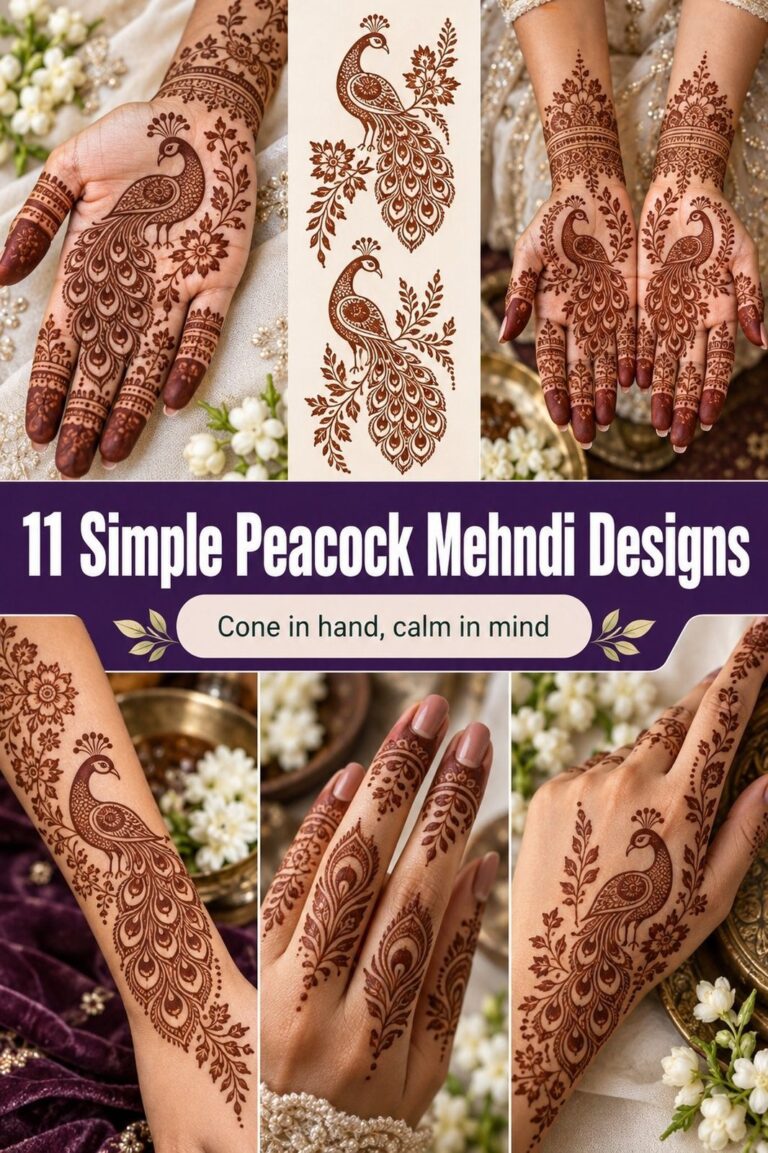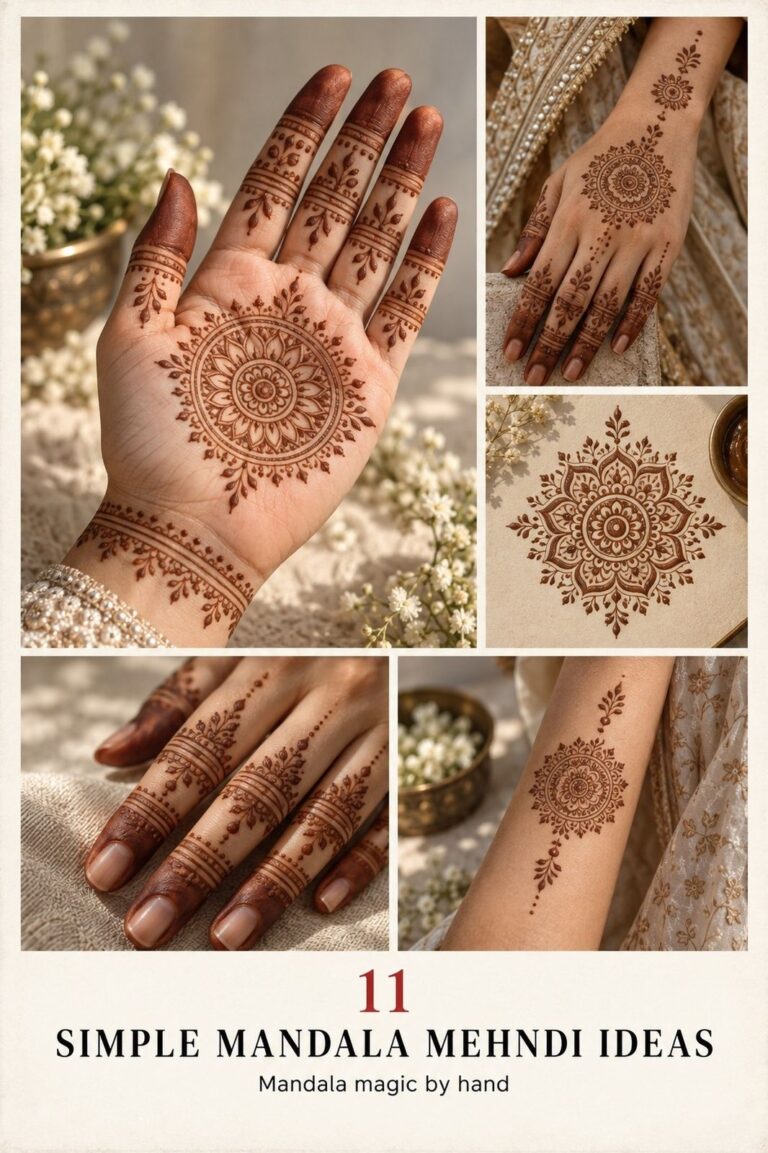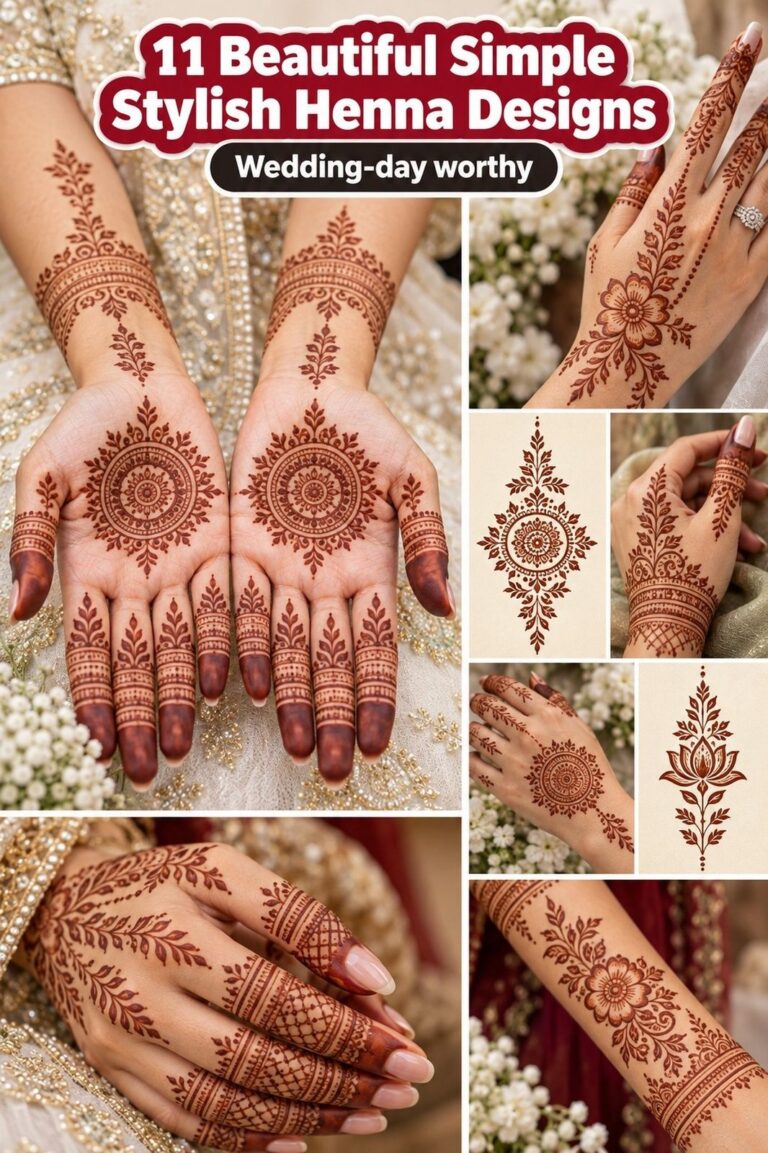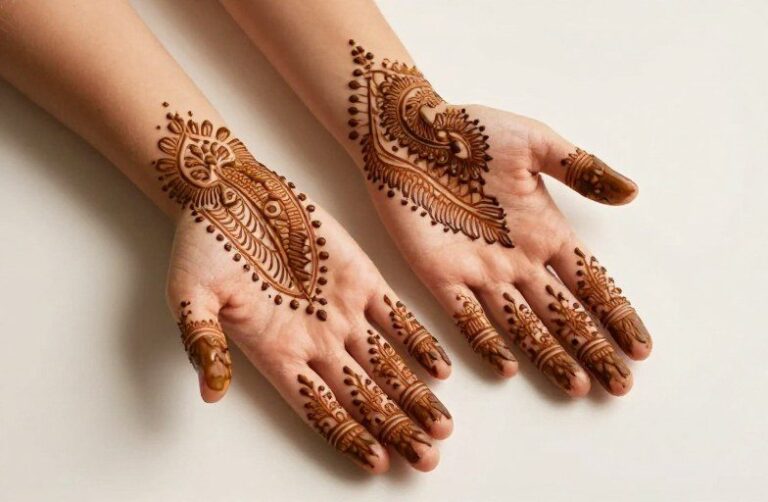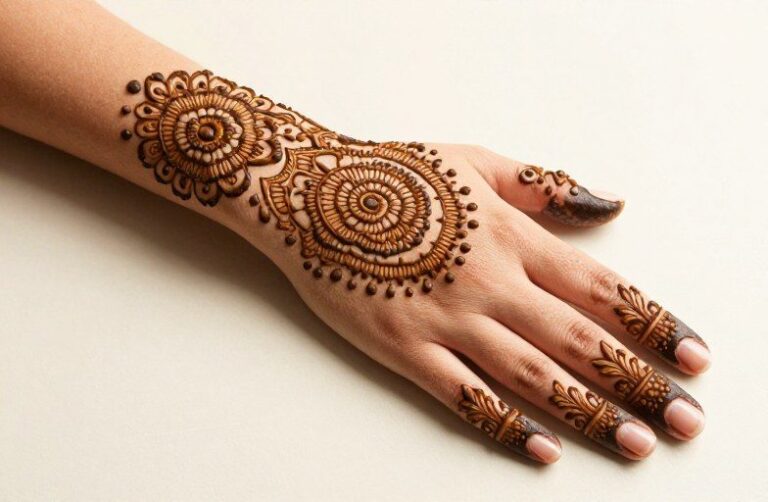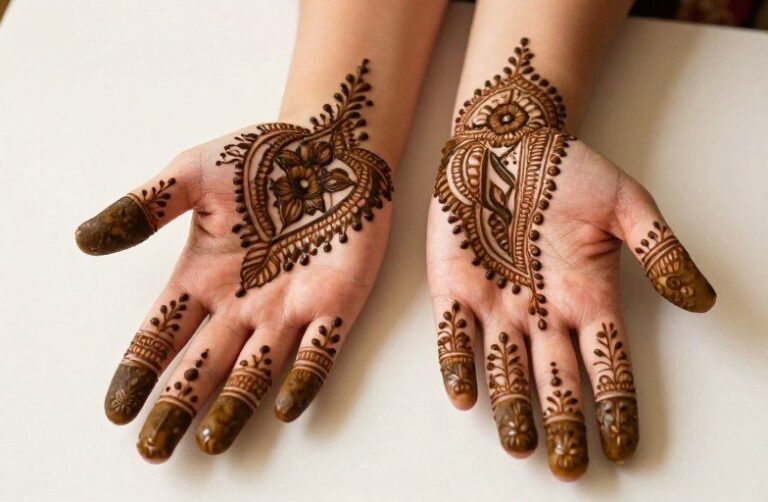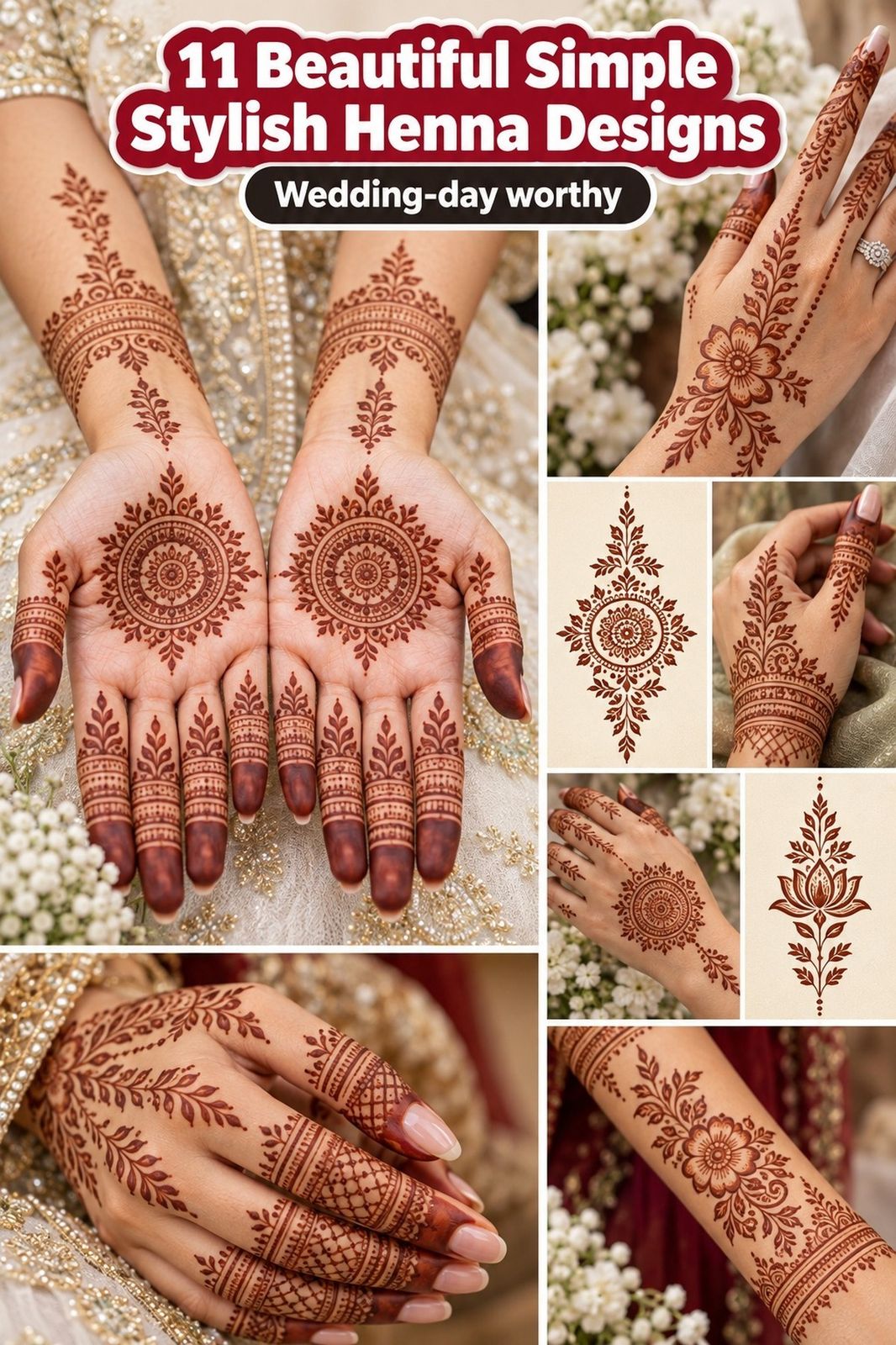
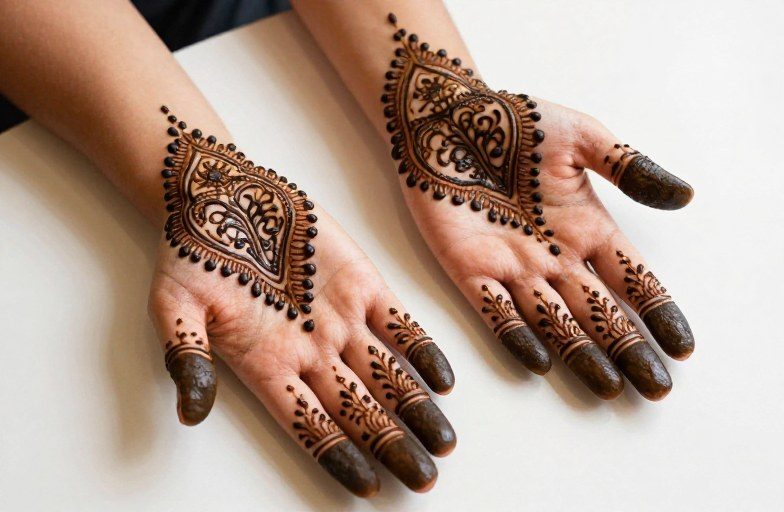
A black henna tattoo in permanent ink usually borrows the flowing, organic patterns of traditional henna body art, floral vines, paisley teardrops, mandala centers, and fine dotwork, without the actual plant dye. The meaning depends heavily on context: some wear it as a permanent tribute to South Asian or Middle Eastern heritage, others as a symbol of transition, blessing, or protection originally associated with henna ceremonies. In tattoo form, the black ink makes the design readable and long-lasting, but it also shifts the symbolism from temporary ritual to lifelong commitment.
Similar & Related Symbols
From Mehndi to Machine Ink
Traditional mehndi uses henna paste to stain the skin reddish-brown for one to three weeks. The patterns themselves carry specific meanings: open flowers for joy and new beginnings, mango-shaped paisleys for fertility and luck, fine lines of dotwork that form protective barriers around the wearer. When these same motifs get translated into permanent black ink, the symbolism transfers but transforms. A bridal mehndi design that once lasted two weeks now lasts decades. The permanence itself becomes part of the meaning, no longer a ritual for a single life event, but a constant reminder of that event’s significance.
Related Visual Languages
Black henna-style tattoos overlap with several other symbolic traditions:
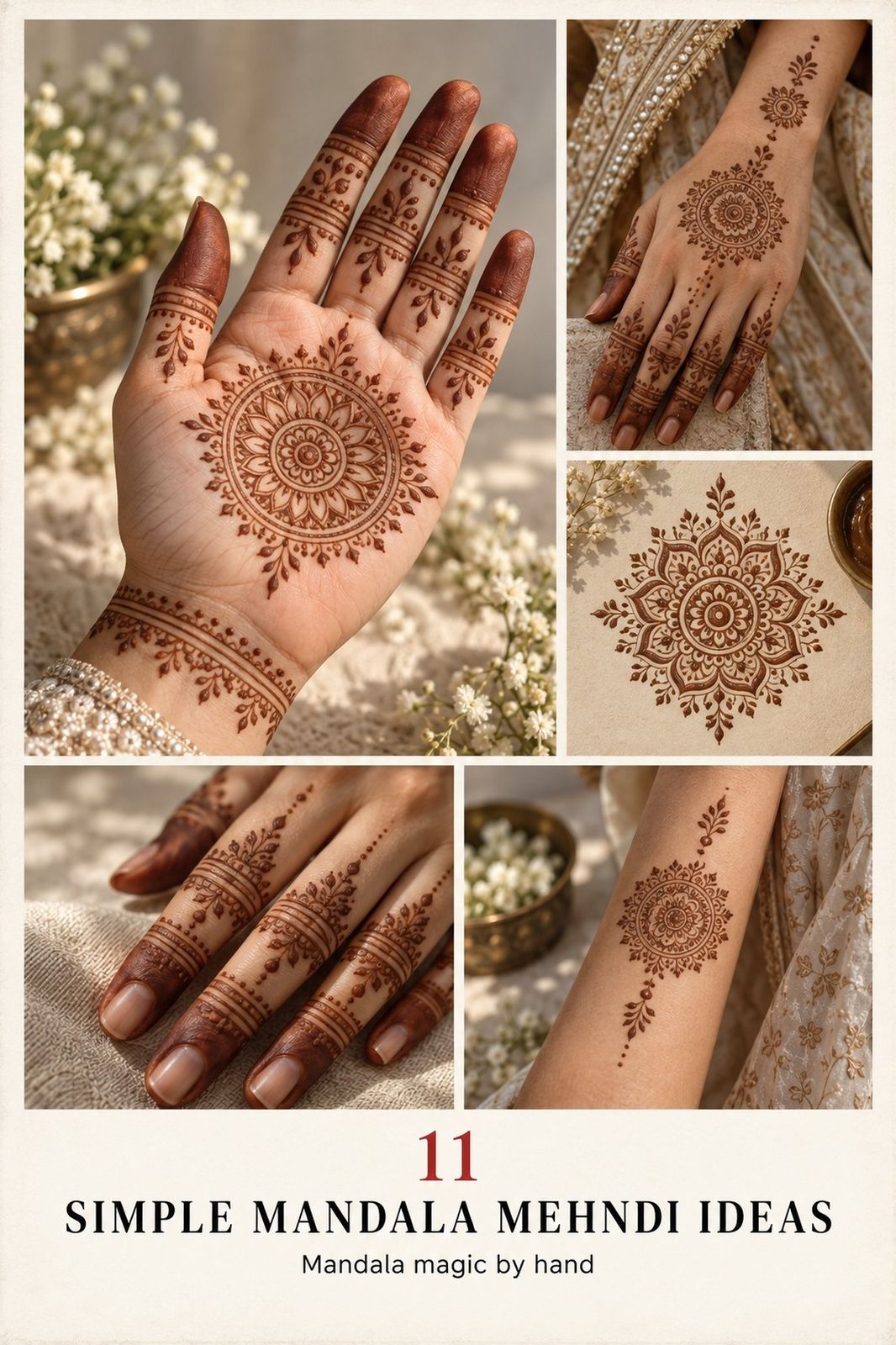
- Mandala tattoos: share the radial, center-focused geometry common in henna, often representing balance and cosmic order
- Islamic geometric art: uses similar interlacing patterns without figurative elements, carrying spiritual associations of infinity and divine order
- Dotwork and stipple tattoos: employ the same texture-building technique as fine henna dotwork, creating depth through density rather than line weight
- Vine and floral ornamental tattoos: trace the same organic, wrapping compositions that henna favors for hands and feet
The key distinction is the cultural specificity. A generic floral sleeve carries different weight than a design explicitly referencing henna’s regional origins.
How It Ages on Skin
Line Weight and Detail Loss
Henna designs rely on extremely fine lines and dense clusters of tiny dots. On skin, these details are vulnerable. Lines thinner than a millimeter tend to spread slightly as the tattoo settles over months and years. What reads as delicate lace at month six may blur into soft gray shapes by year ten. The most successful permanent henna-style tattoos use slightly bolder lines than traditional paste work, artists typically increase line weight by 20 to 30 percent to account for this spread. Dotwork clusters need enough density that individual dots merging still reads as texture rather than muddy gray.
Placement Dictates Longevity
Where you put the tattoo determines how well it keeps its character. Palms and soles, traditional henna locations, make terrible permanent tattoo placements, the thick, shedding skin there causes rapid fading and line distortion. The tops of hands and feet work better, though still high-wear. Inner forearms, upper arms, ribs, and thighs preserve fine detail longest. Sun exposure darkens the black ink to a softer charcoal and can blur edges; black ink absorbs UV aggressively, so these designs benefit from strategic placement under clothing or consistent sun protection.
Color Realism vs. Cultural Accuracy
Some people request brown or reddish ink to mimic actual henna stain. These pigments fade faster than black, often shifting to orange or pink tones before requiring touch-ups. Straight black carbon-based ink holds its value but never looks like real henna. The trade-off is explicit: cultural visual reference in permanent, high-contrast form.
Religious & Spiritual Angles
Protection and Blessing
In many traditions where henna is practiced, the application itself is a blessing. The designs, particularly those incorporating the evil eye motif, the hand of Fatima, or specific geometric borders, function as protective symbols. Permanent black ink versions of these designs often carry the same intent for the wearer, a permanent amulet. However, this gets complicated. Some religious authorities in Islam and Judaism discourage permanent tattoos regardless of imagery. Others view the adaptation of sacred ceremonial patterns into permanent body modification as dilution or disrespect. The spiritual meaning depends entirely on the wearer’s own framework and, when applicable, consultation with knowledgeable community members.
Transition and Threshold Rituals
Henna application traditionally marks transitions: marriage, pregnancy, coming of age, return from pilgrimage. A permanent black henna tattoo can commemorate a personal threshold, recovery, migration, religious conversion, gender transition, using the visual language of ceremonial marking without claiming the ceremony itself. The meaning becomes individual rather than communal, which carries both freedom and potential isolation from collective context.
Personal & Modern Meanings
Contemporary wearers often choose black henna tattoos for reasons disconnected from the original cultural practices. Some appreciate the aesthetic of ornamental patterning without figurative content, decoration for its own sake, covering scars or skin conditions with organic, non-representational flow. Others have personal connections to travel, to a specific person who applied henna for them, or to a moment of transformation witnessed in a context where henna was present. The tattoo becomes a fixed anchor for a memory that otherwise drifts.
There’s also a strand of appropriation concern worth acknowledging. Wearing permanent black henna motifs without understanding their origins, particularly specific bridal or religious patterns, can read as cultural tourism. The most thoughtful modern meanings come from wearers who have done the work, learning the patterns’ origins, choosing designs appropriate to their own story, and often working with artists from the tradition or with deep study in it.
Mythology & Folklore
Origins Often Linked to Cooling and Protection
The use of henna plant paste is often linked to hot climates where its natural cooling properties provided practical benefit before symbolic meaning accumulated. Some trace the dark staining to ancient Egypt, where henna was commonly associated with mummification and the afterlife, though the evidence mixes archaeological finding with later interpretation. In South Asian folklore, henna’s red color connects to blood, fertility, and the life force, auspicious for brides entering sexual maturity and motherhood. The black of permanent ink tattoos inverts some of this symbolism; where red henna celebrates life and visibility, black can suggest permanence, shadow, or the crossing of boundaries between states.
Night of the Henna
Many cultures practice a “night of the henna” before weddings, a gathering where the bride’s female community applies elaborate designs. The darkness of the stain supposedly indicates the depth of love between partners, or the strength of the bride’s bond with her new family. A permanent black henna tattoo can reference this communal intimacy, the gathering, the touch of many hands, the slow hours of application, now frozen in a single image applied by machine.
History & Cultural Roots
Regional Variation in Pattern Language
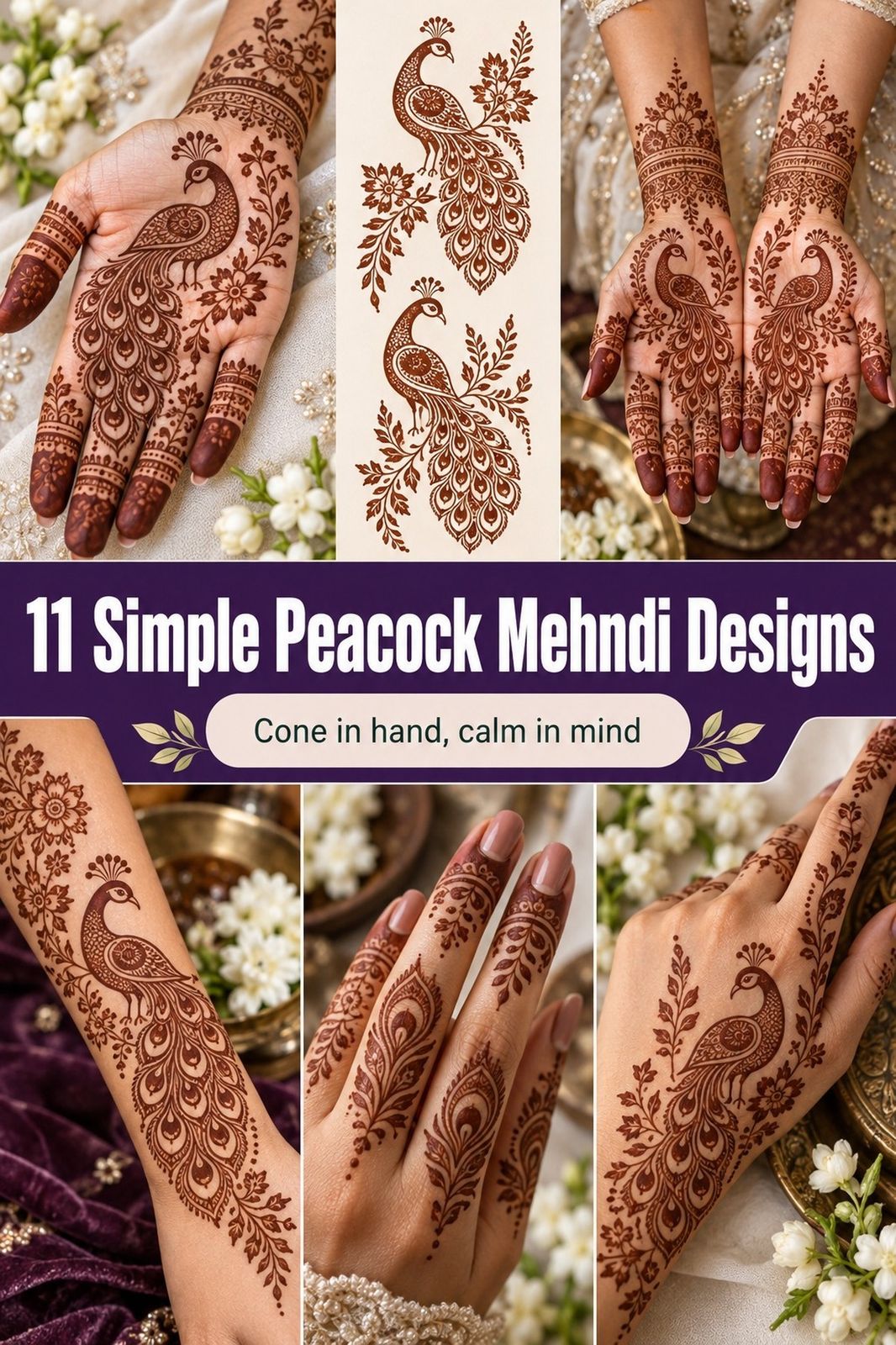
Henna design is not monolithic. North African patterns, particularly Moroccan, favor geometric precision and bold negative space. Indian, Pakistani, and Bangladeshi traditions lean toward dense floral filling with peacocks, mango motifs, and bridal figures. Persian and Iranian work often incorporates more figurative and calligraphic elements. Arabian Peninsula designs frequently use bolder, larger motifs with less fine detail. A black henna tattoo meaningfully connected to heritage should specify which tradition it references, not treat “henna” as a generic global style.
From Colonial Encounter to Modern Revival
Henna’s spread to Western awareness accelerated through colonial travel accounts, then 1960s-70s countercultural fascination, then mainstream fashion and music industry adoption. The permanent tattoo adaptation is a late development, largely post-1990s, as ornamental tattooing gained respect alongside figurative work. This history matters because the meaning of a black henna tattoo today exists in this layered context, ancient practice, colonial extraction, commercial popularization, and individual reclamation or appreciation.
Before You Decide
Research the specific patterns you’re considering. A bridal design from a culture not your own carries different weight than a generalized floral vine. Talk to artists who understand the distinction between aesthetic borrowing and respectful adaptation. Consider placement carefully, fine detail needs protected skin, and traditional locations like palms won’t hold. Think about whether you want the tattoo to read as “henna-inspired” or as something more specific, and whether that specificity matters to your reason for getting it. The black ink will last; make sure the meaning you attach to it will too.
Frequently Asked Questions
Is black henna tattoo ink dangerous or different from regular black ink?
The term ‘black henna’ usually describes the tattoo style, not the ink itself. Actual black henna paste containing PPD (a hair dye chemical) can cause severe allergic reactions and scarring. Permanent tattoos using standard black tattoo ink don’t contain PPD, but the name can confuse people. Always verify what substance is being used.
How do I find an artist who specializes in henna-style permanent tattoos?
Look for portfolios showing fine line ornamental work, dotwork precision, and knowledge of regional pattern traditions. Many artists with South Asian, North African, or Middle Eastern backgrounds, or those who have studied under them, bring authentic understanding. Ask directly about their training in henna design history.
Can I get a brown tattoo that looks like real henna stain?
Brown and reddish inks exist but fade faster than black, often shifting to orange or pink tones. They require more frequent touch-ups. Some people accept this trade-off for visual authenticity; others prefer black for longevity and contrast against skin.
Do black henna tattoos have to carry cultural meaning, or can they just be decorative?
They can absolutely be decorative. The ornamental tradition supports pure aesthetic appreciation. However, choosing specific culturally significant patterns, particular bridal motifs, religious symbols, or regional styles, without understanding their context risks trivializing their origins. General floral and geometric patterns carry less loaded meaning.