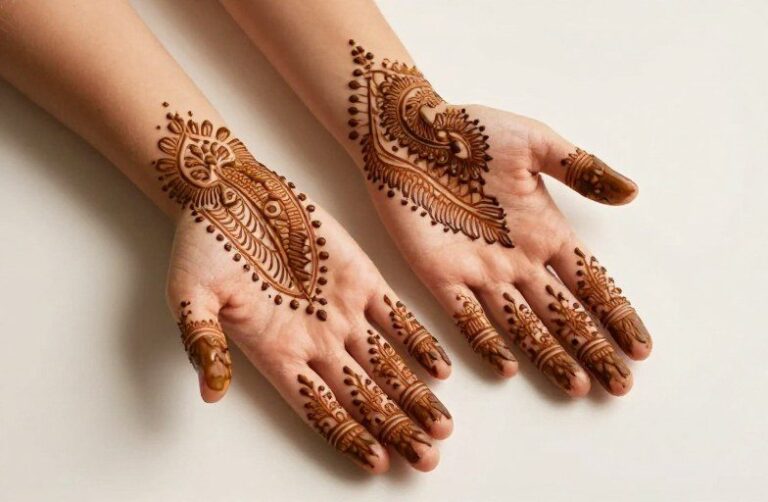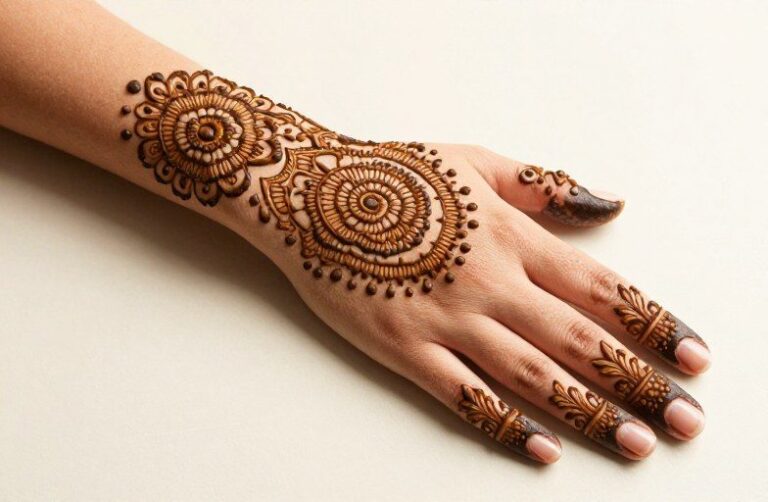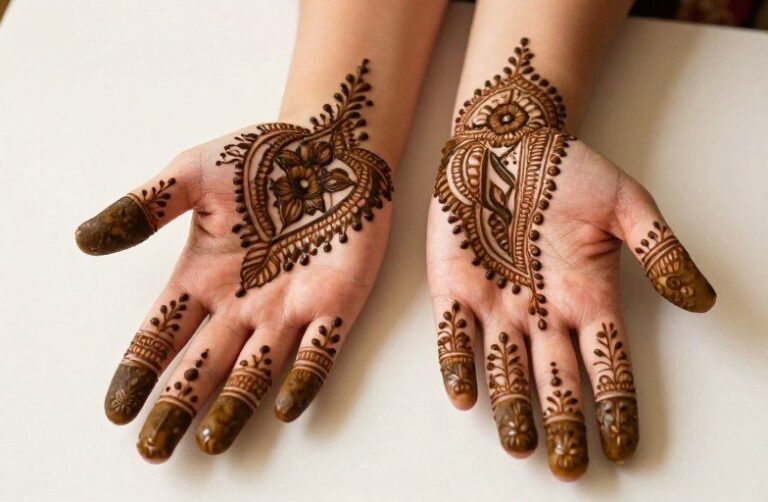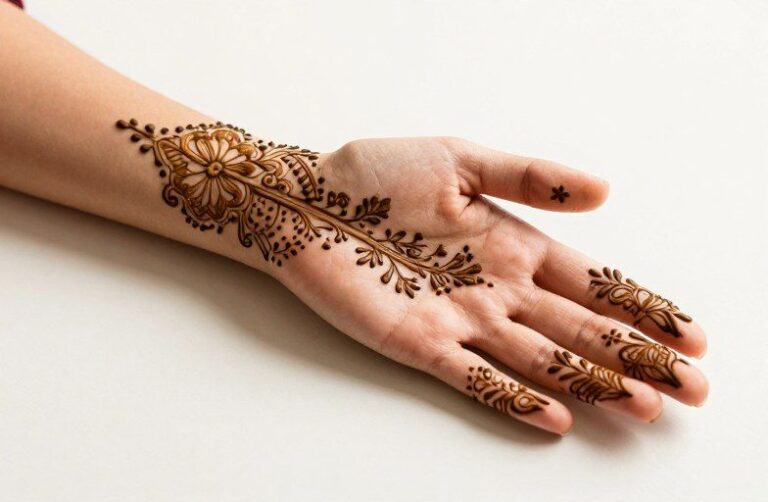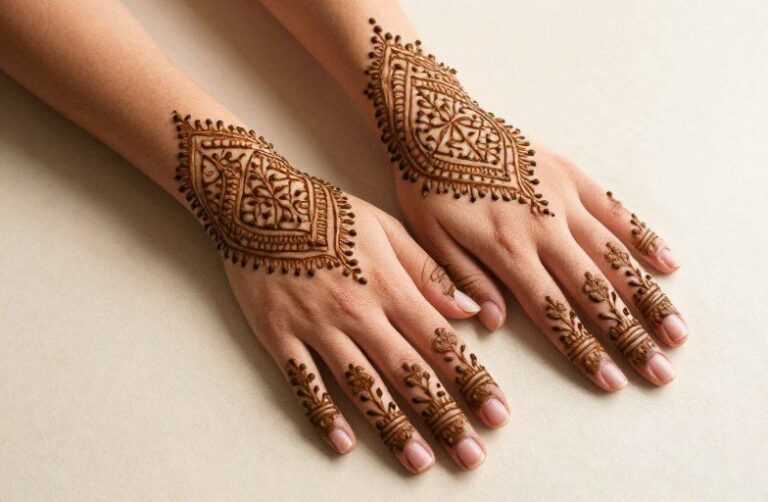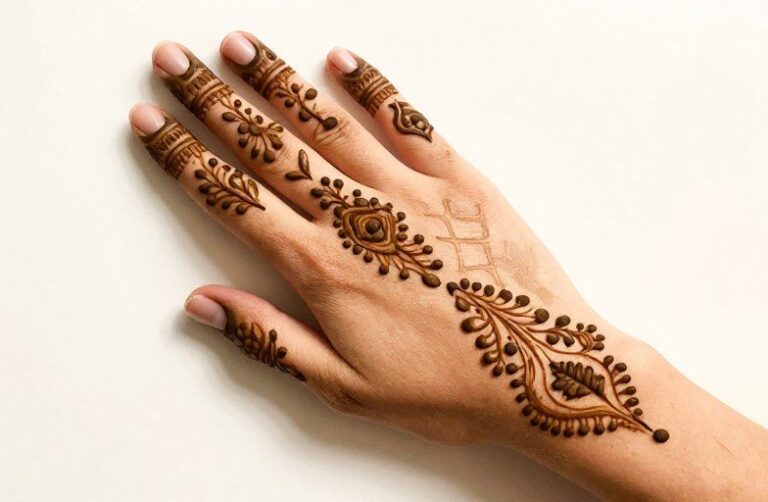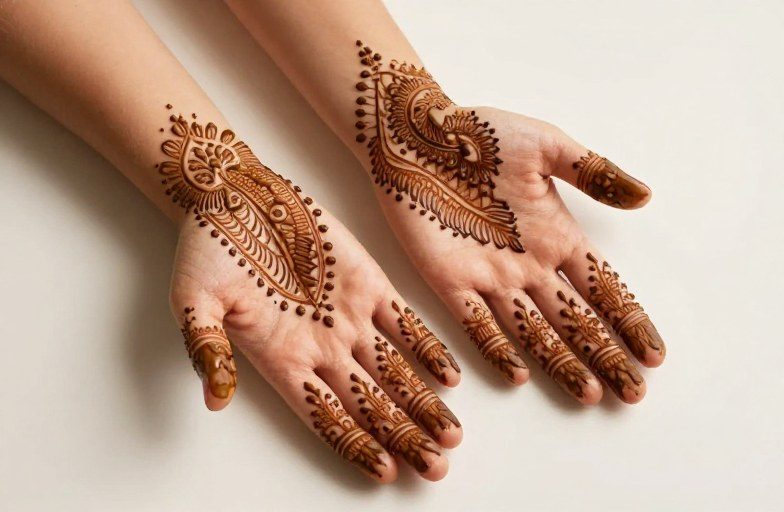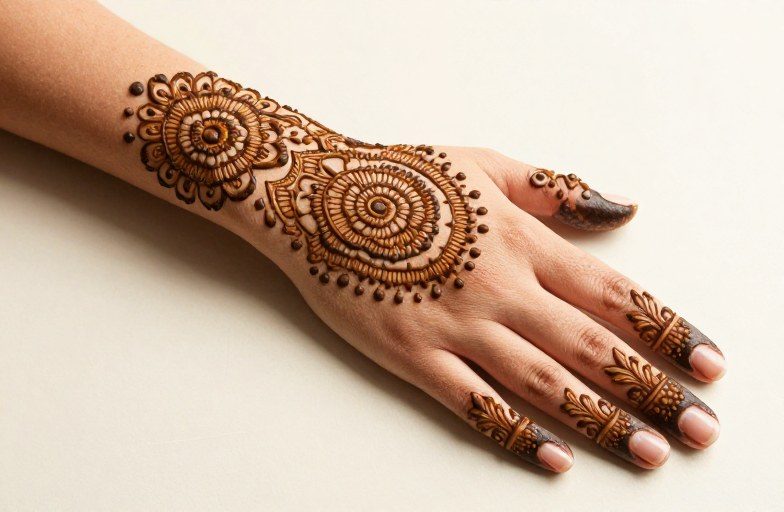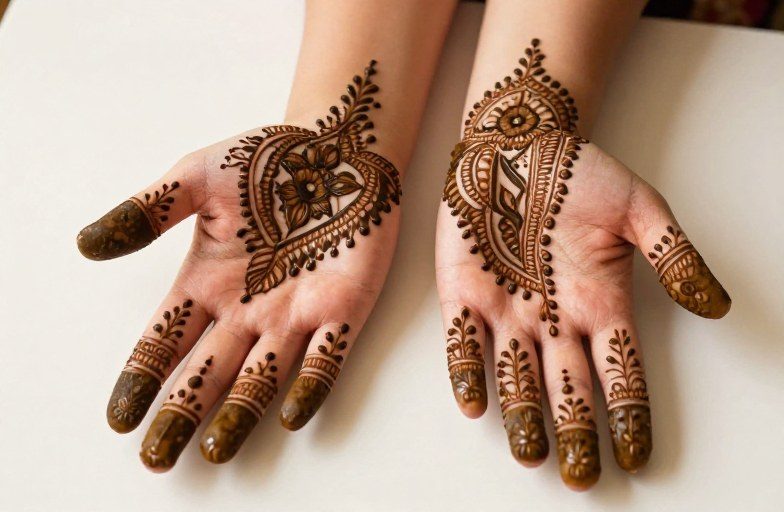
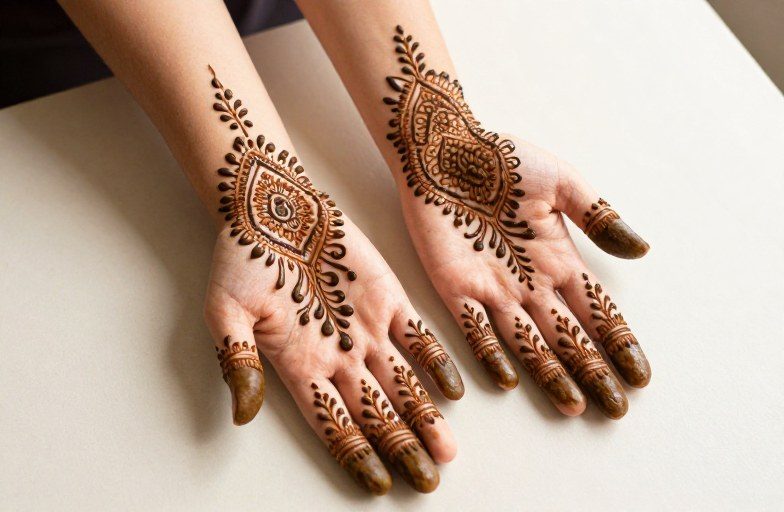
Leg mehndi walks a line between ornament and commitment. The simple versions, sparse florals trailing the ankle, a single mandala floating above the knee, geometric bands that read like jewelry, hold up better than dense bridal coverage when translated to permanent ink. What works in paste on skin for a few hours needs rethinking for a lifetime. These designs strip away the noise while keeping the rhythm that makes mehndi recognizable: repetition, negative space, and flow that follows the leg’s natural curves.
How to Personalize It
Scale to Your Proportions
A design that looks delicate on a longer calf can crowd a shorter one. Simple leg mehndi thrives when the repeat pattern matches your limb’s length. Ankle-to-mid-calf spans suit smaller motifs spaced with breathing room. Thigh pieces can handle larger central elements, one paisley or open mandala, with minimal satellite details. The goal is readable at a glance, not a puzzle that demands close inspection.
Adapt Cultural Motifs Respectfully
Traditional mehndi carries specific symbolism: mango leaves for love, peacocks for beauty, sunbursts for awakening. If these roots aren’t yours, abstract the forms rather than copying sacred arrangements wholesale. A vine becomes a wave. A paisley softens into a teardrop bloom. The visual language stays intact without performing someone else’s ceremony. Talk through this with your artist; good ones know which lines to keep and which to release.
Popular Styles
Three approaches dominate simple leg mehndi in permanent form:
- Line-only botanicals: Single-weight outlines of leaves, buds, and stems. No fill, no shading. These age cleanly because there’s no gray wash to blur. Best for smaller pieces and areas that move a lot, like the ankle bone.
- Dotwork mandalas: Radial patterns built from stippled points rather than solid lines. The texture mimics henna’s natural grain while holding crisp edges over years. Center them above the knee or on the outer thigh where skin stays relatively stable.
- Negative-space bands: Geometric repeats that use your skin tone as the primary color. Think diamond chains, arrow sequences, or simple chevrons wrapping the calf. These read as jewelry and fade gracefully since the “design” is partly the absence of ink.
Most clients mix two: a dotwork center with line-only trailing vines, or a band that resolves into a small mandala at the back of the ankle.
Best Placements
Ankle and Calf
The ankle bone itself is tricky, ink here spreads slightly over time due to thin skin and constant movement. Keep it simple: a small mandala, a three-petal cluster, or a thin band that doesn’t wrap fully. The inner ankle, softer and more vascular, holds detail better but hurts more. The calf’s outer muscle offers the steadiest canvas for larger simple pieces. A mandala or vertical vine here stays proportional and visible in shorts or skirts.
Thigh and Above the Knee
Thigh skin is thicker and less sun-exposed, so ink stays saturated longer. This is where you can place a single bold element, a large open mandala, a paisley pair, a geometric focal point, without surrounding clutter. Above-the-knee placement frames the leg when standing and hides easily for work. The back of the thigh, though, stretches significantly with sitting and walking; avoid intricate linework there unless you accept some distortion over time.
For First-Timers
Simple leg mehndi is forgiving territory if you respect a few realities. The leg hurts less than ribs, more than outer arm. Bone proximity amplifies sensation; the ankle and shin are sharp, the calf and thigh more manageable. Session length matters more than location, two hours is a reasonable first commitment for a piece that won’t overwhelm.
Healing legs is its own challenge. You’ll bend, walk, and likely wear pants that rub. Keep the wrap on for the time your artist specifies, then switch to loose, clean fabric. Sweat is unavoidable; blot, don’t wipe. The second week of healing often looks worse than the first as peeling begins. Resist the urge to moisturize into soggyness, dry healing with minimal, fragrance-free application prevents the ink from lifting out.
Start with something you can expand. A small ankle mandala can grow into a calf vine later. A single band can become a stacked set. Simple foundations leave room.
Standout Design Ideas
The Single Trail
One continuous vine starting at the ankle bone and ending mid-calf, with leaves alternating sides. No background, no fill. The line weight stays consistent throughout. This design moves with the leg rather than fighting it, and the simplicity means touch-ups are straightforward if any section fades unevenly.
The Floating Mandala
A single circular element placed on the outer thigh or above the knee, with no trailing elements. The mandala’s outer ring is bold; inner details stay sparse. This reads as modern and intentional, not incomplete. It also photographs well and doesn’t depend on viewer angle to make sense.
The Broken Band
Three to four geometric repeats wrapping the calf or ankle, each segment separated by skin. Unlike a continuous bracelet, this accommodates leg movement and weight fluctuation without distorting the pattern. Dots, small diamonds, or simplified paisleys work best here.
Trending Variations
Contemporary simple leg mehndi is pulling in two directions: further minimalism and subtle hybridization.
On the minimal end, single-element designs are replacing the traditional full-coverage look. One lotus at the ankle. One crescent above the knee. These function like permanent jewelry and pair with actual accessories without visual competition.
Hybrid styles blend mehndi linework with other visual systems. Fine-line botanical illustration meets paisley curves. Sacred geometry’s precise angles interrupt organic vine flow. Some artists incorporate extremely limited gray wash, just a hint of shadow under a leaf or petal, to suggest henna’s natural stain variation without committing to full shading that will age unpredictably.
Color remains rare in permanent mehndi translation, but muted terracotta or rust tones occasionally appear, mimicking henna’s oxidized stain. These fade faster than black ink and require commitment to refresh schedules.
The Bottom Line
Simple leg mehndi works when it respects the leg’s movement and the eye’s need for rest. Dense paste patterns don’t survive the translation to ink without becoming muddy blurs. The designs that last strip away layer after layer until what remains is structure: a line that flows, a shape that centers, a repeat that breathes. Choose placement based on how you live in your body, active ankles need simpler work than displayed thighs. Trust the negative space. It does more work than the ink.
Frequently Asked Questions
How well does simple leg mehndi hold up compared to arm tattoos?
Leg skin, especially on the calf and thigh, tends to hold ink well due to thickness and less sun exposure. Ankle and shin tattoos fade faster from friction with socks, shoes, and pants. The key is keeping the design simple, less detail means less that can blur over time.
Can I get a leg mehndi tattoo if I have darker skin?
Absolutely. Simple line work in black ink reads clearly on all skin tones. Avoid designs that rely on subtle gray shading or negative-space tricks that depend on high contrast between ink and skin. A skilled artist will adjust line weight and spacing for your specific tone.
How long should I plan for a simple leg mehndi session?
Most simple designs run one to three hours depending on size and placement. Ankle pieces are faster; thigh mandalas take longer due to area. The leg is generally tolerable for beginners, though bone-heavy spots like the shin spike the sensation.
Will the tattoo stretch if I build muscle or gain weight?
Some. The thigh changes most with muscle gain or weight fluctuation. Calf and ankle designs are more stable. Simple patterns with repetition handle distortion better than complex, asymmetrical pieces. If you’re planning significant body changes, discuss placement strategy with your artist.