
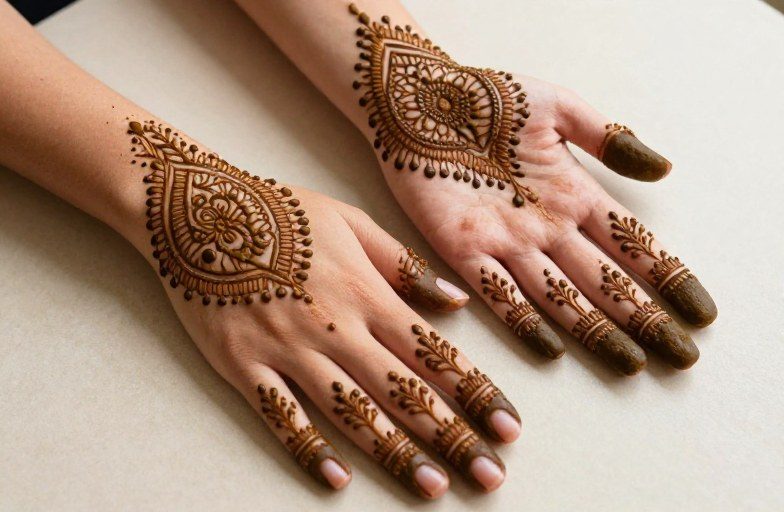
Smudged henna happens, usually from touching the design too soon, sleeping on it, or moisture hitting the paste before it fully sets. The fix depends on timing: wet paste can often be reshaped, dried paste needs careful removal, and stained skin can sometimes be lightened or incorporated into a new design. Here’s how to handle each stage without making it worse.
Aftercare Essentials
Henna aftercare is about keeping the paste intact long enough for the lawsone dye to bind with your keratin. Most smudges occur because this basic protocol gets skipped or rushed.
First Six Hours
Once the henna paste is applied, it needs to stay completely undisturbed. The paste should flake off on its own, never pick it. If you bump or smudge it during this window, you have the best chance of recovery:
- Wet paste: Gently push it back into place with a clean toothpick or orange stick. Don’t add water.
- Partially dry paste: Dab a tiny amount of lemon-sugar sealant (if available) to re-adhere lifted edges.
- Keep the area warm, body heat deepens the stain. A loose cotton sleeve or sock (not tight) helps protect hands and feet.
After the Paste Drops
Once the paste flakes away, the stain is set in the top layers of skin. At this point, “fixing” a smudge means either working with the blurred edge or fading it. Avoid water for the first 12 hours after paste removal. Apply a thin layer of natural oil, coconut, olive, or henna aftercare balm, to create a barrier against sweat and accidental rubbing.
What to Expect Step by Step
Understanding the timeline helps you choose the right intervention at the right moment.
Immediate Smudge (Paste Still Wet)
The paste has the consistency of wet mud. You can reshape lines with a tool, add tiny dabs of fresh paste from your artist if you’re still in the shop, or carefully scrape away excess with the edge of a business card. Work in the direction of the design flow, not against it. Heat from a nearby lamp (not touching skin) helps the repositioned paste set faster.
Dried or Partially Set Paste
This is the trickiest stage. The paste is crumbly but the stain hasn’t fully developed. Brushing off loose bits with clean fingers is fine; using water dissolves the dye before it bonds. For a smudged line, some artists recommend carefully removing the affected paste with a dry cloth, accepting a lighter stain there, and planning to darken surrounding areas later if needed.
Stain Already Developed
Orange at first, the stain darkens to reddish-brown over 24-48 hours. A smudge at this stage is permanent until your skin exfoliates. Options include:
- Gentle exfoliation: A soft washcloth with oil, not scrubbing. This lightens the stain gradually over days.
- Makeup cover: High-coverage concealer matched to your skin tone for events.
- Design adaptation: A skilled henna artist can add elements that incorporate the blur into a larger pattern, turning a smudged petal into a shadowed one, for instance.
Cost Factors
Fixing a smudge runs from free (DIY) to the price of a new appointment. Factors that move the needle:
- Artist policy: Many henna artists will do minor touch-ups within 24 hours at no charge, especially if the smudge happened from their sealant application. Always ask before assuming.
- Complexity of fix: Adding a small element to mask a blur might cost $10-30. Redoing an entire bridal hand or full sleeve starts fresh at standard rates, often $50-150 for intricate work.
- Location: Festival or event henna tends to be priced per piece with no touch-up guarantee. Studio appointments usually include more follow-up care.
- Travel: Some artists charge travel fees for house calls, which matters if you’re trying to fix wedding henna the morning of.
DIY fixes cost almost nothing: lemon juice, sugar, oil, and time. The trade-off is skill and predictability.
Realistic Expectations
Henna stains the stratum corneum, the dead skin layer. It doesn’t penetrate like a needle tattoo. This limits both the damage and the repair options.
A smudged line won’t “blend in” on its own. The contrast between stained and unstained skin is sharp, especially at day two when the color peaks. However, henna fades uniformly as skin turns over, typically 7-14 days for light stains, up to 3-4 weeks for deep ones. A smudge becomes less noticeable naturally, but never instantly.
Skin type matters. Oily skin tends to yield lighter, shorter-lasting stains. Dry skin holds color deeper but also shows every application imperfection. If you’re prone to smudging because your skin won’t hold paste, ask your artist about a stronger sealant or a different aftercare wrap technique.
Common Mistakes
Plenty of well-meaning fixes make things worse. Here’s what to skip:
- Water immediately: Rushing to wash off a mistake stops the staining process entirely. The area you “clean” will be pale orange at best, creating a worse contrast.
- Scrubbing with salt or baking soda: This irritates skin and creates redness that draws attention to the spot. It also removes stain unevenly.
- Drawing over it with pen or marker: Non-henna pigments sit on top of skin and look obviously different, often purple or black against henna’s warm brown.
- Reapplying henna too soon: Fresh paste over a developing stain won’t bond well to already-saturated keratin. Wait until the first stain has fully faded for best results.
- Tight wraps: Smothering the design to “protect” it causes sweat buildup that liquefies paste from underneath. Loose, breathable covering only.
When Home Remedies Help
Some people try lemon juice or whitening toothpaste to fade mistakes. Lemon juice can lighten stain slightly over repeated applications, but it’s slow and drying. Toothpaste is unpredictable and often causes irritation. Neither offers the control of simply waiting for natural exfoliation.
When to See a Professional
Certain situations call for an artist’s eye and steady hand rather than bathroom-sink improvisation.
- Large or prominent placement: A smudge across the back of your hand or center of your forearm is harder to hide than one near the wrist edge.
- Event deadlines: Wedding, Eid, or festival henna with a smudge 12 hours before photos needs professional adaptation, not hopeful waiting.
- Allergic reaction signs: Unusual swelling, burning, or blistering alongside a smudge isn’t a smudge problem, it’s a skin response. An artist can assess if it’s normal tingling or something requiring different care.
- Black henna concerns: If your “henna” was actually PPD-laden black hair dye, smudging is the least of your worries. A professional can identify the formula and advise on safe removal.
A good henna artist has seen every smudge variation. They can often work the blur into shading, extend the design to draw the eye elsewhere, or remove paste strategically for a lighter patch that reads as intentional negative space.
Final Word
Smudged henna stings because you chose the design carefully and waited through the drying time. But the medium is forgiving in its own way, temporary, buildable, and adaptable. Most fixes are about patience: not touching, not wetting, letting the stain develop before you judge the damage. When you do need to act, small deliberate moves beat frantic scrubbing every time. And if the blur won’t budge, an hour with a skilled artist can turn a mistake into something that looks like it was meant to be there all along.
Frequently Asked Questions
Can I reapply henna over a smudged area the same day?
Same-day reapplication rarely works well. The keratin in that skin is already saturated with lawsone, so fresh paste won’t bond deeply. Wait until the stain fades significantly, usually a week or more, before trying to redo that specific spot.
Why does my henna smudge more than other people’s?
Body chemistry varies. Oily skin, high humidity, and certain medications can keep paste from setting properly. Sleep position matters too, side-sleepers often smudge hand designs against their face or pillow. Ask your artist about a stronger sealant or a light wrap technique.
Is a dark smudge permanent like a real tattoo?
No. Henna only stains the dead skin layer and fades as you naturally exfoliate. Even the darkest smudge will disappear within a few weeks. It won’t leave a scar or permanent mark unless there’s an allergic reaction to additives in the paste.
How do I find a henna artist who can fix smudges well?
Look for artists who post close-up photos of their line work and healed results. Ask specifically if they do touch-ups or design adaptations. Festival artists may not have time for fixes, while studio-based artists often build that relationship into their booking.