
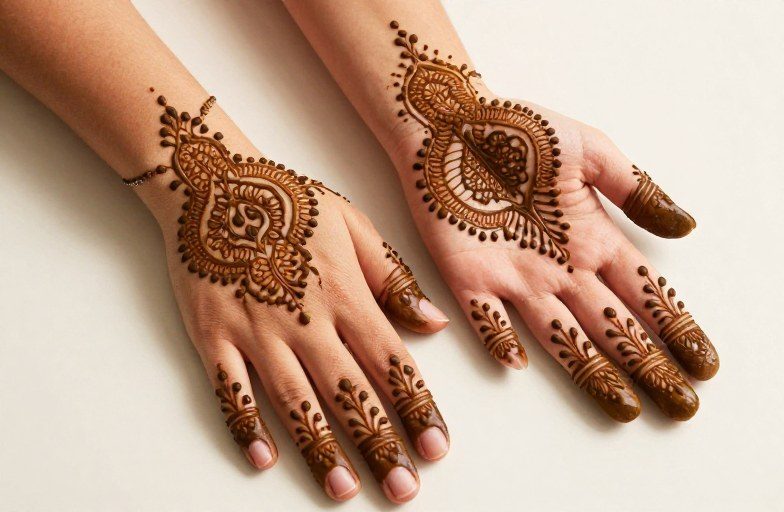
Henna fades on its own in 1-3 weeks, but you can speed things up significantly. The fastest safe methods combine oil-based softening with gentle physical exfoliation, never harsh chemicals or abrasive scrubbing that breaks skin. Expect visible lightening within 24-48 hours of consistent effort, not instant disappearance.
Aftercare Essentials
Ironically, the same principles that make henna last longer reveal how to reverse the process. Henna stains the top layers of dead skin cells; disrupting those layers accelerates fading.
What Actually Binds Henna to Skin
The lawsone molecule in henna penetrates the stratum corneum and oxidizes into a stable stain. It doesn’t reach living dermis like a needle tattoo, which means removal targets surface skin rather than ink particles. Warm water, oil, and mild acids all loosen this bond by different mechanisms.
- Oil saturation: Olive, coconut, or baby oil left on for 15-20 minutes daily breaks down the lipid barrier holding stained cells
- Warm compresses: Opens pores and softens the keratin layer before exfoliation
- Chlorine exposure: Pool swimming genuinely accelerates fading through chemical breakdown and skin softening
- Sunlight: UV exposure oxidizes the stain further, often shifting color to orange-brown before it fades
Products That Actually Help
Skip the expensive “henna removers.” Plain ingredients work better. Micellar water dissolves oil and stain residue effectively. A paste of baking soda and lemon juice (used sparingly, on intact skin only) provides mild chemical exfoliation. Salt scrubs physically lift stained cells but require gentle pressure, think polishing, not sanding.
Healing Timeline
Realistic expectations prevent skin damage from over-treatment. Henna removal isn’t healing in the traditional sense, but your skin absolutely needs recovery between aggressive fading attempts.
Day-by-Day Fading Patterns
Fresh henna (first 48 hours) actually darkens as oxidation completes. Attempting removal during this window wastes effort, the stain hasn’t finished developing. Days 3-7 offer the first effective removal window, when the stain sits in cells beginning to naturally shed. Days 8-14 see the fastest natural fading as turnover peaks. By day 10-15, most henna has visibly degraded regardless of intervention.
Accelerated methods can compress a two-week fade into 3-5 days. The trade-off: irritated, dry skin that requires moisturizing between sessions. Never exfoliate the same area more than once daily. Skin needs 24 hours to regenerate lipid barriers stripped by removal attempts.
Pain & Comfort
Proper henna removal should never hurt. Stinging, burning, or rawness means you’re damaging living skin beneath the stain.
Warning Signs to Stop Immediately
- Redness persisting more than an hour after treatment
- Any broken skin, bleeding, or oozing
- Tight, shiny skin indicating over-exfoliation
- Increased sensitivity to temperature or touch
These symptoms mean you’ve moved from stain removal to skin barrier destruction. Pause all treatment for 48-72 hours, apply plain moisturizer or aloe, and resume with gentler methods. A slightly longer fade timeline beats weeks of compromised skin that’s vulnerable to actual infection.
Comfort-First Techniques
Soak in a warm bath with Epsom salts before gentle scrubbing with a washcloth. The extended moisture exposure does the work, not elbow grease. Follow with shea butter or fragrance-free lotion. Repeat every other day rather than daily if skin feels tight.
The Direct Answer
Here’s the fastest safe sequence: warm oil soak (15 minutes), gentle circular scrub with soft washcloth or sugar scrub, rinse with warm water, moisturize thoroughly. Repeat every 24 hours. For stubborn areas, add a 10-minute lemon juice and baking soda paste before the oil step, but limit this to twice total, as the pH shift irritates skin with repeated use.
What to Avoid Entirely
- Bleach or hydrogen peroxide: Chemical burns on stained skin are well-documented; the stain isn’t worth permanent discoloration
- Abrasive tools: Pumice stones, stiff brushes, or sandpaper remove skin, not just stain
- Acetone or nail polish remover: Dries and cracks skin without selective stain removal
- “Black henna” with PPD: If you reacted to so-called black henna (often containing hair dye), see a dermatologist, don’t attempt home removal on blistered or scarred skin
Black henna deserves special mention. The para-phenylenediamine in these mixtures causes severe allergic reactions in many people. If you have blistering, swelling, or intense itching, this isn’t normal henna fading, it’s contact dermatitis requiring professional care.
Common Mistakes
Most people make henna removal harder than necessary through impatience or misinformation.
Over-Exfoliation Syndrome
Scrubbing until skin turns pink feels productive but backfires. Inflammation increases blood flow to the area, and irritated skin holds onto pigment longer as it rushes to repair. Gentle, repeated sessions outperform one aggressive attack. Think of fading henna like polishing old paint off wood, multiple light passes preserve what’s underneath.
Ignoring the Setting Phase
Fresh henna paste should be scraped off, not washed. But for removal, the opposite applies: water is your friend. Many people avoid moisture hoping to “dry out” the stain. Henna isn’t a wet substance you can dehydrate; it’s a molecular bond in dead cells. Water and oil together lift it far more effectively than dryness, which simply preserves the stained layer intact.
Tips From the Chair
Tattoo artists see plenty of henna, both as standalone work and as clients transition from temporary experiments to permanent pieces. Some observations from years around ink:
Placement Realities
Henna on palms and soles fades fastest naturally due to thick skin cell turnover and constant friction. Removal here is rarely necessary. Upper arms, backs, and thighs hold henna longest; these areas also tolerate more aggressive exfoliation. Finger tattoos, henna or permanent, face constant wear; expect faster natural fading here regardless.
One practical note: if you’re removing henna to prepare for a real tattoo, stop all removal efforts 48 hours before your appointment. Slightly stained skin won’t affect needle work, but irritated or over-exfoliated skin compromises the tattooing surface and your artist’s ability to assess proper depth.
The Ink Aging Parallel
Permanent tattoo ink sits in the dermis, below where henna reaches. The fading principles differ entirely, henna removes with surface renewal; tattoos require laser fragmentation. Don’t apply henna removal logic to actual tattoo regret. Lemon juice and salt won’t touch real ink; they’ll just scar your skin.
For genuine tattoo removal, laser treatments by qualified professionals remain the only effective path. The cost, pain, and timeline (multiple sessions over months) reflect the fundamental difference in where pigment resides. Henna’s accessibility is precisely because it’s temporary, appreciate that feature rather than fighting it aggressively.
Key Takeaways
- Oil plus gentle exfoliation, repeated every 24 hours, fades henna fastest without skin damage
- Never use bleach, acetone, abrasive tools, or aggressive scrubbing, burns and scars aren’t worth faster fading
- Expect 3-5 days of consistent effort for significant lightening; complete removal often takes a week or more
- Black henna with PPD requires dermatologist attention, not home removal
- Skin health always outweighs speed, irritated skin retains stain longer and risks complications
Henna’s temporary nature is the point. Work with that reality using patience and proper technique, and you’ll clear the design cleanly without marking your skin in the process.
Frequently Asked Questions
Does toothpaste actually remove henna?
Toothpaste provides mild abrasion and some drying effect, but it’s not particularly effective. The fluoride and baking soda in some formulas offer slight exfoliation, but dedicated oil soaks and sugar scrubs work faster with less skin irritation.
Can I get a real tattoo over fading henna?
Wait until the henna is fully gone and skin has normalized for 48 hours. Slight orange staining won’t affect tattooing, but any residual texture changes or irritation from removal efforts can compromise how the needle deposits ink and how the tattoo heals.
Why did my henna turn black instead of brown?
Natural henna ranges from orange to deep reddish-brown as it oxidizes. True black henna almost always contains added dyes, commonly PPD (para-phenylenediamine), which can cause severe allergic reactions. This isn’t traditional henna and requires caution.
Does swimming in the ocean remove henna faster than a pool?
Salt water and chlorine both accelerate fading, but through different mechanisms. Salt draws out moisture and lightly abrades skin; chlorine chemically breaks down the stain. Pools are more predictable; ocean variables like sand and wave action add physical exfoliation that can be harsher.