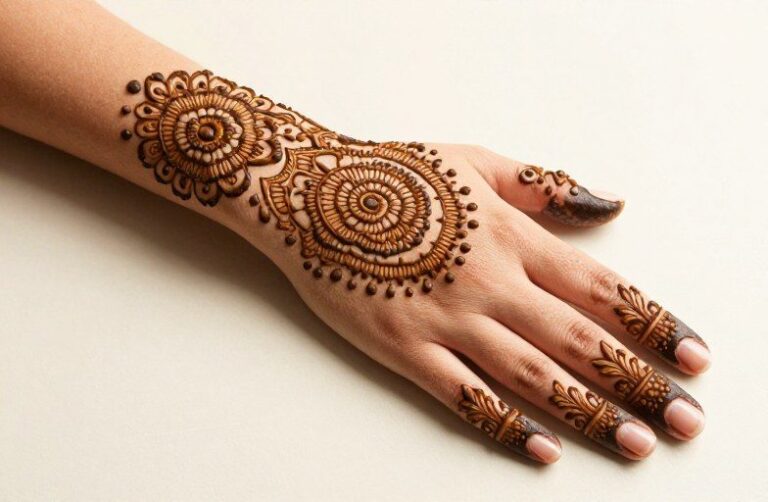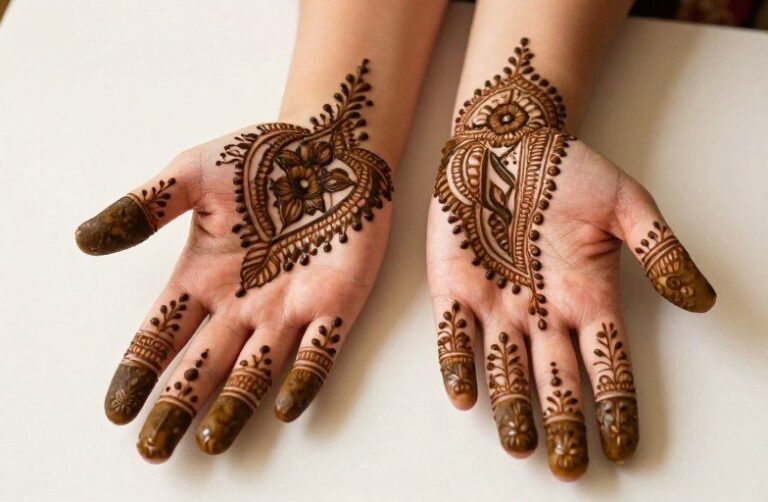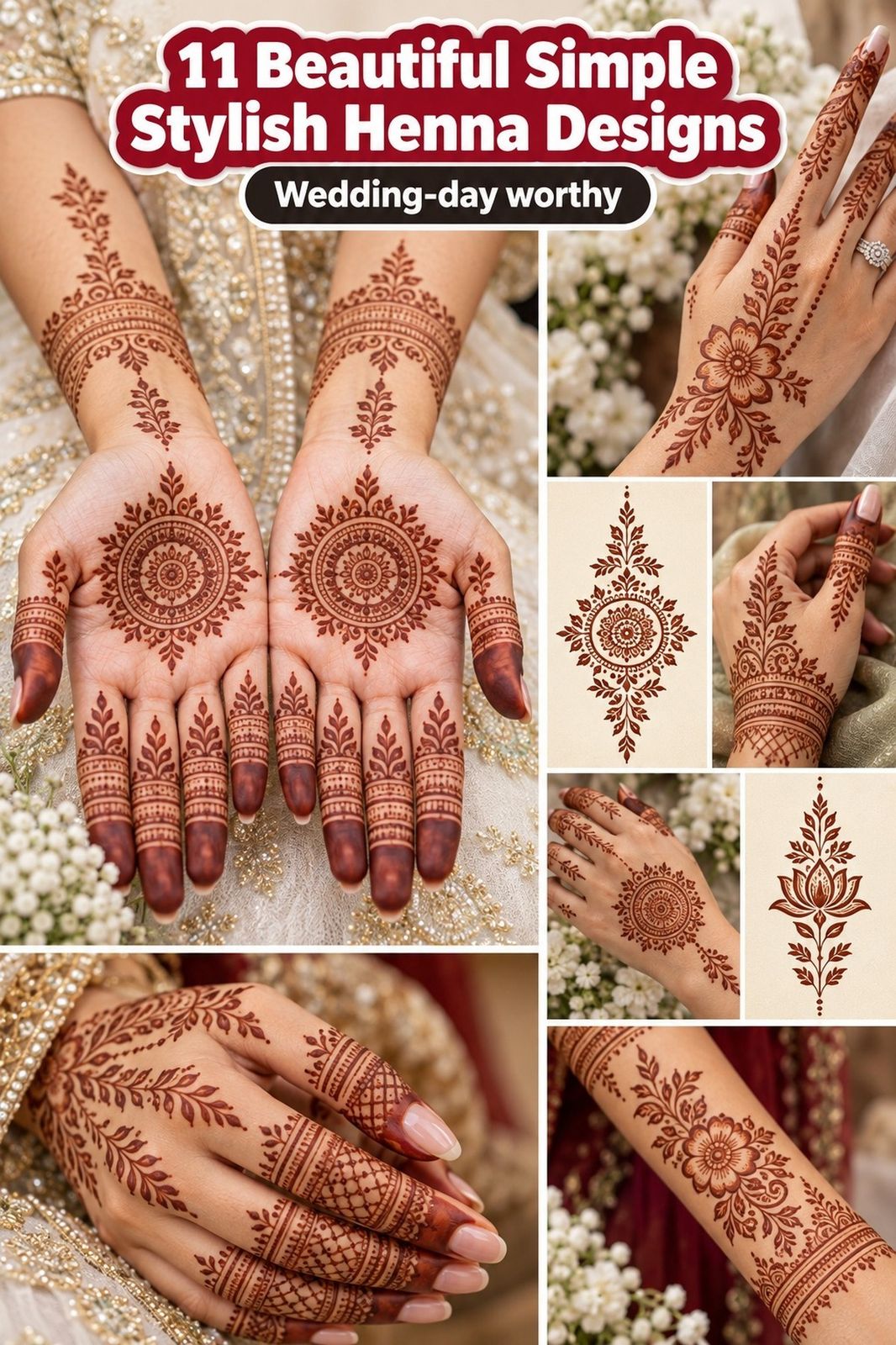
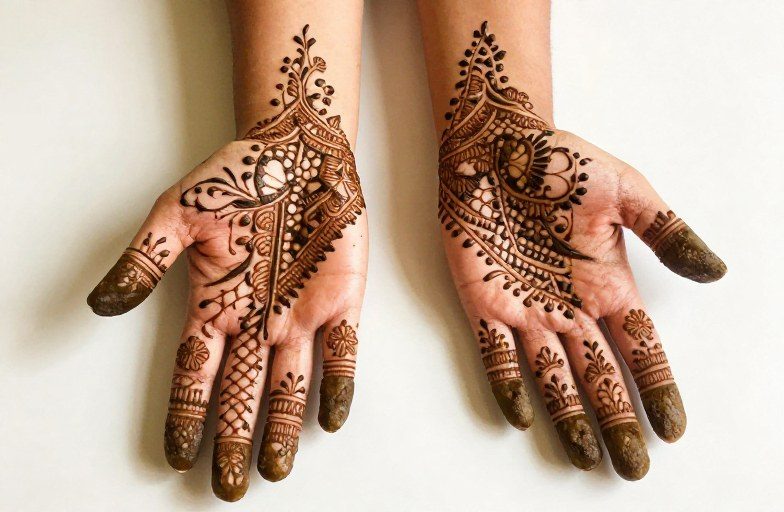
A Hindu henna tattoo carries the flowing geometry of mehndi into permanence. The same lotus, peacock, and paisley motifs that stain skin for a fortnight can now last decades, but the shift from temporary paste to needle and ink raises questions about longevity, cultural respect, and whether the symbolism survives the translation. This guide walks through what actually works, what ages poorly, and what obligations come with wearing these designs.
What These Designs Actually Look Like as Tattoos
Traditional bridal mehndi covers hands and feet in dense, lace-like patterning. Translating that directly to tattoo ink rarely succeeds. The fine lines of actual henna, often just a millimeter or two wide, spread and blur under skin over years. What looks delicate at month three can become grey soup by year ten if your artist copies mehndi too literally.
Scaling for Longevity
Experienced artists solve this by building negative space into the design. They let your skin tone carry part of the pattern rather than filling every gap with ink. Structural lines get slightly thicker than true mehndi, while internal detail stays fine enough to suggest the original delicacy. The goal is not photographic replication but visual translation, something that reads as henna-inspired even as it ages.
Line weight should vary intentionally. Bold outlines anchor the composition; finer interior lines provide texture that can soften without destroying the overall design. Shading works best with distinct value steps, what some artists call “sculpted grey,” rather than smooth gradients that muddy quickly in dense patterns.
Where the Motifs Come From
Each traditional element carries specific resonance that may or may not matter to you personally.
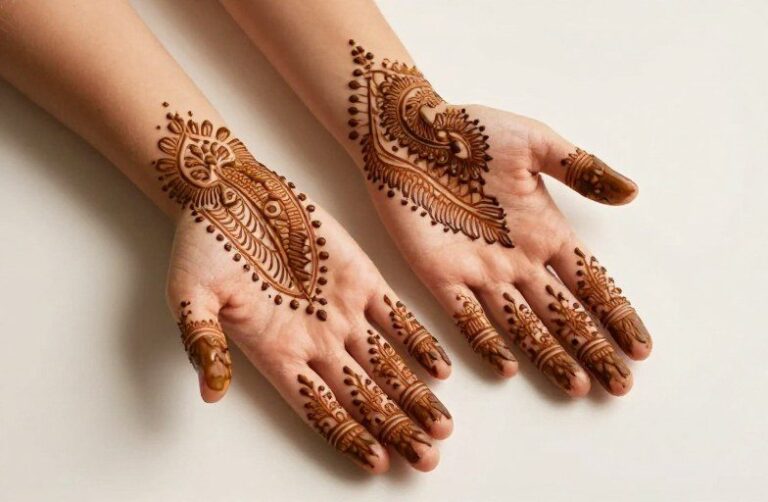
- Paisley (kairi or boteh): The teardrop shape, often linked to mango and fertility symbolism, curves naturally around hips, ribs, and shoulders. It fills space organically without the rigid symmetry of other motifs.
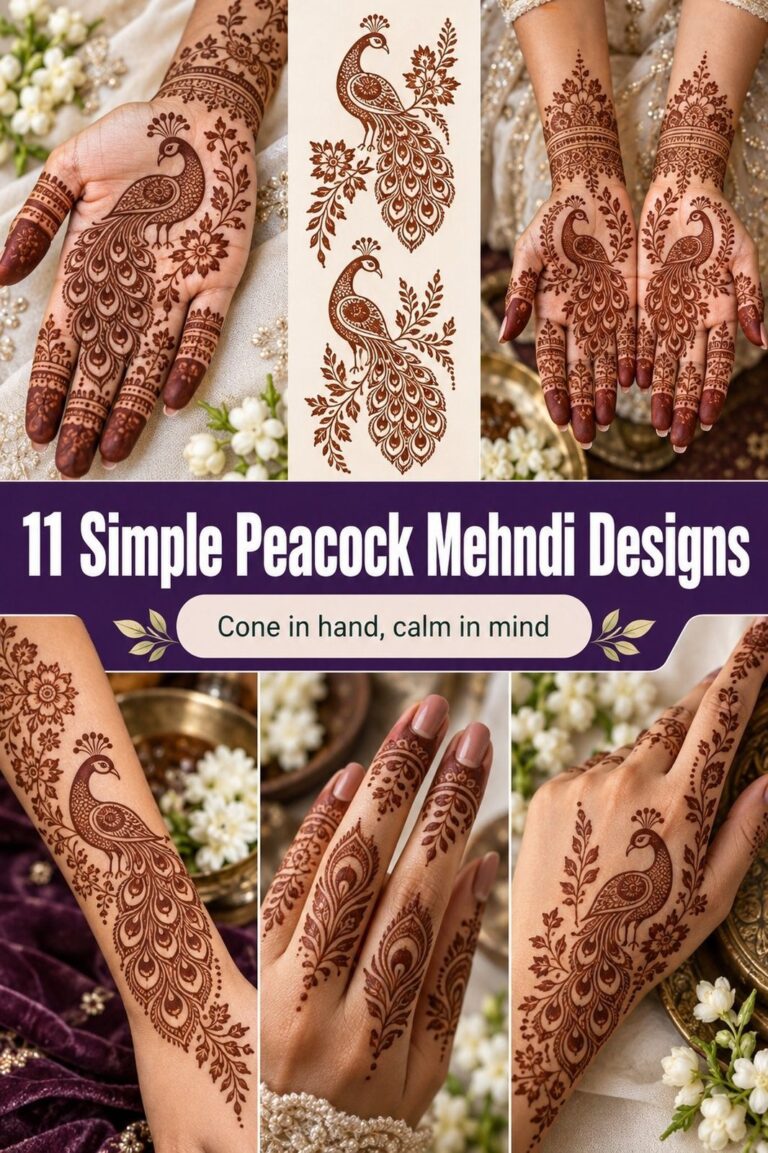
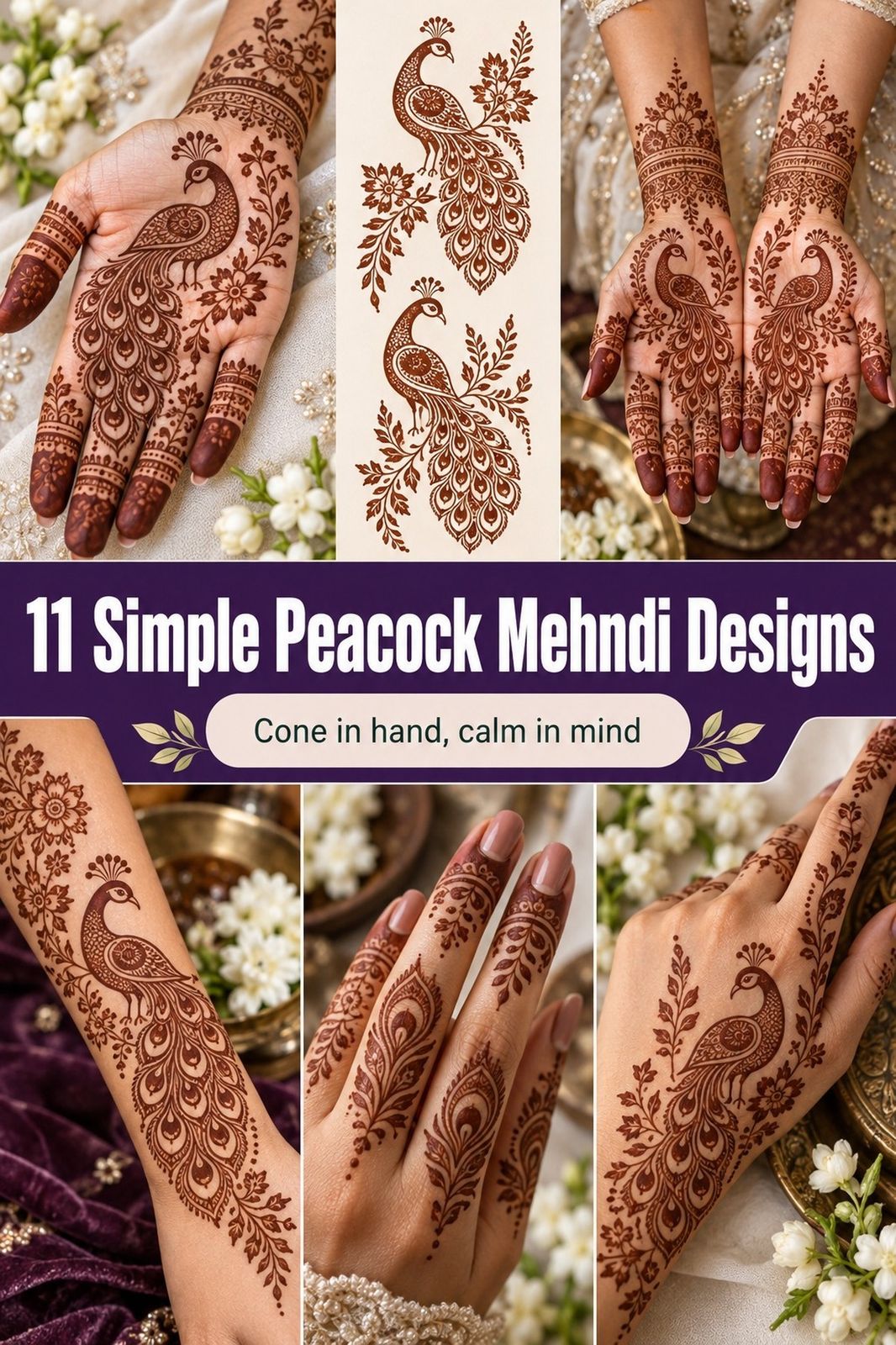
- Peacock: Associated with Saraswati and beauty, the feathered tail allows for spectacular color work or dense black-and-grey patterning. The full bird reads as proud; single feathers can be more subtle.
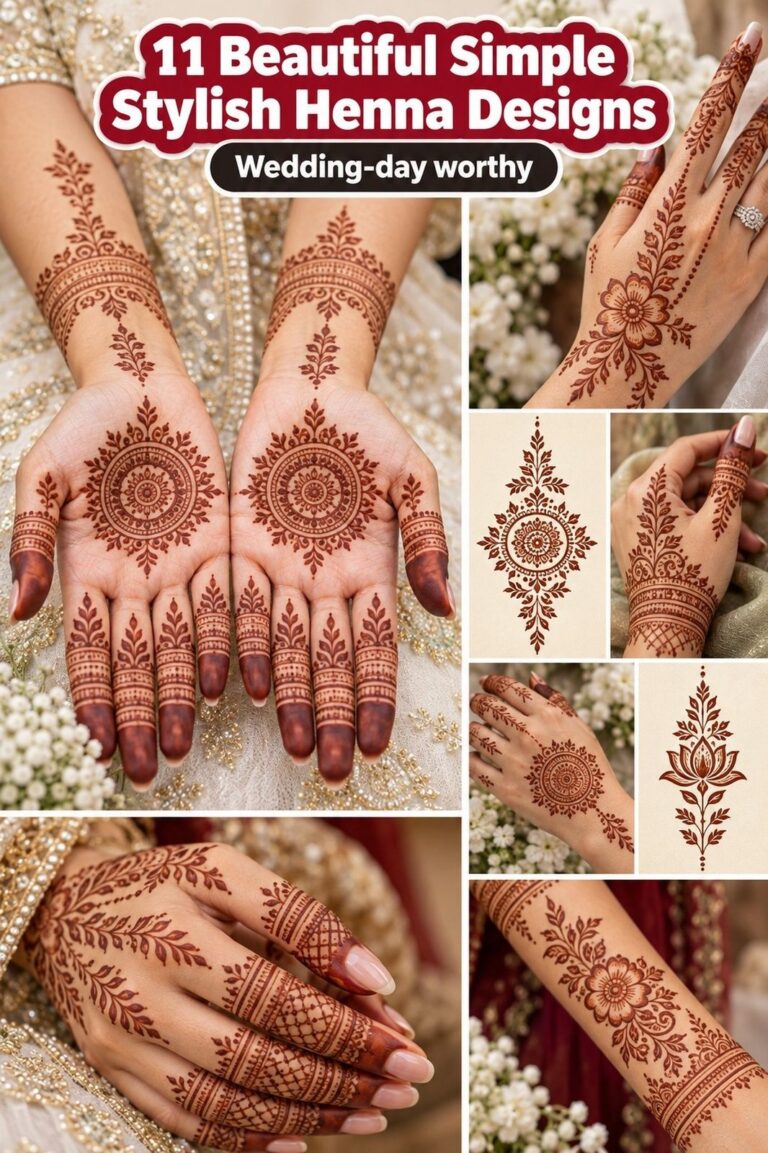
- Lotus: Clean enough for small placements, wrist, ankle, behind the ear, yet scalable to full back pieces. The layered petals hold detail at any size and carry perhaps the most universally recognized symbolism.
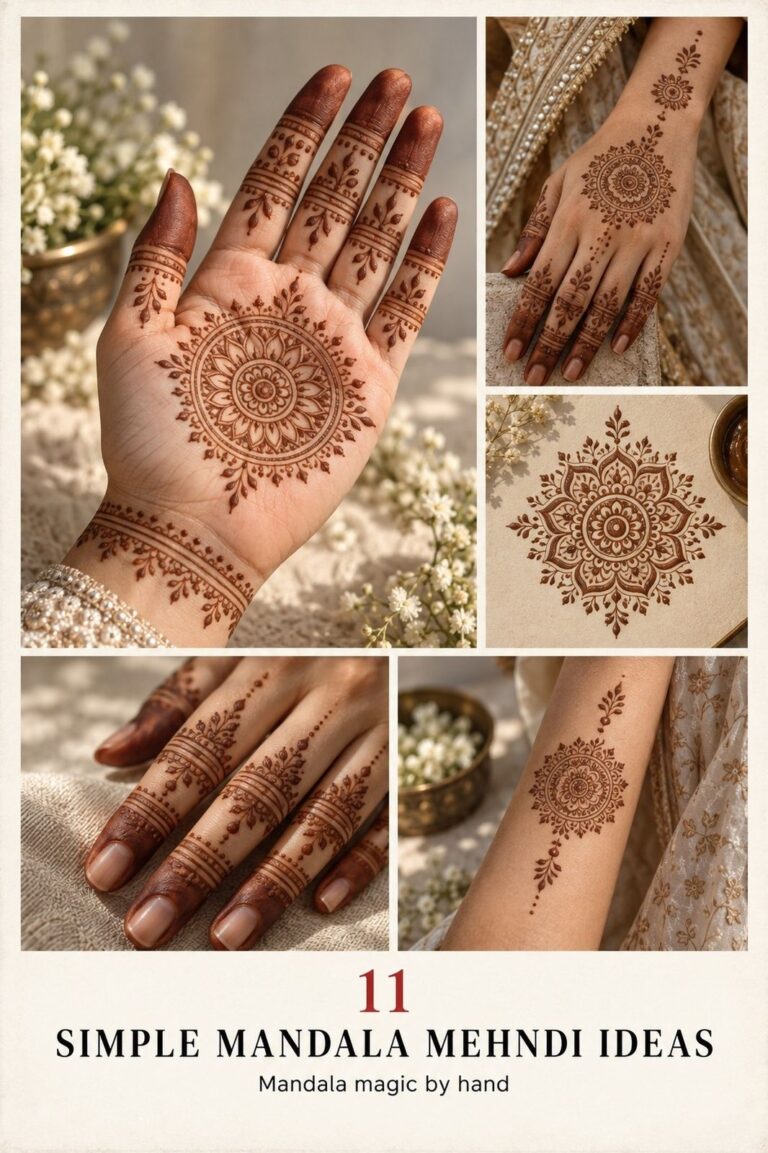
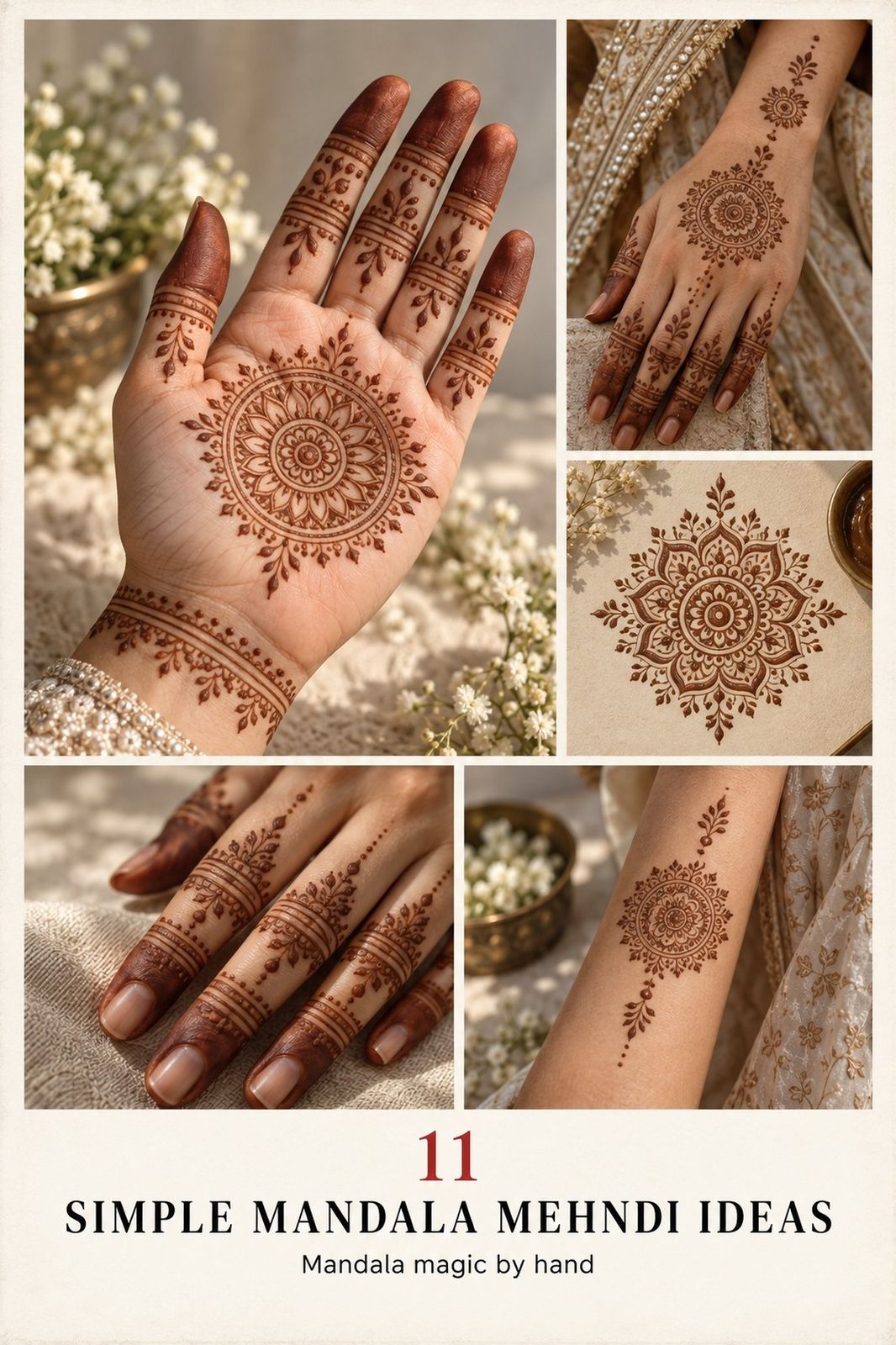
- Mandala: The circular, center-out structure demands flat planes: shoulder blades, upper chest, thighs. Even a two-millimeter drift in one petal throws off the entire visual balance. Radial symmetry is unforgiving.
History and What We Actually Know
Mehndi practice predates recorded history in South Asia, with archaeological evidence of henna use often linked to Bronze Age cultures across the Eastern Mediterranean and South Asia. The specific association with Hindu wedding rituals solidified over centuries, though pinning an exact timeline to a single century is speculative. What matters for your tattoo: the designs were never purely decorative. Application ceremonies involved specific songs, the presence of married women as blessings, and intentional placement on hands and feet to activate energy points.
The migration of mehndi patterns into permanent tattooing accelerated, as far as we can tell, with diaspora communities in the late twentieth century, particularly in the UK and North America. Second-generation South Asians sought ways to carry cultural identity beyond the temporary stain of wedding henna. This history shapes ongoing conversations about appropriation versus appreciation. Wearing these designs without understanding their ceremonial context risks flattening deep practice into mere aesthetic.
Regional Variations Worth Knowing
Rajasthani mehndi favors dense, almost architectural patterning with minimal negative space. Arabic-influenced styles from the Middle East and Pakistan use bolder floral motifs with more breathing room. South Indian traditions incorporate temple architecture and deity-specific imagery. If your artist references any of these, ask which lineage they mean. The visual language differs significantly, and conflating them suggests surface-level research.
Color Decisions and Their Consequences
Actual henna stains skin in earthy red-brown tones. “Black henna” containing PPD is a dangerous chemical additive, not traditional practice. Tattoo translations face a genuine choice: mimic the authentic rust color, embrace the full spectrum of Hindu festival colors, or work in black and grey.
Color realism in lotus and peacock pieces can be stunning. Deep magentas, saffron yellows, emerald greens. However, these pigments fade fastest. Red tones, ironically closest to real henna, are particularly prone to photodegradation. Expect significant brightening within three to five years on sun-exposed skin, with touch-ups required to maintain saturation. Plan for this maintenance or choose placement that sees less sun.
Black and grey mehndi tattoos age more gracefully. The dotwork and line density provide visual interest even as ink softens. The trade-off is symbolic: without color, the peacock loses its iridescent quality, the lotus its association with divine birth from muddy waters. Neither choice is wrong, but each carries consequences you should understand before sitting in the chair.
White Ink and Other Trends
White ink highlights, popular in some ornamental styles, typically disappear within a few years on most skin tones. Plan your design to read without them. Some artists still use white for initial contrast, but it should never carry essential information.
Placement and Its Practical Weight
Hands and feet carry the strongest traditional association, since actual mehndi concentrates there. Tattooing these locations presents real challenges. Hand skin regenerates rapidly, causing faster fade. Feet face constant friction and sun exposure. Many choose instead to place Hindu henna designs on the upper arm, ribcage, or thigh, visible to the wearer, less prone to wear, still carrying the aesthetic language.
The back of the neck offers a middle ground: visible with hair up, concealable, and positioned near the crown chakra in yogic tradition. The upper back and shoulder blades provide flat planes that serve mandala symmetry well. Ribs and hips accommodate the organic curves of paisley and vine work.
Consider your professional context, your pain tolerance, and how the design will age with body changes. A dense hand piece that looks striking at twenty-five may require significant touch-up by forty simply due to cellular turnover in that skin.
Religious and Spiritual Specifics
Hindu henna motifs encode theological concepts. Understanding them prevents unintentional misrepresentation.
- The lotus: Emerges clean from murky water, representing spiritual purity maintained amid worldly attachment. Associated with Lakshmi (prosperity), Saraswati (knowledge), and Vishnu’s navel from which creation springs. It is perhaps the safest motif for those outside the tradition, as its meaning is broadly positive and widely recognized.
- Peacock: Vehicle of Kartikeya, god of war; also connected to Krishna’s feather crown. Symbolizes beauty that transcends pride. The bird consumes poison, transforming danger into plumage. A peacock feather alone carries less specific weight than the full bird.
- Om: When integrated into henna-style patterning, the sacred syllable requires respectful placement. Feet or lower legs are generally avoided by practitioners; upper body placement aligns better with traditional reverence. Consider whether you want to carry a sacred syllable permanently, and how you will explain it to others.
- Swastika: Ancient symbol of auspiciousness, now severely complicated by twentieth-century appropriation. Most artists and clients avoid it entirely in tattoo contexts. If you encounter it in historical reference material, understand that its rehabilitation in Western tattooing is essentially impossible.
Devotional practice sometimes involves specific timing, mehndi applied before festivals, during certain lunar phases. Permanent tattoos cannot follow this temporality, but some practitioners choose their appointment dates with similar intentionality. This is a personal choice, not a requirement.
Combining Styles Without Creating Pastiche
Integrating Hindu henna elements with other tattoo traditions requires thoughtful transition work.
What Works
Fine-line botanical elements echo the organic curves of paisley without conflicting cultural signals. Sanskrit or Devanagari script integrated into the negative space of larger pieces can work if the text is accurate and grammatically correct, verify with a native speaker, never trust Google Translate for permanent body art. Minimalist single-motif designs that isolate one element from the dense traditional field often succeed precisely because they do not overreach.
What Risks Failure
Japanese irezumi backgrounds, waves, wind bars, clouds, can frame mandala or lotus pieces, but the visual density demands careful balance. Two ornate traditions layered together often compete rather than complement. Polynesian geometric patterns share the repetitive, mathematical quality of mehndi but carry their own strict cultural protocols; mixing them without deep knowledge of both traditions produces incoherent pastiche. If you want fusion, find an artist genuinely fluent in both source traditions, not someone who dabbles.
Finding the Right Artist and Red Flags
Look for portfolios showing healed work, not just fresh photos. Mehndi-style tattoos look crisp immediately; the test is how they settle at six months and two years. Ask specifically about experience with dense line work and how they handle the spread that occurs as ink settles.
Be wary of artists who cannot name the regional tradition they are drawing from. “Indian-style” is not a meaningful description. Rajasthani, Arabic-influenced, and South Indian traditions are visually distinct, and conflating them suggests the artist has not done the work. Similarly, be cautious of portfolios that mix sacred Hindu motifs with unrelated spiritual symbols, Buddhist mandalas with Hindu deity imagery, without apparent understanding of either tradition.
Questions to ask: How do you adjust line weight for longevity? Which regional tradition does this specific reference come from? How has this design healed in your previous clients? An artist who deflects or seems irritated by cultural questions is not the right choice for this work.
What to Remember
Hindu henna tattoos occupy genuine space between aesthetic appreciation and cultural participation. The designs offer visual beauty, the mathematical satisfaction of mandala construction, the organic flow of vine and paisley, the symbolic depth of lotus and peacock. They also carry obligations: to understand origins, to avoid sacred misuse, to credit rather than extract.
The best pieces result from honest conversation between you and your artist about what you want, what you know, and what you are still learning. Choose motifs that resonate with your actual life, not your imagined exoticism. Place them where they will age well. Maintain them with the same care you would bring to any significant commitment. A tattoo lasts longer than most marriages; approach it with at least that level of seriousness.
Frequently Asked Questions
How long do Hindu henna-style tattoos last before needing touch-ups?
Dense line work on sun-exposed areas like hands or forearms may need attention within five to seven years. Black and grey pieces on the upper arm, thigh, or back often hold ten to fifteen years before significant refresh. Color saturation, particularly reds and yellows, fades faster; expect brightening within three to five years if the area sees regular sun.
Is it cultural appropriation to get a Hindu henna tattoo if I am not Hindu?
This depends on your approach. Wearing the designs purely as aesthetic, without understanding their ceremonial and spiritual context, risks appropriation. Learning the specific meaning of your chosen motifs, crediting their origins when asked, and avoiding sacred symbols you do not practice, particularly Om or deity imagery, shifts the balance toward appreciation. Some practitioners welcome sincere engagement; others feel these patterns should remain within the community. There is no universal consensus, so humility and willingness to listen matter.
What is the most painful placement for a dense mehndi-style tattoo?
Hands, feet, and ribs are generally the most challenging. Hand skin is thin with little padding and many nerve endings; sessions require frequent breaks. The ribcage moves with breathing, making long lines difficult to execute and uncomfortable to receive. The upper arm and outer thigh offer the most manageable combination of flat surface for symmetry and manageable pain levels.