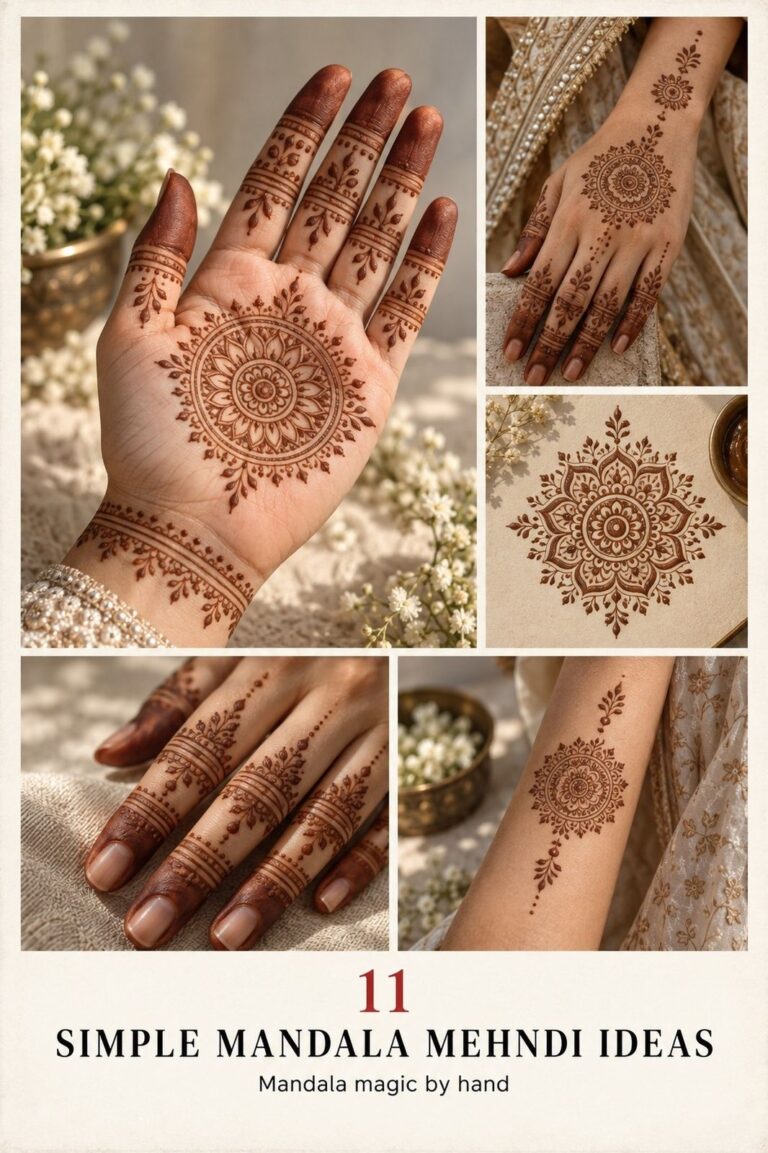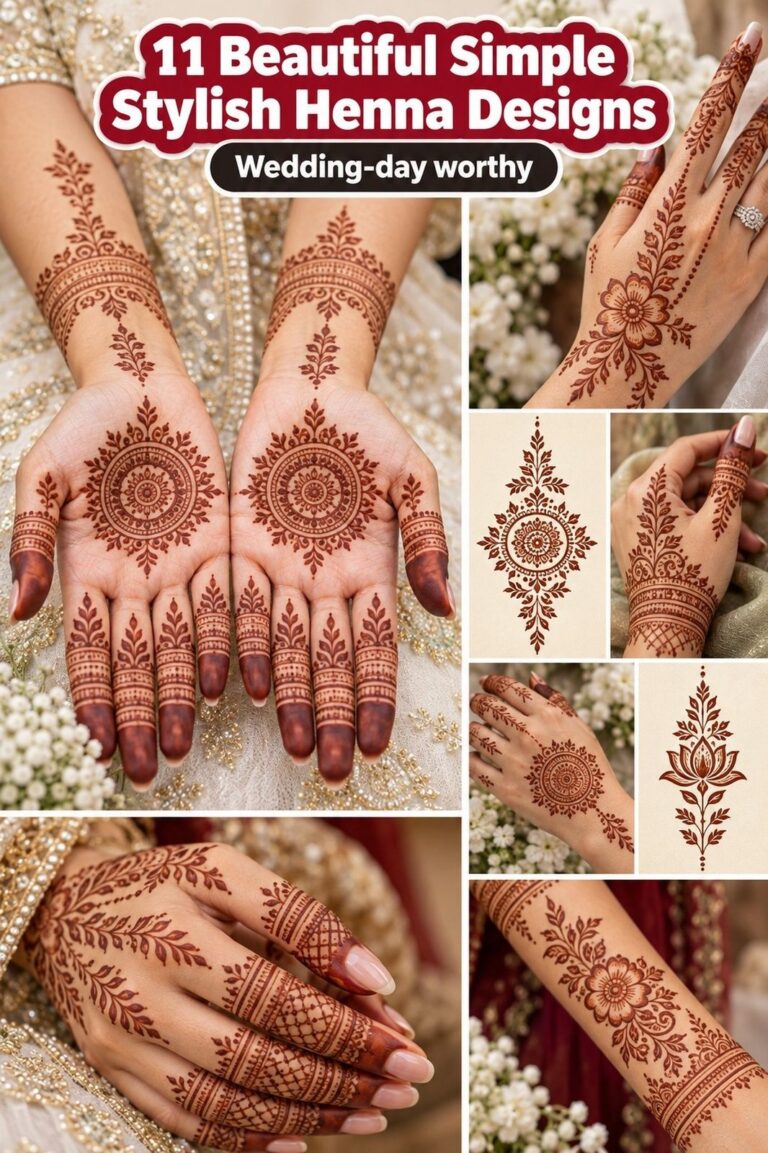
Henna tattoo meaning centers on blessing, transition, and temporary beauty. The stain itself, created from Lawsonia inermis plant paste, darkens over days and fades within weeks, making it a natural symbol of impermanence. Across cultures, people apply henna before weddings, births, religious holidays, and coming-of-age moments, marking thresholds rather than permanence.
Best Placements
Where henna goes matters as much as what it depicts. Traditional application follows body contours that maximize stain depth and symbolic visibility.
Hands and Palms
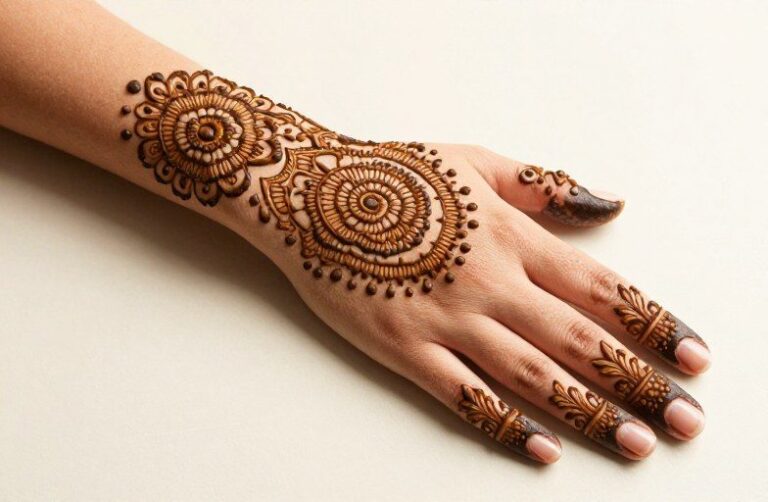
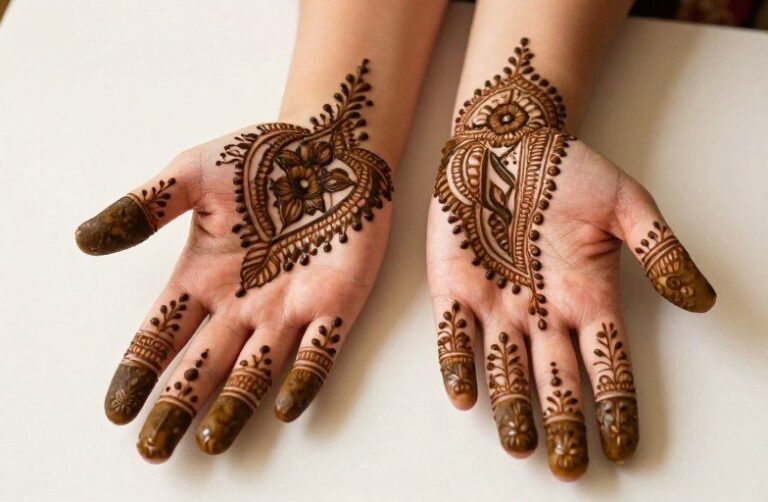
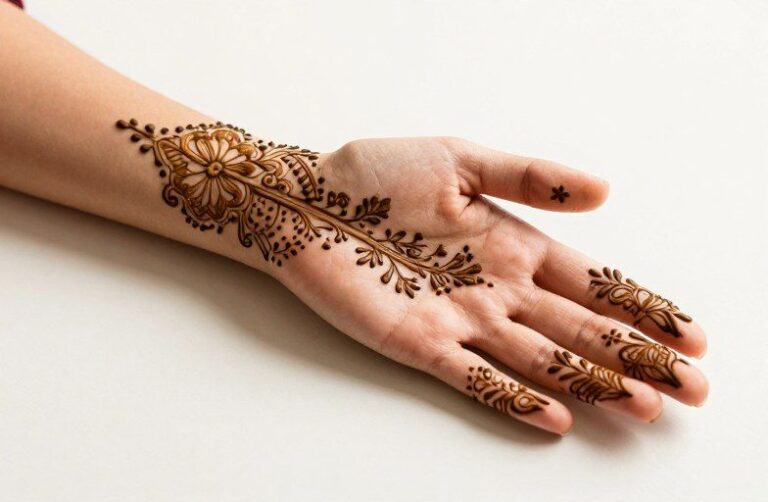
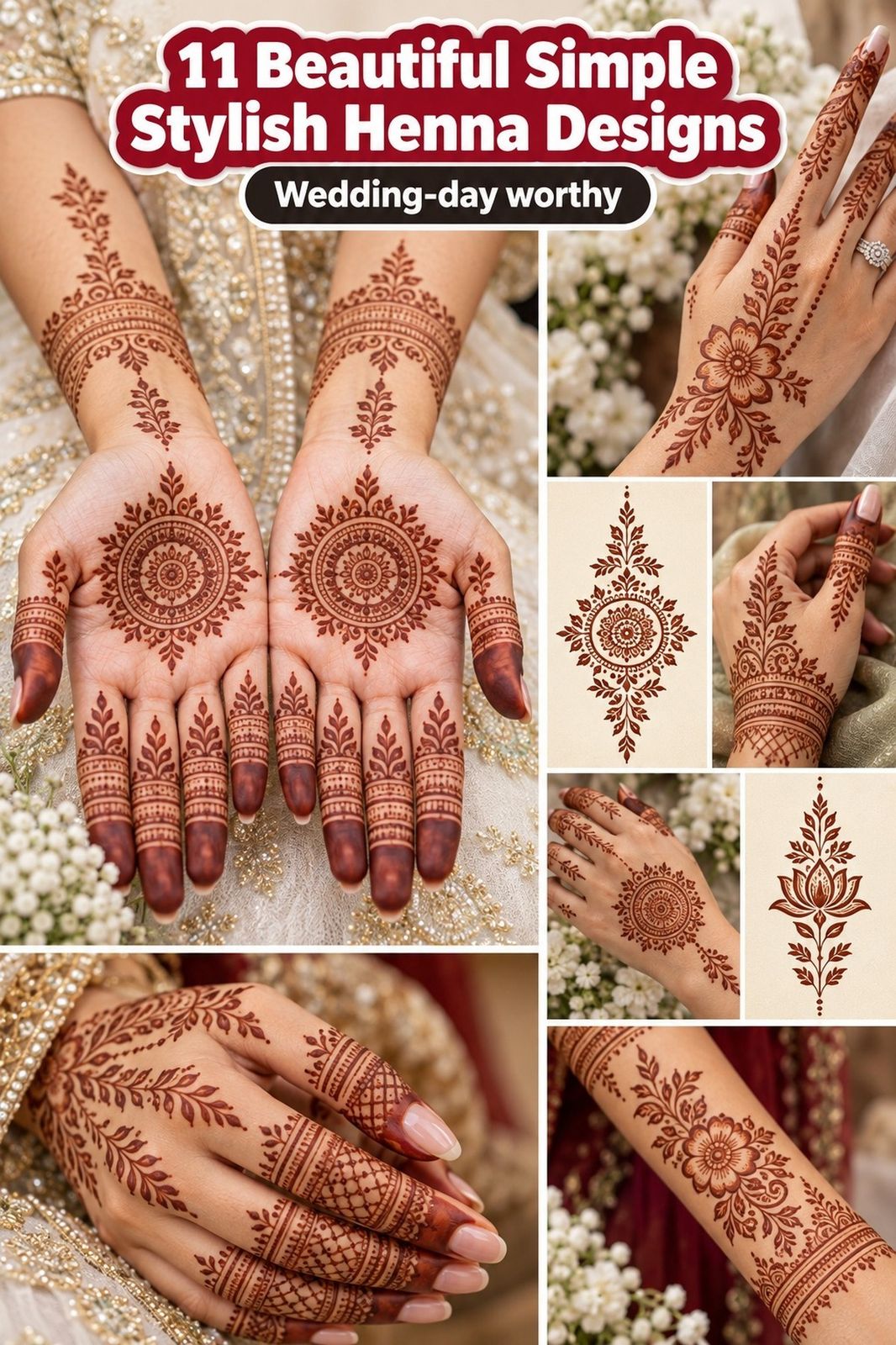
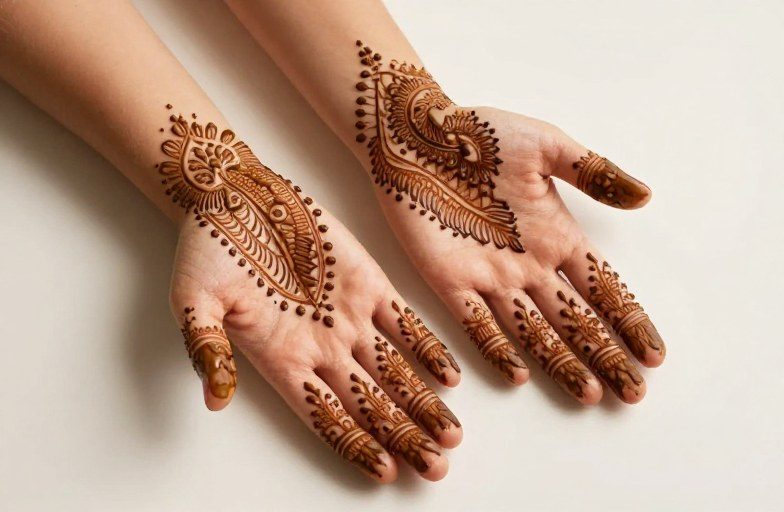
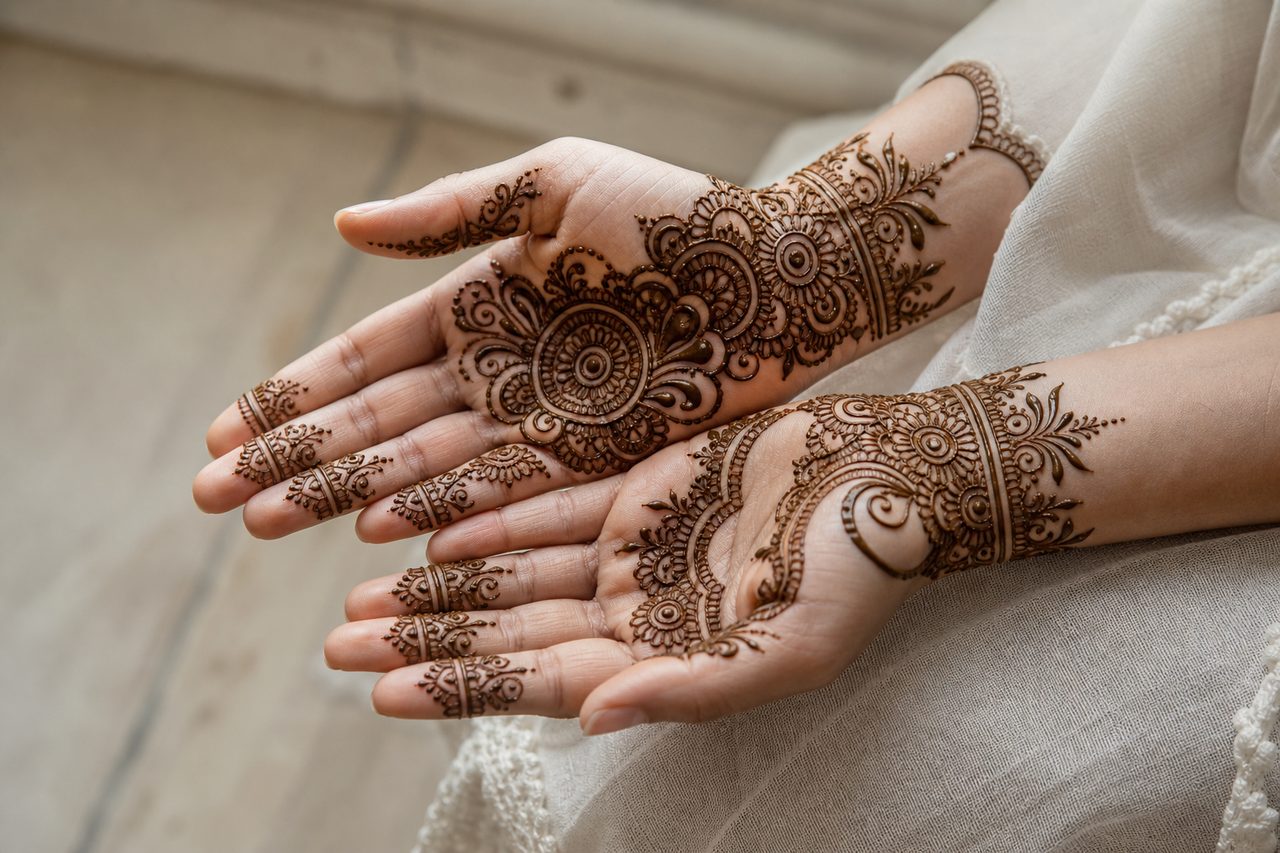
Palms stain darkest because the skin is thickest there. The palms and backs of hands remain the classic placement for bridal mehndi, with designs flowing from fingertips to wrist. The visibility here means the wearer literally presents their blessings to others, offering hands in greeting, prayer, or service displays the art. Fingers tend to fade first from constant washing, so intricate fingertip details often require touch-ups within a week.
Feet and Ankles
Feet hold color well but present practical challenges. The stain develops slower on soles, and walking disturbs the drying paste. Ankle bracelets and toe rings of henna appear frequently in North African and Middle Eastern traditions, often paired with hand work for full bridal sets. The placement connects to grounding and fertility symbolism, with feet literally touching earth.
- Upper arms and shoulders: less traditional but gaining ground for festival wear; stain lighter here due to thinner skin
- Back and sternum: popular for contemporary ornamental work; requires assistance to apply
- Behind the ear and nape: subtle placement, fades quickly from hair washing and friction
How It Ages on Skin
Unlike permanent ink, henna’s lifespan is the entire point. Understanding the actual timeline helps set expectations and spot quality work.
The Color Progression
Fresh paste goes on dark brown or greenish-black. The real stain develops underneath as lawsone molecules bind with keratin. Peak color, typically a deep reddish-brown on palms, orange-leaning on thinner skin, arrives 48-72 hours after paste removal. This delayed reveal is part of the ritual; brides traditionally don’t do heavy labor during this waiting period, both to protect the developing stain and to receive pampering before the event.
Quality natural henna never stains black immediately. “Black henna” containing paraphenylenediamine (PPD) produces instant dark results but carries genuine chemical burn risk. The authentic aging process, orange to brown over two days, signals safety.
Fade Patterns
Fading isn’t uniform. Exfoliation happens fastest where skin contacts objects most: fingertips, palms, soles. The center of a palm design often outlasts the edges by a week. Chlorine, exfoliating scrubs, and oil-based skincare accelerate loss. A well-cared-for palm piece lasts two to three weeks; thinner skin placements fade in seven to ten days. The gradual disappearance itself carries meaning in many traditions, beauty that leaves makes room for the next blessing.
Similar & Related Symbols
Henna doesn’t exist in isolation. Its motifs overlap with permanent tattoo traditions and other body arts across regions.
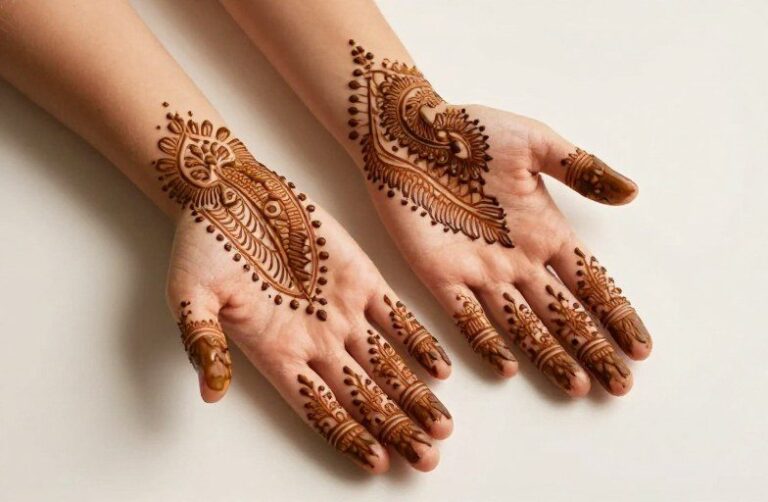
Mendhi patterns share DNA with Islamic geometric art, Persian miniature painting, and Indian temple carvings. The paisley, teardrop with curved top, appears in Kashmiri shawls, Ottoman ceramics, and henna alike. Some trace it to the cypress tree or mango leaf; others to the yoni symbol. The ambiguity is typical: henna artists adapt regional flora into stylized forms that read as decorative to outsiders but carry specific local recognition.
- Dotwork and stippling: similar visual texture to pointillism tattoos; both build form through accumulation rather than line
- Mehndi and jagua: jagua (Genipa americana) produces blue-black temporary stains from South American tradition; often marketed as “black henna” though chemically unrelated
- White henna: not true henna at all but body paint or adhesive with white pigment; purely visual, no stain, washes off same-day
Religious & Spiritual Angles
Context determines whether henna reads as religious practice, cultural celebration, or fashion choice.
Islamic Traditions
Many Muslims associate henna with the Prophet Muhammad, who reportedly used it to dye his beard and encouraged its use. This connection makes it sunnah (recommended practice) for some, particularly for men coloring gray hair. Bridal henna before the wedding night carries baraka, blessing power, across Muslim-majority cultures from Morocco to Indonesia. The art itself contains no sacred text or required imagery; the application ritual and intent carry the spiritual weight.
Hindu and Jain Practices
Karva Chauth, Teej, Diwali preparations, North Indian women apply henna for multiple festivals. The designs often incorporate peacocks, lotuses, and Lord Krishna imagery. Here henna functions as shringar (adornment), one of sixteen traditional beautification practices. The temporary nature suits Hindu philosophy’s emphasis on impermanence and cyclical renewal.
Modern practitioners across faiths and none adapt the art freely. The spiritual meaning often linked to henna, protection from evil eye, blessing for new beginnings, persists even in secular use, though stripped of specific doctrinal framing.
Common Variations & Styles
Regional styles diverge sharply; knowing the differences helps identify what you’re actually looking at.
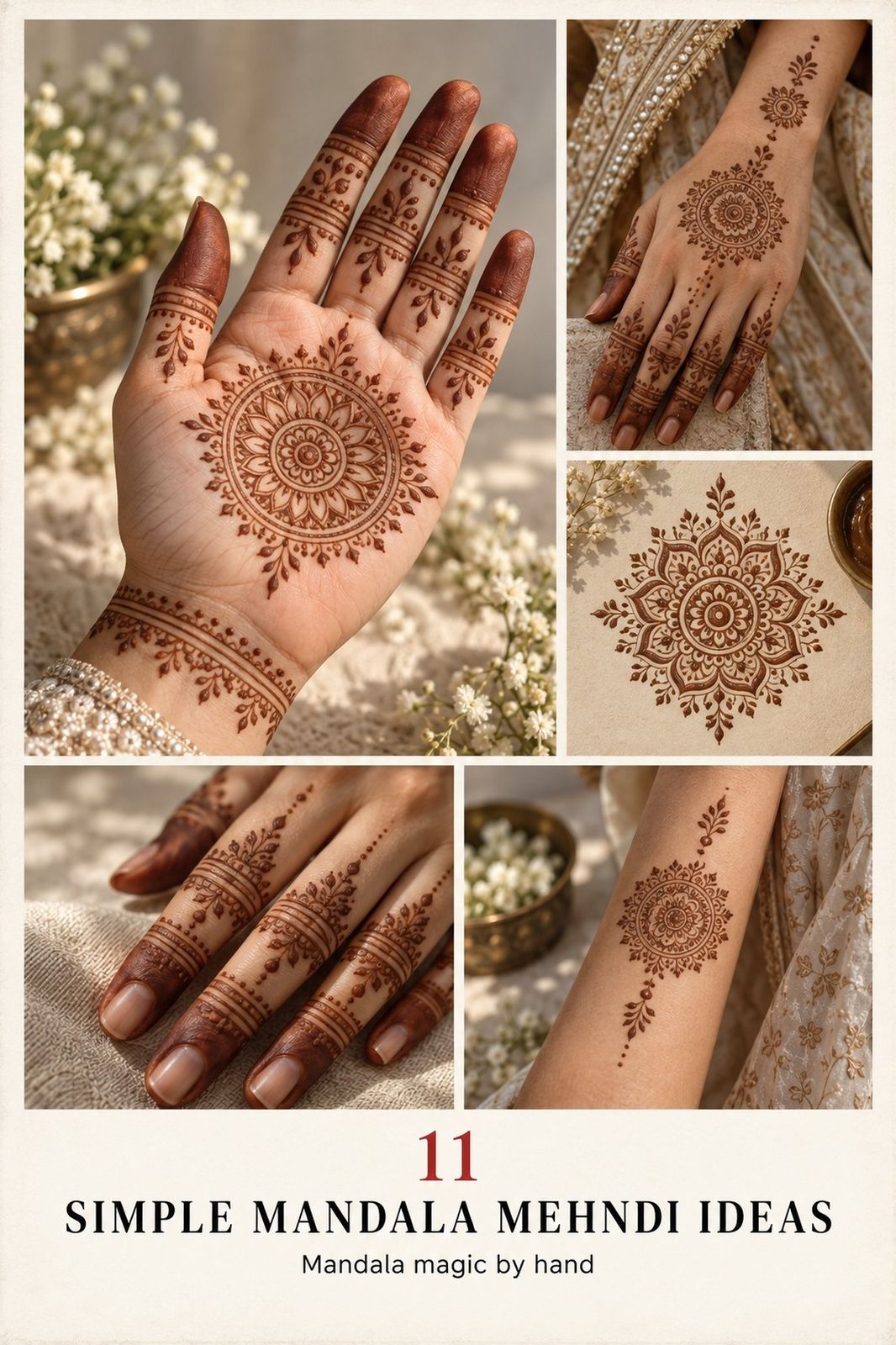
Indian/Pakistani work tends toward dense, all-over coverage with fine detail. Paisleys, floral nets, and bride-groom hidden portraits (modern addition) fill entire hands and feet. Arabic style favors bolder, more spaced-out floral vines, larger negative space, quicker application, striking from distance. African traditions, particularly Sudanese and Somali, emphasize geometric precision and sometimes incorporate scarification patterns. Moroccan work often features Berber diamond patterns and architectural elements from zellige tilework.
- Indo-Arabic fusion: dense Indian detail with Arabic-style vine flow; popular in diaspora communities
- Western ornamental: non-cultural abstract patterns, often on non-traditional placements; sometimes called “henna inspired” rather than traditional mehndi
- Glitter and gem add-ons: cosmetic enhancement applied over or around dried paste; purely decorative, no traditional roots
Color vs Black and Grey
This section applies differently to henna than permanent tattooing, henna has no true color variation, but the comparison reveals quality markers.
Natural henna produces one color range: orange to reddish-brown to deep burgundy, depending on skin chemistry and body part. The variation comes from your skin, not the mix. “Color” in henna means this authentic range; “black and grey” means problematic additives.
PPD-laced “black henna” creates jet black results that look like permanent tattoo ink. The visual similarity tricks tourists and impulse clients. The reality: PPD is industrial hair dye, unregulated for skin contact, and documented to cause permanent scarring and lifelong sensitization. Real henna artists refuse to use it; the color variation isn’t worth the harm.
Some natural variations exist within the brown range. Adding lemon juice, tea, or coffee to paste shifts tone slightly, more auburn, more chocolate. Indigo mixed with henna produces “brown henna” for hair, but on skin it doesn’t bind the same way and produces patchy results. Jagua offers genuine blue-black temporary color from a different plant entirely, though it requires different aftercare and carries its own allergy considerations.
What to Remember
Henna tattoo meaning lives in its temporary nature, its ritual application, and its cultural density, not in any single universal symbol. The best work respects the tradition while fitting the individual wearer. For application, seek artists who mix their own paste from Lawsonia inermis powder, lemon juice, sugar, and essential oils; who can explain their recipe; who let you smell the earthy, grassy scent of real henna. The paste should be greenish-brown going on, not jet black. The stain should develop over days, not appear instantly.
Aftercare is simple and specific: keep paste on six to twelve hours, scrape rather than wash off, avoid water for the first day, apply sugar-lemon sealant if the artist provides it. The meaning you carry includes the care you take, attention to the process honors the tradition, if you’re marking a wedding, a festival, or simply a Tuesday that felt like it needed blessing.
Frequently Asked Questions
How can I tell if my henna artist is using safe, natural paste?
Ask about their ingredients directly. Natural paste contains Lawsonia inermis powder, lemon juice, sugar, and skin-safe essential oils like lavender or tea tree. It should smell earthy and herbal, not chemical. If the paste is jet black or the artist can’t explain their mix, walk away.
Why did my henna turn orange instead of dark brown?
Color varies by body part and individual skin chemistry. Thinner skin on arms and legs often stains orange-brown; thicker palm and sole skin reaches deeper brown. The shade also depends on how long paste stayed on and body temperature during development.
Can I get henna if I have sensitive skin or eczema?
Natural henna is generally well-tolerated, but patch test 24 hours beforehand. Avoid henna entirely on broken, inflamed, or freshly exfoliated skin. Essential oils in paste can irritate some people; ask for a reduced-essential-oil mix if concerned.
What’s the difference between bridal henna and casual festival henna?
Bridal work typically covers both hands to mid-forearm and feet to mid-calf with dense, intricate patterns taking three to six hours. Festival or casual application might be a single hand accent or arm band taking twenty minutes to an hour. The meaning differs too, bridal henna carries specific blessing rituals, while casual wear is primarily decorative.