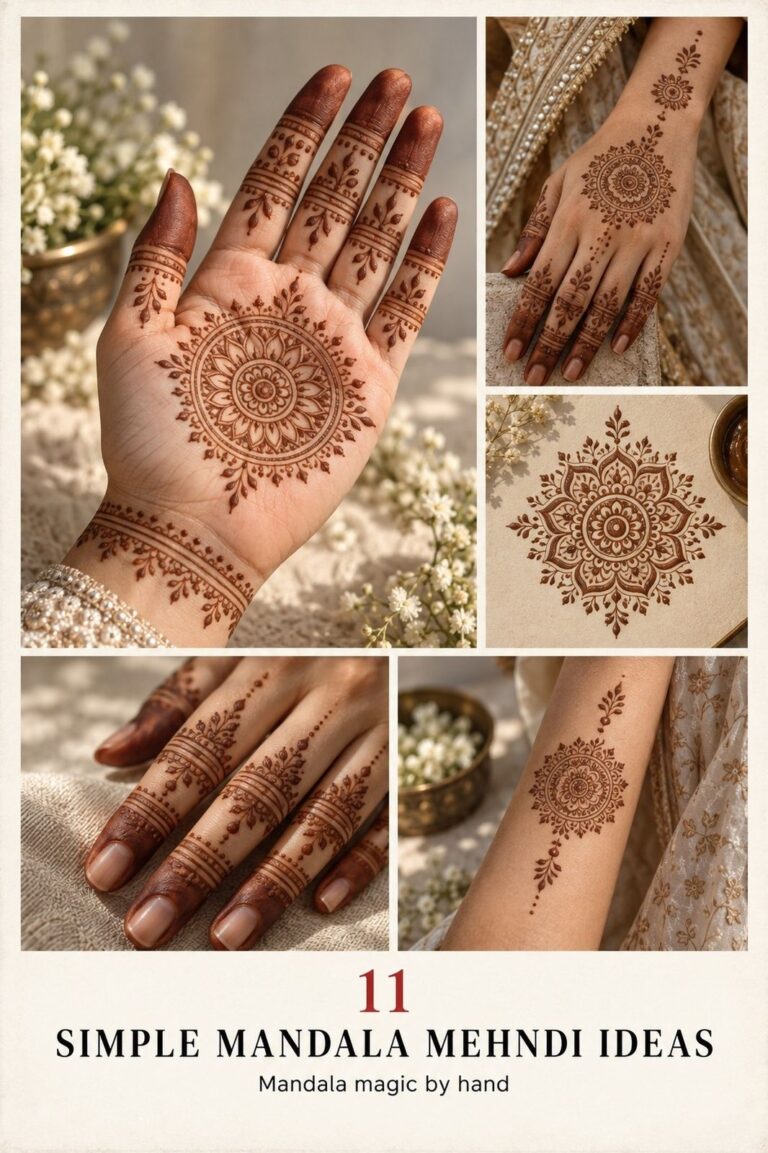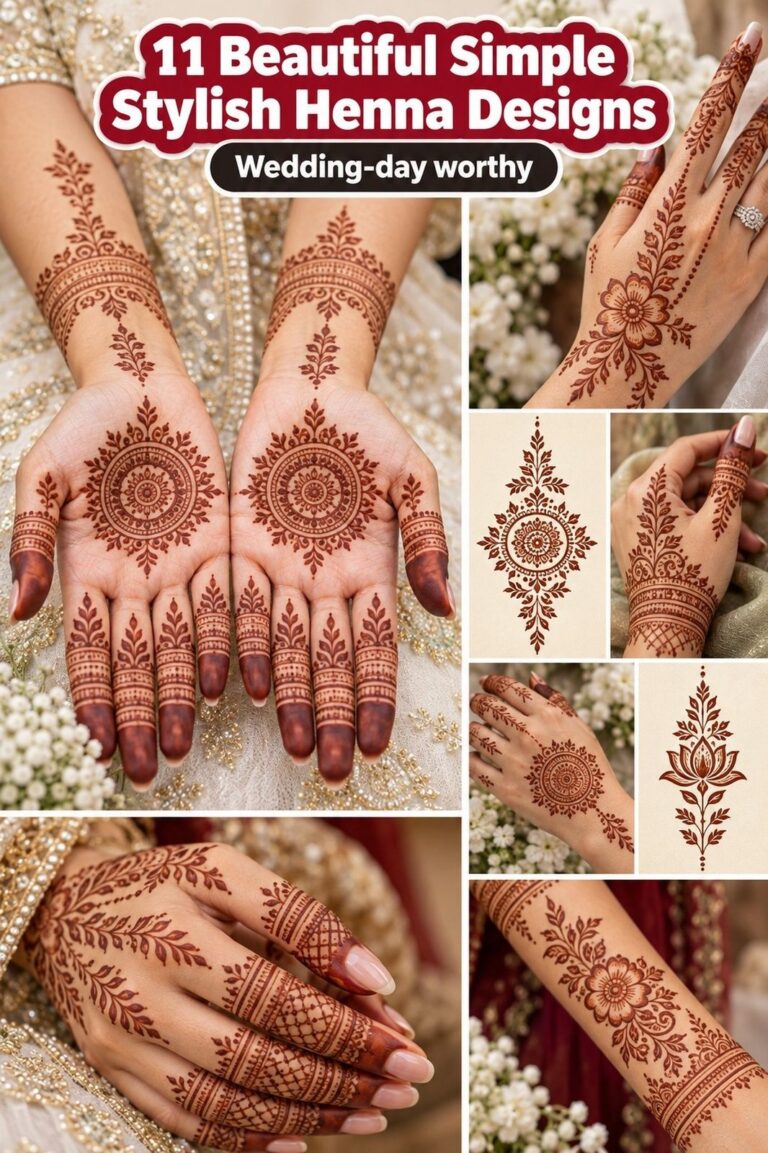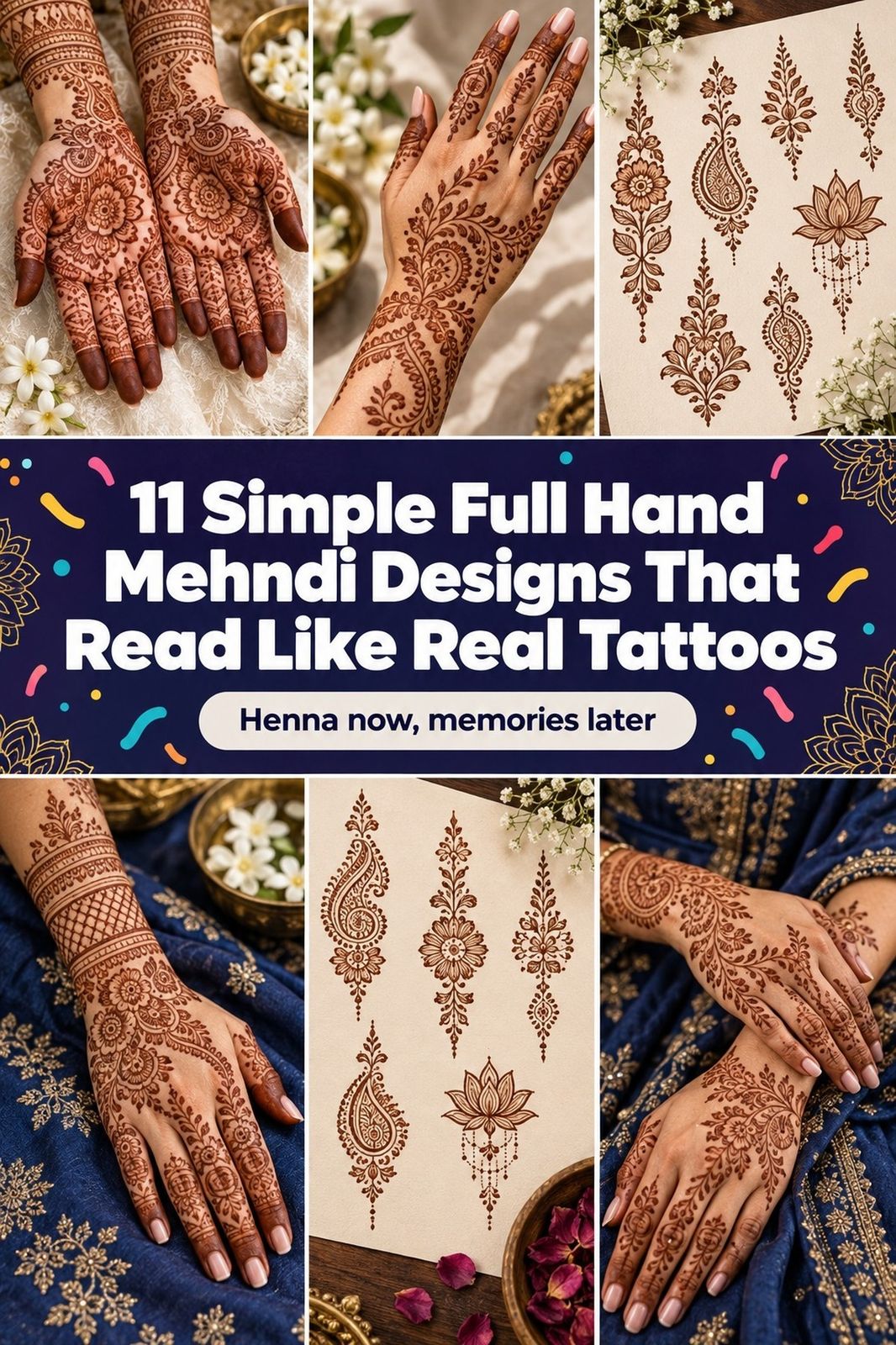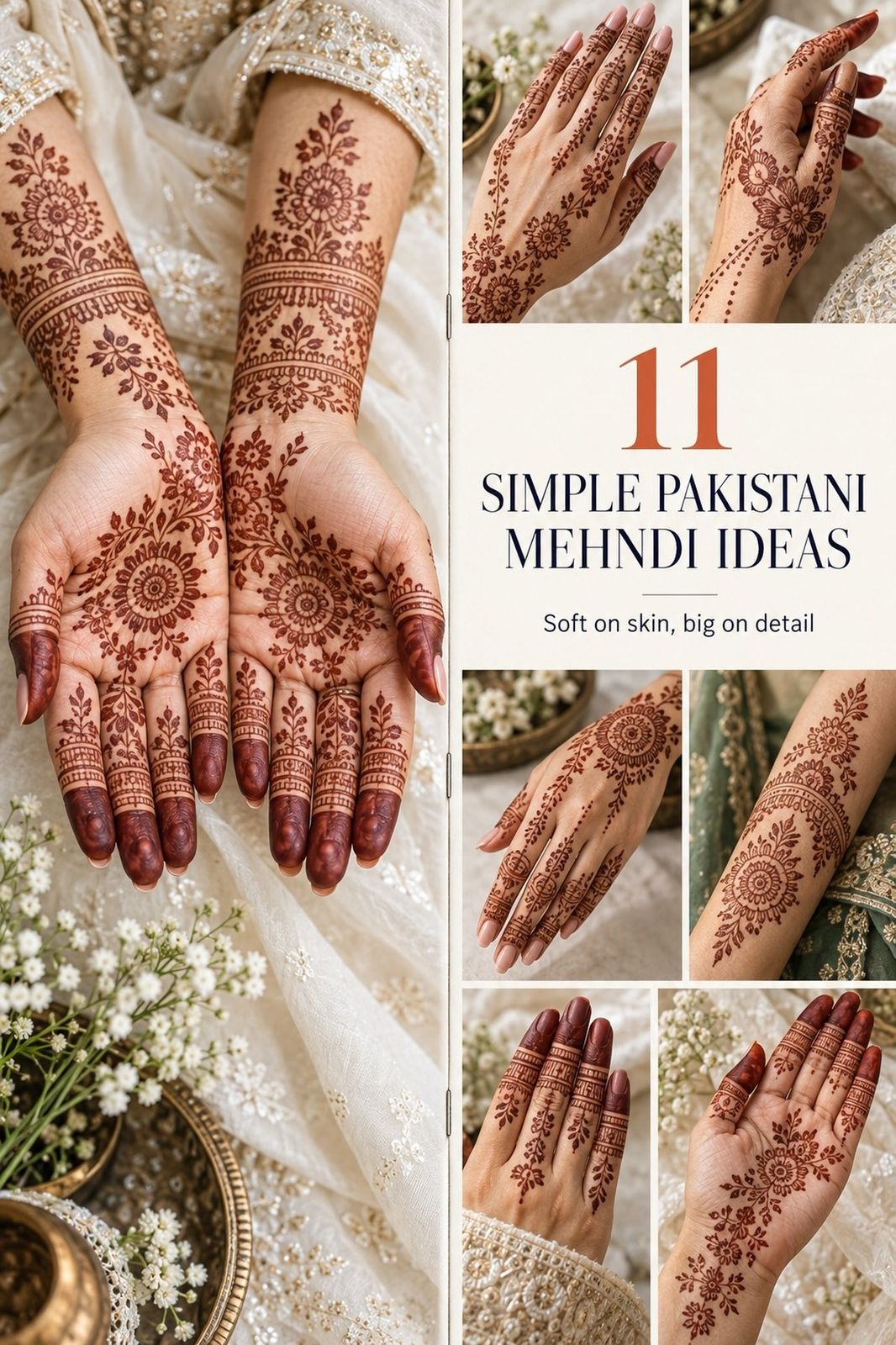
When people ask “is henna tattoo permanent,” they’re usually touching on something deeper: the meaning behind temporary body art that carries permanent cultural weight. Henna, mehndi in Hindi and Urdu, symbolizes blessing, joy, protection, and transition. Its meaning lives in the ritual of application, the social gathering, and the knowledge that beauty here is meant to fade, marking moments rather than claiming skin forever.
Common Variations & Styles
Not all henna looks the same, and the style you choose carries its own symbolic language. Traditional regional designs read like visual dialects to those familiar with the art form.
Indian/Pakistani Full-Hand and Bridal Patterns
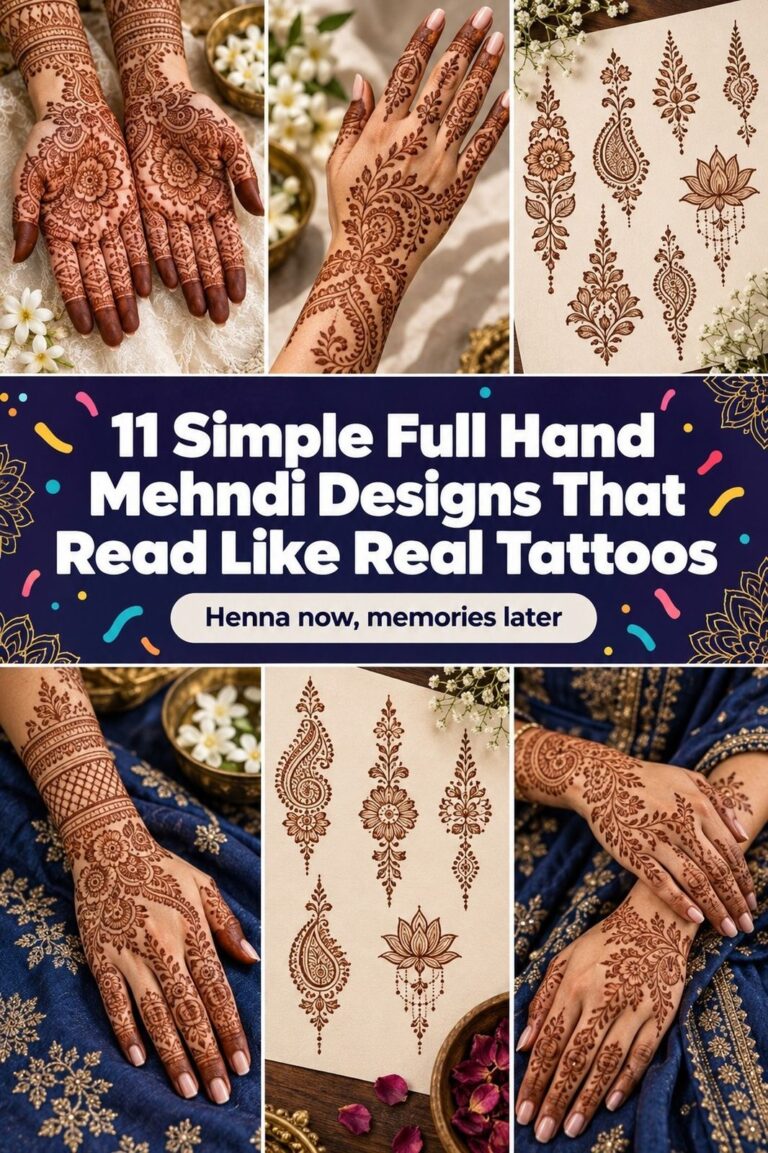
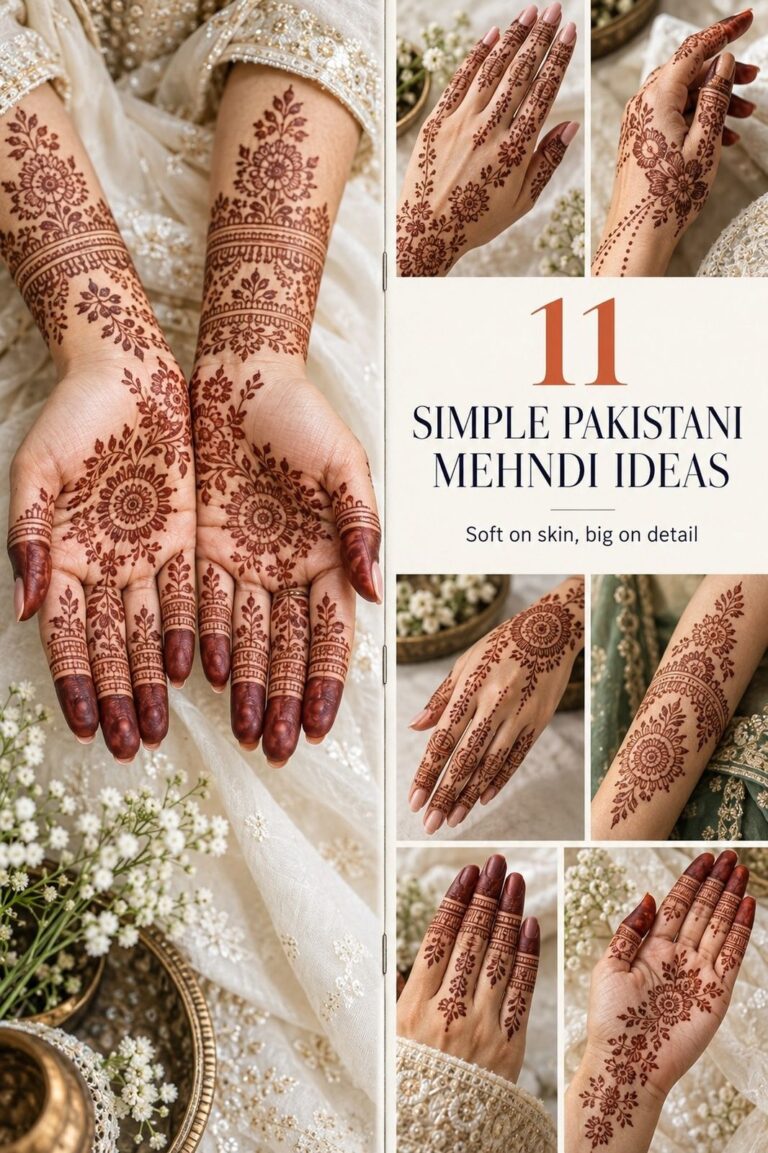
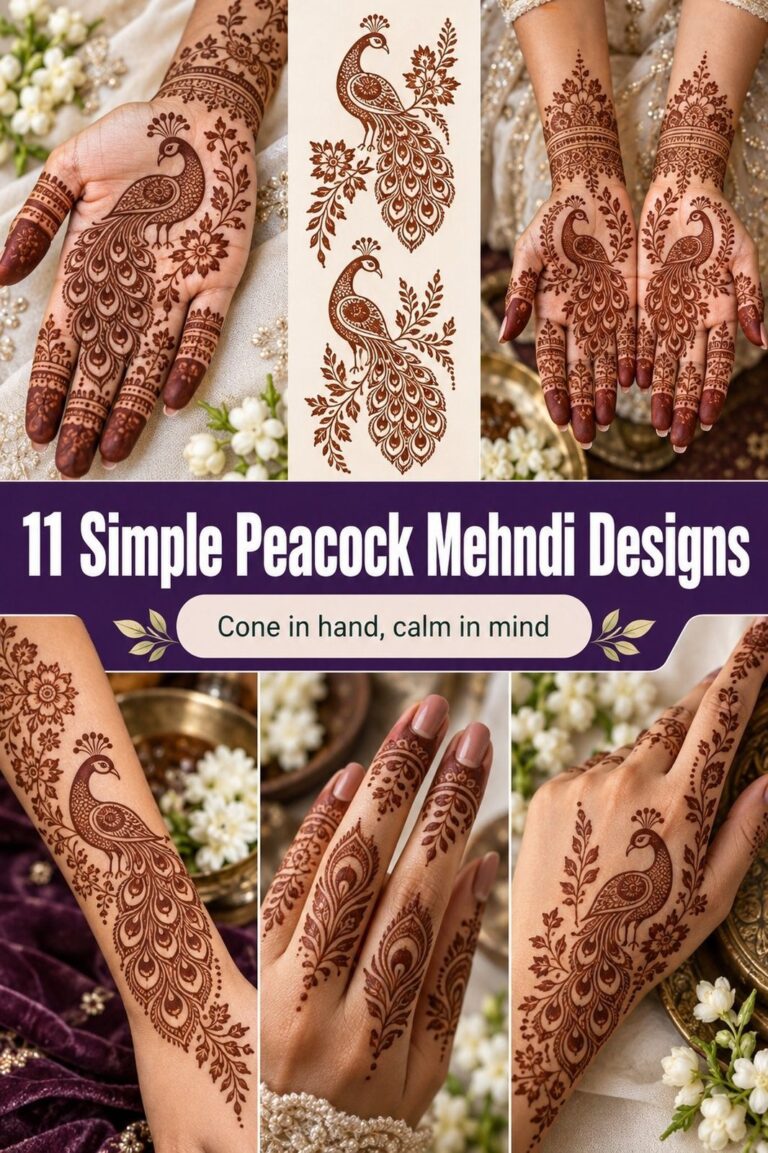
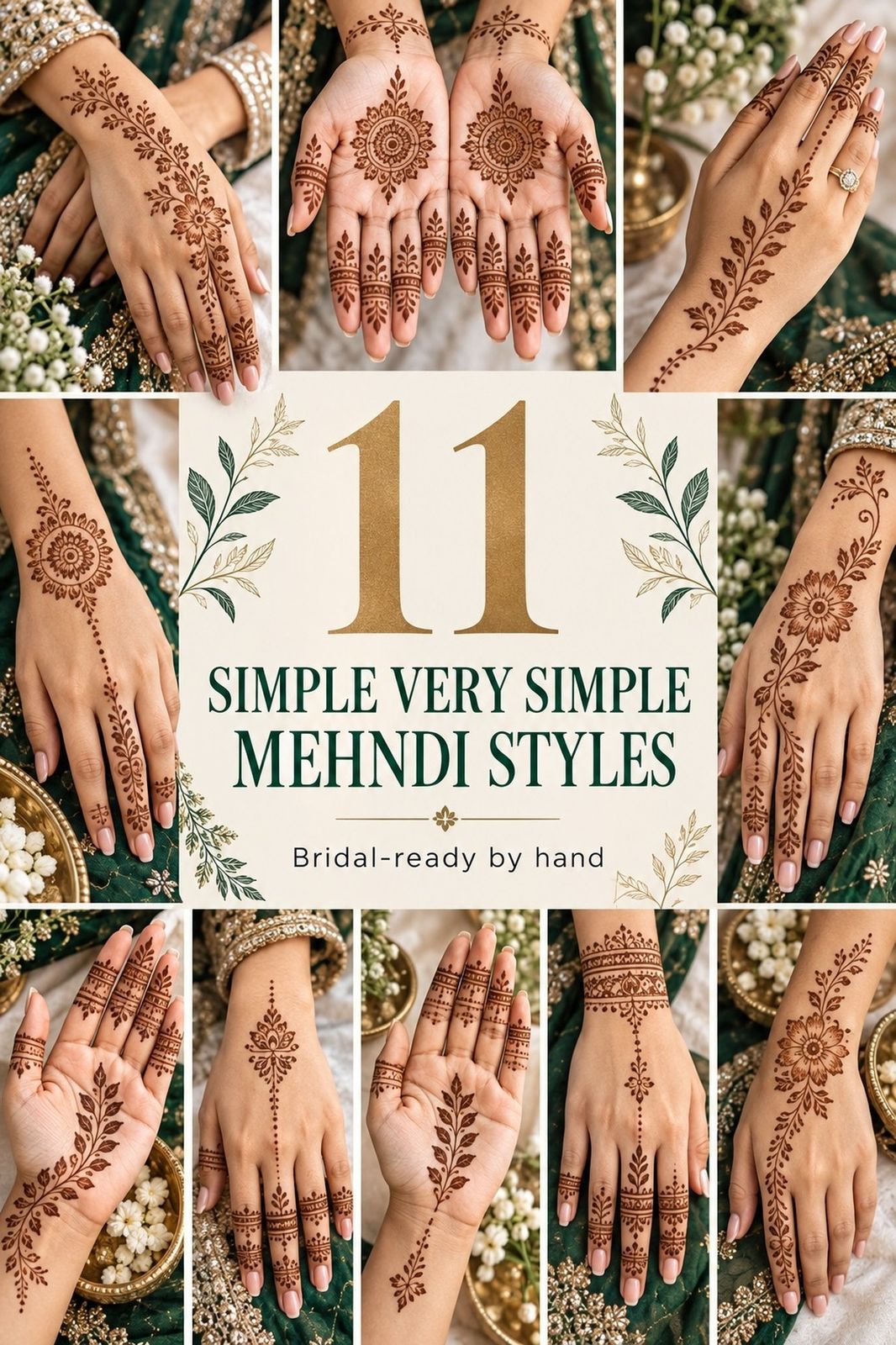
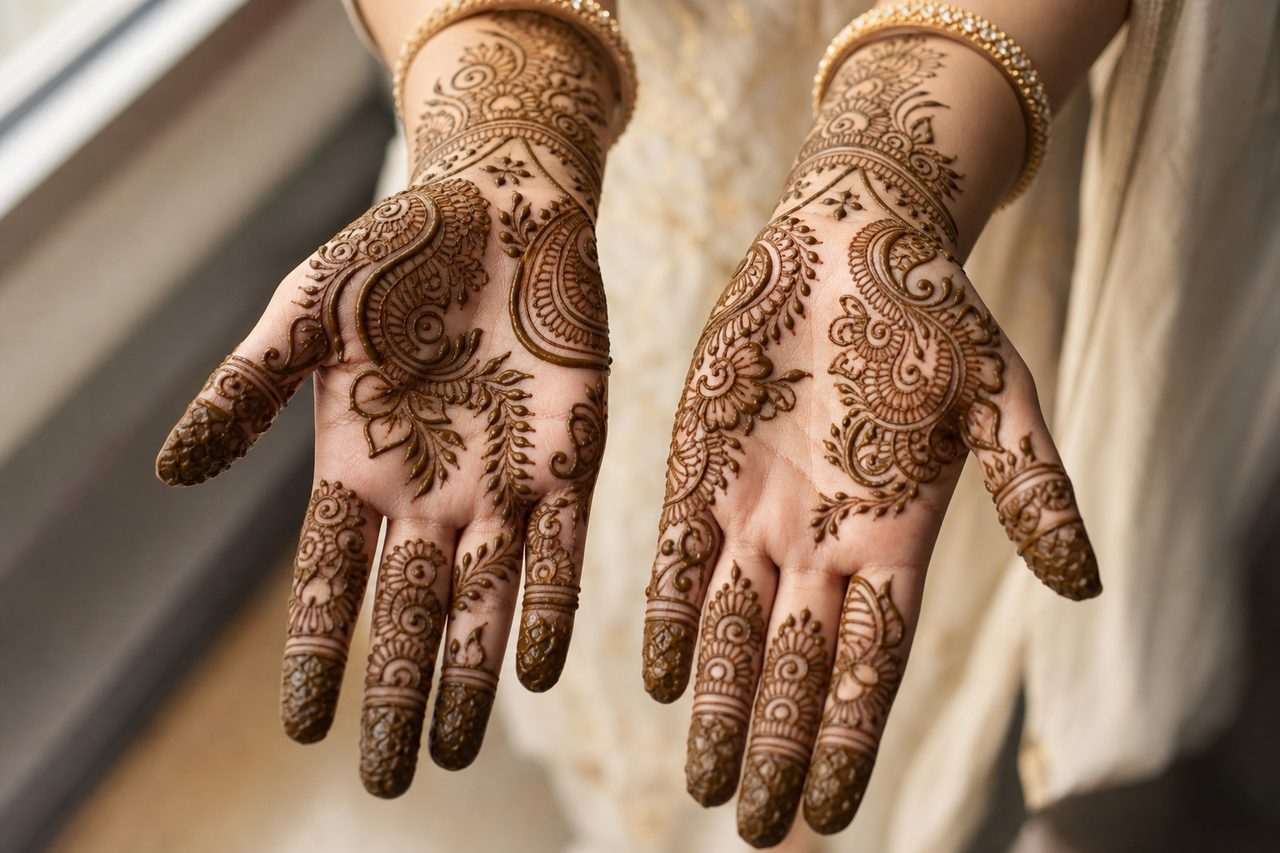
These dense, intricate compositions cover palms and extend to mid-arm or beyond. The palm holds particular significance, its warmth is believed to activate the henna’s protective properties. Bridal mehndi traditionally includes hidden initials of the groom, turning the design into a playful game of discovery. Paisleys represent fertility and abundance; peacocks signal beauty and grace; floral vines suggest growth and connection. The fingertips stained darkest indicate the strength of the bond being celebrated.
Arabic Flowing Designs and Minimalist Lines
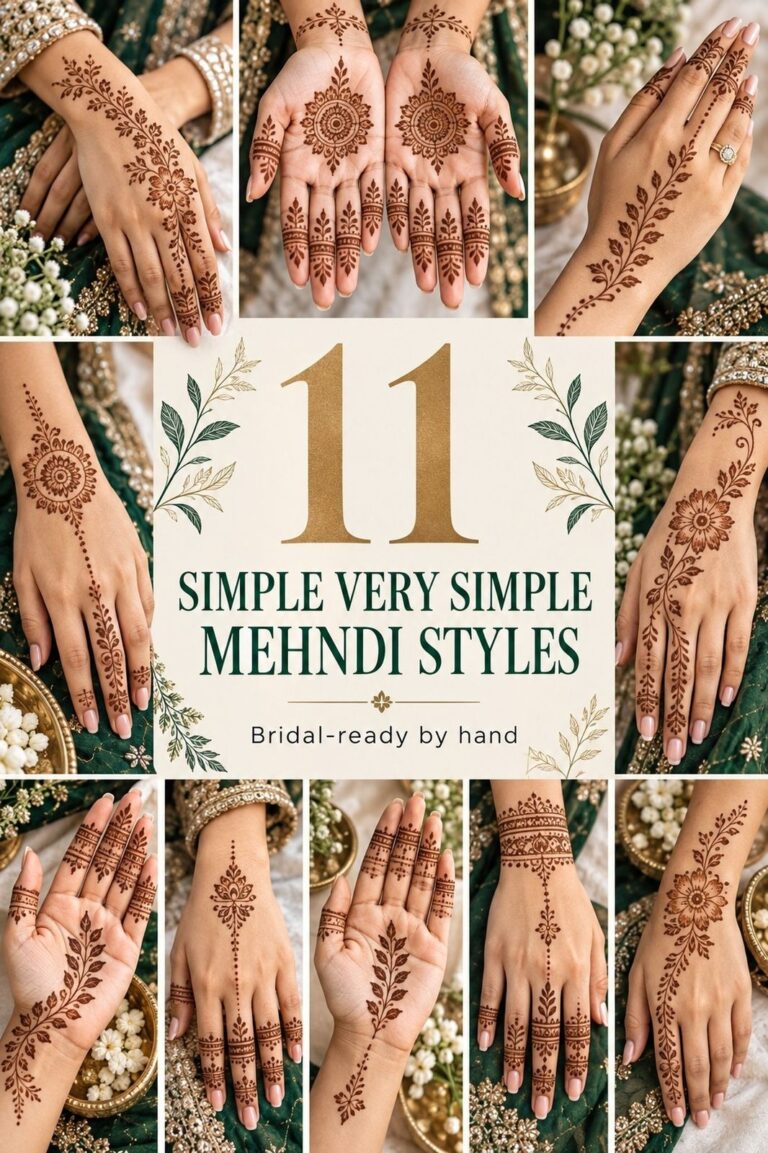
Arabic styles favor negative space, with bold floral trails running from wrist to fingertip or wrapping the foot in vine-like movement. These designs read as more contemporary, more “wearable” for casual events, but they carry the same symbolic DNA: flowers for joy, leaves for longevity, flowing lines for the continuity of life. The openness of the style lets the skin breathe visually, creating a lighter, more modern aesthetic that works well for those who want meaning without overwhelming coverage.
- North African geometric patterns: angular, architectural, often incorporating the evil eye symbol for protection
- Indonesian/Malay motifs: finer lines, sometimes incorporating Islamic calligraphy or prayer elements
- Contemporary fusion styles: mixing regional traditions with personal imagery like constellations, animals, or abstract forms
Similar & Related Symbols
Henna doesn’t exist in isolation. Its symbolic cousins help clarify what this temporary art is actually doing on the body.
Permanent tattoos using similar imagery, lotus flowers, mandalas, hamsa hands, often borrow from the same visual vocabulary but commit it to skin forever. The henna equivalent asks something different: can meaning exist without permanence? The answer, across cultures, has been yes. Jagua, a fruit-based temporary dye from the Amazon, produces blue-black stains and serves similar ceremonial functions in South American indigenous communities. Temporary bindi and tilak markings in South Asian traditions share henna’s logic of sacred, removable adornment.
White henna (actually body paint, not true henna) has emerged as a wedding and festival trend, but it strips away the plant’s traditional associations entirely, no stain, no chemistry, no cultural weight. It looks striking in photographs but carries none of the accumulated meaning of the real thing.
Religious & Spiritual Angles
Henna’s spiritual dimensions vary dramatically by context, and oversimplifying does no one any favors.
Islamic Traditions and Celebrations
In many Muslim communities, henna is linked to the Prophet Muhammad, who reportedly used it to dye his beard and encouraged its use for general beautification. Eid celebrations, weddings, and the nights before Ramadan often feature mehndi application. The stain is considered sunnah, praiseworthy but not obligatory. Some interpret the temporary nature as humility before God: human adornment fades, divine beauty does not. The practice is cultural as much as doctrinal, varying enormously between regions and families.
Hindu and Jain Ritual Contexts
Karva Chauth, Teej, Diwali preparations, henna marks auspicious occasions in Hindu and Jain practice. The red color aligns with shakti, feminine energy, and married status. Unmarried women may apply simpler designs, while married women often receive more elaborate work. The application itself becomes a form of prayer, the sitting still, the patience required, the transformation of the body into something blessed and beautiful for a limited time.
Across these traditions, henna functions as a threshold marker, applied before significant life events, worn during transition, fading as the new state normalizes. The temporary quality isn’t a deficiency; it’s the entire point.
Best Placements
Where henna goes on the body matters as much as what the design depicts. Different locations carry different symbolic loads and practical considerations.
Palms and soles stain darkest due to thicker skin and higher protein content, making them the traditional “power” positions. The back of the hands and tops of feet take lighter stains but offer more visible display. These placements signal openness, presentation, social participation. Hidden placements, inner wrist, behind the ear, along the collarbone, suggest intimacy, private blessing, personal reminder rather than public declaration.
- Full bridal: hands to elbows, feet to mid-calf, sometimes extending to upper arms, maximum coverage for maximum blessing
- Minimalist wrist band or finger detail: modern adaptation, often worn casually, less tied to ritual occasion
- Back piece or shoulder placement: contemporary Western adoption, sometimes incorporating non-traditional imagery
Healing reality: henna stains mature over 24-72 hours, starting orange and deepening to reddish-brown. The paste should flake off naturally; premature removal lightens the result. Aftercare means avoiding water for the first day, applying sugar-lemon sealant if traditional methods are used, and accepting that palms will always outlast forearms. The fading itself becomes part of the experience, watching the blessing gradually release, the marked return to ordinary skin.
History & Cultural Roots
The henna plant, Lawsonia inermis, is often linked to regions spanning North Africa, the Arabian Peninsula, and South Asia, with evidence of cosmetic use dating back thousands of years. Ancient Egyptian mummies show henna-dyed hair and fingernails, suggesting the plant’s significance predates many contemporary religious associations. Some trace it to the Bronze Age Levant, where it may have served medicinal and cosmetic purposes before acquiring its current ceremonial roles.
What we can say with confidence: henna traveled trade routes, adapted to local customs, accumulated layers of meaning. It was never a single, pure tradition. Colonial encounters, diaspora movements, and now digital sharing have continued this process of transformation. The henna you see at a music festival in California shares DNA with bridal mehndi in Lahore, but the contexts, expectations, and symbolic weight diverge significantly. Neither is more “authentic”, both are real expressions of a living practice.
Modern Commercialization and Cultural Tension
The rise of “henna-inspired” permanent tattoos, chemical “black henna” containing dangerous PPD additives, and casual festival application by untrained practitioners has created genuine friction. These developments don’t erase traditional meaning, but they do complicate it. Knowing the difference between natural henna (brown stain, earthy smell, safe for most skin types) and its dangerous imitators is practical knowledge that also honors the practice’s roots.
Mythology & Folklore
Stories about henna’s origins and powers circulate across cultures, and while we shouldn’t present any as established historical fact, they reveal how deeply the practice has been imagined.
Some trace the bridal tradition to a story of a woman who used henna to please her husband and preserve their union. Variants appear across the Middle East and South Asia, with the details shifting to reflect local values. The common thread: henna as mediator of love, desire, and social harmony. Another body of folklore associates henna with protection against the jinn, evil eye, and general misfortune, its red color, like blood without violence, creating a symbolic shield.
In Jewish traditions of the Middle East and North Africa, henna ceremonies (hina) marked weddings with specific songs, foods, and application rituals. The practice has diminished but persists in some communities, another thread in the complex tapestry, no, another branch in the widespread tree of henna’s cultural presence.
The temporary nature of henna has generated its own minor mythology: that the longer the stain lasts, the deeper the love, the stronger the blessing. This is folk belief, not fact, but it shapes how people experience and value their results. The fading becomes divination, the body becoming a slow clock measuring something immaterial.
Final Word
So is henna tattoo permanent? The stain isn’t. The meaning can be, but only if you understand what you’re participating in. Henna’s symbolism, blessing, transition, beauty that accepts its own passing, requires the temporary quality to function. Without fading, it becomes something else entirely: decoration without ritual, image without process, permanence pretending to be what it never was.
The real question isn’t whether henna lasts. It’s if you’re seeking to mark a moment or to become a monument. Henna chooses the former, and there’s wisdom in that choice that permanent tattoo culture sometimes forgets in its rush toward forever.
Frequently Asked Questions
How long does a real henna tattoo actually last?
Natural henna typically lasts one to three weeks, depending on body placement, skin chemistry, and aftercare. Palms and soles hold the longest due to thicker skin; areas with frequent washing or friction fade faster. The color deepens over 48 hours before gradually lightening.
What’s the difference between black henna and natural henna?
Natural henna produces a brownish-orange to reddish-brown stain. So-called “black henna” often contains paraphenylenediamine (PPD), a hair dye chemical that can cause severe allergic reactions, blistering, and permanent scarring. Natural henna is never black when first removed.
Can I get a permanent tattoo that looks like henna?
Yes, many artists specialize in fine-line work that mimics henna’s delicate patterns. However, the symbolic meaning differs, permanent commitment versus temporary blessing. The aesthetic can be replicated; the ritual and cultural context cannot.
Is it cultural appropriation to get henna if I’m not South Asian or Middle Eastern?
Context matters. Participating respectfully at a friend’s wedding, using traditional artists, and understanding the practice’s significance differs from casual festival application without knowledge or connection. The key is respect, education, and avoiding commercial exploitation of sacred traditions.