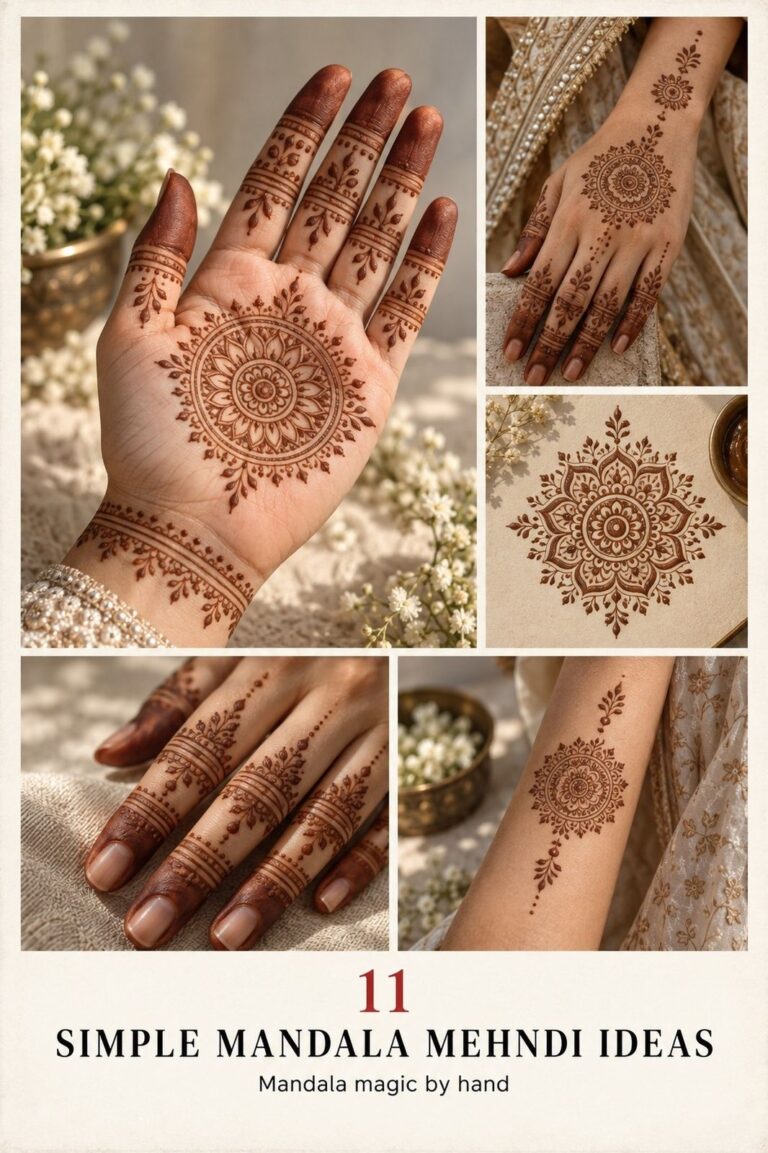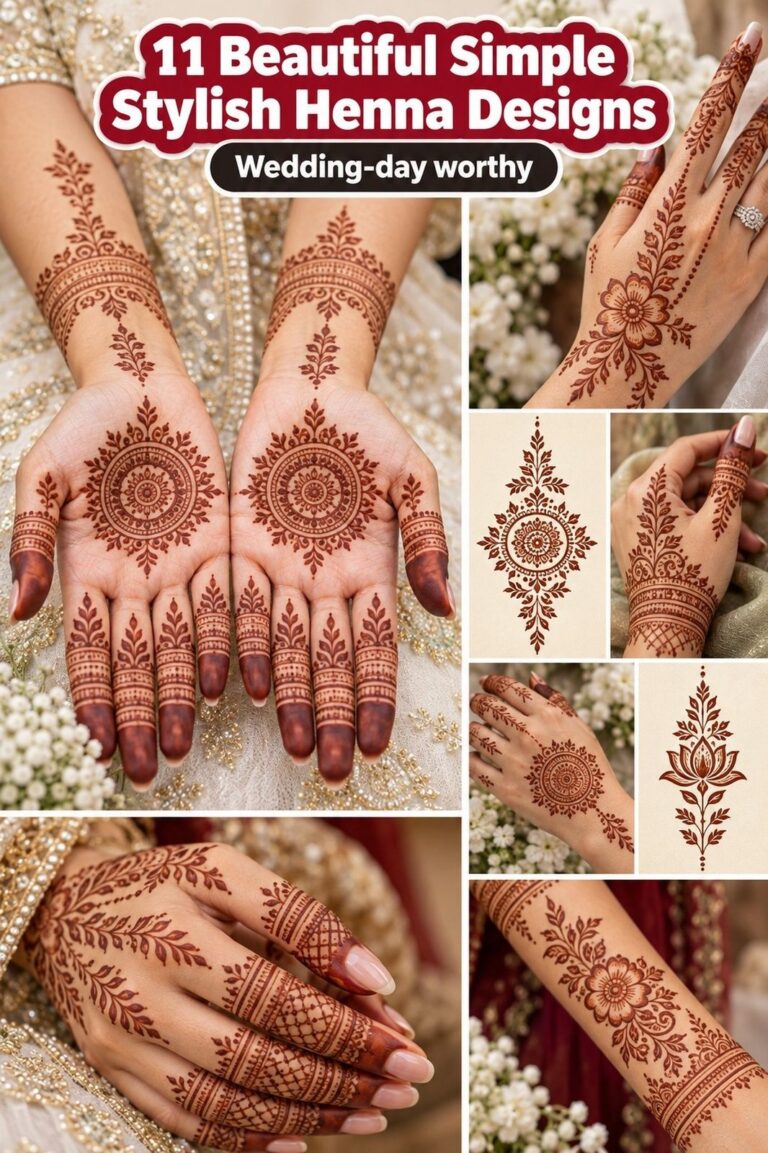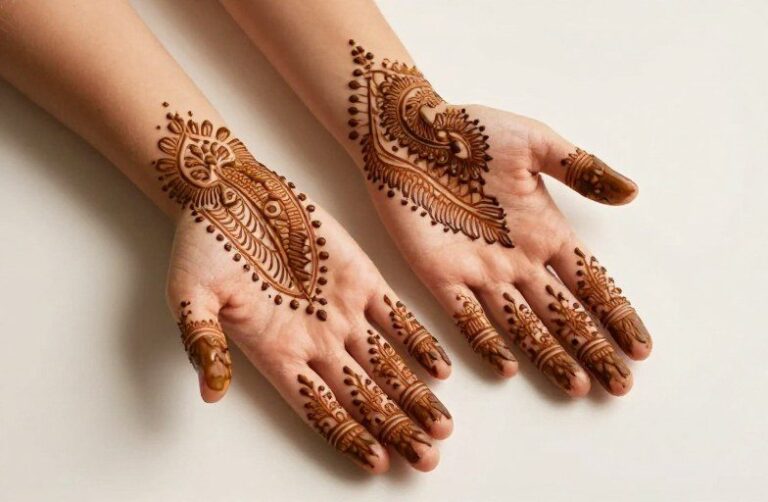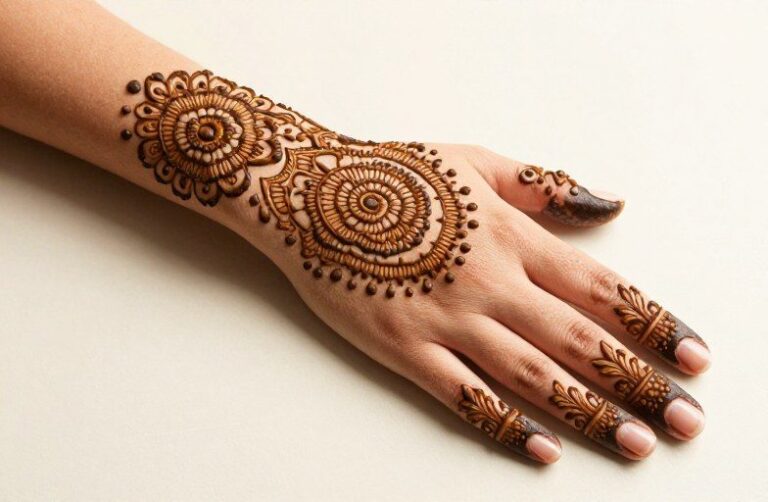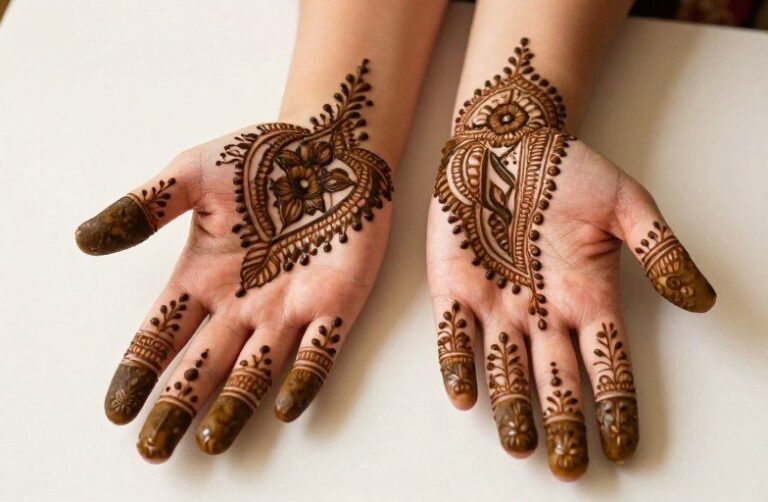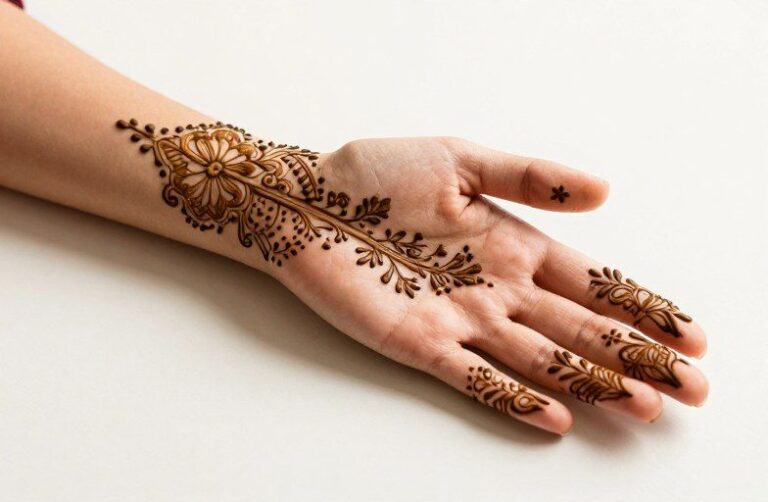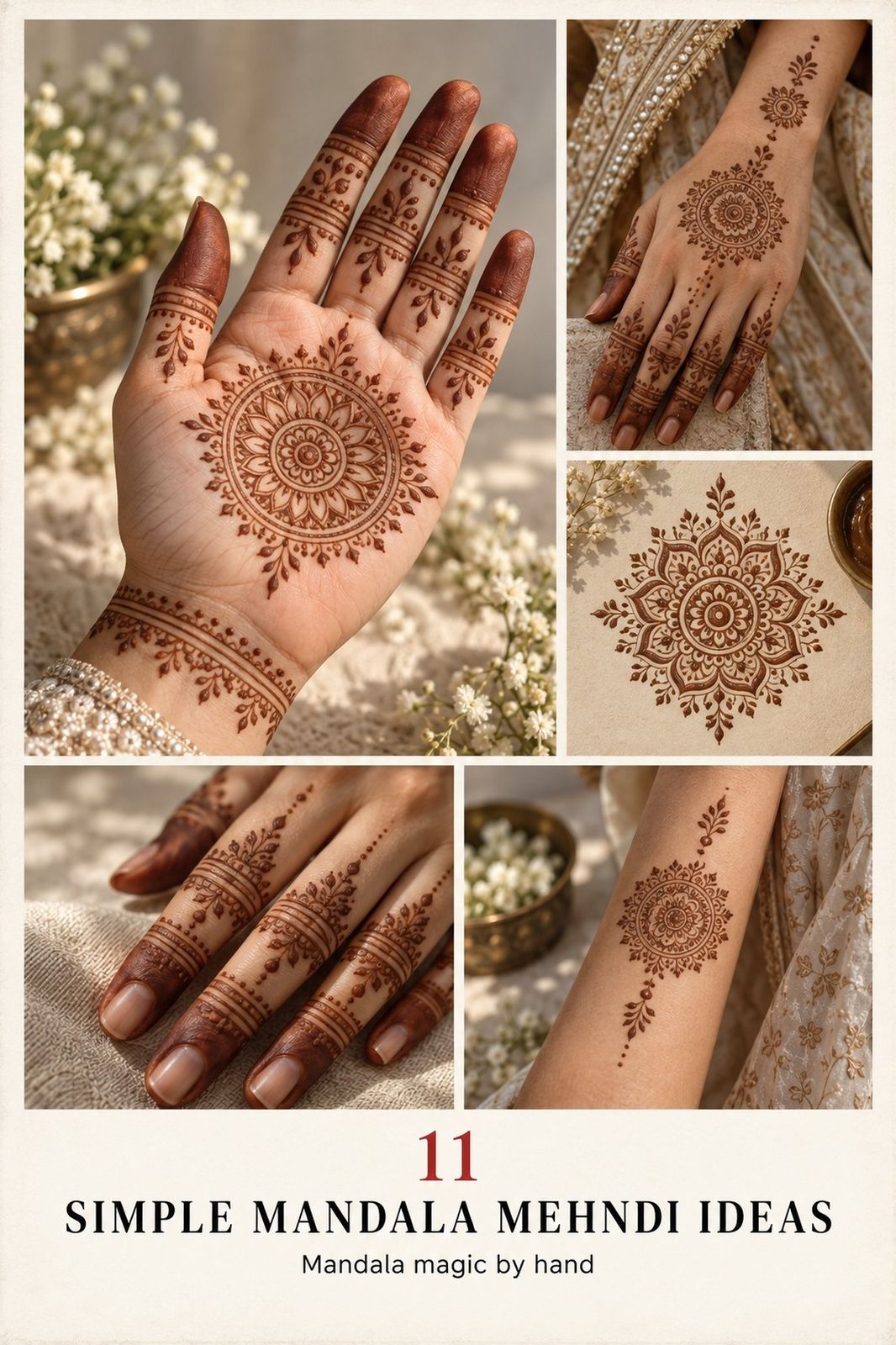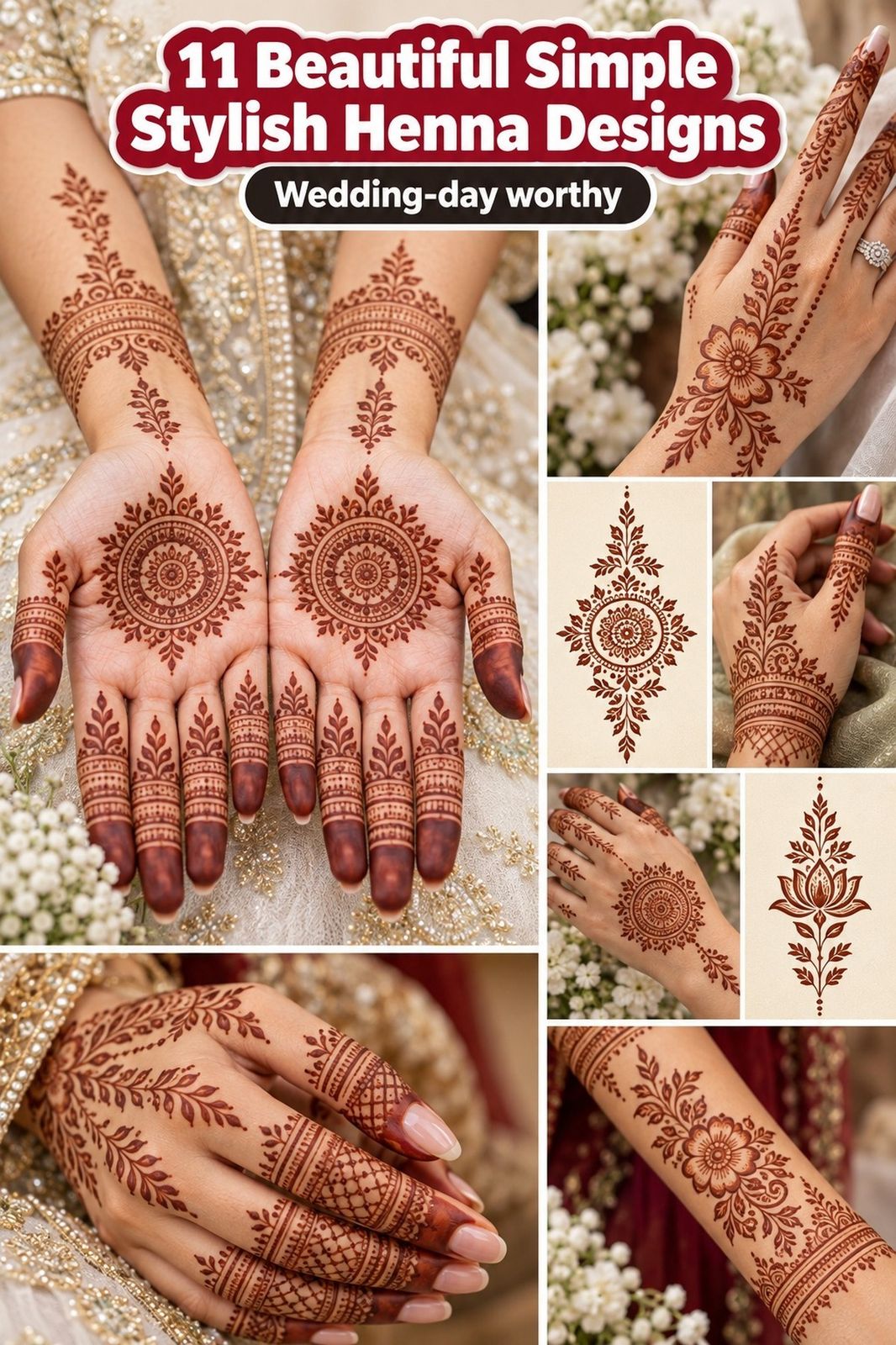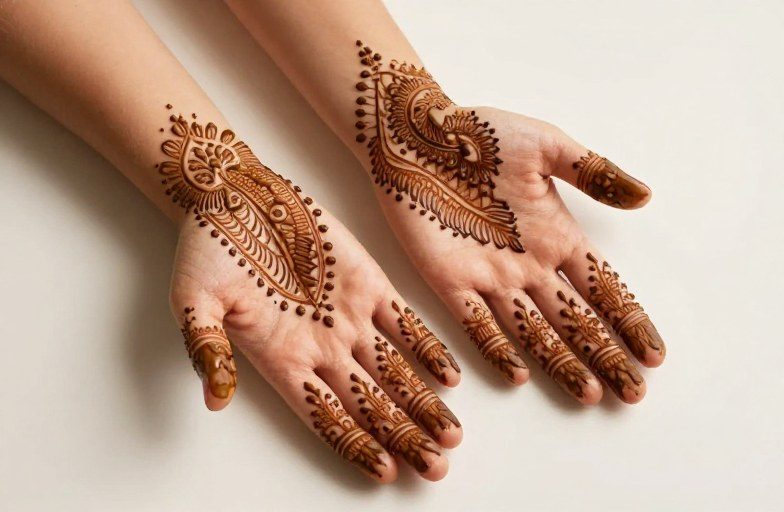
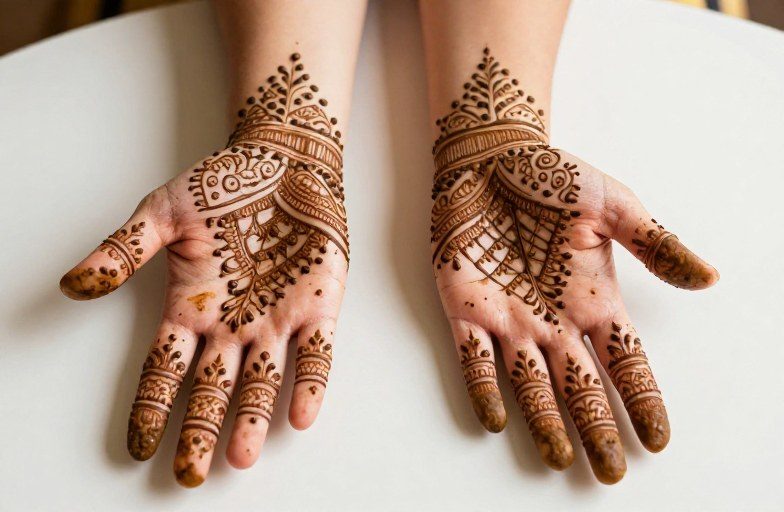
Pakistani mehndi stands apart from other South Asian henna traditions through its dense, architectural quality. Where Indian mehndi often flows with open paisley shapes and scattered motifs, Pakistani work builds upward in layered bands, fine parallel lines, teardrop clusters, and geometric frames that stack like lattice. Translating this to permanent tattoo work means understanding how those compressed details behave under skin, how they age, and where on the body the precision holds up.
Best Placements
These designs reward flat, stable surfaces. The fine linework that defines Pakistani mehndi stretches and blurs on areas with high movement or frequent sun exposure.
Hands and Fingers
The traditional home for mehndi, but a demanding one for tattoos. Palm-side ink rarely holds; the skin there sheds too aggressively. The dorsal hand, back of hand and fingers, takes ink better, though expect touch-ups. Finger tattoos here typically blur within 2-4 years. A common compromise: place the dense central motif on the back of the hand, letting simpler band patterns wrap the fingers where fading matters less visually.
Forearms and Feet
Inner forearms offer the best canvas for extended Pakistani-style bands. The skin is relatively thin, the surface stable, and the natural viewing angle shows off the stacked horizontal composition these designs favor. Feet work similarly, instep tattoos hold detail well, though they hurt significantly and heal slower due to blood flow patterns. Ankles and the top of the foot accommodate the vertical “cuff” style common in bridal mehndi.
- Upper back/shoulder blades: excellent for large mandala-centered pieces
- Side of the neck: risky but striking for small geometric clusters
- Behind the ear: holds fine lines surprisingly well, hidden placement
- Ribs: large surface, but stretching during breathing affects long-term symmetry
How to Personalize It
Authentic Pakistani mehndi carries specific motifs, mango shapes (kairi), florals, and negative-space domes. Personalizing without diluting the style means working within its grammar rather than against it.
Integrating Text
Urdu calligraphy, particularly Nastaliq script, threads naturally into the flowing bands of Pakistani mehndi. Names, short phrases, or single significant words can replace a geometric band or run as a subtle overlay within negative space. The script’s diagonal rhythm mirrors the teardrop and leaf motifs without visual conflict. Arabic script works similarly, though the visual density differs, more horizontal, less cascading.
Hybrid Approaches
Some artists combine Pakistani structural density with Persian miniature painting’s figurative elements, or with Moroccan geometric tessellation for sharper angles. These fusions succeed when one style dominates and the other accents. A Pakistani framework with Moroccan star infill reads intentional; equal mixing tends toward visual noise.
Size & Scale
Minimum viable size for Pakistani mehndi tattooing sits around 3×3 inches. Below this, the parallel-line textures and dot clusters compress into muddy gray. The style’s identity lives in that texture, take it away and you’re left with generic floral.
For full-hand coverage (dorsal only, not palm), plan 5-7 inches vertical. Extended forearm bands need 8-12 inches to develop the characteristic layered buildup: base lattice, middle floral band, top finial row. Large back pieces can push 15+ inches, allowing true architectural dome structures with multiple concentric rings.
Line weight matters enormously at scale. Pakistani mehndi in henna uses single-weight application; tattoo translation typically needs three weights: hairlines for texture, medium for structure, bold for anchors. Without this variation, large pieces flatten visually.
For First-Timers
First tattoo and drawn to this style? Start with placement that lets you learn your pain tolerance without risking the design’s integrity.
What to Expect
Forearm outer edge: moderate pain, easy healing, visible result. The session runs 2-3 hours for a 4-5 inch band, longer than many first tattoos, because the detail density demands slow, steady work. Bring entertainment; the repetition of dotwork and parallel lines doesn’t allow the artist to speed up significantly.
Healing follows standard protocol with one caveat: the sheer line density means more plasma and ink shedding during days 3-7. The tattoo will look patchy, then cloudy, then clarify around week 3. Don’t panic at the 10-day mark when fine lines seem to disappear, they often resurface as the skin fully settles.
- Avoid swimming and sun for 3-4 weeks minimum
- Loose sleeves only, fabric rubbing destroys fine lines
- Black ink only for first piece; color adds variables
- Book a touch-up at 6-8 weeks once healing reveals what held
Standout Design Ideas
Moving beyond the expected bridal-hand replication opens territory that feels contemporary without betraying the source.
Architectural Back Pieces
A full-back Pakistani mehndi tattoo built around a central dome (gumbad) with radiating minaret-style vertical bands creates a garment-like effect. The dome’s negative space, left skin-tone, becomes as important as the inked lines. This scales to shoulder-blade width for a more wearable version, maintaining the dome but with simplified radiating elements.
Negative-Space Mastery
Advanced work in this style increasingly uses the skin itself as the primary design element, with ink creating the “holes” in a lace-like structure. Pakistani mehndi’s traditional use of fingertip staining (leaving the center of the palm dark, edges lighter) translates to tattooing as graduated stippling, dense dots fading to none, creating soft boundaries impossible with linework alone.
Popular Styles
Contemporary tattooing has developed several distinct approaches to Pakistani mehndi, each with different longevity and visual character.
Single-Needle and Fine Line
Using 1RL or 3RL needles exclusively, this approach replicates henna’s delicate quality as closely as possible. The tradeoff: faster fading, more touch-up dependency, and higher cost per hour due to slower application. Best for collectors who prioritize authenticity of line over longevity, and who commit to maintenance.
Bold-Line Adaptation
Thicker structural lines (7-9RL) with fine-line internal detail create a hybrid that ages more gracefully. The bold elements carry the design’s readability at 10-year distance; the fine details reward close viewing. Most Pakistani mehndi tattoos in this category use 0.35mm needles for structure, 0.25mm for texture.
Dotwork and Stippling
Some artists translate the entire design language into dot density variation, no continuous lines at all. This reads softer, more atmospheric, and avoids the blown-line risk that continuous linework faces over decades. Healing is slower (more total needle trauma), but the 20-year result often outperforms comparable linework pieces.
Key Takeaways
Pakistani mehndi tattooing succeeds when the density and structure of the tradition are respected rather than merely referenced. The style demands specific placements, flat, low-movement skin surfaces, and benefits from scale that lets the layered composition breathe. Single-needle work captures henna’s delicacy but requires commitment to touch-ups; bold-line adaptations offer more forgiving aging. Personalization works best within the style’s existing visual grammar: calligraphic bands, hybrid geometric systems, or negative-space inversions rather than arbitrary motif mixing. For first-timers, forearm bands offer the most balanced introduction, visible enough to satisfy, manageable enough to heal, and positioned where future extension into larger work flows naturally. Whatever scale you choose, the defining quality of Pakistani mehndi remains its built-up, architectural density; protect that, and the specific motifs become secondary.
Frequently Asked Questions
How well do fine-line Pakistani mehndi tattoos hold up over time?
Single-needle work starts softening around year 3-5, with significant blur by year 10. Bold-line structure with fine internal detail ages better, thicker lines stay readable while finer elements fade gracefully rather than turning to gray mush. Expect your first touch-up around year 5 if you want to maintain crispness.
Can I get a Pakistani mehndi tattoo on my palm like traditional henna?
Palm tattooing is generally discouraged. The thick, rapidly-regenerating skin there sheds ink aggressively; most palm tattoos fade to illegibility within months, and the process is extremely painful. The back of the hand and fingers are the practical alternative, though finger tattoos also blur faster than other placements.
What’s the difference between Pakistani and Indian mehndi styles in tattoo form?
Pakistani mehndi builds vertically in dense, layered bands with stronger geometric framing and more negative-space domes. Indian mehndi flows more organically with scattered paisleys, peacocks, and open breathing room between motifs. In tattoo translation, Pakistani reads more architectural and structured; Indian reads more fluid and ornamental.
How do I find an artist who actually understands this style?
Look for portfolios showing geometric precision, consistent line weight control, and evidence of South Asian design literacy, not just one or two henna-inspired pieces mixed with unrelated work. Ask specifically about their needle grouping choices for dense pattern work; knowledgeable artists can explain why they use 3RL versus 7RL for different structural elements. Avoid anyone who treats it as “just floral.”
More Tattoo Ideas
- Indian Mehndi Tattoo Ideas
- Arabic Mehndi Tattoo Ideas
- Explore more