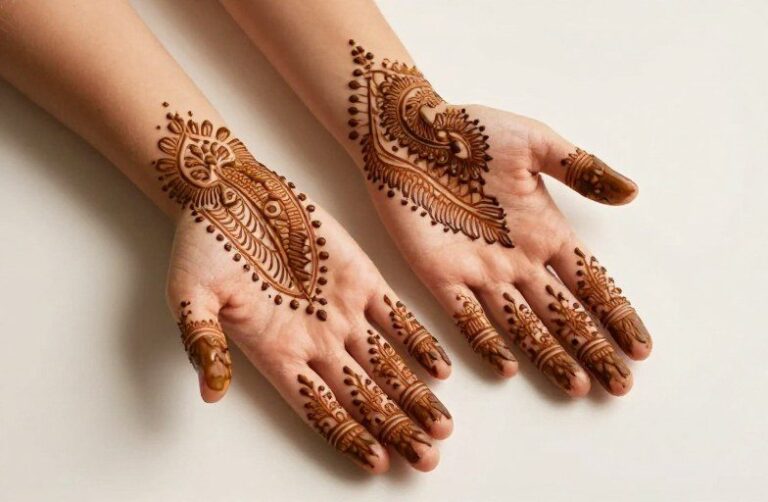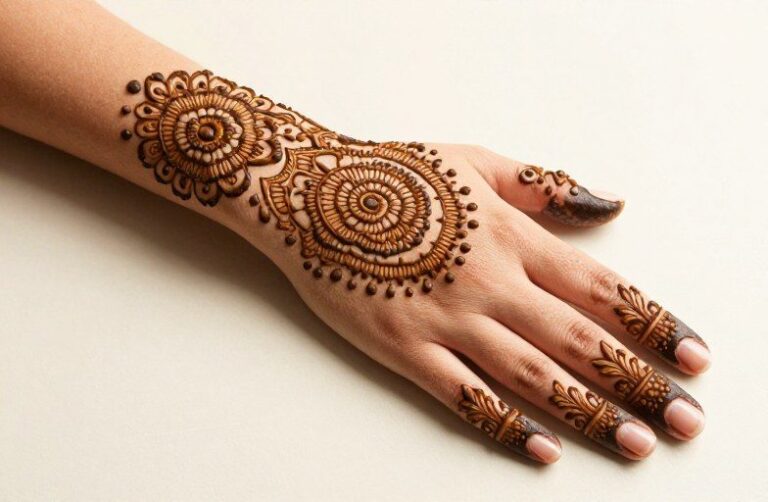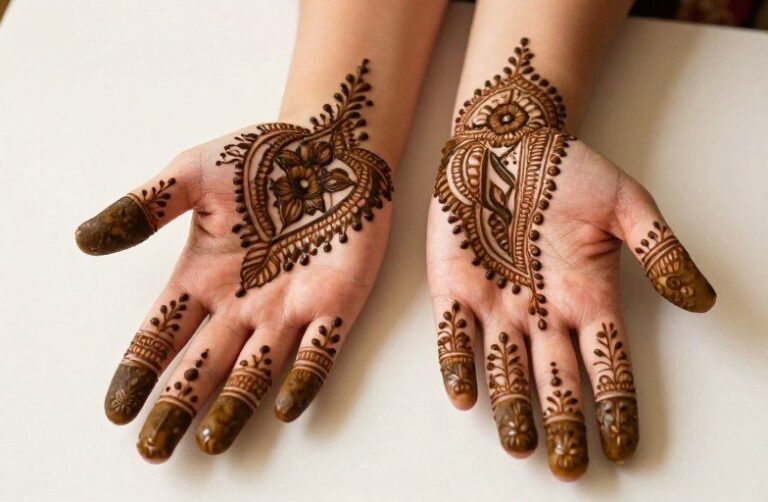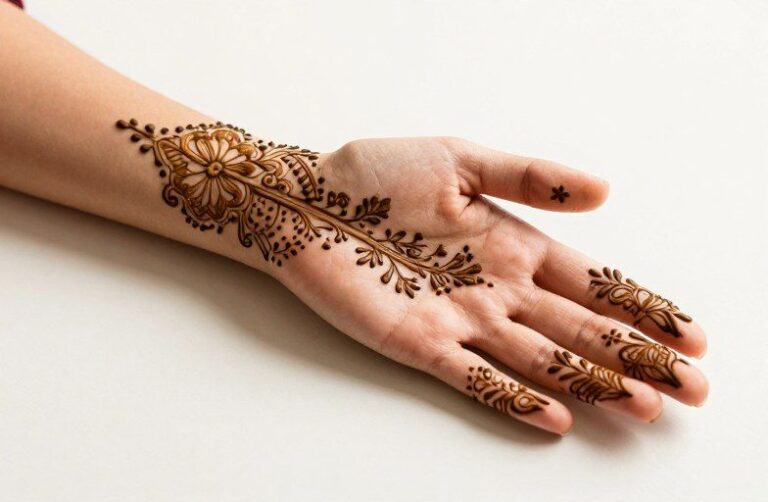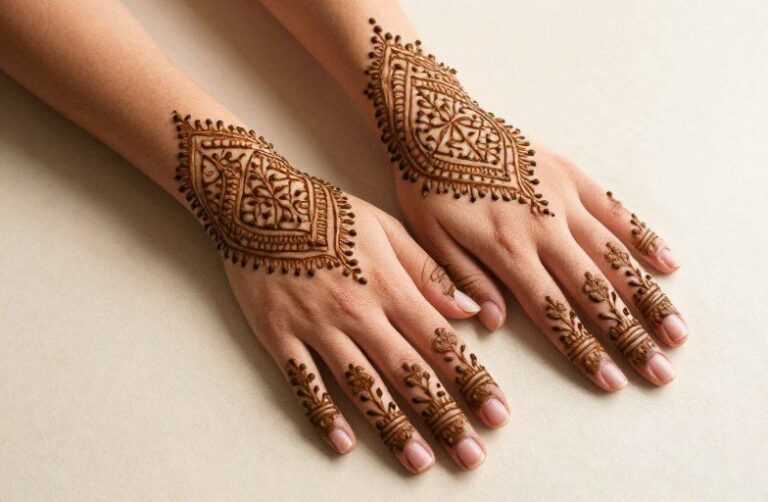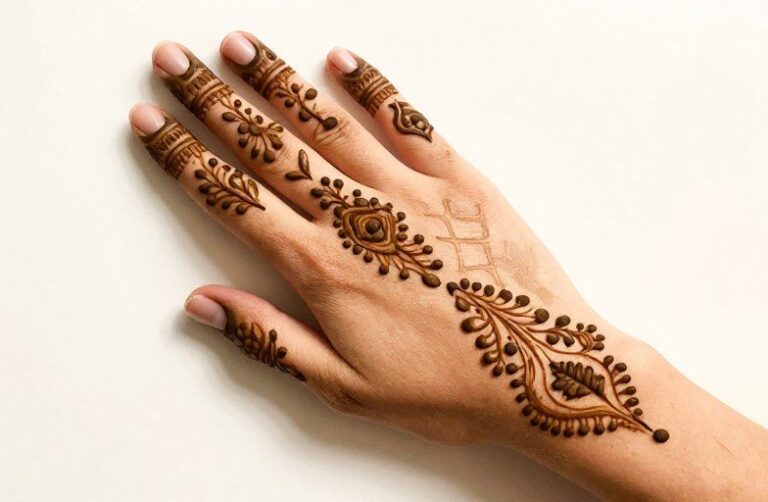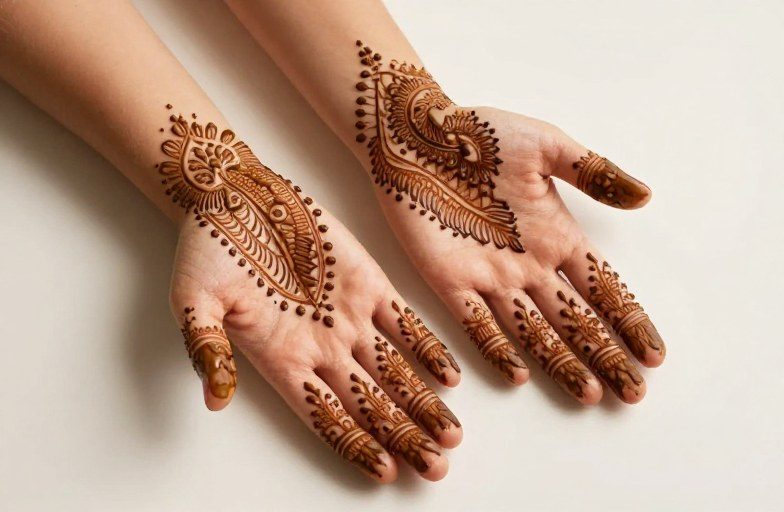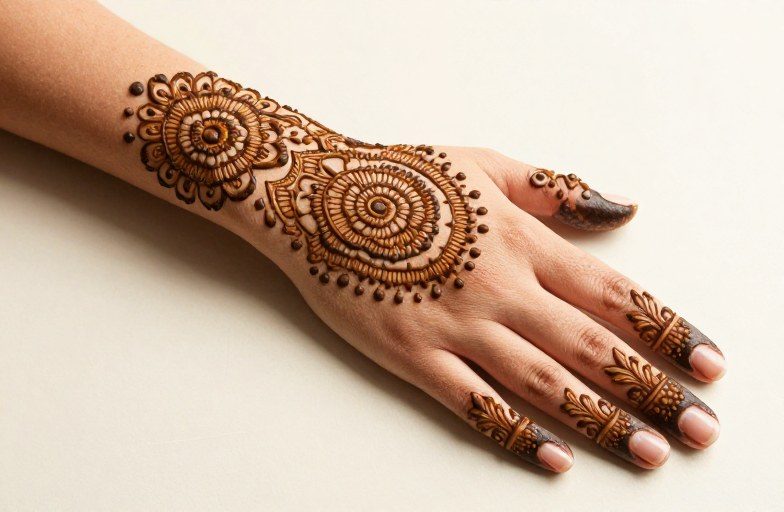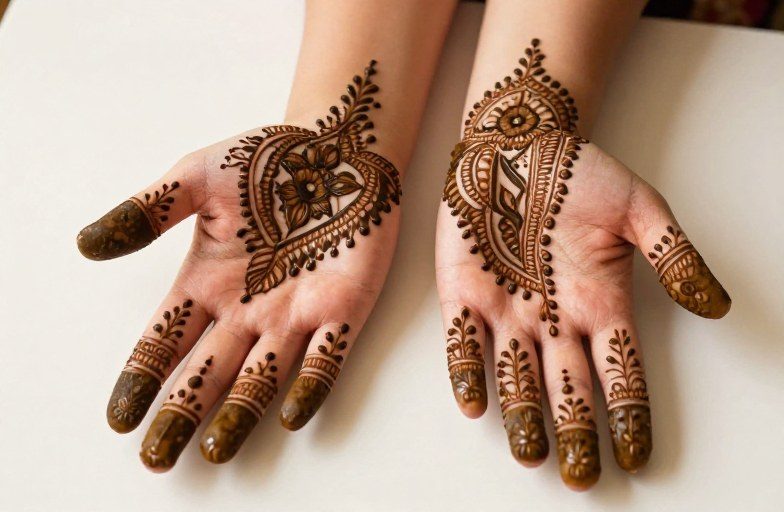
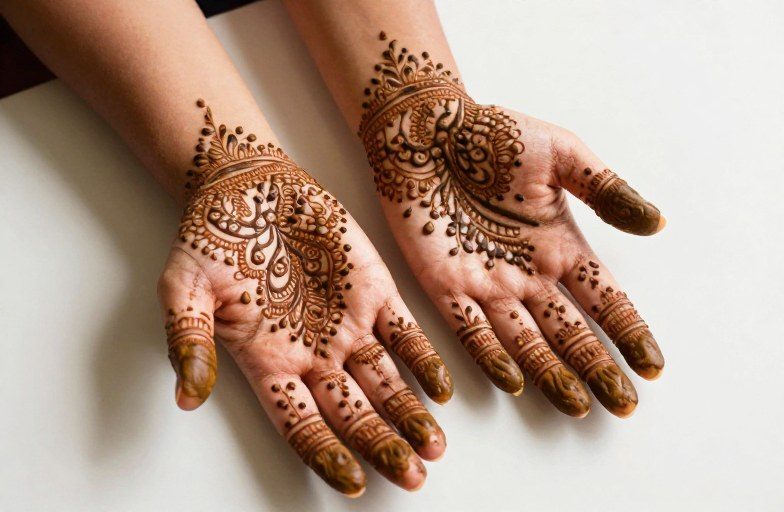
Indian mehndi designs carry centuries of visual language, teardrop paisleys, trailing vines, mandala centers, and fingertip details that flow with the body’s natural lines. Translating these temporary henna patterns into permanent tattoos takes more than tracing a reference photo. The density, line weight, and negative space that look stunning in paste on skin behave differently under a tattoo machine. This guide breaks down how to adapt classic mehndi motifs into ink that holds up for years, not weeks.
For First-Timers
New to mehndi-style tattoos? Start with the fundamentals that make these designs distinctive. Traditional henna sits on the skin’s surface, allowing for extremely fine lines and dense, lace-like coverage. Tattoo ink lives in the dermis, where the finest details blur and the densest blacks can heal into muddy patches.
Start with Simplified Motifs
Pick one or two classic elements rather than attempting a full bridal-style hand piece. A single paisley on the wrist, a small mandala on the shoulder, or a vine trailing from behind the ear gives you the aesthetic without the technical risks. These simpler starting points let you test how the style feels on your body before committing to larger work.
Understand the Healing Difference
Henna stains the top layer of skin and fades evenly. Tattoos scab, peel, and settle. That crisp 1mm line you see in a fresh henna photo will likely spread slightly in tattoo form. Experienced artists compensate by building lines slightly thicker than the reference, maintaining the illusion of delicacy while ensuring the design survives healing. Ask your artist to show you healed photos of fine-line work, not just fresh pieces.
Best Placements
Mahndi traditionally adorns hands, feet, and forearms, areas where movement and visibility let the design come alive. Tattoo placement follows similar logic but with added considerations for ink longevity and daily practicality.
Hands and Fingers
Finger tattoos inspired by mehndi fingertip details look striking but demand realistic expectations. The sides and pads of fingers shed ink rapidly; many artists won’t do them, or will warn that touch-ups every 1-3 years are standard. The back of the hand holds ink better, especially along the metacarpals and between the knuckles. A ring of small dots or a single paisley on the back of one finger can reference the tradition without the full commitment of fingertip coverage.
Forearms and Feet
The inner forearm offers flat, stable skin that shows off flowing vine work and mandala centers beautifully. Feet work well for trailing ankle-to-toe designs, though the arch and sides of the foot fade faster than the ankle bone area. Many people choose the top of the foot rather than the sole, traditional for henna, but extremely painful and prone to blowout for tattoos.
- Inner wrist: small paisleys, single vines, or bracelet-style bands
- Upper back between shoulder blades: large mandala centerpieces
- Behind the ear: tiny floral clusters that peek through hair
- Ribs or side torso: elongated vine trails that follow the body’s curve
- Back of neck: symmetrical mandalas or central teardrop motifs
Tips for Choosing
Selecting a mehndi-inspired tattoo means balancing authenticity with practicality. The most successful pieces honor the visual grammar of the tradition without pretending to be henna.
Research Regional Variations
Rajasthani designs favor bold geometric borders and peacock motifs. Arabic-influenced mehndi uses more negative space and flowing floral trails. Pakistani bridal styles often include dense, architectural patterns with domed shapes. South Indian work frequently incorporates mango motifs and temple-inspired geometry. Knowing which tradition speaks to you helps narrow the visual direction and gives your artist a coherent starting point.
Work with the Right Artist
Not every tattooist handles fine ornamental work well. Look for portfolios showing consistent line weight, healed photos of detailed pieces, and experience with dotwork or geometric patterns. Someone who specializes in bold American traditional may struggle with the subtle gradations mehndi-inspired work requires. Ask specifically about their experience with Indian ornamental styles, not just “fine lines” generally.
Popular Styles
Several distinct approaches have emerged for translating mehndi into permanent ink, each with different visual results and maintenance needs.
Blackwork ornamental uses solid black ink to recreate the saturated look of fresh henna. This approach reads clearly from a distance and ages relatively well, though large solid areas can blur over time. The contrast between dense black and bare skin creates the characteristic lace effect.
Fineline with dotwork mimics the delicate quality of henna paste more closely. Single-needle or tight grouping work creates hair-thin lines and precise stippling. This looks breathtaking fresh but requires a skilled artist and good skin, oily or sun-damaged skin causes faster spread. Expect more frequent touch-ups.
Black and grey shading adds depth to traditional flat patterns, creating a more three-dimensional, sculptural quality. This works particularly well for mandala centers and paisley fills, though it moves further from the authentic henna aesthetic. Some artists combine approaches: blackwork outlines with subtle grey shading inside select elements.
Size & Scale
Scale dramatically affects how mehndi tattoos read and how well they age. The density that makes henna impressive becomes a liability when shrunk too small or blown up too large.
Small Pieces
Palm-sized or smaller designs need radical simplification. A mandala that looks intricate at 6 inches across becomes a blob at 2 inches. Choose open compositions with fewer layers: a single paisley with minimal internal detail, or a small vine cluster rather than a full trailing pattern. The smallest successful mehndi tattoos often use only the dot-and-circle fingertip vocabulary, scaled appropriately.
Large Pieces
Full sleeves, back pieces, or leg coverage allow authentic complexity but require planning. The design must flow with body movement, not just replicate a flat henna stencil. Large-scale work benefits from having a clear focal point, usually a central mandala or dominant paisley, with secondary elements radiating outward. Without this hierarchy, the eye gets lost and the body becomes a wallpapered surface rather than a canvas with intentional composition.
Matching & Pairing Ideas
Mahndi tattoos lend themselves to symmetrical and paired designs, reflecting the tradition’s use on both hands or feet for special occasions.
Matching forearm pieces, one on each inner arm, create balance without being identical mirror images. Many artists design them as complementary rather than matching: one dominated by flowing vines, the other by geometric borders, unified by shared motif vocabulary. This avoids the rigid “matching tattoo” look while maintaining connection.
Couples sometimes adapt the tradition of bridal mehndi by each getting related elements. One might carry a dominant peacock motif while the other incorporates the same floral vocabulary in a smaller companion piece. The key is avoiding direct duplication; mehndi culture emphasizes individual expression within shared visual language.
Mahndi elements also pair well with non-ornamental tattoos. A mandala can frame a portrait or animal subject, with the ornamental work acting as background rather than main event. Conversely, a small script or symbol can sit at the center of a mandala, combining personal meaning with traditional form.
Final Thoughts
Indian mehndi offers tattoo enthusiasts a deep well of visual material, patterns refined over generations to complement human anatomy and movement. The translation to permanent ink requires respecting what tattoo pigment actually does on skin, not forcing it to imitate paste. Simplified motifs, thoughtful placement, and artists who understand ornamental work produce pieces that reference the tradition honestly while standing as good tattoos in their own right. Start small, prioritize healed results over fresh photos, and let the design grow with your understanding of the style.
Frequently Asked Questions
Do mehndi tattoos hurt more than other styles?
The pain depends on placement, not style. However, dense dotwork and repeated line passes over the same area can feel more intense than single-pass bold lines. Hands, feet, and ribs remain the most painful spots regardless of design style.
How do I keep fine lines from blurring over time?
Choose an experienced artist who builds lines slightly thicker than true hair-fine. Avoid sun exposure, which degrades ink faster in delicate work. Plan for touch-ups every few years, especially on high-movement areas like wrists and fingers.
Is it cultural appropriation to get a mehndi-style tattoo?
The visual language of mehndi has spread globally through centuries of trade and migration. Most people find respectful engagement, learning about regional traditions, avoiding sacred religious symbols, and working with knowledgeable artists, acceptable. Direct copying of specific bridal or ritual patterns without understanding may read as careless.
Can I cover an old tattoo with mehndi-style ornamental work?
Ornamental patterns work well for cover-ups because the dense, layered nature of mehndi designs can incorporate and disguise older ink. Large mandalas and heavy blackwork borders are particularly effective. Your artist will need to design around the existing tattoo’s shape and darkness rather than applying a standard stencil.
More Tattoo Ideas
- Arabic Mehndi Tattoo Ideas
- Explore more