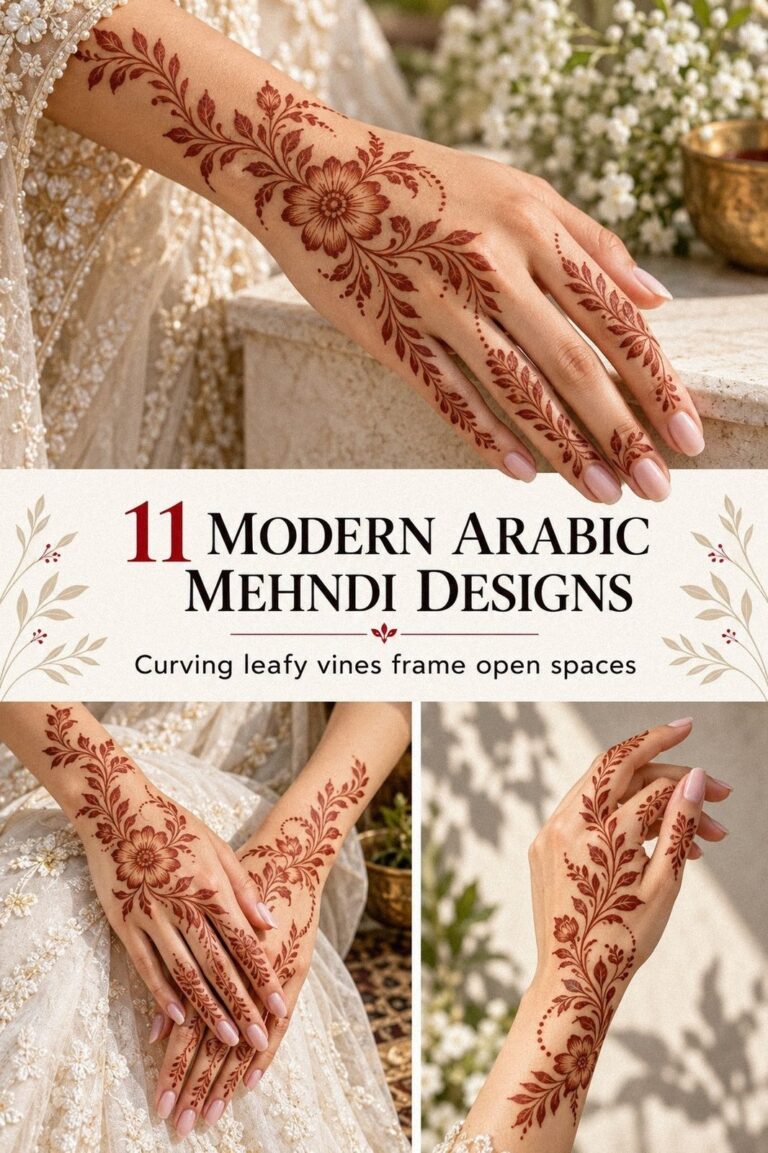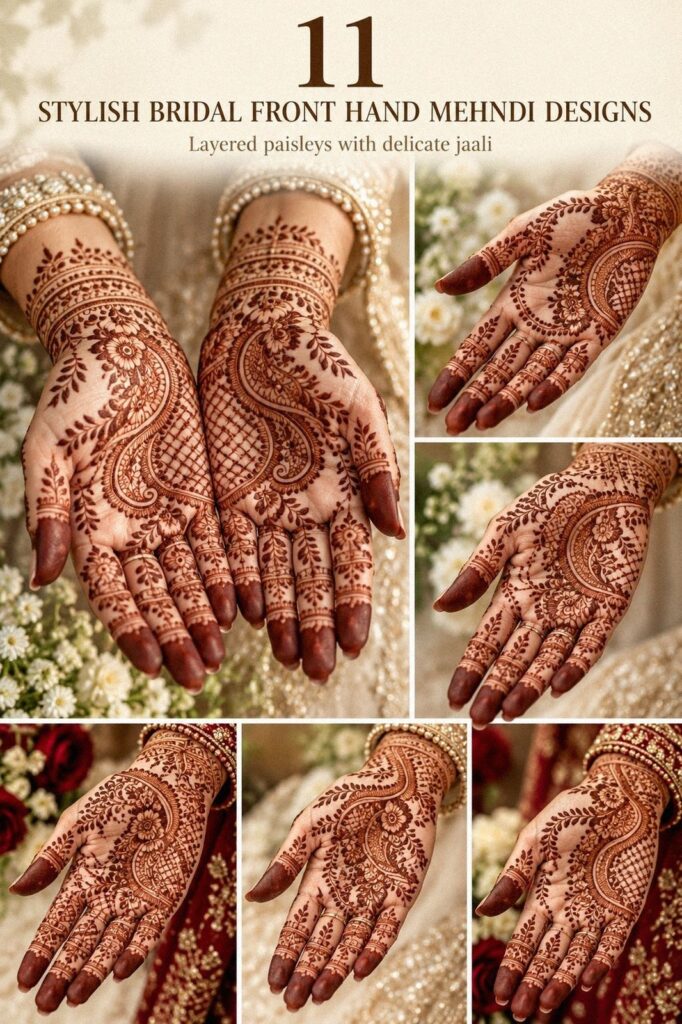
Bridal stylish mehndi designs for front hand feel strongest when the henna cone leaves enough skin visible between motifs. I learned that after choosing a pattern that was too dense for a family celebration. The paste dried beautifully, but the stain looked crowded. Now I look for striking shapes, crisp spacing, and a realistic one-to-three-week finish.
Don’t overthink: Could an Intricate Mandala Carry the Whole Bridal Palm?.
The front hand should feel personal, not copied. These ideas move from minimal and delicate to ornate and powerful, so you can choose a meaningful pattern for your Sangeet, jewelry, clothing, and comfort.
Editor’s note: The best design isn’t always the most intricate one. I’d rather see one expressive peacock, mandala, or paisley than a palm so full that every motif disappears. If a design feels right when your hand moves, it’s probably a strong choice!
- Minimal Bridal Front-Hand Mehndi Linework
- Could an Intricate Mandala Carry the Whole Bridal Palm?
- Let Flowing Arabic Vines Lead Across the Front Hand
- Bold Pakistani Bridal Front-Hand Mehndi Patterns
- What Makes Delicate Finger and Wrist Mehndi Feel Complete?
- Pair Symmetrical Floral Motifs With One Human Detail
- Latest Geometric Bridal Mehndi for Front Hand
- When Does a Symbolic Peacock Make the Best Focal Point?
- Choose Jewelry-Style Bands Without Copying Every Ornament
- Negative Space or Full Coverage for Both Hands?
- Traditional Full-Coverage Bridal Front-Hand Mehndi
1Minimal Bridal Front-Hand Mehndi Linework

A minimal pattern uses short floral curves, tiny dots, and a narrow trail that follows your finger joints. The open skin spacing makes the design look delicate instead of unfinished, and I’d choose this elegant option when you don’t want the henna competing with your bangles.
Ask your artist for natural henna paste with a smooth texture and fine marks that won’t merge while drying. If you’re comparing layouts, the simple stylish mehndi designs for front hand collection can help you judge spacing before you commit.
Keep the palm area mostly open and let the fingers carry the detail. I’d skip a solid central flower because it would make the crisp pattern feel heavier. One small paisley near the thumb can provide a personal focal point without adding unnecessary weight.
The cost of this design is often easier to manage because it uses less henna paste and takes less time. That doesn’t mean it looks basic. A polished, understated trail can feel more stylish than a crowded palm, especially when the design is seen in person!
For your Sangeet, leave the paste on for about 1 to 2 hours, then let the stain deepen into its darker second-day color. Protect the finger details from smearing while they set, and expect the final pattern to remain visible for one to three weeks.
2Could an Intricate Mandala Carry the Whole Bridal Palm?
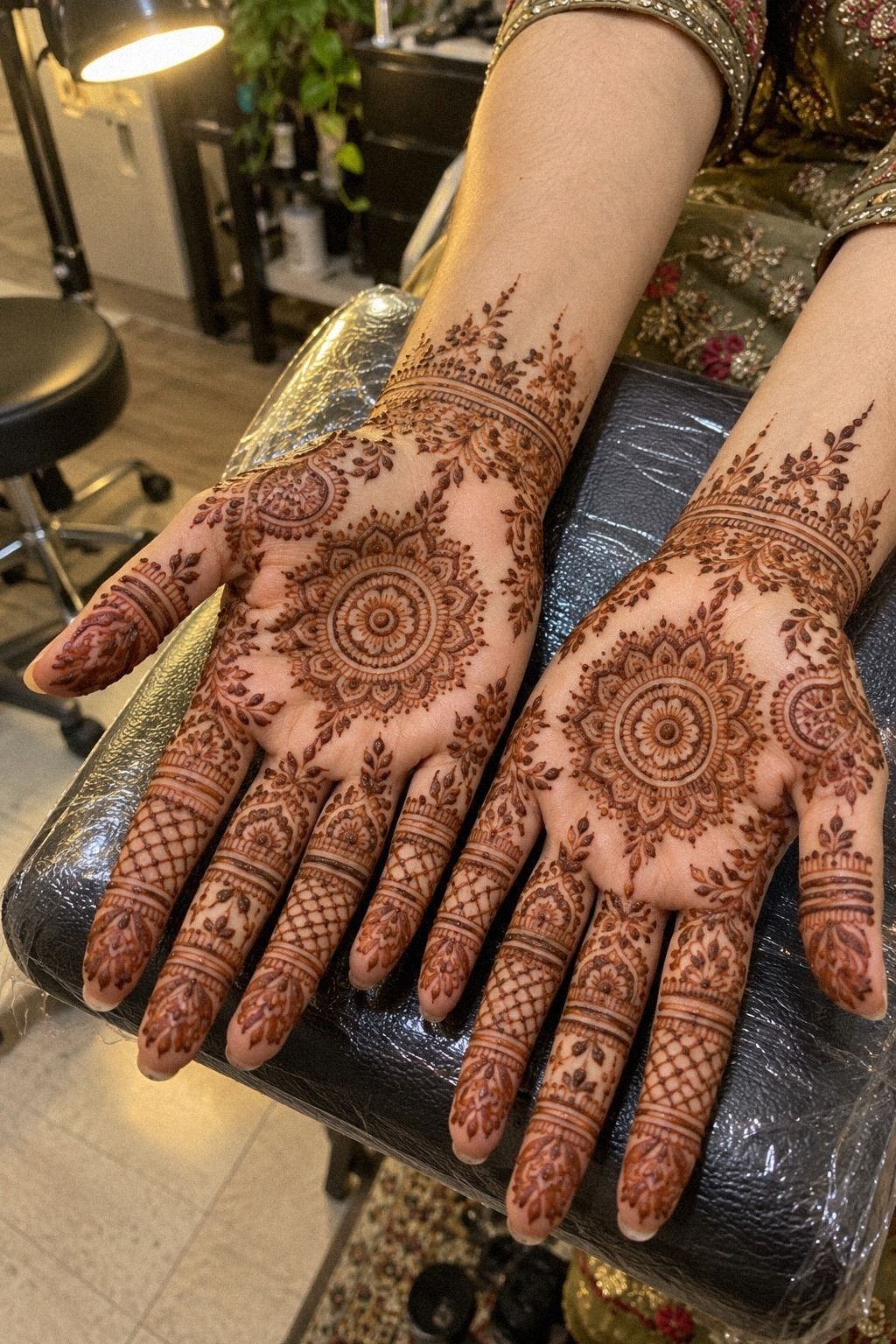
A mandala can give one palm a symbolic center without requiring every area to be filled. Choose balanced rings, delicate petals, and enough open skin around the middle so the intricate pattern remains readable.
3Let Flowing Arabic Vines Lead Across the Front Hand
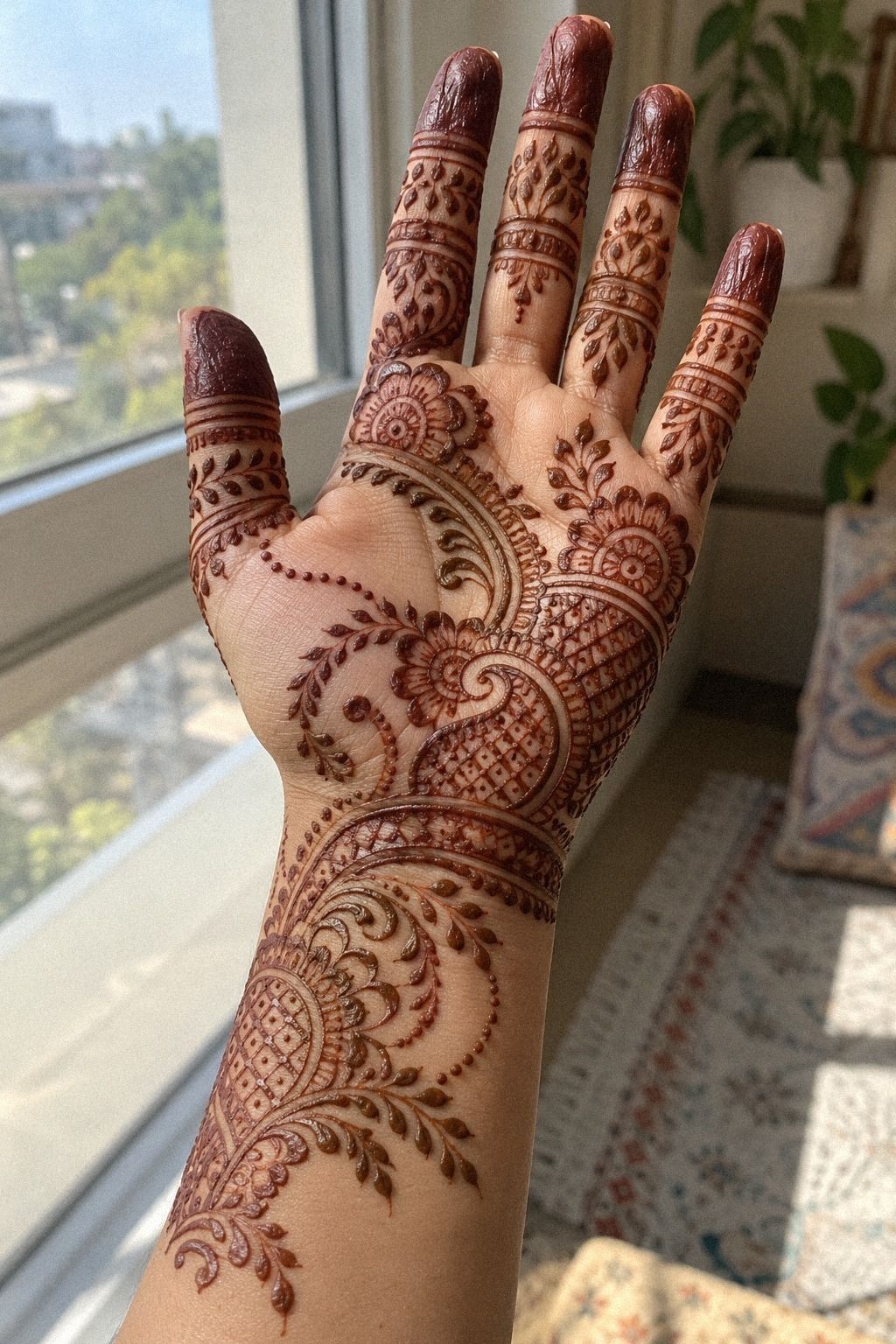
A flowing Arabic pattern travels diagonally instead of sitting in a compact block. Large flowers, open leaves, and curved vines create ethereal movement from the wrist toward the index finger. I’d pick this graceful direction when you want a design that feels expressive and romantic.
Tell your artist to leave generous skin around the Arabic mehndi vine. Reddish-brown paste looks especially refined when broad petals sit beside fine tendrils, rather than when every gap is filled.
A tapered wrist finish matters. I once chose a pattern that stopped abruptly at my wrist, and the ending felt sharp whenever I moved my hand. Now I’d ask for two small leaves or a delicate curl to soften the edge.
The easy stylish mehndi designs for front hand collection includes similar open compositions. You can show your artist the layout and then change the flower size, wrist length, or finger detail to make it personal.
This style can be a smart budget choice when you want an elegant bridal effect without booking full coverage. It uses the eye-catching movement of a larger design while leaving enough skin visible for bangles and rings.
For your Sangeet, pair the flowing wrist trail with bracelets because the pattern leaves room for metal and fabric to show. Don’t overload the wrist with extra circles. One vine, a few dots, and a clean palm will give you a timeless finish.
4Bold Pakistani Bridal Front-Hand Mehndi Patterns

Bold Pakistani patterning uses compact motifs across the fingers and palm, with repeated florals, paisleys, and fine mesh details. It feels traditional, expressive, and powerful without needing an identical design on both hands.

5What Makes Delicate Finger and Wrist Mehndi Feel Complete?
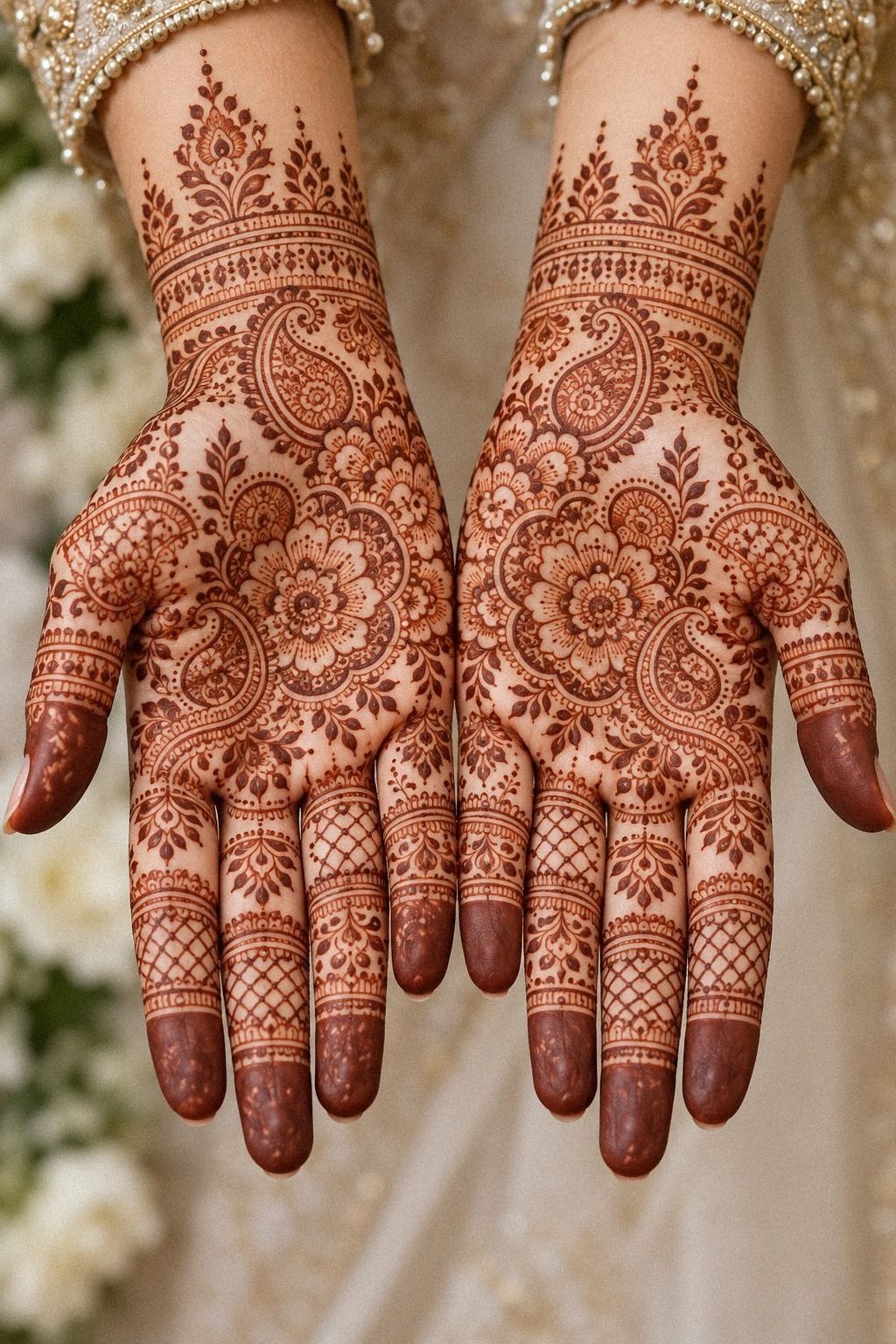
Delicate finger mehndi works through rhythm. Use narrow bands, tiny leaves, dots, and one small paisley rather than trying to cover every finger. This dainty approach is a good fit when you want your jewelry to remain visible.
Ask for thin henna lines that vary slightly in width. Repetition gives the design structure, while small changes keep it from feeling mechanical. The wrist trail should end softly because a hard horizontal stop can divide the hand visually.
You can compare related ideas in the simple front-hand mehndi guide. I’d borrow the delicate rhythm, not copy the placement exactly, because your fingers and wrist need their own proportions.
This pattern often gives excellent value for a shorter celebration appointment. It leaves the palm space mostly free, still shows clearly when you lift a glass, and doesn’t require the budget of a full bridal arrangement.
Keep the finger bands undisturbed until the paste flakes away naturally. The finished stain should look crisp and feminine, with enough contrast to remain visible as it gradually fades.
6Pair Symmetrical Floral Motifs With One Human Detail
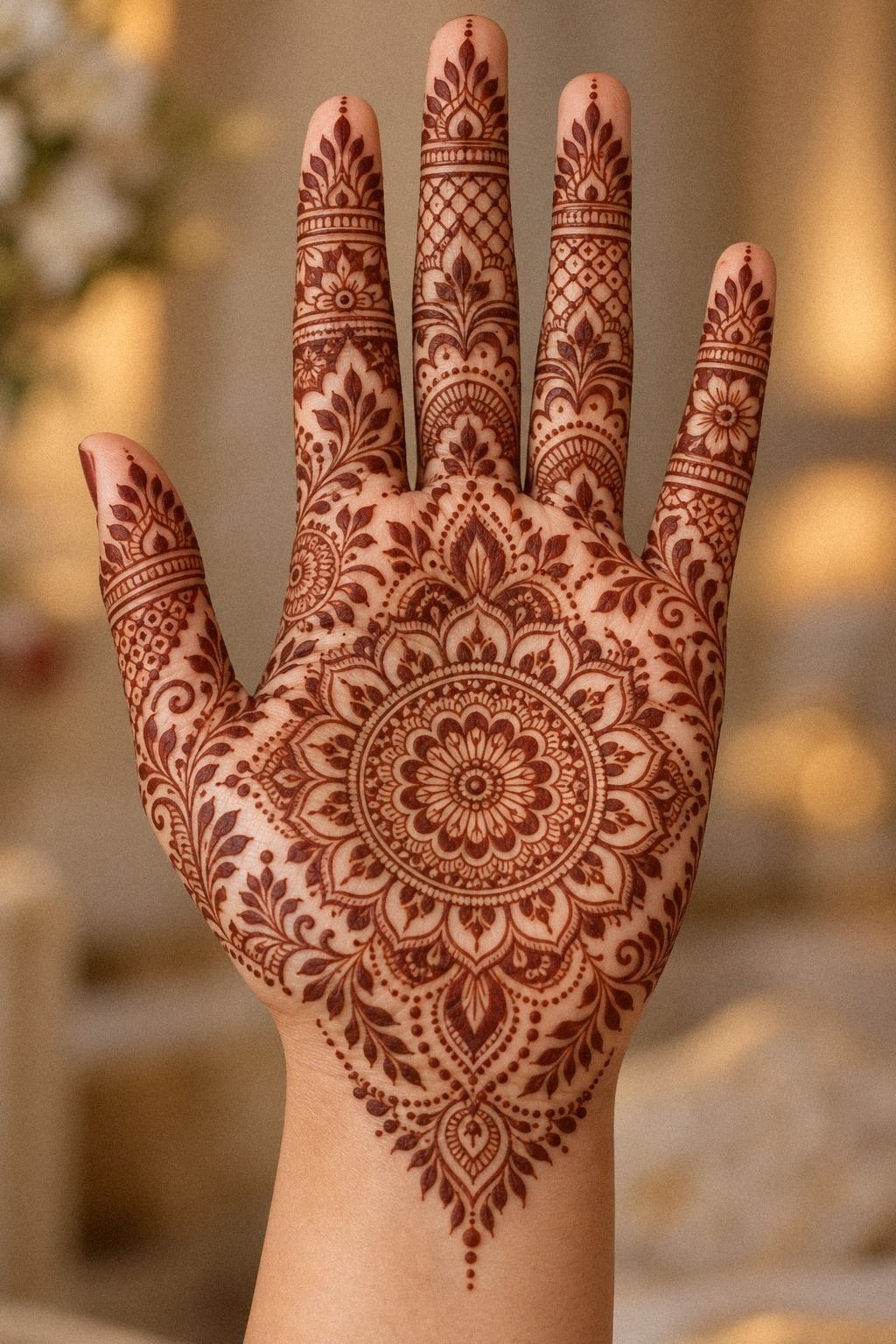
Symmetrical mehndi looks classic because the same floral center and leaf shapes appear on both hands. The arrangement feels polished, but a tiny difference between the two sides can keep it from looking copied or rigid.
Ask for matching floral centers and a repeated leaf shape along the fingers. Fresh paste should have a workable texture so the artist can keep both sides related without rushing.
Your artist might suggest filling every background gap to make the symmetry stronger. I’d resist that. Open skin around the flowers gives the design a striking edge and lets the deeper stain stand out.
The latest simple mehndi designs references show how small spacing changes can make repeated motifs feel lighter. You can use them when you’re deciding whether a fuller arrangement has enough visual value.
During the ceremony, keep the floral paste from rubbing against fabric or jewelry while it is fresh, or the matched petals may lose their crisp edges.
7Latest Geometric Bridal Mehndi for Front Hand
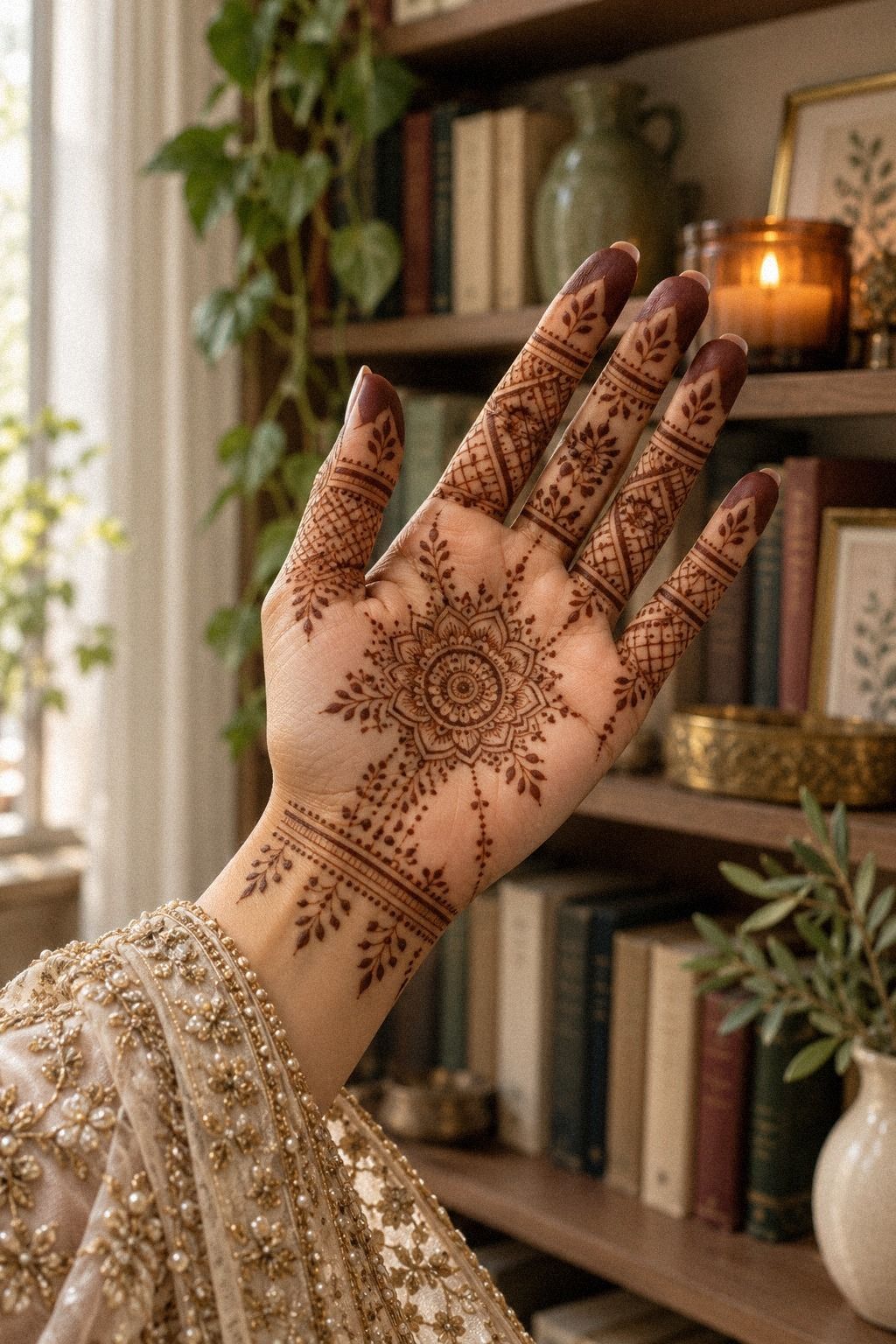
Geometric mehndi uses grids, pointed petals, diamonds, and repeated angles. The style feels sleek and modern while remaining connected to traditional pattern language. I’d choose it when you want something sharp, daring, and meaningful.
Build the pattern around one central shape instead of scattering unrelated triangles. Geometric henna detailing works best when diamonds connect through fine lines and one or two leaves soften the structure.
If you’re worried that geometry will look too severe, add a small floral curve near the thumb. That playful contrast gives the design warmth without weakening its crisp character.
The easy simple mehndi designs collection offers cleaner layouts to study. A smaller geometric design can be a practical budget option when you want a stylish result without paying for dense coverage.
Keep your fingers slightly apart while the paste dries. Sharp mehndi openings need clear edges, and touching wet lines together can blur the small spaces. It’s a daring look, but it holds together with remarkable clarity!
8When Does a Symbolic Peacock Make the Best Focal Point?

A peacock gives the palm an expressive focal point and an empowering story. Choose a graceful neck, bold feather eyes, and a few flowing leaves if you want the motif to feel personal without covering every inch.
9Choose Jewelry-Style Bands Without Copying Every Ornament
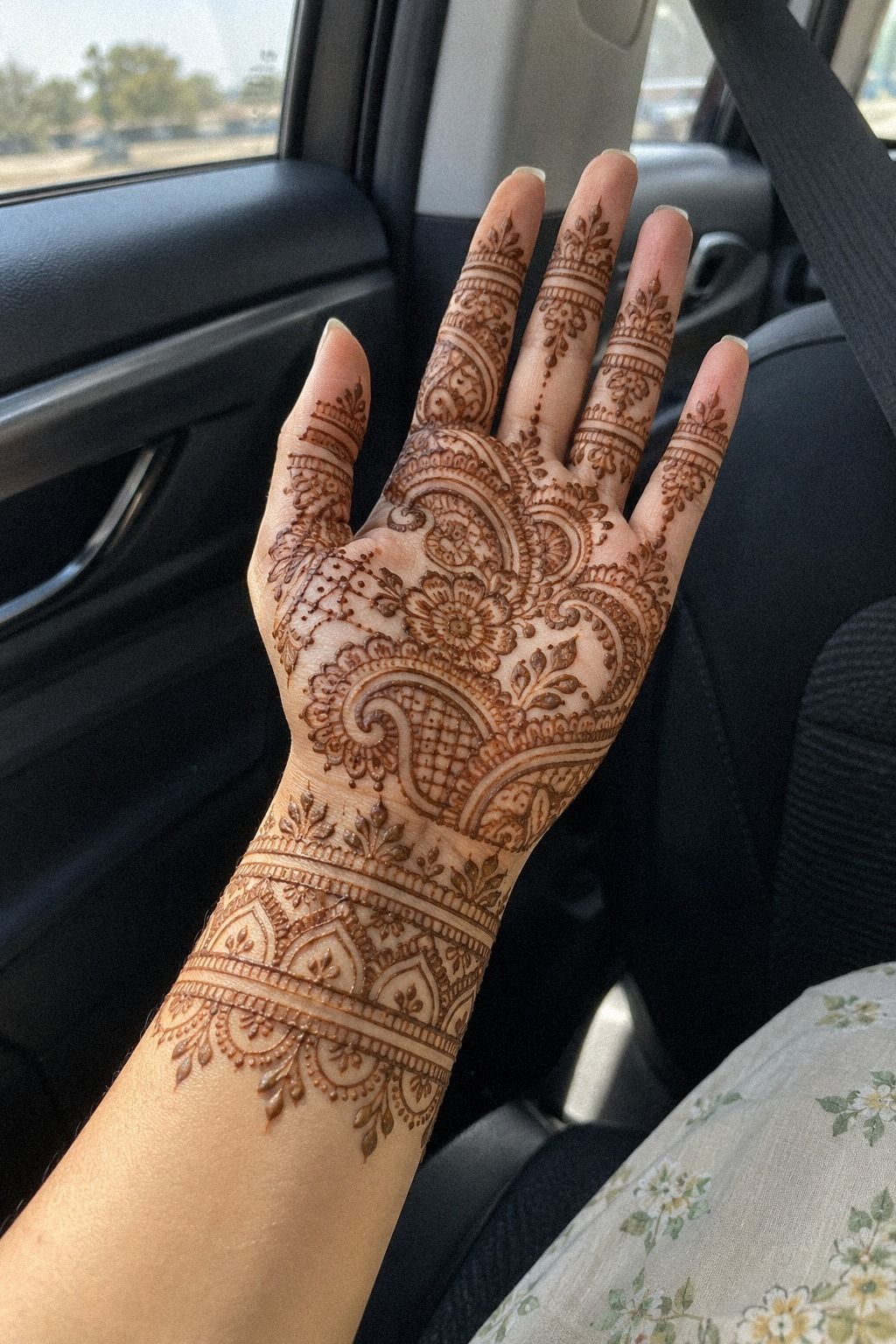
Jewelry-style mehndi uses bands, hanging chains, and delicate floral details. The arrangement follows the wrist like a bracelet and extends toward the fingers like rings, creating an iconic and feminine effect.
Ask for chain-style mehndi bands with small connectors instead of thick horizontal blocks. Your artist can create a ring effect around one finger while leaving the others lighter.
I’d avoid copying every piece of jewelry you own into the pattern. One bracelet and one ring motif will look more polished than a crowded collection of imitations. The latest bridal mehndi designs references can help you choose where the visual weight should sit.
This idea can offer strong value when your accessories already provide sparkle. You may spend less on dense palm detail while still getting an elegant bridal effect that coordinates with your outfit.
Let the wrist bracelet motif provide delicate detail and let the jewelry provide shine. You’ll get a harmonious result if both use one repeated shape, such as a teardrop, flower, or small paisley.
10Negative Space or Full Coverage for Both Hands?
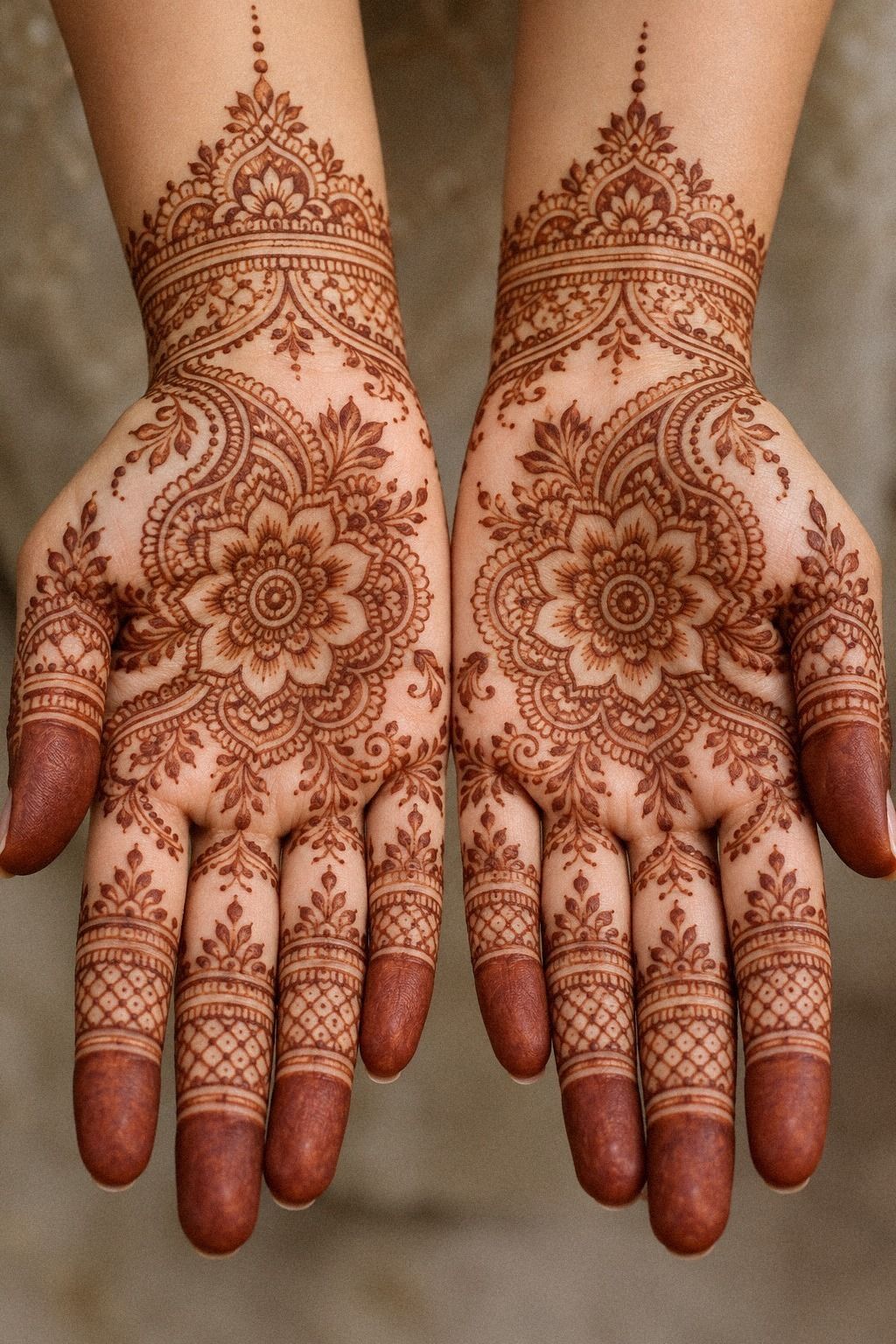
Negative-space mehndi keeps deliberate open areas across the fingers and palms. The style feels edgy, vibrant, and expressive without relying on heavy coverage, so I’d choose it for a long celebration with plenty of movement.
Start by deciding which areas should stay completely clear. Open-skin mehndi spacing works best when the empty sections have a visible purpose, such as a central palm window or clean finger channels.
Ask your artist to map those spaces before adding the surrounding paisleys and florals. The simple back-hand mehndi designs examples show how a few sharp borders can make an open arrangement feel complete.
Negative space can provide excellent value if you want both hands decorated while keeping the cost controlled. It uses fewer filled henna areas, takes less time, and can look more distinctive than standard dense coverage.
Your palms will look especially striking against bright Sangeet clothing or a floral garland. Keep the negative-space borders clean, because a smudge can reduce the contrast that makes this style work.
11Traditional Full-Coverage Bridal Front-Hand Mehndi
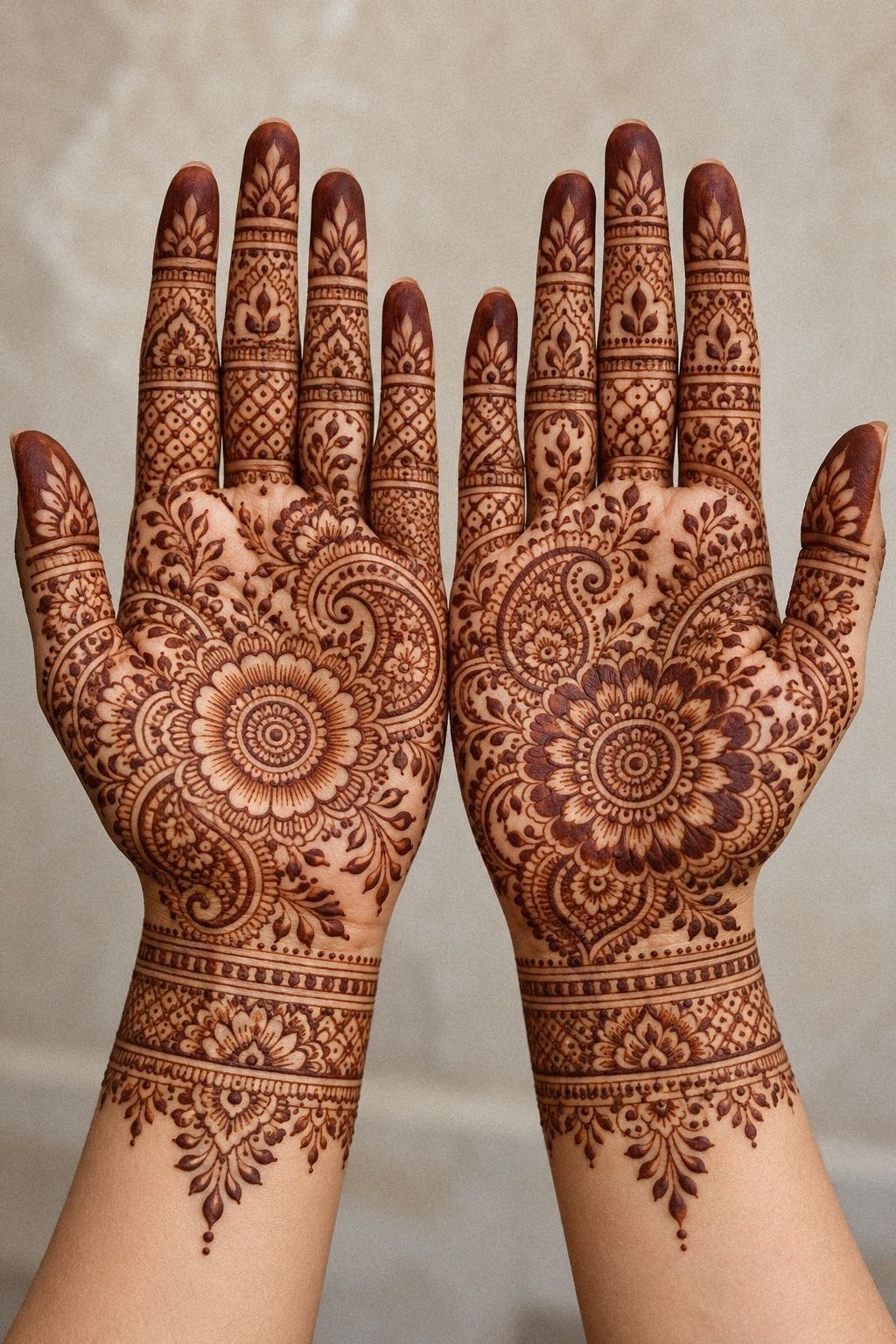
Traditional full coverage carries florals, paisleys, fine borders, and repeated motifs across the palm, fingers, and wrist. I’d choose this sacred and powerful approach when cultural tradition matters most to you.
Use full-coverage henna motifs in layers of detail, but keep one main symbol visible through the pattern. Your artist can place a mandala, bride-and-groom scene, or floral medallion at the center.
The surrounding jaal pattern should frame that focal point instead of swallowing it. Traditional doesn’t have to mean crowded, and the best ornate patterns still have a readable rhythm.
If you want more references, the simple full-hand mehndi collection offers ways to balance dense palms with clearer fingers. Compare the amount of detail with the time and budget you have available.
Plan carefully because detailed paste takes patience. Keep your hands still while the bridal henna design dries for about 1 to 2 hours, then allow the color to deepen through the second day.
Here’s a realistic planning guide for the design itself. Prices vary by city, artist experience, travel, timing, and whether both hands are included, so treat these as budgeting ranges rather than a promise.
Ask whether the quote includes the artist’s travel fee, both hands, design changes, and the time needed for drying advice. A written estimate makes the choice less stressful, especially when several family members are booking the same day.
Why I’d Choose Mehndi Over a Heavier Bridal Statement
I’ve seen brides choose a dense design because they’re afraid a simpler one won’t look bridal enough. That fear can lead to crowded palms and motifs that disappear into one another. My preference is a meaningful central shape with enough clear skin around it to look striking and personal at the celebration.
The best bridal henna pattern also respects the occasion. Sangeet is active, social, and full of movement.
You’ll greet relatives, hold cups, adjust your dupatta, and pose for family memories. A pattern should remain readable while your fingers move.
I once judged a design only by its wet paste. That was a mistake. The paste looks raised at first, then the stain changes as it dries and deepens on the second day.
You need to judge the spacing, not the temporary surface.
For your own choice, start with the feeling you want your hands to carry. Minimal patterns feel crisp and understated.
Mandalas feel symbolic. Peacock motifs feel joyful.
Full coverage feels traditional and powerful.
My strongest recommendation is the flowing Arabic style for most Sangeet celebrations. It’s elegant, expressive, and forgiving when your hand moves naturally. Good mehndi can feel ceremonial without becoming heavy!
What People Always Want to Know
How much does bridal mehndi for the front hand usually cost?
There’s no dependable US-wide cost because artists charge by design density, travel, timing, and experience. I’d ask for a written quote before your event. A clear reference layout helps estimate the work and prevents surprises.
Is front-hand bridal mehndi a good choice for a first celebration design?
Yes, I’d choose it when someone wants to try mehndi without booking full coverage. A simple front-hand pattern gives you room to see how the paste dries, how your skin takes the stain, and whether the design feels worth it for the occasion.
How do I choose a mehndi artist?
I’d look for a portfolio showing clean florals, even paisleys, and finished designs after the paste has dried. Ask what’s in the henna cone ingredients, and avoid products promising an unnaturally fast stain. A good artist should answer clearly.
What color is best for bridal mehndi in 2026?
I’d choose natural reddish brown because it deepens gradually and looks authentic. A warm brown stain works with gold, silver, ivory, and colorful Sangeet clothing. Choose motif contrast and spacing before chasing a particular color effect.
Can I create front-hand mehndi on a budget?
Yes. I’d choose one palm, fewer details, and a small wrist trail instead of full coverage on both hands. An open floral design uses less paste and time while still giving you a polished bridal result.
How long does bridal mehndi last?
Natural mehndi usually remains visible for one to three weeks, depending on washing, friction, skin, and placement. A deeper second-day stain is normal. Keep the paste on while it dries, wash gently afterward, and expect the edges to fade first.
Where I’d Start First
If I had to pick one, I’d start with the flowing Arabic design. Its open spacing sits cleanly beside bangles and won’t turn your front hand into one dark block. Save the easy front-hand mehndi ideas for later and show your artist the reference you like best.
For a second option, I’d choose a symbolic peacock with a clear palm center. It’s meaningful, romantic, and easy to personalize without filling every inch. The peacock mehndi collection can help you compare feather shapes before your appointment.
Whatever you choose, protect the open spaces, ask about the cost in advance, and give the paste enough time to dry. The right design should feel personal from the first glance and still feel like you on the second day.