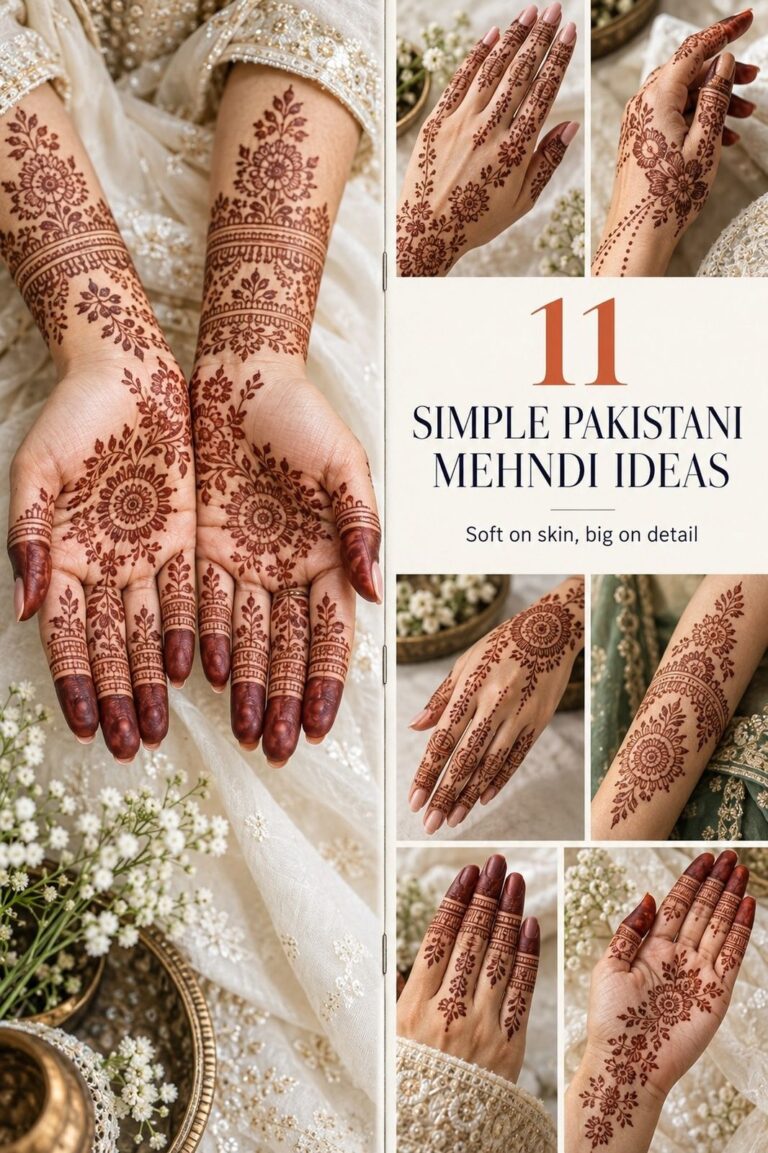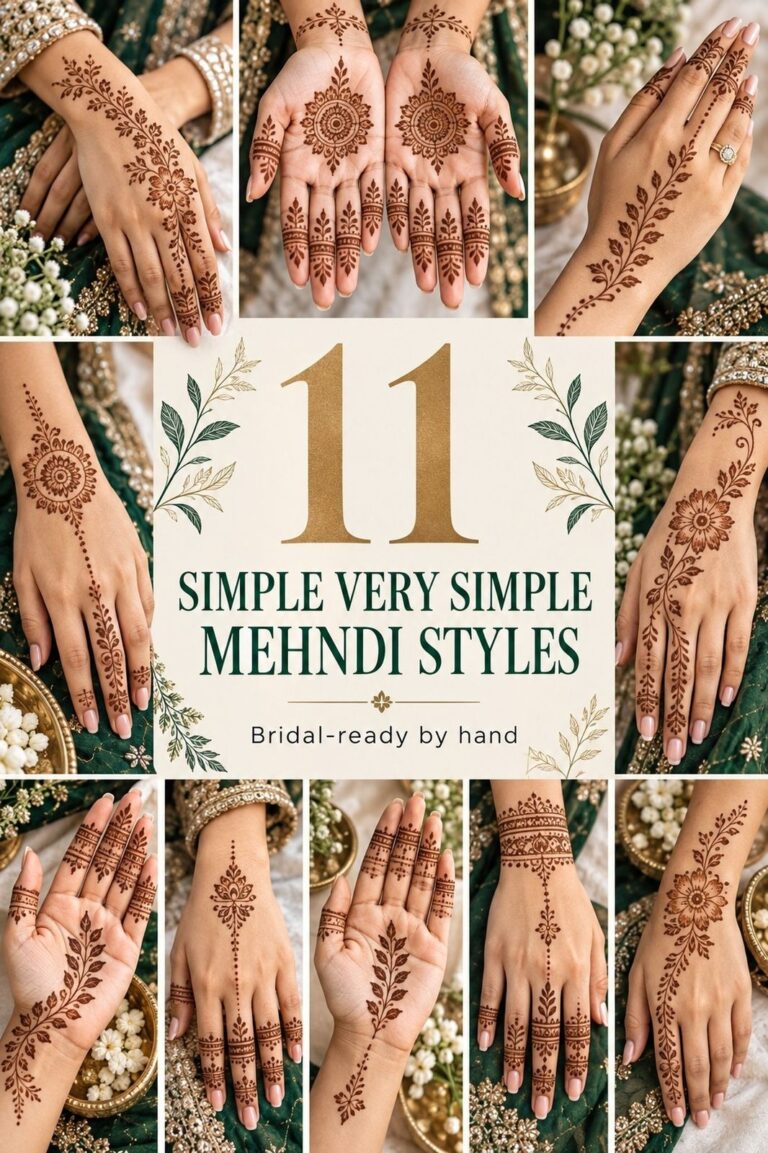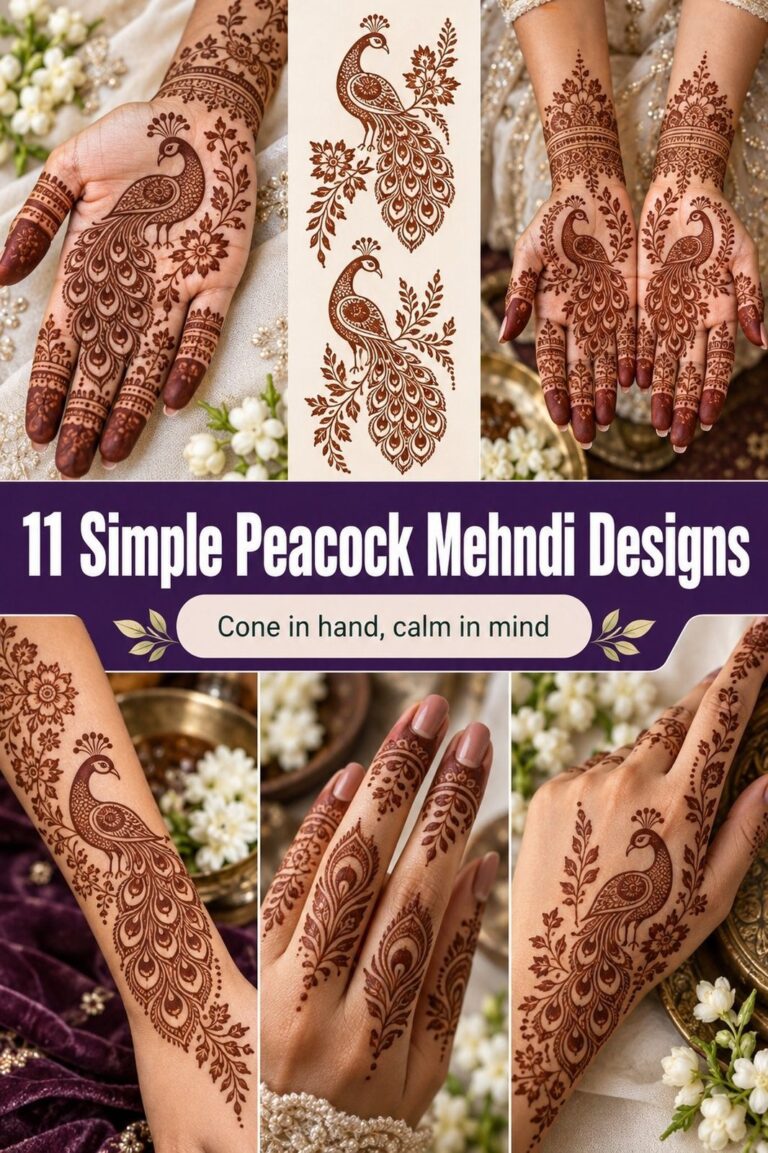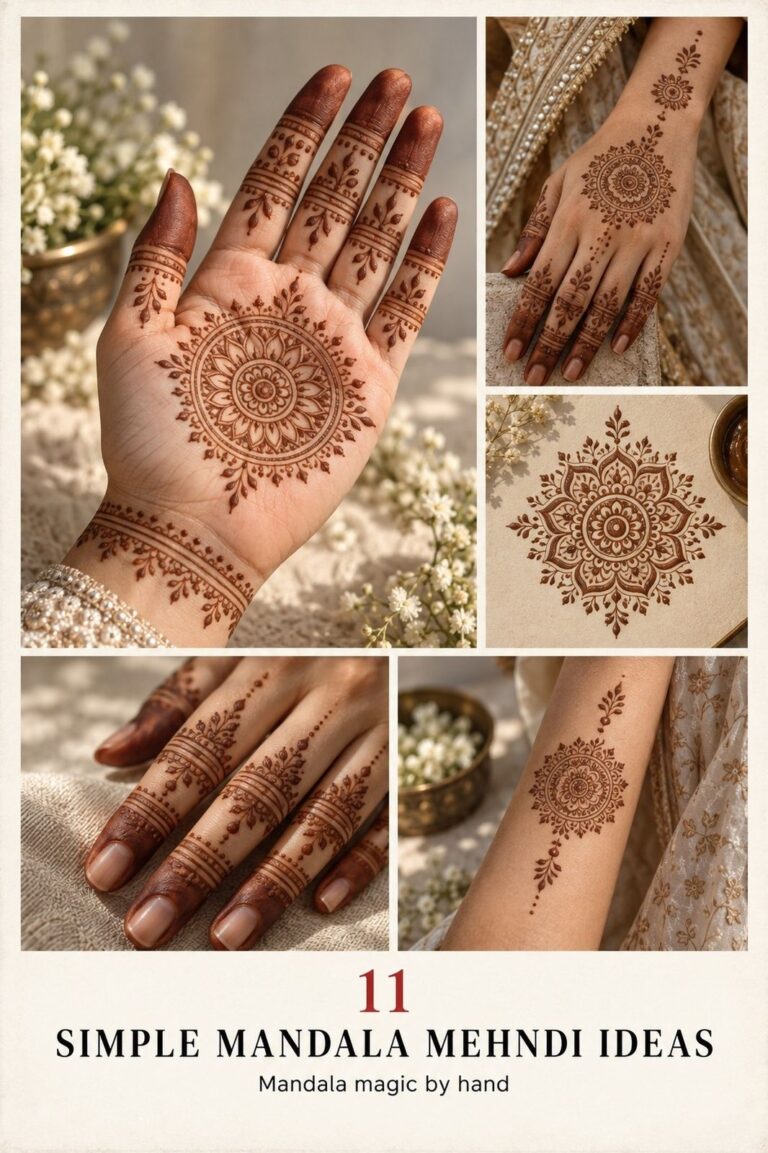
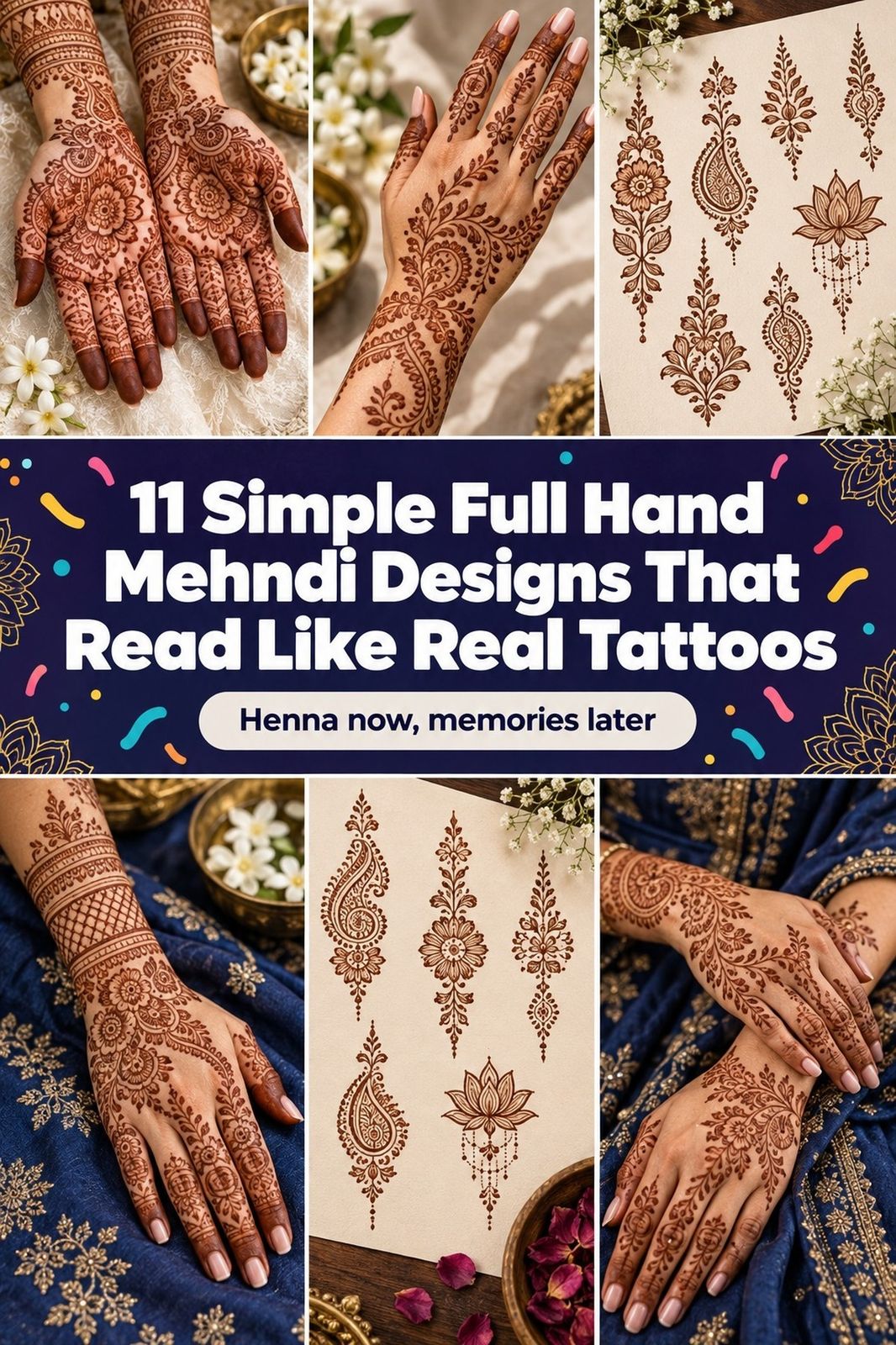
Simple full hand mehndi designs can stay crisp for years when you control line weight, spacing, placement, and healing. I learned that after watching delicate details blur across knuckles and fingers. This guide turns reddish-brown henna references into a striking tattoo plan with graceful movement, realistic costs, and personal meaning.
- ✓ Start With Simple Full Hand Mehndi Designs
- ✓ Which Latest Simple Full Hand Mehndi Designs Still Feel Personal?
- ✓ Choose Simple Full Hand Mehndi Designs For Hands
You’ll see how to build an intricate hand tattoo without crowding every crease. The goal isn’t maximum coverage. It’s a crisp, expressive design that still feels powerful when your hand is moving.
Before You Start: The Three-Source Rule
Choose three visual sources before you draw: one palm structure, one finger rhythm, and one wrist ending. Your first source might be a henna photograph, your second a floral trail, and your third a border from a traditional motif. This keeps your personal design focused instead of copying every mark you like.
Measure your hand in centimeters and mark the palm crease, thumb base, knuckles, and wrist bone on tracing paper. You don’t need a rigid stencil.
You need a map showing where your design will bend when you move. A sterile transfer paper outline helps your artist see the intended flow without forcing every detail into permanent ink.
Think about healing before you book. Hands, fingers, feet, ribs, and sternum can be more painful, while the forearm, shoulder, and thigh are often easier for many people.
Your design can be delicate, but your aftercare instructions can’t be casual. Save examples from our simple full hand mehndi tattoo guide and bring them to a licensed artist.
A clean consultation matters more than a dramatic reference image. Ask how your artist handles fine lines, knuckles, and palm movement. Bring your questions, because you’re choosing a permanent mark, not testing a temporary filter!
A Consultation That Protects the Design
Ask whether your artist has healed work that resembles your idea. Fresh tattoos can look sharp on nearly everyone, but healed fine-line work reveals how the artist understands pressure, spacing, and skin movement.
Discuss needle groupings, expected fading, and whether the design needs simplification. A good artist won’t dismiss your reference. They’ll explain which parts can remain intricate and which need a bolder structure.
Ask for a written estimate before the appointment. The shop minimum may cover a small motif, while a full hand, palm, fingers, and wrist can require several hours. Knowing the likely cost early makes the project easier to plan.
If the artist rushes your questions, that’s useful information. A permanent tattoo is worth careful planning, and you shouldn’t feel pressured to book before the design feels right!
- Start With Simple Full Hand Mehndi Designs
- Which Latest Simple Full Hand Mehndi Designs Still Feel Personal?
- Choose Simple Full Hand Mehndi Designs For Hands
- Place Bold Vines Across Each Finger
- Can Palm Linework Stay Crisp?
- Frame The Wrist With Flowing Florals
- What Makes Knuckle Motifs Work?
- Add Meaningful Symbols Near The Thumb
- Layer Delicate Dots Between Floral Trails
- Match Symmetrical Patterns Across Both Hands
- Why Finish With Sharp Fingertip Detailing?
1Start With Simple Full Hand Mehndi Designs
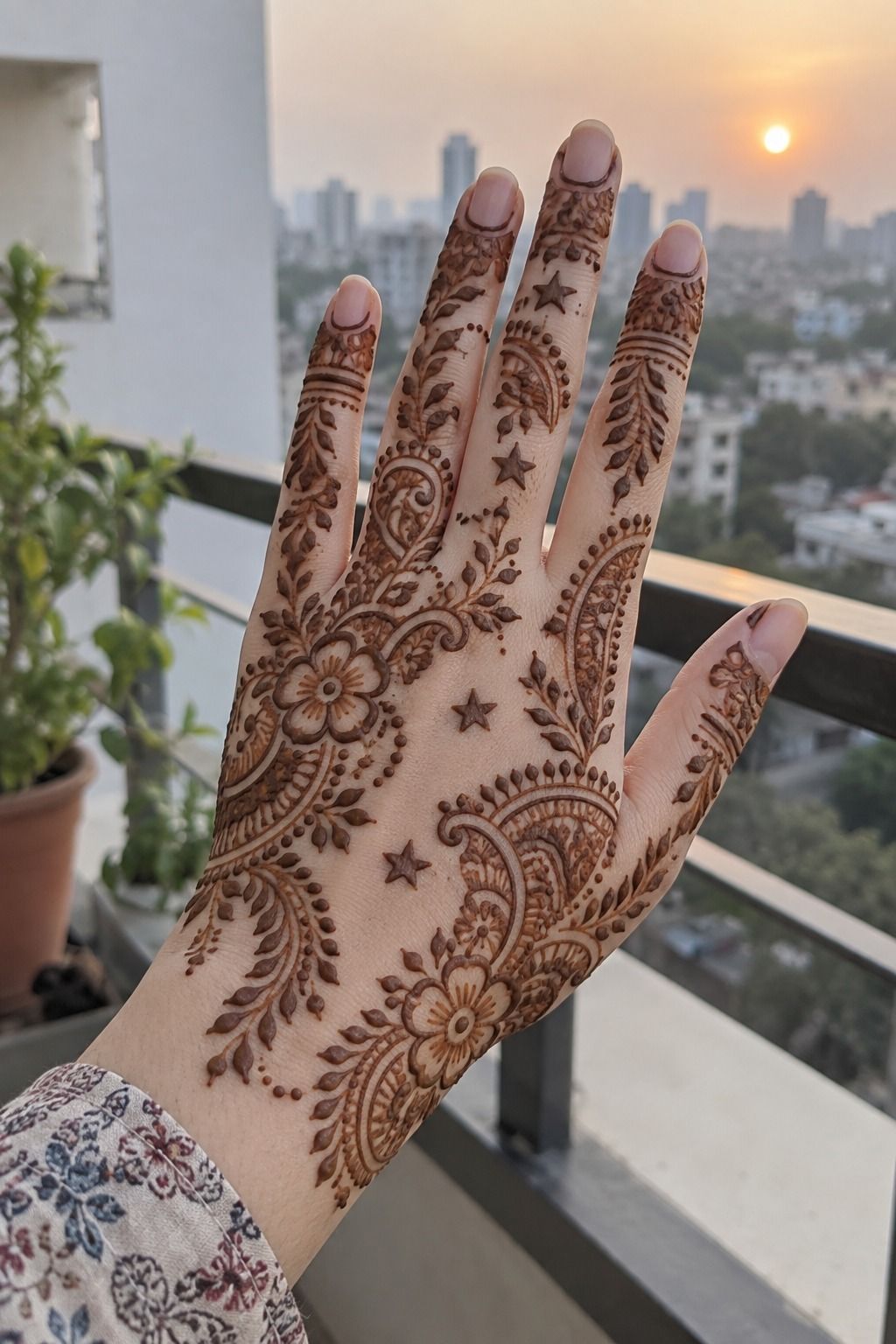
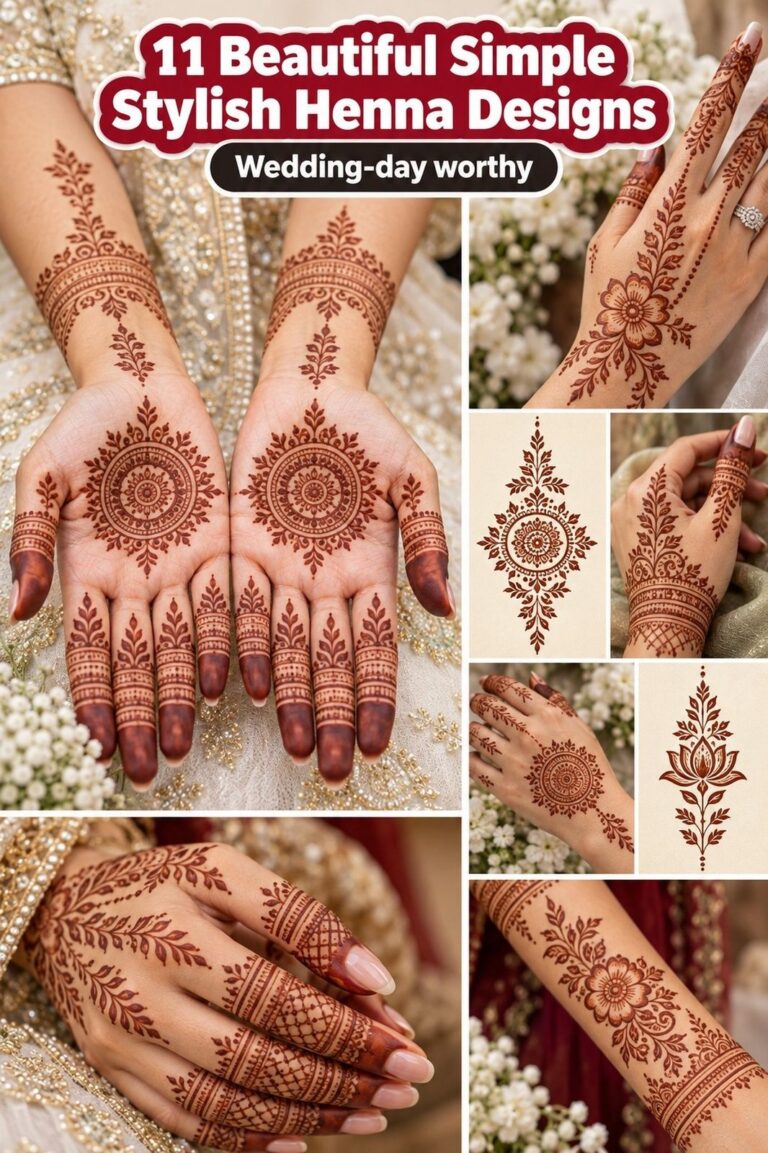
Begin with one central shape on the back of your hand, then let every other line support it. A fine-line black ink floral medallion gives your eye a clear anchor without filling every inch. Your center can be intricate, but the surrounding marks should stay understated.
Keep the first draft smaller than your final ambition. Trace it on paper, place it over your hand, and flex your fingers.
If the petals disappear into a crease, move them before your appointment. A personal design should follow your movement, not fight it.
Use one dominant line weight and one supporting weight. Your artist might use a 3RL needle for narrow contours and a slightly heavier grouping for selected leaves. Ask to see healed examples, not only fresh photographs.
For a related starting point, compare your sketch with these simple stylish front-hand mehndi designs. Strong compositions usually have one clear center, a few directional trails, and enough skin showing to keep the image crisp.
2Which Latest Simple Full Hand Mehndi Designs Still Feel Personal?
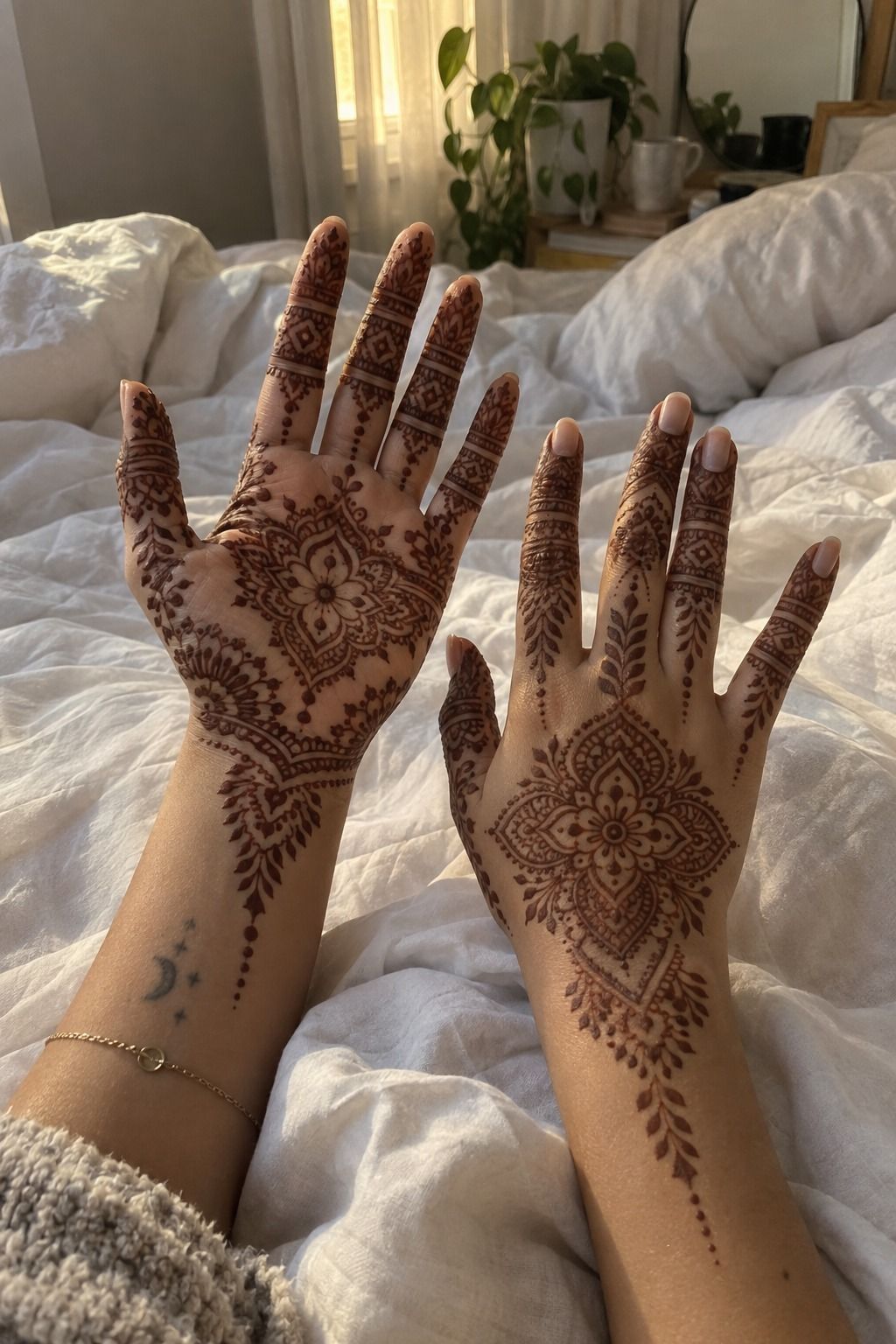
Choose current references for their structure, not because they’re trending for a week. The latest simple full hand mehndi designs often use graceful floral paths, bold empty gaps, and selective blackwork. A blackwork ink accent can make a small motif feel iconic without turning the whole hand into a solid block.
Look for photographs taken in ordinary lighting. A design that seems vibrant under studio flash may look flat in daylight. Your reference should show the back of the hand, fingers, and wrist together.
Study how the design crosses joints. Knuckle skin moves, and finger tattoos can soften or fade faster than ink on the forearm. Your artist may simplify a tiny leaf or enlarge a dot so it remains readable.
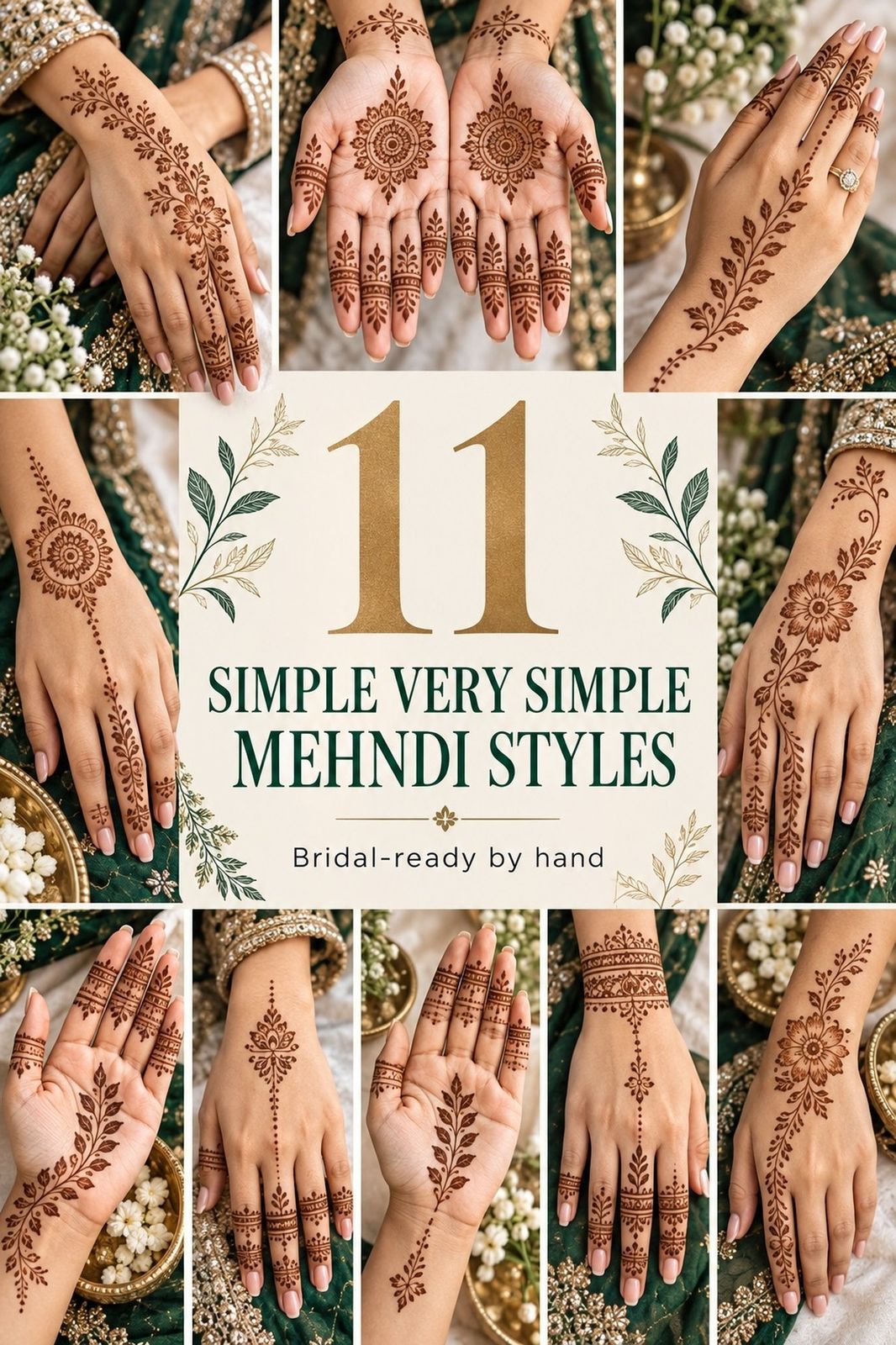
Save your favorites beside examples from these simple very simple mehndi designs. You’re allowed to borrow the rhythm while changing the symbols. A romantic vine can become a family motif, a birth flower, or a meaningful geometric mark.
3Choose Simple Full Hand Mehndi Designs For Hands
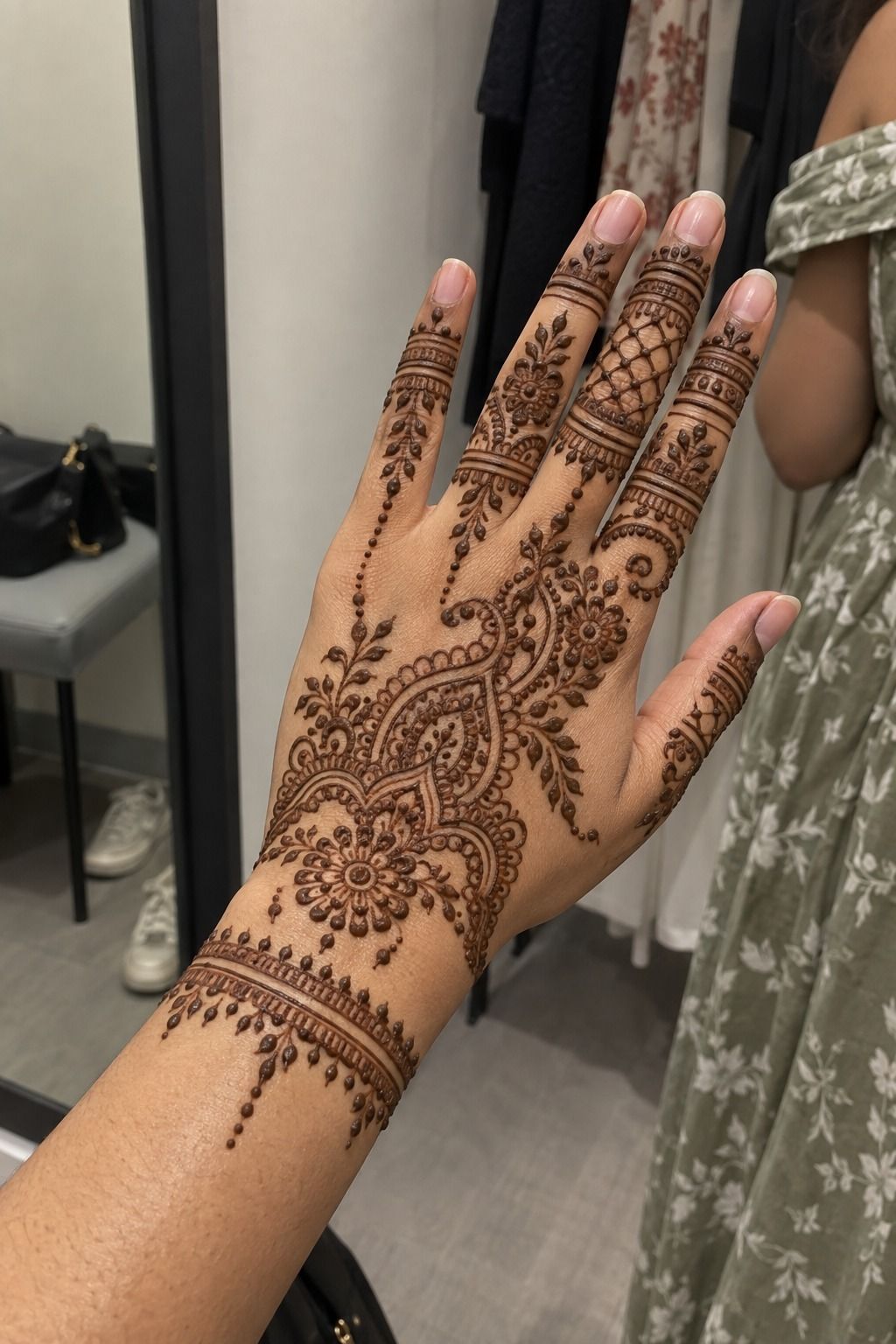
Choose your hand placement before you choose the final motif.
Mehndi, Then Ink: What Actually Changes?
Henna references can be ornate, but tattoo ink behaves differently inside skin. A henna stain may show delicate texture that won’t translate well into permanent lines. Your artist should preserve the rhythm while editing details for longevity.
Traditional mehndi often relies on dense repetition. Tattoo design needs more breathing room because lines can soften, merge, or lose contrast. That doesn’t make the final piece less meaningful.
It makes the translation more realistic.
The strongest reference gives your artist a direction, not a strict blueprint. Bring the symbols, curves, and mood you love, then let the artist create a tattoo ink version that fits your hand.
4Place Bold Vines Across Each Finger
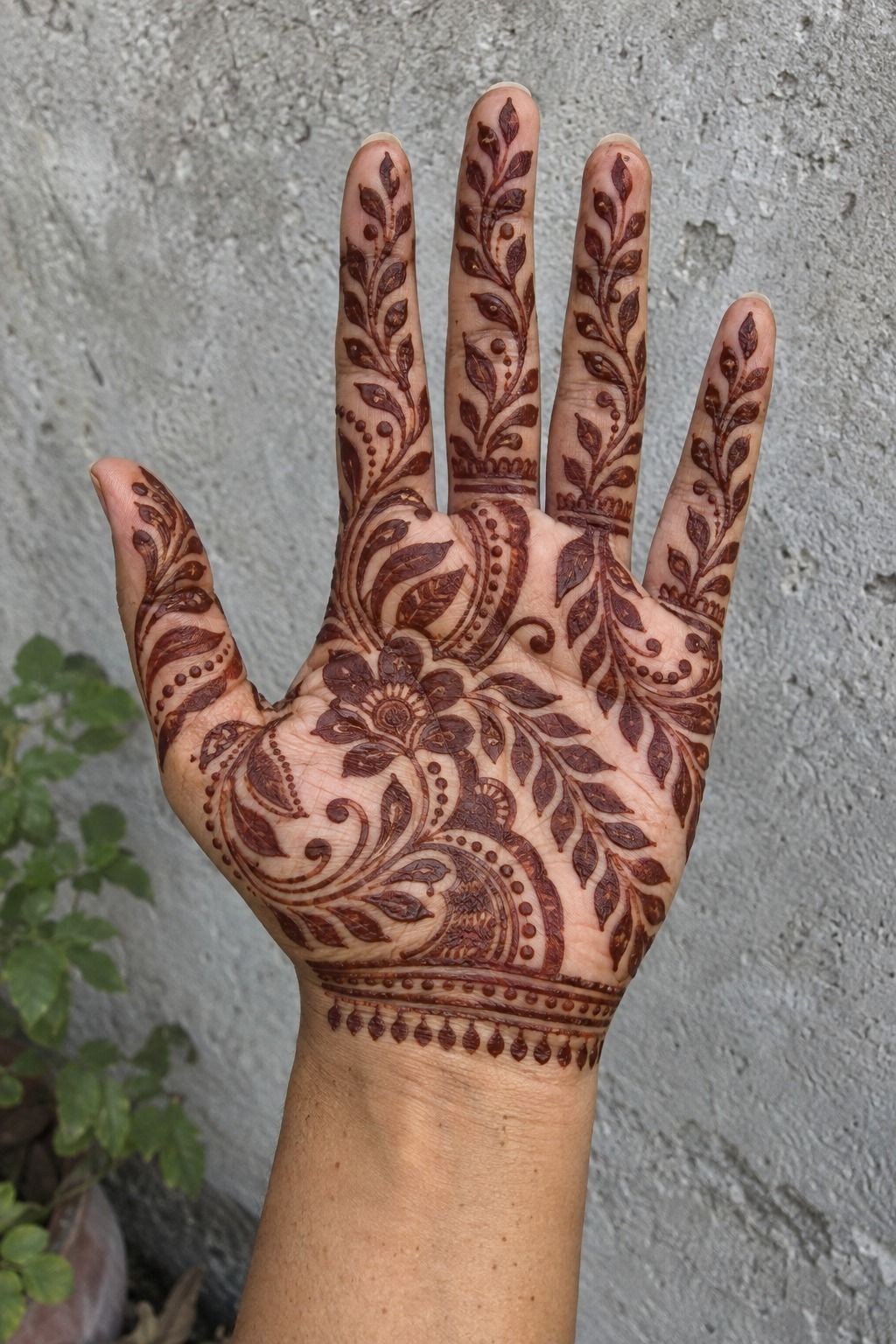
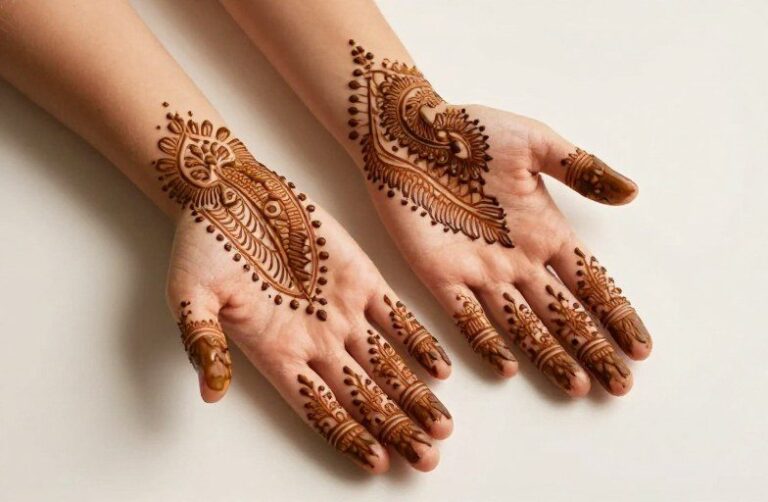
Start each vine at the palm and let it travel toward one fingertip instead of drawing separate decorations on every finger. A black henna reference can show the bold direction, but your artist should simplify the paste texture into clean ink.
Keep the vine away from the deepest side creases when possible. Fingers bend constantly, and those creases can interrupt even graceful linework. Your artist may use small leaves, dots, or short curves where the skin is more stable.
Leave a little space around each knuckle. A 3RL needle can create expressive leaves, but leaves placed too close together may merge as the tattoo settles. A smaller, cleaner trail may age better than a perfect copy.
For more placement ideas, browse these simple wrist mehndi tattoos. A wrist connection gives your fingers a visual beginning and prevents the vines from looking like isolated marks.
5Can Palm Linework Stay Crisp?
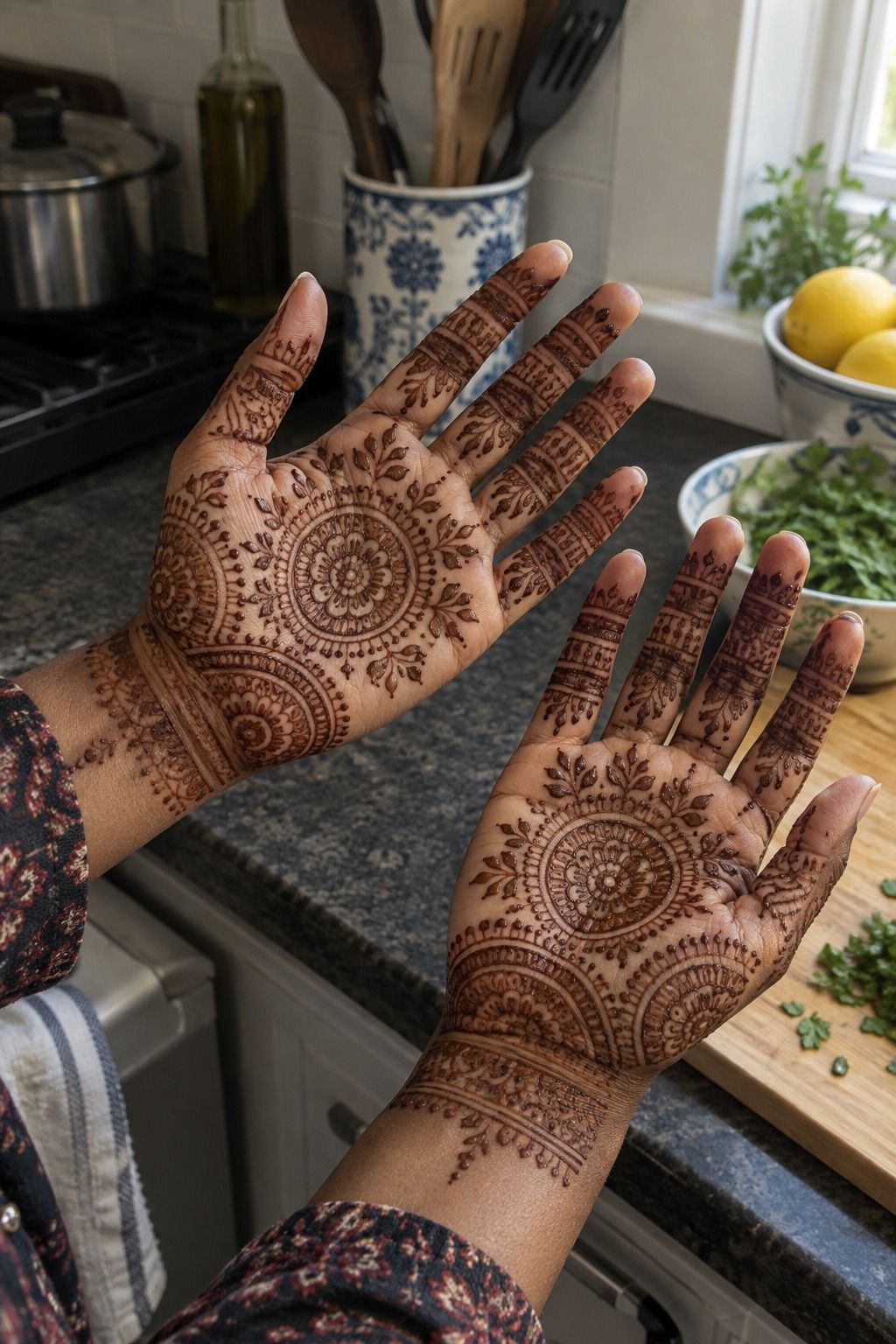
Palm designs need a realistic plan because the skin is thick, active, and exposed to friction. Use the henna photograph as a raw, gritty reference, then let your artist reduce the smallest marks. A black ink palm accent may hold better than a cluster of ultra-fine lines.
Place the strongest shapes where your palm bends less. Your artist can map the major creases and shift a flower slightly so the lines don’t sit directly inside them. You’ll still get an intricate effect, but the tattoo won’t depend on every tiny dot remaining untouched.
Ask how the artist handles saturation and touch-ups. Palm tattoos can need more patience than a forearm design, and your artist should explain the likely aging pattern without making promises. Unscented soap and gentle washing matter during healing.
I’d use the palm as an accent rather than filling every available area. Your hand will look more polished when the ink has a clear path through the palm. If you’re comparing options, review these simple full hand mehndi examples and mark the designs that still look sharp at a glance.
6Frame The Wrist With Flowing Florals
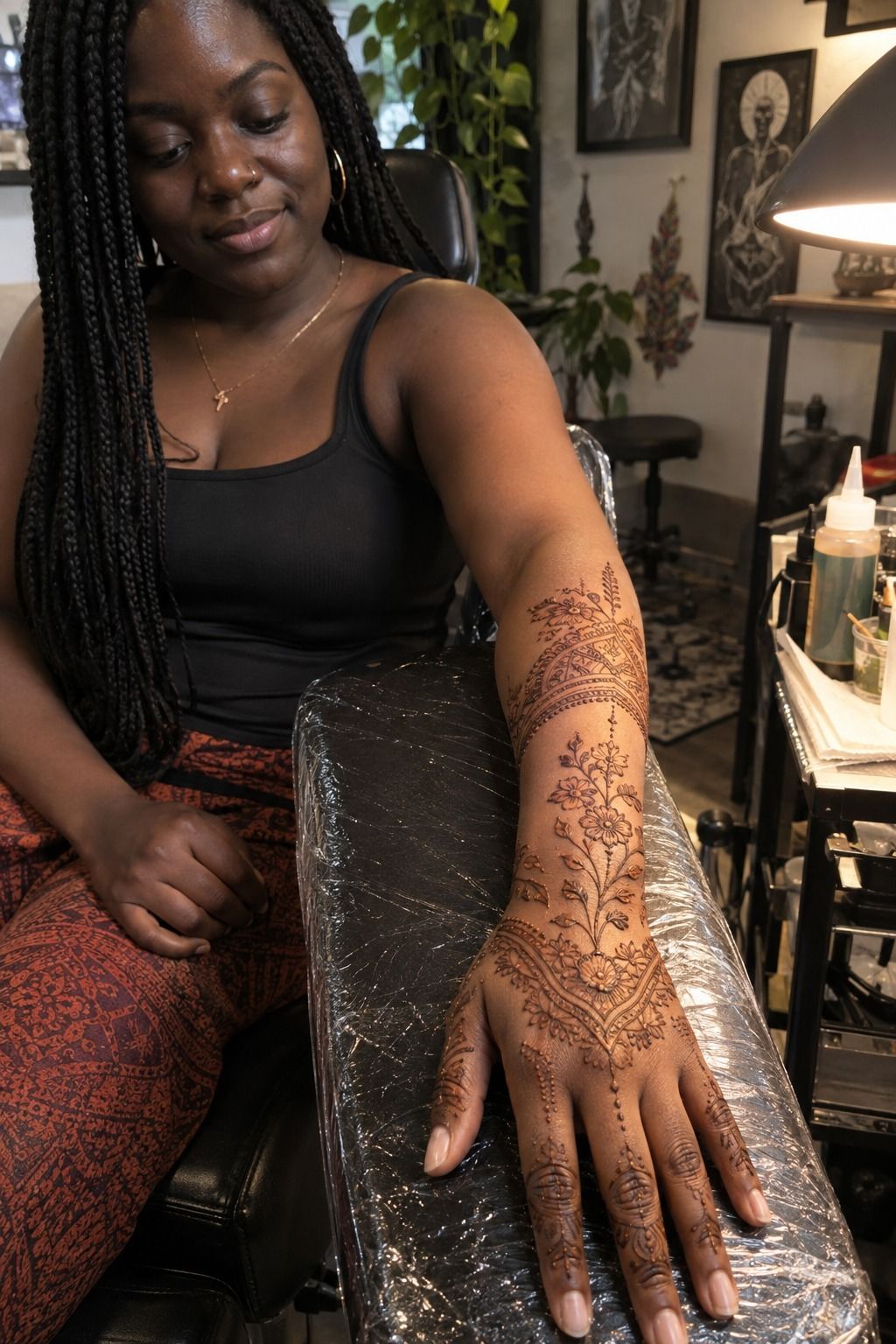
Treat the wrist as the ending of your design, not a separate bracelet.
7What Makes Knuckle Motifs Work?
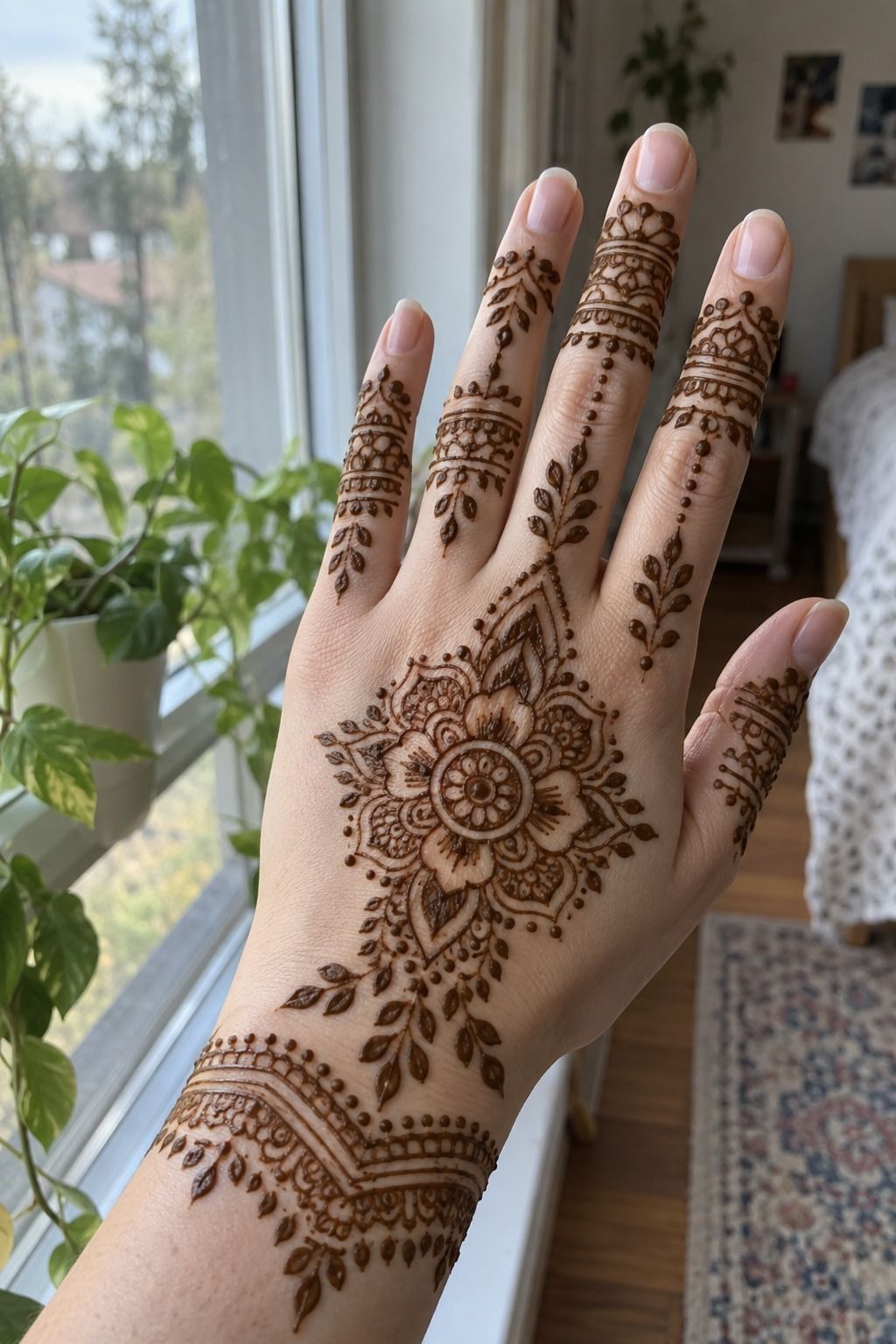
Knuckles need restraint. Begin with one motif per joint, then connect the shapes with short lines that can flex without collapsing. A brown henna stain reference may show dense patterning, but your tattoo should leave clear gaps around the folds.
Ask your artist to stencil the design while your fingers are relaxed. Then bend them. You’ll see whether a flower turns into a half-moon or whether a vine slides toward the side.
Use repeated shapes carefully. Matching petals can create a classic rhythm, but identical symbols on every knuckle may feel too mechanical. Your artist can vary the direction while keeping the same line language.
For a less crowded reference set, compare these simple front-hand mehndi designs. A polished knuckle layout doesn’t need to fill every crease. It needs to look intentional from both a distance and a close view.
8Add Meaningful Symbols Near The Thumb
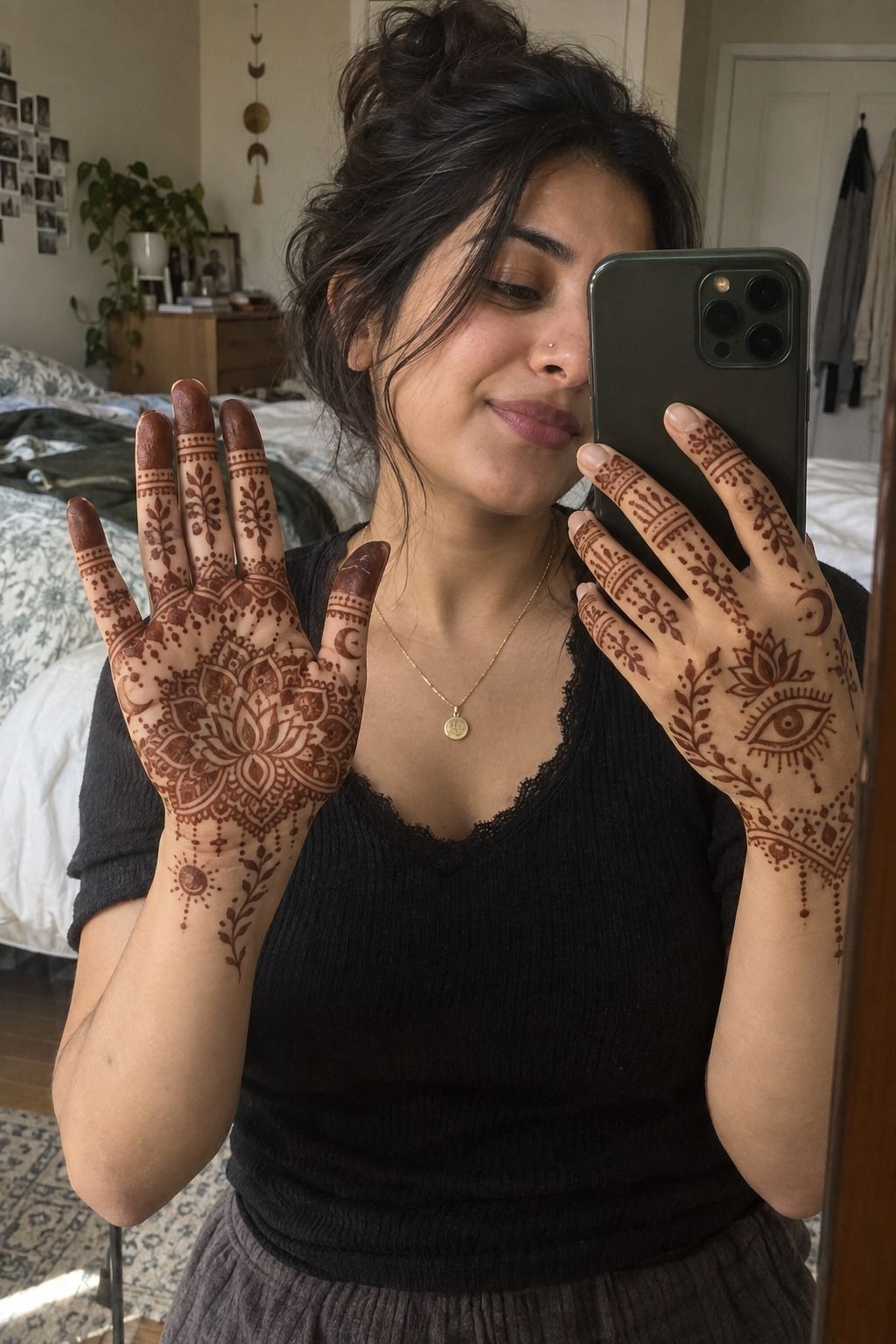
The thumb area can hold one meaningful symbol because it naturally draws attention when you move your hand. Choose a small lotus outline, crescent, initial, sun, or family mark that connects to your story.
Place the symbol where thumb movement won’t constantly fold the design. Your artist can test the stencil with the thumb across the palm and then extended outward. That reveals whether the mark remains readable in daily gestures.
Use surrounding dots or leaves as support, not camouflage. A single-needle line can create a hauntingly delicate edge, but it may soften more than a heavier contour. Ask which details should stay crisp and which can remain subtle.
If you’re still choosing imagery, explore these simple peacock mehndi designs. You might borrow a feather curve without copying the whole bird. That kind of adaptation keeps the tattoo expressive and personal.
9Layer Delicate Dots Between Floral Trails
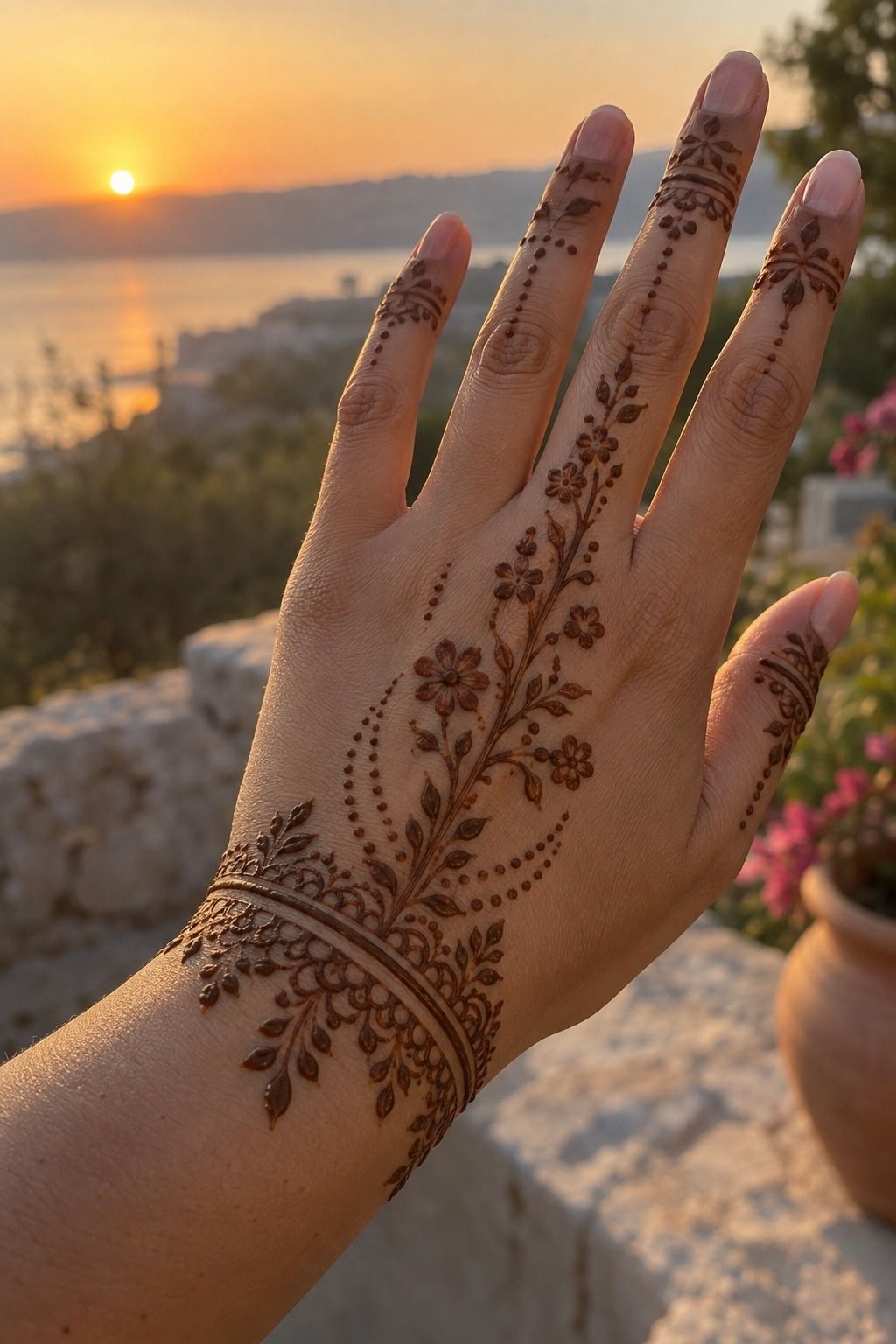
Use dots as punctuation between major motifs, not as filler. A fine black ink dot trail can make a floral path feel playful while preserving open skin around it. Your artist should vary the spacing slightly so the line feels hand-drawn.
Begin with the largest gaps between your palm and wrist. Then add smaller dots near the fingers only where the composition needs a bridge. Your design can be dainty without becoming fragile.
Ask whether the artist prefers dotwork by hand or with a machine grouping. The technique matters less than healed results, clean hygiene, and controlled depth. Stencil transfer gel can help preserve the planned rhythm.
Keep your aftercare simple. Wash gently, moisturize as directed, and avoid soaking or direct sun while the surface heals. Save these simple very simple mehndi designs for ideas, then remove every dot that doesn’t strengthen your pattern.
10Match Symmetrical Patterns Across Both Hands
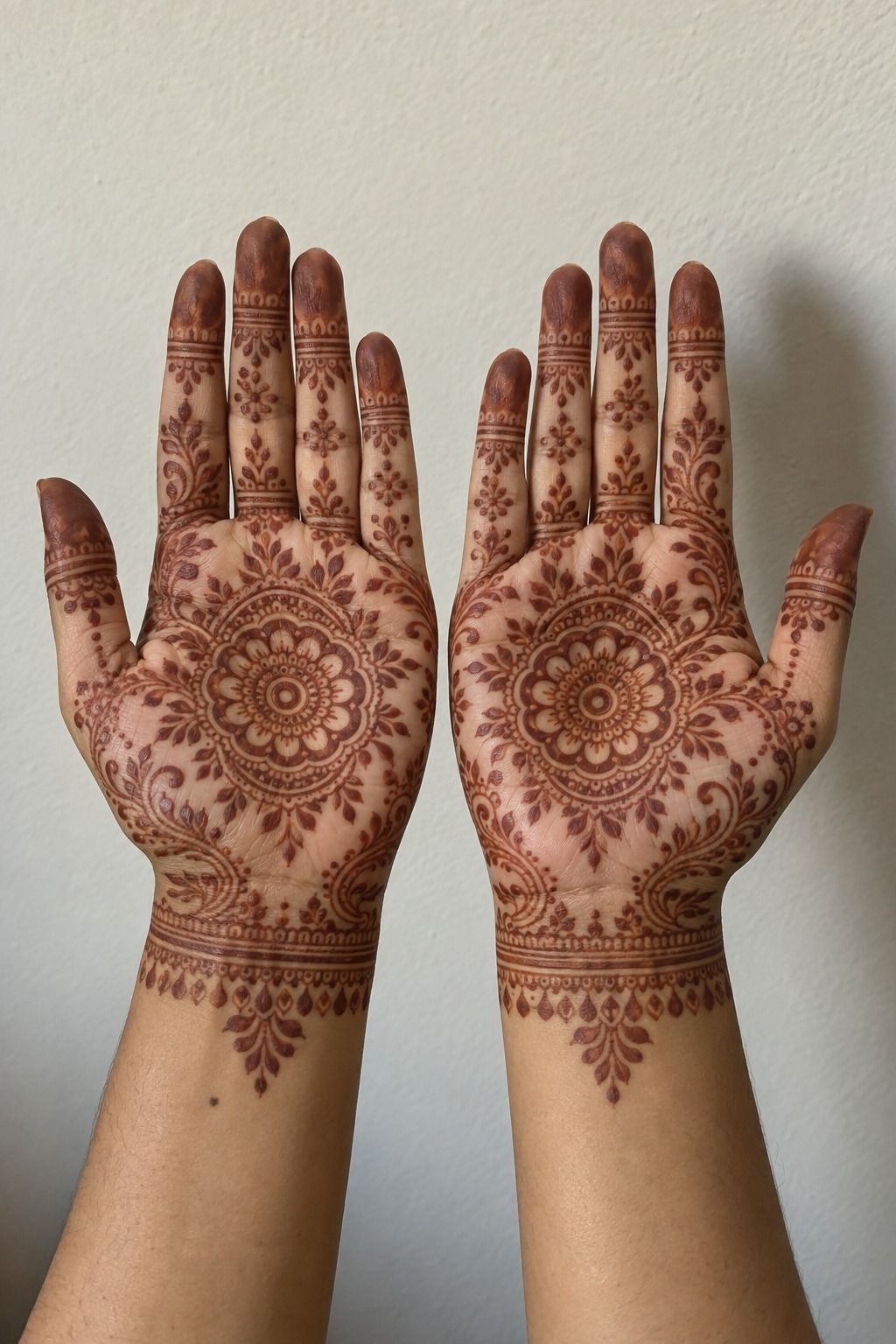
Symmetry doesn’t mean making both hands identical. Choose one shared element, such as a flower, crescent, vine direction, or dot rhythm, then let each hand develop its own movement. A blackwork floral pair can feel iconic without becoming mirror copies.
Place both stencils before the first permanent mark. Your artist can compare the thumb angles, wrist endings, and finger spacing while you hold your hands together. I’d rather adjust a slightly different flower now than discover later that the matching pieces sit at different heights.
Think about which hand will carry the stronger visual weight. If you write, work with tools, or wear jewelry on one side, that hand may experience more friction. Your artist can place the denser motif on the less active hand.
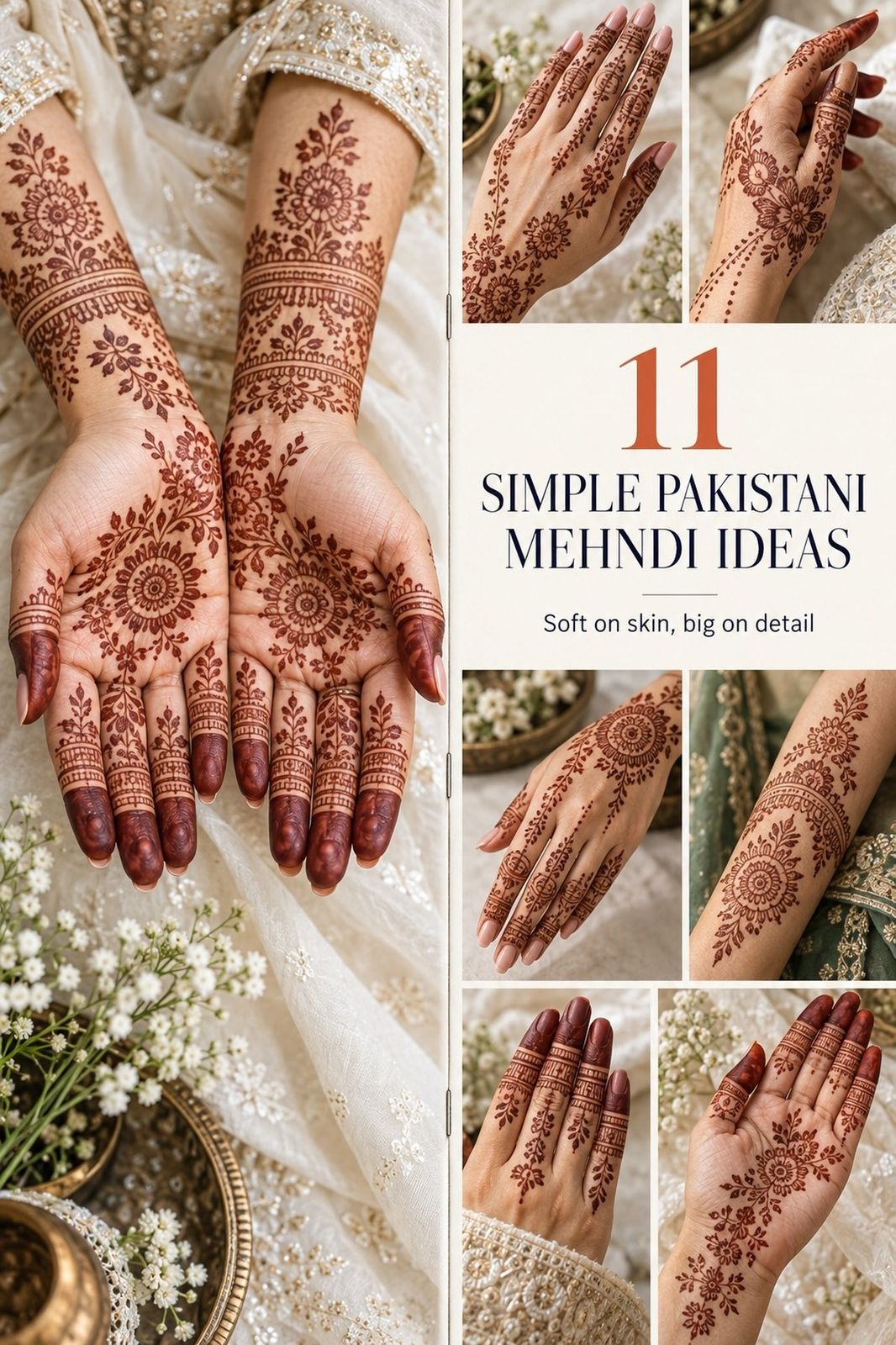
Use simple Pakistani mehndi designs for ideas about repetition and balance. You can also compare both hands with these simple back-hand mehndi tattoo references. A romantic pairing works best when each hand has a clear identity.
11Why Finish With Sharp Fingertip Detailing?
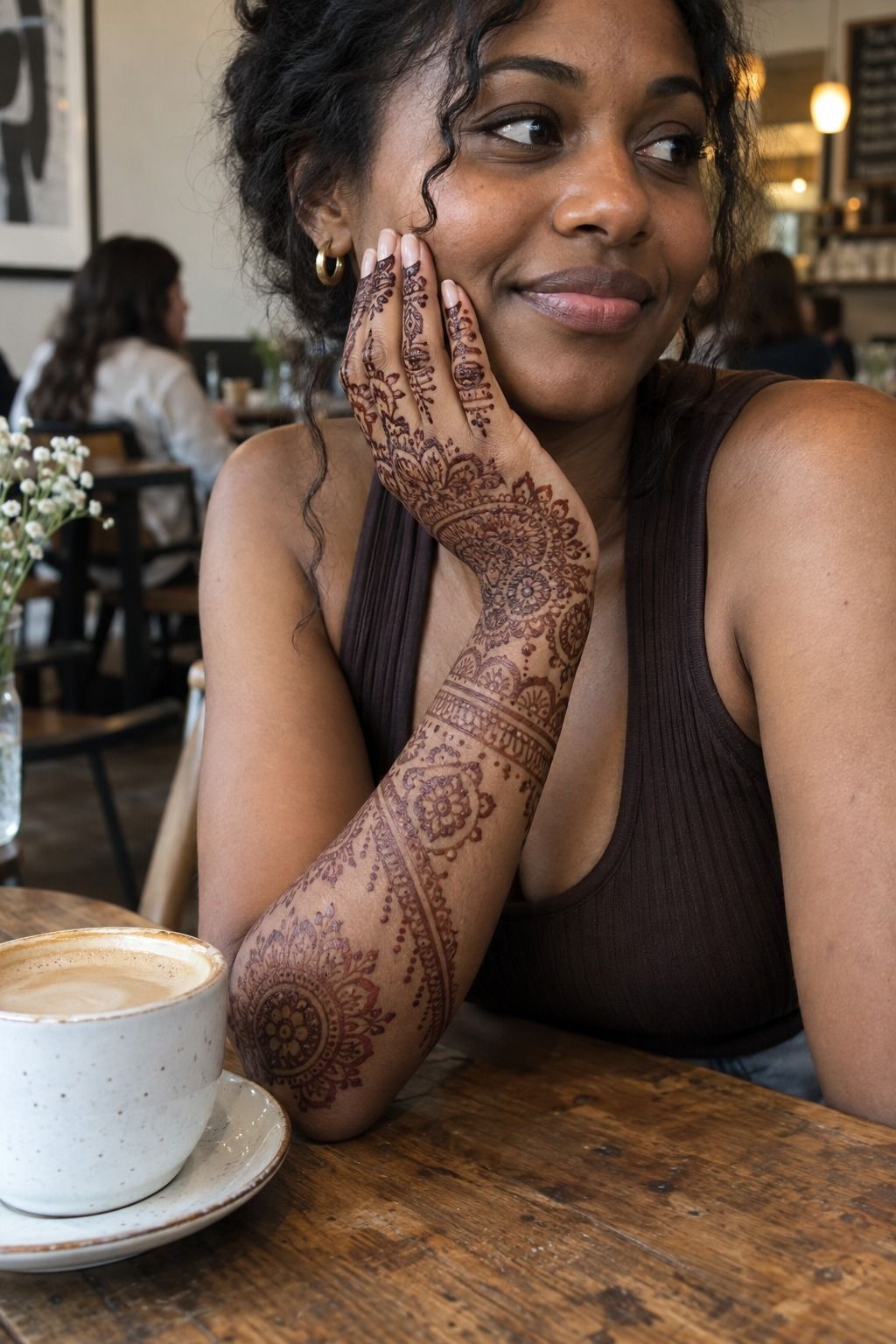
Save the fingertips for last because they’re among the most exposed areas. A solid black fingertip accent can make the entire design feel bold, edgy, and finished, but you’ll need to discuss fading with your artist.
Ask your artist to check every fingertip from multiple angles. Your fingers curve, spread, and touch each other, so a design that looks sharp from above may disappear from the side.
Remember that UV exposure can soften tattoo contrast over time. Once your tattoo has healed fully, protect it with broad-spectrum sunscreen. SPF 30 sunscreen is a practical baseline for exposed skin, though your artist’s aftercare instructions should lead during healing.
For a lighter finish, compare these simple front-hand mehndi tattoo ideas. A sharp fingertip detail can be feminine, masculine, or completely neutral depending on the surrounding lines. Stop when the hand reads clearly!
Which Details Should You Simplify Before Booking?
Start with the smallest marks. If a placement map shows dozens of tiny dots crossing creases, simplify before the appointment. Removing weak details often makes the main motif look more powerful.
Think about your skin, work, and habits. Someone who washes their hands constantly or works with tools may need more open spacing and fewer fragile lines.
That isn’t a failure of the design. It’s practical planning.
Review your artist’s portfolio for healed examples, not only dramatic fresh work. A healed artist portfolio tells you more about long-term value than a bright appointment-day photograph.
My Healed-Ink Test
I’ve seen people arrive with ten references open and no clear decision about what belongs on their skin. Mehndi patterns offer intricate florals, symbolic geometry, expressive vines, and tiny marks that look irresistible in a photograph. But a hand tattoo has to work while you grip a cup, open a door, type a message, and move through ordinary days.
My strongest preference is a clear center with movement toward the wrist and fingers. I’d choose a graceful floral path over a dense field of decoration because open skin gives the lines somewhere to breathe. That doesn’t mean the tattoo must be minimal.
Fresh ink is vibrant, sharp, and convincing on nearly everyone. Healed line retention tells you whether the artist understands skin, pressure, and long-term readability. Ask for examples after the surface has settled, especially for hands and fingers.
Finally, don’t confuse a simple design with an easy design. A minimal composition leaves nowhere for weak placement to hide. The most polished hand tattoos often use a few strong shapes, a personal symbol, and careful negative space.
The Full-Hand Flow Rule I Keep Coming Back To
A full-hand tattoo needs a clear hierarchy. Decide where the eye should land first, then let every vine, dot, and flower support that direction. Negative space is part of the design, not an unfinished area.
Your hand should still look readable when it’s open, relaxed, curled, and holding something. Test those positions before committing. A design that works only in one photograph may not be worth the cost.
I also think people underestimate the importance of movement. The best hand tattoo composition responds to your gestures instead of freezing them. That’s what makes the result feel expressive rather than pasted on.
If you’re unsure, remove one detail and look again. Strong tattoos usually survive editing. When every mark has a purpose, the final piece feels timeless, personal, and polished.
What A Simple Full Hand Mehndi Tattoo Usually Costs
Tattoo pricing varies by artist, region, hand coverage, and the time needed for custom drawing. The figures below are typical US reference points, not a quote. A boutique minimum often lands around $50 to $100, while an hourly rate may run about $100 to $250.
I’d ask for the full estimate after your artist sees the references and understands whether you want one hand or both. A detailed palm, fingers, and wrist can require more planning than a simple back-of-hand design. A custom quote gives you a clearer idea of the final cost.
Your budget should follow the artist’s skill, not just the cheapest available rate. A lower price won’t help if the lines spread or the composition ignores your movement. Paying for healed experience can be worth it when the design is permanent.
Ask whether a touch-up policy is included, especially for areas that commonly fade. A touch-up policy can change the overall value of the appointment, so include it in your budget rather than treating it as an afterthought.
If you’re comparing style references, review this simple full hand mehndi tattoo guide before your consultation. Clear references help your artist estimate the work accurately and make the price easier to judge.
The Questions Worth Answering First
How much does a simple full hand mehndi designs tattoo usually cost?
A simple full hand mehndi designs tattoo usually costs about $100 to $300 in the US, depending on coverage, artist, and region. A custom hand tattoo may begin near a shop minimum of $50 to $100, while hourly pricing can reach about $100 to $250.
Are simple full hand mehndi designs a good idea for a first tattoo?
Yes, they can be a good first tattoo if you choose a manageable placement and artist. The clean linework can age well when spacing is sensible, and you can make the subject personal. Hands are visible and more sensitive, so you’ll want to understand healing before booking.
How do I choose a tattoo artist for simple full hand mehndi designs?
Choose an artist with healed photographs, clean linework, and experience with hands and fingers. Ask about licensed studio hygiene, needle groupings, touch-ups, and aftercare. Your artist should listen to your references, explain limitations, and show work that resembles your desired style.
How much do simple full hand mehndi designs hurt?
Pain varies, but hands, feet, ribs, and sternum are often more sensitive than the forearm, thigh, or shoulder. Forearm placement may feel more tolerable for many people. Your session can still be manageable if you eat beforehand, hydrate, and follow the artist’s preparation advice.
How long do simple full hand mehndi designs take to heal?
The surface usually heals in about 2 to 3 weeks, while the tattoo can take about 2 to 3 months to settle completely. Gentle aftercare means washing carefully, moisturizing as directed, avoiding pools and excessive sun, and never picking at peeling skin.
What’s the best placement for simple full hand mehndi designs?
The back of the hand and forearm are practical starting points because they offer visibility and generally more stable skin than the palm or fingertips. Back-hand placement gives your artist room for a central motif, while a wrist connection can carry the design without forcing dense palm coverage.
Where I’d Start First
If I had to pick one step, I’d start with the central back-of-hand motif. It gives every vine, dot, and wrist flower a direction, so your tattoo won’t become a collection of disconnected details.
Save that reference, show it to your artist, and build outward only when the central motif feels right. Start with the mark that makes your whole hand look intentional, then stop!