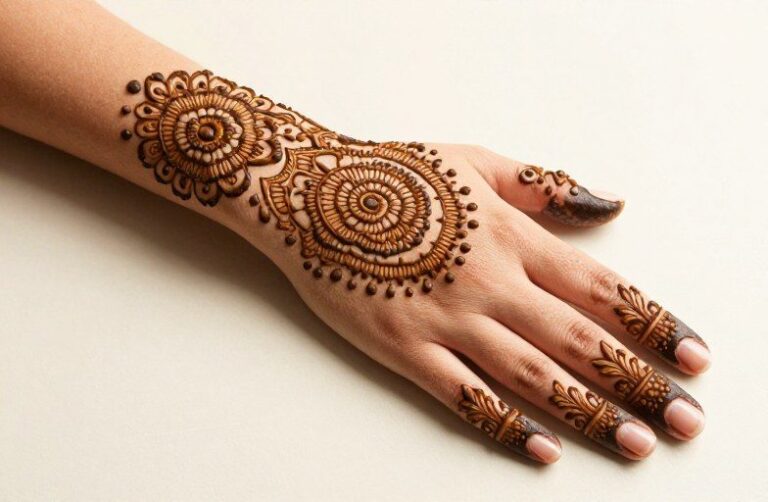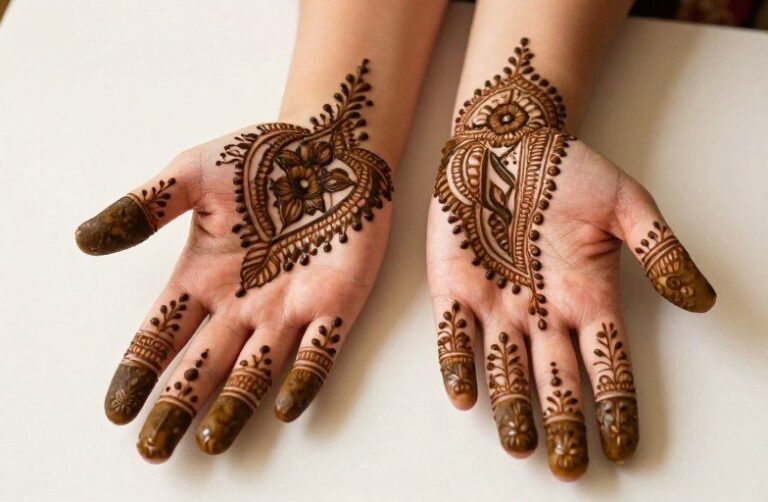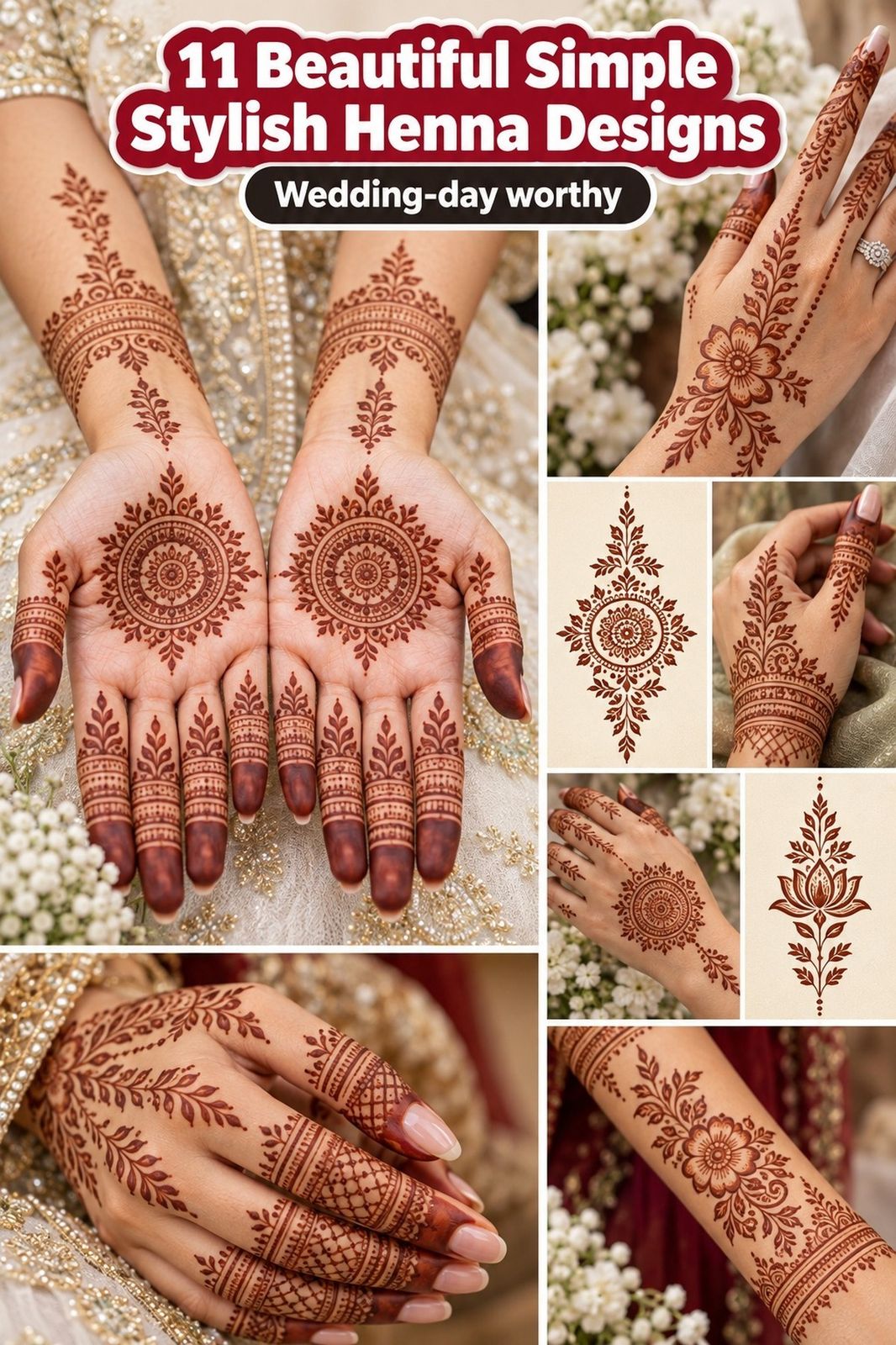
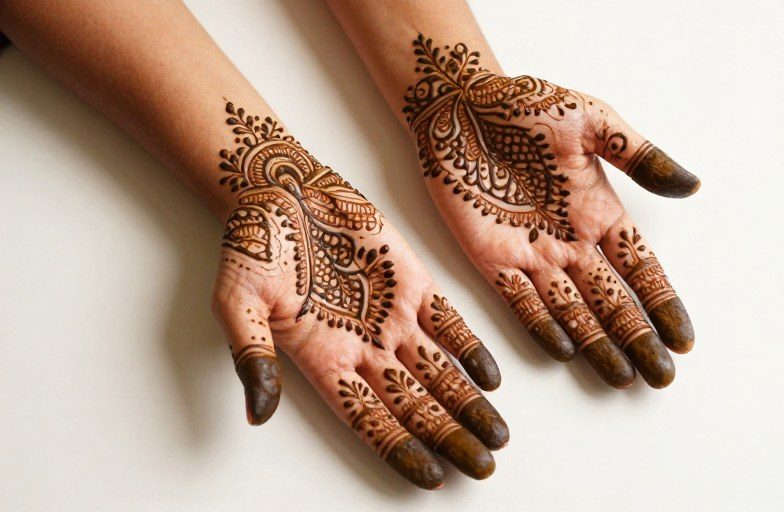
Traditional mehndi designs carry centuries of regional technique, fine lines, negative space, and botanical geometry that reads differently on skin than Western flash. Translating henna patterns into permanent tattoos means understanding why certain shapes flow the way they do, where they sit naturally on the body, and how to adapt them without flattening the tradition into generic “tribal” filler. Here’s what actually works.
Color Choices
Henna paste stains skin in one color: that burnt sienna to deep rust range depending on body chemistry and how long the paste sits. Permanent tattoos can chase that warmth or deliberately depart from it.
Staying Close to the Source
Earthy reds and warm browns exist in tattoo ink, but they fade faster than black. Iron oxide-based pigments shift toward orange or pink as they age, sometimes within two years on high-friction areas like palms or fingers. If you want that henna-toned look, plan for touch-ups. Some artists mix a custom brown-black that stays neutral longer, ask to see healed photos from two-plus years back, not fresh work.
Blackwork and Contrast
Black ink holds. The tradeoff: dense black mehndi patterns read more as “tattoo” and less as “henna stain.” That isn’t bad, it’s a different visual language. Fine black linework with intentional skin breaks can mimic henna’s lace-like quality. Avoid solid black fill; mehndi relies on breathing room. Graywash shading, used sparingly, can suggest the tonal variation of a fresh henna stain fading unevenly.
How to Personalize It
The patterns themselves are traditional, but placement and combination create individual variation.
Regional Motifs
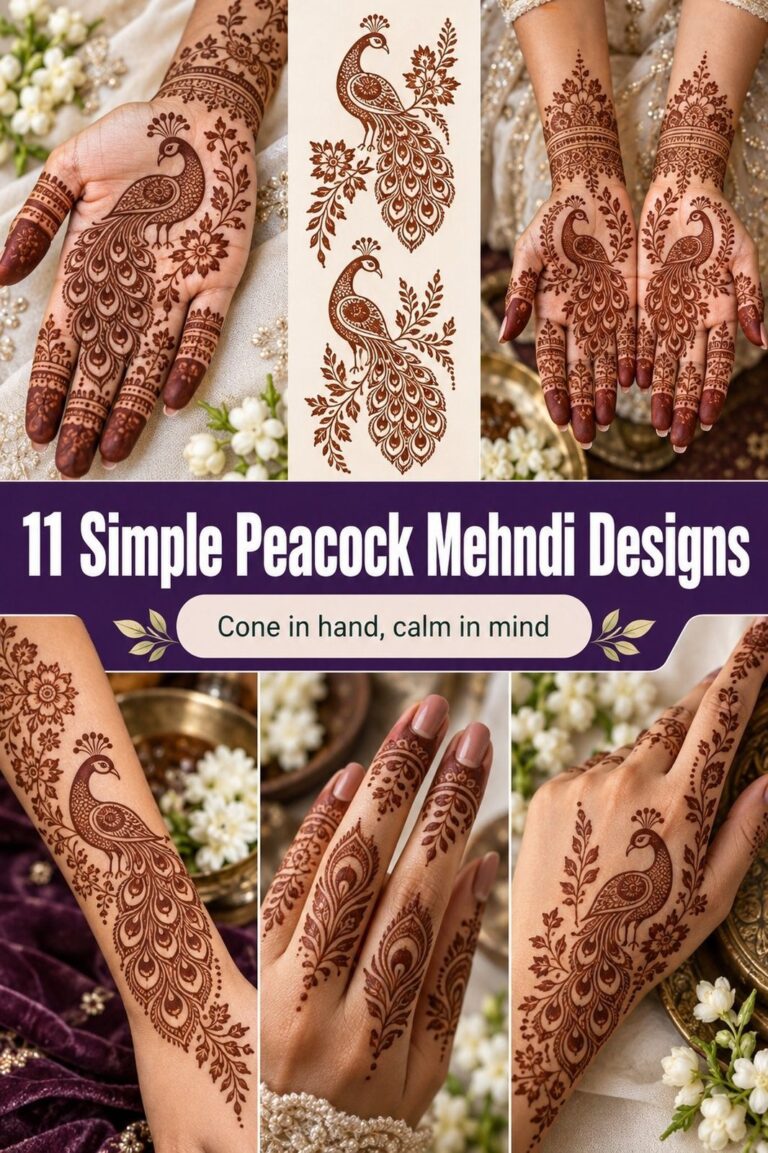
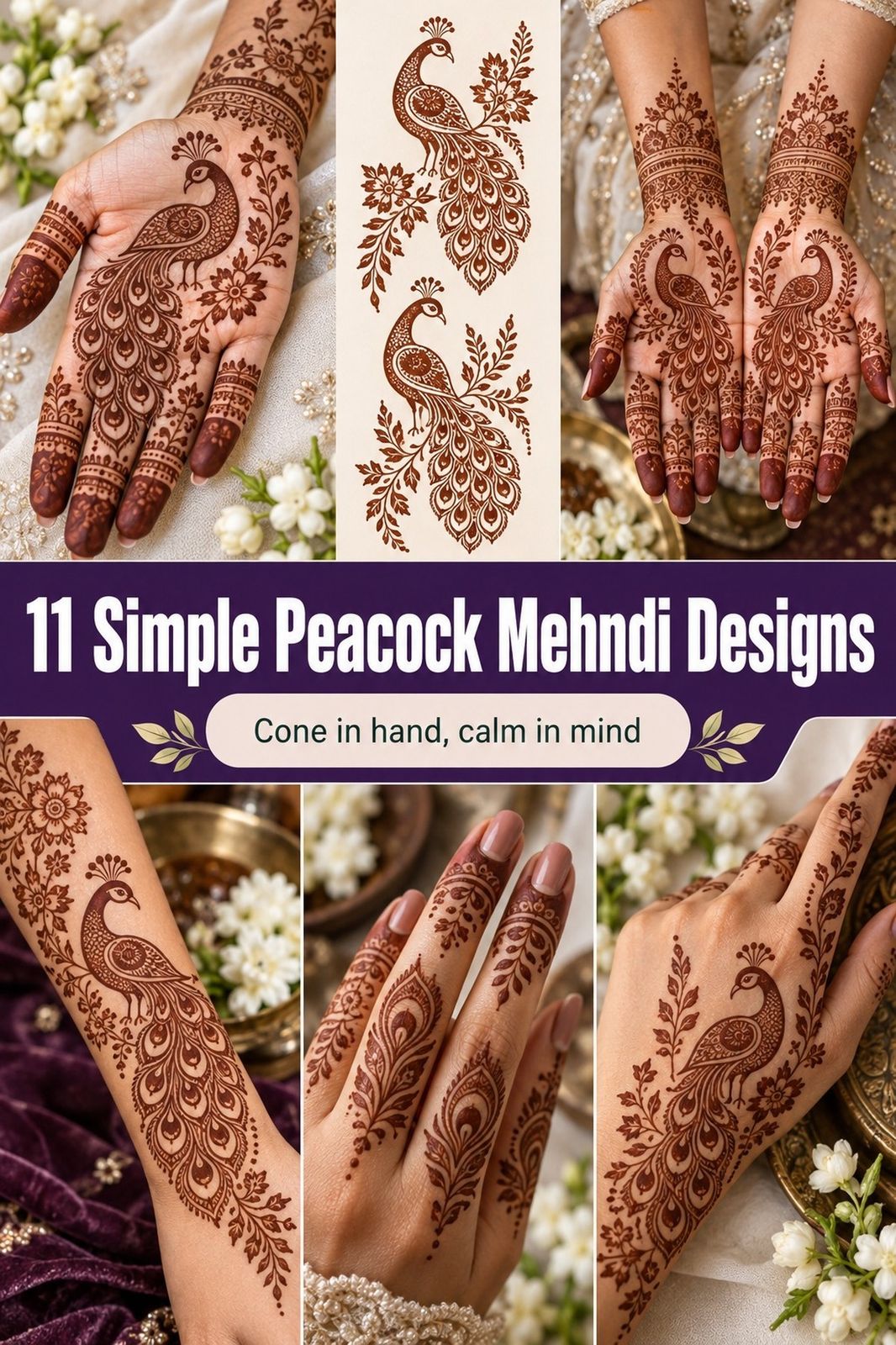
Indian mehndi typically features dense, all-over coverage with peacocks, mango shapes (kairi), and paisleys. Arabic styles run more floral and vine-based with bolder negative space. Pakistani designs often layer geometric frames inside flowing borders. Moroccan henna favors diamond grids and Berber symbols. Know which tradition you’re drawing from. Mixing them blindly produces visual confusion, like wearing a kimono with lederhosen.
Modern Interventions
Some clients integrate birth flowers, constellations, or abstracted text into the negative space between traditional motifs. Others scale patterns way up, taking a detail that would cover one fingertip in henna and blowing it across a shoulder blade. The key: let the traditional structure lead, then insert personal elements where they don’t fight the flow.
Matching & Pairing Ideas
Mehndi tattoos pair well with certain styles and clash with others.
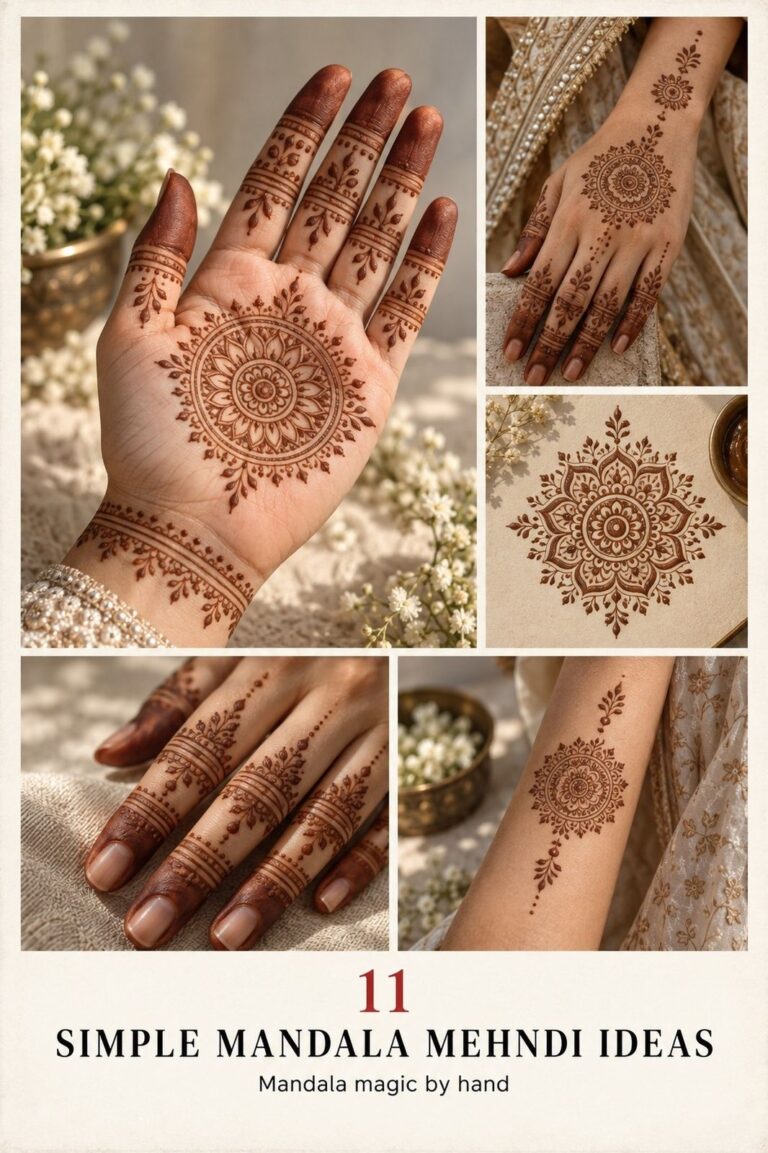
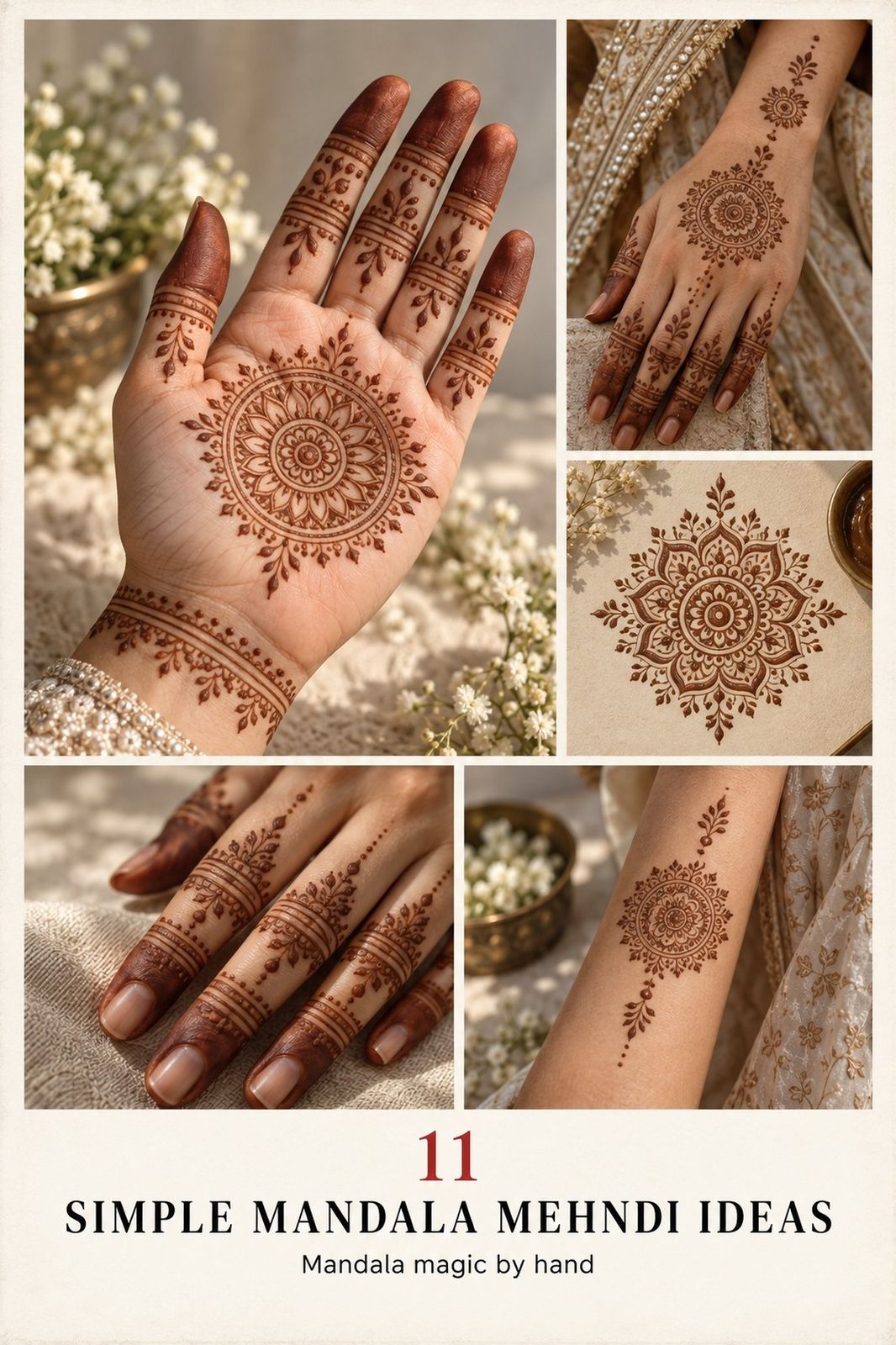
- Dotwork mandalas: Natural fit. The radial symmetry and repetitive mark-making share DNA with henna’s geometric frames.
- Fine-line botanicals: Compatible if the lineweight matches. A single-needle fern next to bold mehndi paisleys looks accidental, not eclectic.
- Script or lettering: High risk. Text interrupts the continuous flow that defines mehndi. If you must, isolate words inside a central medallion rather than threading them through vines.
- Japanese traditional: Generally poor match. The color palette, line quality, and compositional rules are too different. Separate them by body region rather than adjacent placement.
For couples or close friends, split mandala designs work, each person carries half, the pattern completes when hands meet. This mirrors actual henna traditions where bridal designs sometimes incorporate the groom’s initials hidden in the pattern.
Best Placements
Henna has canonical placements. Permanent tattoos can follow or subvert them.
Where Henna Lives
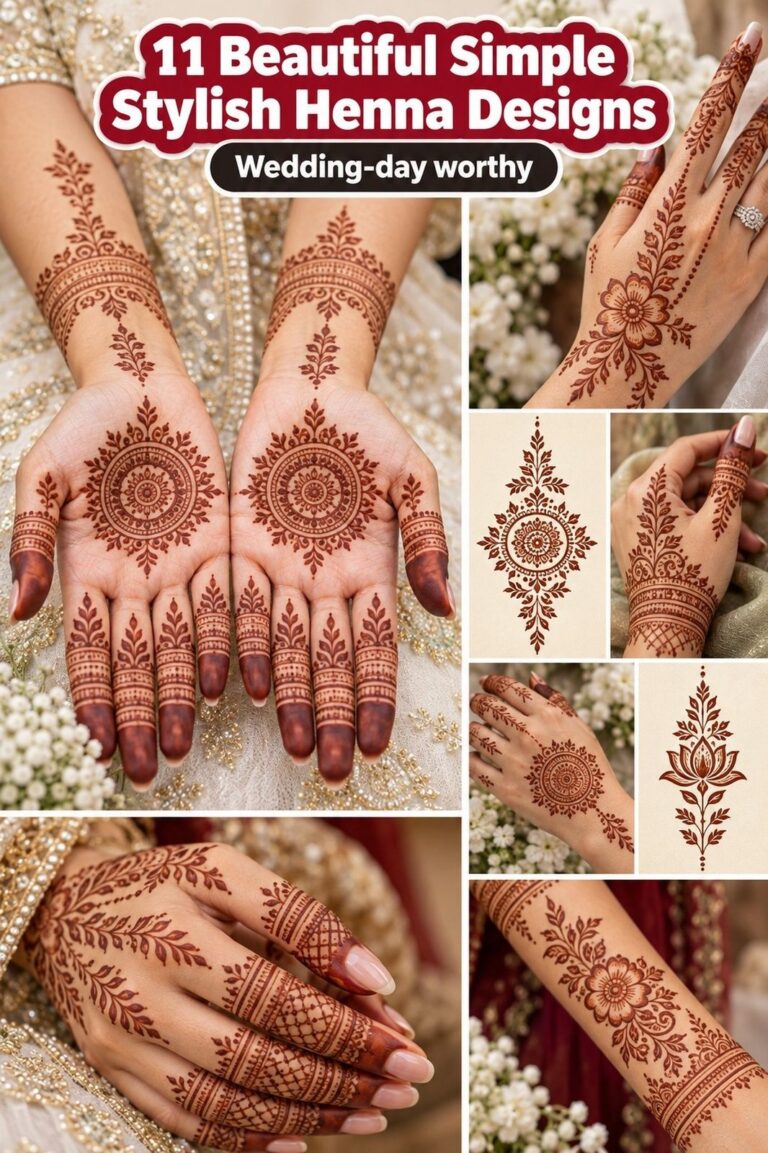
Palms and soles stain darkest because the skin is thickest there, but tattooing these areas is brutal, ink doesn’t hold well, pain is extreme, and healing is complicated. Most artists refuse. The compromise: backs of hands, wrists, forearms, feet, and ankles. These carry the visual association without the technical nightmare. Upper arms, shoulders, and back pieces work too but read as “adapted” rather than “traditional placement.”
Scaling for Body Curves
Mehndi patterns wrap around fingers, pool in the palm’s center, trail from wrist to elbow. On larger areas like a thigh or ribcage, the same density can feel overwhelming. Artists often thin the pattern or break it into panels with skin gaps. The spine makes a strong vertical axis for a central vine with symmetrical branching, essentially a back piece that references the bridal “full hand” coverage without copying it literally.
Tips for Choosing
Research before you commit. Not every artist who can tattoo roses can handle mehndi linework.
- Portfolio check: Look for consistent line weight, smooth curves, and intentional negative space. Mehndi has no “good enough” wobble, every line is visible.
- Cultural consultation: If you’re not from a mehndi tradition, talk to your artist about appropriation versus appreciation. Some patterns carry religious or ceremonial weight. Avoid bridal-specific motifs (heavy palm coverage with hidden names, certain protective symbols) unless that meaning belongs to you.
- Healing reality: Fine lines blur. What looks crisp at three weeks may soften by year two. Plan for potential thickening, especially on inner wrists and anywhere skin flexes constantly.
- Size decisions: Small mehndi tattoos (under 3 inches) often lose their detail. The patterns are inherently intricate. If you want something tiny, choose a single repeated element rather than a compressed full design.
Standout Design Ideas
Specific approaches that avoid the generic “henna-inspired” Pinterest look.
The Single Finger Trail
One delicate vine running from the base of a finger toward the nail, ending in a tiny dot or leaf. References henna’s finger detailing without the palm commitment. Heals poorly on actual fingers, consider the hand’s back, near the knuckle line, where ink holds better and the visual association remains clear.
Panel Pieces
Rectangular or diamond-shaped dense patterns placed on the outer forearm, upper arm, or calf. Framed by skin, they read as textile or architectural rather than “random pattern.” Some artists add a thin double-line border, referencing the way henna artists use toothpick-applied paste to create clean edges.
Scar Coverage Integration
Mehndi’s organic flow adapts well to skin texture variation. The eye expects irregularity in vine patterns, so a line that subtly widens or shifts to accommodate scar tissue looks intentional. This requires an artist comfortable with freehand adaptation, stencils fail here.
Negative Space Dominance
Instead of dense pattern, sparse dots and fine lines that suggest the space between traditional elements. Reads as contemporary, references the tradition without claiming it. Works especially well as a collarbone piece or along the spine’s lower edge.
Key Takeaways
Traditional mehndi designs offer a specific visual vocabulary: flowing botanical geometry, intentional negative space, and regional variation that deserves recognition. Permanent tattoos can honor this without replicating it exactly. Choose your color knowing that warm tones fade and blackwork shifts the feel. Respect the tradition’s origins enough to learn which patterns belong to which region and which carry ceremonial weight. Place the work where it references henna’s body mapping without attempting the untattooable palms and soles. Find an artist with demonstrated fine-line control and comfort with curves that don’t forgive wobble. The best mehndi tattoos don’t look like someone discovered henna on vacation, they look like someone studied the tradition and made a deliberate, informed choice.
Frequently Asked Questions
Do mehndi tattoos have to be brown to look authentic?
No. Brown and red inks exist but fade faster than black. Many authentic-looking mehndi tattoos use black linework with strategic skin breaks to mimic henna’s stained-skin appearance. The authenticity comes from the pattern structure, not the color.
Can anyone get a mehndi-style tattoo, or is it cultural appropriation?
Appreciation versus appropriation depends on context. Avoid specific bridal or religious protective symbols unless they belong to your tradition. Generic botanical vines and geometric patterns are widely shared across cultures. Talk with your artist and do basic research on what you’re requesting.
How well do fine mehndi lines hold up over time?
They soften. Lines that start at 1mm or thinner may blur to 2-3mm within five years, especially on high-movement areas like wrists and ankles. Plan for this by starting slightly bolder than you think you want, and budget for touch-ups every few years.
What’s the most painful placement for a mehndi-style tattoo?
Anywhere near bone with thin skin, ankle bones, wrist bones, collarbones. The patterns require sustained, precise linework in these sensitive areas, which means longer sessions without the relief of shading breaks. Feet and ribs are notoriously rough.