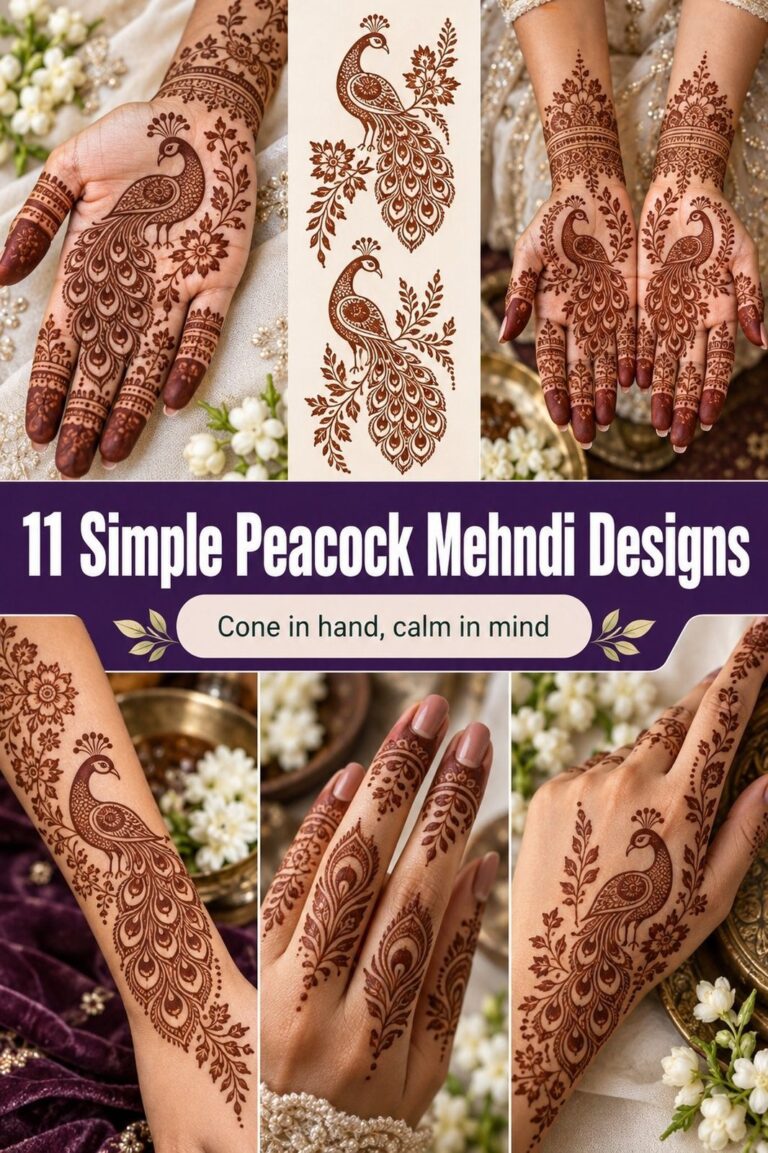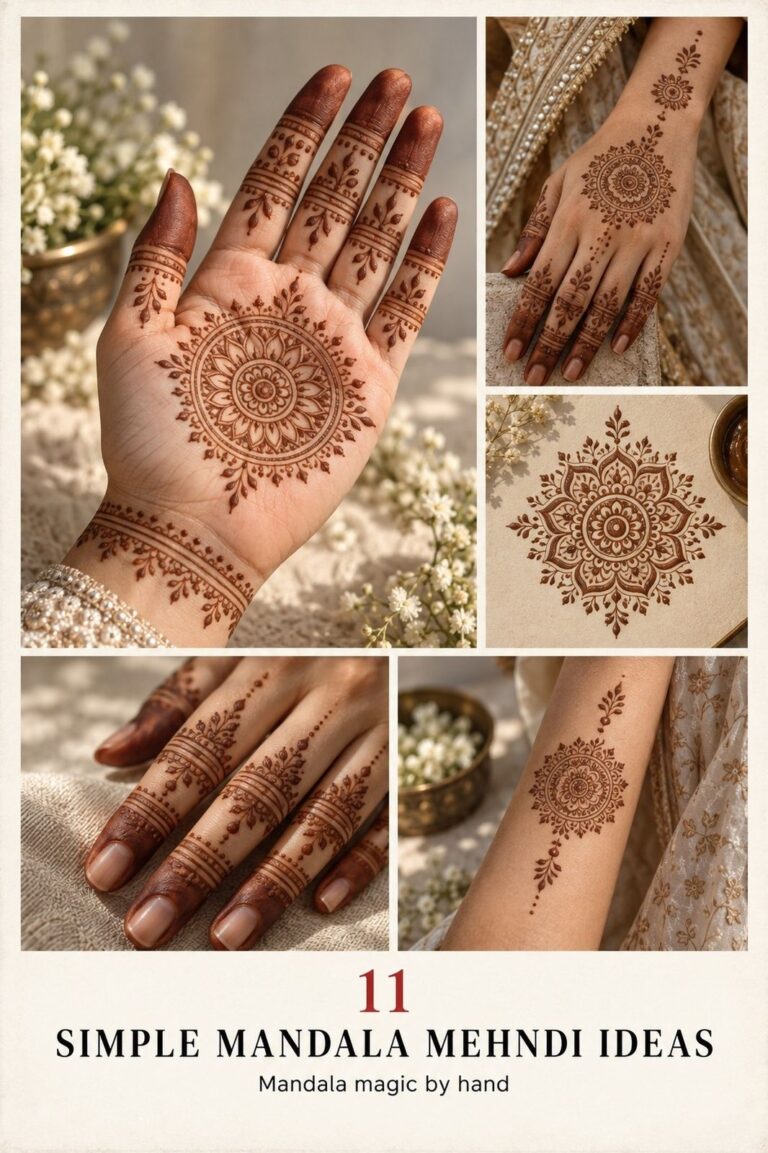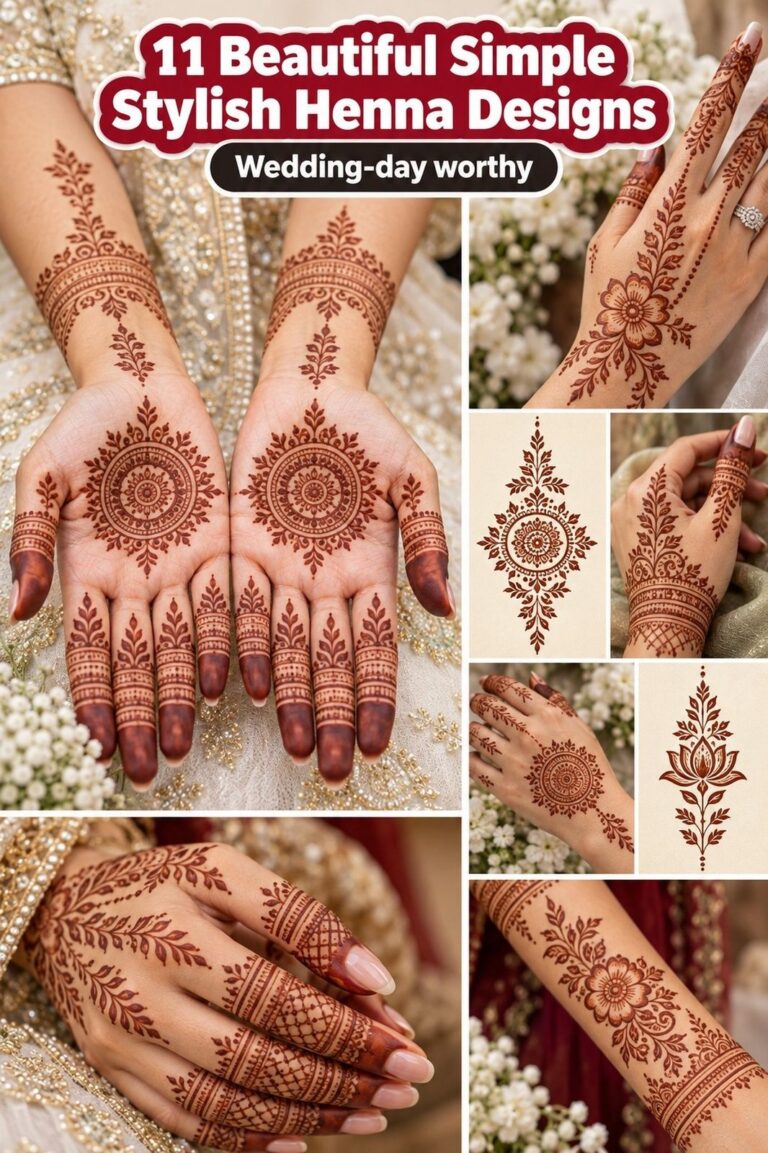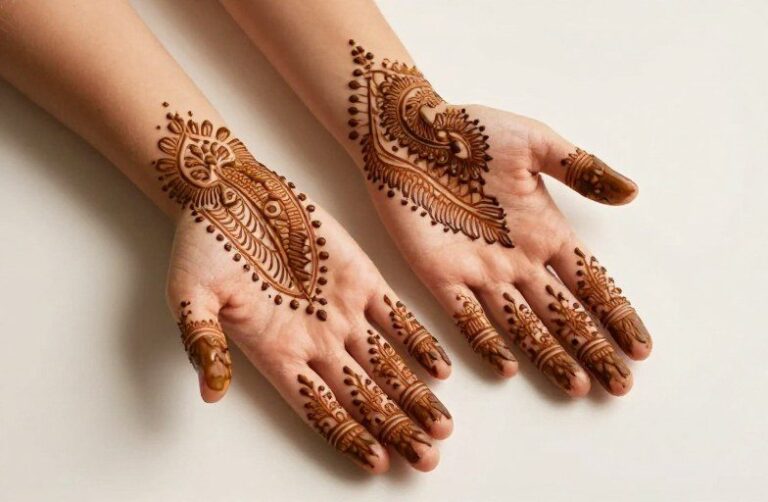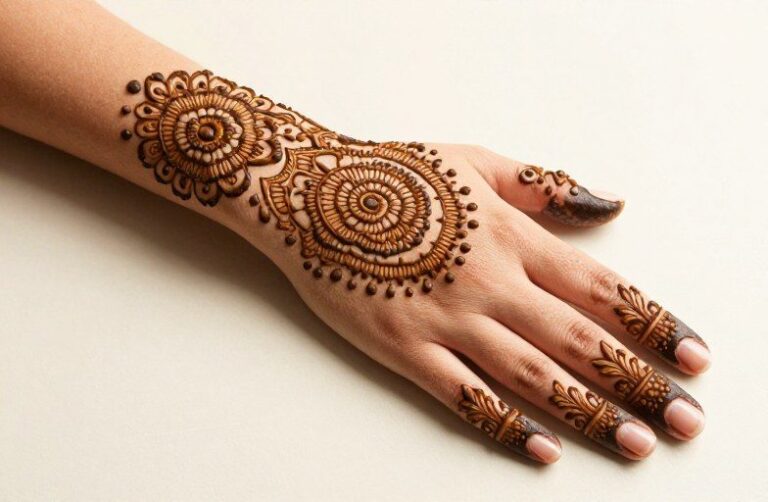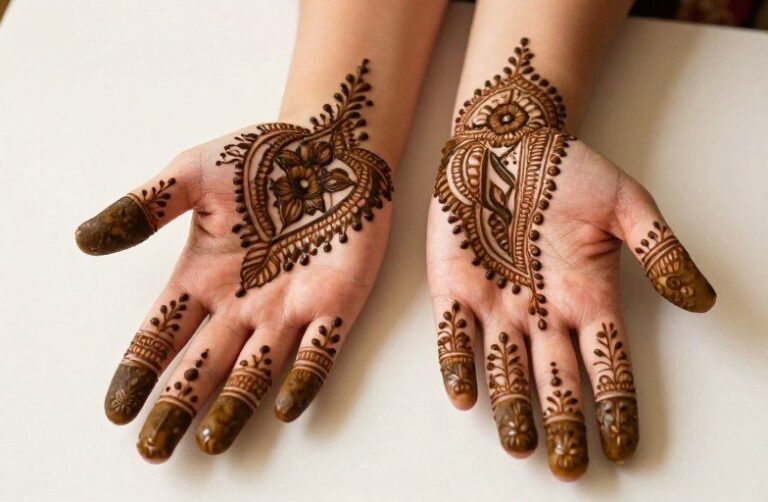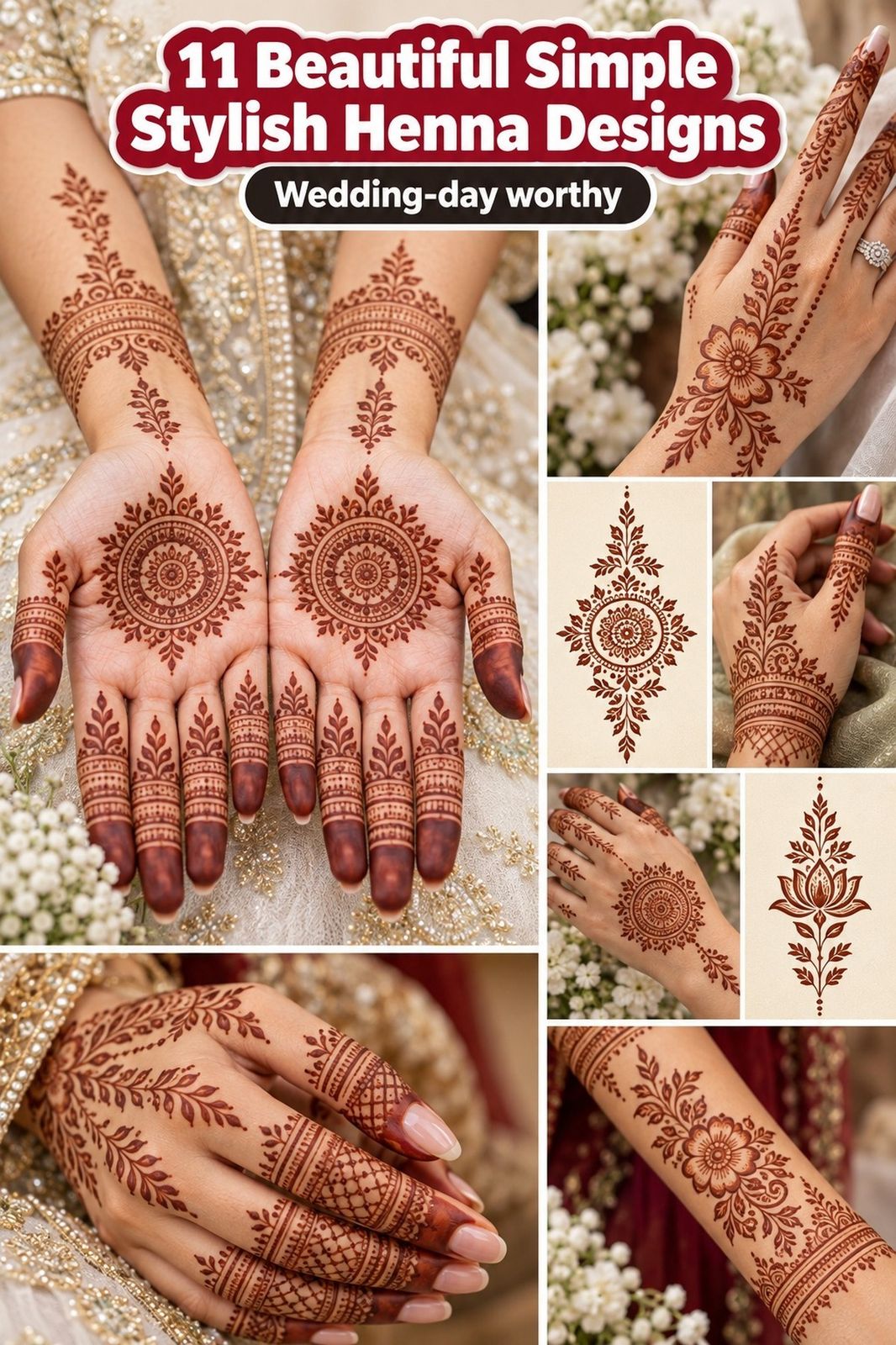
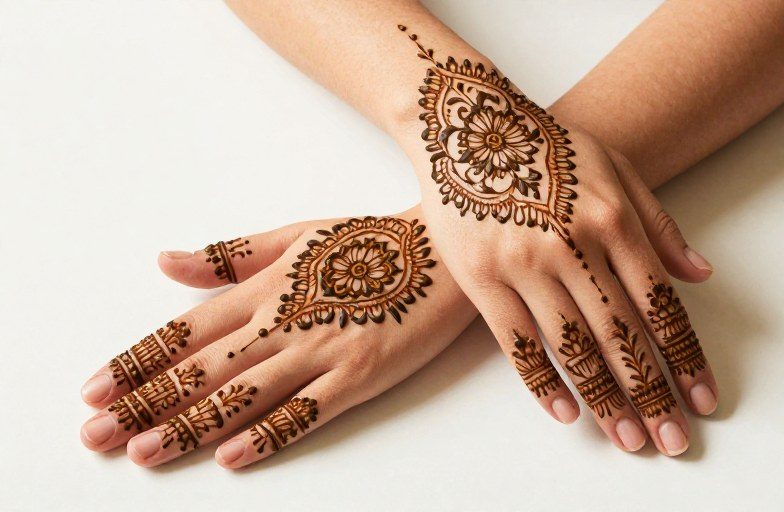
Henna tattoos mean blessing, joy, and transitional marking. The temporary stain functions as a living symbol, intentionally fleeting, which itself carries weight. Unlike permanent ink, henna’s brief lifespan turns the body into a canvas for celebration, protection, or spiritual passage, with the fading process often viewed as part of the ritual rather than its end.
How It Ages on Skin
The aging of henna is the entire point. A fresh stain sits orange on the surface, deepens to a rich reddish-brown over 48 hours, then slowly exfoliates over one to three weeks. This visible decay creates a meaning structure that permanent tattoos cannot replicate.
The Color Shift as Symbol
That initial orange phase, often hidden under lemon-sugar wraps, represents potential. The peak dark stain marks fulfillment. The gradual fade back to bare skin mirrors cycles: marriage celebrations, religious observances, seasonal rites. Some traditions read the final pattern’s clarity as an omen; a dark, long-lasting stain supposedly signals strong fortune or a blessed union.
Placement and Wear Patterns
Palms and soles stain darkest due to thicker keratin, and these high-contact areas fade fastest from daily friction. This creates natural variation: a bridal mehndi design on the hands becomes a time-lapse of the celebration itself, with the wedding day’s peak darkness softening through the honeymoon. By contrast, upper arm or back placements, less common in traditional use but popular in modern adaptations, hold color longer but carry less cultural resonance.
- Palms: darkest stain, fastest fade, highest traditional significance
- Feet: similarly dark, associated with grounding and spiritual protection
- Forearms: moderate stain, modern preference for visibility
- Fingers: quick fade, often used for simple blessing marks
Personal & Modern Meanings
Contemporary wearers layer personal significance onto henna’s traditional framework. The temporary nature permits experimentation without lifelong commitment, making it a low-stakes entry point for tattoo-curious individuals.
Non-Committal Expression
Some choose henna to test placements, motifs, or the experience of being marked before committing to permanent ink. Others prefer the impermanence itself, body decoration without accumulation, identity as fluid rather than fixed. Festival culture has adopted henna as aesthetic rather than ritual, with geometric patterns, mandalas, and even pop-culture imagery replacing traditional floral and paisley vocabulary.
Reclamation and Identity
Diaspora communities sometimes use henna to reconnect with heritage, particularly for weddings or coming-of-age moments. The meaning here operates through deliberate cultural continuity. Conversely, some second-generation wearers report tension: using a sacred practice as casual decoration can feel like appropriation or dilution, depending on context and knowledge of origin.
Religious & Spiritual Angles
Henna’s spiritual associations are deep and geographically widespread, though specific meanings vary sharply by tradition. The common thread is marking sacred time or invoking protection through bodily transformation.
Islamic and Hindu Traditions
In many Muslim communities, henna is commonly associated with Eid celebrations and pre-wedding night of henna gatherings. The Prophet Muhammad’s recorded use of henna on his beard and recommendation for women to use it establishes religious precedent. Hindu bridal traditions often trace mehndi to stories of Krishna darkening Radha’s skin, with the red color symbolizing joy and the blood of consummation. Some Jewish communities, particularly Mizrahi and Sephardic, use henna in pre-wedding henna ceremonies with distinct ritual structures.
Protective Function
The baraka concept, blessing power, often attaches to henna application. Historical use across North Africa and the Middle East includes marking animals, thresholds, and the deceased, suggesting the stain functions as a boundary-marker between states: living and dead, sacred and mundane, single and married. The specific patterns matter less than the act of marking itself in many protective contexts.
Who Chooses This Tattoo
Demographics for henna are broader than for permanent tattooing, cutting across age, gender, and professional constraints. The temporary nature removes barriers that stop people from entering shops.
Cultural Practitioners vs. Casual Users
Traditional users, brides, festival observers, religious participants, approach henna as obligatory or expected ritual. Their designs follow established regional vocabularies: Indian raja-rani (king and queen) motifs, Moroccan geometric grids, Sudanese bold hand patterns. Casual users at beach towns, music festivals, or mall kiosks select from flip-book options, often ignorant of origin. The meaning gap between these groups is substantial: one group participates in inherited meaning, the other borrows aesthetic.
Professional and Social Constraints
Workers in conservative fields, minors, and individuals with medical contraindications for permanent tattooing find henna accessible. The stain also serves as social lubricant: bridal parties, pregnancy blessings, and group festival applications create communal experience around the marking process itself.
Color vs Black and Grey
Henna’s natural color range is narrow, orange to deep brown depending on body chemistry and paste quality. This limitation defines its symbolic vocabulary in ways that permanent tattoo color choices do not.
The Red-Brown Spectrum
Natural henna’s red-brown connects to blood, earth, and warmth across multiple cultures. The color reads as organic, living, temporary in a way that black ink does not. Some traditions specifically value the “black henna” peak that occurs before oxidation, though this is distinct from the dangerous paraphenylenediamine (PPD) “black henna” that causes chemical burns. The authentic dark phase is chemically different and safe; the PPD additive is a modern adulteration.
Modern Additives and Their Problems
Colored henna, purported blues, greens, purples, contains synthetic dyes, not true henna. These offer aesthetic variety but strip the material of traditional meaning. Worse, “black henna” with PPD can scar permanently, ironically creating the lasting mark that natural henna deliberately avoids. The symbolism of safe, temporary blessing inverts to permanent damage.
Similar & Related Symbols
Several practices share henna’s temporary-marking function or its ceremonial role, though each carries distinct cultural weight.
Jagua, derived from South American Genipa americana, produces a blue-black stain closer to permanent tattoo appearance. It’s marketed as “henna alternative” but originates in entirely different indigenous traditions. Woad and other plant dyes in European history served warrior marking functions, though these practices are far less continuous than henna traditions. Modern cosmetic tattooing (microblading, lip blush) inverts henna’s logic: permanent or semi-permanent pigment applied with needle rather than surface stain.
Permanent tattooing of henna-style patterns creates interesting tension. The designs, originally meant to fade, to mark temporary states, become fixed. Some artists specialize in this crossover, translating mehndi vocabulary into linework that holds. The meaning shifts from ritual participation to aesthetic appreciation, from communal to individual.
The Bottom Line
Henna works as meaning because it works as material: the stain’s brief life mirrors the occasions it marks. Its symbolism depends heavily on context, who applies it, who wears it, what tradition frames the act. The same floral vine pattern means heritage reclamation on one hand, vacation decoration on another. The temporary nature is not absence of commitment but a different kind of commitment: to the present moment, to the ritual’s completion, to letting beauty pass. Understanding how henna functions on skin, oxidation, keratin binding, exfoliative fade, clarifies why its meanings attach to transition rather than permanence. Whether approached as sacred practice, cultural connection, or simply beautiful temporary marking, henna’s significance remains rooted in its material reality: it appears, it peaks, it disappears, and the body returns to itself changed by the memory of pattern.
Frequently Asked Questions
How long does a henna tattoo typically last?
Natural henna lasts one to three weeks depending on placement, skin type, and aftercare. Palms and soles fade fastest due to friction and washing, while upper arms or backs may hold stain longer. Avoiding exfoliation and chlorine extends wear slightly.
Is henna safe for everyone?
Natural henna from the Lawsonia inermis plant is generally safe for external use, though rare allergies exist. Avoid so-called “black henna” containing PPD, a hair dye chemical that can cause severe burns and permanent scarring. Patch test if you have sensitive skin.
Can I get a permanent tattoo that looks like henna?
Yes, many tattoo artists specialize in translating mehndi patterns into permanent linework. The aesthetic translates well, though the meaning shifts from temporary ritual marking to fixed personal choice. Seek artists with specific experience in fine-line ornamental work.
What’s the difference between henna and mehndi?
Henna refers to the plant and paste; mehndi refers to the art form and application practice, particularly in South Asian contexts. The terms are often used interchangeably in Western settings, but mehndi carries stronger cultural and artistic specificity.