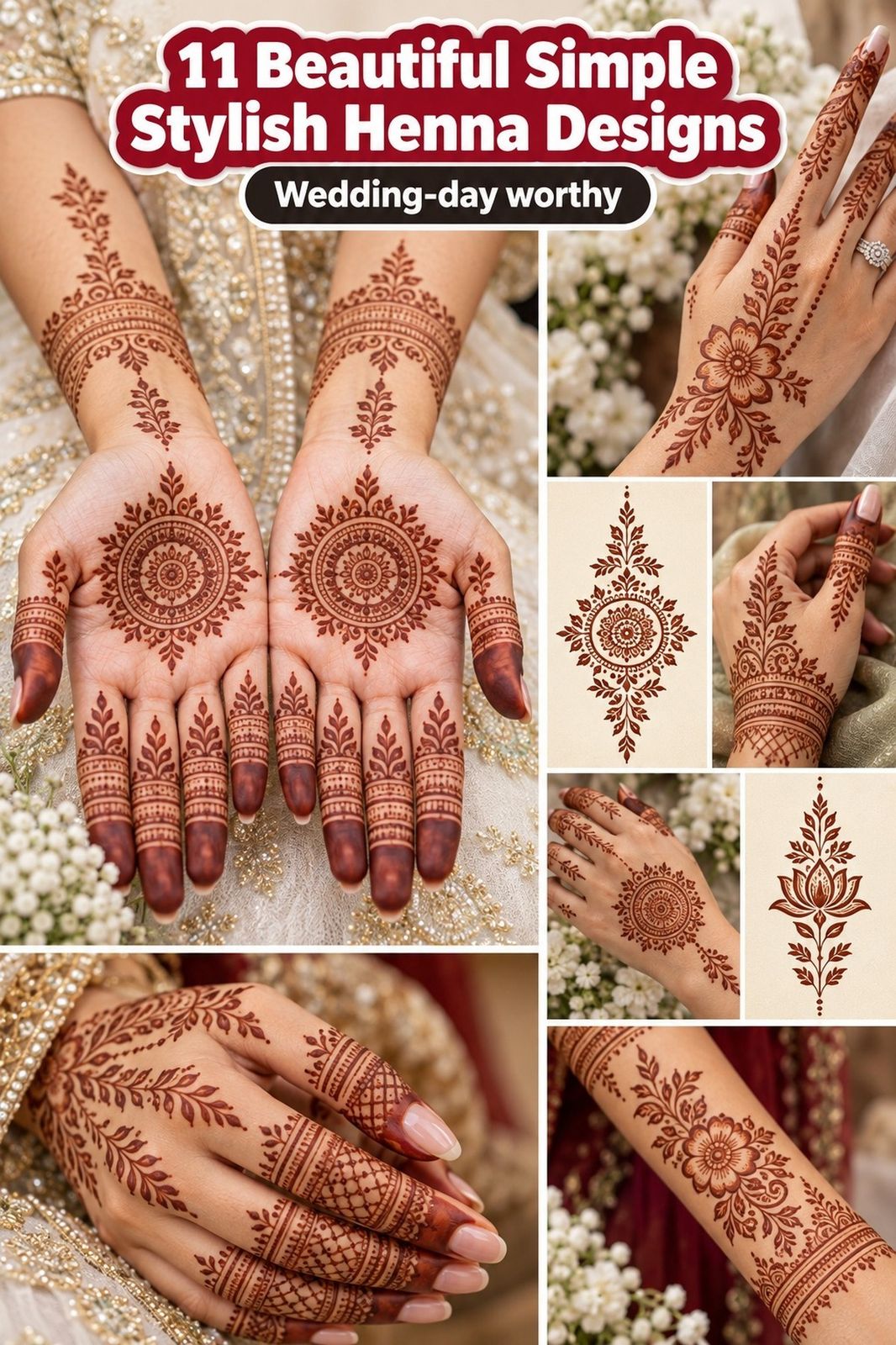
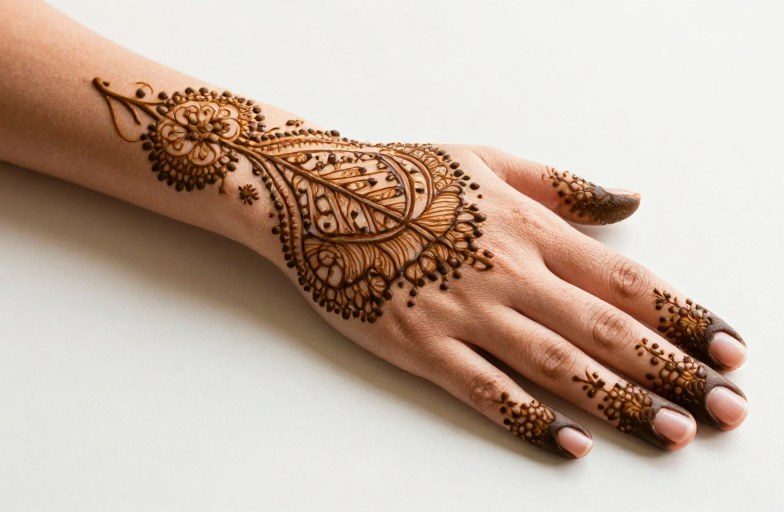
A henna hand tattoo, whether done with actual henna paste or permanent ink, most commonly represents blessing, celebration, and protection. The hand placement itself matters, palms for receiving good fortune, backs of hands for displaying status or beauty, fingertips for intensifying the design’s spiritual charge. In permanent tattoo form, these designs translate a temporary ritual into lasting commitment, carrying forward the same symbolic weight of transition, luck, and feminine creative power.
Common Variations & Styles
Not every henna-style tattoo looks the same, and the variation you choose shifts what you’re signaling.
Traditional Mehndi Patterns
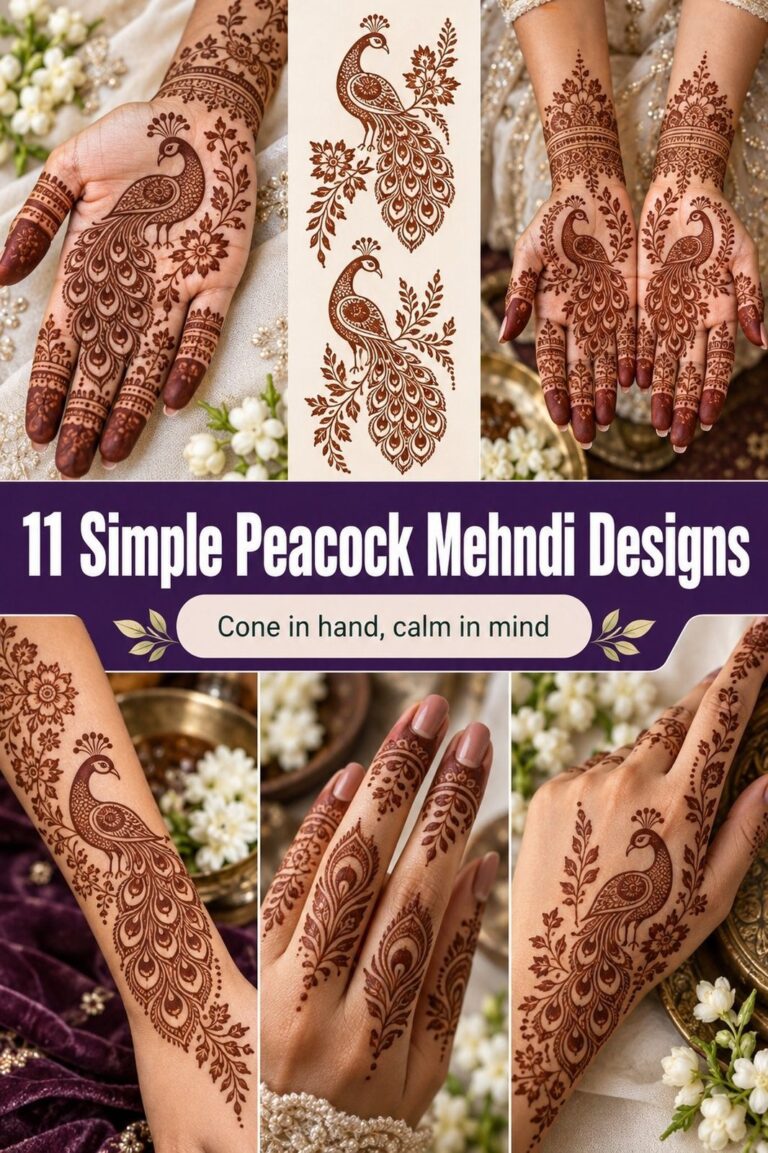
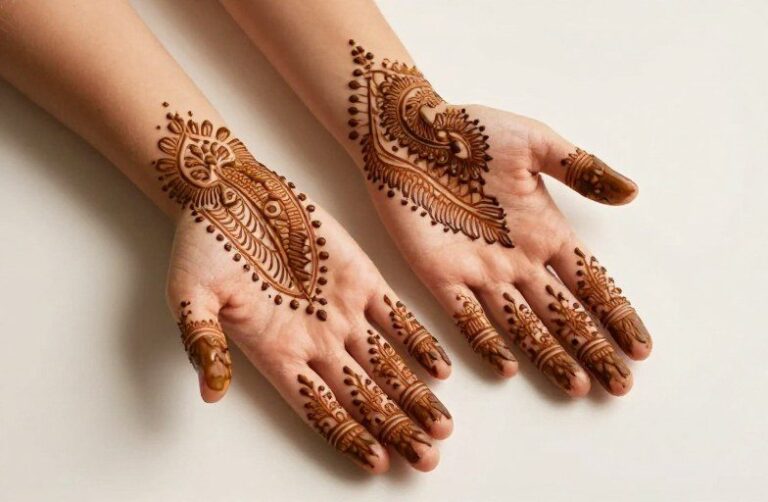
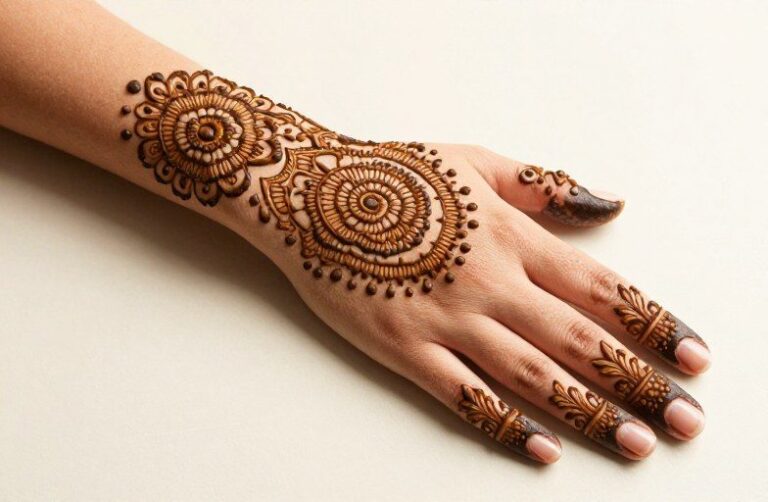
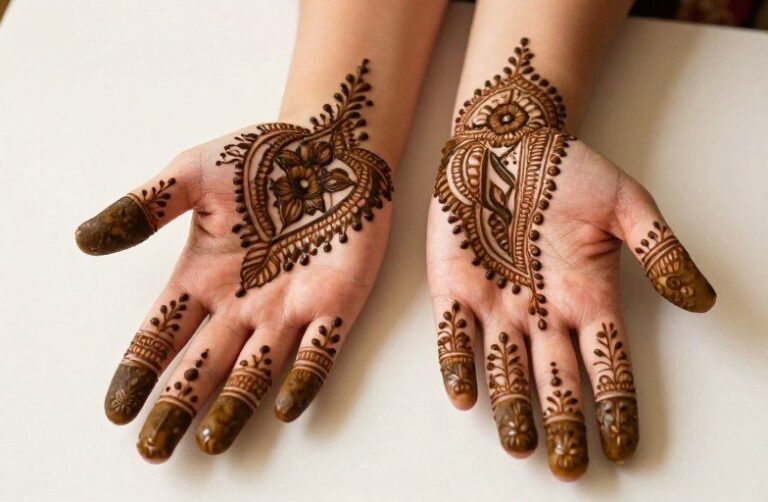
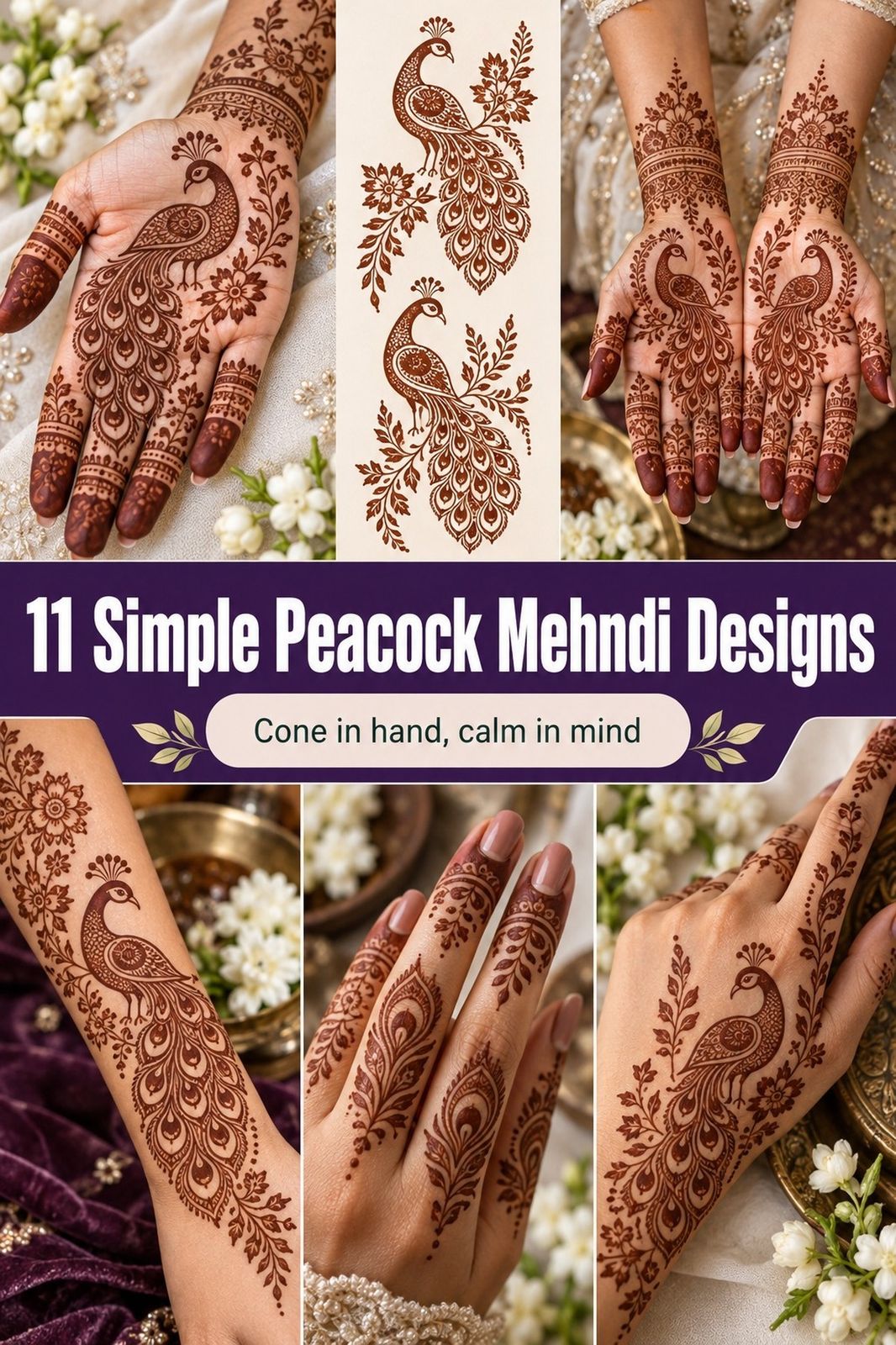
Classic Indian mehndi fills the entire palm with dense paisleys, florals, and peacock motifs, leaving negative space to create contrast. The fingertips typically get solid caps of ink or henna. This full-coverage approach historically marked brides and major festivals like Eid or Diwali. In permanent ink, the same density requires careful planning, solid black fills on palms blur faster than linework, so many artists adapt by using stippling or lighter graywash to suggest the darkness without fighting the biology of palm skin.
Minimalist and Modern Adaptations
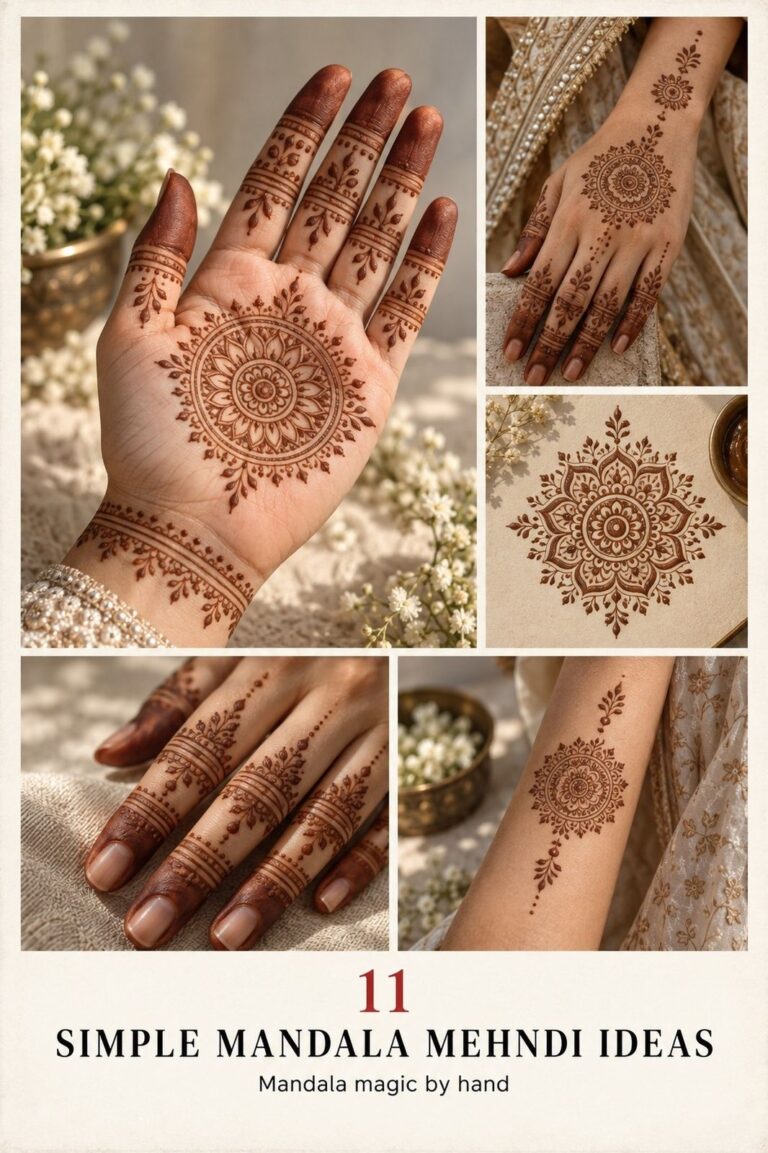
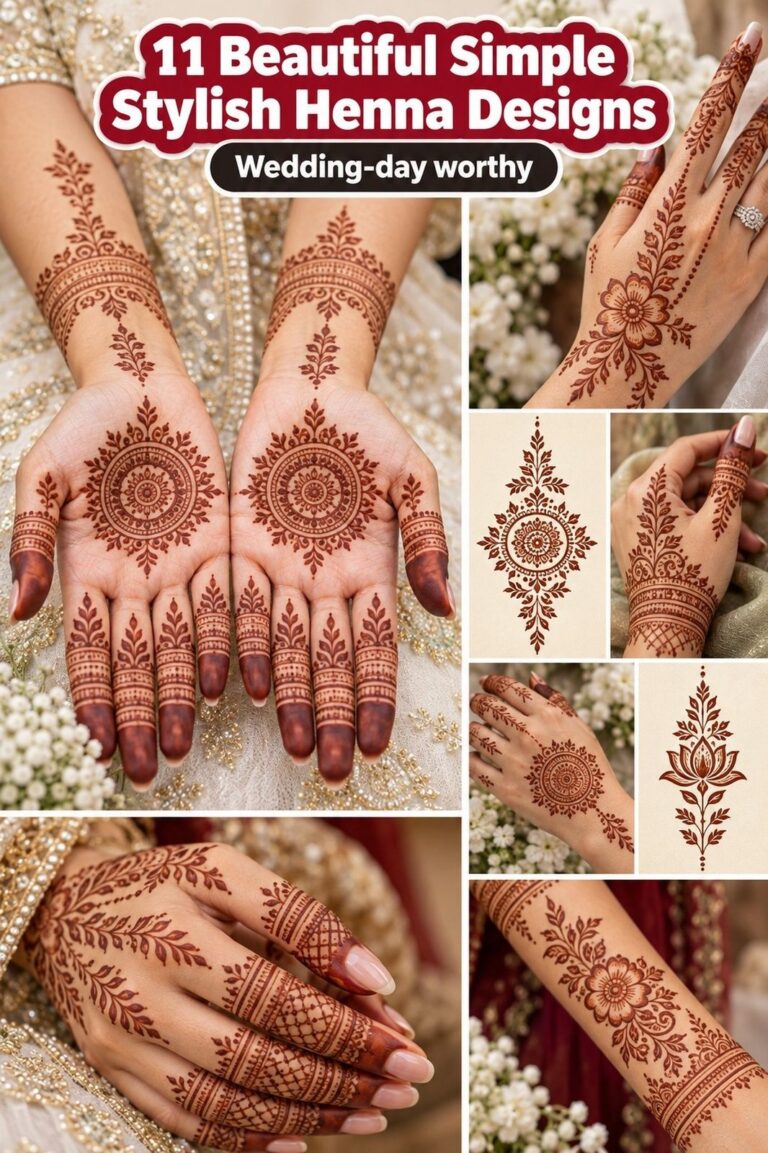
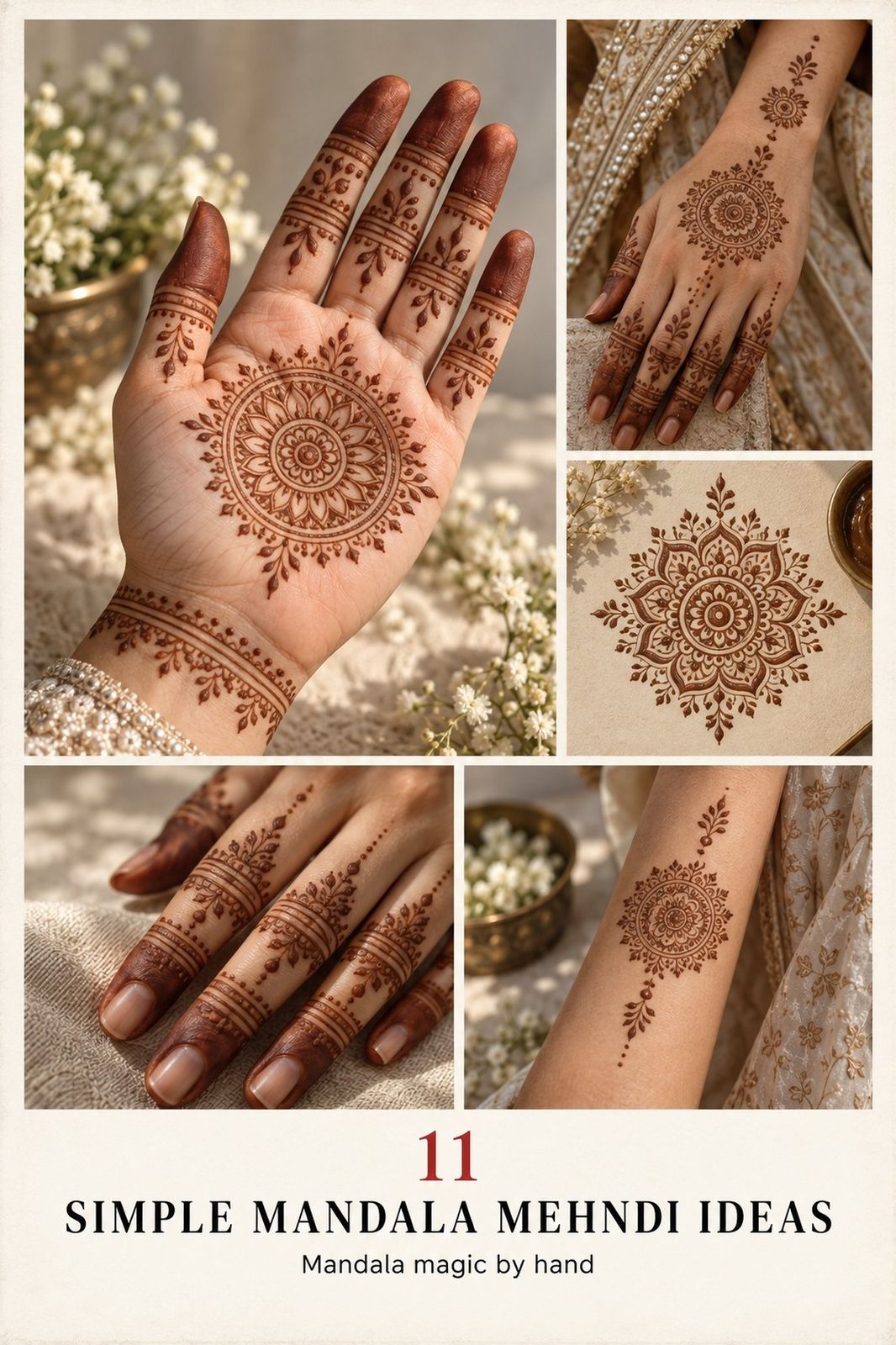
Single-line vines, small mandalas on the wrist extending toward the thumb, or finger bands stripped of filler. These read more as aesthetic choice than cultural signal, though they still borrow the henna visual language. Fine line versions heal cleaner on the back of the hand but need touch-ups sooner than bold traditional weight. The trade-off: delicate looks fresh, bold stays readable.
- Full palm coverage: highest symbolic weight, hardest to maintain in permanent ink
- Back-of-hand mandala: balances visibility with slower aging
- Finger bands only: trendy, high fade risk, needs commitment to upkeep
- Wrist-to-hand flow: frames the hand without dominating it
Similar & Related Symbols
Henna designs don’t exist in isolation. Understanding neighboring symbols helps you choose or combine elements with intention.
The evil eye (nazar) frequently appears inside henna compositions, especially on the palm center or wrist. It shares the protective function but adds active defense against envy rather than general blessing. Paisleys (mango/boteh shapes) represent fertility and life, common in bridal mehndi, sometimes awkward if worn without awareness of that association. Lotus flowers carry Buddhist and Hindu spiritual meanings of purity rising from difficulty, and they integrate naturally into vine-based henna flows.
Geometric Islamic patterns, girih, arabesques, eight-point stars, overlap with henna in Moroccan and Middle Eastern traditions but carry stricter aniconic religious rules. Mixing figurative elements (faces, animals) with these patterns can create unintentional dissonance for viewers who recognize the traditions.
Mythology & Folklore
Henna’s origins are often linked to ancient Egypt, where mummies show henna-dyed hair and nails, though the hand-painting practice as we know it solidified later in the Islamic Golden Age and spread through trade routes. Some trace it to the Hindu tradition of shagun, auspicious markings for new beginnings. The common thread across cultures: henna marks threshold moments.
Bridal and Fertility Lore
In South Asian tradition, the darkness of the henna stain supposedly predicts the depth of love between bride and mother-in-law, or the prosperity of the marriage. The night of the henna (mehndi ki raat) remains a distinct pre-wedding ritual. Permanent tattoos referencing this carry that weight of commitment and transformation, appropriate for some, loaded for others who haven’t walked the ritual itself.
Protective Functions
Across North Africa, henna applied to the hands and feet was believed to bar evil spirits, particularly during vulnerable periods like childbirth or illness. The hamza hand, a related but distinct symbol, amplifies this protective aspect. Permanent tattoo versions sometimes combine both, the henna visual style with the hamsa’s explicit defensive purpose.
Design Tips & Pairings
Placement on the hand demands practical compromise. The palm side has thick, rapidly-regenerating skin that sheds ink within months to a few years. The dorsal (back) side lasts longer but moves constantly with tendons and knuckles.
Working With Hand Anatomy
Designs that flow with the hand’s structure age better than those fighting it. Vines following the metacarpal lines, mandalas centered on the knuckle valley, or patterns radiating from the wrist all move naturally. Avoid tiny details between fingers, this area blurs fastest and hurts most. If you want finger coverage, bold bands outperform intricate filigree.
Color and Technique Choices
Actual henna is reddish-brown; “black henna” often contains dangerous additives like PPD. In permanent tattooing, artists simulate henna’s warmth with reddish-brown or warm black inks. Some use whip-shading to mimic the gradient effect of a real henna stain fading. Others go full black for graphic impact, sacrificing the organic color reference for longevity.
- Pair with: Arabic calligraphy for spiritual depth, geometric frames for structure
- Avoid: random placement that ignores hand movement, too-fine lines on palms
- Consider: starting with henna or jagua temporary tattoos to test placement before committing
Religious & Spiritual Angles
The spiritual significance varies dramatically by tradition and by individual practice.
In Islam, henna is generally considered permissible (many scholars say encouraged) for women, particularly for celebrations. The Prophet Muhammad is commonly associated with using henna, though specific hadith vary in authentication. Permanent tattoos, however, occupy contested territory, some traditions consider any tattoo haram, others distinguish between beautification and harm. A henna-style permanent tattoo walks this line deliberately or accidentally depending on the wearer’s knowledge.
In Hinduism, henna connects to shakti, feminine energy, and to Lakshmi, goddess of prosperity. The red color aligns with sindoor and bridal auspiciousness. Permanent ink versions lose the temporary, renewable aspect that made the ritual cyclical, but retain the devotional symbolism.
For secular wearers, the aesthetic alone carries no automatic spiritual charge, though the visual vocabulary still communicates to those who recognize its roots. That recognition, accurate or not, becomes part of how the tattoo functions socially.
How It Ages on Skin
Hand tattoos age hard. No way around it. The combination of sun exposure, constant movement, and frequent washing makes this one of the highest-maintenance placements.
Specific Aging Patterns
On the back of the hand, ink lines spread as skin loses elasticity, expect noticeable softening within 5-7 years for fine work, 10-15 for bold. The knuckles themselves can distort designs as skin stretches and compresses. Palm tattoos often fade to ghost images within 2-5 years, with some disappearing almost entirely. The sides of the fingers hold better than the palm but worse than the dorsal hand.
Maintenance Reality
Plan for touch-ups. A detailed henna-style hand piece might need refreshing every 3-5 years depending on sun exposure, skin type, and how hard you are on your hands. Moisturizing and sunscreen help, but won’t overcome the biology of the location. Some artists refuse palm work entirely because of the near-certainty of poor retention.
What to Remember
A henna hand tattoo carries genuine cultural and spiritual weight that doesn’t disappear just because the medium shifts from paste to needle. The meaning you’re signaling, protection, celebration, transition, devotion, depends on which tradition you draw from and how you adapt it. Placement determines longevity more than design complexity; the back of the hand endures, the palm surrenders. If you’re drawn to the aesthetic without the cultural connection, that’s a valid choice, but it should be an informed one. The visual language speaks whether you intended the message. Choose symbols you understand, placement you can maintain, and an artist who knows how hand skin behaves differently than a shoulder or thigh. The best henna-style permanent tattoos respect both the tradition they reference and the practical reality of living inside your own skin.
Frequently Asked Questions
Does a henna hand tattoo have to be black to look authentic?
No. Real henna stains reddish-brown, and some artists use warm brown or reddish inks to match. Black ink lasts longer and reads more graphically, but authenticity isn’t tied to color, it’s about pattern structure and placement tradition.
Can I get a henna-style tattoo if I’m not from a culture that uses henna?
This is a personal decision requiring honest research. Many people from henna-wearing cultures appreciate respectful appreciation; others see permanent replication by outsiders as appropriation. Talking to artists from the tradition helps, as does avoiding specific sacred motifs without understanding.
How much does hand placement affect the pain level?
The palm and fingertips are among the most painful tattoo locations due to dense nerve endings and thin skin over bone. The back of the hand hurts less but still ranks high. Finger sides and wrist creases fall somewhere between.
Will a henna tattoo look weird if I later want a different style on my arm?
Possibly. Henna’s dense, organic patterns create a strong visual boundary at the wrist. Planning future arm work with your artist helps, some designs bridge naturally, others clash. Consider leaving a transition zone or planning the full sleeve concept early.