
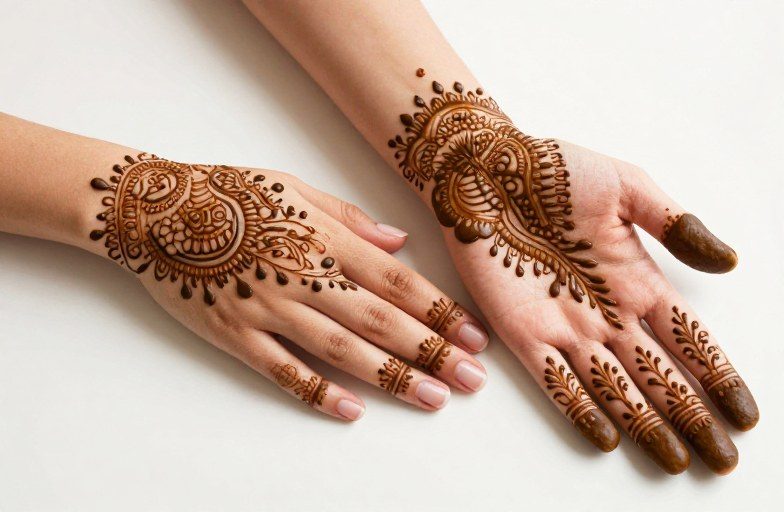
Most henna stains on the face fade naturally within 1, 2 weeks, but you can speed the process with gentle exfoliation, oil-based removers, and consistent cleansing. Avoid harsh scrubbing, bleach, or acidic chemicals near your eyes and lips. The skin on your face is thinner and more reactive than your arms or legs, so patience matters more than aggressive removal.
Aftercare Essentials
Even though you’re trying to lose the stain, treating your facial skin well during removal prevents redness, peeling, and post-inflammatory marks that can last longer than the henna itself.
Protecting the Moisture Barrier
Stripping henna often means repeated washing and exfoliation. Overdoing it leaves skin raw and vulnerable. After any removal attempt, apply a simple, fragrance-free moisturizer. Look for ceramides, squalane, or plain petroleum jelly. Skip active ingredients like retinol, AHAs, or benzoyl peroxide until the stain is fully gone and the skin feels normal again.
- Wash with lukewarm water, never hot
- Pat dry; don’t rub
- Moisturize within 60 seconds of cleansing
- Avoid makeup over the area if it’s irritated
What to Avoid on Facial Skin
Body scrub recipes with salt, sugar, or baking soda are too abrasive for the face. Lemon juice is commonly suggested online, but it’s phototoxic, meaning it can cause a severe burn when followed by sun exposure. The same goes for toothpaste, nail polish remover, and bleach. These can cause chemical burns, permanent hypopigmentation, or scarring on delicate facial tissue.
Cost Factors
Removing henna at home costs almost nothing, just items you likely own. Professional help is rarely needed for henna, but if you’re considering it, here’s how the numbers break down.
DIY Methods
Olive oil, coconut oil, micellar water, and a soft washcloth are your primary tools. A bottle of mineral oil or baby oil runs $3, $6. Exfoliating cleansers with gentle acids like lactic acid cost $8, $15. You don’t need expensive kits marketed as “henna removers.”
Professional Options
Facials with enzyme peels or mild chemical exfoliation at a reputable spa might run $75, $150. Laser treatments are overkill for henna and not typically offered for this purpose. If a shop suggests laser removal for henna, that’s a red flag. Henna sits in the dead skin layer, not the dermis where tattoo ink lives. No laser targets it effectively.
The Direct Answer
Here’s what actually works, ordered from gentlest to most active.
- Oil soak: Apply olive, coconut, or baby oil over the stain. Let it sit 10, 15 minutes. Wipe with a warm, damp cloth. Oil dissolves the henna paste residue and loosens the stained dead skin cells. Repeat twice daily.
- Micellar water or oil cleanser: These lift dye without stripping skin. Good for sensitive areas around the eyes.
- Gentle physical exfoliation: A soft washcloth in circular motions after oiling. Don’t press hard. Once daily maximum.
- Mild chemical exfoliation: A cleanser with lactic acid or low-percentage glycolic acid, used every other day, accelerates cell turnover. Avoid if skin feels tight or looks red.
- Steam: A warm shower or brief facial steam softens the stratum corneum, making exfoliation more effective.
Combine methods: oil first, then steam or warm cloth, then gentle exfoliation, then moisturize. This sequence respects the skin’s barrier while maximizing stain release.
What to Expect Step by Step
Day-by-day progression helps set realistic hopes and keeps you from over-treating.
Days 1, 3
The stain is usually darkest. It may look almost black or deep orange-brown depending on the henna quality and how long the paste sat. At this stage, oil soaks and normal face washing are your best tools. The stain won’t disappear yet. Don’t panic-scrub.
Days 4, 7
Natural fading becomes visible, especially after sleeping when skin turnover peaks. This is when gentle exfoliation helps most. You might notice patchiness as some areas fade faster, that’s normal, based on skin thickness and how the paste was applied.
Days 8, 14
Most henna is barely visible by now. Stubborn areas often sit along the hairline, eyebrows, or jawline where paste was thickest or left longest. Continue light exfoliation every other day. If traces remain past two weeks, the henna likely contained additives like PPD (para-phenylenediamine), which can stain more persistently and may cause allergic reactions.
Tips From the Chair
Working in tattoo shops means seeing every kind of temporary and permanent skin marking. A few observations translate directly to henna removal.
Location Matters
Forehead skin is oilier and thicker than cheek or under-eye skin. Henna fades faster on the forehead. Around the eyes, where skin is thinnest, henna penetrates less deeply but the area is most prone to irritation from rubbing. Use only oil and micellar water there, no scrubbing.
Line Work vs. Shaded Areas
Henna applied thickly in solid blocks (like a filled-in shape) stains deeper than thin lines. Fine linework fades faster because there’s less dye deposit. If your henna has dense dark areas, expect those to linger several days longer than the outline.
Ink Aging Parallels
Permanent tattoo ink sits in the dermis and stays until lasered. Henna only stains the epidermis, the top, constantly shedding layer. That’s why it’s temporary. But the same principle applies: damaged skin holds pigment unevenly. Scratching, picking, or burning the skin trying to remove henna can create a longer-lasting mark than the henna itself would have.
Realistic Expectations
Complete removal in 24 hours is unlikely without damaging your skin. Most people need 5, 10 days of consistent, gentle treatment. Darker stains from high-quality henna or longer paste contact time take longer. Black henna containing PPD can stain for 3, 4 weeks and may leave a chemical burn shadow that persists months.
When to Stop Trying
If the skin becomes red, swollen, blistered, or painful, stop all removal methods and let the skin heal. Continuing to treat irritated skin risks infection and scarring. Henna will fade on its own eventually. Your skin’s recovery is the priority.
What Won’t Work
- Laser tattoo removal: targets dermal ink, not epidermal stain
- Sunburn or tanning: damages skin, doesn’t selectively remove henna
- Household bleach or abrasive cleaners: chemical burn risk
- Peeling or picking: causes scabs, possible scarring, uneven fading
What to Remember
Henna on the face is temporary by nature, but the skin underneath is permanent. Gentle oil soaks, patient exfoliation, and consistent moisture will fade the stain faster than aggressive methods ever could. The face heals more visibly than the body, any irritation shows. Treat it kindly, and the henna will be gone before you know it. If a stain persists beyond three weeks or the skin reacts badly, that suggests PPD or another additive, and a dermatologist’s input becomes worthwhile. Otherwise, trust the process your skin already does every day: shedding, renewing, and returning to baseline.
Frequently Asked Questions
Can I use makeup to cover henna while it’s fading?
Yes, but only if the skin isn’t irritated. Wait until any redness or sensitivity calms, then use a concealer that matches your undertone. Henna often oxidizes to an orange-brown, so a color-correcting peach or orange base under concealer helps neutralize the stain.
Why is my henna getting darker instead of lighter?
Henna oxidizes over 24, 48 hours, darkening from orange to deep brown. This is normal and not a sign of permanent staining. After the peak darkness, it will begin fading as the stained skin cells naturally shed.
Is black henna harder to remove than natural henna?
Yes, significantly. Black henna often contains PPD, a hair dye chemical that penetrates deeper and can cause lasting skin discoloration or allergic reactions. Natural henna fades in 1, 2 weeks; PPD-laced stains may persist 3, 4 weeks or longer.
Should I avoid sun exposure while fading henna from my face?
Yes. Freshly exfoliated skin is more photosensitive, and UV exposure can darken any remaining henna pigment or cause uneven tanning. Use a mineral sunscreen daily, especially if you’ve used any acid-based exfoliants.