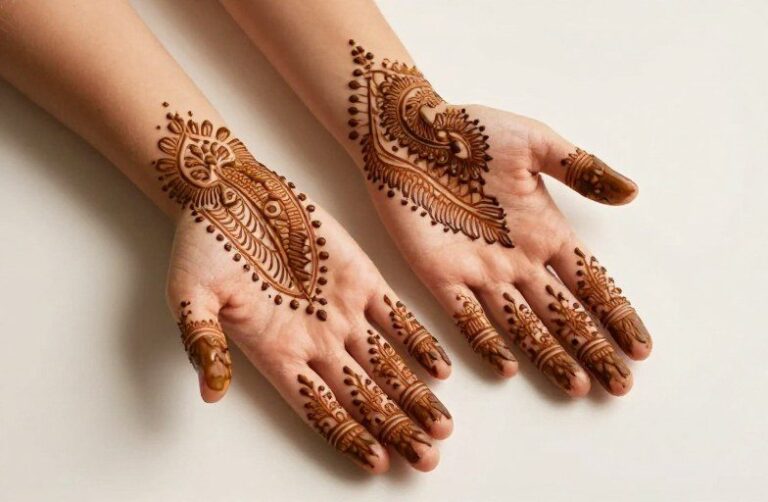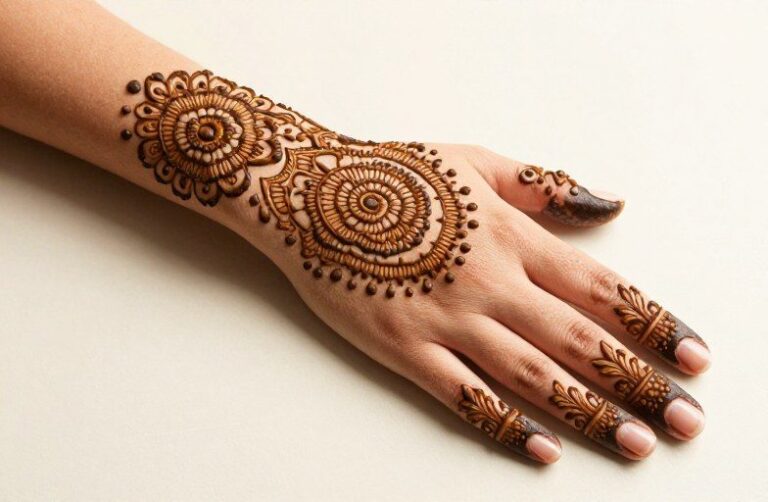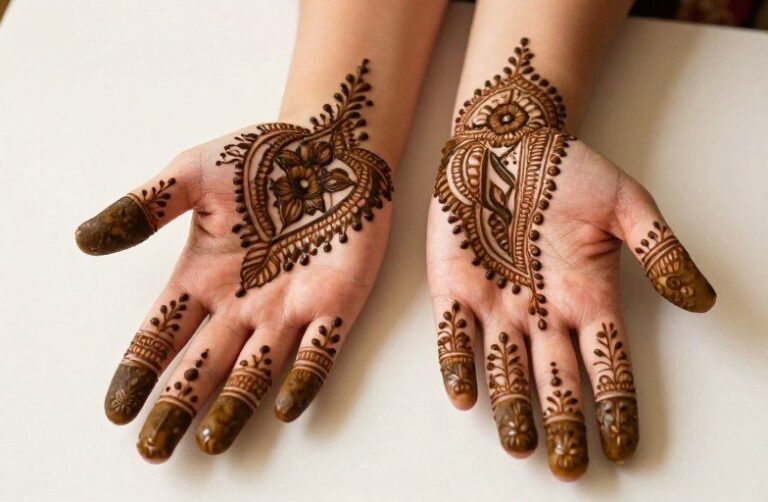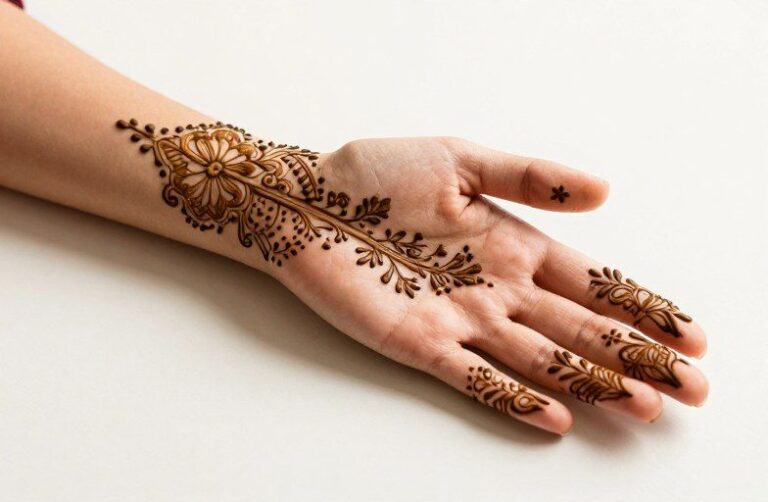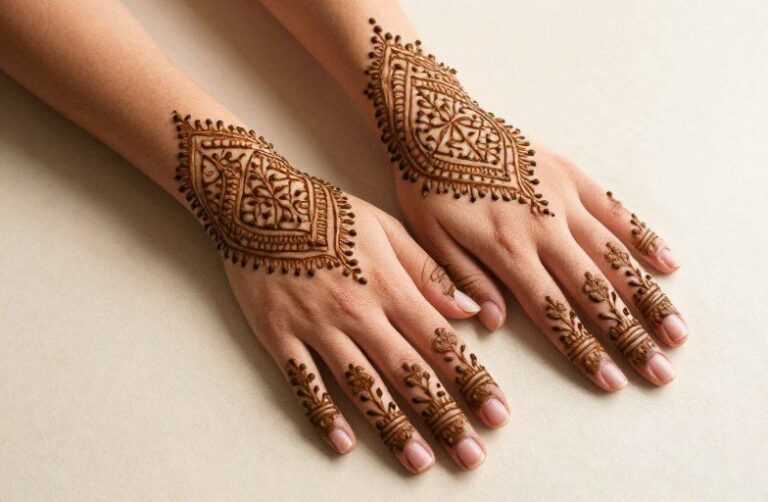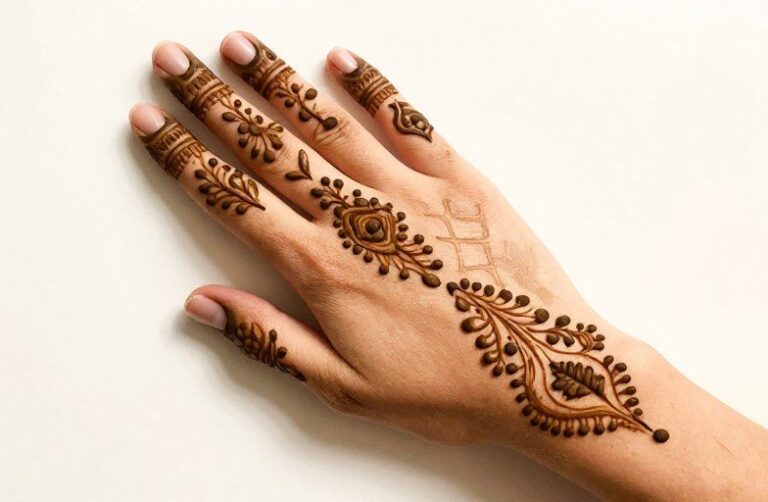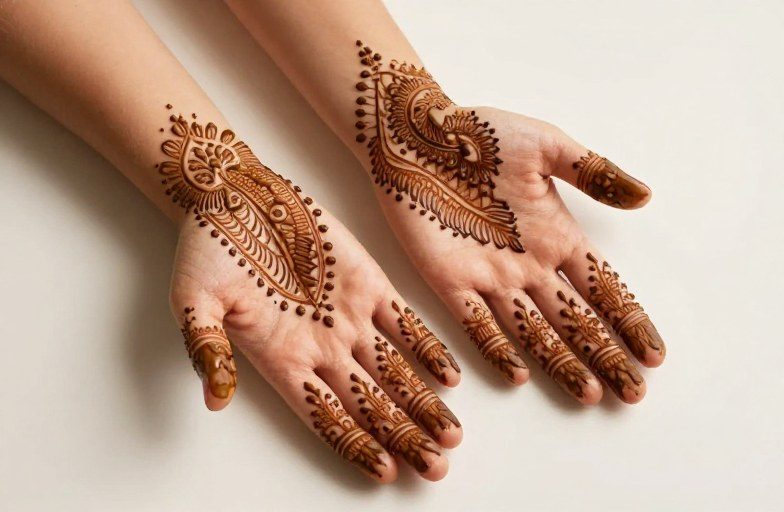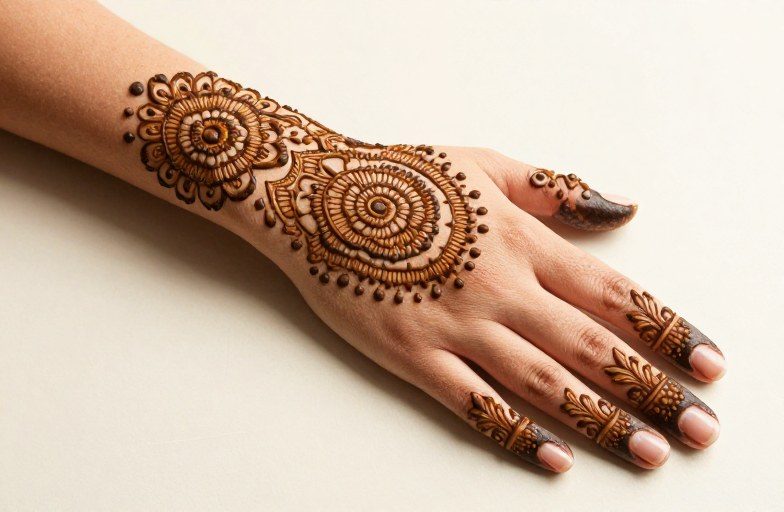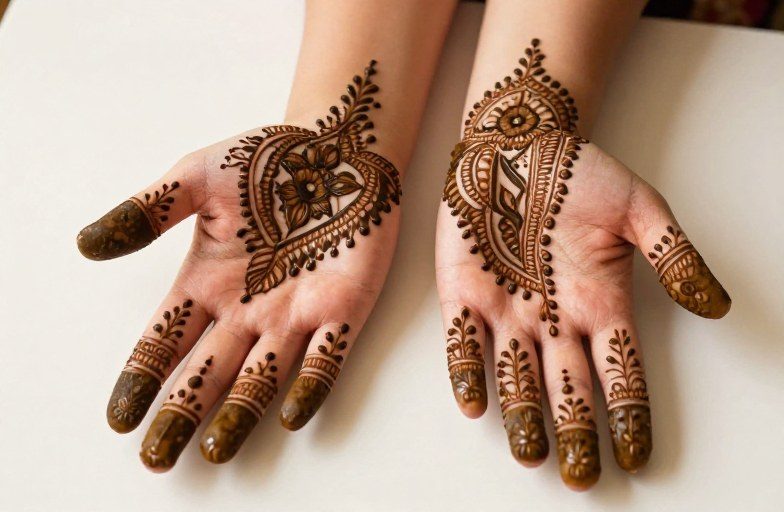
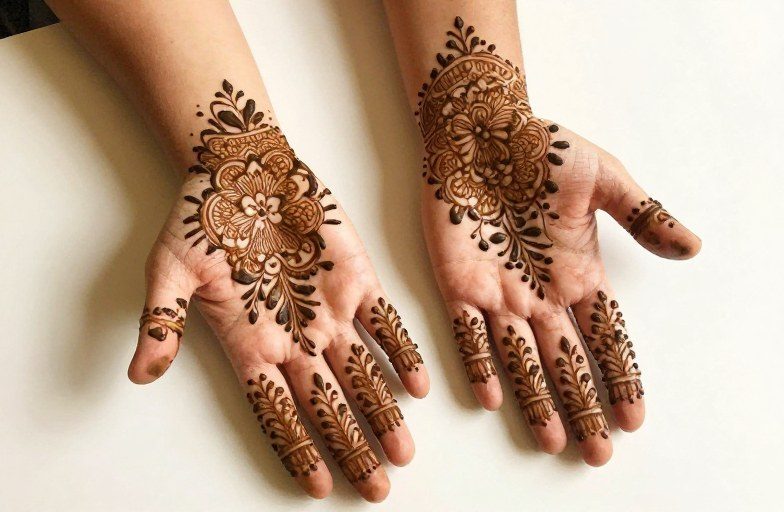
Mehndi patterns have traveled far beyond wedding celebrations and festival hands. The flowing vines, clustered petals, and negative-space tricks that make henna so hypnotic translate beautifully into permanent tattoo work, but only when you understand where the two mediums diverge. Floral mehndi designs demand a specific approach to line weight, skin movement, and how ink settles over time compared to the temporary stain sitting on top of dead skin cells.
Size & Scale
Small Accents vs. Full Coverage
A single jasmine bloom behind the ear or along the collarbone can read as delicate jewelry, but shrink a mehndi sleeve’s complexity down to two inches and you lose the breathing room between lines. Dense paisley packed into a tiny space blurs within three years as ink spreads naturally under skin. Fingers and the sides of hands are especially unforgiving, movement and thin skin cause faster degradation. If you’re set on a small piece, strip the design to one dominant flower with three to five surrounding dots or teardrop accents. Let the negative space do the heavy lifting.
Full forearm or calf coverage works differently. Here you can layer the classic mehndi elements: central lotus or mandala, radiating vines, scattered buds, and fingertip-style detail creeping toward the wrist or ankle. The scale lets your artist vary line weight dramatically, thick outer contours holding their shape for decades, hair-thin interior details that soften intentionally over time, creating a lived-in patina rather than a muddled mess.
Placement Realities
- Hands and feet: High friction, frequent washing, and thin skin make these the fastest-fading placements. Expect touch-ups every few years if you want crisp edges.
- Inner forearm: Moderate sun exposure, relatively stable skin. Ideal for medium-scale floral clusters that wrap slightly around the arm.
- Upper back/shoulder blade: Excellent for large, symmetrical compositions. Skin stays relatively still, preserving fine linework longer.
- Ribcage and hip: Stretching and compression from breathing and movement distort geometric precision. Organic florals adapt better than rigid mandalas here.
Color Choices
Traditional Brown-Black Translations
Natural henna stains in that distinctive reddish-brown, and many clients want to replicate this warmth. Straight black ink on lighter skin reads harsh and flat; ask your artist about warm brown-black mixes, or consider soft gray-wash shading behind linework to mimic the depth variation of a fresh stain. On darker skin tones, pure black lines pop cleanly, but brown ink can disappear into the background, contrast matters more than color accuracy.
Adding Permanent Color
Some choose to break from henna’s earth-tone limitations entirely. Deep maroon or burgundy linework nods to the traditional stain while reading as intentional tattoo pigment. Muted sage greens for leaves, dusty rose for petals, or indigo accents reference South Asian textile palettes without screaming “color tattoo.” One caution: bright reds and yellows fade fastest and often shift to muddy orange or pink. If you want color longevity, keep it to darker saturation levels and expect the palette to cool over a decade.
Tips for Choosing
Reference gathering for mehndi tattoos requires more discrimination than scrolling Pinterest. Live henna photography captures the stain’s organic bleed and variation, which a tattoo machine cannot replicate. Look instead for tattoo portfolios where artists have already solved the translation problems, how they handled the transition from flowing vine to skin, where they simplified knotwork, how negative space functions at their scale.
Ask specifically about an artist’s experience with ornamental and pattern-based work. Portrait specialists or traditional American-style artists may lack the muscle memory for consistent, unbroken curves and mirror symmetry. A portfolio heavy in geometric mandalas, ornamental blackwork, or dotwork suggests the right technical foundation. During consultation, request a stencil test on your actual placement, complex mehndi wraps and flows differently on a flat drawing than on a curved calf or moving hand.
Standout Design Ideas
Modern Hybrids
Contemporary floral mehndi increasingly borrows from other traditions. Persian miniature painting contributes tighter, more illustrative flower forms with visible stem structure rather than the floating, pattern-driven blooms of classic henna. Art Nouveau curves introduce asymmetry and movement that break the rigid bilateral symmetry of traditional bridal designs. Japanese botanical tattooing offers leaf shapes and bud stages that layer naturally into mehndi vine structures.
Negative Space Tricks
The most sophisticated mehndi tattoos exploit what isn’t inked. Consider a dense floral cuff where the skin itself forms a central lotus shape, surrounded by inked petals. Or a finger-to-wrist vine where the leaves are solid black and the flowers are uninked skin, outlined only by their surrounding darkness. These techniques require confident design, hesitant negative space looks accidental, not intentional.
- Shadow florals: Solid black background with mehndi patterns left as skin-tone lines, dramatic but high-commitment for large areas.
- Dot gradients: Traditional mehndi uses stippling for texture; translated to tattoo, varying dot density creates soft shading without solid black fills.
- Split composition: One half dense pattern, one half sparse vine with heavy negative space, creating visual rhythm across a limb.
For First-Timers
First tattoo and drawn to mehndi’s beauty? Start with placement that forgives learning curves. The outer forearm offers flat, stable canvas, moderate pain levels, and easy concealment or display. Avoid fingers, feet, ribs, and anywhere directly over bone or major joints for your initial experience, these hurt more, heal trickier, and show wear faster.
Healing ornamental linework demands discipline. Thick scabbing across dense black areas is common; resist picking or scratching, which pulls ink out unevenly and creates permanent light spots. Sleep with clean, loose coverings for the first three nights to prevent sticking to sheets. After the peel phase, moisturize lightly, over-greasing suffocates healing skin and can blur fine lines. Expect the final settled result at four to six weeks, not two.
Trending Variations
Minimalist Reduction
Current demand leans toward stripped-down mehndi vocabulary: single continuous vines, one repeated flower motif, or isolated paisley teardrops rather than all-over density. These read as contemporary and wearable across professional contexts, aging gracefully because there’s less ink competing for space as lines naturally spread.
Biomechanical Fusion
A niche but growing direction integrates mehndi patterning with anatomical illustration, floral vines emerging from or weaving through muscle structure, bones rendered in the negative space between traditional motifs. This demands exceptional technical execution and sits at the intersection of ornamental and realism specialties.
Final Thoughts
Floral mehndi tattoos honor a visual tradition without requiring cultural claims. The success lies in respecting what makes the medium work, flow, repetition, deliberate emptiness, and adapting it to the permanent constraints of skin. Choose an artist who understands both the source material and the technical translation. Prioritize longevity in your placement and scale decisions. And remember that a mehndi tattoo’s beauty deepens as it ages, the lines softening into something that looks less like fresh henna and more like the memory of it, which carries its own particular resonance.
Frequently Asked Questions
How is a mehndi-style tattoo different from getting actual henna?
Henna stains the dead skin layer and fades as skin exfoliates. Tattoo ink sits in the dermis, permanent and unaffected by washing. The visual similarity is in the linework and patterning, but the application, healing, and lifespan are completely different processes.
Will fine mehndi lines blur together over time?
Yes, especially on high-movement areas like hands and feet. Lines placed too close together eventually spread into each other. A skilled artist spaces elements with aging in mind, and you should expect touch-ups every five to ten years for dense ornamental work.
Can I get a brown tattoo that looks exactly like real henna?
Brown tattoo inks exist but behave differently than henna stain. They often heal darker or shift tone unpredictably. Most artists recommend black or very dark brown for longevity, with the understanding that the tattoo reads as “mehndi-inspired” rather than a perfect color match.
Do floral mehndi tattoos work on dark skin tones?
Absolutely. The contrast of black linework against deeper skin can be striking. Brown inks may not show sufficiently, so artists typically recommend bolder black. Portfolio research matters, find an artist experienced with your skin tone who understands how their linework and shading read against melanin-rich skin.