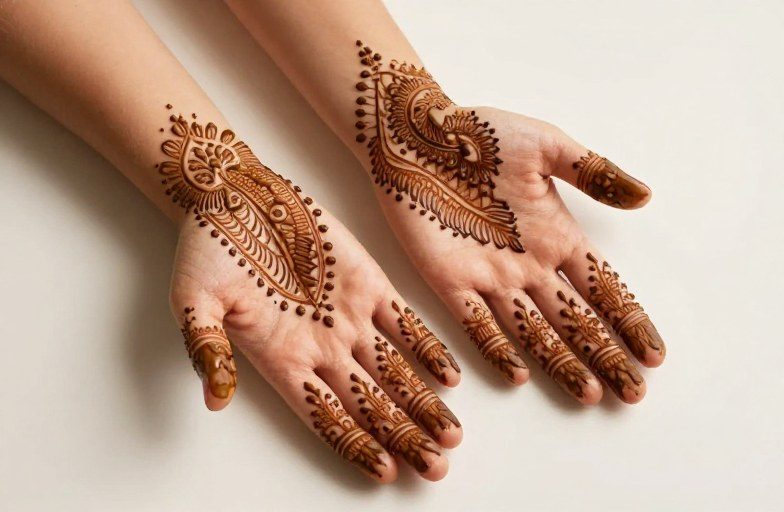
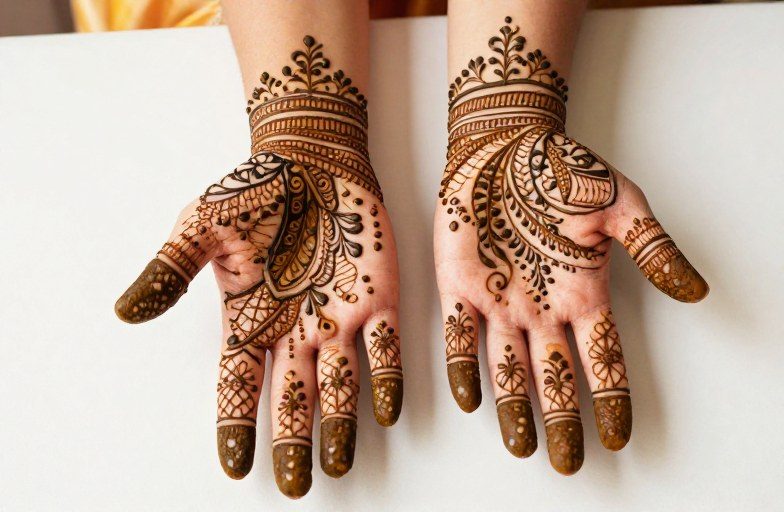
Traditional henna, mehndi, has decorated skin across South Asia, North Africa, and the Middle East for centuries, with roots often linked to ancient cooling practices and ceremonial marking. The paste, ground from Lawsonia inermis leaves, stains the top layers of skin in shades of orange-brown to deep rust. What draws people to it is the temporary nature and the intricate, repetitive patterns that feel ceremonial even in casual settings. I have watched clients sit for hours, then wake two days later to color they did not expect. That gap between application and result is part of the medium’s quiet magic. Here is what I have learned about classic motifs, where they work best on the body, and how to adapt traditional forms without losing their structural integrity.
Starting Out
Fresh henna paste squeezes from a cone like thick toothpaste, dries on the skin over 20-40 minutes, and flakes away to reveal a light orange stain that darkens over 24-48 hours. The color peaks around day two, then fades gradually as skin exfoliates. First-timers often expect immediate dark results; patience is part of the process. I always tell people to plan their first application for a low-stakes weekend, not before a wedding or photoshoot where they need the color to read perfectly.
Simple Starter Motifs
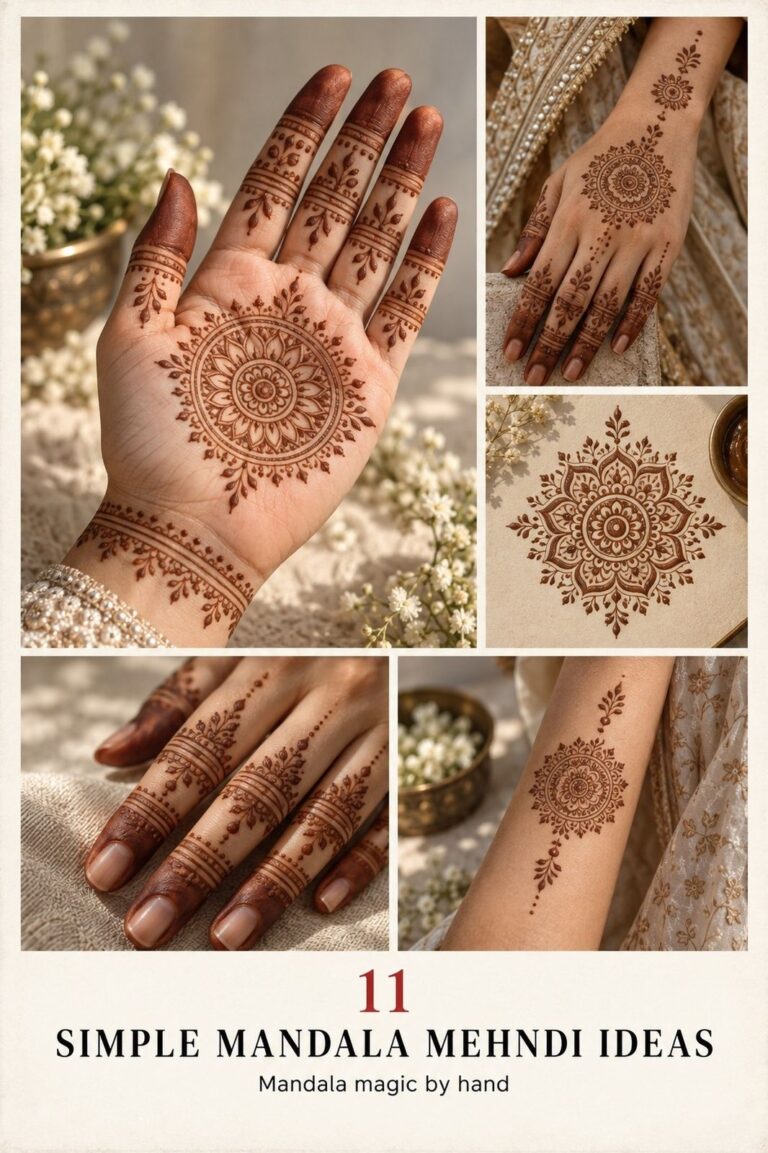
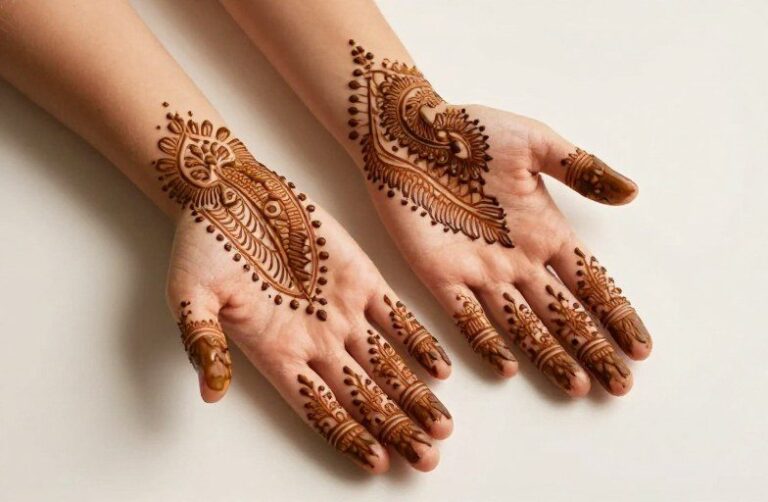
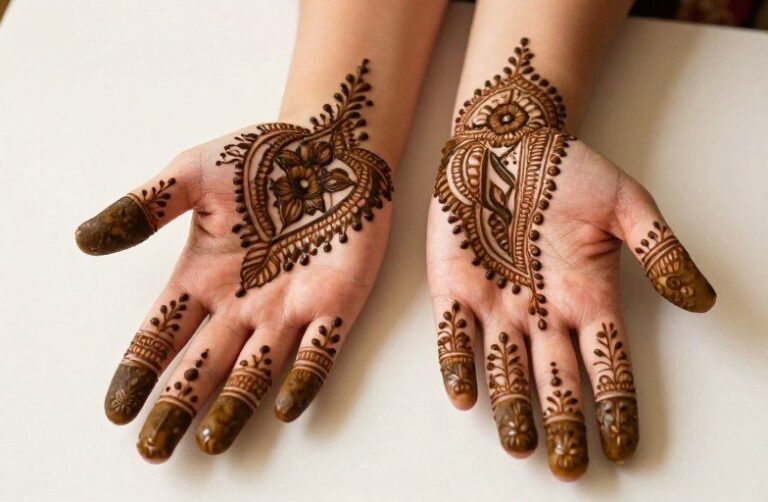
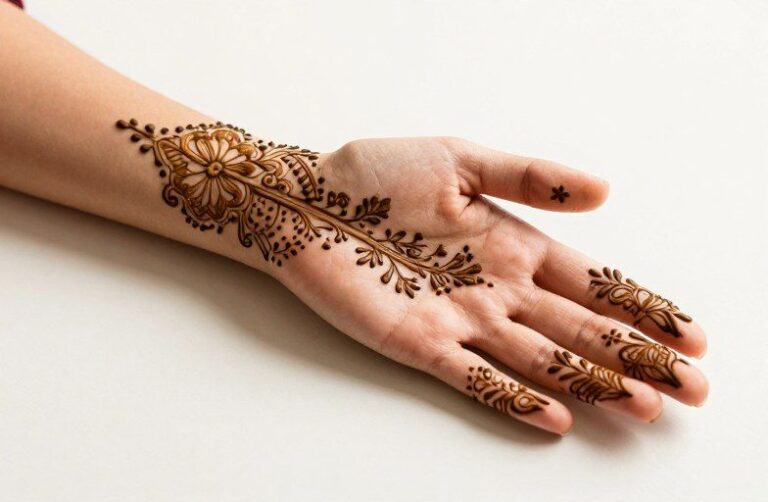
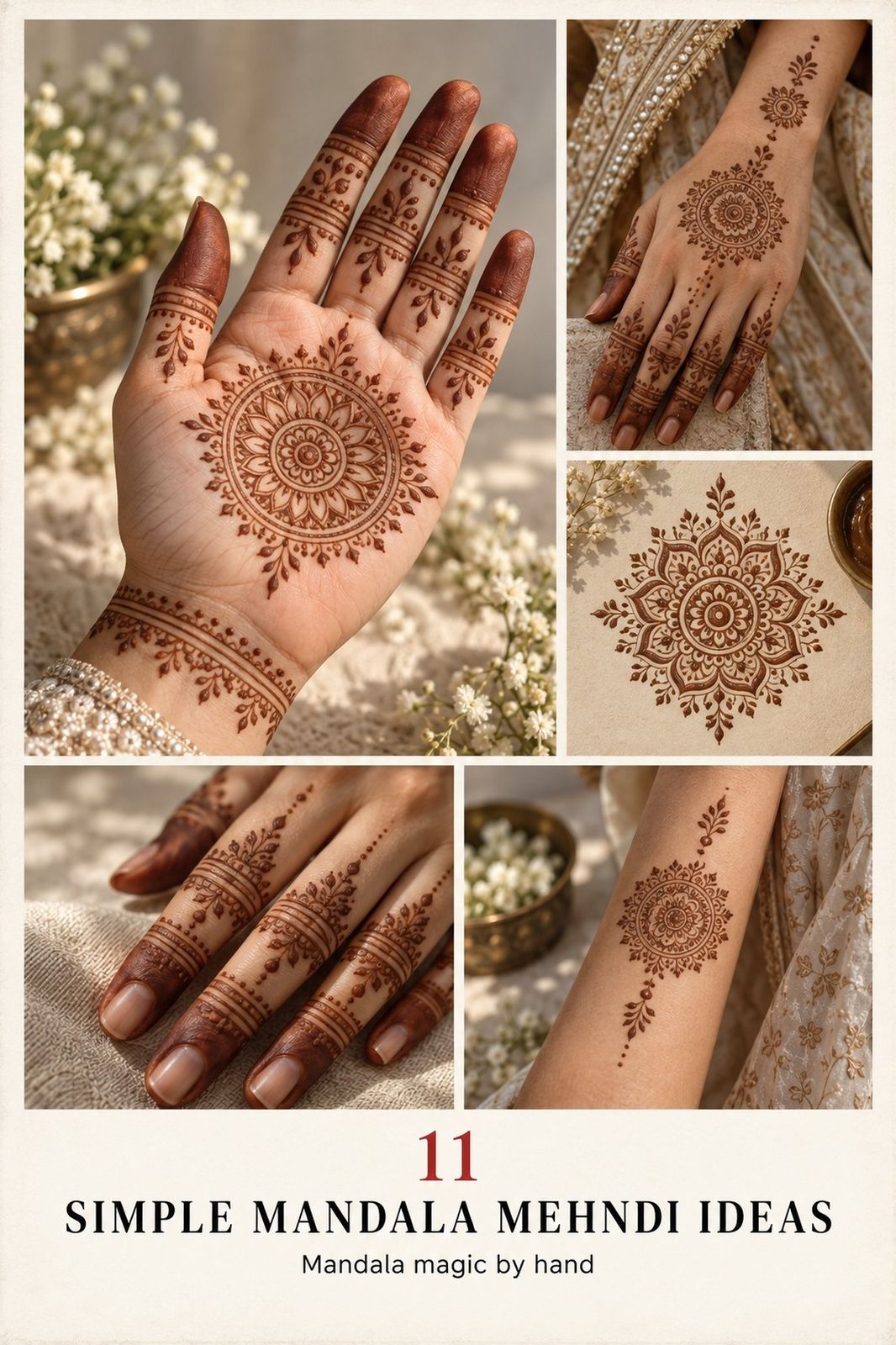
Begin with single elements rather than full-coverage designs. A paisley teardrop on the wrist back, a small mandala on the palm center, or a vine trailing from finger base to first knuckle lets you observe how the stain develops on your particular skin tone. These isolated shapes also limit the sitting time, 15-20 minutes versus hours for bridal coverage.
Related reading: traditional mehndi tattoos | Indian mehndi tattoo designs | Rajasthani henna tattoos | Pakistani mehndi tattoo ideas
- Paisley (mango/boteh): curved teardrop with internal scalloping
- Basic flower: five or seven petals radiating from a dot center
- Single vine: S-curve with alternating leaf shapes
- Dot clusters: geometric groupings of 3-5-7 dots
What to Expect During Application
The paste smells earthy, slightly herbal. It tingles on fresh-shaved skin; this is normal, not an allergic reaction. True henna allergies are rare; reactions usually stem from chemical additives in “black henna” products. You cannot touch anything for 20-40 minutes while the design sets. Plan your phone use, bathroom trips, and beverage access before the artist starts. I have seen too many people ruin a wrist design reaching for a door handle they forgot was there.
Making It Yours
Traditional henna carries regional signatures. Rajasthani patterns fill every available space with dense detail. Arabic styles favor flowing floral vines with deliberate negative space. Moroccan geometric work emphasizes straight lines and tessellating shapes. Personalization comes from combining these traditions or adapting motifs to personal significance, but the structural grammar matters more than most people realize.
Integrating Personal Symbols
Request your artist to weave initials into vine intersections, replace standard flower centers with zodiac symbols, or frame a mandala with petal counts matching family members. The structural grammar of traditional henna, radial symmetry, meandering lines, nested borders, accommodates these substitutions without breaking visual coherence. A skilled artist maintains the traditional aesthetic while embedding your specific references. The key is letting the tradition lead and the personal detail follow, not forcing a zodiac symbol into a space that cannot hold it gracefully.
Blending Regional Styles
Mixing Arabic vine flow with Indian paisley density creates contrast that guides the eye. Or pair Moroccan geometric borders with a central floral medallion. The key is hierarchy: one style dominates, the other accents. Equal-weight mixing often looks confused rather than fusion. I have seen beautiful work where a single Arabic vine snakes through otherwise dense Rajasthani filler; the negative space becomes the point of rest, not emptiness.
Where to Place It
Henna stain intensity varies dramatically by body location. Palms and soles stain darkest due to thicker stratum corneum; backs of hands and tops of feet develop medium tones; arms and legs fade fastest. This biological reality should shape your design choices, not fight them. I have had clients insist on fine finger detail for an upper-arm placement, then return disappointed when the lines disappeared in three days. The body teaches you where henna wants to live.
High-Stain Zones
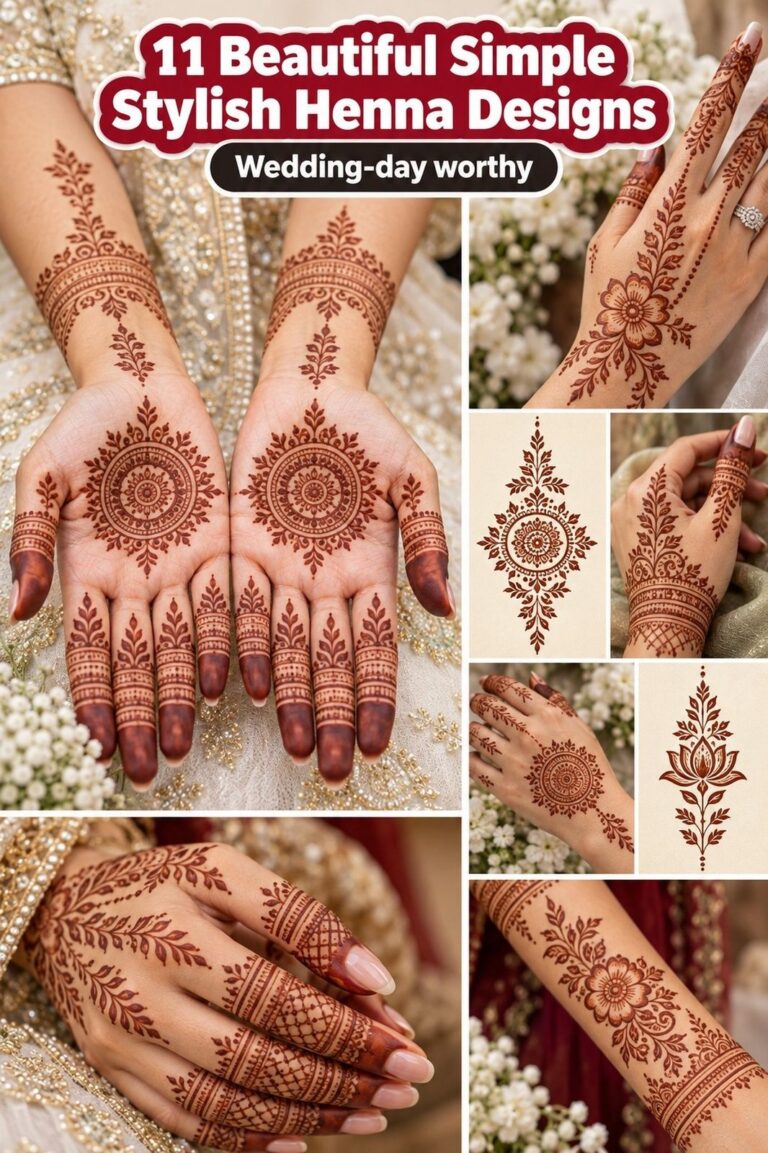
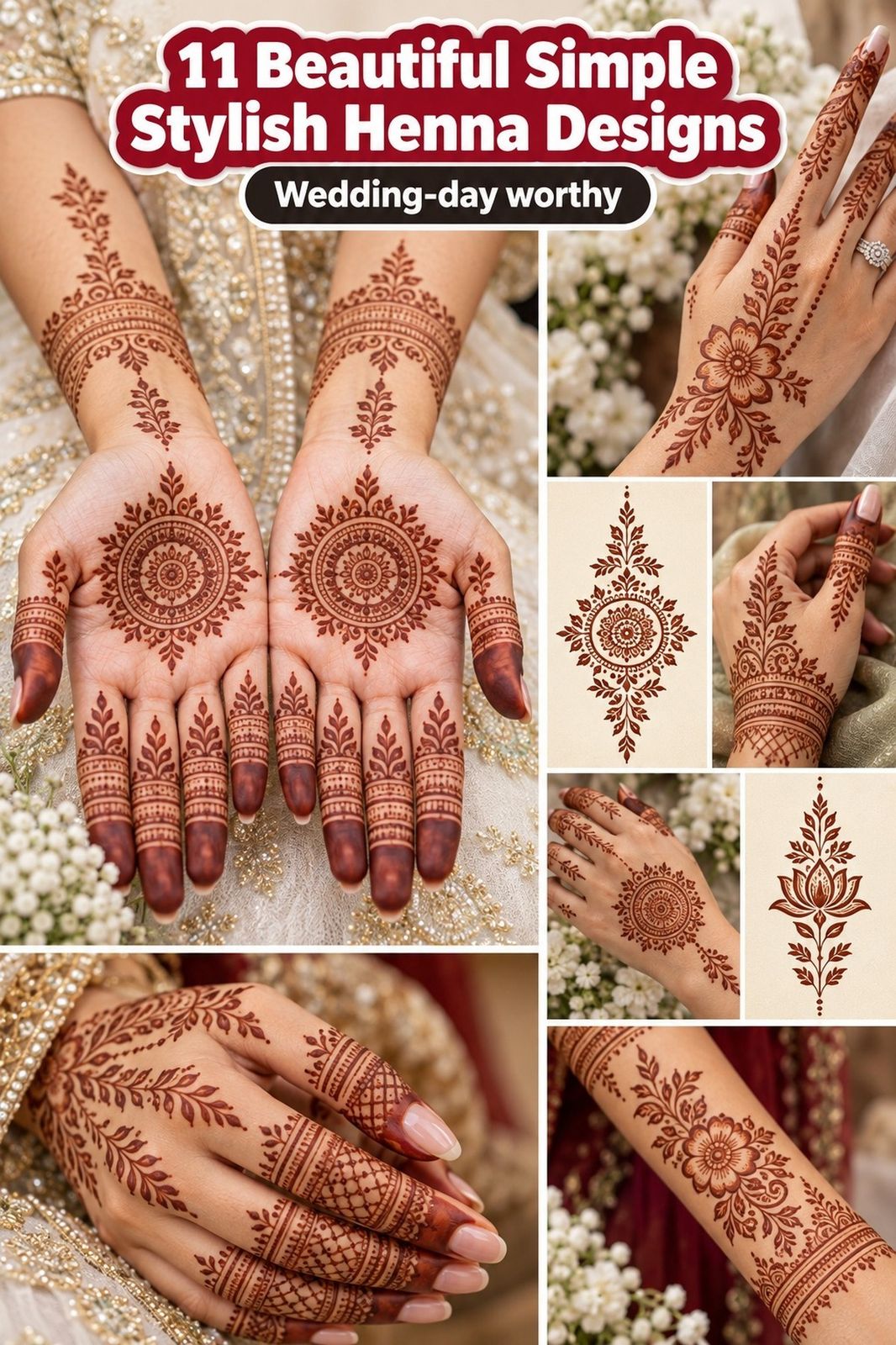
Palms carry full bridal designs beautifully. The radial layout of fingers and central palm naturally frames mandalas and peacock motifs. Soles, less commonly decorated in Western contexts, hold deep color for weeks and suit geometric patterns that will not distort with foot flexion. The heel-to-arch transition works for linear designs following the foot’s architecture. If you are willing to go barefoot or wear open shoes, sole henna is one of the longest-lasting placements available.
Medium and Low-Stain Zones
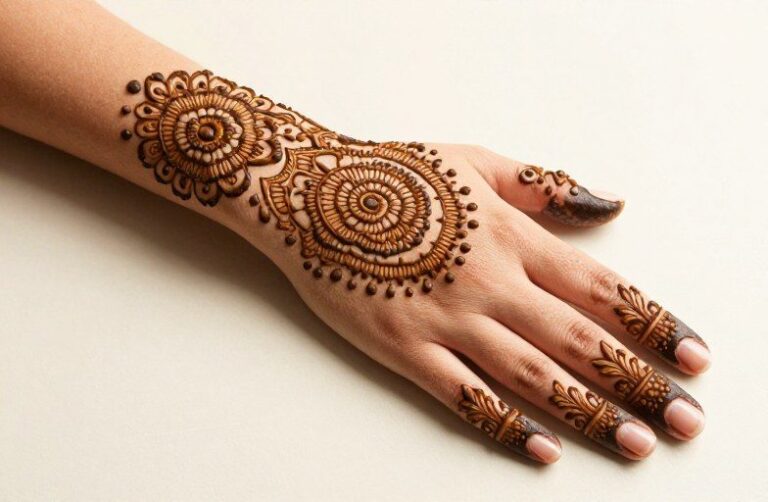
Back of hand, wrist, forearm: these visible areas suit medium-detail work where some fading is acceptable. Upper arm and shoulder henna stains lighter but photographs well; choose bolder lines over fine stippling here. Ankles and lower calf hold reasonable color; the shin fades faster due to clothing friction and less keratin. Behind the ear has become popular for tiny accent designs, though the stain there is unpredictable, skin thinness and oil glands interfere with uptake.
- Fingers: rings, bands, or fingertip caps (stain dark, wear fast)
- Wrist: bracelet bands or single-element focal points
- Upper back: large central mandalas, often for special occasions
- Behind ear: tiny accent designs, increasingly popular but variable results
Choosing for Your Life
Design selection depends on occasion, clothing context, and your tolerance for visible ornament. Bridal-level full-hand coverage commands attention; a single wrist vine reads as subtle accessory. Consider your daily environment. Some workplaces still associate visible henna with unprofessionalism. This is prejudice, not truth, but it is something to anticipate if you work in conservative settings.
Matching Design to Context
Festival or vacation settings allow experimental scale and placement. Wedding guest appearances suit medium coverage: back of one hand, wrist to mid-forearm. Professional contexts with occasional visibility favor small, easily concealed placements: inner wrist, ankle under pants, nape of neck with hair down. I have done palm-only designs for clients who need to shake hands professionally; the design is theirs, hidden in a handshake, revealed in private moments.
Finding the Right Artist
Ask to see photos of healed results, not just fresh application. Fresh paste photographs dark and wet; the true test is 48-hour stain development. Inquire about paste freshness. Henna mixed over 48 hours ago loses staining power. Avoid any artist offering “black henna” or immediate dark results; these typically contain paraphenylenediamine (PPD), a chemical that can scar. A good artist will explain their mixing schedule without hesitation. Hesitation is information.
Scale and What Survives
Detail density must match physical size. A thumbnail-sized flower cannot support twenty internal lines; the paste blurs and the stain becomes muddy. Conversely, a palm-sized mandala with only five elements looks sparse and unintentional. The traditional solution is scaling: small designs use simpler forms, large designs compound complexity. This sounds obvious until you see someone try to fit a bridal-level peacock on a pinky finger.
Micro-Henna Limits
Lines thinner than 2mm in paste width rarely stain well. The paste spreads slightly as it dries, and fine lines often flake away entirely. Artists working small must use dot clusters, short dashes, and negative space rather than hairline filigree. Finger bands and ear accents work within these constraints; eye-corner designs push them. I have learned to refuse certain requests not because they are impossible to draw, but because they are impossible to make last.
Large-Scale Composition
Full-arm or full-leg coverage requires structural planning. Traditional bridal work uses “filler” patterns, small repetitive shapes like fish scales, checkers, or stippling, that transition between major motifs and prevent visual dead zones. The composition flows from proximal to distal, shoulder to fingertip, hip to toe, with increasing detail density toward the extremities. This draws the viewer’s eye outward and mirrors how the body itself narrows. Ignoring this flow creates pieces that feel top-heavy or abandoned at the edges.
Understanding Color
Natural henna produces one color family: orange to burgundy to brown, depending on skin chemistry, body zone, and paste quality. The “color choices” in traditional henna are really about timing, aftercare, and realistic expectations, not alternative pigments. Anyone promising you a color menu is selling something that is not traditional henna.
Maximizing Depth
Leave paste on 6-8 hours minimum; overnight is traditional for a reason. Avoid water contact for 24 hours post-removal. Apply sugar-lemon sealant after the paste dries to keep it adhered. Heat helps. Steamy environments or gentle warming accelerate dye release. The resulting color on palms can reach near-black cherry; on arms, expect terracotta to chestnut. Your chemistry determines which end of that range you hit. I have seen siblings with identical aftercare get different results from the same batch of paste.
What “Black Henna” Actually Means
True henna never stains black. Indigo, sometimes added to henna for hair dye, can darken results slightly but is unpredictable on skin. “Black henna” body art is typically PPD-laced paste that causes chemical burns and lifelong sensitization. Jagua, a South American fruit extract, produces blue-black temporary stains through different chemistry. It is not henna, requires different handling, and is less widely available. If you want dark temporary body art, seek jagua specifically; do not accept “black henna.” The name itself is a warning, not a variety.
What to Remember
Traditional henna rewards patience and respects biological limits. The stain you get depends on where on your body, how long you keep the paste, and your individual skin chemistry, not the artist’s Instagram filter. Start small to learn your personal color development. Choose placement based on visibility needs and stain longevity expectations. Vet artists on healed-result photos and paste freshness, not cone-wrapping technique. Understand that natural henna’s color range is beautiful precisely because it is limited. The warm browns and rusts complement most skin tones without the harshness of synthetic alternatives. You might wear a single wrist vine for a week, or full bridal coverage for a wedding celebration. Either way, the stain will fade, the pattern will disappear, and that temporary quality is the point. It marks a moment, not a lifetime. That is the tradition you are entering, whether you know its full history or simply love how it looks on your skin.
Frequently Asked Questions
How long does traditional henna last?
On palms and soles, 2-3 weeks; on arms and legs, 1-2 weeks; on fingers, 5-10 days due to frequent washing and faster exfoliation. Individual skin chemistry and aftercare matter significantly.
Why is my henna orange at first?
The dye oxidizes over 24-48 hours. Fresh removal reveals orange; the color deepens to brown or burgundy as it reacts with air and skin proteins. This is normal and expected.
Can I get traditional henna if I have sensitive skin?
True henna (Lawsonia inermis) rarely causes reactions. Patch test 48 hours beforehand. Avoid any product labeled “black henna” or promising immediate dark results, as these often contain PPD, a known allergen that can cause severe reactions.