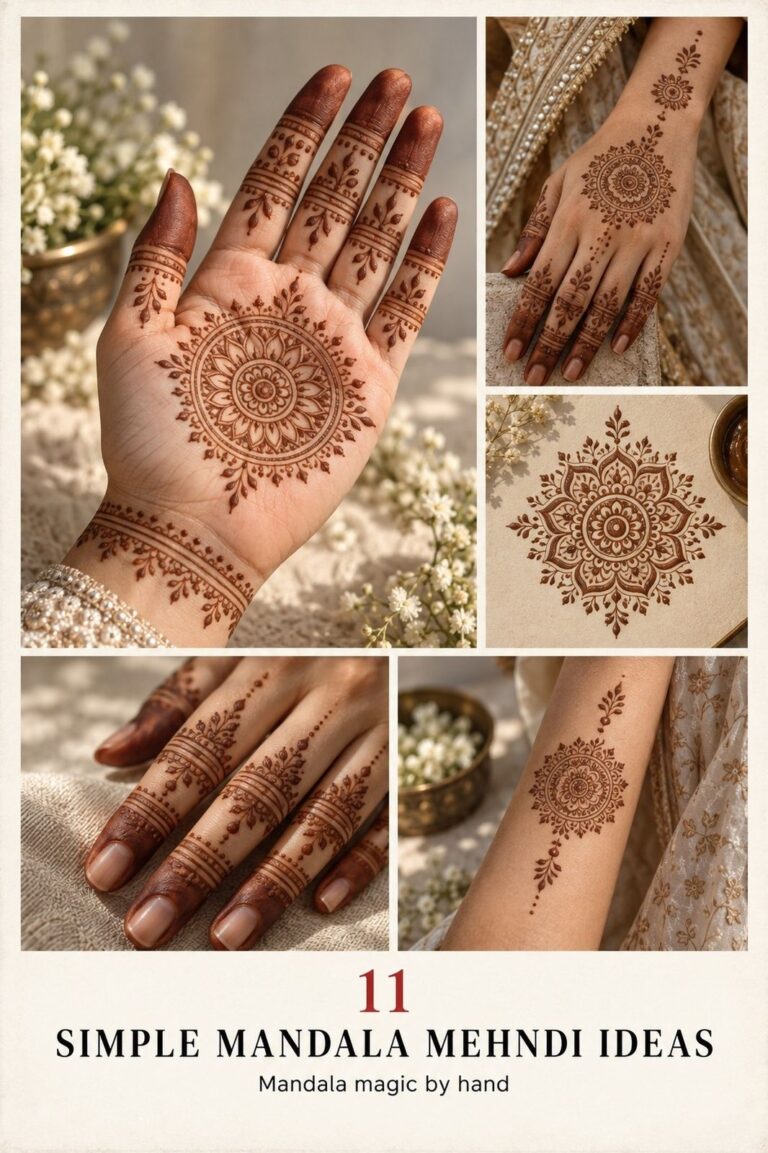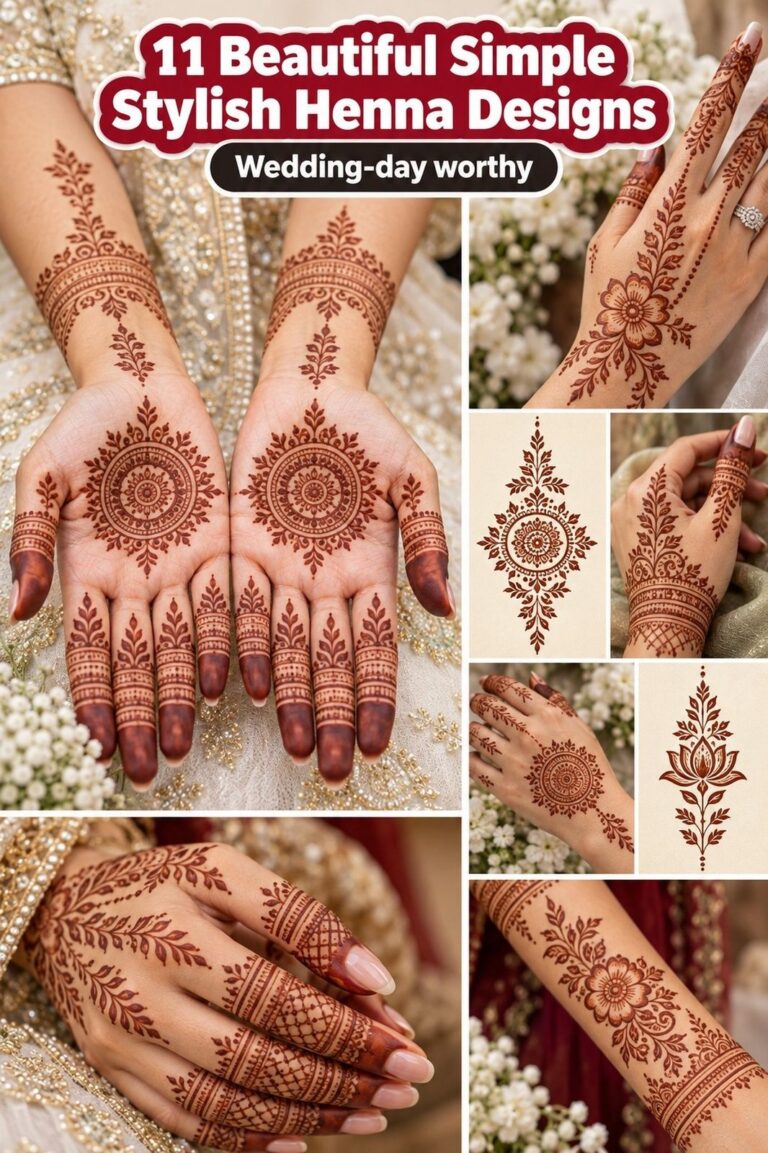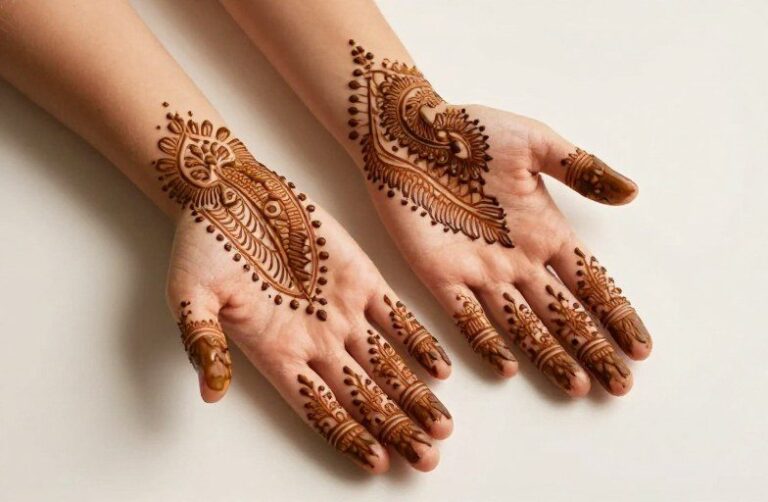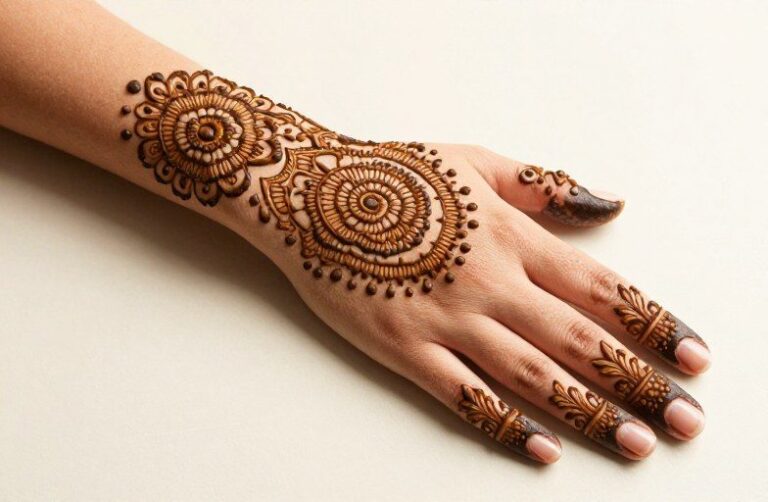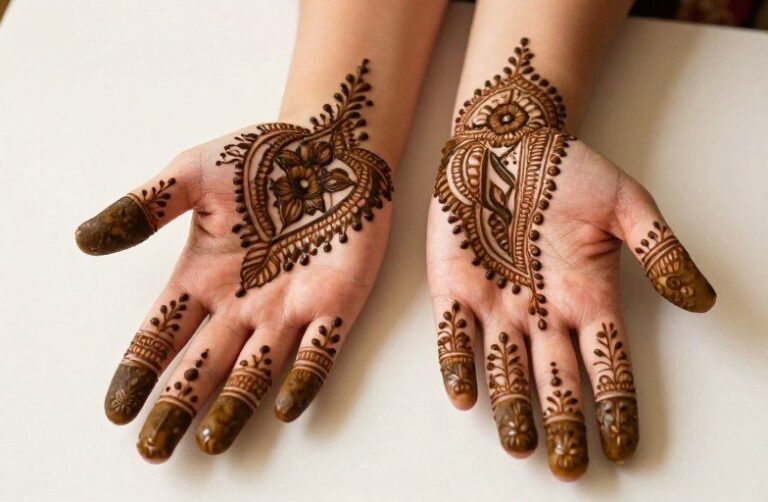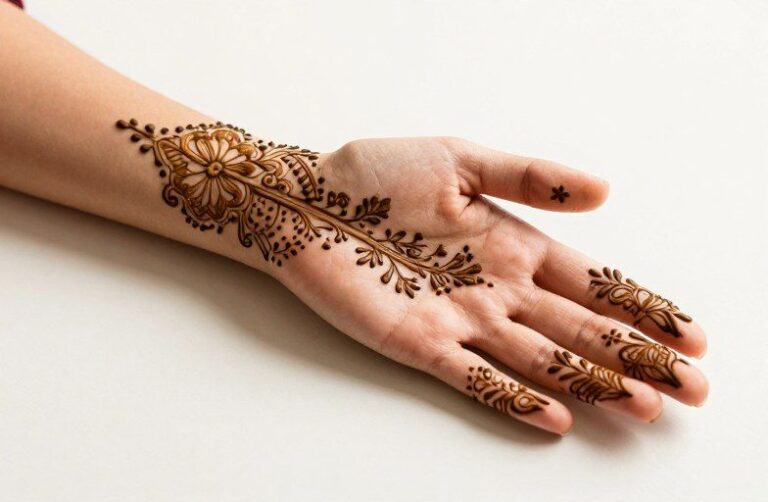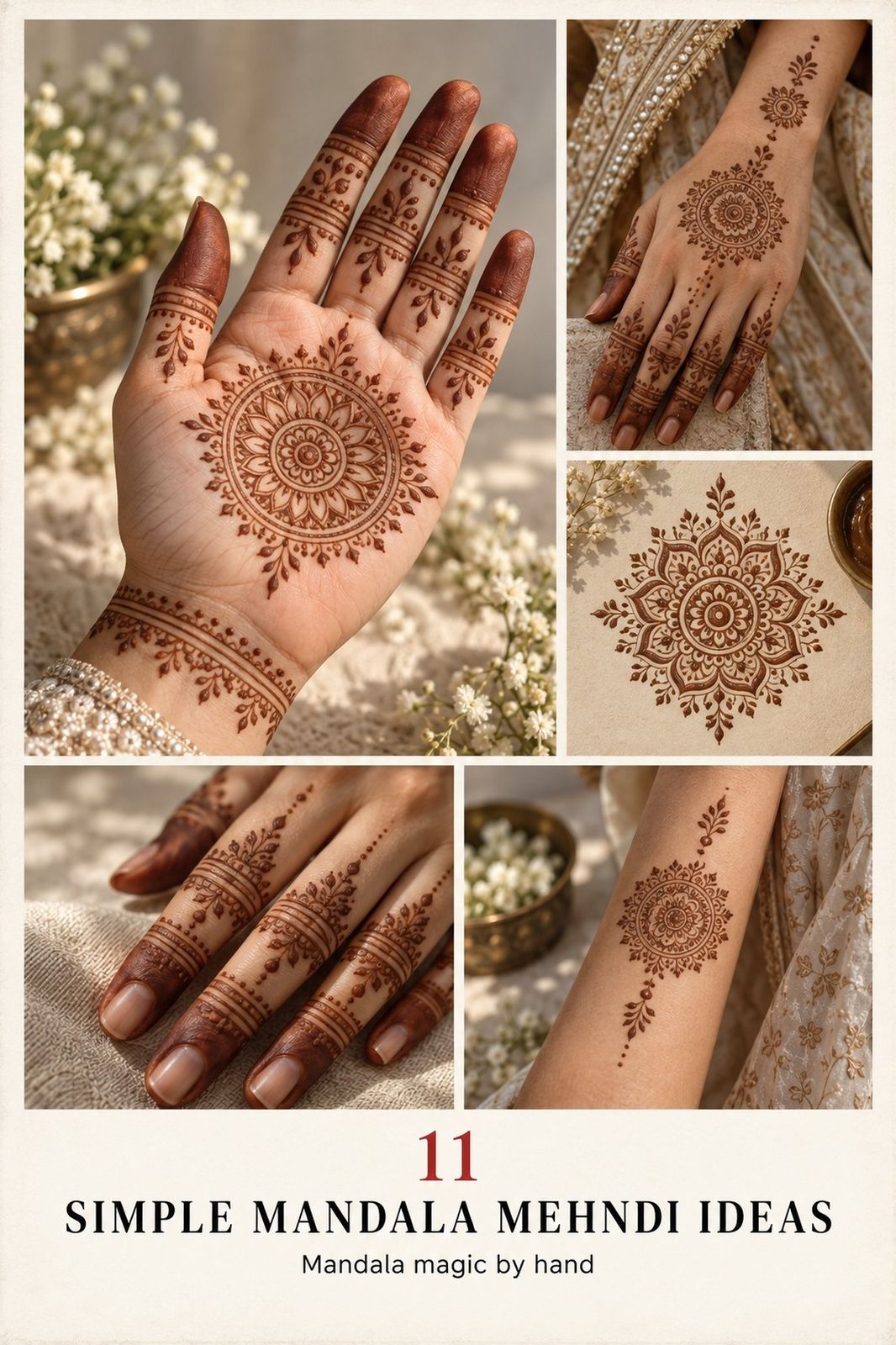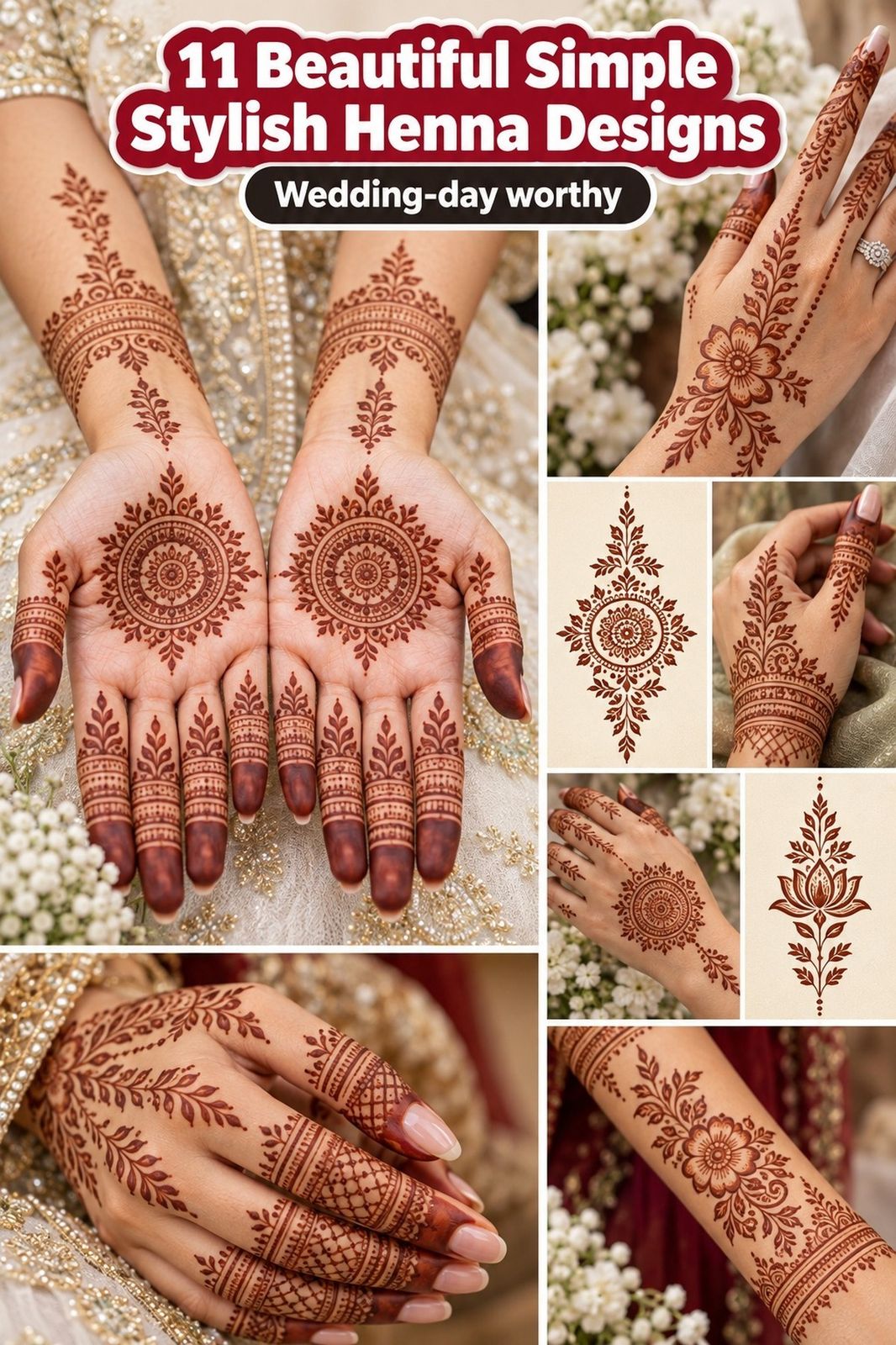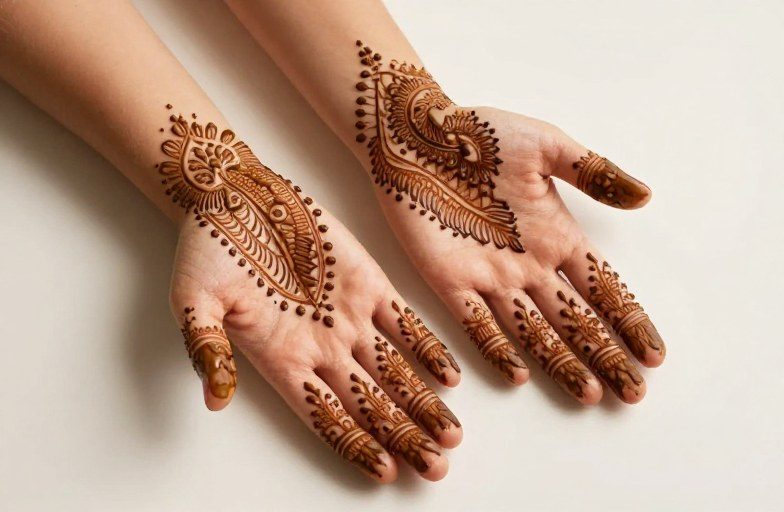
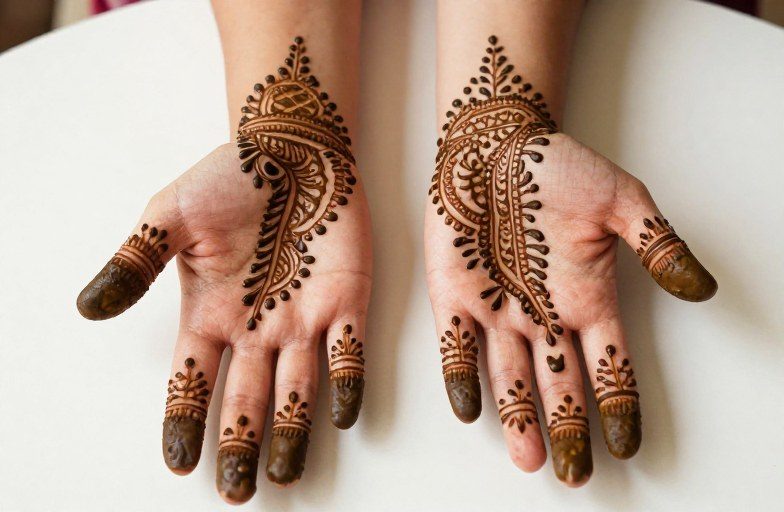
Henna family tattoos borrow the visual language of mehndi, the temporary body art made from crushed henna plant paste, and fix it permanently into skin. The result is a particular kind of family tattoo: dense, organic, and deliberately non-literal. Where a portrait names a person and a tree diagrams relationships, henna-style work suggests family through pattern, repetition, and the pleasure of looking closely.
What Henna Motifs Actually Mean
The Continuous Line
Traditional mehndi rarely breaks its flow. Vines loop, paisleys nest inside paisleys, florals interlock without hard borders. In permanent form, this translates to wrapping compositions around wrists, forearms, or ribs, places where the pattern can travel without a defined endpoint. The visual suggestion is of generations moving forward and backward simultaneously, the family as unbroken chain rather than fixed structure.
Specific motifs carry weight:
- Mango leaves (kairi): Associated with fertility and family growth, common in bridal mehndi, now adapted into permanent pieces.
- Peacocks: Linked to beauty and dignity, particularly to the union of families through marriage.
- Flowers within flowers: A central bloom surrounded by buds suggests the parent-child relationship, new life emerging from established roots.
Protection as a Function of Love
Henna application traditionally preceded significant life events, and the paste itself was believed to hold protective qualities. Permanent henna-style tattoos inherit this association, family understood as shield, as sanctuary. The dense, lace-like coverage of traditional mehndi, when translated to ink, can cover scars or surgical marks. The pattern becomes a kind of armor chosen by and for loved ones.
How Henna Compares to Other Family Symbols
Family-focused tattoo seekers often cross-reference traditions. Understanding the distinctions helps clarify what henna specifically offers.
- Celtic knotwork: Shares the interlocking, endless-line quality but carries European cultural weight. The knots are geometric where henna is organic.
- Tree of life: Explicitly genealogical, roots, trunk, and branches as direct family mapping. Henna patterns rarely literalize structure this way; they suggest connection through repetition and rhythm.
- Claddagh: Irish hands-heart-crown symbol focused on romantic and platonic bonds. Henna family pieces tend toward broader kinship networks, less dyadic.
- Adinkra symbols: West African visual language with specific proverbs attached. Henna motifs are more decorative and interpretively open, less didactic.
Some clients blend traditions: henna-style linework framing a tree of life, or family initials worked into paisley negative space. The hybrid approach works when the visual logic holds, both traditions value density, coverage, and the eye’s pleasure in discovering detail.
Design and Technical Choices
Line Weight and the Problem of Replication
Traditional mehndi relies on cone-applied paste that creates slightly raised, organic lines. A tattoo machine cannot replicate this exactly. Skilled artists approximate the effect through variable line weight: slightly thicker outlines with finer interior detail, occasional deliberate wobble where a machine line would normally be uniform.
Placements that honor the design’s nature:
- Hands and feet: Most authentic to mehndi tradition, but also the fastest to fade due to cell turnover and sun exposure. Fine lines typically soften within several years.
- Inner forearm: Offers visibility and a relatively flat canvas for intricate work. Aging is moderate; expect gradual line softening over a decade.
- Upper arm or shoulder cap: Better for larger compositions that need room to expand. Less sun damage, more stable long-term.
- Ribs and side torso: Painful, but the curved surface mimics the body’s natural flow and accommodates wrap-around vine structures.
Integrating Names, Dates, or Text
Adding family names or birthdates requires restraint. Blocky fonts fracture the visual unity. Better approaches include names hidden in negative space within a paisley, dates rendered in small numerals following a vine’s curve, or family initials worked into the center of a floral motif where a dot would normally sit. The script, whether Devanagari, Arabic calligraphy, or Roman letters, must share the design’s organic quality.
How These Tattoos Age
All tattoos shift, but henna-style designs face particular challenges because their impact depends on fine detail and negative space.
In the first two years, lines remain crisp and the lace-like quality stays intact. The tattoo reads as delicate, possibly lighter than surrounding work if the artist worked too cautiously.
Around year five to eight, individual dots begin to spread slightly. The finest interior lines soften into halos. The overall pattern holds, but the stained-skin illusion weakens. This is where initial line weight matters: bolder outlines anchor the composition while internals blur gracefully.
After a decade, dense black areas may develop a blue-gray cast as ink particles settle deeper. Negative space remains crucial; over-packed designs become muddy. The tattoo transitions from fresh henna to henna memory, which some wearers prefer.
Touch-up strategy differs from bold traditional work. Henna-style pieces rarely benefit from heavy re-lining. Selective reinforcement of key structural lines, possibly adding small new elements to refresh the pattern’s density, preserves the organic quality better than aggressive retracing.
History and Cultural Context
Origins Often Linked to Ritual
The use of henna plant paste for body decoration is often linked to regions spanning North Africa, the Middle East, and South Asia. Some evidence connects it to ancient Egypt based on mummified remains with henna-stained hair and nails, though the practice’s geographic origins remain debated among scholars. The specific association with marriage and family celebration developed distinctly across cultures. In some traditions, the bride’s mehndi marks a moment of female bonding before she joins her husband’s family. In others, it appears during Eid celebrations marking communal religious identity.
The Night of the Henna
In several traditions, the pre-wedding gathering involves family members applying paste to the bride while singing songs about married life. The darkness of the stain has been interpreted in various ways across regions, sometimes linked to the depth of love from a husband or mother-in-law. Permanent henna-style family tattoos sometimes reference this specific night: mothers and daughters getting matching pieces, or a bride later tattooing the pattern she wore. The mythology becomes personal archive rather than abstract symbolism.
Henna has also been associated with protection against the evil eye, malicious envy directed at happy families. Permanent tattoos inherit this association less literally but retain the visual vocabulary of defense-through-beauty.
Cultural Considerations for Wearers
Not everyone who chooses a henna-style family tattoo has South Asian, North African, or Middle Eastern heritage. This raises legitimate questions about cultural appropriation versus appreciation. The distinction often lies in specificity and research: understanding the motifs you select, choosing an artist who actually studies mehndi rather than copying generic patterns, and avoiding sacred or specifically religious symbols unless they belong to your own practice. The most respectful pieces tend to focus on the botanical and geometric vocabulary rather than lifting directly from ceremonial bridal designs.
Who Chooses This Tattoo
The wearer profile extends beyond cultural background.
- Second-generation immigrants: Often seeking to fix a temporary cultural practice into permanent form, claiming heritage against the erosion of memory.
- Adoptive families: Parents who built family through non-biological means sometimes choose henna-style pieces to honor the cultural backgrounds of adopted children without claiming false ownership, sometimes in collaborative designs with the child’s original cultural motifs.
- Partners in interfaith marriages: Henna’s cross-cultural presence in Hindu, Muslim, Jewish, and secular celebrations makes it a shared visual language when religious symbols would divide.
- Those who experienced loss: The protective, ceremonial quality appeals to people memorializing family members, henna patterns as permanent blessing, the body as site of continued care.
What unites these choices is a preference for pattern over portrait, for process over product. The henna family tattoo rarely depicts faces or names prominently. It encodes relationship through repetition, through the labor of looking closely, through the hand-drawn quality that machine work can only approximate.
Before You Decide
Choosing a henna-style family tattoo means accepting certain trade-offs. The fine detail you love in year one will soften. The cultural associations require honest engagement, not passive decoration. The artist pool is narrower than for traditional Western styles; not every tattooer who can execute clean linework understands the organic flow of mehndi-derived design.
Ask prospective artists to show healed photos, not just fresh work. The crispness of a new tattoo is misleading; you need to see how their line weight and negative space choices hold up over time. Ask about their familiarity with mehndi specifically, not just ornamental tattooing generally. The distinction matters in the curve of a paisley, the spacing of a dot cluster, the way a vine terminates rather than simply stopping.
Consider also the placement carefully. Hands and feet honor the tradition most directly but demand the most maintenance. The inner forearm offers a compromise between visibility and longevity. The upper arm or back provides space for larger compositions that can breathe and age more gracefully.
Finally, sit with the symbolism before committing. Henna family tattoos work best when the wearer understands what the pattern suggests rather than demands. Family as continuous line, as protective covering, as accumulated detail that rewards attention. The meaning lives in the wearing as much as the design.
Frequently Asked Questions
Do henna family tattoos have to be black like traditional mehndi?
No. While black most closely mimics the oxidized henna paste, some clients choose brown tones or even move toward color. The key is maintaining the visual density and organic flow that define the style, not the specific pigment.
Can I get a henna-style tattoo if I have no South Asian or Middle Eastern heritage?
This is a personal decision requiring research and respect. Focus on botanical and geometric motifs rather than sacred or specifically ceremonial designs. Choose an artist who studies mehndi authentically, and be prepared to answer questions about your choices without defensiveness.
How do I find an artist who specializes in this style?
Look for portfolios showing healed ornamental work with genuine mehndi influence, not just generic tribal patterns. Ask specifically about their study of henna design. Many artists with this expertise have apprenticed in or traveled to regions where mehndi is practiced traditionally.
Will a henna-style tattoo cover an old tattoo I want hidden?
Sometimes, but the fine detail and negative space that make these tattoos beautiful work against heavy coverage. Dense blackwork can mask older ink, but you lose the lace-like quality. Consult an artist about whether the old tattoo’s location and darkness allow for the delicate approach you want.