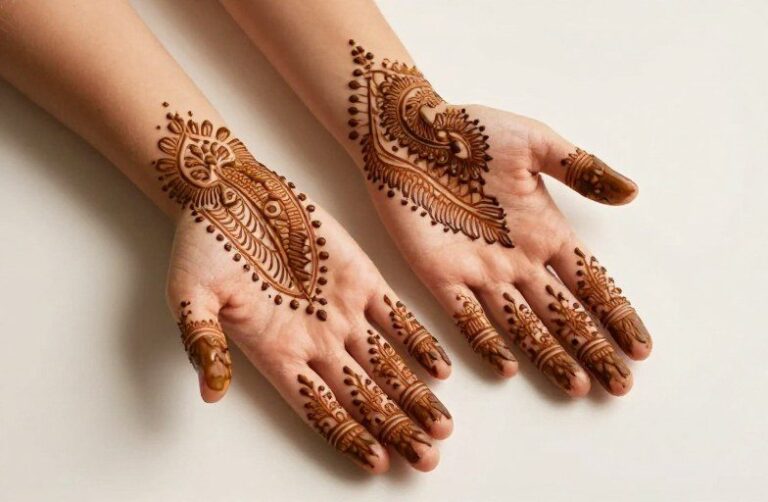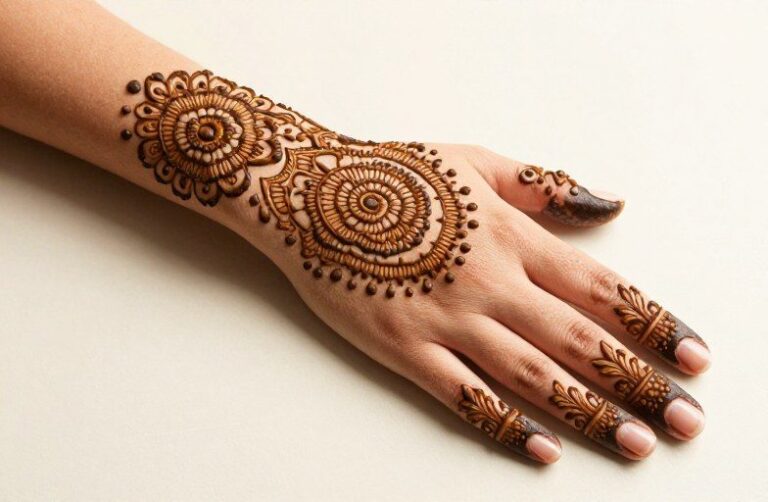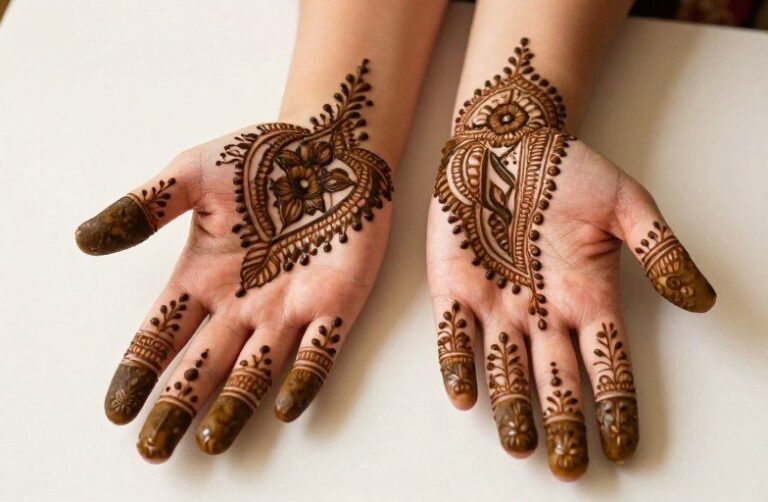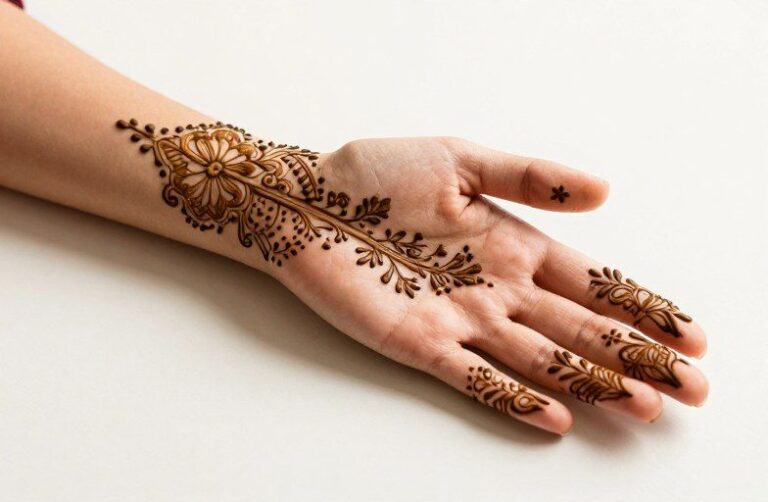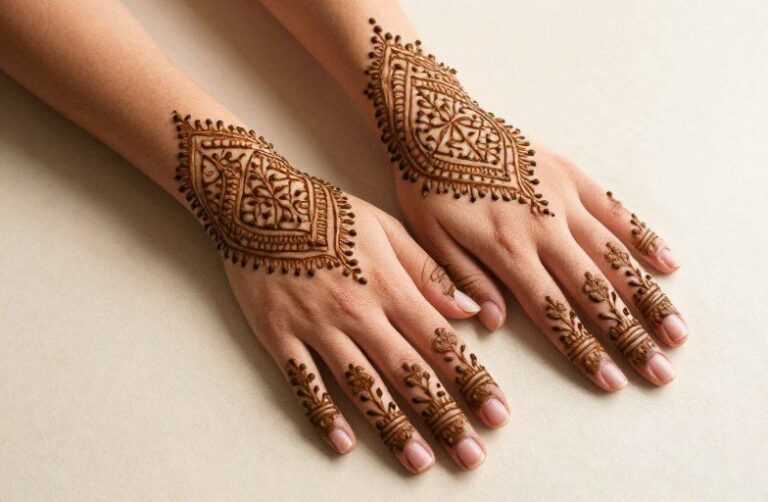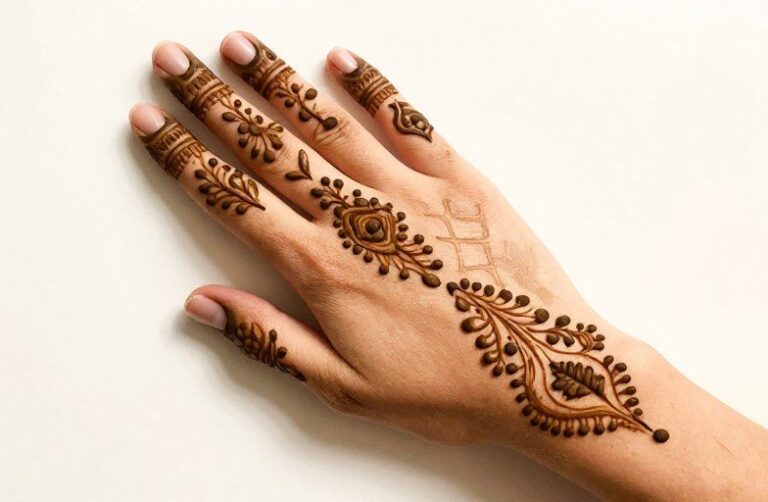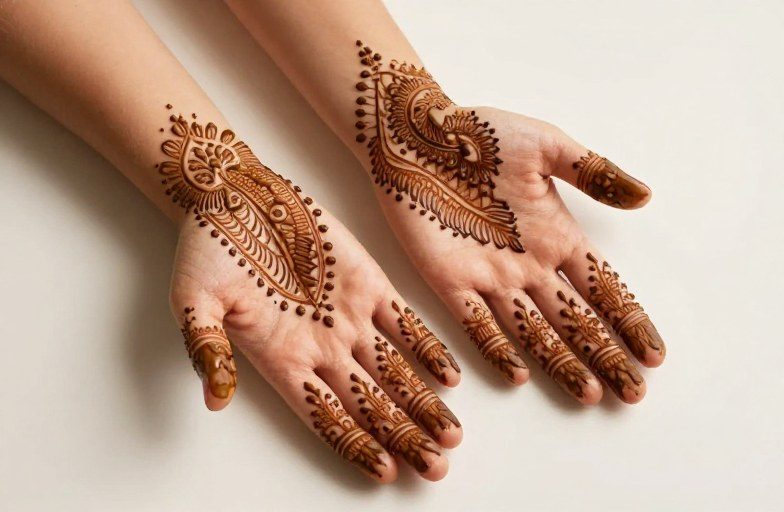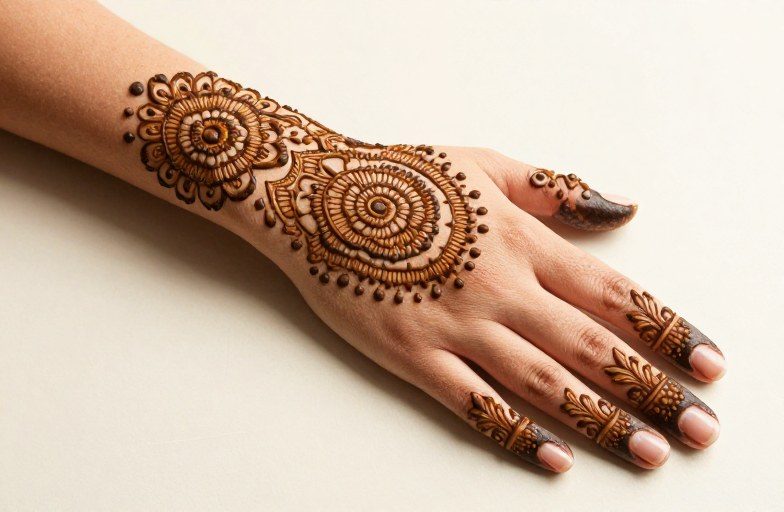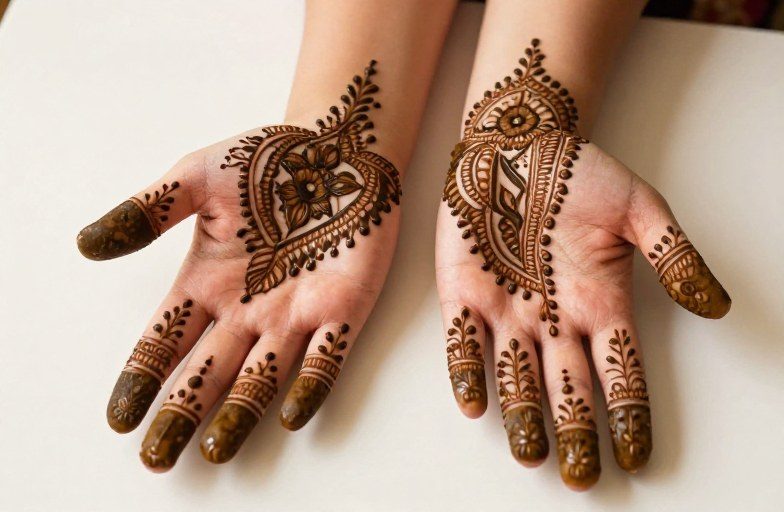
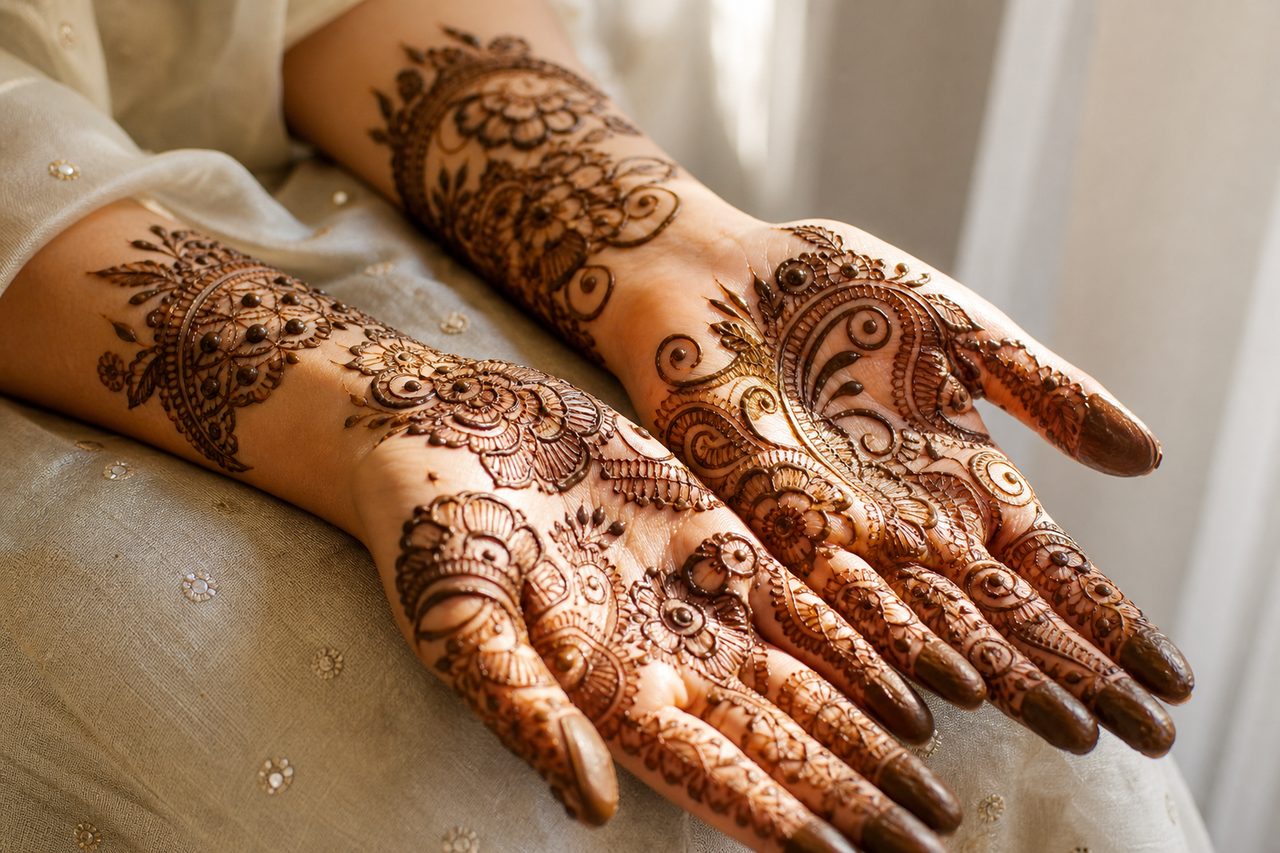
A henna tattoo is a temporary body design created with paste from the Lawsonia inermis plant, often linked to South Asian, Middle Eastern, and North African traditions. Unlike needle-and-ink tattoos, henna stains the top layers of skin and fades as those cells naturally exfoliate. The meaning shifts dramatically depending on context: bridal henna in India encodes wishes for fertility and prosperity, while Moroccan henna patterns historically served protective functions against the evil eye.
Religious & Spiritual Angles
Religious applications of henna run deep but vary sharply by region and sect. Understanding these distinctions matters, especially if you’re considering henna as a spiritual marker rather than pure decoration.
Islamic Traditions
Within many Muslim communities, henna carries sunnah associations, some trace it to the Prophet Muhammad’s encouragement of beautification for women. Eid celebrations, particularly Eid al-Fitr, commonly feature henna application. The designs tend toward floral arabesques and geometric patterns that avoid figurative imagery, aligning with aniconic preferences in religious art. Pakistani and Bangladeshi wedding ceremonies often include the mehndi night, where elaborate bridal patterns are applied amid singing and ritual.
Hindu and Jain Practices
Karvachauth, Teej, and Diwali all incorporate henna in North Indian practice. The bridal mehndi ceremony specifically encodes symbolic elements: hidden initials of the groom, mango leaves for love, and peacocks for beauty. Some Rajput traditions held that deeply stained henna indicated a mother-in-law’s love. Jain communities use henna during Paryushan and other festivals, though with typically simpler patterns than Hindu bridal work.
Jewish and Christian Adaptations
Moroccan Jewish communities maintained henna ceremonies before weddings, sometimes called berberisca or naqoud, with designs distinct from Muslim neighbors, often more figurative, incorporating fish and birds. Some modern Jewish couples, particularly in interfaith contexts, revive these ceremonies. Christian communities in Ethiopia and Eritrea have long used henna for festivals and mourning rituals, with crosses sometimes incorporated into geometric patterns.
Personal & Modern Meanings
Contemporary wearers outside traditional cultures often adopt henna for reasons disconnected from its origins. The temporary nature fundamentally changes the psychological contract, you’re not committing to a lifetime, which alters what “meaning” can mean.
Transition Markers
Graduations, sobriety anniversaries, and divorce finalizations all show up in modern henna requests. The two-week lifespan suits liminal moments: visible enough to mark the occasion, gone enough to not haunt the next chapter. Some trace this use to henna’s traditional role in life-cycle rituals, though the parallel is more structural than cultural.
Non-Permanent Experimentation
Testing a permanent tattoo design via henna has become common practice. The stain reveals how a pattern sits on your specific skin tone, how it moves with your body, and whether you actually enjoy seeing it daily. Dark brown henna on lighter skin gives roughly the contrast of black ink; on deeper skin tones, the stain reads more subtly, which surprises some first-timers.
Who Chooses This Tattoo
The demographic has broadened dramatically in the last two decades, creating tension between cultural practice and fashion adoption.
- Diaspora communities often use henna to maintain connection with heritage, particularly for children born outside traditional homelands
- Festival attendees at Coachella-type events frequently get henna as part of a broader aesthetic, sometimes with minimal cultural awareness
- Pregnant people increasingly choose henna for belly decoration, adapting Moroccan blessing traditions to baby showers
- Cancer patients sometimes use henna on scalps during hair loss, though this requires careful paste selection
- Tourists in Marrakech, Goa, or Dubai often get henna as a souvenir, with quality varying enormously
The ethics of who applies and who wears remain contested. Traditional artists in source communities often view tourist-market henna as economic survival; others see it as cultural dilution. Your own position in this matrix affects what the tattoo means, whether you choose to engage with that question or not.
How It Ages on Skin
Henna’s aging process differs fundamentally from permanent tattoo aging, and these differences carry symbolic weight for some wearers.
The Stain Cycle
Fresh paste removal reveals orange-yellow stain that darkens to reddish-brown over 24-48 hours as lawsone oxidizes. Peak color lasts roughly 3-5 days, then gradually fades through tan and yellow phases. Total disappearance typically takes 7-14 days depending on body location, skin chemistry, and aftercare. Palms and soles stain darkest and longest due to thicker stratum corneum; upper arms and backs fade fastest.
What Affects Longevity
- Chlorinated pools and hot tubs strip stain rapidly
- Exfoliating products accelerate fading unevenly, creating patchy results
- Natural oils (coconut, olive) can protect stain but may also leach color
- Friction from tight clothing or gym equipment wears patterns fastest
This impermanence is the point for some, unbearable for others. The meaning of “temporary” shifts with age and life circumstances, what feels liberating at twenty can feel pointless at forty.
Common Variations & Styles
Regional styles carry distinct visual vocabularies that communicate origin even to untrained eyes.
Indian/Pakistani Mehndi
Dense, all-over coverage with paisleys, peacocks, and fine line work. Bridal applications often cover hands to mid-forearm and feet to mid-calf, with fingertips solidly stained. The jaali (net) pattern creates lace-like negative space. Modern fusion adds crystals, glitter, or colored accents, though purists consider these departures.
Arabic/ Khaliji Styles
Flowing, asymmetrical designs with bold floral elements and significant negative space. Less dense than Indian work, with larger individual motifs. Gulf variations often incorporate geometric borders. The style photographs well and has become popular for quick festival applications.
North African Traditionally
Berber and Moroccan henna often features geometric patterns, some talismanic in origin. The fessi style from Fez uses fine, dense cross-hatching. Sudanese dulab (henna) includes distinctive dark, almost black, staining achieved through longer paste contact and specific mixing techniques.
Modern Synthetic Variants
“Black henna” containing PPD (para-phenylenediamine) produces darker, longer-lasting stains but carries significant allergy risk, skin reactions can scar or sensitize permanently. “White henna” contains no actual henna, using body paint or adhesive with white pigment. Neither carries traditional meaning, and both represent commercial adaptation rather than cultural continuation.
Design Tips & Pairings
For those seeking meaningful henna rather than casual decoration, several practical considerations improve outcomes.
Placement Logic
Palms display maximum contrast and tradition but limit daily function, typing, cooking, childcare all become awkward with fresh paste. The dorsal hand offers visibility with less interference. Feet carry strong bridal associations in many cultures; wearing foot henna outside those contexts reads differently depending on your audience. Inner wrists and forearms suit modern, visible-but-practical placement.
Complementary Elements
- Permanent tattoos: henna can frame existing ink or fill gaps during sleeve planning
- Jewelry: rings and bracelets interact with hand henna, plan coordination or intentional contrast
- Clothing: sleeve length and neckline determine how much henna remains visible; traditional outfits often designed to display specific patterns
Line weight matters more in henna than in permanent tattoo design. Fine lines blur faster as stain spreads slightly under skin surface. Bold outlines hold definition longer. Shading, as understood in tattooing, doesn’t translate, henna creates flat color fields with density variation rather than gradient.
Final Word
Henna occupies an unusual position in contemporary body modification: deeply traditional yet legally unregulated, culturally significant yet easily appropriated, technically simple yet requiring genuine skill for quality results. Its meaning depends on who’s applying, who’s wearing, and what context surrounds the act. The temporary nature isn’t a lesser version of permanence but a different category entirely, one that suits certain life moments better than indelible ink ever could. If you’re drawn to henna, sit with the question of why: decoration, connection, experimentation, or something less articulable. The answer shapes what the tattoo means more than any pattern you choose.
Frequently Asked Questions
How can I tell if henna paste is safe to use?
Pure henna smells earthy and stains orange-brown initially, never jet black. Avoid any product listing “black henna” or containing PPD, which can cause chemical burns and permanent scarring. Ask the artist for ingredient transparency; hesitation is a red flag.
Does henna work on all skin tones equally?
Henna stains all skin, but visibility varies. On deeper skin tones, the reddish-brown stain reads more subtly, often appearing as a warm glow rather than sharp contrast. The stain is still present and meaningful; photography sometimes fails to capture it accurately.
Can I get henna if I have sensitive skin or eczema?
Patch test 24 hours before full application, placing a small amount on your inner wrist. Avoid application over broken skin, active eczema patches, or recent sunburn. Natural henna is generally well-tolerated, but citrus additives in some pastes can irritate sensitive individuals.
How do I make my henna stain last longer?
Keep paste on 6-12 hours minimum; scrape off rather than washing. Avoid water for the first 24 hours if possible. Apply a thin layer of natural oil or sugar-lemon sealant after paste removal. Minimize friction and chemical exposure to the stained area.