A pregnant woman considering henna usually asks two things: is it safe for my body and my baby, and what would the marking mean? The answer to the first is generally yes, with specific precautions. The answer to the second depends on whose hands hold the cone, what tradition or intention shapes the design, and what you need the ritual to do for you.
What Pregnancy Henna Means
The practice of marking pregnant bodies with henna is often linked to North African, Middle Eastern, and South Asian traditions. In many of these cultures, the application is not merely decorative. It functions as a protective act, a communal blessing, and a way to honor the threshold between pregnancy and birth. The belly, specifically, becomes a focal point: the navel as center, the radiating pattern as shield or prayer.
Traditional Symbolism
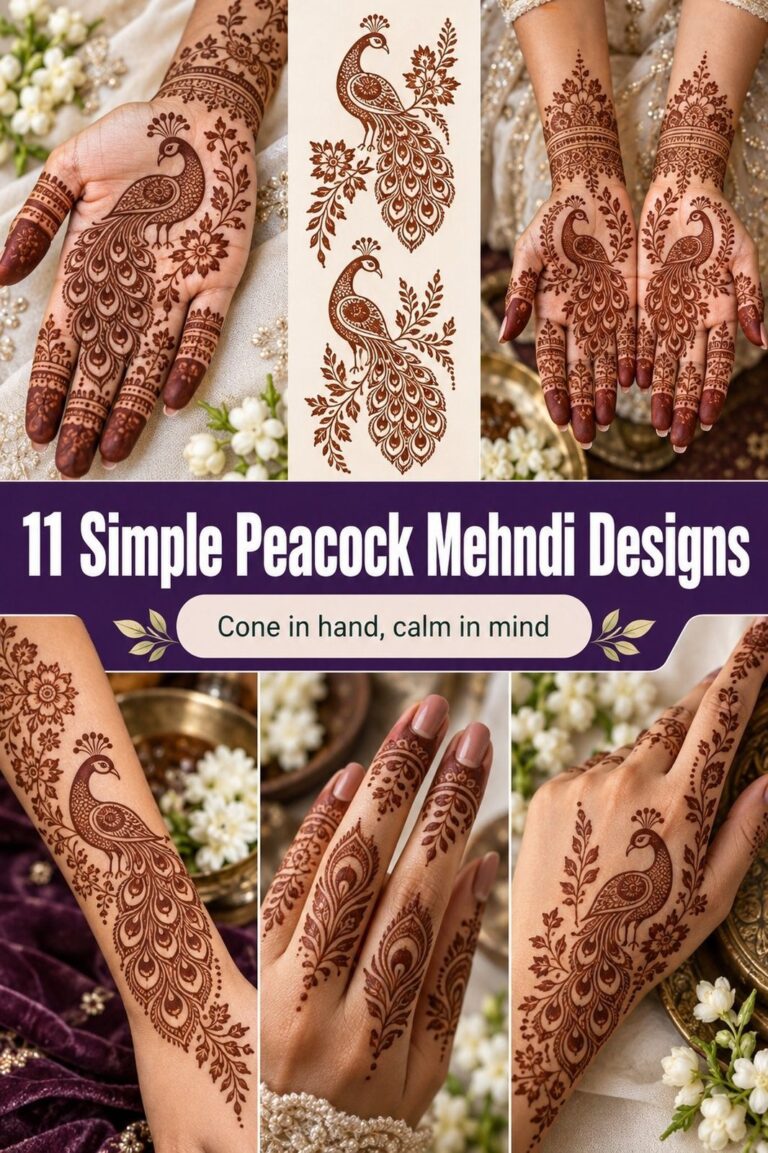
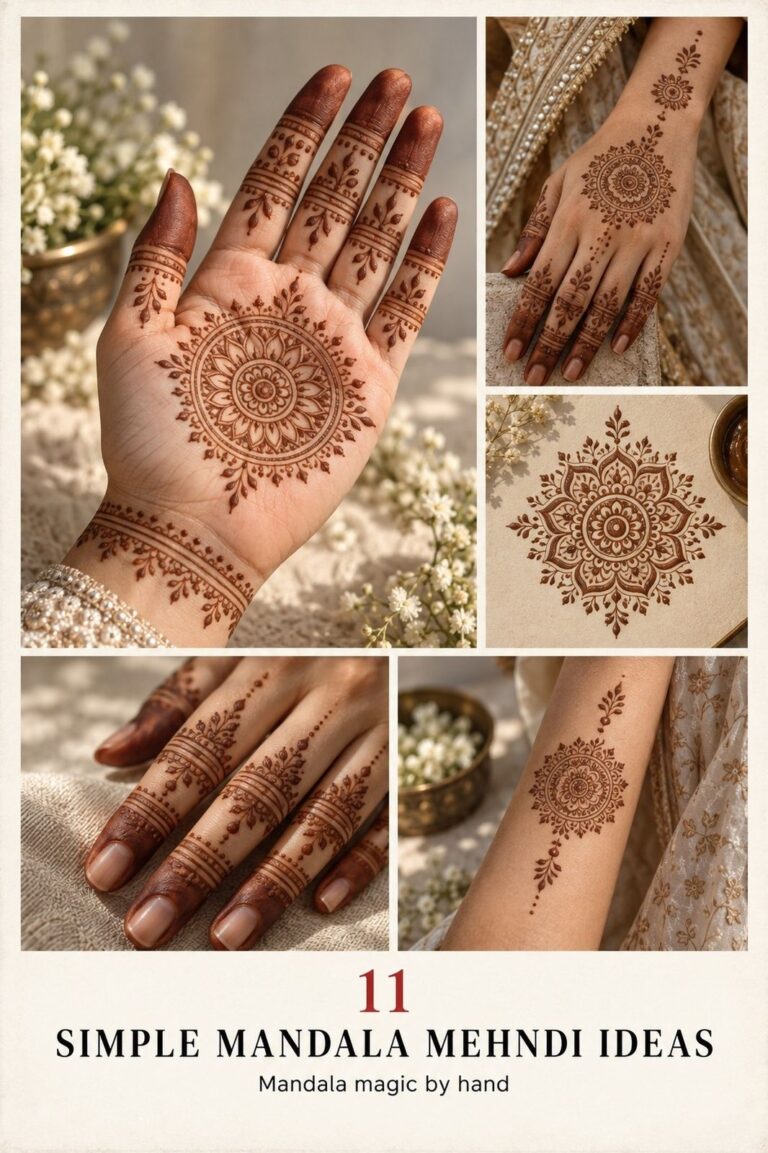
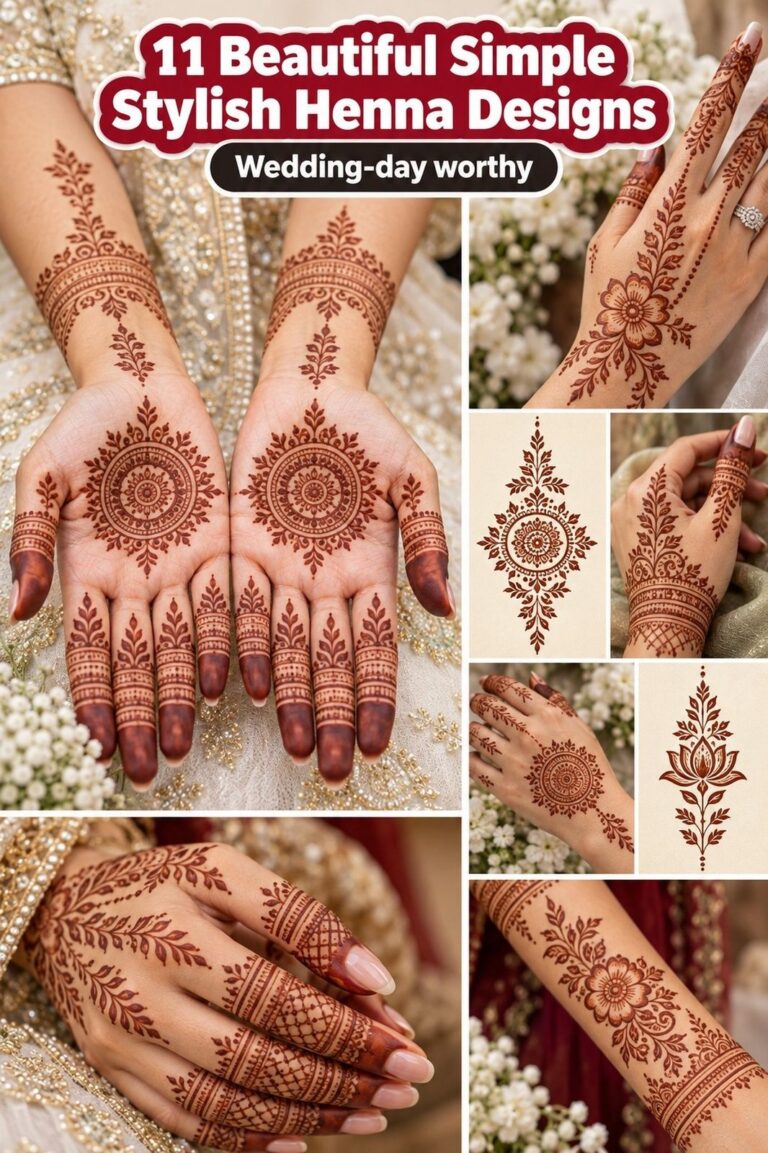
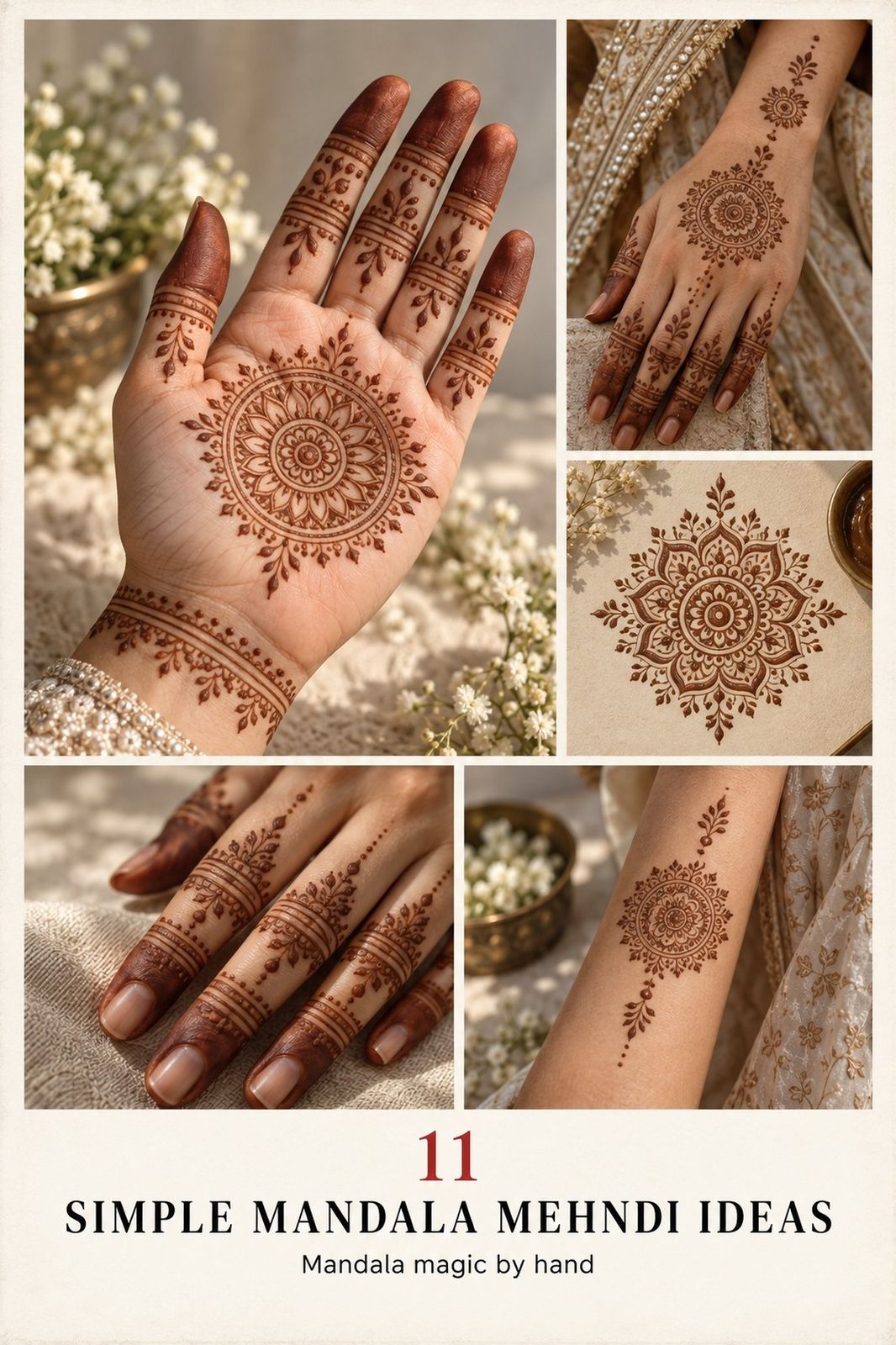
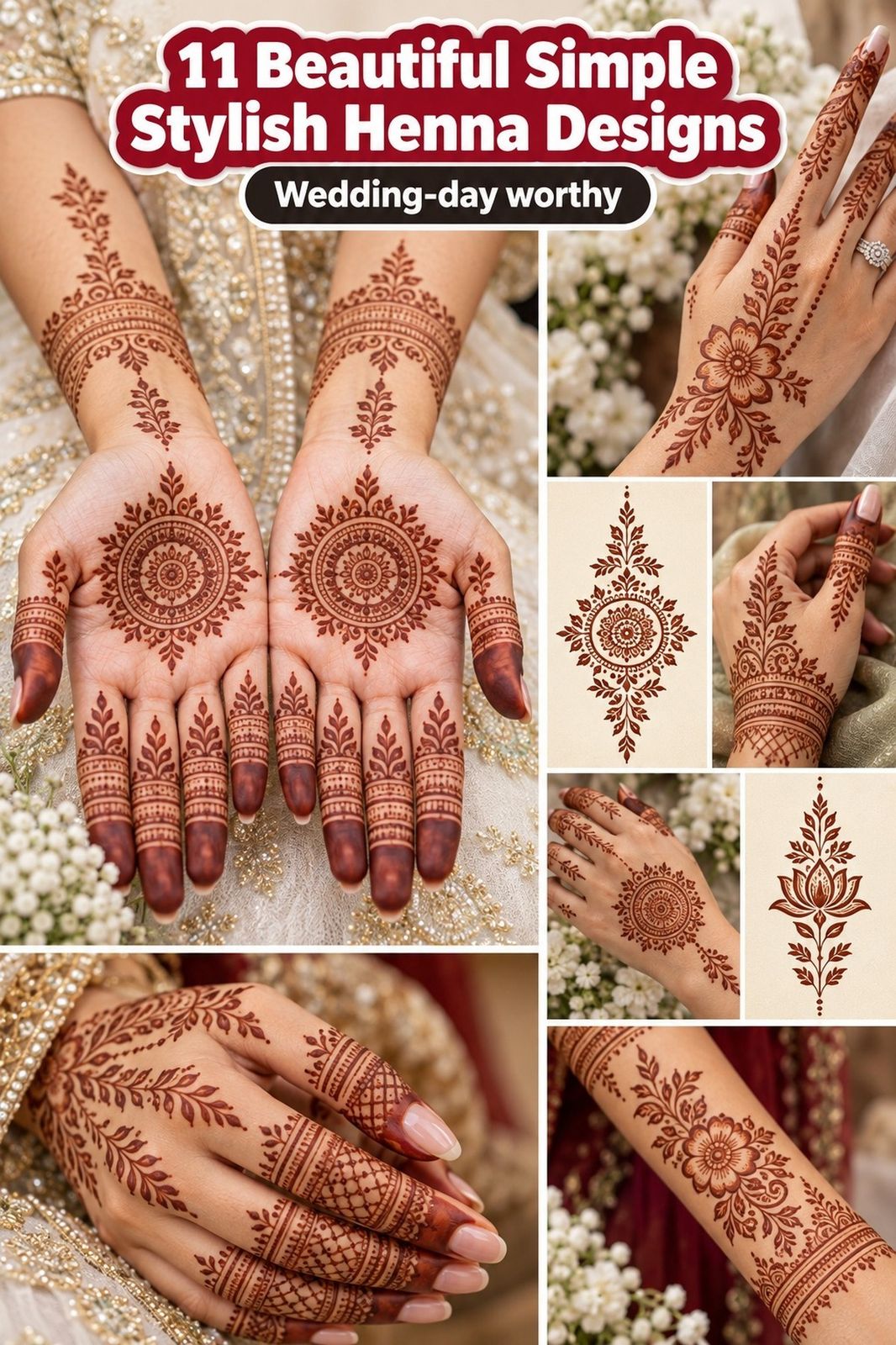
Common motifs carry specific weight. Floral elements, lotus, jasmine, rose, reference fertility and the unfolding of life. Geometric borders or eye-shaped forms are often linked to warding against harm. The mandala structure, radiating from the navel, maps onto ideas of the body as a contained, sacred space during a vulnerable time. These meanings are not universal; they shift by region, by family, and by the individual artist’s training. What reads as pure ornament to an outsider may carry layered significance to the person wearing it.
Personal and Contemporary Layers
Today, many women adapt or extend these frameworks. A design might commemorate a pregnancy after loss, acknowledge a surrogate’s experience, or simply create a moment of beauty in physically demanding months. Some use the application as a ritual of preparation, a way to mark time, or a last quiet act focused on their own body before birth shifts attention outward. The meaning is not fixed. It accrues through the intention brought to the session, the community present, and the story told about the design afterward.
Where the Practice Comes From
Historical documentation of pregnancy-specific henna is sparse. The broader use of henna for skin decoration in North Africa, the Middle East, and South Asia is well-attested, but separating pregnancy applications from general festive or bridal use requires care. Some traditions link henna to fertility deities in ancient Egyptian practice, though this connection is often reconstructed rather than directly documented. Moroccan henna nights, typically associated with weddings, sometimes extend to pre-birth gatherings in specific communities. South Asian godh bharai ceremonies often include henna, though the designs and their meanings vary by region, religion, and family custom.
Regional Approaches
- Indian subcontinent: Intricate hand and foot designs during pre-birth celebrations, with motif choices often shaped by family tradition and regional style rather than rigid rules
- North Africa: Bold geometric or floral belly patterns, sometimes applied by older female relatives using established techniques
- Levant: Simpler vine or floral patterns on hands and feet, with protective intent often emphasized
- Diaspora communities: Blended approaches combining ancestral patterns with contemporary imagery, ultrasound shapes, names in multiple scripts, or personal symbols
Colonial and missionary pressures disrupted many of these practices in their regions of origin. Contemporary pregnancy henna in Western contexts exists in tension: it may function as genuine cultural continuity, as aesthetic adoption, or as some combination. The question of who applies it, who taught them, and what understanding they bring matters for assessing authenticity and respect.
Safety During Pregnancy
This is the core practical concern, and it deserves direct attention. Natural henna, made from the dried and powdered leaves of Lawsonia inermis, mixed with lemon juice, sugar, and essential oils, has a long history of external use. For most pregnant women, it is considered safe when applied to intact skin. But the details matter significantly.
What to Verify
Insist on knowing the paste ingredients. Natural henna produces a reddish-brown stain that darkens over 24 to 48 hours. Any product claiming to produce black results quickly contains para-phenylenediamine (PPD), a chemical dye associated with severe allergic reactions, chemical burns, and scarring. PPD exposure during pregnancy is specifically risky; it can be absorbed through skin and has been linked to adverse outcomes. No reputable artist will use or offer black “henna.” If you see this, leave.
Essential oils in paste require attention. Many traditional recipes include tea tree, lavender, or eucalyptus oil. Some of these are not recommended in pregnancy at therapeutic doses, though external application in henna paste is generally considered minimal exposure. If you have scent sensitivities, gestational allergies, or specific medical guidance, ask for an oil-free or reduced-oil mix. A skilled artist can accommodate this.
Physical Comfort and Timing
The application process requires stillness, often 30 minutes to several hours depending on complexity. Late pregnancy can make sustained sitting uncomfortable or medically inadvisable. Consider placement, session length, and your ability to change position. Belly application in the third trimester may be easiest side-lying or with substantial pillow support.
Skin changes during pregnancy affect results. Stretching, increased sensitivity, and altered skin chemistry can produce unpredictable stain color or duration. Some women stain darker; some lighter. This is normal variation, not failure. Test a small area if you have reactive skin or have never used henna before.
Medical Timing Considerations
Consider your prenatal schedule. Group B strep screening occurs around 35 to 37 weeks; avoid fresh belly henna immediately before this if your provider needs clean skin for culture. Similarly, if you have scheduled monitoring, non-stress tests, or biophysical profiles, placement should not interfere with sensor or probe contact. Communicate with your care provider if you have specific concerns.
Design Choices and Practical Constraints
Pregnancy bodies change shape. A design that looks centered at application may shift as the belly grows or as position changes. Experienced artists account for this, placing patterns to accommodate distortion and choosing flowing, organic lines over rigid geometric precision that will visibly warp.
Belly-Specific Approaches
- Central mandala: Radiating from the navel, typically scaled to the available surface, works with the body’s natural focal point
- Side vines: Climbing from hip toward rib, accommodating asymmetry as pregnancy progresses
- Full wrap: Continuous pattern around the torso, technically demanding, most striking in late pregnancy when the belly is largest
- Minimal accent: Small design near the navel or along the hip, for symbolic presence without extensive coverage
Line-dominant patterns generally age better than heavy shading. The paste’s natural variation creates texture that reads as intentional. Fine detail near the navel often blurs first due to skin stretching and clothing contact.
Other Placements
Wrist and ankle bands allow easy display during daily activities and accommodate swelling that may shift belly placement. Upper back or shoulder designs suit mothers planning water births who want visible art during labor. Each placement changes the tattoo’s social function: private ritual versus public announcement, personal meditation versus shared symbol.
Working With an Artist
Not all henna artists have pregnancy experience. Ask directly about their training, their paste ingredients, and their comfort with pregnant clients. A professional should welcome these questions, explain their sourcing, and adjust positioning for your body. They should also advise realistic expectations about stain duration and color variation on pregnancy-altered skin.
Application as Ritual
The session itself carries meaning. Some women invite partners to participate in simple pattern application, transforming the act into shared preparation. Others arrange group ceremonies where expectant mothers apply henna to each other, creating community bonds. The fading of the stain, typically one to two weeks, becomes a meditation on impermanence, a quiet early lesson in loving what does not last.
Text and Custom Imagery
Some incorporate calligraphy, due dates, birth flowers, or family symbols. If using text in any language, verify transcription with a native reader or scholar. Misspelled blessings or unintended meanings undermine the protective intent. Numerals and dates work cleanly across scripts but should be checked for accidental associations in the chosen language. Ultrasound imagery can be reinterpreted in henna’s flowing style, though the abstract nature of the medium means it will read as suggestion rather than portrait.
What Natural Henna Actually Looks Like
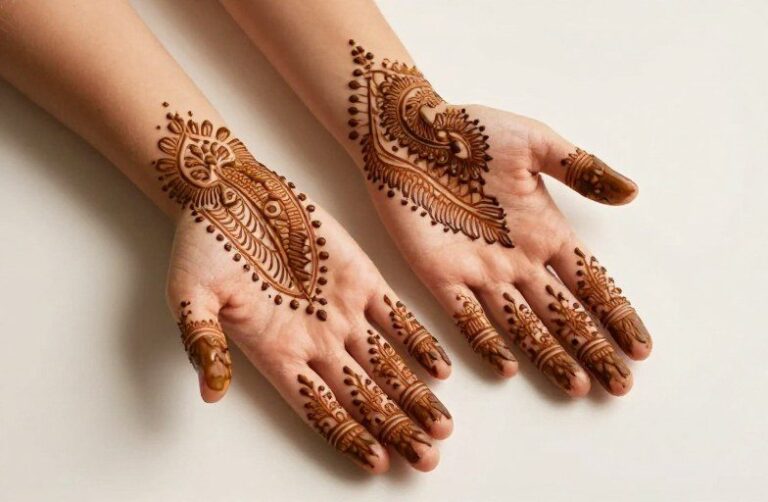
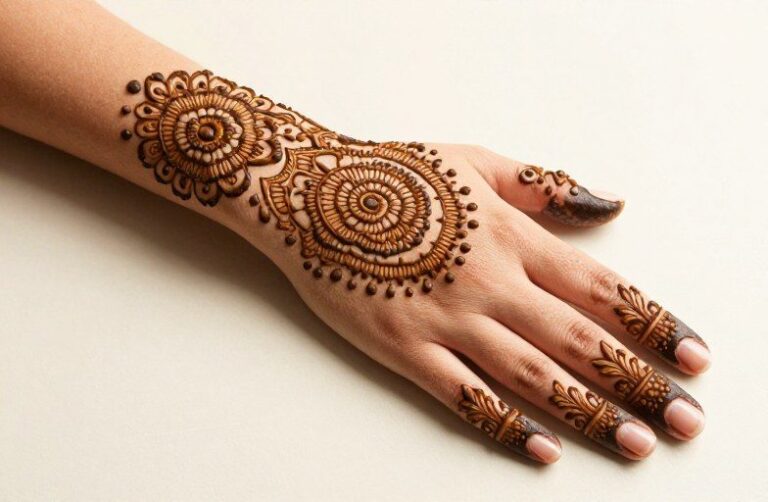
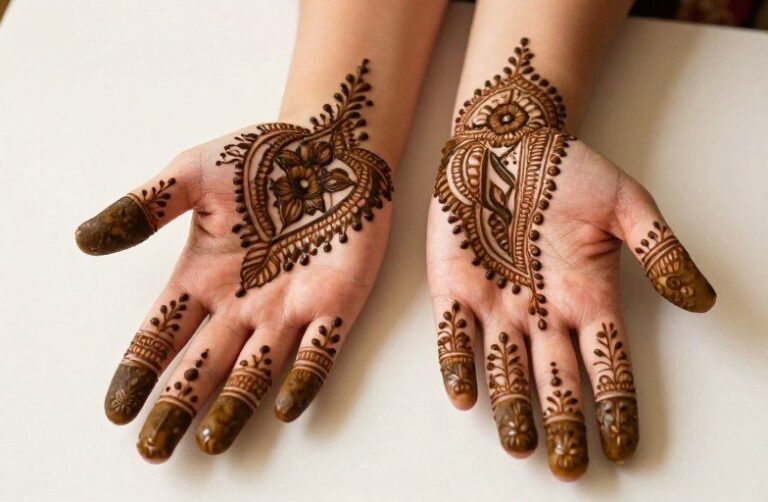
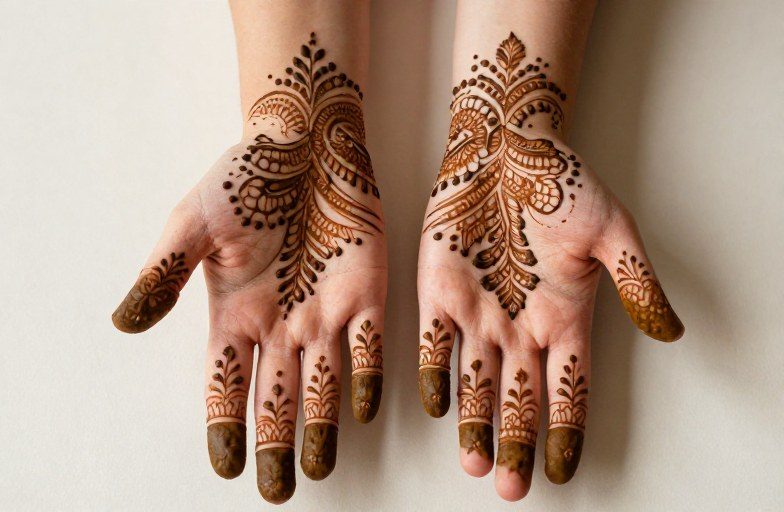
Natural henna produces one color range: orange when paste first flakes away, deepening to reddish-brown and eventually mahogany over two days. This is not a defect. The warm tone against pregnancy-altered skin, often lighter or more translucent, creates a specific glow that chemical alternatives cannot replicate.
Final color depends on skin chemistry, body temperature, paste freshness, and placement. The same batch produces different results on wrist versus belly. This unpredictability belongs to the medium. Artists who add unknown darkening agents to force uniform results are compromising safety for aesthetics.
“White henna” is not henna at all; it is body paint, useful for photography but lacking symbolic weight and staying power. Jagua, a South American fruit-derived dye producing blue-black results, sometimes substitutes for those wanting darker contrast. However, jagua’s safety during pregnancy is less documented than henna’s traditional use. For the specific protective and celebratory symbolism associated with pregnancy marking, natural henna’s established presence carries meaning that alternatives do not inherit.
Before You Decide
The question of whether to get henna during pregnancy opens into practical and reflective territory. Verify your artist’s ingredients and experience. Consider your physical comfort, medical schedule, and skin changes. Think about what you want the marking to do: protect, celebrate, prepare, commemorate, beautify. The practice offers genuine depth when approached with awareness of its cultural roots, its material requirements, and your own specific needs. The stain will fade. The intention, and the moment of stillness it creates, may last longer.
Frequently Asked Questions
Is henna safe during all trimesters?
Natural henna is generally considered safe for external application throughout pregnancy, but first-trimester caution is common due to heightened sensitivity and miscarriage risk. Most practitioners and pregnant women prefer waiting until the second or third trimester, when the pregnancy is established and the belly offers a meaningful canvas.
Can henna induce labor?
There is no evidence that external henna application induces labor. The primary physical concern is comfort during long application sessions in late pregnancy, not stimulation of uterine contractions.
Why does my henna look orange at first?
Natural henna always begins orange and oxidizes to reddish-brown over 24 to 48 hours. Immediate dark brown or black results indicate chemical additives, specifically PPD, which should be avoided especially during pregnancy.
Will stretching ruin my belly design?
Experienced pregnancy henna artists design with distortion in mind, using flowing organic lines and central placement that accommodates growth. Some shifting is expected and factored into the original design.
How do I find a pregnancy-experienced henna artist?
Ask directly about their training, paste ingredients, and experience with pregnant clients. Reputable artists will explain their sourcing, offer ingredient transparency, and describe how they adjust positioning for pregnancy bodies.