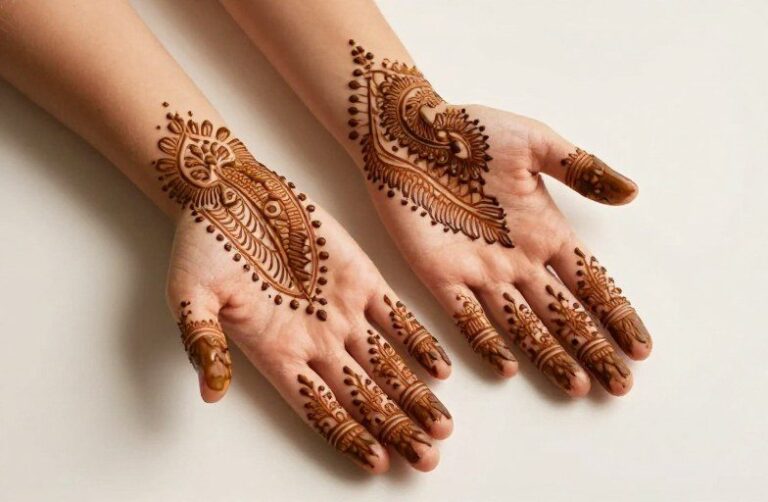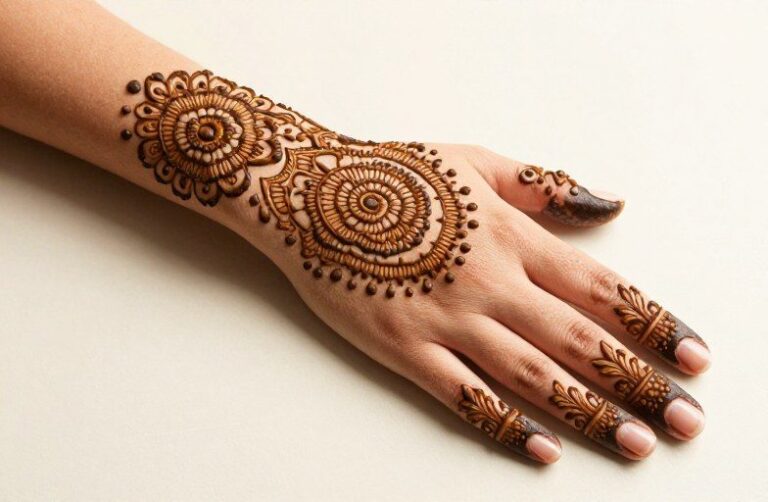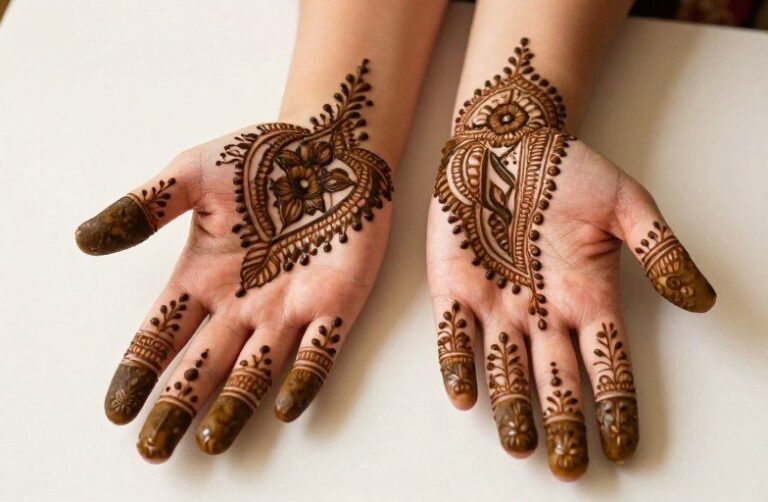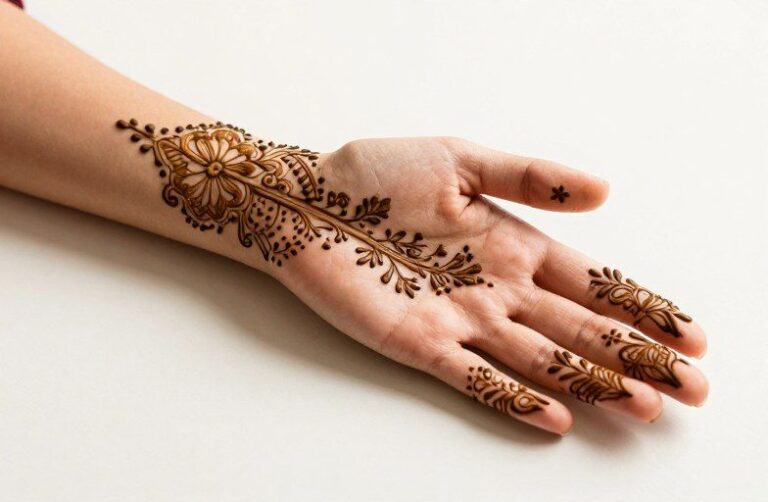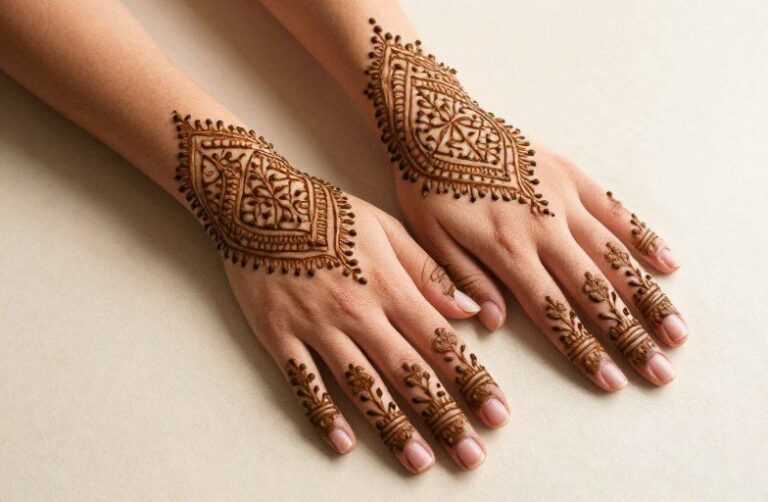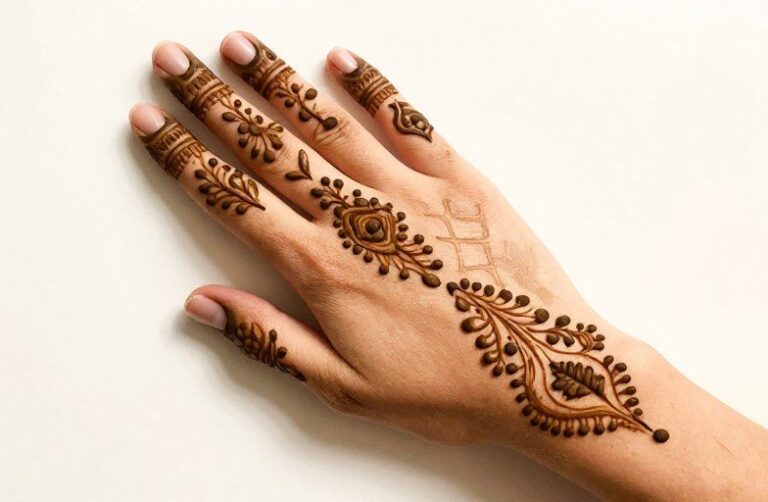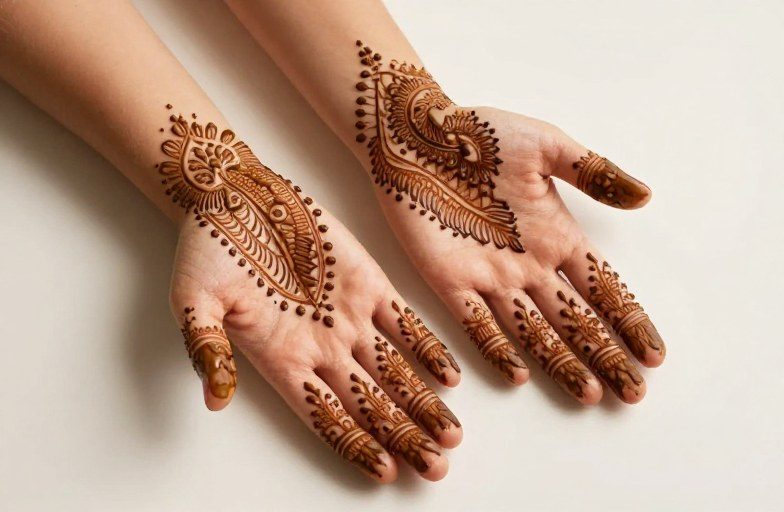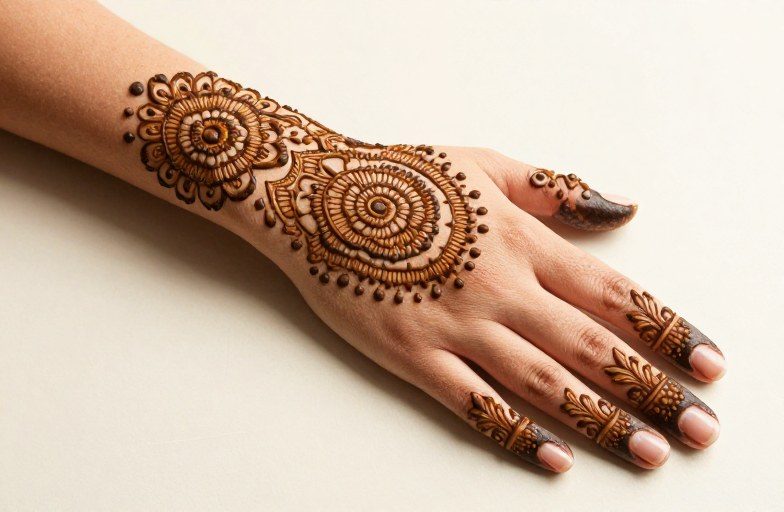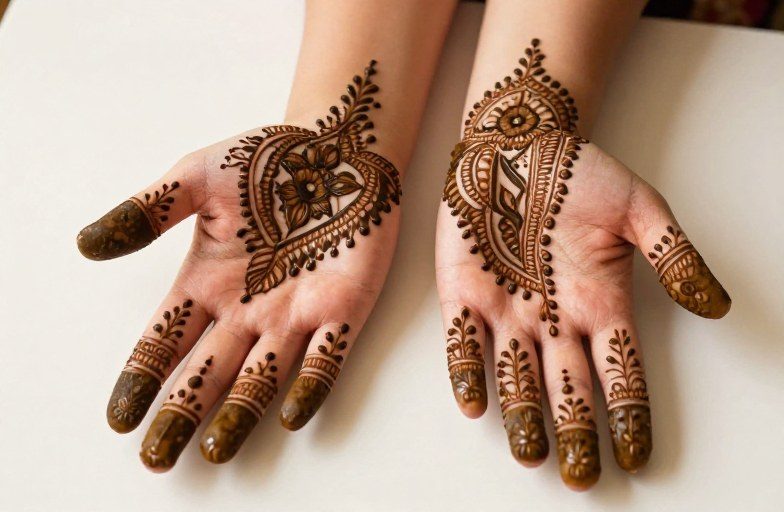
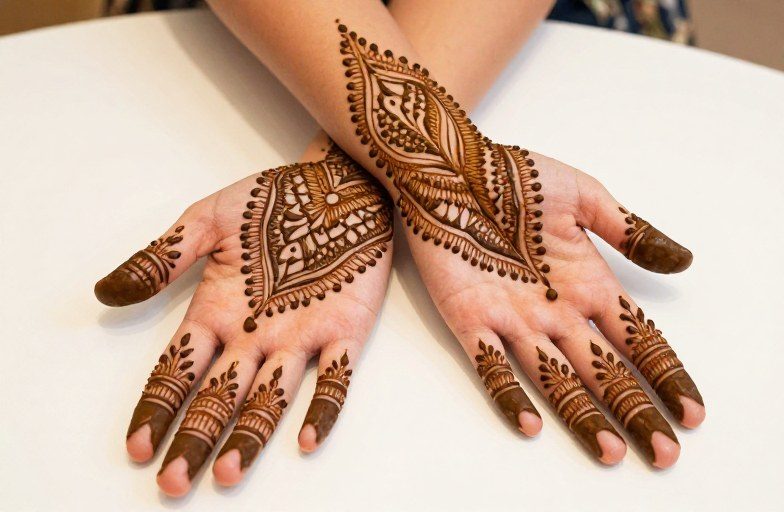
A henna back tattoo means different things depending on if you’re referencing traditional mehndi or a permanent tattoo designed to mimic its flowing, organic patterns. the design channels centuries of cultural practice: protection, blessing, and marking significant life passages. On the back specifically, these patterns transform the body’s largest canvas into something between armor and ornament.
Personal & Modern Meanings
Marking Transitions
People gravitate toward henna-style back tattoos during actual life shifts, marriage, recovery, relocation, coming out. The back placement matters here. You can’t see it yourself without effort; it’s a private declaration that still exists in space, felt on fabric, glimpsed in mirrors. That tension between hidden and visible mirrors the uncertainty of transition itself.
Modern wearers often strip away specific cultural references and keep the visual language: trailing vines, paisley teardrops, mandala centers, finger-tip detailing that extends across shoulder blades. The meaning becomes personal through selection rather than inherited symbolism. Someone might choose a lotus mandala between the scapulae to represent emergence from difficulty, or a full-back piece with Mehndi-inspired negative space to honor a partner’s heritage without claiming it as their own.
Reclamation & Respect
Some choose this style to reclaim their body after trauma or medical intervention. The dense patterning can incorporate scar tissue, the organic lines flowing around rather than disguising changed skin. Others, particularly those with South Asian or North African ancestry, use permanent henna-style tattoos to preserve what was always temporary, wedding mehndi that washed away, Eid patterns from childhood.
History & Cultural Roots
Henna as a body art practice stretches back thousands of years, with archaeological evidence often linked to ancient Egypt and the Bronze Age Levant. The plant, Lawsonia inermis, grows across North Africa, the Middle East, and South Asia, and its cooling properties likely preceded decorative use, people in hot climates stained their palms and soles for practical relief before the patterns grew elaborate.
From Ritual to Celebration
Traditional mehndi ceremonies remain central to South Asian weddings, where intricate back-of-hand and foot designs can take hours to apply. The back, though less common in pure traditional practice, appears in some regional bridal customs and in contemporary fusion ceremonies. The darkness of the stain was once interpreted as auspicious, deeper color meant stronger blessing, more passionate marriage, better mother-in-law relations. These beliefs persist in modified form even among secular practitioners.
Permanent tattooing using henna-inspired designs is far newer, emerging from 1990s Western tattoo culture’s appetite for “tribal” and ornamental styles. The crossover sparked ongoing debates about appropriation that remain unresolved. What’s clear: the visual vocabulary migrated faster than its contextual meaning, and responsible wearers acknowledge that gap.
Who Chooses This Tattoo
The back placement attracts specific personalities. Dancers and performers use the full-back canvas for stage presence, visible in backless costumes, striking under lighting. Yoga practitioners often choose lower-back or upper-spine placements that align with chakra symbolism, though this overlays Hindu metaphysical concepts onto what was originally more diffuse cultural practice.
You’ll see henna back tattoos on people who want ornamental rather than figurative art. They tend to reject the portrait-and-quote tattoo mainstream, preferring pattern that reads as decoration first, meaning second. Many have existing tattoos and want something that connects or fills space between pieces without competing for narrative attention.
Age-wise, this skews slightly older than first-tattoo averages. The style demands commitment to coverage and scale that younger or budget-constrained clients often avoid. The back’s pain factor, moderate to severe through spine and rib-adjacent areas, also filters for determined clients.
Common Variations & Styles
Placement & Scale
- Full back piece: Dense pattern from nape to waist, often centered on spine, sometimes extending to shoulders. Most visually striking, most time-intensive (15-30 hours over multiple sessions).
- Upper back/shoulder cap: Mandala or floral burst between scapulae, sometimes wrapping to deltoids. Popular entry point; can expand later.
- Lower back/trail: Vertical or horizontal banding above or across sacrum. Declined in popularity since the 2000s “tramp stamp” era but persists in more sophisticated patterning.
- Spine line: Narrow vertical strip following vertebrae, often with symmetrical branching. Minimalist interpretation; ages poorly if too fine.
Line vs. Shading
Traditional henna is purely line work, no shading, no color gradients. Tattoo adaptations sometimes honor this constraint, using bold black lines with skin as negative space. Others incorporate dotwork stippling, greywash softening, or even limited color to suggest the henna paste’s progression from wet black to oxidized brown. The pure-line approach ages cleaner; greywash in dense back pieces can muddy over time as ink spreads in the skin’s looser dermal structure.
Symbolism & Core Meaning
Specific motifs carry established associations, though individual wearers often layer personal meaning atop traditional ones:
- Paisley (kairi/boteh): Often interpreted as mango or sprouting seed, representing fertility and new beginnings. In Persian contexts, some trace it to cypress tree symbolism.
- Lotus: Purity emerging from murk, commonly associated with Hindu and Buddhist iconography. In henna contexts, it anchors bridal designs.
- Mandala: Cosmic order, wholeness, meditation focus. The circular form contains and organizes the chaotic flow of surrounding vines.
- Eye motifs: Protection against evil influence, sometimes called nazar references. Appears in North African and Middle Eastern henna traditions.
- Vines and trailing lines: Connection, growth, the unbroken line of life. Their meandering quality distinguishes henna style from more rigid geometric tattoo traditions.
On the back specifically, these symbols face outward from the wearer, presented to the world rather than absorbed inward. That orientation matters for meaning. A mandala on the chest draws energy in; the same mandala between shoulder blades projects intention outward.
How It Ages on Skin
The Back’s Specific Challenges
Back skin moves constantly with shoulder rotation and spinal flexion. Over years, this mechanical stress blurs fine lines faster than placements on more stable areas like outer forearm or calf. The upper back, between scapulae, stretches less than lower back but still sees significant movement during daily reaching and lifting.
Line-heavy henna designs age better than shading-dependent versions. Bold outlines at 0.35mm or thicker hold definition; hairline details at 0.25mm or below often disappear into soft grey within 5-7 years. The dense patterning of traditional henna style actually helps here, adjacent lines blur together into maintained texture even as individual elements lose crispness.
Sun Exposure
Back tattoos see intermittent but intense sun exposure, beach days, swimming, backless summer clothing. UV degradation hits black ink fastest, shifting it to blue-grey or greenish tones. This matters less for henna-style work than for color realism, but the shift does flatten the warm/cool contrast that makes fresh line work pop. SPF application to your own back is awkward; plan on assistance or clothing coverage for serious sun exposure.
Healing a back tattoo requires logistics. Sleeping on your stomach or side for two weeks strains anyone not naturally positioned that way. The back’s large surface area means more plasma and ink shedding during initial healing, loose, dark clothing protects both your sheets and the tattoo. Plan sessions knowing you’ll need 3-4 days before returning to heavy physical work or gym back exercises.
What to Remember
A henna back tattoo carries weight beyond its visual appeal. If you’re drawn to the style, sit with if you’re engaging with cultural tradition or merely borrowing aesthetics. The best work comes from artists who’ve studied the source material, look for portfolios showing accurate traditional motifs, not just vaguely “ethnic” patterning. Ask about their training; many serious ornamental tattooists have traveled to study with mehndi practitioners or South Asian tattoo artists.
The back’s scale demands commitment in time, money, and pain tolerance. A full piece represents 20+ hours and thousands of dollars. Start smaller if uncertain, upper back mandala, shoulder cap, rather than committing to a full back piece you’ll abandon halfway. The style’s density makes cover-up nearly impossible; laser removal of saturated black back work is grueling and incomplete.
Most importantly, know why you’re choosing this specific visual language. The meaning isn’t automatic. Henna patterns deserve the respect of understanding, even if your personal significance diverges from historical use. The tattoo will outlast your current life chapter. Make sure the connection runs deeper than current fashion.
Frequently Asked Questions
Does a henna back tattoo have to be black like real henna, or can it use color?
Black line work most authentically mimics traditional henna, but some artists incorporate brown, red, or even jewel tones to suggest the paste’s oxidation process. Pure black ages most cleanly; color additions require more maintenance and fade unevenly on back skin.
How do I find a tattoo artist who specializes in henna-style back pieces?
Search for ornamental or geometric specialists rather than generalists. Look for portfolios showing consistent fine line control, traditional motif accuracy, and healed photos. Artists with South Asian, Middle Eastern, or North African backgrounds often bring deeper understanding, though skill and respect matter more than ethnicity alone.
Is it culturally appropriative to get a permanent henna-style tattoo if I’m not from those traditions?
There’s no universal consensus. Avoid sacred or specifically religious motifs, credit the tradition’s origins, and consider whether your engagement supports living practitioners. Some choose to commission traditional mehndi artists for special occasions rather than permanently appropriating the visual language.
Why do henna back tattoos often cost more than other styles at similar sizes?
The dense, unbroken line work requires intense concentration and steady hand speed. There’s no room for error, no shading to hide wobbles, no color blocks to break up complexity. Ornamental specialists also command higher rates due to specialized skill demand and smaller client pools.