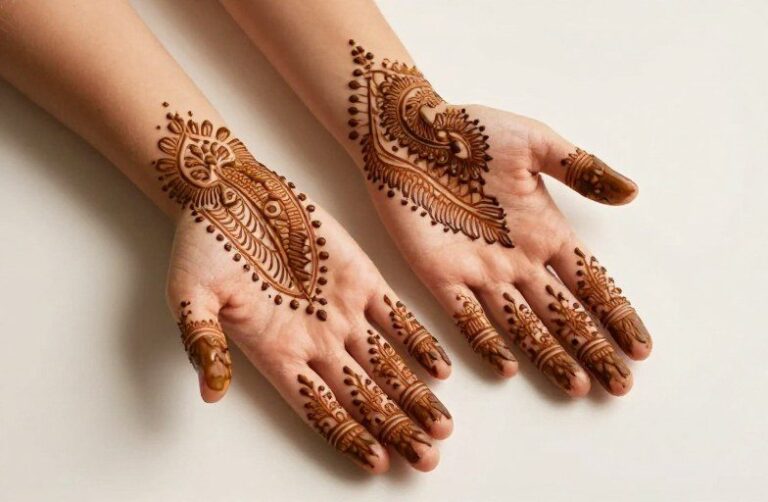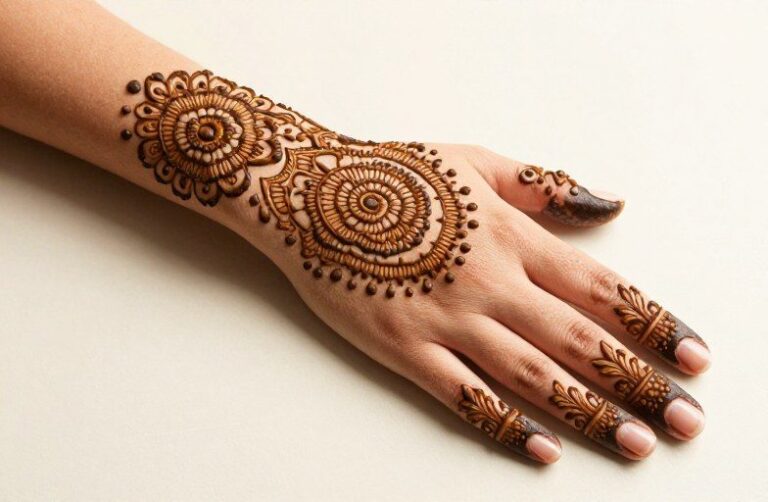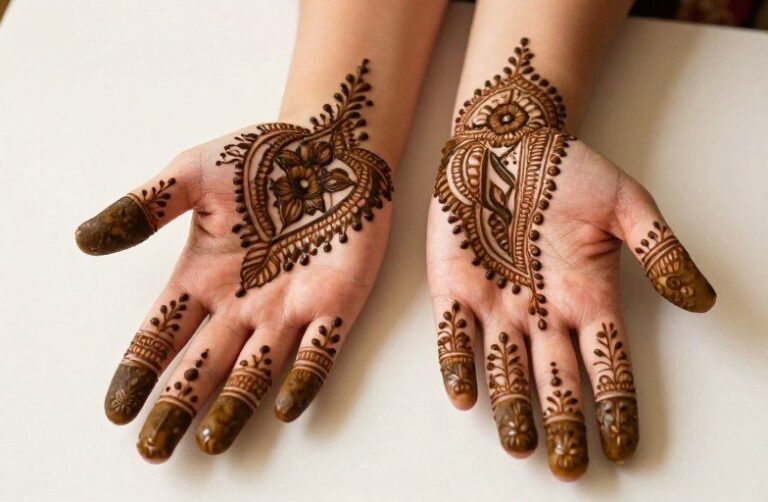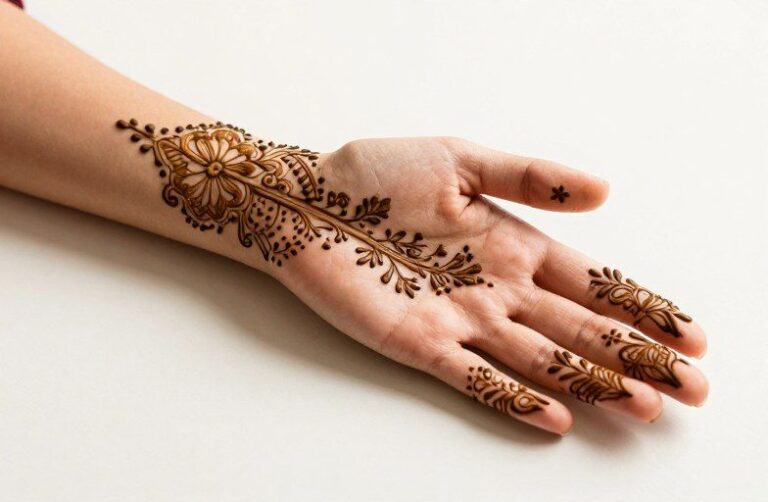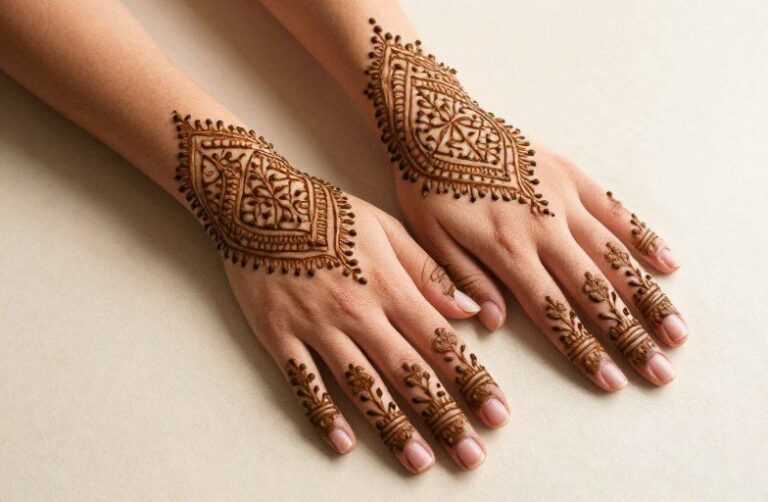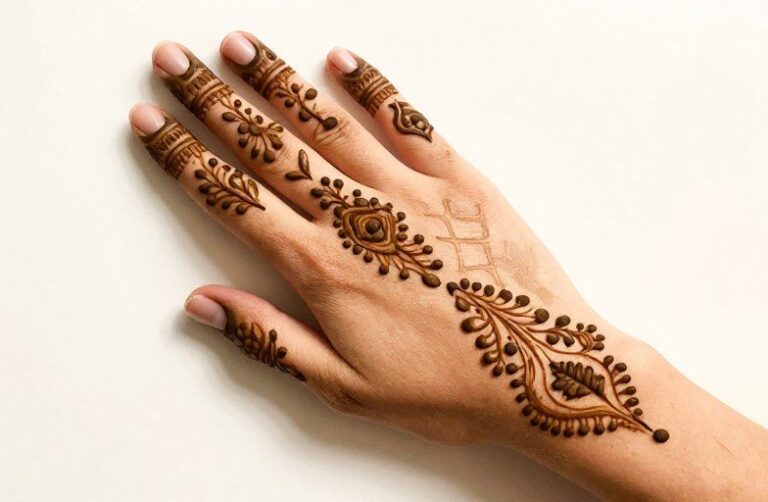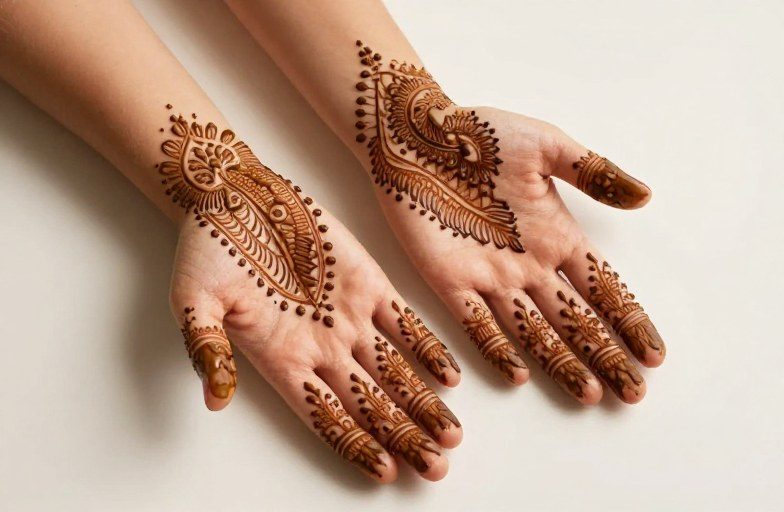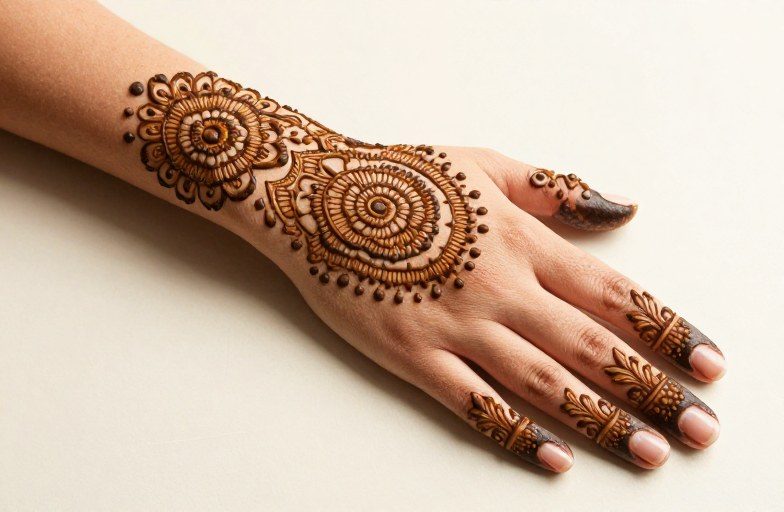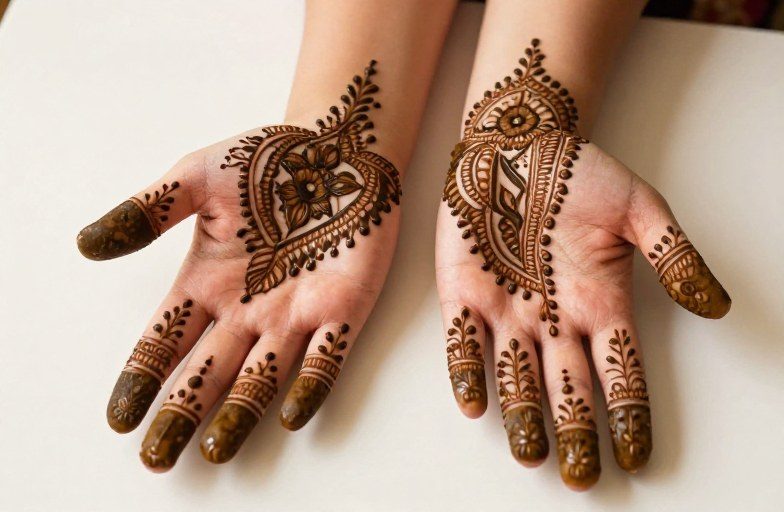
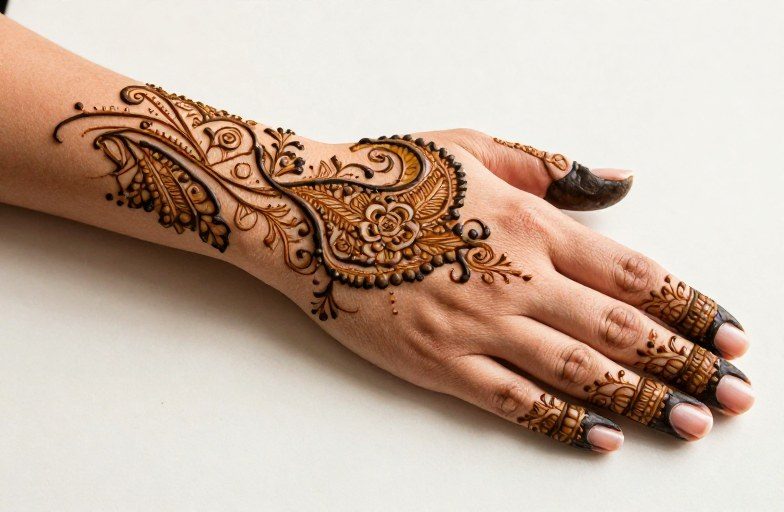
A henna bird tattoo joins two visual traditions: the flowing, organic patterns of Mehndi body art and the ancient symbolism of birds as messengers between earth and sky. this design suggests freedom, spiritual movement, and the cycles of life and renewal. The henna style adds cultural weight, particularly from South Asian and Middle Eastern traditions where intricate henna application marks celebration, protection, and moments of transition.
What the Henna Bird Communicates
Birds rendered in henna form carry familiar meanings, but the decorative treatment changes how those meanings settle on skin. The henna bird is often not rendered realistically; instead, it grows out of paisley swirls, dotwork, and trailing vines, becoming part of a larger ornamental field rather than a standalone figure.
Flight and Liberation
The upward sweep of a henna bird’s wings, often drawn with elongated feather patterns, emphasizes escape and rising. Unlike a solid black silhouette, the henna version suggests movement through its negative space and line weight variation. This quality makes it well matched to placements where the body naturally curves, shoulder blades, ribs, outer thighs, where the design can follow musculature and suggest the bird is mid-motion.
Spiritual Messengers
Many traditions cast birds as carriers between worlds. In henna specifically, the peacock often dominates religious and ceremonial contexts, but smaller songbirds appear in folk Mehndi as auspicious symbols. A henna bird tattoo distills this into personal iconography: the wearer as messenger, or the tattoo as a reminder of someone departed. The style’s association with temporary henna rituals, weddings, festivals, and rites of passage, adds a layer of liminality, marking moments of transformation.
The Cyclical View
Birds migrate, return, depart again. Henna itself is temporary by nature, staining skin for days or weeks before fading. A permanent tattoo in this temporary style creates a tension that many find meaningful: the enduring commitment to something that looks transient. The bird’s seasonal movement paired with henna’s brief lifespan can read as acceptance of change rather than resistance to it.
Symbols That Sit Nearby
Understanding what surrounds the henna bird helps clarify its territory and avoid muddled design choices.
The Peacock in Mehndi
Far more common in traditional application, the peacock represents beauty, pride, and immortality. Its eye-spots translate poorly to small tattoos; a henna bird offers similar visual density without demanding large scale. The peacock is also more culturally specific, tied to particular religious contexts, where a generic songbird allows broader personal interpretation.
The Phoenix
It shares rebirth symbolism but carries Western heroic narrative weight. The henna bird is quieter, more decorative, less literal about destruction and renewal. Someone drawn to fire and ash narrative might prefer the phoenix; someone drawn to pattern and flow might prefer the henna bird. They are not interchangeable despite overlapping themes.
The Hamsa Hand
Sometimes combined with birds in henna-style tattoos, though this risks symbol overload. The hand’s protective function can ground the bird’s ethereal quality, but the combination works best when one element clearly dominates. Equal visual weight tends to read as collage rather than coherent statement.
Mandala Elements
Radial symmetry around or beneath a henna bird can suggest cosmic order, but the bird’s organic lines fight against strict geometry. Most successful designs let the bird break the mandala’s edge rather than sit centered within it. The tension between the bird’s escape trajectory and the mandala’s containment is the point; resolving it too neatly defeats the purpose.
Butterflies occupy similar symbolic space, transformation, lightness, feminine coding, but lack the directional momentum of birds. A henna butterfly reads as static beauty; a henna bird implies ongoing journey.
Who Gets This Tattoo and Why
The appeal crosses age and background, but certain patterns emerge in placement and scale choices that reveal intent.
The First-Timer’s Trap
Henna bird designs attract first-timers drawn to the style’s association with temporary body art. The visual softness feels less committing than bold blackwork. This is a genuine risk: the fine lines and stippled shading that sell the henna look are precisely what blur and fade fastest. Someone choosing this as a first piece needs honest education about how those delicate patterns will age, not reassurance that it will stay pretty. The conversation should cover touch-up frequency, sun protection, and the likelihood that detail will soften within five to seven years.
Cultural Connection and Aesthetic Borrowing
Wearers with South Asian or Middle Eastern heritage sometimes choose this as permanent marker of practices their families observed temporarily. Others without that background are drawn to the visual language alone. The distinction matters in how the design is discussed and positioned, whether it is claimed as personal heritage or acknowledged as aesthetic influence. Neither is invalid, but the conversation around the tattoo should match the reality. Appropriation concerns arise not from the image itself but from the framing: a henna bird presented as “tribal” or “exotic” betrays ignorance of its origins.
Placement by Intent
Smaller, more hidden placements often signal personal significance; larger, more visible pieces tend toward decorative fashion. The upper back and shoulder remain most common for medium-sized henna birds, allowing the wing span to spread across scapular width. The rib cage offers vertical flow but challenges the artist with breathing movement and pain response. Ankle and wrist placements, popular in actual henna application, translate poorly to tattoo: too small for detail, too exposed to sun and friction.
Personal Meanings in Contemporary Practice
Contemporary wearers layer individual significance onto traditional symbolism without necessarily rejecting the older meanings.
Migration and Displacement
Birds crossing borders, the henna style marking cultural origin. The tattoo becomes a permanent claim on identity that moves with the body, unlike the temporary henna of childhood visits. For those who have left homelands, the design can function as portable roots, something that cannot be confiscated or left behind.
Recovery and Release
For some, the design marks recovery from confinement: illness, abusive relationships, institutional settings. The bird’s flight reads as earned rather than given. The henna style’s decorative quality, its association with celebration and ceremony, reframes the narrative from survival to return to joy. This is not universal; some prefer stark, unadorned imagery for trauma marking. The henna bird suits those who want their survival to read as beautiful, not brutal.
Relationship Markers
Some choose paired birds, facing or mirrored, to represent partnership without the cliché of lock-and-key or puzzle-piece imagery. The henna style’s inherent symmetry supports this without forcing literal matching. Parent-child pairs also appear, with scale variation suggesting protection or guidance. The risk here is sentimentality; the best pieces avoid literal heart shapes or obvious coupling devices and let the birds’ orientation do the work.
Hybrid Approaches
Modern additions, geometric frames, watercolor splashes behind traditional linework, incorporation of text in Devanagari or Arabic script, push the design in personal directions. These hybrid approaches succeed when the henna linework remains dominant; when the additions overwhelm, the piece loses coherence and reads as trend collision. The watercolor trend in particular has produced many failed henna birds where the background bleed obscures the pattern discipline that defines the style.
Color Decisions and Their Consequences
This choice fundamentally changes what the tattoo communicates and how long it remains readable.
The Traditional Henna Palette
Actual henna paste stains skin in reddish-brown tones, darkening from orange to near-black over days. Tattoo replication of this range, warm siennas, burnt umbers, muted rusts, reads as authentic and grounded. The limitation is practical: these pigments have narrower workable ranges on skin than black ink, and some warm tones shift unpredictably as they heal, particularly on darker skin tones where the tattoo must compete with natural melanin. A skilled artist will test patch and adjust; an inexperienced one may produce muddy results that age to indistinguishable brown blur.
Black and Grey Adaptation
Most henna bird tattoos execute in black and grey, using dot density and line weight to simulate the tonal variation of stained skin. This reads as graphic and permanent, less literally “henna.” The advantage is longevity: black ink holds definition longer, and the design remains readable even as fine details blur. Greywash can suggest the faded quality of old henna, which some find evocative, others find morbid. The association with death and mourning in some cultures makes this a consideration, not merely an aesthetic preference.
Full Color Departure
Blues, greens, purples within the henna patterns depart entirely from source material and enter fantasy interpretation. These work best when the color is contained within the linework rather than bleeding around it, maintaining the henna aesthetic’s discipline of pattern over painterly effect. Once color escapes the lines, the piece becomes something else, neither henna nor traditional color tattoo, often unsatisfying to both audiences.
Technical Considerations for a Successful Piece
Technical decisions determine whether this concept succeeds on skin over decades.
- Line weight hierarchy: The outer bird silhouette needs heavier line than internal henna patterns. Without this contrast, the form dissolves into decorative noise. A common failure is uniform line weight throughout, which photographs well fresh but ages into indistinguishable mush.
- Negative space preservation: Traditional henna relies on skin showing through. Tattooing every gap solid black destroys the effect. The best pieces leave strategic skin breaks, particularly in wing feathering and tail trailing. These gaps are not absence but active design elements.
- Scaling limits: Below approximately 4 inches in any dimension, the henna detail becomes unworkable. Attempting micro-henna birds results in solid black blobs within five years. Conversely, very large pieces, twelve inches or more, require the bird to integrate with background ornamental fields or the central figure loses impact against empty skin.
- Pairing with florals: Roses, lotuses, or trailing vines extend the henna vocabulary naturally. The bird should emerge from or interact with these elements, not float above them disconnected. The vine should appear to grow through the bird’s form, not merely frame it.
- Script integration: Short words or names woven into the tail feathers or wing patterns can work if the lettering matches the curve of the linework. Block text or straight lines fracture the organic flow. The script becomes pattern first, readable text second; reversing this priority usually fails.
Healing reality for fine linework: expect more touch-up needs than bold traditional tattoos. The stippled dots and hair-thin trails that define the style are the first elements to drop out during healing. Budget for a session at six to eight weeks, and understand that some detail may be permanently lost regardless of artist skill. The style demands acceptance of imperfection; chasing photographic freshness through repeated touch-ups often damages skin and degrades the piece further.
What to Remember
A henna bird tattoo succeeds when it honors the tension between its sources: the temporary, celebratory, communal practice of henna application, and the permanent, individual, often solitary decision to mark skin with ink. The bird’s flight suggests escape, but the henna style roots it in tradition and pattern. This is not a contradiction but the design’s essential character.
Choose this tattoo if the visual language genuinely moves you, not because it photographs well or carries soft associations with temporary body art. Understand that the delicacy you love will require maintenance and will inevitably soften. The best henna bird tattoos age into something different from their fresh state, not failed but transformed, like the faded henna stain that remains beautiful in its last days before disappearing entirely. The permanent version cannot disappear; it can only become less defined, more suggestion than statement. Make peace with that future before committing.
The cultural resonance is real and present, whether you claim it or borrow it. Acknowledge the source, choose an artist who understands the pattern discipline, and let the bird’s direction, upward, outward, breaking through geometry, carry whatever personal meaning you need it to hold. The meaning is not in the bird alone but in what you bring to its flight.
Frequently Asked Questions
How long does a henna bird tattoo take to complete?
A medium-sized piece, four to six inches, typically requires three to five hours depending on detail density. Large ornamental fields with full back or sleeve coverage may need multiple sessions. The fine linework cannot be rushed; artists working too quickly produce blown lines that destroy the henna effect.
Does a henna bird tattoo hurt more than other styles?
The pain level depends on placement, not style. However, the longer sessions required for dense henna patterning can accumulate fatigue. Rib and spine placements, common for vertical bird compositions, rank among the more painful locations. The stippled dotwork technique involves repeated needle penetration in small areas, which some find more irritating than sweeping shading passes.
Can a henna bird tattoo be removed with laser?
Black ink responds best to laser removal; the warm tones used in traditional henna palette replications may require more sessions and can leave ghosting. Multi-colored pieces with blues or greens present additional challenges. The fine detail that defines the style often means more total ink particles distributed across the skin, potentially lengthening removal process compared to bold solid designs of similar size.