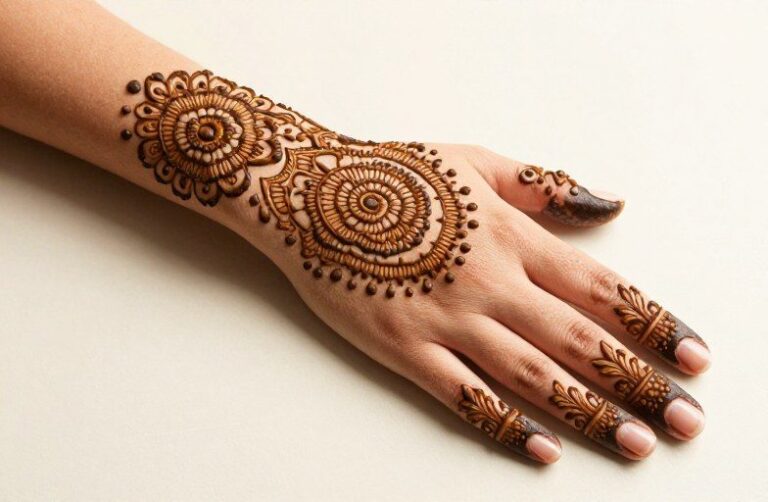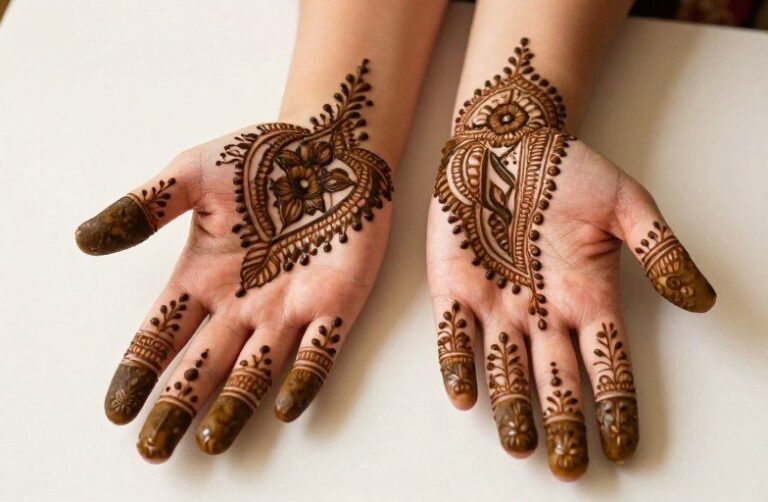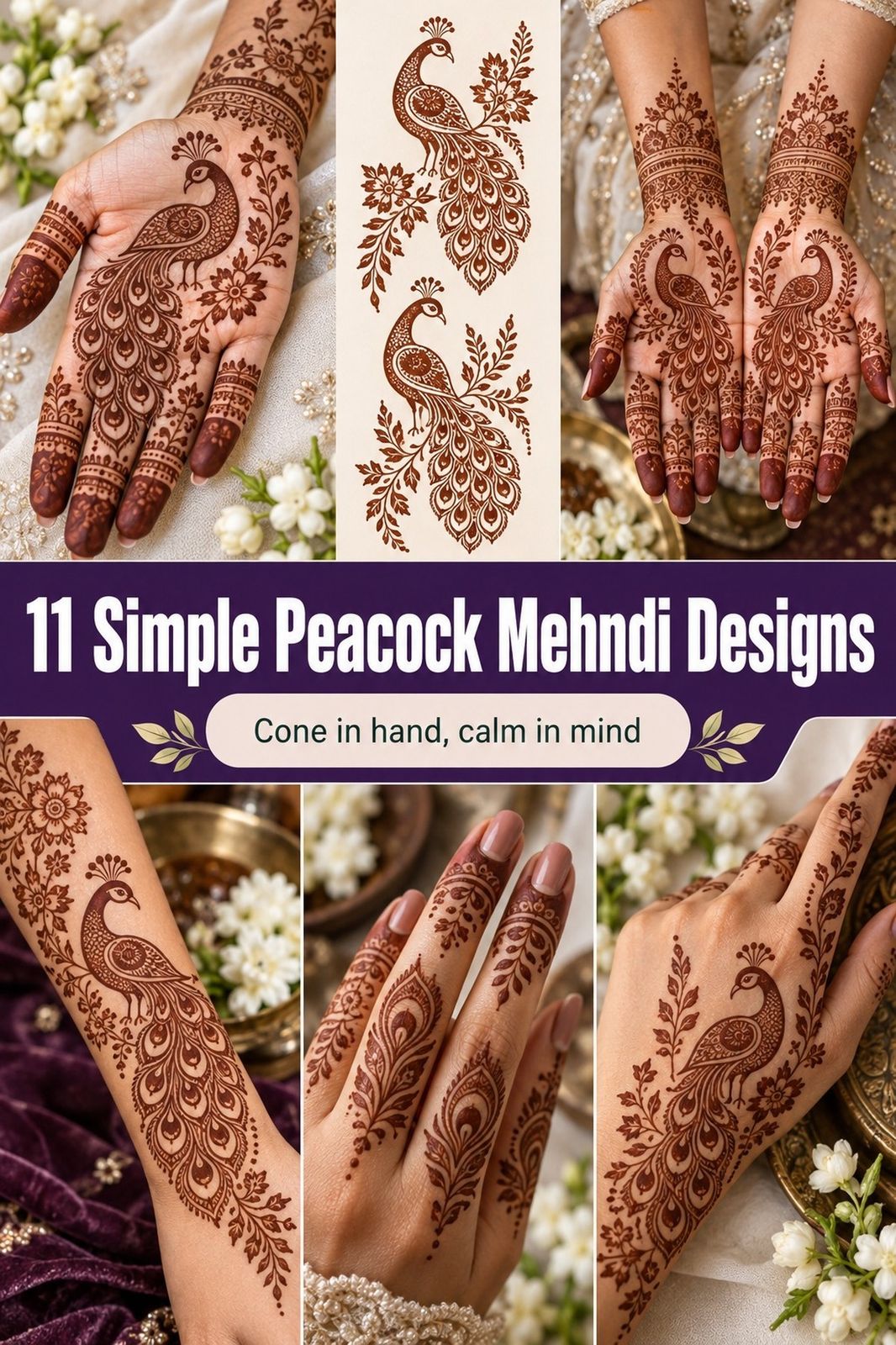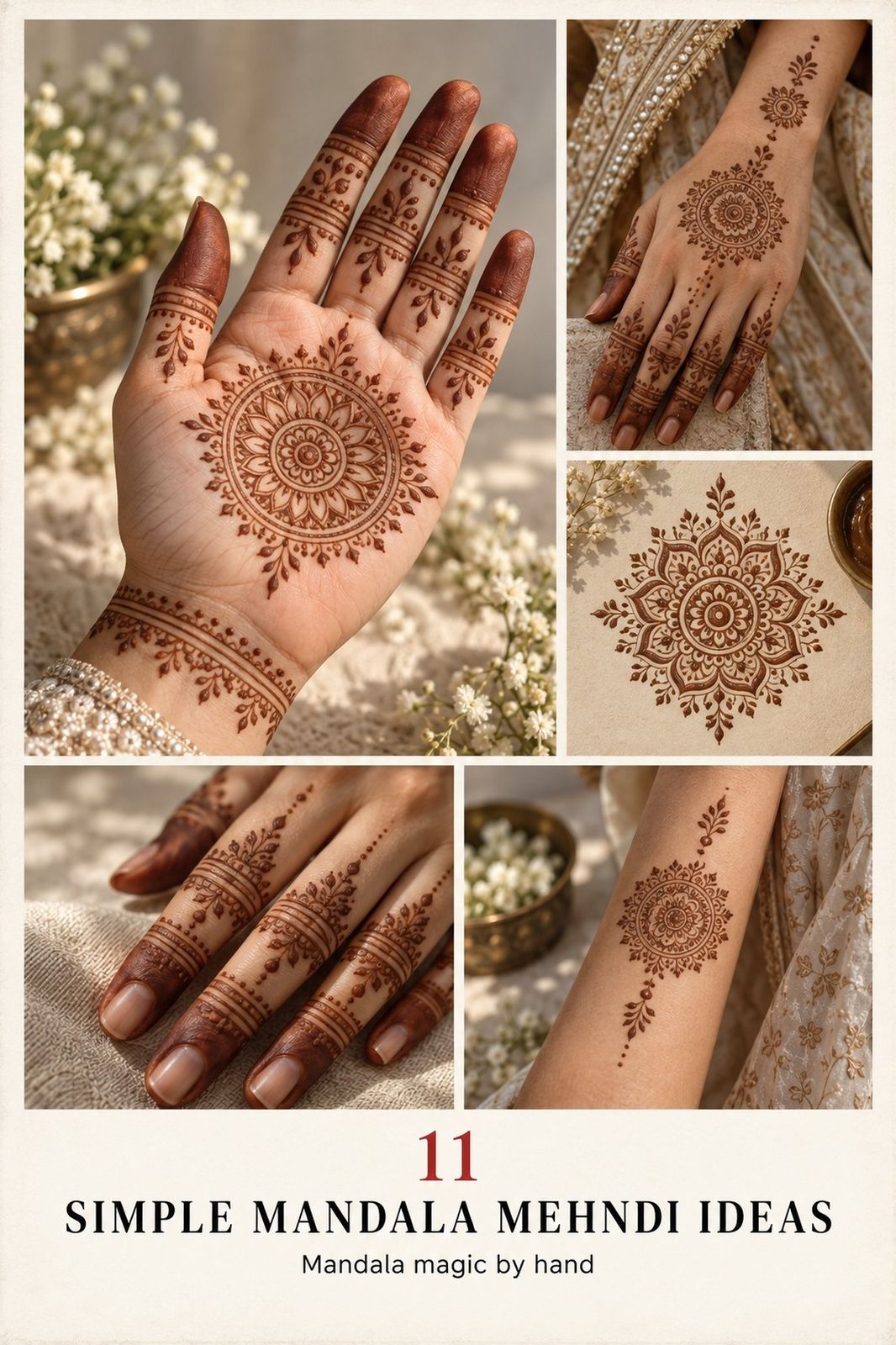
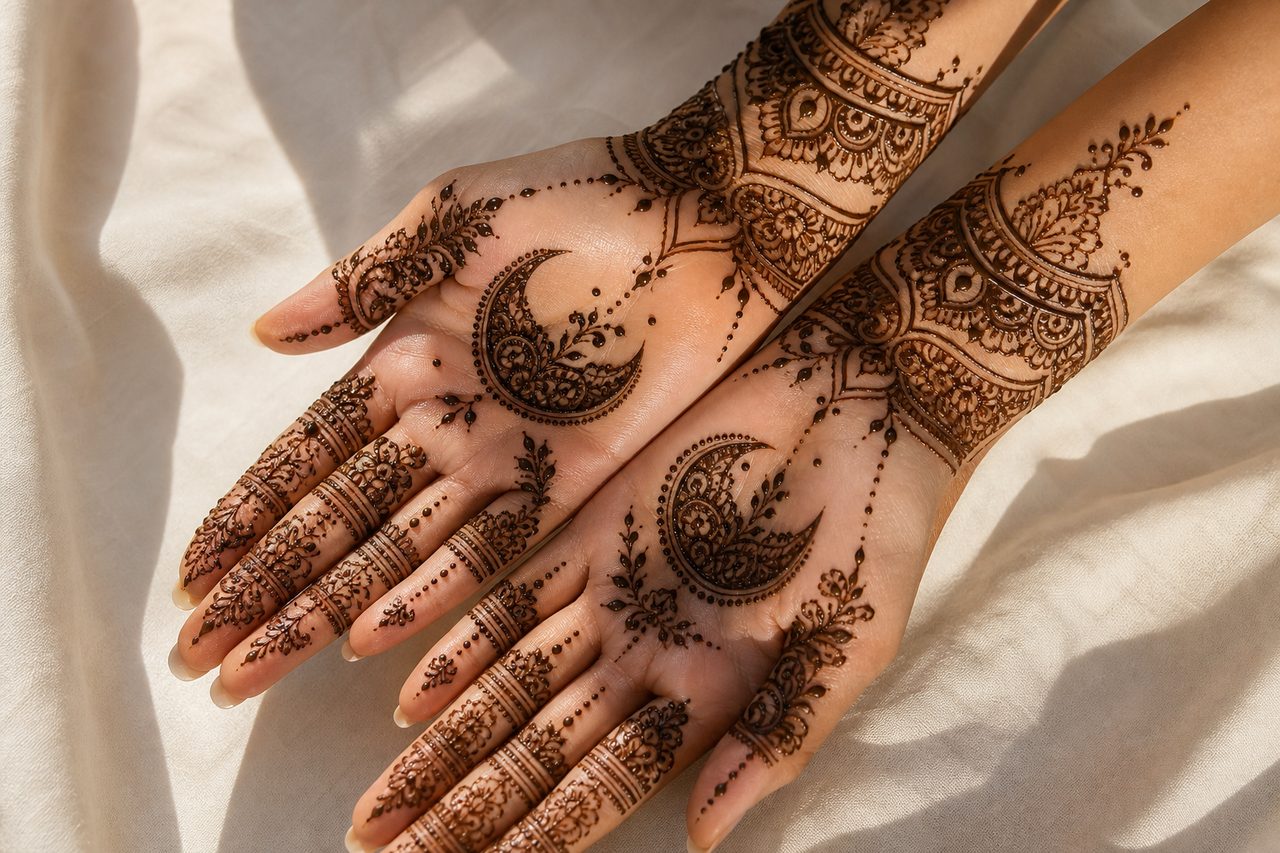
A moon henna tattoo speaks to cycles you already live inside: the rhythm of change, the pull of intuition, the quiet strength often coded as feminine. Unlike permanent ink, henna fades over one to three weeks. That temporary quality mirrors the moon itself, appearing, disappearing, returning. The design draws from traditions across South Asia, North Africa, and the Middle East, where henna has marked celebrations and rites of passage for centuries.
What the Moon Means in Henna
The moon offers a visual language for transformation. Its waxing and waning map onto growth, loss, renewal. In henna specifically, the moon often signals transition: a marriage, a new chapter, a reclaimed sense of self. The symbol carries weight because it operates on multiple registers at once, astronomical, emotional, cultural, personal.
Crescent vs. Full Moon
The crescent dominates most henna designs. It reads as beginnings, potential, the gathering of intention. A full moon carries weightier connotation: completion, culmination, the height of emotional or creative power. Some choose the waning moon to mark release or endings. The phase you select changes the entire message without adding a single extra symbol.
This choice matters more than many wearers realize. A crescent on a bride’s palm signals hope and forward movement. A full moon on someone recovering from loss might honor what was whole, now changing. The phase is the meaning; everything else is ornament.
The Fading as Part of the Meaning
Henna’s impermanence is not a drawback. The stain darkens over 48 hours, holds peak intensity, then gradually softens. This mirrors how intentions actually work: sharp at first, then absorbed into daily life. A moon that literally disappears and can be redrawn aligns with lunar cycles in a way permanent tattooing cannot replicate.
Some wearers find the fading difficult. They want the symbol to hold. But the moon does not hold; it changes. The practice of watching your henna lighten, of choosing when to reapply or let go, becomes a small meditation on attachment.
Religious and Spiritual Contexts
The moon appears across spiritual traditions with varying emphasis. Henna wearers today often mix these contexts or operate outside them entirely. Understanding the layers helps you wear the symbol with awareness rather than confusion.
Islamic Heritage
Islamic art and architecture frequently employ the crescent, though its religious association developed later than commonly assumed. The symbol predates Islam across the Near East and was adopted rather than invented by the tradition. Moon henna during Eid celebrations connects to this heritage without requiring strict religious observance. Many Muslim and non-Muslim wearers alike appreciate the cultural resonance, though non-Muslim wearers should understand they are borrowing from a living tradition.
Hindu and Buddhist Threads
In Hindu iconography, the moon adorns Shiva’s hair and represents the mind’s control over emotion. Henna application before weddings and festivals often incorporates lunar motifs as blessings for mental clarity and balanced partnership. Buddhist traditions, particularly Tibetan, associate the moon with the cooling of desire and the attainment of enlightenment. This is less common in henna practice but appears in diaspora communities blending multiple influences.
Contemporary Personal Practice
Modern wearers frequently adopt moon henna outside specific religious frameworks. The symbol functions as a personal marker for menstrual cycle tracking, fertility awareness, or attunement to natural rhythms. This secular-spiritual hybrid has spread through visual sharing online, though practitioners vary widely in their cultural sensitivity. There is no governing body, no standard. You must assess your own intentions and their reception.
Regional Styles and How They Change the Moon
Design execution shifts dramatically by region and artist skill. The same crescent moon reads differently in Moroccan, Indian, or Arabic hands. Knowing these distinctions helps you request what you actually want and recognize when an artist is working outside their training.
Geometric and Floral Traditions
Moroccan henna favors geometric precision: angular crescents with lattice fill, sharp corners, mathematical repetition. Indian, Pakistani, and Bangladeshi traditions lean toward florid, organic linework with paisley and vine integration. Arabic styles split the difference: bold outlines with strategic interior detail, often faster to apply than Indian work but more ornate than Moroccan.
A moon in Moroccan style feels architectural, almost lunar in the scientific sense. The same moon in Indian style feels tidal, fluid, connected to water and growth. Neither is more authentic. They are different languages.
Minimalist Approaches
A simple crescent, perhaps with a single dot or small star, reads cleanly on fingers, wrists, or behind the ear. These suit first-time henna wearers or those in professional settings where elaborate designs draw unwanted attention. The negative space around the moon matters as much as the line itself. Too cramped, and the symbol loses its breathing room. Too isolated, and it looks accidental.
Complex Compositions
Full-hand or foot designs might center the moon within mandala structures, surround it with lotus petals, or suspend it from vine tendrils. These require experienced artists. The moon’s curve must integrate with surrounding geometry without distortion. A common error: scaling the moon too small within a busy field, causing it to read as generic filler rather than focal point. If you cannot identify the moon at conversational distance, the design has failed its own symbolism.
History and What We Actually Know
Lunar deities populate nearly every culture’s mythology. Direct henna-moon folklore is sparser than popular accounts suggest. The connection emerges more from shared symbolic territory than documented historical practice. Honesty about this gap matters more than inventing ancient lineage.
Pre-Islamic Arabia and Speculative Links
In pre-Islamic Arabia, Hubal and other lunar deities received worship. Henna’s use in the region may have overlapped with these observances, though concrete linkage remains speculative. We know henna was present; we know lunar worship was present. The bridge between them is inference, not record. Writers who claim certainty here are fabricating.
South Asian Lunar Traditions
Chandra and Soma personify the moon in Hindu and Vedic traditions, often linked to soma, the divine intoxicant and creative elixir. Henna’s cooling properties and association with bridal preparation create thematic overlap with lunar fertility and union. Some trace wedding henna nights to agricultural calendars governed by moon phases, though this origin is often claimed more confidently than evidence supports. The link is plausible, not proven.
Protective Functions
Across North Africa and the Middle East, henna broadly served protective functions: against evil eye, barrenness, misfortune. The moon, as nocturnal guardian, fit naturally into this framework. Specific moon-henna protective rituals are less documented than general henna blessing practices, but the conceptual pairing persists in contemporary folk belief. Wearers today who choose moon henna for protection are continuing a logic, not necessarily a documented rite.
Placement and Practical Considerations
Where you place moon henna affects visibility, stain quality, and how your choice reads to others. These are practical matters, not afterthoughts.
Palms stain darkest due to thicker skin but fade fastest from washing. Backs of hands and forearms offer compromise: good color retention, manageable wear, visible expression. Feet and ankles carry traditional bridal associations; visible foot henna in Western contexts often reads as vacation souvenir rather than intentional symbolism, which may or may not matter to you.
- Fingers: Crescent moons align naturally along the finger’s curve. Limited space demands simplicity. Fades in 5-7 days from constant use.
- Inner wrist: Personal visibility, easy to conceal. Moon faces the wearer, emphasizing introspection. Moderate stain duration.
- Upper arm or shoulder: Larger canvas for detailed phases or moon-and-star compositions. Less traditional but increasingly common.
- Behind ear: Intimate placement, subtle reveal. Crescent shape echoes ear’s natural curve. Requires skilled application for crisp edges.
Neck and chest placements carry additional weight for non-South-Asian, non-North-African individuals. Henna’s specific cultural history in these areas, particularly bridal and ceremonial use, means visible application there can read as costume rather than appreciation. The moon itself is broadly shared; henna is not. If you choose these placements, do so with understanding of how you may be perceived, not just what you intend.
Design Tips and Symbol Pairings
Successful moon henna balances negative space with meaningful addition. Overloading the moon obscures its symbolic clarity; leaving it isolated wastes henna’s decorative potential. The sweet spot varies by placement and personal style.
What to Pair with the Moon
Stars, especially in odd numbers, extend the celestial theme without competing. Lotus flowers ground lunar energy in growth and emergence. Snakes or serpents introduce transformation and cyclic rebirth; visually striking but symbolically dense, best for wearers with specific personal connection. Feathers suggest aspiration and air element; paired with moon, they can feel unfocused unless you have a clear reason for the combination.
Ask yourself: does the pairing tell a story, or does it merely accumulate? The moon and lotus say emergence from darkness. The moon and snake say shedding and renewal. The moon, snake, lotus, star, and feather say you could not choose.
Line Weight and Technique
Pure line-work crescents suit small placements and modern aesthetic. Filled moons using dense henna paste create near-solid color, reading as bold graphic elements rather than delicate tradition. Dotwork gradients suggest the moon’s surface texture; this technique demands steady hand and quality paste consistency. Shading through varying application pressure, thicker paste for darker areas, thinner for lighter, is advanced technique few casual artists master.
Color expectations need calibration. Natural henna ranges orange-brown to deep burgundy, never the black of chemical “black henna” which contains dangerous PPD additives. A moon that stains orange initially will darken over 48 hours. Clients unfamiliar with this process sometimes panic and scrub prematurely, ruining both result and the symbolic patience the moon teaches. Wait. Watch. Let it develop.
Before You Decide
A moon henna tattoo carries layered meaning: cyclical change, feminine energy, intuitive attunement, the acceptance of impermanence. Its power depends on thoughtful design choices, phase selection, placement, cultural context, and honest personal intention. The temporary nature is not lesser than permanence; it is a different statement about how meaning operates in time.
Choose an artist who understands the tradition’s weight. Select symbols that genuinely resonate rather than trend. Let the fading become part of what the moon teaches: that presence and absence are not opposites, but phases of the same cycle. The henna will disappear. The attention you brought to choosing it, and the patience you practiced while wearing it, remain.
Frequently Asked Questions
How long does a moon henna tattoo typically last?
One to three weeks depending on placement, skin type, and aftercare. Palms and fingers fade fastest due to washing and friction. Backs of hands and forearms typically hold longer. Deep initial stain and minimal water exposure in the first 24 hours extend duration.
Can I get a black moon henna tattoo?
Natural henna never stains black. Products marketed as “black henna” contain PPD, a chemical additive linked to severe allergic reactions and permanent scarring. True henna ranges from orange-brown to deep burgundy. The color darkens over 48 hours after paste removal.
Is it cultural appropriation for non-South-Asian people to wear moon henna?
Context matters. The moon itself is a universal symbol. Henna carries specific cultural weight in South Asian, North African, and Middle Eastern traditions. Wearing it respectfully, understanding its histories, avoiding sacred bridal designs out of context, and supporting artists from those traditions reduces appropriation risk. Neck and chest placements carry particular sensitivity.
What moon phase should I choose for my henna design?
Crescent for beginnings, intention, potential. Full moon for completion, culmination, emotional height. Waning moon for release, endings, letting go. The phase is the primary meaning; surrounding elements modify rather than create it.
How do I find a skilled henna artist for a moon design?
Look for portfolios showing consistent line quality, proper stain color (not black), and familiarity with your preferred regional style. Ask about paste ingredients; natural henna contains only henna powder, lemon juice, sugar, and essential oils. Artists who cannot explain their ingredients or guarantee stain development time are not professionals.