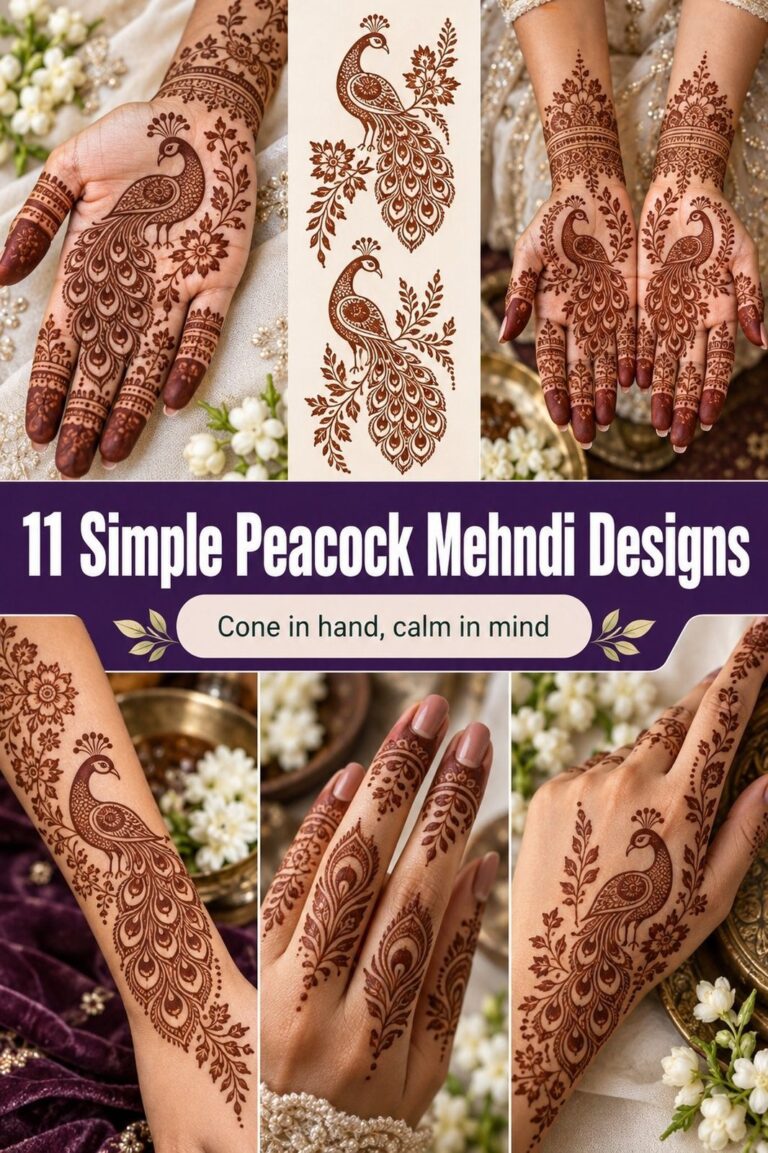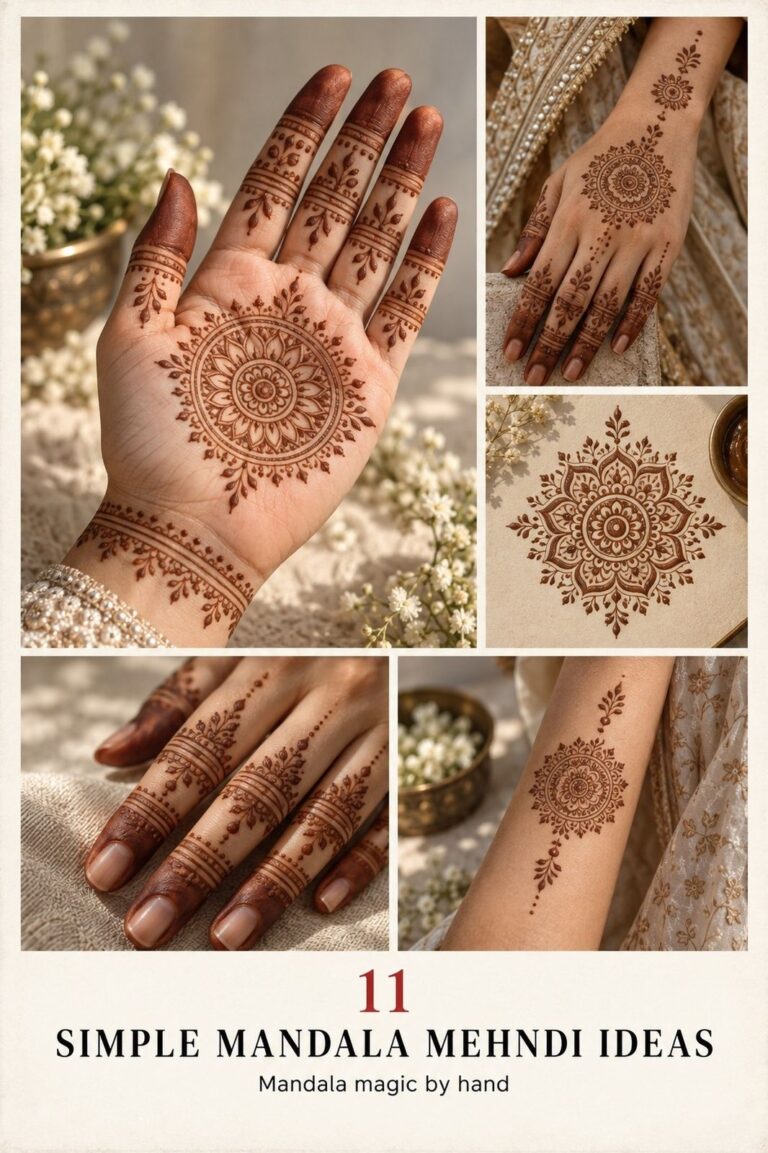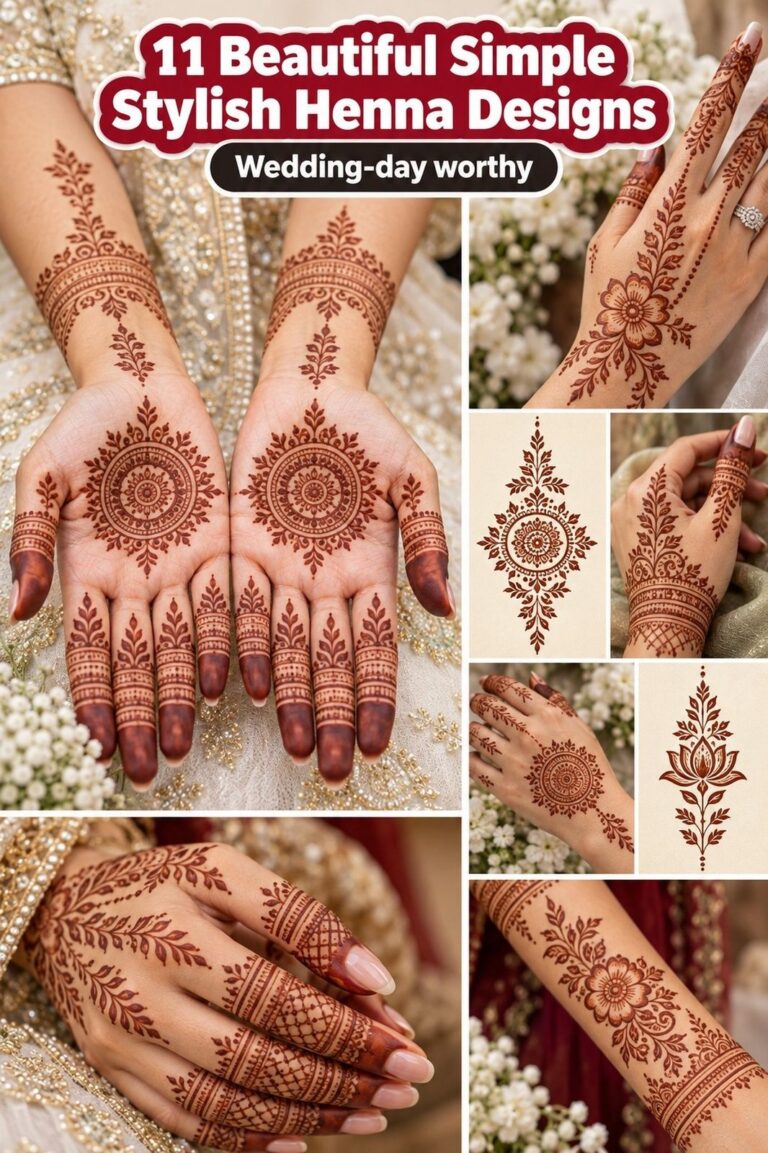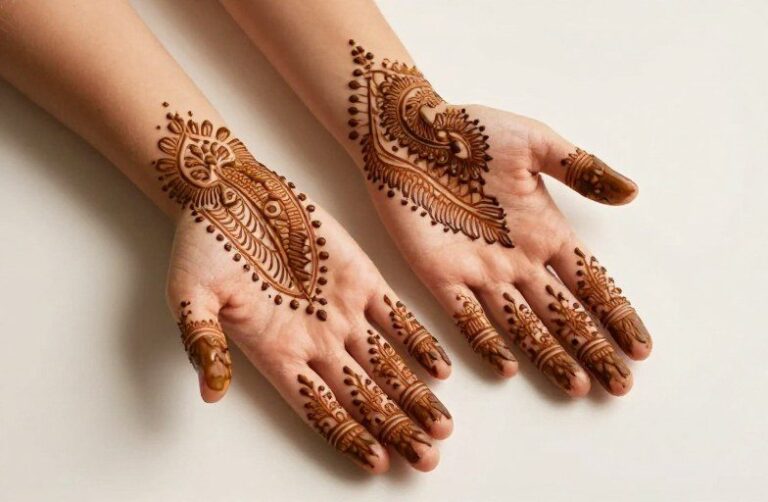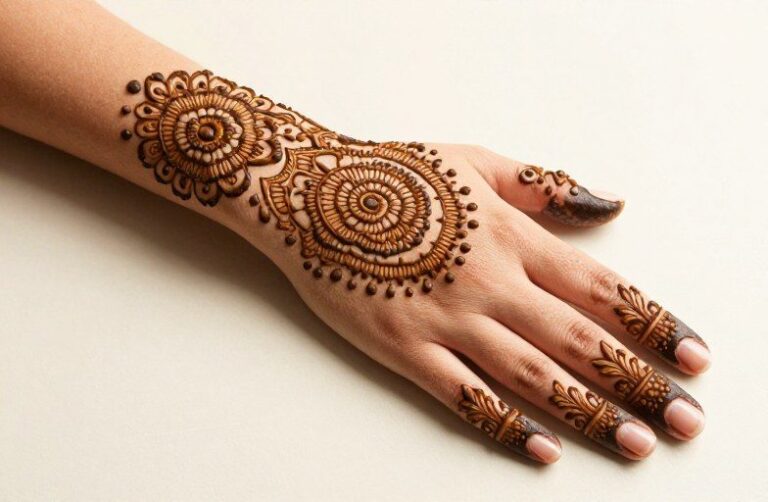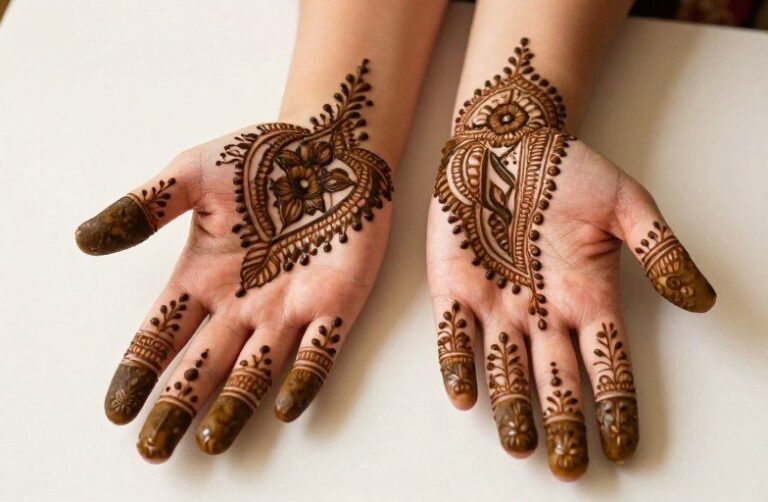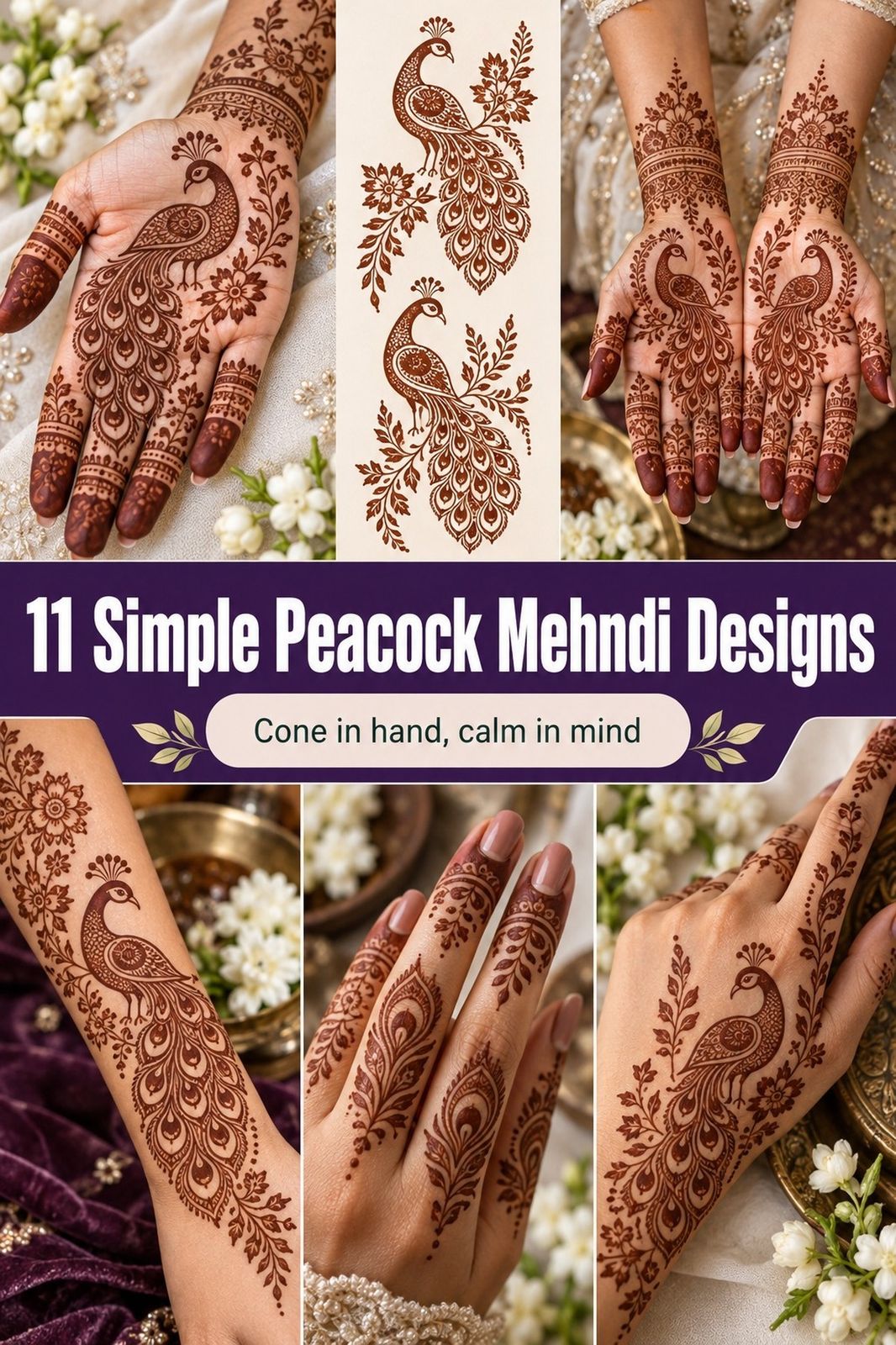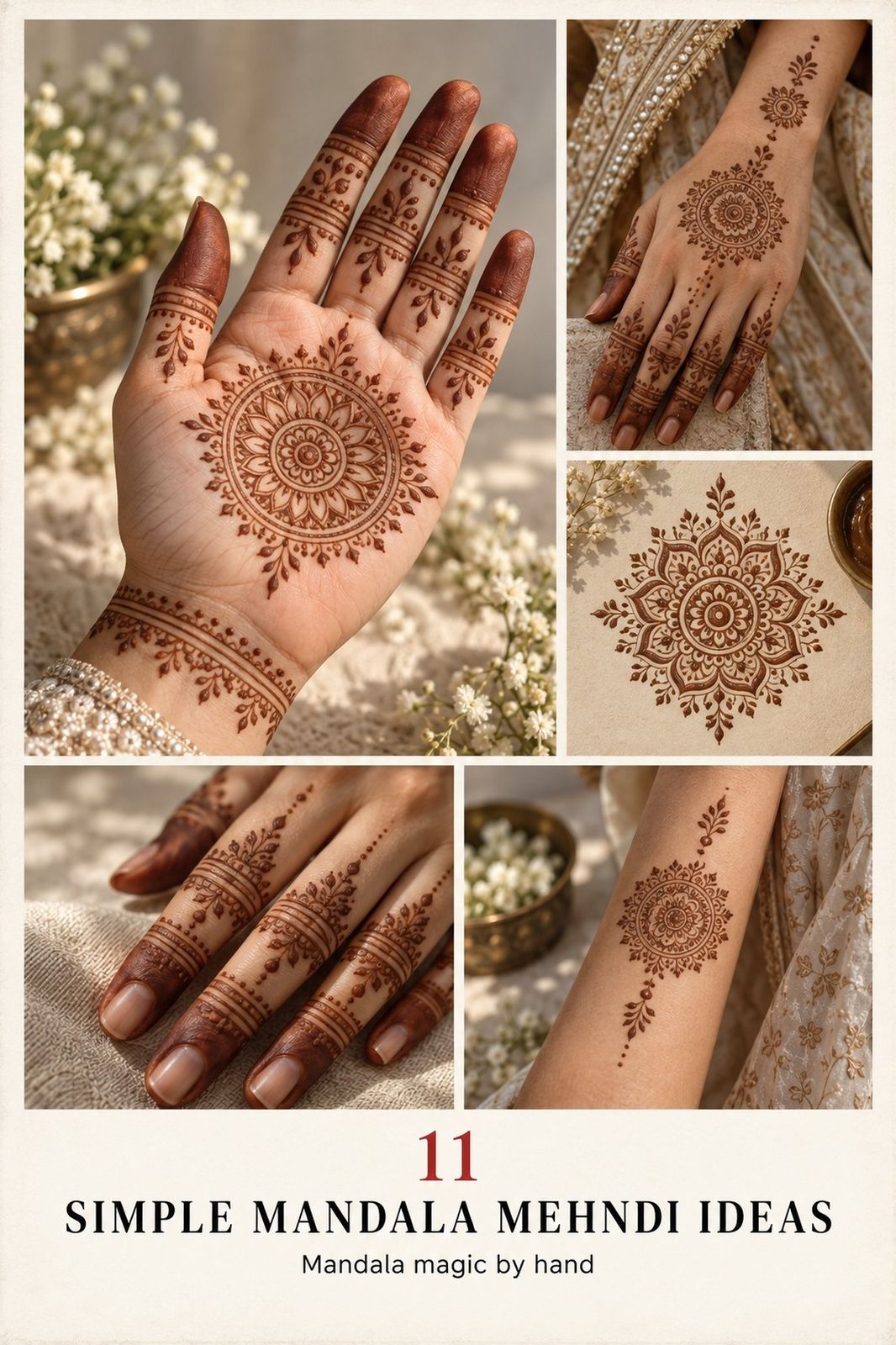
Henna tattoo meaning centers on joy, protection, and transitional moments. Unlike permanent ink, henna carries its significance through impermanence itself, blessing a moment rather than marking a lifetime. The brown stain left by Lawsonia inermis leaves has signified celebration across North Africa, South Asia, and the Middle East for thousands of years, with specific patterns encoding regional identity and personal intention.
Best Placements
Where henna sits on the body changes its social and symbolic function. Traditional application follows clear rules that still shape modern practice.
Hands and Fingers
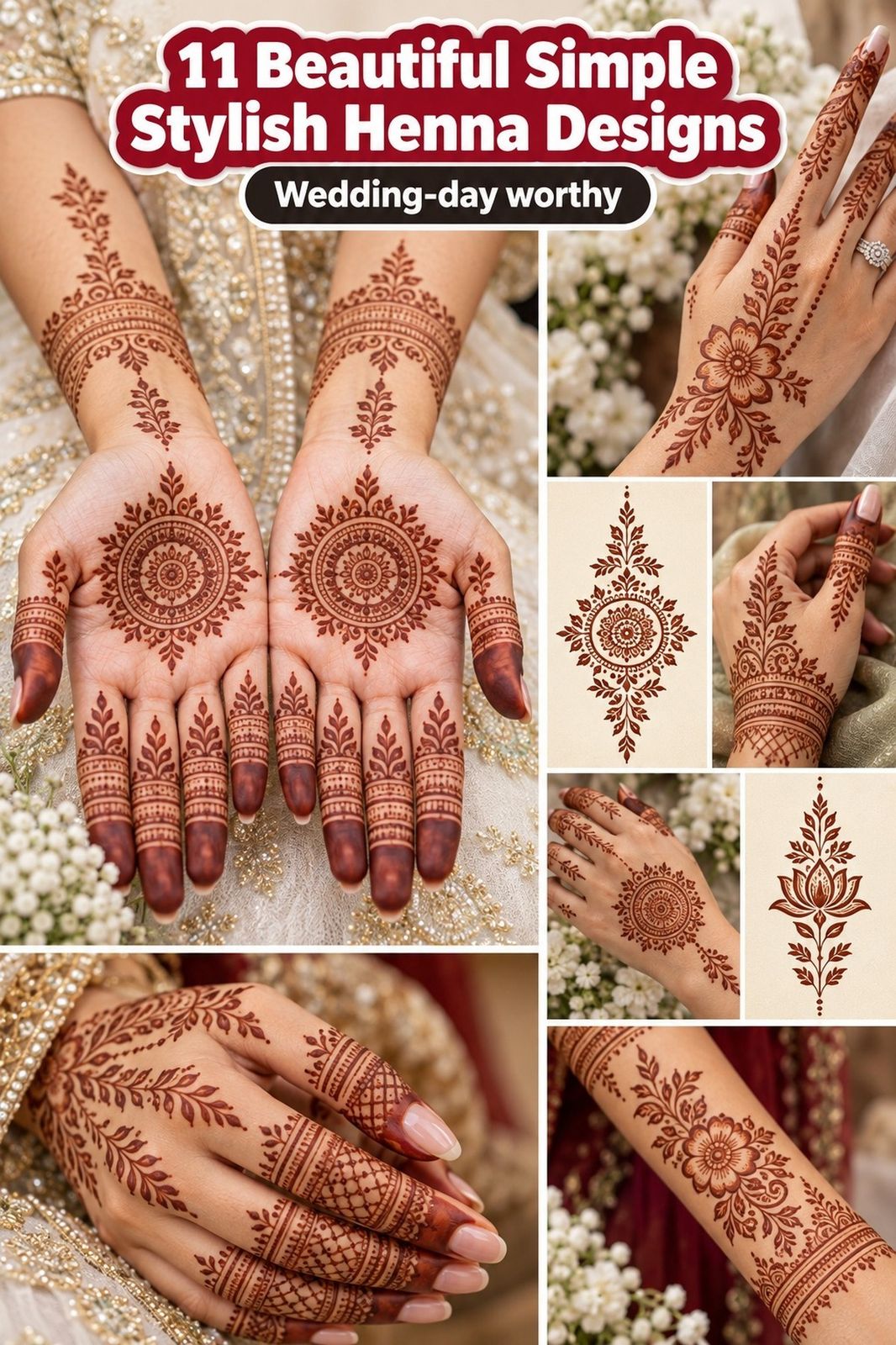
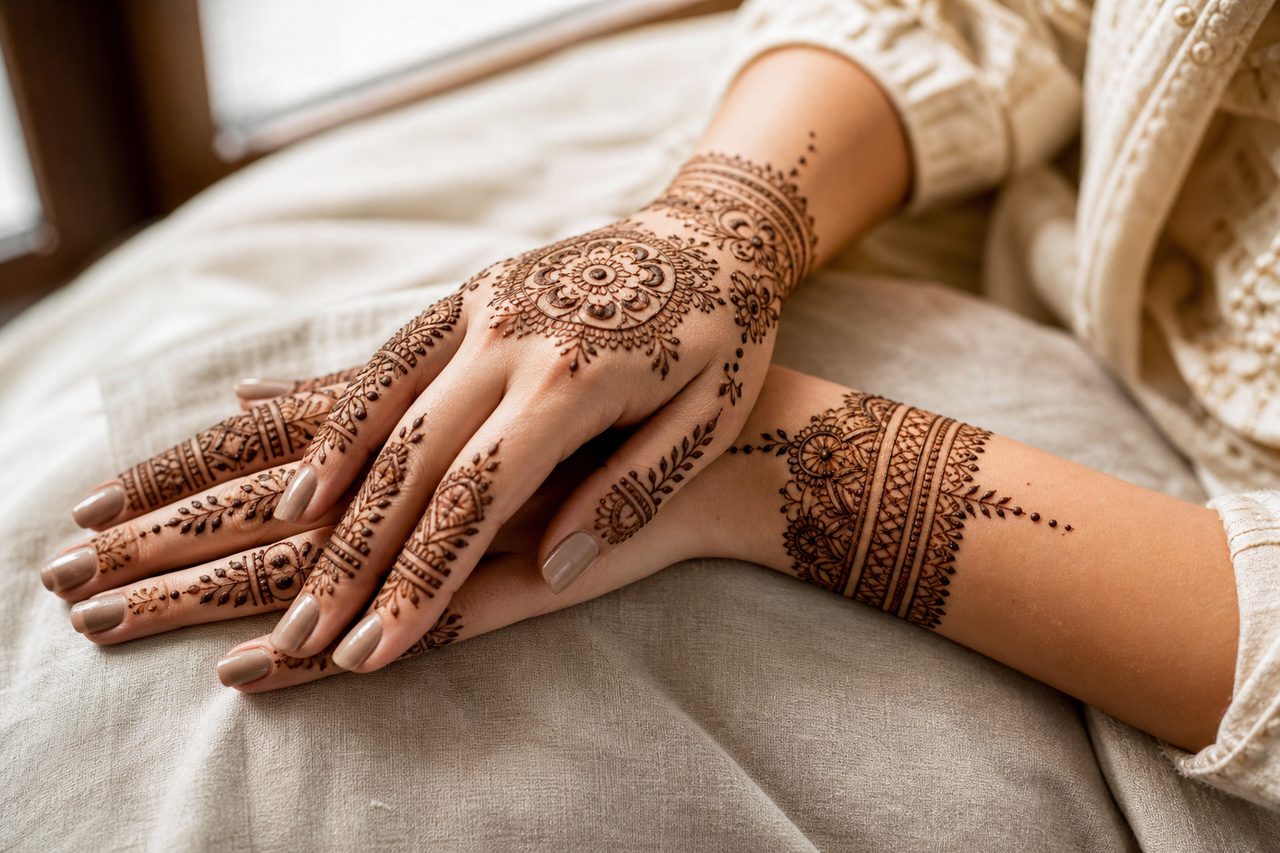
The palms and backs of hands remain the most recognized placement. Dense, dark staining here indicates high celebration, weddings, Eid, Diwali. Fingertips dipped solid brown, called shidab in some traditions, signal a bride’s readiness. The visibility matters: hands greet, serve food, gesture in prayer. Henna here cannot be hidden, announcing participation in something significant.
Feet and Ankles
Foot henna carries protective associations, often linked to grounding and warding the evil eye. Ankles circled with delicate vine patterns draw from Berber and Bedouin traditions where the junction of body and earth needed guarding. Modern festival application often skips feet for practical reasons, sandals, sweat, and faster fading, but the placement retains its older resonance when chosen deliberately.
- Palms stain darkest due to thicker keratin; backs of hands show finer detail
- Upper arms and shoulders allow larger compositions for non-traditional wearers
- Neck and sternum placement risks faster fade from clothing friction
- Behind the ear offers discreet personal marking without social announcement
Mythology & Folklore
Stories surrounding henna often involve love, fertility, and divine favor. These narratives shaped how people read the patterns on skin.
Bridal Narratives
Many cultures share variants of a tale where henna first appeared to bless a wedding. The plant’s red dye connects symbolically to menstrual blood, the life force, and the threshold between girlhood and marriage. Some traditions hold that the bride’s henna must be applied by a happily married woman, transferring that fortune through touch. The darkness of the stain supposedly predicts marital prosperity, though this varies enormously by region and family.
Protective Symbols
The eye motif, nazar, appears frequently in henna precisely because the medium itself carries protective reputation. Fish, scorpions, and the hand of Fatima all recur across North African and Middle Eastern application. These aren’t merely decorative; they participate in a logic where the temporary stain holds active power during its visible life.
History & Cultural Roots
Archaeological evidence places henna use in the Bronze Age Levant, with mummies showing stained hair and nails. The practice spread along trade routes rather than through single conquest, adapting to local belief systems.
In South Asia, mehndi developed elaborate regional styles: Rajasthani patterns favor fine geometric grids, Arabic flow favors bold floral trails, Pakistani bridal work often covers nearly every visible skin surface. Each style encodes not just aesthetics but caste, class, and geographic origin. African henna traditions, particularly Moroccan and Sudanese, favor denser, more abstract patterning with stronger emphasis on protective function.
Colonial documentation often misread henna as merely cosmetic, missing its role in rites of passage. The 20th century saw decline in some regions with modernization, then revival through diaspora communities seeking connection. Contemporary festival henna, often applied at concerts and street fairs, represents a distinct break from ritual context, though practitioners may still draw on traditional pattern vocabulary.
Design Tips & Pairings
Meaning in henna emerges from pattern choice as much as placement. Understanding traditional motifs lets you compose with intention rather than random decoration.
Floral and Botanical Elements
Vines and flowers traditionally signify joy and growth, appropriate for celebrations. The lotus carries specific spiritual weight in South Asian application. Paisley, the mango-shaped ambi or boteh, represents fertility and eternity through its teardrop-within-teardrop structure. These elements work well trailing from wrist toward elbow or winding around ankle bones.
Geometric and Architectural Patterns
Islamic geometric traditions translate beautifully to henna, interlocking stars, tessellating polygons, and arabesque lines that never terminate. These patterns reference divine infinity and mathematical order. They suit linear placements: running up the forearm, framing the back of the hand, or encircling the upper arm.
- Pair dense central motifs with breathing space at edges for visual balance
- Mirror patterns across both hands for formal symmetry, or deliberately mismatch for casual energy
- Consider negative space: the skin left unstained shapes the design as much as the brown lines
- Avoid mixing too many regional vocabularies unless you’re deliberately creating hybrid work
Color vs Black and Grey
This section addresses a genuine confusion: henna’s natural color versus problematic “black henna” alternatives.
Natural Brown Range
Authentic henna produces orange-brown initially, darkening to reddish-brown over 48 hours. The final shade depends on skin chemistry, body temperature during application, and Lawsonia leaf quality. This variation is inherent, not a flaw. The warm tone carries its own symbolism, earth, blood, sun, connected to life force rather than death or mourning.
The Black Henna Warning
So-called “black henna” typically contains paraphenylenediamine (PPD), a hair dye chemical that can cause severe allergic reactions and permanent scarring. It produces a quick black stain that fades fast, but the health risk is substantial. Jagua, a South American fruit extract, offers a blue-black natural alternative with different cultural associations but similar temporary duration. Neither black option carries the traditional protective and celebratory meaning of true henna.
How It Ages on Skin
Henna’s impermanence defines its meaning. Understanding the lifecycle helps set appropriate expectations and care for the stain properly.
Fresh paste removes easily; the stain develops over 6-12 hours as lawsone molecules bind with skin keratin. Peak color arrives at 48 hours, holding 1-2 weeks on hands, 2-3 weeks on feet or other less-washed areas. Exfoliation accelerates fading, swimming, harsh soaps, and manual labor all shorten lifespan. The gradual disappearance itself carries meaning in some traditions: the blessing dissipates as the stain fades, completing its work.
Moisturizing with natural oils preserves color longer than petroleum products, which can trap moisture and paradoxically increase exfoliation. Sun exposure darkens some stains initially but can also speed overall fading. The patchy, uneven disappearance at week two or three is normal, not failure, though many modern wearers touch up or remove early rather than accept this natural decay.
What to Remember
Henna tattoo meaning operates on multiple registers: the specific pattern vocabulary, the placement on body, the occasion of application, and the fact of impermanence itself. Wearing it without cultural connection requires honest acknowledgment, festival henna differs from bridal mehndi, and the distinction matters to communities who maintained these practices through centuries. The most respectful approach learns specific traditions rather than treating all henna as interchangeable decoration. Quality paste, patient application, and proper aftercare honor the medium regardless of context. The stain will fade; how you engaged with its living tradition remains.
Frequently Asked Questions
How long should I leave henna paste on for the darkest stain?
Keep the paste on 6-12 hours minimum; overnight is traditional. Don’t wash it off with water, scrape dry paste away, then avoid water for another 12 hours if possible. The stain continues developing for 48 hours after removal.
Can I get a henna tattoo if I’m not from a culture that traditionally uses it?
Appreciation with education differs from casual appropriation. Learn the specific tradition you’re drawing from, avoid sacred bridal patterns for casual wear, and support practitioners from source communities when possible.
Why did my henna turn orange instead of brown?
The initial orange stage is normal. True darkening happens over 24-48 hours as oxidation completes. If it stays orange, the paste may be old, poorly mixed, or applied to skin that was too cool during development.
What’s the difference between henna and jagua temporary tattoos?
Henna comes from the Lawsonia plant and stains reddish-brown; jagua comes from Genipa americana fruit and stains blue-black. They have different cultural origins, chemical compositions, and allergy profiles, never assume safety information transfers between them.