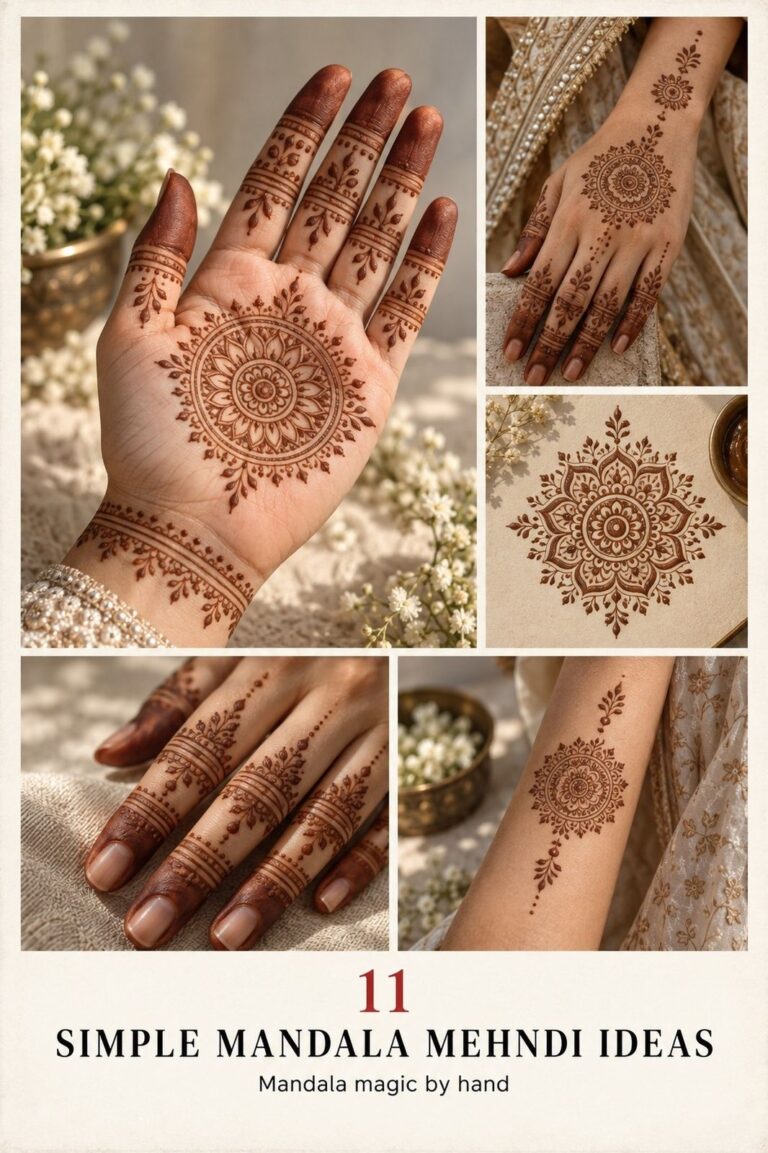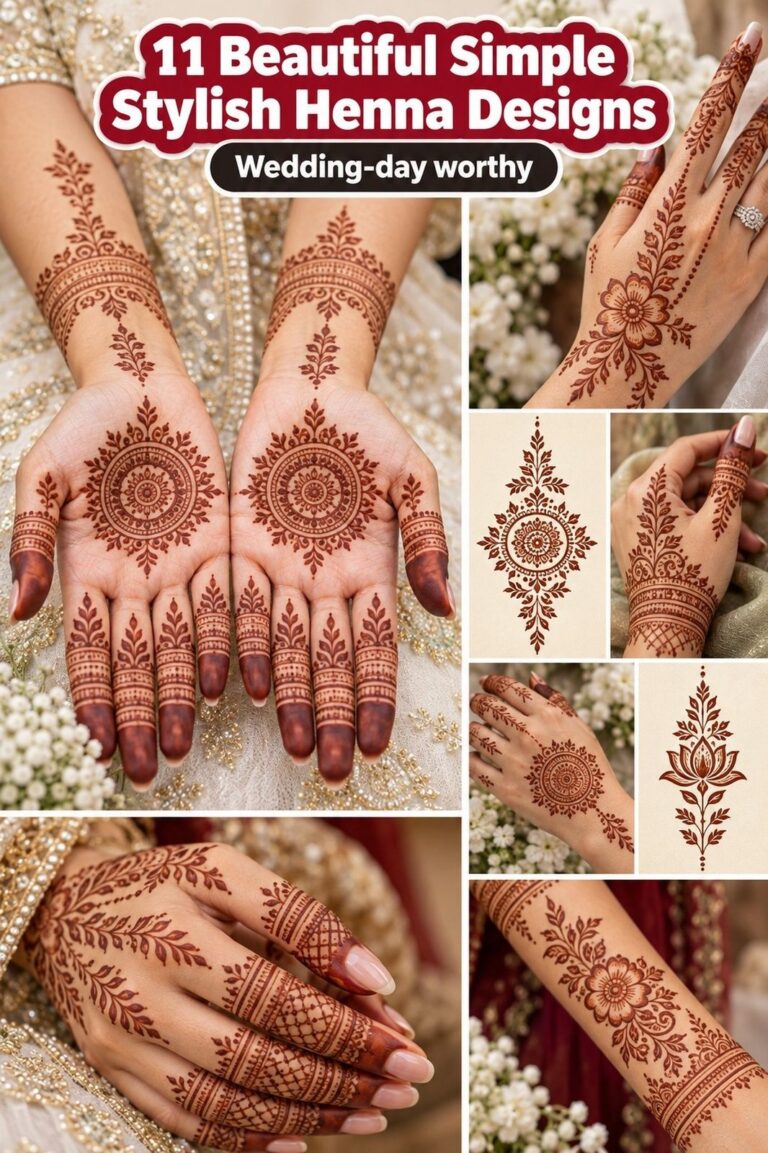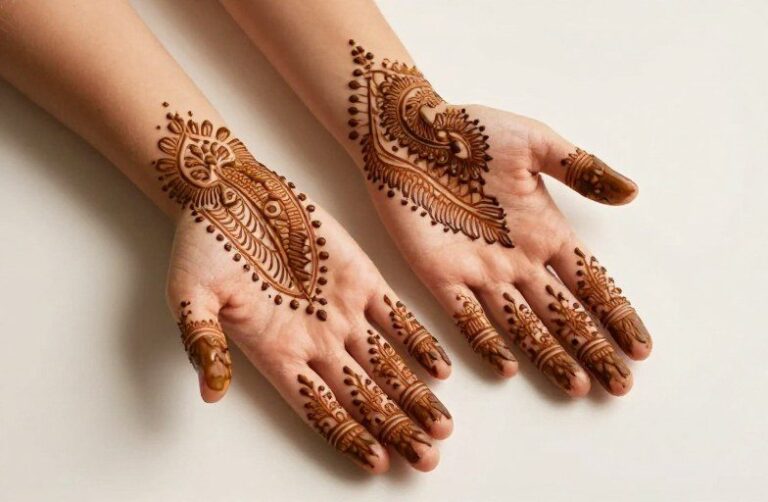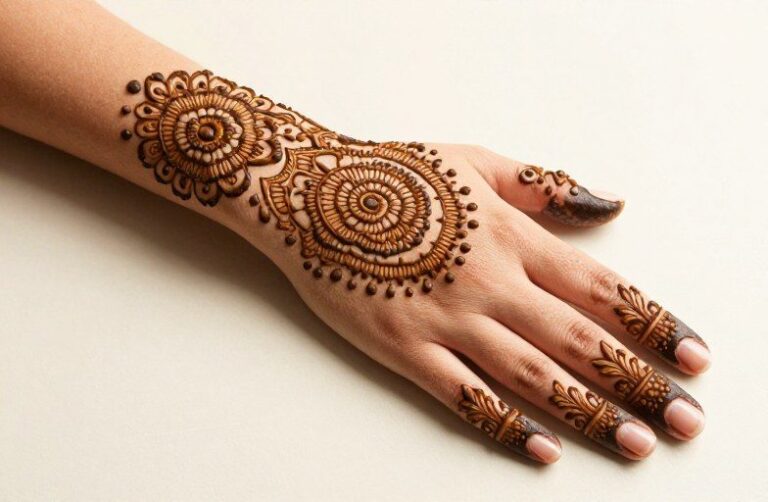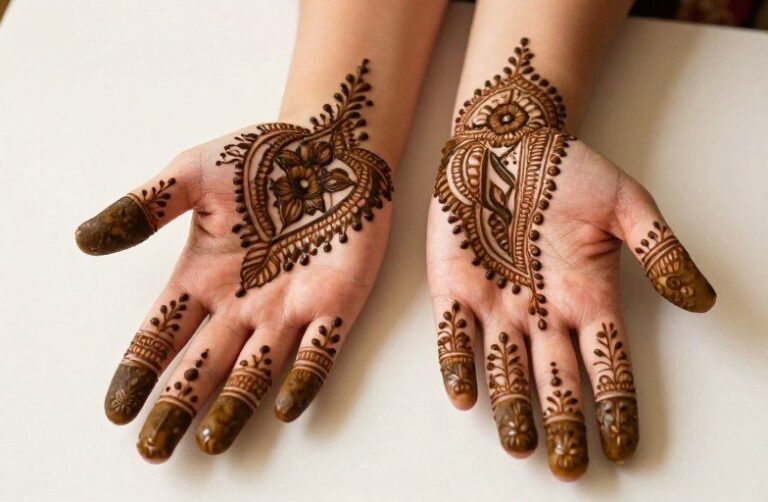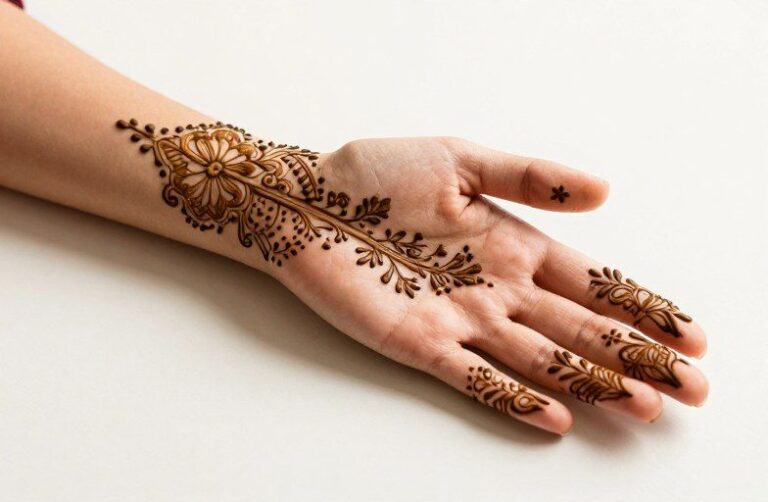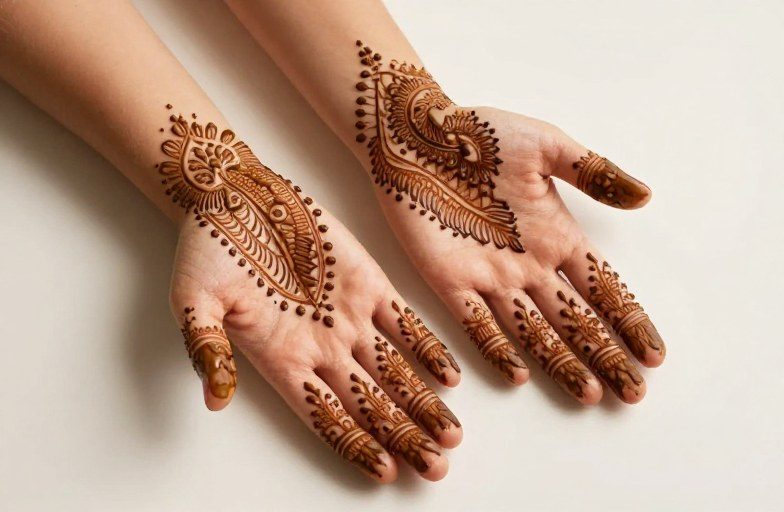
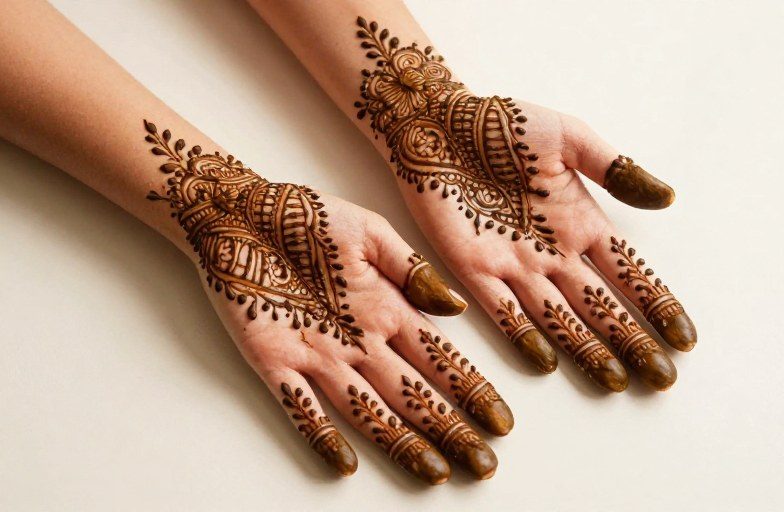
A henna tattoo on a woman traditionally signals blessing, protection, and transition. The elaborate temporary designs, applied during weddings, pregnancies, and coming-of-age ceremonies, mark moments when community gathers to honor female life stages. Today, women also choose henna-inspired permanent tattoos to carry that same spirit of adornment and intention into daily life.
History and Cultural Roots
The practice of staining skin with henna paste is often estimated at five thousand years, though archaeological evidence is scattered and interpretations vary. Traces surface in ancient Egypt, the Levant, and the Indian subcontinent, but no continuous record exists. For women specifically, henna has functioned as both cosmetic and ritual tool, beautifying the body while creating a visible boundary between ordinary time and sacred occasion.
The Role of Women as Keepers of the Practice
Across regions, women have been the primary practitioners and recipients. The knowledge of mixing paste, reading skin types, building patterns from memory, these skills moved through female hands. This was rarely formal instruction; a girl watched her mother, offered her own palms for practice, gradually learned to hold the cone steady. The transmission itself became part of the meaning: one generation teaching the next that adornment deserves time, that gathering matters, that the body is a site for care.
Regional Variations in Women’s Henna
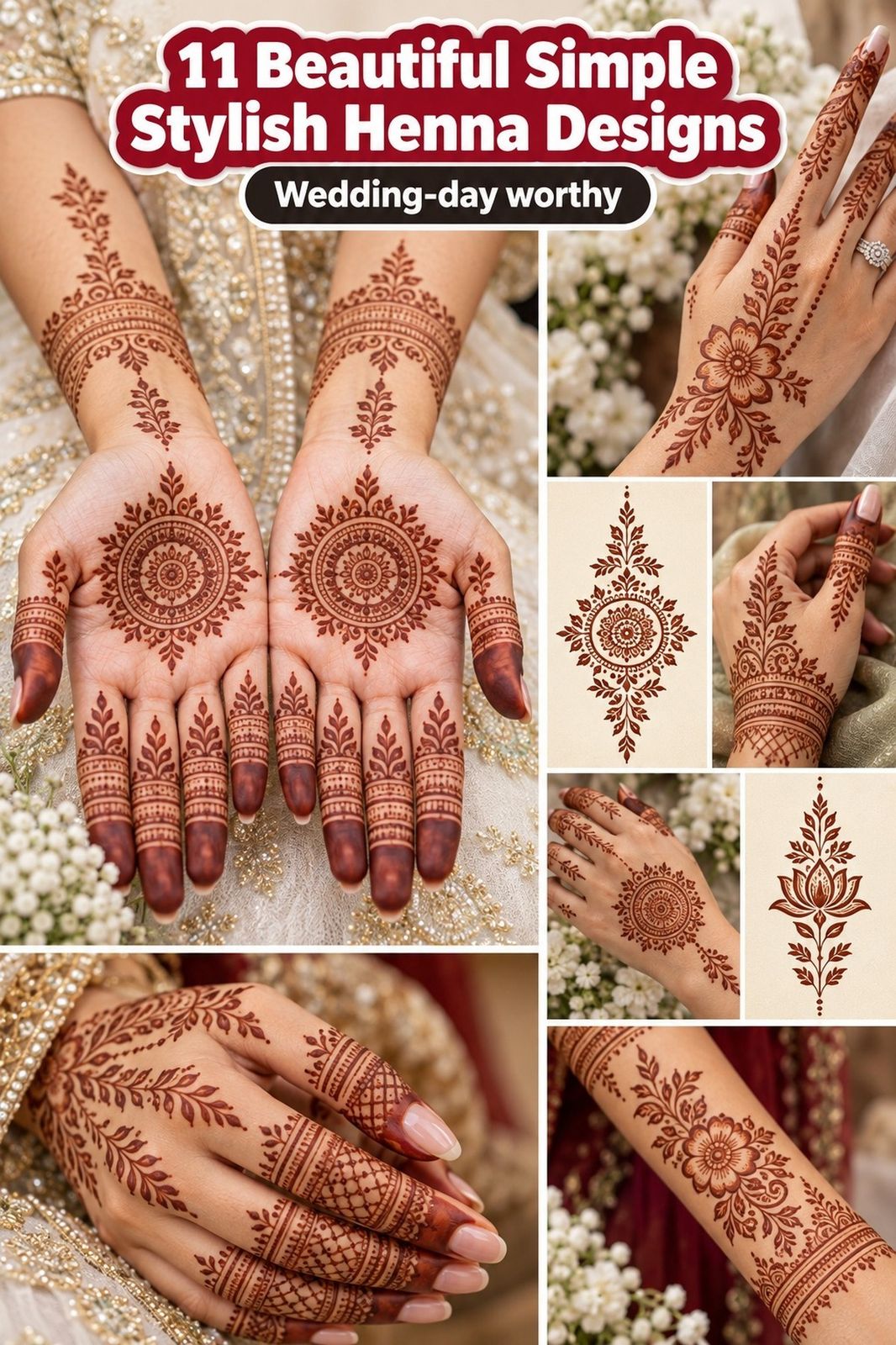
North African henna for women tends toward geometric precision, diamonds, triangles, and grid patterns that flow across hands and feet. These designs often incorporate protective symbols like the khamsa. In South Asian bridal tradition, the mehndi ceremony gathers female relatives to apply increasingly dense floral and paisley work; the depth of color afterward is sometimes interpreted as a sign of marital blessing. Middle Eastern styles frequently blend both approaches, with bold floral centers framed by lace-like geometric borders.
The common thread: henna application remains largely a women’s practice, passed between mothers and daughters, aunts and nieces. The intimacy of the act, sitting close, holding hands, waiting together for the paste to dry, matters as much as the finished pattern.
Best Placements
Traditional placement follows practical and symbolic logic. Palms and soles stain darkest because the skin there is thickest, but these locations also carry meaning. Open palms suggest receptivity and giving; the feet ground the design in movement and journey.
Permanent Henna-Style Tattoo Placement
Women translating henna motifs into permanent ink face different constraints. The hand and foot tattoos that work beautifully in temporary paste become challenging long-term:
- Hands: Finger and palm tattoos fade fastest due to constant use and regeneration. Fine lines blur within months to years. If you want permanent henna-style work here, expect touch-ups and consider slightly bolder line weight than traditional mehndi uses.
- Forearms and upper arms: Ideal compromise. The canvas allows for bracelet-style wraps, flowing wrist-to-elbow vines, or central mandala focal points. Skin stays relatively stable, and designs remain visible without being as punishing as finger work.
- Ribcage and sternum: Growing popularity for henna-inspired pieces. The curved surface echoes the organic flow of traditional motifs, and the placement feels private and intentional, visible on your own terms.
- Ankles and calves: Reference the foot tradition without the technical nightmare of actual foot tattooing. A vine wrapping the ankle or a panel rising from the heel preserves the grounding symbolism.
Back pieces work less well; the flat plane fights the wrap-around, flowing quality that makes henna distinctive.
What to Avoid
Black henna, a paste adulterated with paraphenylenediamine (PPD) to force a dark stain quickly, is not traditional and is dangerous. It can cause severe allergic reactions, permanent scarring, and sensitization that makes future hair dye use risky. If you are researching henna for temporary wear, learn to recognize natural paste, which stains orange-brown initially and darkens over two days. Any artist offering instant black results is using something that has no place on skin. This matters for tattoo research too, because some women arrive at permanent henna-style work after bad temporary experiences; understanding the distinction helps you advocate for yourself.
Mythology and Folklore
Henna’s cooling properties before staining gave it medicinal and magical associations. In hot climates, paste applied to the skin brought physical relief, which naturally extended to symbolic protection against spiritual heat, jealousy, the evil eye, misfortune.
Stories of Protection and Love
Several traditions link henna to figures associated with fertility and marriage, though specifics vary by region and are rarely documented in written sources before the modern era. Some communities connect it to the earth itself, the paste made from leaves that grow in harsh conditions. The night before a wedding, women gather for the henna ceremony partly to transform the bride, partly to surround her with collective female energy that buffers her from harm.
One widespread folk belief holds that henna protects the couple’s first night together. Another suggests that hidden initials within the bridal design, worked in by the artist, searched for by the groom, ensure attentiveness and playfulness in the marriage. These are living traditions, not museum pieces; they shift, accumulate, lose elements, gain others.
The Evil Eye and Protective Function
The khamsa, eye motifs, and certain geometric repeats in henna all serve apotropaic purposes, turning away harm. Women as primary wearers made sense in this framework: they were seen as vulnerable to envy during life transitions, and henna created temporary armor. The protection was social as well as symbolic; the gathering of women itself constituted a buffer, visible community support made manifest on the skin.
Personal and Modern Meanings
Contemporary women choose henna tattoos for reasons that both honor and depart from tradition. The aesthetic appeals across cultural backgrounds, but the meaning shifts with context.
Reclamation and Connection
For women of South Asian, North African, or Middle Eastern descent, wearing henna, temporary or permanent, can assert cultural continuity in diaspora. The choice becomes political and personal: refusing to flatten the practice into generic aesthetic, insisting on named tradition. Some work with artists who know the specific regional vocabulary; others blend elements consciously, transparently.
This reclamation is not simple. Some women grew up with henna as obligatory ritual and resist it; others rediscover it as voluntary practice. Both positions are valid. The meaning is personal, not prescribed.
Marking Personal Transitions
Women outside those lineages sometimes adopt henna to mark their own thresholds, graduations, recoveries, new beginnings, without claiming the cultural ceremony. The honesty matters here. A henna-inspired permanent tattoo can acknowledge influence while respecting boundary: learning the difference between appreciation and appropriation, asking whether your design references specific symbolic motifs or borrows general visual language.
Meaning in modern wear often centers on:
- Impermanence embraced: Even permanent tattoos carry the memory of temporary stain, a reminder that beauty does not require permanence to matter.
- Intentional adornment: The act of decorating the body as self-determined ritual, not performance for others.
- Feminine lineage: Connection to generations of women who gathered, applied, waited, celebrated.
Similar and Related Symbols
Henna motifs share DNA with several tattoo traditions, and understanding overlap helps clarify what makes henna distinct.
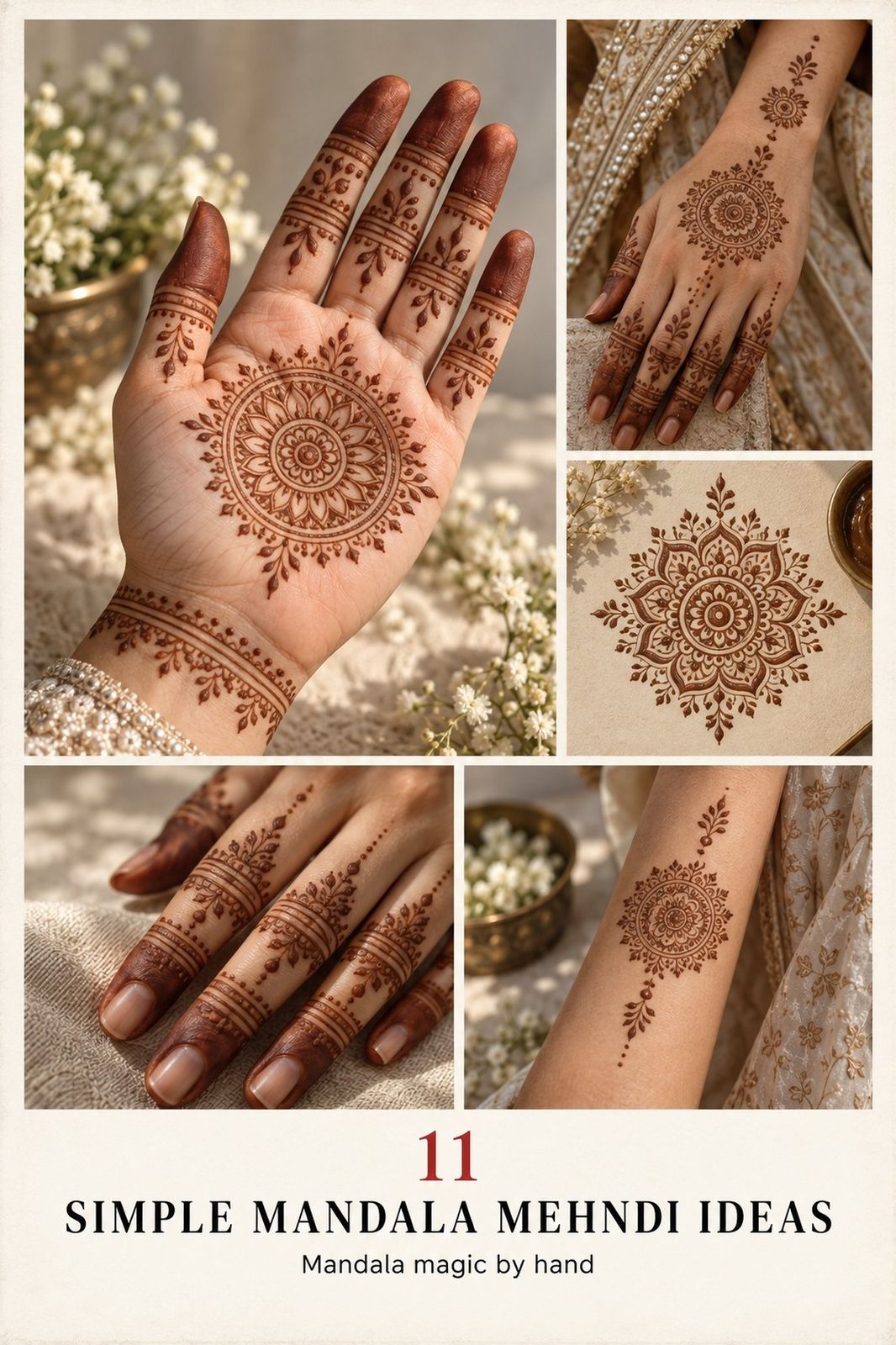
Mandala tattoos share the radial, center-out structure common in bridal mehndi, but mandalas carry specific spiritual geometry from Buddhist and Hindu traditions that henna does not necessarily invoke. The two traditions sometimes overlap in practice, but they are not identical. Paisley (boteh) appears in both henna and Persian textile design; in henna, it often represents mango or almond, symbols of fertility. Lace tattoos mimic henna’s delicate negative-space quality but lack cultural referent. Mehndi-style florals versus botanical realism: the former flattens and stylizes, the latter pursues accuracy. Choose based on whether you want symbolic or naturalistic presence.
The khamsa or hamsa hand appears frequently in henna and stands alone as tattoo; combined, the two amplify protective intention. If you choose this pairing, understand that the hamsa has specific Jewish, Islamic, and North African histories that deserve acknowledgment.
Design Tips and Pairings
Translating henna to permanent ink requires technical adjustments. Paste sits on skin’s surface and can achieve hair-fine detail that tattoo needles struggle to maintain over years.
Line Weight and Aging
Traditional mehndi lines are extraordinarily thin. In tattoo form, slightly heavier lines, still fine, but not microscopic, hold better. Talk to your artist about how specific widths will age; what looks delicate at six months may disappear entirely at six years. Shading in henna-style tattoos is typically stippled or dotwork to mimic the paste’s natural texture variation, rather than smooth gradient.
Color and Composition
Actual henna stains orange-brown to deep burgundy. Some women choose that exact palette for permanent work; others shift to black for contrast, or add subtle color accents, deep red, saffron, to suggest the stain without literalizing it. White ink henna tattoos gained popularity but age unpredictably, often yellowing or fading unevenly, particularly on darker skin tones where the white lacks contrast against natural pigment. If you are considering white ink, look at healed photos on skin similar to yours, not fresh work.
Compositionally, henna designs flow along the body rather than sitting as isolated images. A good artist builds movement: vines that wrap, florals that cascade, borders that frame natural anatomy. Negative space is as active as the inked lines.
Pairing Possibilities
- Minimalist text in relevant script (Arabic, Devanagari, etc.) woven into the design, not floating separate
- Jewelry-adjacent placement that interacts with actual rings or bracelets
- Geometric frames for more organic central motifs, or vice versa
The best pairings respect the original logic: henna flows, it wraps, it responds to the body part it inhabits. Fight that logic and the result looks pasted on, not grown.
What to Remember
Henna tattoos on women carry layered meaning: blessing and protection, feminine gathering and transmission, transition and adornment. The tradition is specific to cultures and histories that deserve honest acknowledgment. If you carry no personal lineage, you can still wear henna-inspired work, but do so with knowledge, not ignorance dressed as innocence.
For permanent ink, placement and technical choices matter enormously. Hands and feet are traditional but high-maintenance; forearms and ribs offer better longevity with visible presence. Line weight must account for aging. Color choices should reflect how the design will look at five years, not five minutes. And above all, find an artist who understands the difference between copying a Pinterest image and building a design that moves with your particular body.
The temporary nature of true henna is not a limitation to overcome. It is part of the teaching: some beauty is meant to fade, to require renewal, to bring people back together for the reapplication. Permanent henna-style work carries a different weight. Make sure you are ready for it.
Frequently Asked Questions
How long does a real henna tattoo last on women?
Natural henna stains typically last one to three weeks depending on skin type, placement, and aftercare. Palms and soles hold longest due to thicker skin; areas like the upper arm or back fade faster. The stain darkens over the first 48 hours, then gradually exfoliates away.
Is it cultural appropriation for a white woman to get a henna tattoo?
Context and intent matter. Wearing henna to a South Asian or North African wedding as a invited guest is generally accepted. Getting henna at a festival without understanding its significance, or permanently tattooing specific religious symbols, raises different concerns. Research the specific tradition you are drawing from, credit sources, support artists from that culture, and avoid claiming a ceremony that is not yours.
Why do henna tattoos stain darker on palms and feet?
The stratum corneum, the outermost skin layer, is thickest on palms and soles. Henna dye molecules bind to keratin in this layer, so more keratin means more dye uptake and deeper, longer-lasting color. These areas also have fewer sebaceous oils that can interfere with staining.
What should I look for in a tattoo artist for permanent henna-style work?
Seek portfolios showing healed results, not just fresh photos. Ask specifically about their experience with fine line aging and how they adjust traditional mehndi thinness for tattoo longevity. A good artist will discuss line weight openly, show you comparable healed work, and explain why certain placements last longer than others.