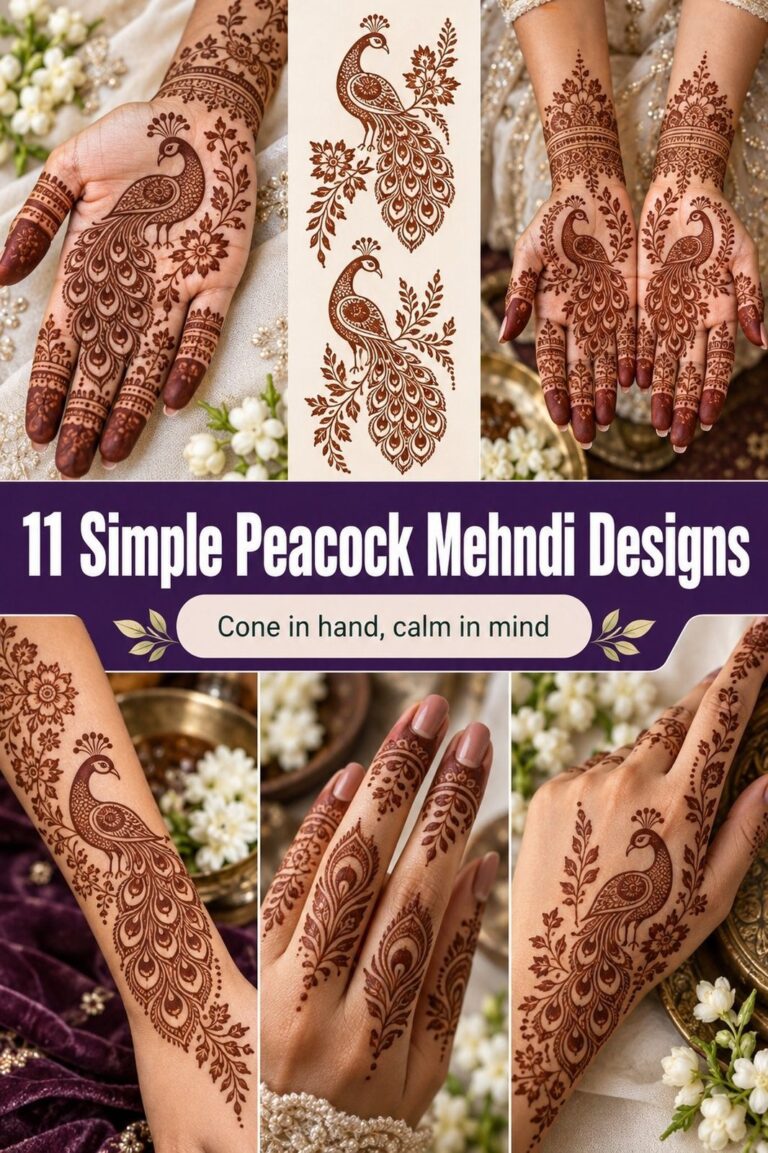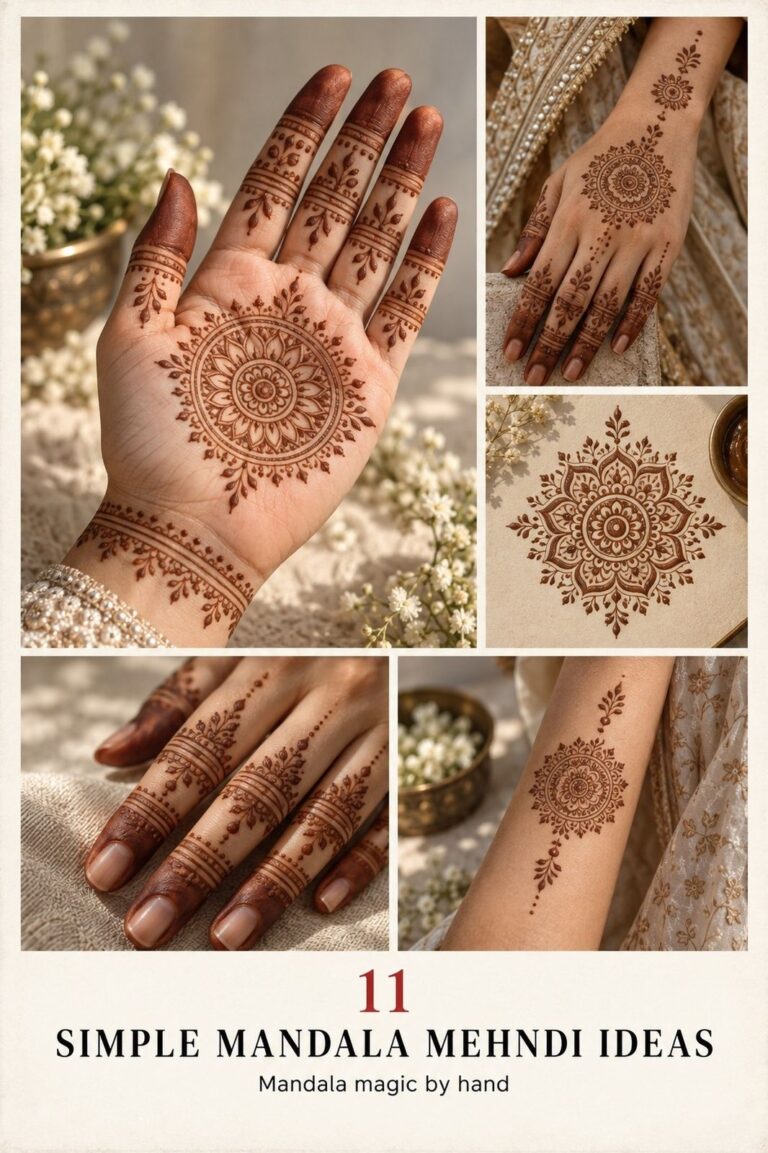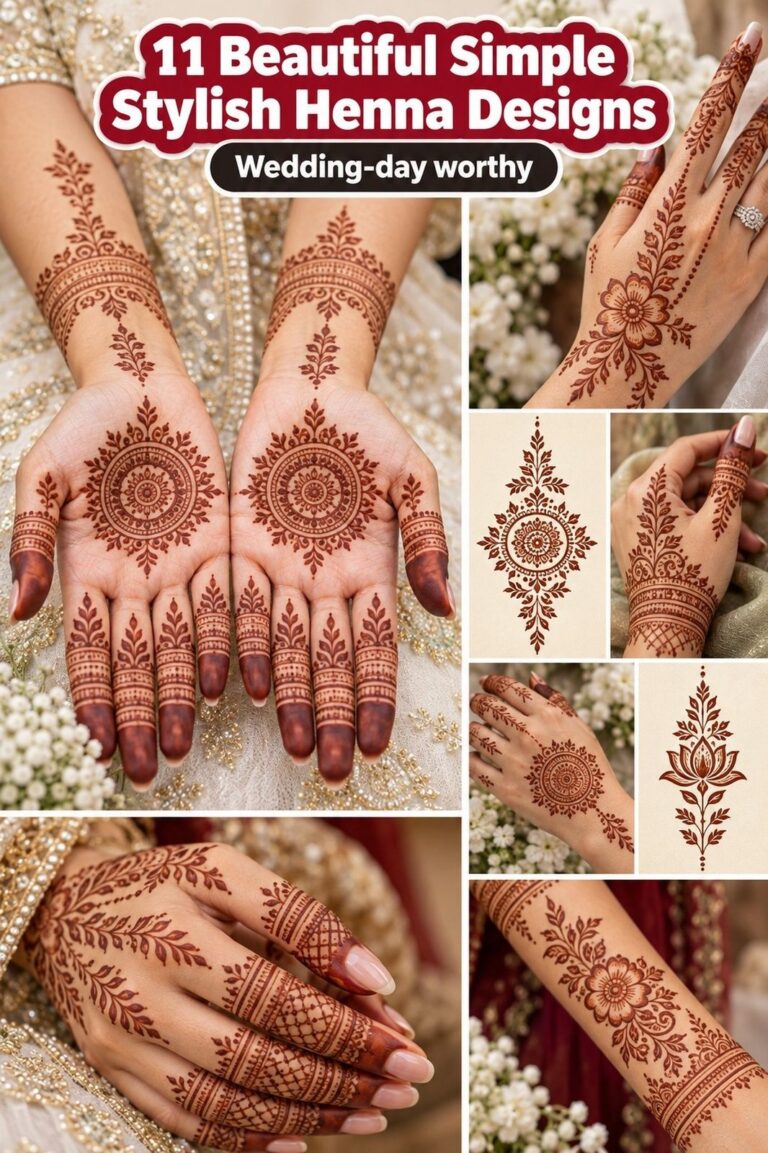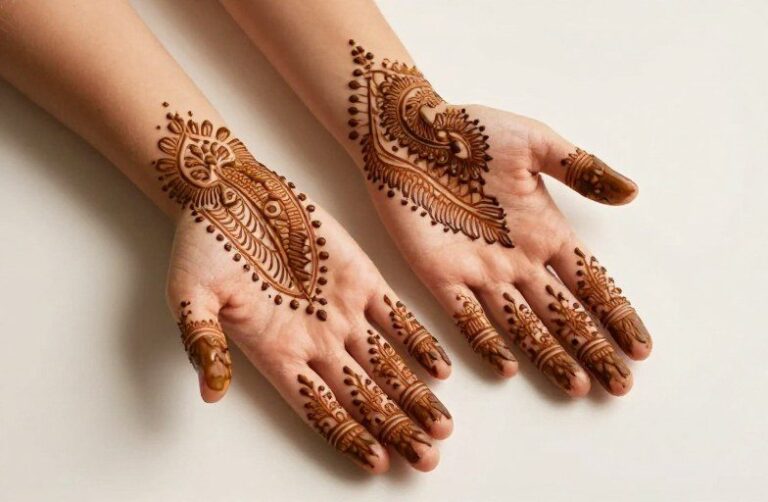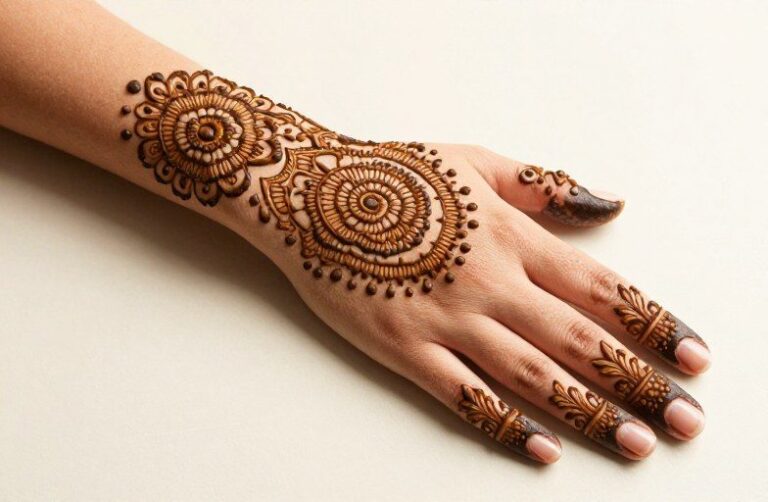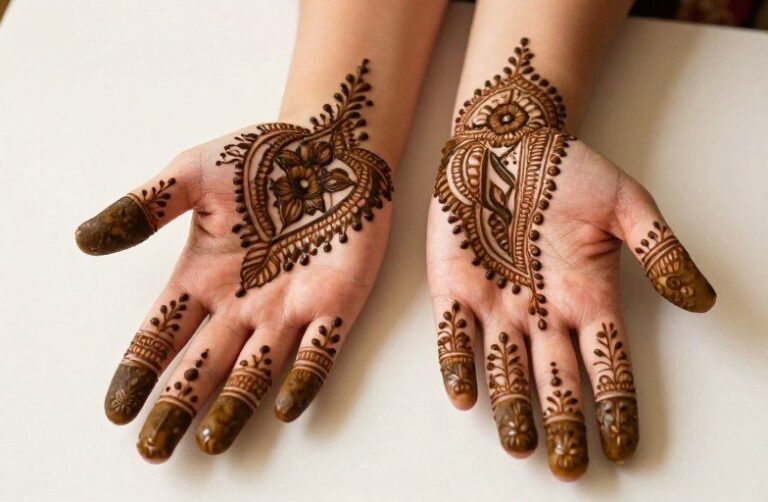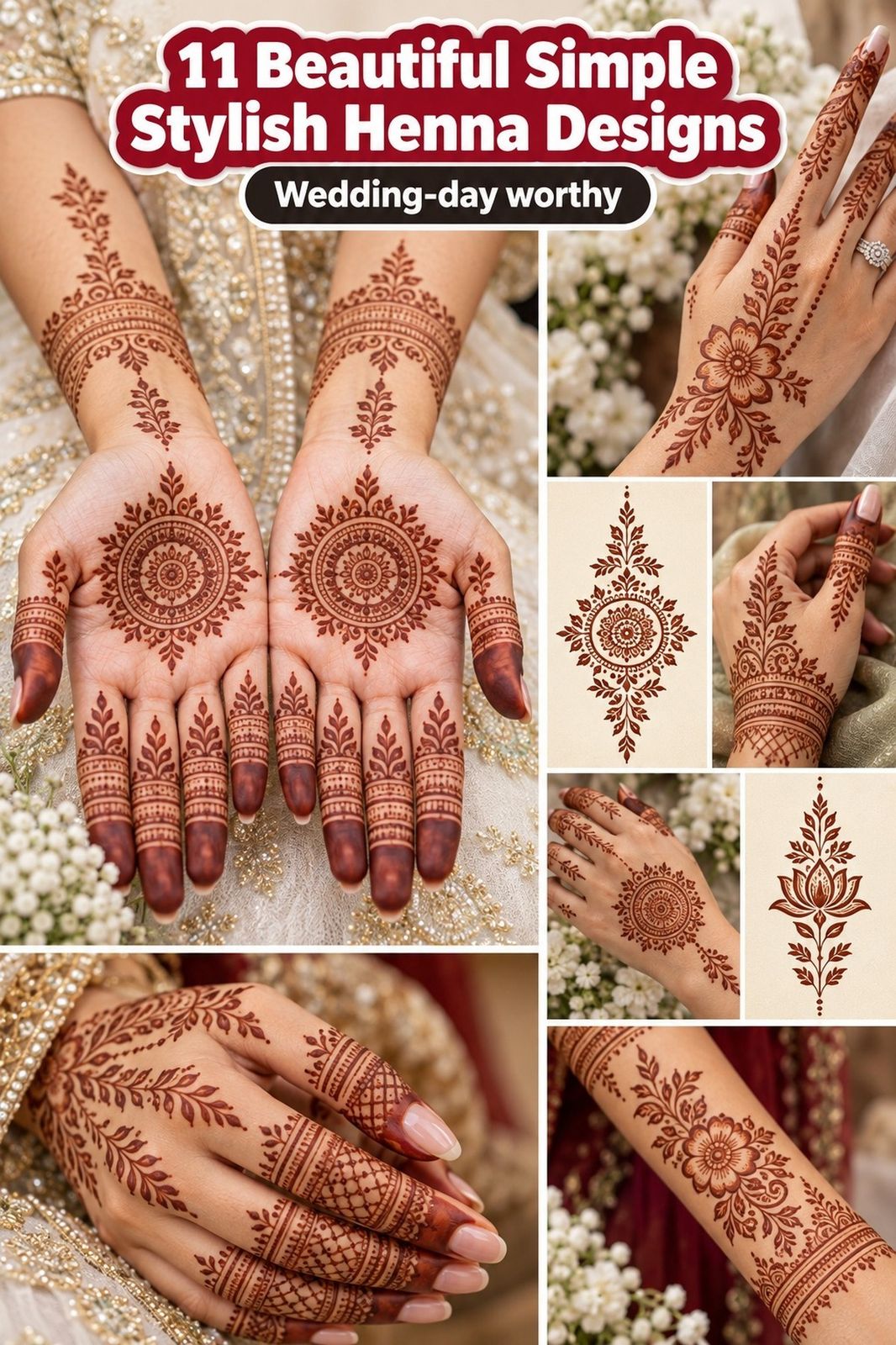
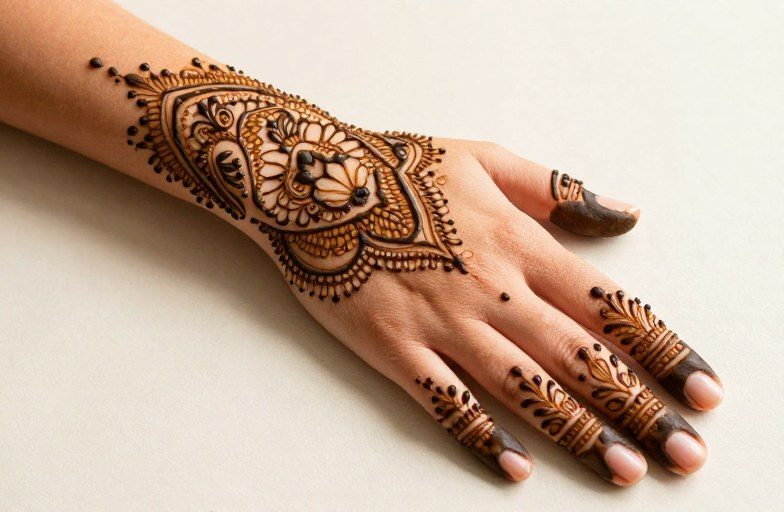
Henna as a tattoo motif refers to the ornate, flowing patterns traditionally drawn with henna paste, not necessarily the plant itself. The meaning bridges temporary ritual art and permanent ink: blessing, protection, fertility, and celebration. In permanent tattoo form, these designs often carry personal or cultural significance rather than strict religious obligation, though they remain deeply rooted in specific spiritual traditions.
Mythology & Folklore
Stories about henna’s protective power circulate across North Africa, the Middle East, and South Asia. Some trace it to the Islamic tradition of decorating brides, where intricate patterns were believed to ward off the evil eye and attract baraka, or divine blessing. Pre-Islamic Berber and Bedouin cultures already used henna for similar purposes, suggesting the symbolism predates and transcends any single religion.
The Night of the Henna
In many Middle Eastern wedding customs, the night before the ceremony centers on henna application. The darkness of the stain was thought to predict marital prosperity, with deep color signaling strong love. Tattoo wearers sometimes reference this narrative, choosing henna-inspired designs to commemorate partnership, commitment, or the threshold moments of their own lives.
Protective Motifs Within the Patterns
- The “evil eye” symbol frequently hides within henna geometry, particularly in North African designs
- Paisley shapes, called boteh in Persian, represent the cypress tree or growing seed, life and eternity
- Floral elements reference paradise gardens in Islamic art tradition
- Dot clusters at fingertips mimic traditional patterns placed where the body is most vulnerable to spiritual harm
Similar & Related Symbols
Henna patterns share DNA with several other ornamental traditions that tattoo collectors sometimes confuse or combine. Understanding the distinctions matters for respectful, intentional design choices.
Mehndi vs. General Islamic Geometry
Mehndi specifically denotes the art of henna application. Islamic geometric patterns, arabesques, girih tiles, calligraphy, often appear alongside henna-style tattoos but follow stricter mathematical rules and frequently include representational elements (though never figural in religious contexts). A tattoo mixing both should be deliberate, not accidental pastiche.
Indigenous Botanical Traditions
Jagua, a South American fruit-based dye, produces blue-black temporary tattoos sometimes mistaken for henna. In permanent ink, jagua-inspired patterns carry different cultural weight. Similarly, whakairo Māori patterns or Polynesian tatau use botanical and natural elements but operate within entirely distinct genealogical systems. Collectors should research thoroughly before hybridizing.
Design Tips & Pairings
Henna-inspired tattoos succeed when they honor the original art’s structural logic: flowing lines, negative space importance, and organic asymmetry within balanced composition.
Placement Considerations
- Hands and feet remain the most authentic placements, mirroring traditional application sites
- Palmar surfaces fade fastest due to cell turnover; the back of the hand holds ink better
- Forearms allow larger compositions with the “flowing vine” structure common in Indian bridal mehndi
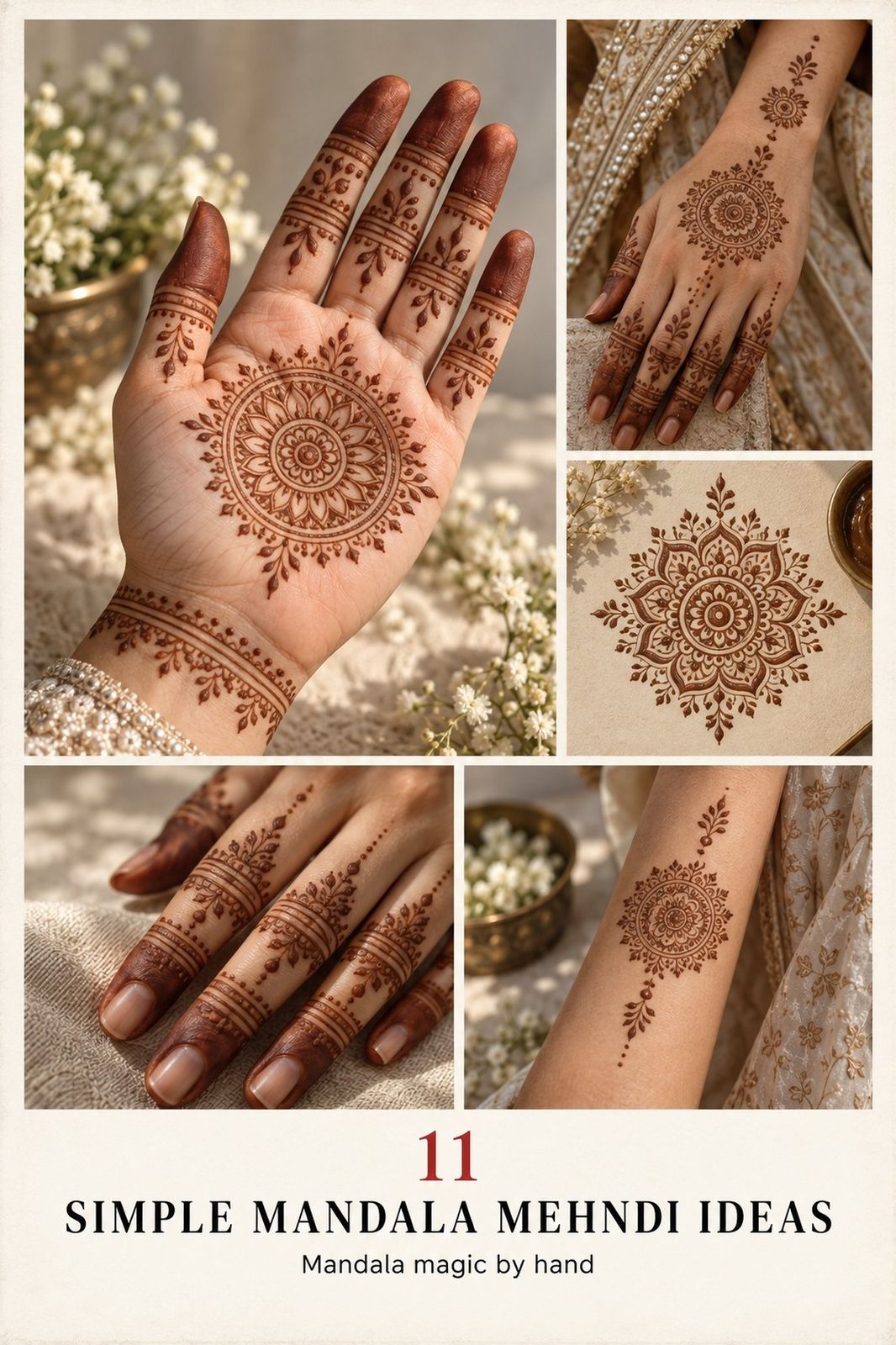
- Upper back and shoulder blades suit mandala-centered designs derived from Moroccan naqsh patterns
- Finger bands and side-of-hand pieces reference minimalist Gulf Arab styles
Working With Your Artist
Bring reference images from specific regional traditions rather than generic “henna” Google results. A skilled artist will adapt the weight of lines for tattoo longevity, traditional henna lines are hair-fine, but tattoo ink spreads slightly over time. Slightly bolder strokes, perhaps 0.5mm minimum, prevent the muddy blur that destroys delicate patterns. Shading in henna tattoos should mimic the natural gradient of staining: darker at the center of motifs, lighter at edges, never the even graywash of typical Western tattooing.
How It Ages on Skin
The fine detail that makes henna beautiful challenges long-term tattoo clarity. Understanding this tension helps set realistic expectations and guide design choices.
Line-heavy henna patterns age better than stippled or dotwork-heavy versions. Individual dots tend to spread and merge; interconnected lines maintain definition. Black ink provides the strongest contrast over decades, though some collectors choose deep reds or browns to echo actual henna color, knowing these pigments fade faster and may shift toward orange or purple.
On sun-exposed areas like hands and forearms, expect noticeable softening within five to seven years. Touch-ups can restore crispness but require an artist familiar with the original pattern’s logic. The palm itself, despite being traditional, is among the worst placements for longevity; many tattoo artists refuse it entirely due to rapid fading and uneven healing.
History & Cultural Roots
Henna’s use spans roughly five thousand years, with archaeological evidence from Egypt, the Levant, and the Indian subcontinent. The plant, Lawsonia inermis, thrives in hot, dry climates, and its cooling properties likely preceded decorative use, paste applied for temperature relief, with staining an incidental effect that became culturally meaningful.
Regional Variation in Pattern Language
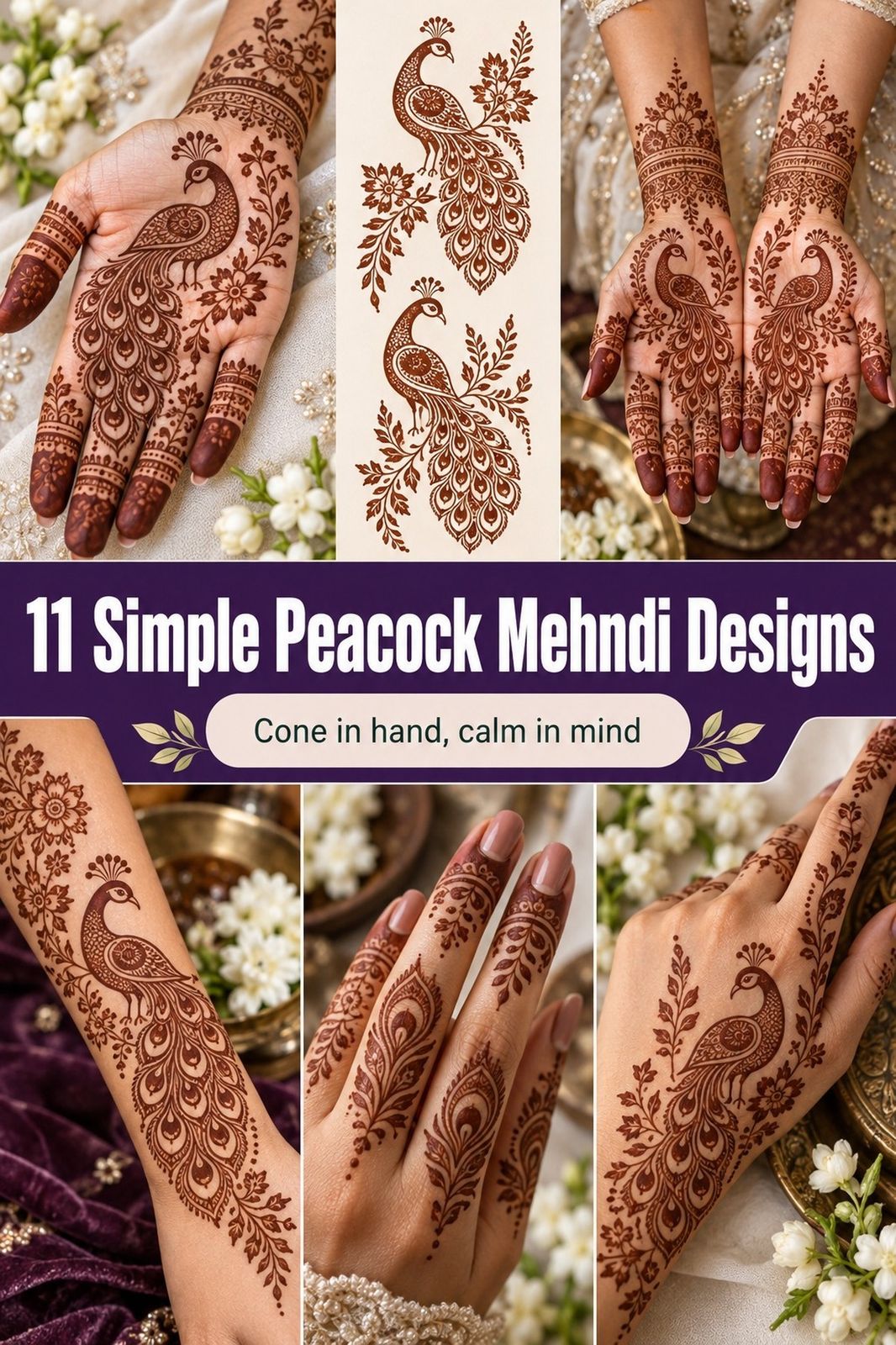
- Indian mehndi favors dense, all-over coverage with paisleys, peacocks, and figurative elements
- Arabic styles emphasize flowing vines and negative space, often less dense
- Moroccan patterns use bold geometric shapes, frequently abstract and architectural
- Sudanese and East African traditions incorporate specific protective symbols and sometimes include the name of the beloved hidden in pattern
Colonial and Orientalist fascination with “the exotic East” distorted Western understanding of these distinctions. Contemporary tattoo collectors should approach henna motifs with the same regional specificity they’d expect for Japanese or Nordic traditional designs.
Color vs Black and Grey
Traditional henna stains range from pumpkin orange to deep burgundy depending on skin chemistry, paste quality, and duration of application. Permanent ink cannot replicate this organic variation, but different approaches offer different effects.
Black Ink Realism
Black lines on light skin most closely approximate the visual weight of fresh henna on pale skin. The contrast reads immediately as “henna-inspired” to most viewers. This approach works across all skin tones but requires careful line weight management on darker skin to prevent the pattern from disappearing into healed, slightly raised scar tissue.
Brown and Red Pigments
Some artists mix custom brown-red blends to mimic aged henna. Results vary significantly by individual skin chemistry and ink brand. These tones often heal warmer (more orange) than anticipated and require more frequent refreshing. Collectors should view fully healed photos of their artist’s color work before committing.
White Ink and Scarification
White ink henna patterns, popular circa 2010-2015, rarely age well, most fade to yellowed, barely visible scars within two to four years. Actual scarification (cutting or branding to create raised patterns) produces permanent results but occupies ethically complex territory when applied to culturally significant designs. Most reputable practitioners avoid this for henna-inspired work.
Final Thoughts
A henna-inspired tattoo carries meaning proportional to the wearer’s understanding and intention. The pattern itself is not inherently religious, henna appears in Hindu, Muslim, Jewish, Christian, and secular celebrations across its geographic range. What matters is whether the design respects its source tradition, whether the placement suits the pattern’s structural logic, and whether the collector can articulate why this particular visual language resonates beyond aesthetic appreciation.
Work with artists who research their references. Expect the fine detail to challenge both the tattooer and time itself. The result, done well, holds something of the temporary art’s spirit: a mark of occasion, a gesture of beauty, a protective boundary drawn on the body’s surface.
Frequently Asked Questions
Can non-religious people get henna-style tattoos without disrespecting the tradition?
Yes, with care. Henna itself spans multiple religions and secular contexts. Avoid specific ritual motifs you haven’t researched, choose artists who understand regional styles, and be prepared to explain your personal connection if asked. The issue is usually thoughtless appropriation, not participation itself.
Do henna tattoos have to go on hands and feet to be authentic?
Traditional application favors these areas, but permanent tattoos need not follow temporary art’s rules. Forearms, shoulders, and backs work well for larger compositions. Just understand that palm and sole tattoos fade exceptionally fast and many artists won’t do them.
How do I find a tattoo artist who specializes in henna-inspired designs?
Look for portfolios showing actual mehndi reference work, not generic tribal patterns. Ask about their research process, do they distinguish Indian, Arabic, and Moroccan styles? The best artists will ask about your cultural connection and suggest appropriate regional patterns rather than defaulting to whatever’s trending.
Will a henna tattoo look bad as it ages since the lines are so thin?
Thin lines do blur over time, but strategic design prevents disaster. Avoid all-dotwork pieces, keep minimum line weight around 0.5mm, and place detailed work on low-friction, low-sun areas. Plan for a touch-up in five to eight years if the pattern matters long-term.