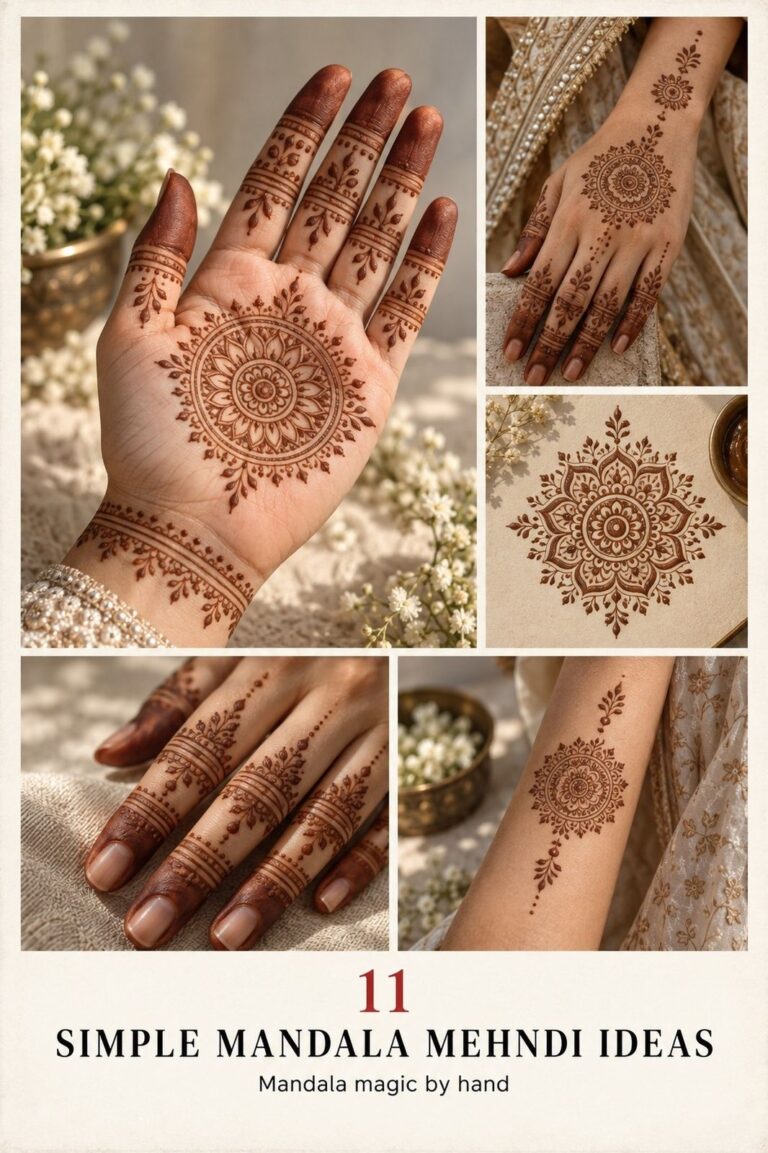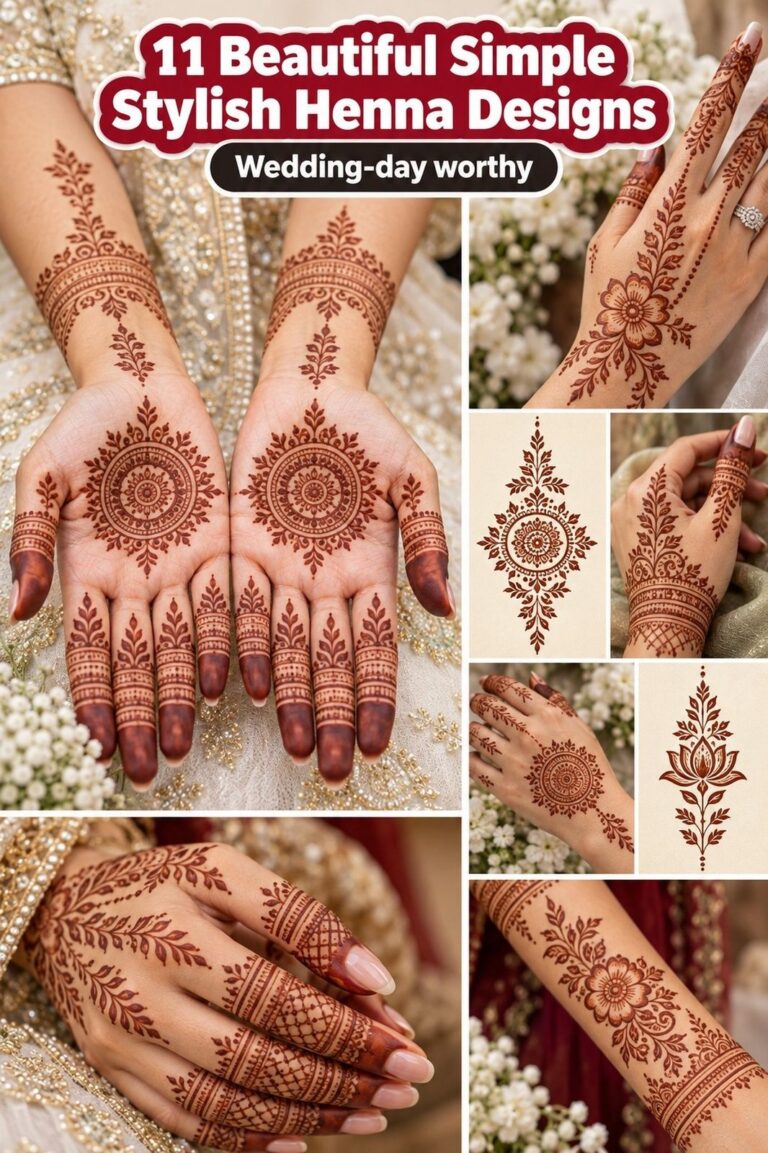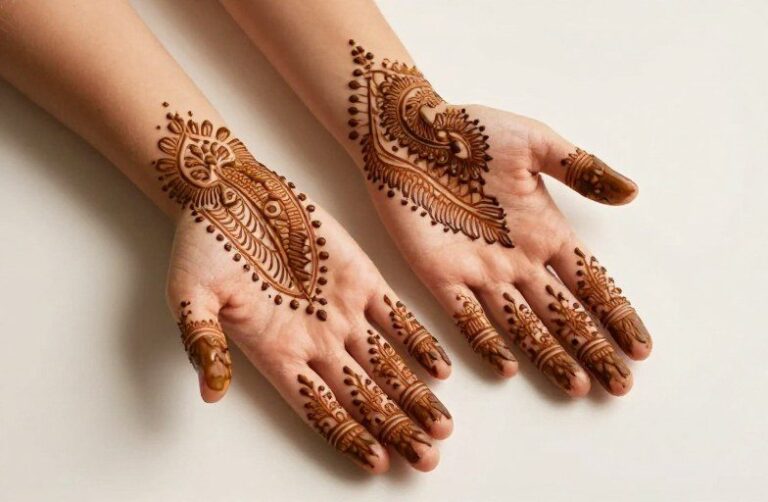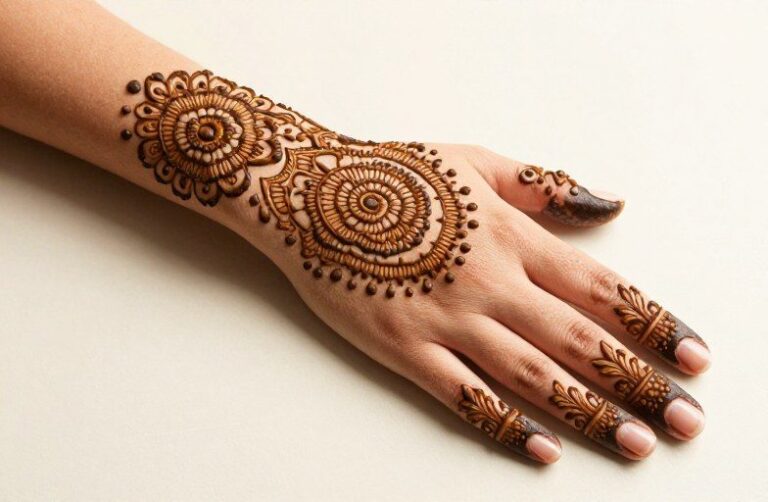
A scorpion henna tattoo carries layered symbolism rooted in survival, protection, and transformation. The arachnid’s dangerous reputation makes it a powerful ward against evil eye and harm in many traditions, while its ability to survive harsh conditions speaks to personal resilience. In henna specifically, temporary by nature, the scorpion often marks transitional moments: weddings, coming-of-age celebrations, or periods of significant change.
Design Tips & Pairings
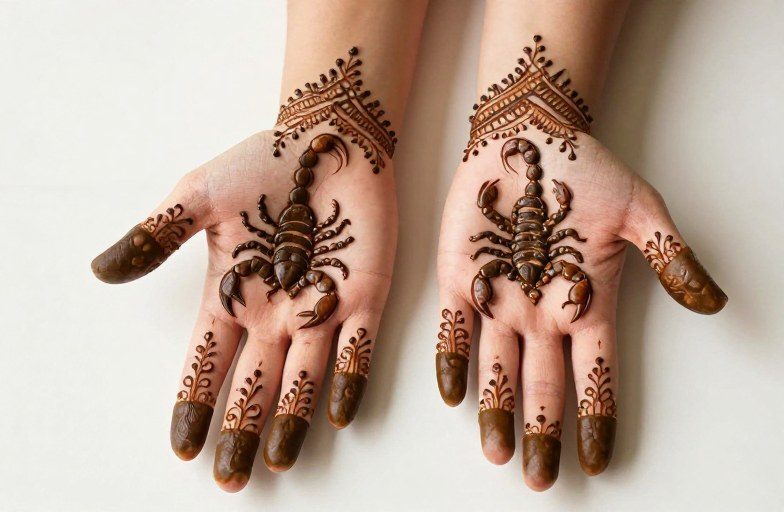
Scorpion henna works best when the anatomy reads clearly. The segmented tail curling over the body, the pincers raised in warning, these details distinguish a scorpion from a generic bug. A common mistake is softening the form too much; the design needs some sharp angles to register.
Complementary Motifs
Pairing the scorpion with specific elements shifts the emphasis:
- Floral vines wrapping the tail soften the aggression, creating balance between danger and growth
- Moon phases above or below connect to cycles, intuition, and feminine energy
- Geometric borders frame the scorpion as a protective talisman rather than a standalone creature
- Eyes (nazar) integrated into the body reinforce the anti-evil-eye function common in North African and Middle Eastern traditions
Line weight matters in henna. Thick paste lines hold better and stain darker, so use confident outlines for the body and tail, saving finer lines for leg segmentation or texture. Shading in henna is achieved through dot density or crosshatching rather than smooth gradients, plan for this limitation.
Scale and Detail Limits
On fingers or wrists, a simplified silhouette reads better than an anatomical study. For larger back or thigh pieces, you can develop the exoskeleton texture and add secondary elements. The paste starts cracking as it dries; extremely fine detail often flakes away before the stain sets.
Color vs Black and Grey
Traditional henna yields a brownish-orange stain from lawsone in the leaves. “Black henna” containing PPD (para-phenylenediamine) produces darker results but carries genuine allergy risks, skin reactions can be severe and permanent. Natural henna with added indigo or jagua achieves near-black tones more safely, though the color fades faster.
How Henna Stains Actually Develop
The color you see immediately after paste removal is pale orange. Oxidation over 24-48 hours deepens to the final tone. Palmar skin (hands, feet) stains darkest due to thicker stratum corneum. The scorpion’s bold silhouette shows up well on palms, though the design must flow with the natural creases or it will distort as the hand moves.
On arms or legs where the stain runs lighter, the scorpion’s outline needs more weight to remain visible. A faded, blurry scorpion loses its impact, this is why experienced artists emphasize the tail curve and pincer shape over intricate interior detail on body areas that stain poorly.
History & Cultural Roots
The scorpion’s protective role appears across multiple henna-wearing cultures. In Berber traditions of North Africa, scorpion motifs in henna were often linked to fertility and safe childbirth, the dangerous creature invoked to guard against other dangers. Some Bedouin practices used scorpion designs as part of bridal henna, the temporary nature matching the liminal status of the bride between families.
Regional Variations
Indian bridal henna rarely features scorpions, favoring peacocks, flowers, and paisleys instead. The scorpion design concentrates more in Moroccan, Algerian, Egyptian, and Sudanese henna traditions, plus some Persian Gulf styles. This geographic clustering matters: wearing a scorpion henna design without awareness of its specific cultural weight can read as appropriation rather than appreciation.
The symbolism also connects to pre-Islamic protective traditions across the region, where dangerous animals were depicted to repel harm through sympathetic magic, like attracts like, or like repels like depending on the interpretation.
Best Placements
Scorpion henna demands placement that respects the creature’s natural posture. The tail’s curve should follow body contours rather than fight them.
High-Impact Locations
- Top of hand, fingers extended: the scorpion appears to move as the hand gestures; the tail can curl toward the wrist
- Outer forearm: horizontal orientation lets the scorpion “walk” along the arm length
- Foot dorsum, arching toward toes: traditional in many cultures, the stain holds well, and the placement carries protective symbolism for the journey
- Upper back, shoulder blade: space for larger, more detailed work; the tail can wrap toward the spine
Placement Pitfalls
Inner wrist creases destroy straight lines within days. The scorpion’s legs across the palm’s thenar eminence blur quickly with hand use. Behind the ear looks intriguing but stains unpredictably and fades fast. Consider how the design will look as the stain matures and begins to flake, placement on high-friction areas accelerates the ugly phase.
Similar & Related Symbols
Understanding adjacent symbols helps clarify what the scorpion specifically offers.
The spider shares web-weaving and patience associations but lacks the scorpion’s defensive aggression. Serpents in henna carry renewal and fertility meanings, more fluid and less armored than the scorpion. The eye motif (nazar, khamsa) overlaps in protective function but is purely defensive, without the scorpion’s implication of active retaliation against threats.
Scorpion vs. Other Arachnids
True spiders appear rarely in traditional henna. The scorpion’s visual weight, tail, pincers, segmented body, makes it more graphically satisfying. Tarantulas carry similar danger-appeal in modern tattooing but lack the established henna tradition. For someone drawn to the scorpion’s edge but wanting less overt aggression, a crab (same zodiac family, different symbolism) offers hard shell protection without venomous connotation.
Religious & Spiritual Angles
Islamic perspectives on henna vary: generally permitted for women, discouraged for men in many interpretations, with specific hadith mentioning the practice positively. The scorpion image itself carries no inherent religious prohibition, though some conservative interpretations avoid animal imagery altogether in favor of geometric and floral patterns.
Pre-Islamic and Syncretic Layers
Scorpion veneration existed in ancient Egyptian religion (the goddess Serqet, often linked to healing and protection) and in some Mesopotamian traditions. These layers persist in folk practice even where formal religious education discourages “superstitious” symbolism. A scorpion henna design may simultaneously function as protective folk magic, cultural heritage marker, and aesthetic choice, often without clear boundaries between these categories for the wearer.
In contemporary spiritual practice outside these traditions, the scorpion sometimes gets adopted as a “shadow work” or “embracing darkness” symbol. This modern psychological framing differs from traditional protective use, and the distinction matters for respectful engagement.
Before You Decide
Scorpion henna offers genuine symbolic density, protection, resilience, liminal power, but carries cultural weight that rewards research. The temporary nature lets you test the symbol’s resonance without lifelong commitment, though good henna still requires hours of stillness and days of aftercare (keep the paste on 6-8 hours, avoid water initially, expect full color development at 48 hours).
Consider whether the design connects to your actual heritage, a specific tradition you have studied, or purely aesthetic attraction. None of these are invalid, but they call for different levels of contextual awareness. The scorpion’s danger is part of its power; a softened, cute version loses what makes the symbol compelling. Commit to the form’s sharp edges, or choose a different motif entirely.
Finally, source your henna carefully. Natural henna smells earthy, stains orange-brown initially, and never causes the immediate dark black stain that PPD-laden products provide. The scorpion protects in symbolism; your actual skin needs protection from harmful additives.
Frequently Asked Questions
Does scorpion henna have different meanings for men and women?
Traditionally, henna itself was gendered female in many cultures where scorpion designs appear. The scorpion’s protective symbolism applies broadly, but bridal and fertility associations specifically target female life stages. Modern wearers of any gender choose based on personal resonance rather than prescribed roles.
How long does a scorpion henna design typically last?
On palms and soles, 1-3 weeks with good aftercare. On arms, legs, or back where skin is thinner and less stained, 7-10 days is typical. Exfoliation, swimming, and harsh soaps accelerate fading. The scorpion’s bold outline usually remains readable longer than fine interior details.
Can I get a permanent tattoo based on a scorpion henna design?
Yes, but adapt the design. Henna’s organic flow and intentional “imperfections” don’t translate directly to tattoo machine precision. Work with an artist who understands both mediums, some specialize in “henna-style” permanent tattoos that capture the aesthetic without literal replication.
What does the scorpion’s direction matter in henna placement?
Tail curled upward traditionally signals readiness and alertness; tail relaxed downward reads as at rest or defeated. Facing toward the body center versus outward changes whether the symbol reads as internal protection or external warning. Most traditional placements follow these conventions intentionally.