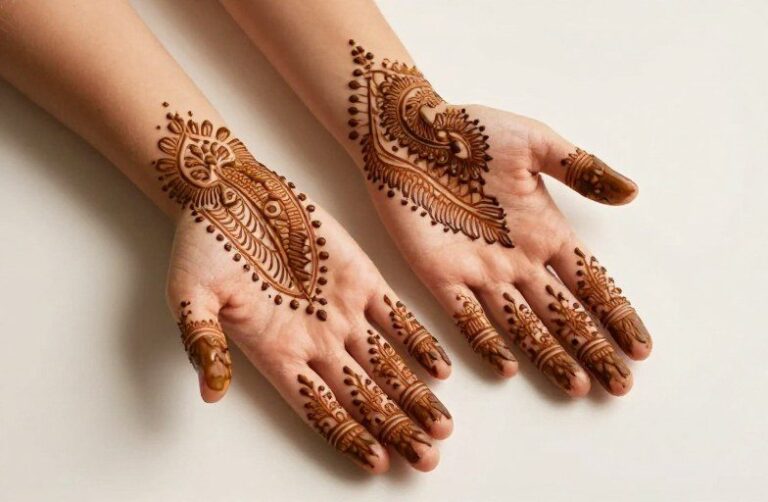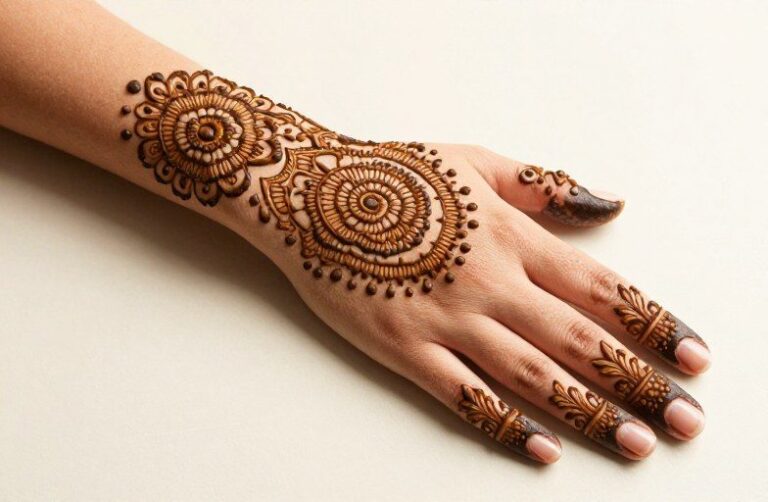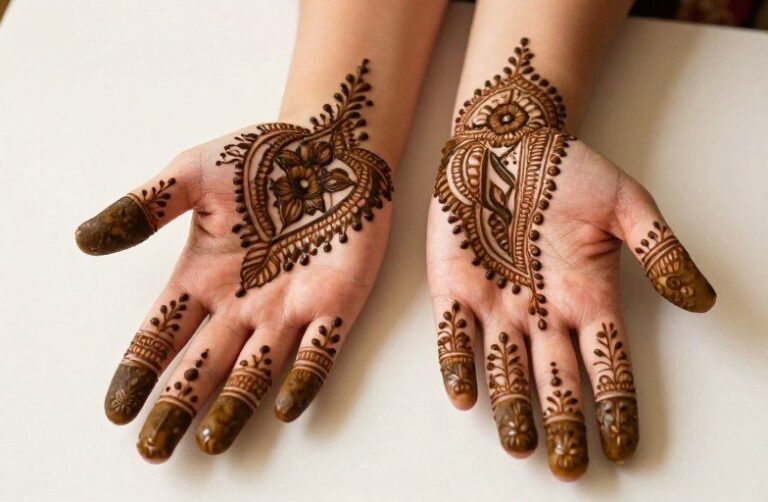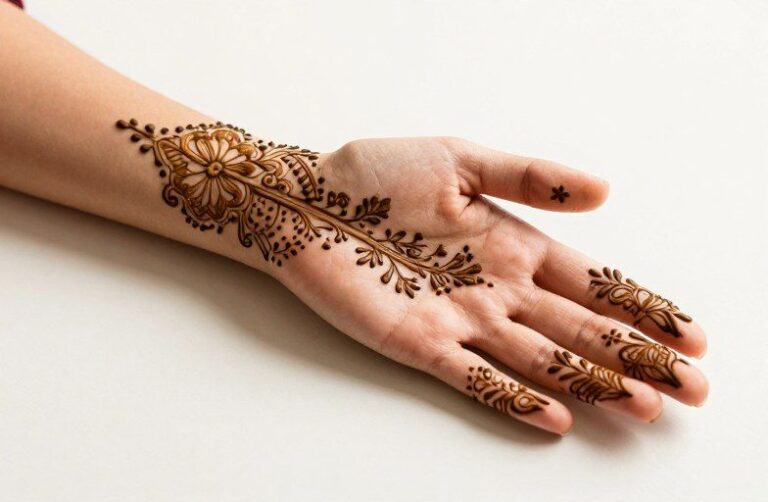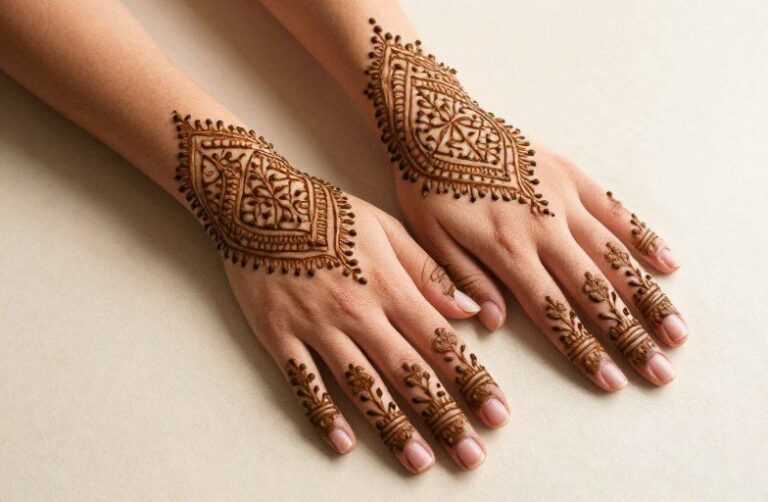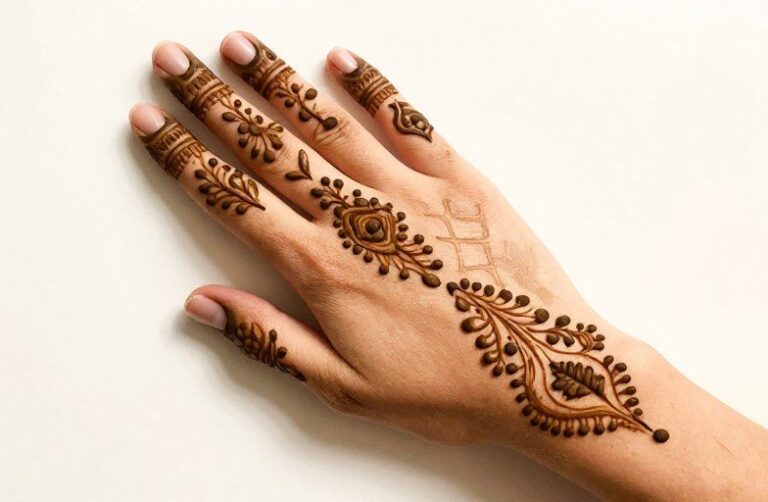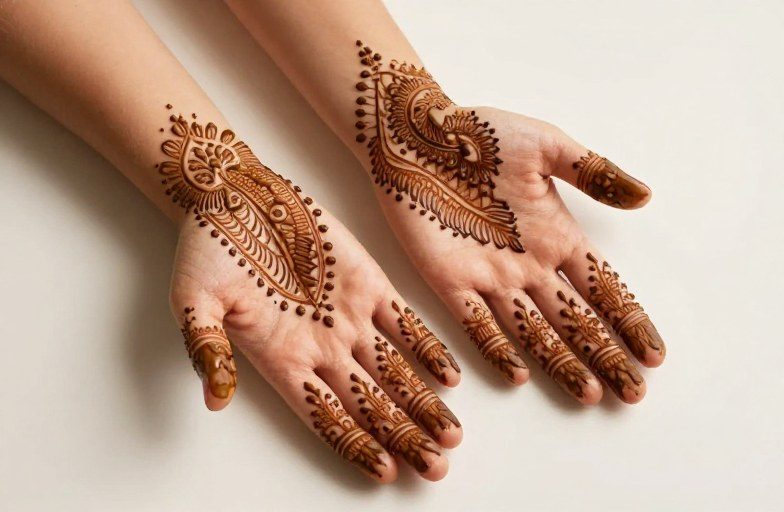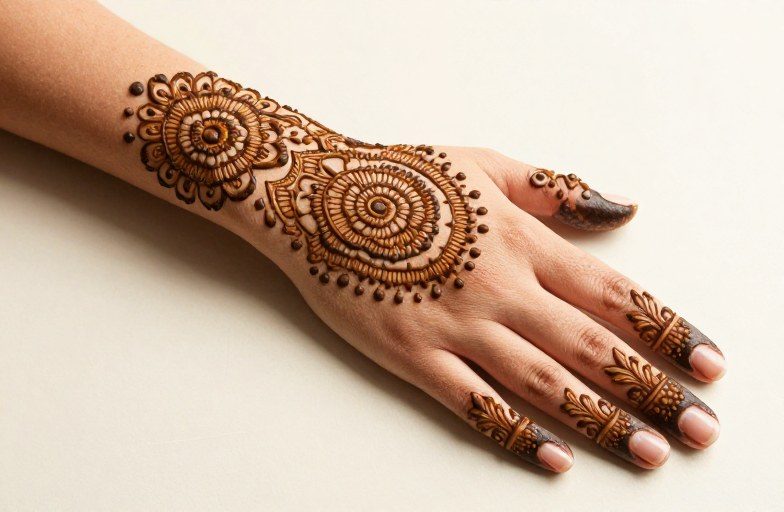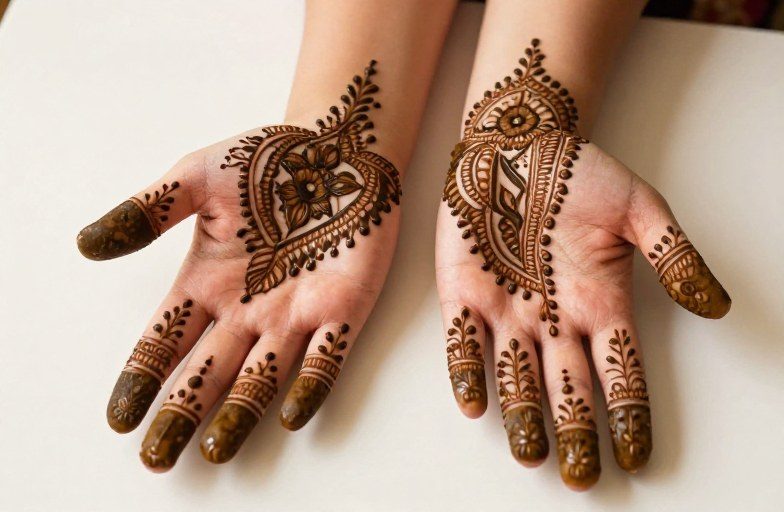
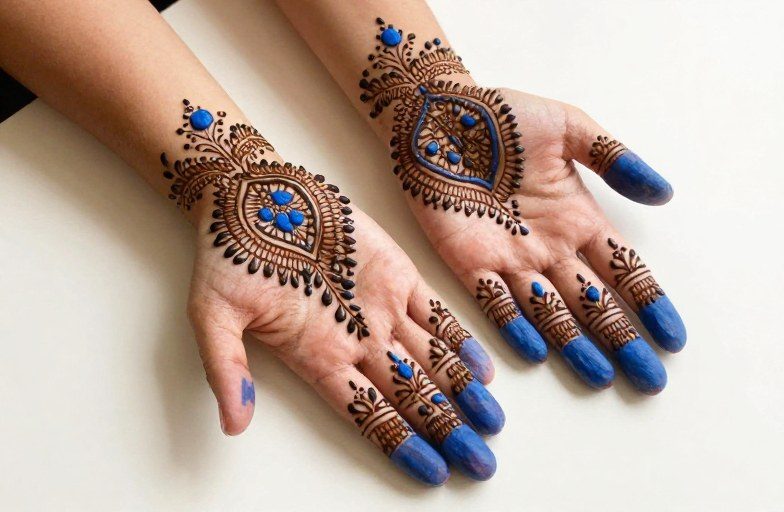
A blue henna tattoo most commonly signals protection, safe passage, and spiritual connection. The color itself carries weight across multiple traditions, often linked to the evil eye, celestial bodies, and the threshold between the physical and unseen. Unlike natural henna, which stains skin reddish-brown, blue pigment in these designs usually means synthetic dye or permanent tattoo ink, which changes both the symbolism and the commitment.
History & Cultural Roots
Natural henna (Lawsonia inermis) has decorated skin across North Africa, the Middle East, and South Asia for millennia. The plant’s lawsone molecule bonds with keratin, producing that characteristic rust-to-burgundy stain. Blue doesn’t occur in nature with this medium. When you see blue “henna,” you’re typically looking at one of two things: a synthetic dye called PPD (para-phenylenediamine) mixed into paste for temporary color, or a permanent tattoo rendered in blue ink that mimics henna’s flowing, botanical patterns.
The Synthetic Blue Temporary
PPD-based “black henna” or blue-tinted variants emerged in tourist markets, not traditional practice. These formulas can provoke severe allergic reactions, blistering, and permanent scarring. The color choice here was commercial, not cultural, vendors wanted something photogenic and distinct from natural henna’s subdued tones. If you’re considering temporary blue body art, know that genuine henna artists generally refuse these additives.
Permanent Blue Ink as Cultural Homage
Permanent blue tattoos borrowing henna motifs represent something different: a deliberate, lasting adoption of visual language. Blue ink in tattooing carries its own lineage, sailor tradition, Russian criminal markings, and later, fine-art color work. Combining this with henna-inspired geometry creates hybrid symbolism that speaks to diaspora identity, travel, or aesthetic appreciation without claiming heritage that isn’t yours.
Similar & Related Symbols
Understanding what sits adjacent to blue henna helps clarify what you’re actually communicating with this design.
- Traditional mehndi patterns: Paisleys, florals, and mandala geometry that signify joy, fertility, and celebration in specific cultural contexts. Without that context, they read as decorative.
- The Nazar (evil eye): A blue glass or ceramic amulet, commonly associated with Turkey and Greece. Blue henna designs incorporating the eye motif amplify protective intent.
- Moroccan fassi style: Dense, architectural henna from Fez, often featuring angular geometry rather than the curving florals of Indian mehndi.
- Indigo dye traditions: From West African adire to Japanese ai-zome, blue plant dyes carry labor and transformation symbolism that occasionally bleeds into tattoo interpretation.
The convergence point is threshold and protection, blue as boundary color, henna as ceremonial marker. Together, they intensify that liminal quality.
Common Variations & Styles
Not all blue henna tattoos function the same way visually. The execution changes how the piece ages and what it communicates.
Line-Weight Variations
Fine, single-needle lines replicate henna’s delicacy but blur faster as skin ages and ink spreads. Bold, consolidated outlines, think 3-5 needle groupings, hold their structure longer but lose some of that lace-like quality. Most successful permanent pieces split the difference: fine interior detail with slightly heavier exterior contours that act as containment.
Shading Approaches
Traditional henna is pure line, no shading. Tattoo adaptations sometimes add soft blue wash or dotwork gradients to create dimension. This is where the design becomes distinctly tattoo rather than imitation. Solid blue fill versus outlined-only also changes longevity, filled areas fade more uniformly, while outlines can look disconnected as surrounding skin ages.
- Hand and foot placement: Most culturally resonant, also most prone to blowout and fading due to thin skin and constant movement.
- Forearm or calf: Better canvas for detail, less symbolic weight, easier healing.
- Ribcage or sternum: Accommodates larger mandala formats, painful session, dramatic reveal.
Who Chooses This Tattoo
The appeal crosses several distinct groups, and the motivation matters for how the tattoo reads.
Travelers who encountered henna abroad sometimes want permanent commemoration. The blue shift often reflects personal preference rather than cultural knowledge, some simply like the color, or want to distinguish their piece from the brown temporary they experienced. Others with heritage from henna-practicing cultures use blue ink as deliberate modern translation, a way to honor tradition without the performative aspect of applying paste for events they no longer participate in.
A smaller group approaches this purely aesthetically: drawn to the intricate, organic patterns without particular symbolic investment. That’s valid, but worth recognizing. The visual language carries weight whether you intend it or not, and visible placement can prompt assumptions about background or belief.
Design Tips & Pairings
If you’re committed to this concept, technical decisions determine whether the piece succeeds.
Color Selection
Not all blue inks behave equally. Cobalt-based blues tend toward purple fade. Some turquoise formulations shift greenish as they age. Navy and midnight blues hold longest but can read as black in dim light. Request healed photos from your artist, fresh blue looks brighter than settled color by 30-40%.
Complementary Elements
- Gold or yellow accents: Create contrast and reference traditional henna’s occasional glitter or oil embellishment. Risk: yellow fades fastest of all tattoo pigments.
- Negative space: Letting skin show through mimics henna’s natural variation in stain depth. Essential for readability as blue ages toward gray.
- Geometric frames: Contain the organic flow, giving structure that prevents the design from becoming visual mush over time.
Avoid pairing with excessive black, two dark colors compete rather than complement. If you want black line, keep it minimal and functional.
Personal & Modern Meanings
Contemporary wearers layer individual significance onto the inherited symbolism. Common threads include:
- Marking transition or travel, literal journeys and internal ones
- Claiming protection after difficult experience, the blue as shield
- Connection to water, sky, or night, elemental associations that need no cultural permission
- Feminine strength, given henna’s historical association with women’s rituals and gathering
The permanence of tattoo ink versus henna’s temporary stain fundamentally changes the gesture. Henna marks occasion; tattoo marks identity. Blue specifically can signal conscious departure from tradition, choosing the color that doesn’t exist in the original practice, making visible that this is adaptation, not replication.
The Bottom Line
A blue henna tattoo works best when you understand exactly what you’re combining: the protective, ceremonial lineage of mehndi patterns with the modern, permanent assertion of tattoo culture, filtered through blue’s specific associations with boundary and spirit. Get the technical details right, ink behavior, placement realities, line weight for longevity, and the symbolism has room to breathe. Get them wrong, and you’ve got a blurry blue mess that communicates confusion rather than intention. Research your artist’s healed work. Ask specifically about their blue ink experience. The difference between a piece that holds for decades and one that degrades into indistinct fog is usually decided before the needle touches skin.
Frequently Asked Questions
Is blue henna safe for temporary skin application?
Natural henna never produces blue color. Blue ‘henna’ products contain synthetic dyes like PPD that can cause severe allergic reactions, blistering, and permanent scarring. Stick to traditional reddish-brown henna from reputable sources, or choose permanent tattoo ink from a licensed professional.
How does blue tattoo ink age compared to black?
Blue ink typically fades faster than black and can shift toward green or gray depending on the pigment base. Cobalt blues may purple; turquoise often goes greenish. Healed photos from your artist show truer color than fresh work.
Can I get a blue henna tattoo if I’m not from a henna-practicing culture?
Appreciation versus appropriation depends on context. Avoid sacred or specifically religious motifs. Stick to botanical, geometric patterns. Consider consulting with artists from that tradition, and be prepared to explain your connection to the design if asked.
What’s the most painful placement for this style?
Hands and feet, most culturally significant for henna patterns, are also among the most painful tattoo placements due to thin skin, nerve density, and proximity to bone. Ribcage and sternum run close behind for larger mandala pieces.