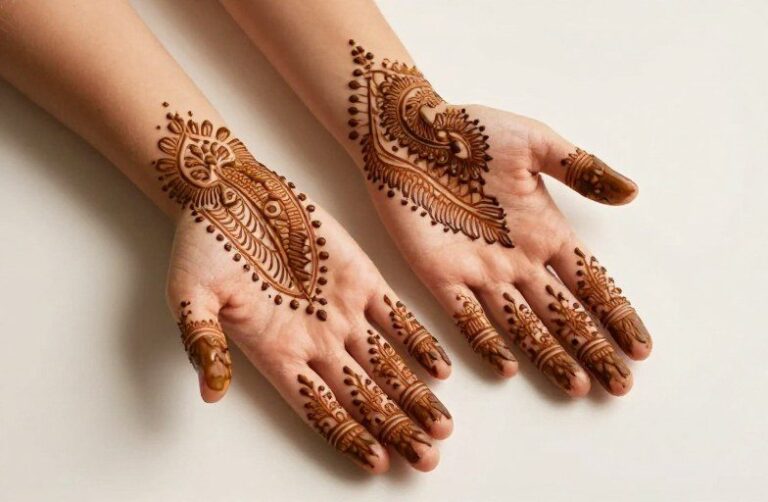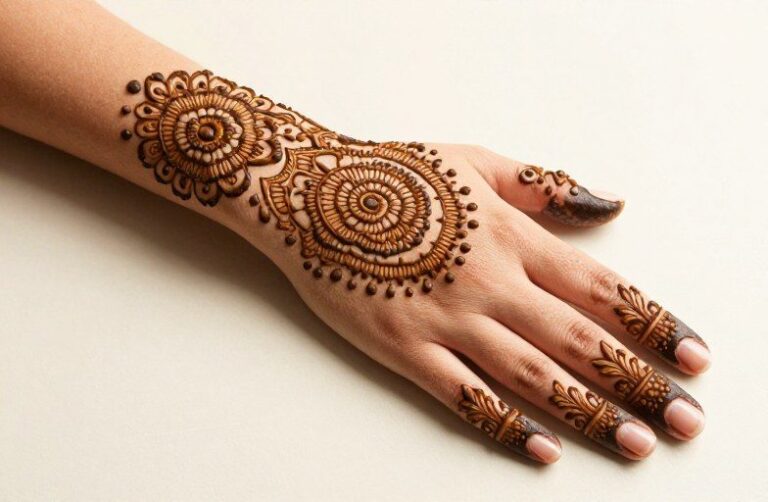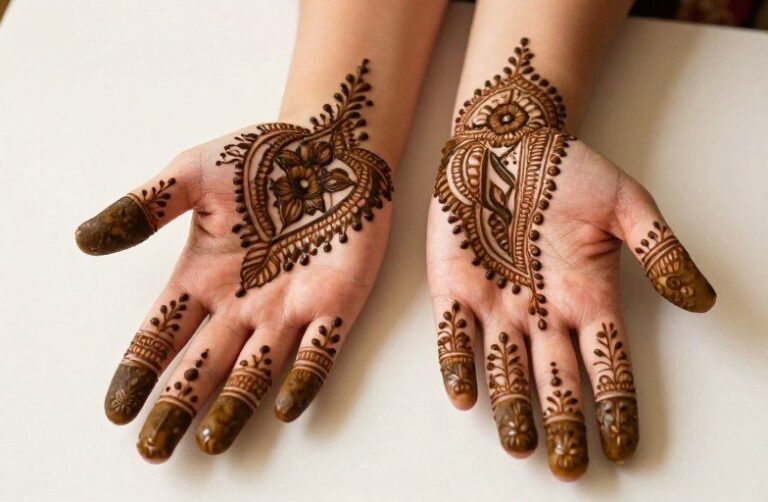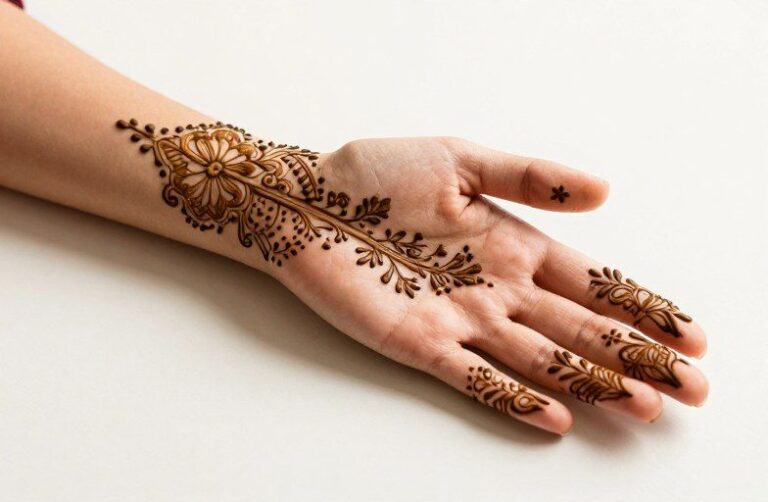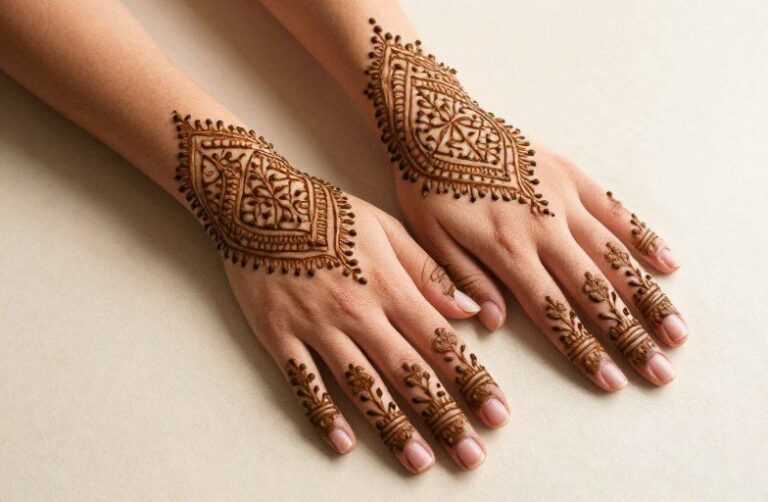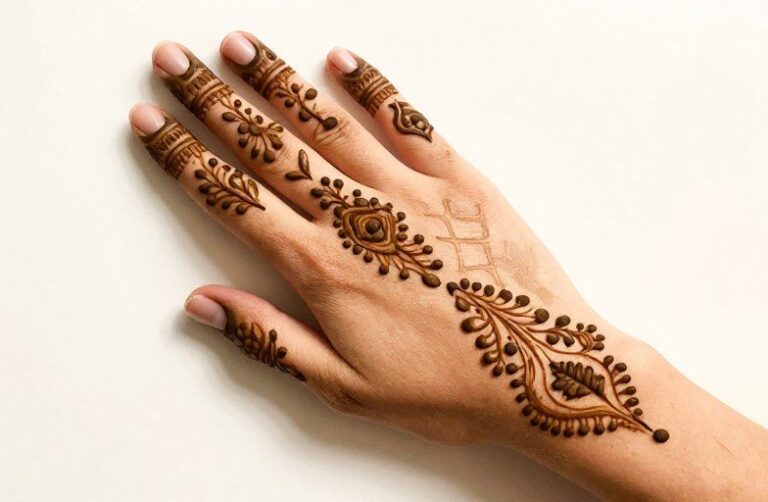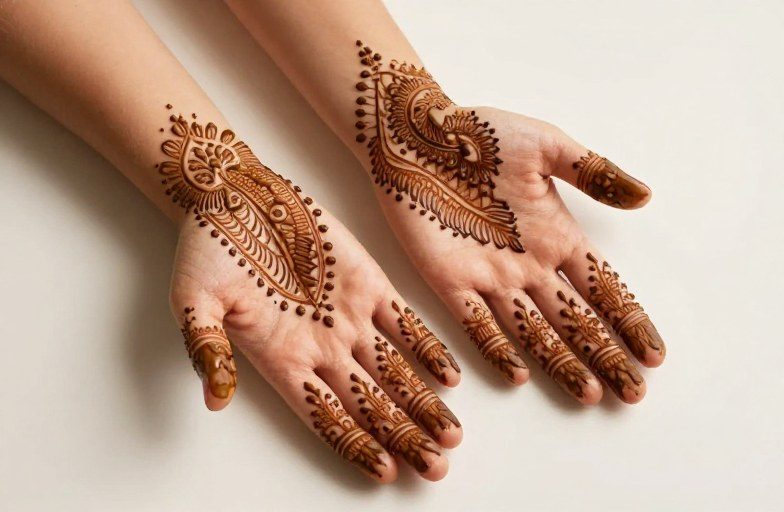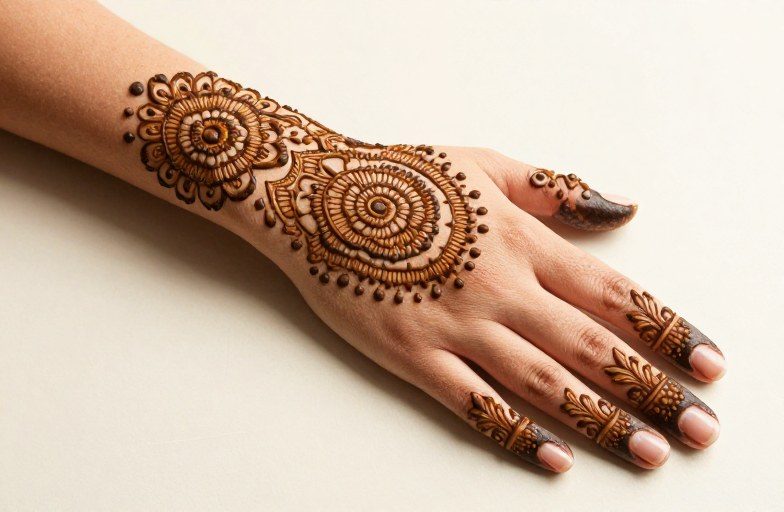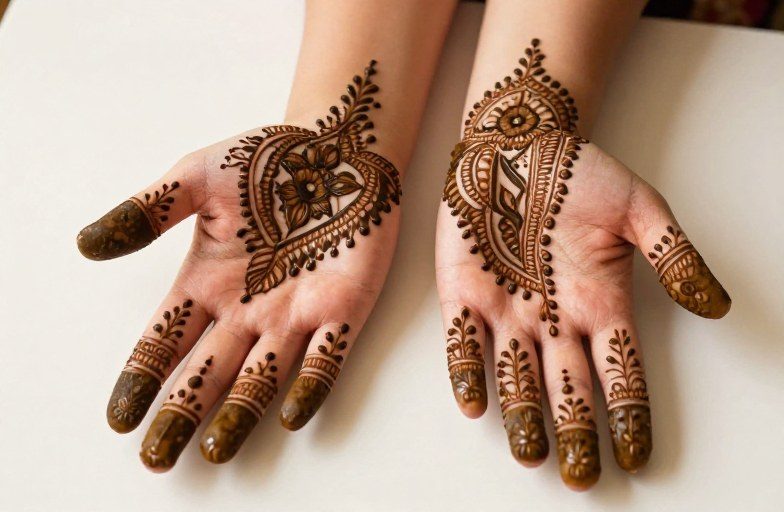
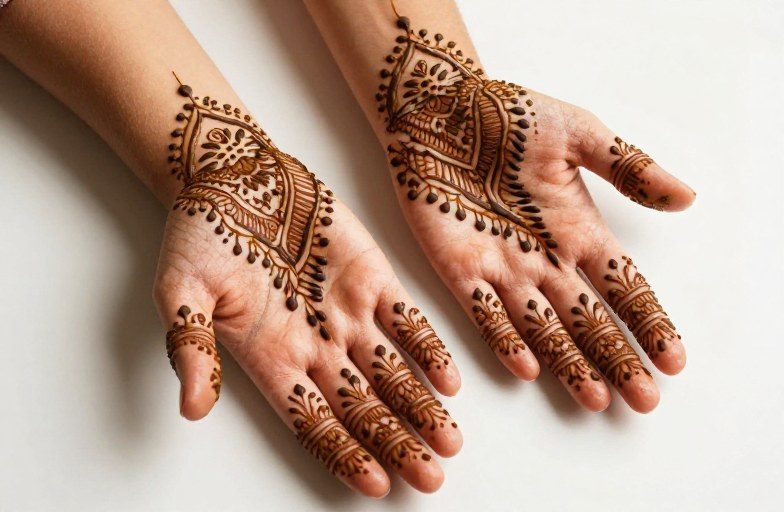
Henna tattoos mean something when they carry personal intent, cultural connection, or both. The significance shifts dramatically between traditional Mehndi and modern ornamental work done in tattoo shops. Traditional application holds religious and cultural weight in South Asian, Middle Eastern, and North African communities, where specific patterns mark weddings, festivals, and rites of passage. Western-style henna tattoos, often applied with jagua or temporary ink, borrow the visual language but usually serve decorative or personal purposes rather than ritual ones.
What Henna-Style Tattoos Mean Today
Contemporary henna-style tattoos let people engage with intricate, flowing designs without permanent commitment. The meaning attaches to whatever the wearer assigns: commemorating travel, honoring heritage, or simply loving the aesthetic of organic, non-geometric patterning.
Commemorative and Milestone Markers
Brides married into South Asian families sometimes get permanent henna-style tattoos to remember wedding Mehndi without annual reapplication. Others mark pregnancies, recoveries, or relocations with these designs. The visual softness reads differently than bold black tattooing, less aggressive, more integrated with skin tone.
Related reading: do henna tattoos have meanings | henna meaning marriage tattoo | henna tattoo meaning strength | henna tattoo meaning love
Heritage Reconnection
For people with mixed or diasporic backgrounds, henna-style permanent tattoos can function as heritage markers. A Persian-American might incorporate gol-o-morgh (flower and bird) motifs. Someone with North African roots might choose Berber geometric patterns traditionally used in henna. The key distinction: working with an artist who understands the specific tradition, not downloading generic flash from Pinterest.
Where to Place Them
Henna patterns flow best where skin moves and stretches naturally, places the body already expresses curves and lines.
- Hands and fingers: The classic Mehndi placement, but challenging for permanent ink. Finger tattoos blur faster than most locations due to constant friction and regeneration. If you want longevity, keep fine lines off the palms and sides of fingers.
- Feet and ankles: Traditional for bridal henna, and actually decent for tattoo longevity if kept off the sole. The top of the foot holds detail well; the ankle bone area blurs faster from shoe friction.
- Forearms and wrists: Ideal for permanent henna-style work. The flat planes let artists build dense, lace-like patterns that age gracefully. Inner wrist tattoos fade faster from hand-washing and sun exposure.
- Upper back and shoulders: Large-scale ornamental pieces work beautifully here, mirroring traditional back-hand bridal designs. The skin stability supports fine linework longer than high-movement areas.
- Ribs and sternum: Growing popularity for ornamental pieces. Painful, but the canvas size allows genuine artistic complexity.
One practical note: dense black ornamental patterns on high-friction areas (inner thighs, under bra lines) tend to blow out and muddy faster than elsewhere. Plan for touch-ups or choose less saturated designs there.
Color, Black, and What Actually Works
Actual henna paste stains skin in orange-brown tones, darkening to deep rust. Jagua, a South American fruit-based alternative, produces blue-black stains closer to tattoo ink. In permanent tattooing, artists replicate these looks differently.
Blackwork and Ornamental Black
Most henna-style permanent tattoos use dense black linework. This reads immediately as henna inspired to Western eyes but departs significantly from actual henna’s warm tones. Black ornamental tattoos age with characteristic grey-blue softening as ink particles disperse. Fine lines in blackwork henna pieces tend to hold better than equivalent fineness in greywash, since black pigment particles are larger and more stable.
Brown and Warm Tones
Some artists attempt color matching to real henna using brown inks. Results vary enormously by skin undertone. What reads warm rust on fair skin may disappear into olive or deep brown complexions. Brown inks also fade faster than black, often shifting pinkish or greyish unpredictably. If you want the genuine henna color permanently, consult artists with specific portfolios in this approach. It is genuinely difficult to execute well.
History and Cultural Roots
The henna plant (Lawsonia inermis) grows across semi-arid zones from North Africa to South Asia. Its use for body staining is ancient, though exactly how ancient remains debated among scholars. Egyptian mummies show henna-dyed hair and nails; some connect this to cooling properties in hot climates, since henna paste lowers skin temperature during application.
The migration of henna into specific ritual contexts, weddings, Eid celebrations, childbirth blessings, developed regionally rather than from a single origin point. Colonial-era photographs show henna use across class boundaries in Algeria, Egypt, India, and Yemen, though specific patterns and occasions varied. The globalization of henna art as a portable, commercial service largely dates to late-20th-century diaspora communities and tourism economies.
For tattoo purposes, the critical historical point is this: permanent henna-style tattooing is a modern Western development, not a traditional practice. The convergence is recent, and respectful engagement means acknowledging that distinction rather than claiming ancient lineage for a forearm piece.
Symbolism Across Traditions
Henna’s symbolic associations vary enormously by region, and many meanings floating online conflate multiple traditions.
South Asian Bridal Traditions
In Indian, Pakistani, and Bangladeshi wedding customs, the darkness of bridal Mehndi is often linked, through folk belief rather than religious doctrine, to the strength of marriage and the mother-in-law’s affection. Specific motifs carry symbolic weight: peacocks for beauty and grace, lotus flowers for purity and awakening, mango leaves for love. The jaal (net) pattern traditionally covers the palm to catch good fortune.
Middle Eastern Protective Beliefs
Some scholars trace henna’s use in the Levant and Arabian Peninsula to pre-Islamic protective practices. The khamsa (hand of Fatima) frequently appears in henna, though the symbol predates Islam and crosses multiple faiths. Night-before-wedding henna parties persist across Muslim and Jewish communities in the region, though specific rituals differ.
North African Berber and Amazigh henna often encodes information: marital status, tribal affiliation, even protective practices against the evil eye. These systems were largely oral and regional; no universal dictionary of Berber henna symbols exists in published form.
Designing Work That Lasts
Henna-style tattoos succeed or fail on flow and negative space. The dense, all-over coverage that looks stunning in temporary paste often overwhelms as permanent ink, especially as aging blurs boundaries between elements.
Working With Your Artist
- Bring reference images from actual Mehndi artists, not other tattoos. Traditional source material preserves the organic irregularity that makes henna feel alive.
- Ask for breaking points in the design, areas where the pattern naturally thins or stops, giving future touch-up options as blurring occurs.
- Consider stippled or dotwork shading rather than solid black fills; both age more gracefully and reference traditional henna’s variable stain density.
- Scale matters: what looks delicate in a small Instagram photo needs to be larger on skin to hold detail through healing and aging.
Complementary Styles
Henna ornamental pairs well with botanical realism (vines, flowers, leaves) since both share organic, non-geometric structure. It clashes visually with heavy American traditional or bold tribal. Script and lettering generally do not integrate; henna’s non-representational flow fights the literalness of words. Some successful pieces combine henna-style ornamental with geometric dotwork mandalas, though this requires careful transition zones.
What to Remember
Henna tattoos carry genuine meaning when they connect to living tradition, personal significance, or both. The aesthetic alone, those wandering vines and paisley forms, justifies the choice for many people. What is worth avoiding is wearing culturally specific symbols without understanding their context, or claiming a heritage that is not yours without honest acknowledgment.
If you are drawn to this style, start with temporary work. Attend a Mehndi ceremony if invited. Study the actual traditions. Then, if you choose permanent ink, you will know what you are carrying and why. That knowledge is what separates a thoughtful piece from mere decoration.
Frequently Asked Questions
Do henna tattoos have religious meaning?
Traditional Mehndi often carries religious and cultural weight, particularly in Hindu, Muslim, and Jewish communities. Modern ornamental henna-style tattoos usually serve decorative or personal purposes rather than ritual ones.
Is a permanent henna tattoo culturally appropriative?
It depends on context. Wearing culturally specific symbols without understanding them is problematic. Drawing from a tradition you were not raised in requires honest acknowledgment and ideally, guidance from practitioners of that tradition. Purely ornamental, non-specific patterns carry less risk.
How long do henna-style finger tattoos last?
Finger tattoos blur faster than most placements due to constant friction, hand-washing, and skin regeneration. Fine lines may need touch-ups within a few years. Keeping designs off the palms and sides of fingers improves longevity.
Can tattoo ink match real henna’s brown color?
Some artists attempt this with brown inks, but results vary enormously by skin undertone. Brown inks also fade faster than black and often shift to pinkish or greyish tones. It is genuinely difficult to execute well; seek artists with specific portfolios in this approach.
What is the difference between henna and jagua?
Henna paste stains skin in orange-brown tones. Jagua, made from a South American fruit, produces blue-black stains closer to actual tattoo ink. Both are temporary, though jagua is often used in modern tattoo shops for henna-style temporary work.