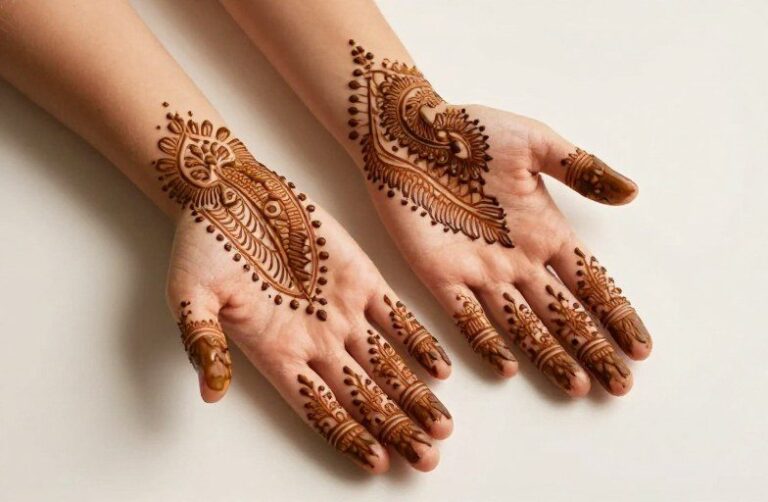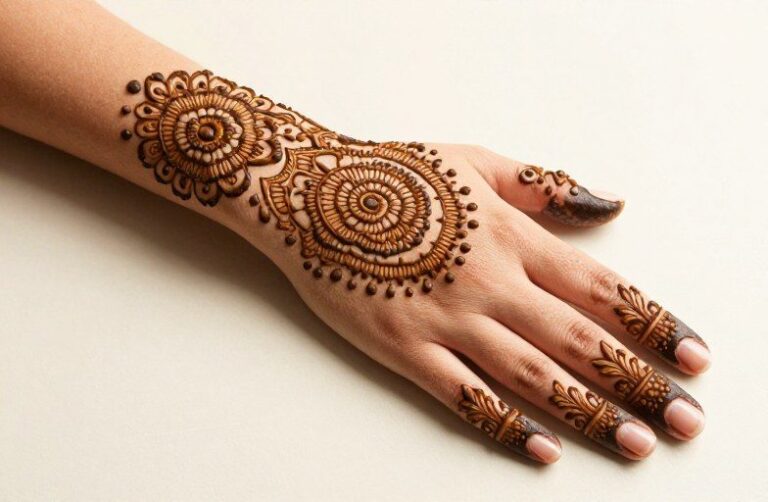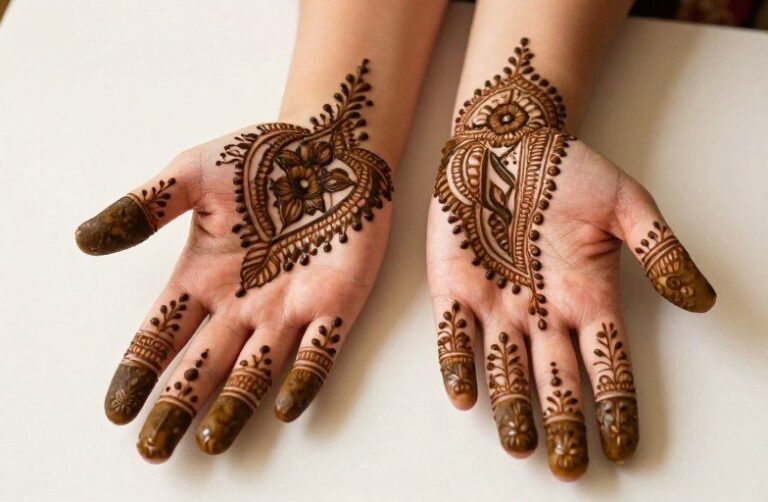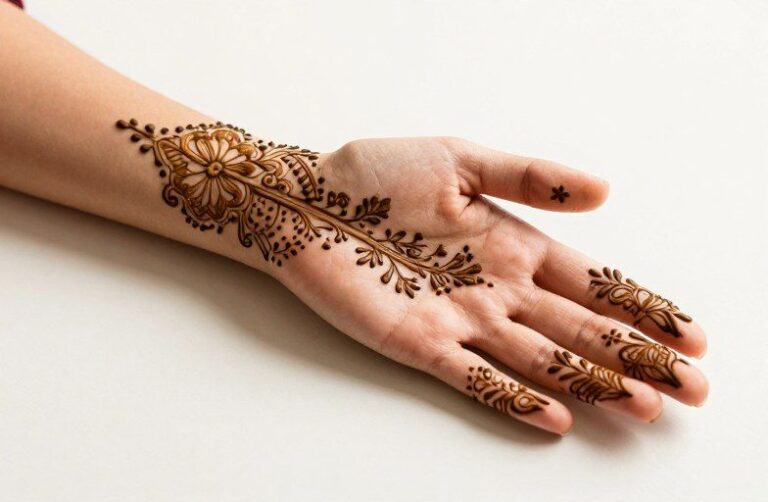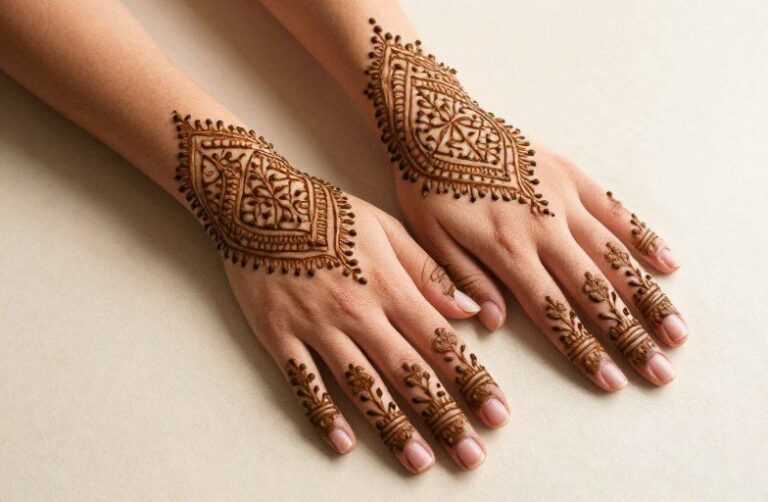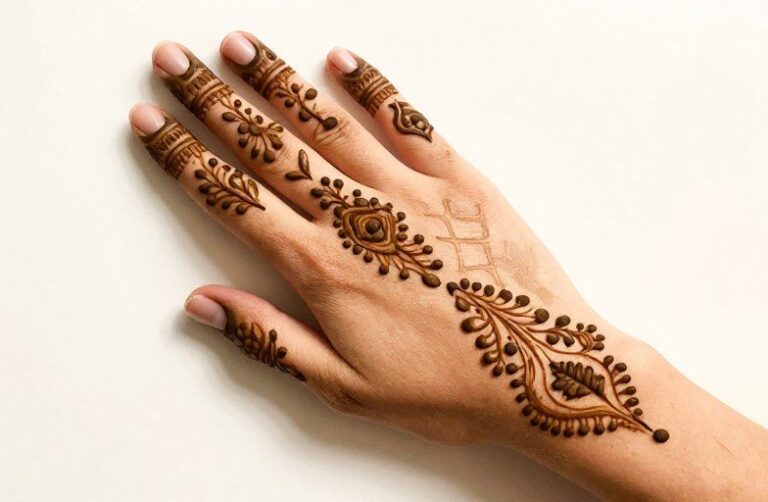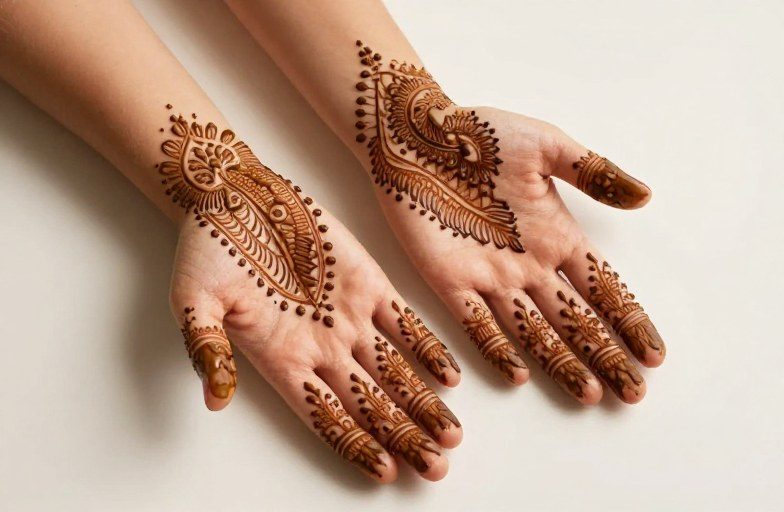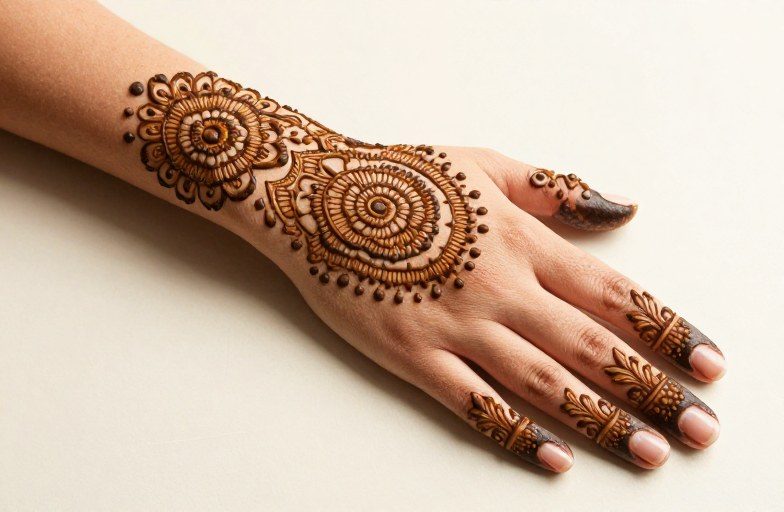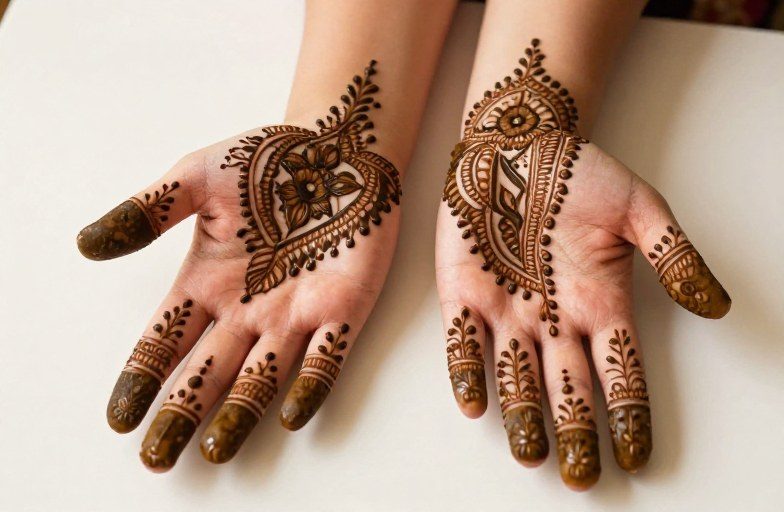
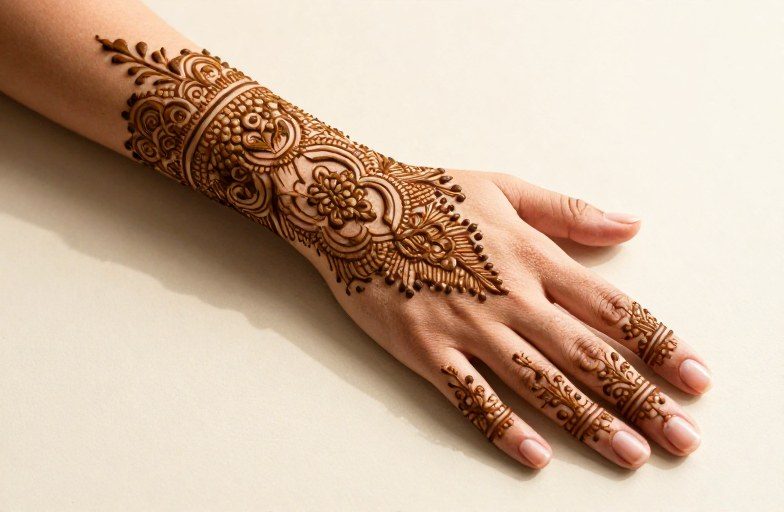
A henna arm tattoo usually carries meanings of blessing, protection, and transition, births, marriages, coming-of-age, recovery. On the arm, the design becomes visible armor: a public declaration that moves with you through gesture and daily work.
Who Chooses This Placement
The arm attracts people who want henna visible but not confrontational. Unlike a neck or hand piece, an arm design enters conversations gradually, revealed when sleeves roll up, when you gesture across a table, reach for a door handle.
Cultural Reconnection or Appreciation
Some wearers trace direct lineage to henna traditions, South Asian, North African, Middle Eastern, or Horn of Africa heritage, and seek a permanent marker of practices their families performed temporarily. Others come from outside these cultures, drawn by aesthetic beauty, and face the ongoing tension of respectful adoption versus extraction. The arm’s visibility intensifies this question: you cannot hide the conversation.
Related reading: henna arm tattoo meaning | henna feather tattoo meaning | henna inspired tattoo meaning | henna peace tattoo meaning
First-Timers and the Hesitant
Henna’s temporary nature in traditional form makes the permanent version appealing to people who loved the ritual but wanted something lasting. The arm offers substantial space without the intensity of a back or chest piece. You can start with a forearm band, gauge your comfort, then extend toward the shoulder across multiple sessions.
- People marking marriage, divorce, or recovery milestones
- Those transitioning from temporary henna at festivals to permanent ink
- Individuals seeking visible but professionally acceptable placement
- Artists and makers who use their hands expressively
Personal and Modern Meanings
Contemporary wearers attach personal significance to traditional motifs. A mandala that once protected a bride might now center a recovery date. Vines that traced lineage now climb toward a personal goal. The arm’s length accommodates narrative unfolding, designs that start at the wrist and travel upward, mapping progression.
Transformation and Protection
The hand and arm have always been primary henna placement in traditional practice, often linked to drawing off evil eye and attracting positive forces. In permanent form, this protective function becomes psychological armor. People describe looking down during difficulty and finding the pattern grounding, a visual anchor that does not wash away after two weeks.
Femininity Reclaimed
Traditional henna ceremonies center women’s spaces: pre-wedding gatherings, postpartum celebrations, Eid preparations. Modern wearers of all genders reclaim these associations, sometimes honoring female lineage, sometimes queering the feminine-coded practice, sometimes simply appreciating the aesthetic without gendered intent. The arm’s public visibility makes this reclamation unmissable.
Mythology and Folklore
Henna’s symbolic history runs through multiple traditions, often linked to cooling properties and spiritual protection. In some South Asian folklore, the plant’s red dye represents sacrifice transformed into beauty. North African traditions commonly associate elaborate bridal henna with warding spirits who might harm the union.
The Night of the Henna
Pre-wedding henna nights, variously called Mehndi, Beberiska, or similar across regions, carry folklore about the darkness of the stain predicting marital happiness. Darker color meant deeper love, stronger bond. This belief persists in diaspora communities, sometimes with gentle irony. A permanent tattoo sidesteps the stain’s variability, fixing the “darkness” permanently. Some find this comforting; others miss the living uncertainty.
Prophetic and Medicinal Associations
Some trace henna use to ancient medicinal application: cooling fevers, treating skin conditions. The symbolic overlap between physical healing and spiritual protection created patterns believed to maintain bodily and social health. Modern wearers rarely claim these medicinal properties, but the healing symbolism transfers easily to recovery narratives: addiction, grief, illness survived.
Design Tips and Pairings
Henna-style tattooing on the arm demands specific technical considerations. The traditional medium’s paste-on-skin quality creates raised, textured lines that real ink cannot replicate. Skilled artists translate this visual language into techniques that read as henna-inspired without pretending to be henna.
Line Weight and Flow
Traditional henna builds pattern through consistent fine lines, occasionally punctuated by heavier dots or filled shapes. Tattoo translation requires adjusting for how ink ages: lines spread slightly over years, dots blur, negative space closes. Experienced artists plan for this, spacing elements wider than temporary design requires. The forearm’s relatively stable skin, less sun exposure than hand, less movement distortion than inner arm, helps preserve detail.
Complementary Placements
Arm henna pieces pair naturally with:
- Shoulder caps that extend the vine or mandala upward, creating sleeve potential
- Opposite arm matching pieces for balance without strict symmetry
- Back pieces that reference the same motif family for full-body coherence
- Hand tattoos that continue the pattern, though hand aging differs dramatically from arm
Color choices matter. Traditional henna reads as reddish-brown; jagua, a different plant, reads blue-black. Tattoo ink can approximate these tones or depart entirely. Some choose deep burgundy, others stark black, others integrate muted color. Black and grey ages most predictably on arms; reds can shift toward orange or brown depending on ink quality and sun exposure.
Religious and Spiritual Angles
Henna carries religious significance across several traditions, though practice varies enormously by region and community. Understanding these layers prevents unintentional appropriation or misrepresentation.
Islamic Contexts
Many Muslims associate henna with prophetic recommendation; narrations often linked to Muhammad suggest dyeing gray hair and beautifying hands. Eid celebrations, weddings, and post-pilgrimage henna carry spiritual weight. A permanent tattoo, however, enters complex territory: many Islamic jurists consider permanent tattooing forbidden, making the henna-inspired permanent piece potentially fraught for observant Muslims. Some navigate this by keeping designs abstract, avoiding explicit religious text, or choosing placement easily covered.
Hindu and Jain Traditions
Mehndi ceremonies precede Hindu weddings with specific ritual structure: application by married women, particular songs, designated timing. Religious festivals like Karva Chauth and Teej incorporate henna as marital devotion. The arm’s visibility in these contexts carries social meaning: married status, family participation, ritual compliance. Permanent versions sometimes reference these occasions without replicating their full religious weight.
Spiritual-but-not-religious wearers often gravitate toward mandala structures and sacred geometry, which appear across henna traditions. These patterns function as meditation objects, their repetitive structure inviting contemplation. The arm’s accessibility, you can see your own mandala without a mirror, suits this practice.
What to Remember
Research before committing. Henna-inspired tattooing requires an artist who understands traditional pattern structures, not just someone who can copy a festival design from Pinterest. Ask to see healed work; fine lines that look crisp at appointment may blur differently than bold traditional tattooing. Consider how the piece ages with your skin, how it reads in professional contexts, how it situates you in relation to living traditions.
The arm offers a particular negotiation: visible enough to matter, concealable enough to control. The meaning lives partly in the pattern, partly in your relationship to it, partly in the conversations it starts when someone asks what it is and you decide how much to explain.
Frequently Asked Questions
Is a henna arm tattoo culturally appropriative?
It depends on your relationship to the tradition, the specific design, and how you discuss it. Abstract geometric patterns carry less cultural weight than specific ritual motifs. Research the pattern’s origins, credit the tradition when asked, and consider whether your wearing of it causes harm or erasure to origin communities.
How do I find an artist who specializes in henna-style tattooing?
Look for portfolios showing healed work, not just fresh photos. Ask directly about their study of traditional pattern structures, regional variations, appropriate contexts, technical translation from paste to ink. Avoid artists who treat henna as merely a visual style without understanding its cultural dimensions.
Will a henna-style tattoo fade faster on the arm than other styles?
Forearm skin is relatively stable, but fine lines and dense patterns age differently than bold traditional work. Sun exposure accelerates fading; plan for touch-ups and consider placement that allows for natural aging without catastrophic blur. Inner arm and elbow bend areas distort more with movement.