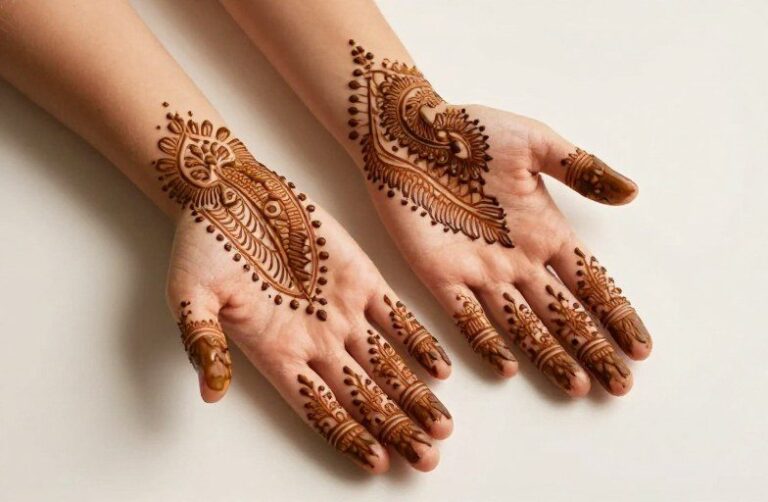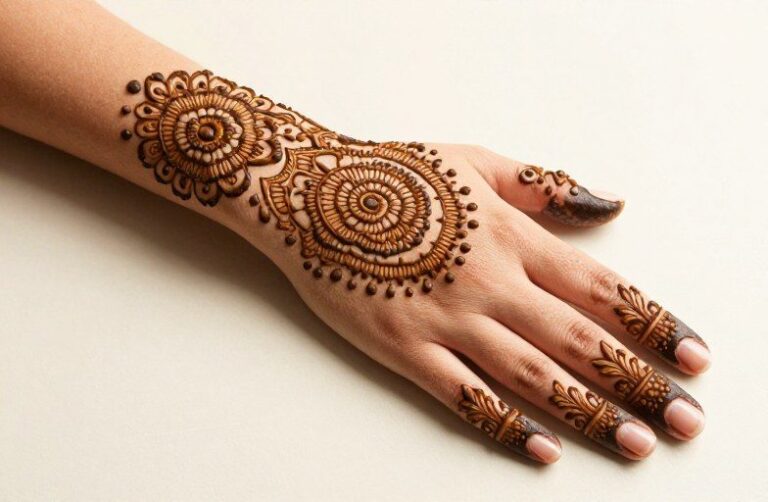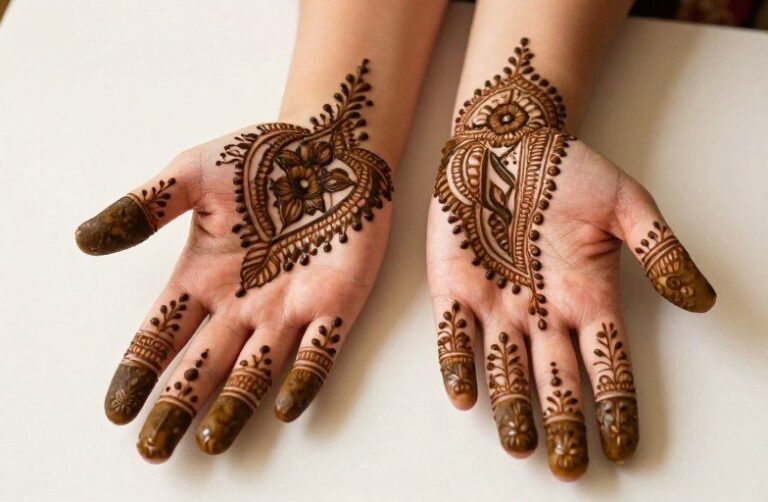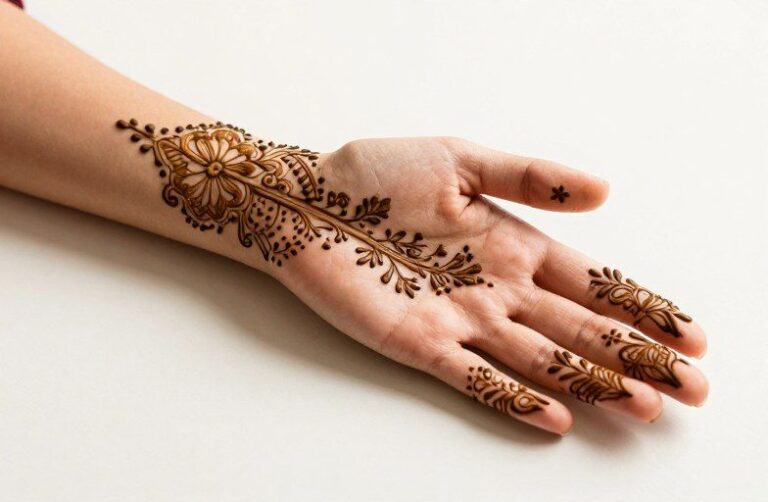
A henna tattoo, technically a stain from the Lawsonia inermis plant, carries layered meaning across cultures: blessing, transition, beauty, and temporary commitment. The question of showering with one isn’t mere practicality, it touches on how you preserve a ritual mark meant to fade, and what that fading itself symbolizes. Unlike permanent ink, henna’s impermanence is the point.
Color vs Black and Grey
Natural henna yields an orange-brown stain that darkens to deep rust or chocolate over 48 hours. This color range isn’t accidental, it’s tied to earth, blood, and the chemistry of your own skin. “Black henna” often contains PPD (para-phenylenediamine), a hair-dye additive that can scar and sensitize. The symbolism shifts dramatically between these.
Natural Henna’s Warm Spectrum
The traditional reddish-brown connects to:
- Earth and soil in North African Berber traditions
- Menstrual blood and fertility in some South Asian wedding rituals
- Sun and harvest in Levantine agricultural rites
The color deepens as the stain oxidizes, creating a living timeline on the skin. Showering too early, within the first 6-8 hours, halts this oxidation, leaving you with pale orange rather than the intended depth. That premature washing can feel like interrupting a conversation mid-sentence.
Black Henna’s False Promise
Jet-black stains mimic permanent tattoo ink, often appealing to tourists wanting “real tattoo” aesthetics without commitment. The symbolism here inverts: instead of embracing transience, black henna denies it. The chemical burn risk adds an unintended permanence, scarring, that contradicts henna’s essential meaning. Avoid entirely.
Design Tips & Pairings
Henna patterns encode specific meanings through geometry and motif. Understanding these lets you choose or request designs that align with your intent, and knowing how water affects them helps preserve that intent.
Protective Patterns
Eye motifs (nazar), hamsa hands, and geometric borders traditionally ward misfortune. These rely on crisp edges, precisely what water exposure blurs in fresh paste. After paste removal (12-24 hours post-application), avoid soaking for 24 more hours. Quick showers with natural soap, pat-dry immediately, then seal with a thin layer of coconut or olive oil to maintain barrier protection.
Fertility and Floral Work
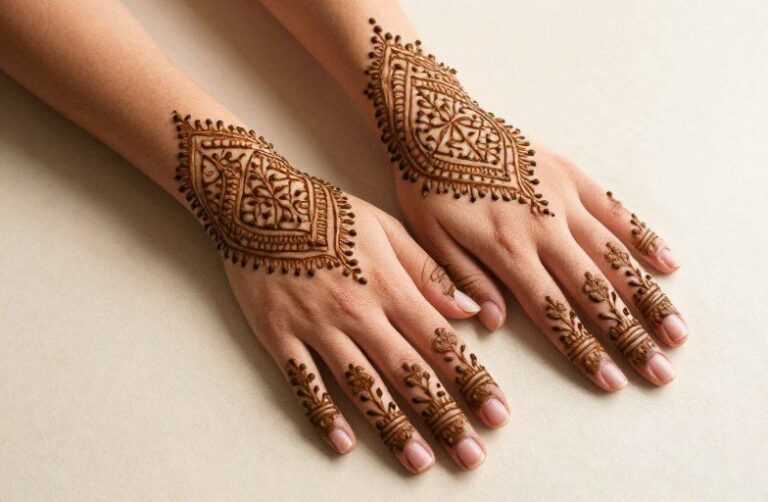
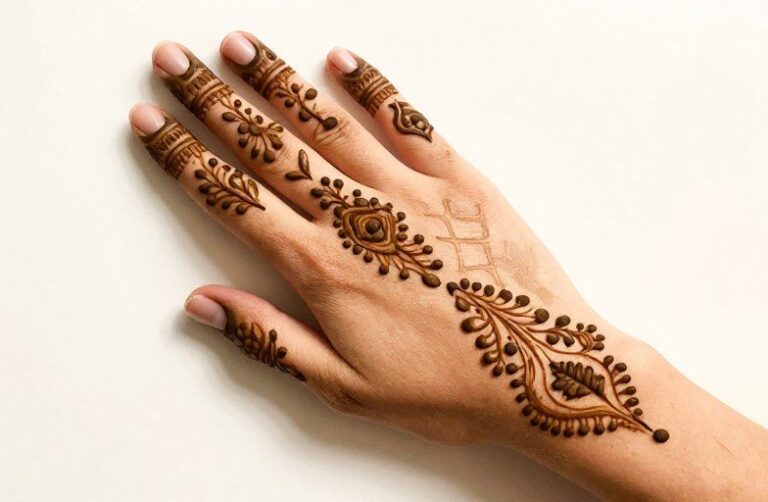
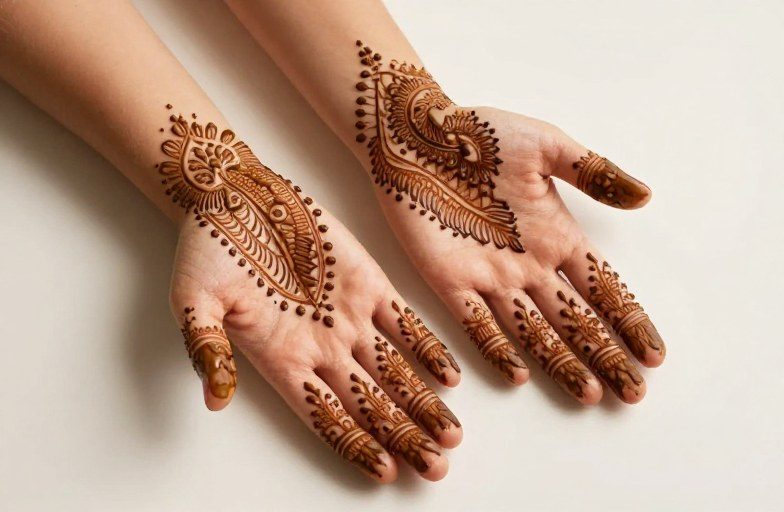
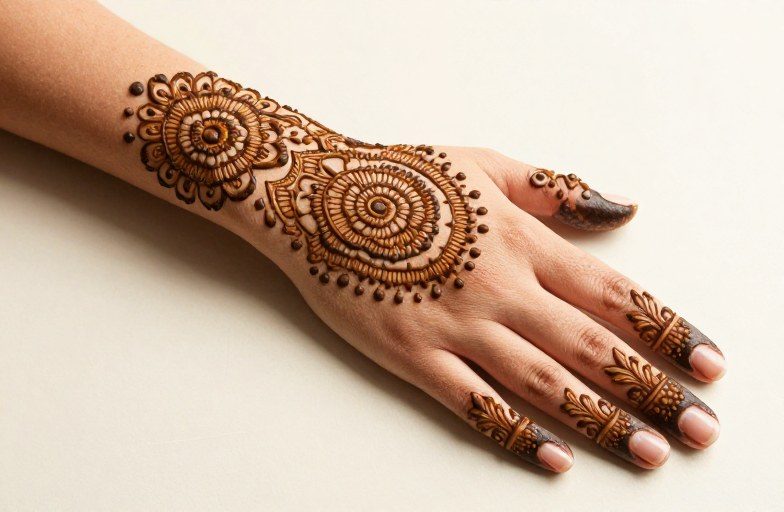
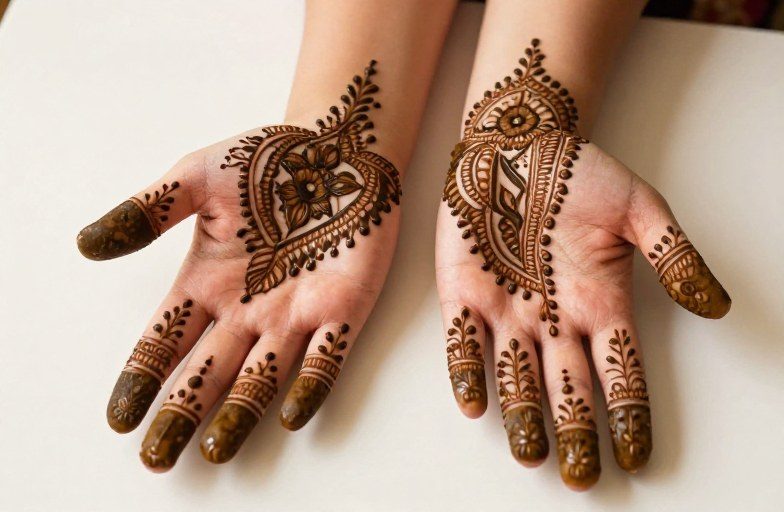
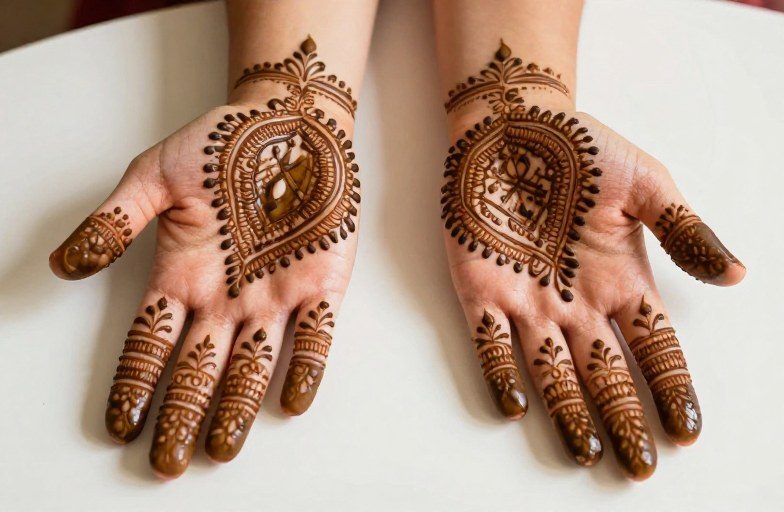
Vines, flowers, and paisleys (mango shapes) dominate bridal henna across Pakistan, India, and Bangladesh. Intricate finger coverage traditionally meant the bride wouldn’t need to do housework, visible stain proved celebration priority. Modern wearers often choose partial hand placement for practical showering: backs of hands stain better and resist water friction longer than palms or fingertips.
Pairing henna with permanent tattoos requires spacing. Fresh henna over healing ink traps moisture; fresh ink over henna-stained skin reads muddy. Wait until both are fully settled, 2-3 weeks minimum between applications.
Religious & Spiritual Angles
Henna’s spiritual use predates Islam, Hinduism, and Judaism, yet all three adopted it. The showering question intersects with ritual purity requirements in ways permanent tattoos rarely do.
Islamic Wudu and Ghusl
Water must reach the skin surface for valid ablution. Thick henna paste blocks this; thin stain does not. Scholars generally agree that oxidized henna stain doesn’t invalidate wudu, but wet paste must be removed. This creates a practical tension: religious duty to pray versus preserving a decorative or celebratory mark. Many apply henna after evening prayers, allowing overnight setting before dawn obligations.
Hindu Ritual Context
Karvachauth and Teej festivals involve elaborate bridal henna as part of fasting and prayer cycles. The fast itself includes water restriction, ironically protecting the fresh stain. Post-fast immersion in water (rivers, ritual baths) marks transition back to ordinary life, and the fading henna mirrors this re-entry.
Mythology & Folklore
Henna’s origin stories often involve sacrifice, transformation, or divine favor. The plant’s cooling properties, genuinely effective for skin inflammation, grounded its mythic associations with soothing suffering.
Some trace henna’s wedding use to a Yemeni folktale: a woman who couldn’t afford jewelry painted her hands to appear adorned, and the practice spread as democratic beauty. In Rajasthan, bridegrooms sometimes receive simpler henna patterns, the asymmetry marking gendered social roles.
The fading itself carries narrative weight. Unlike permanent tattoos that “age with you,” henna disappears, inviting speculation about what you might choose next, what phase you’re entering. Showering accelerates this fade unevenly: palms and soles exfoliate fastest, upper arms slowest. This creates natural ombré that some read as fortune’s uneven distribution, others as life’s necessary impermanence.
Similar & Related Symbols
Henna occupies a symbolic neighborhood with other temporary and permanent body marks. Understanding boundaries clarifies its unique position.
- Jagua: South American fruit dye yielding blue-black, sometimes marketed as “black henna” alternative. Different plant, different chemistry, similar impermanence.
- Mehndi vs henna: Mehndi is the application art; henna is the material. The distinction matters in South Asian contexts where mehndi carries specific ceremonial choreography.
- White ink tattoos: Permanent, but fade to yellowish scar-like visibility. Some seekers choose henna instead, wanting the visual of pale raised skin without permanence.
- Scarification: Permanent, intentional keloid raising. Henna’s temporary raised paste offers a non-committal preview of that aesthetic.
Showering affects jagua similarly, avoid soaking 24 hours post-application. White ink and scarification demand opposite care: moisture helps healing, unlike henna’s need for dryness during oxidation.
How It Ages on Skin
Henna’s aging is front-loaded. The first 48 hours determine final color; after that, it’s gradual decline. Understanding this timeline helps interpret showering’s impact.
The Oxidation Window
Fresh paste: wet, dark, easily smeared. Removal reveals orange stain that darkens through 48 hours. During this window, water is enemy, steam from showers, swimming, dishes, even sweating. The stain hasn’t bonded to keratin fully; water molecules compete with henna’s lawsone pigment for skin attachment.
The Fade Curve
Peak color: days 2-4. Visible stain: typically 1-3 weeks depending on body placement, skin chemistry, and care. Palms and soles, with thicker keratin, hold longest but also receive most friction. Backs of hands, popular for visibility, fade faster due to washing frequency.
Exfoliation accelerates loss. Loofahs, harsh soaps, and hot water strip stained skin cells. Cooler showers, gentle cleanser, pat-dry technique, all extend life. But some welcome the fade: each lighter shade marks passage, a calendar on the body.
Final Word
Showering with henna isn’t forbidden, it’s timed. The question reveals a deeper negotiation: how to honor temporary beauty within daily necessity. The stain’s meaning partly resides in this fragility, in the attention required to preserve it. Permanent tattoos ask for commitment to image; henna asks for commitment to process, to repeated application, to cycles of decoration and return to plainness.
Whether marking a wedding, exploring pattern without permanence, or simply enjoying plant-derived color, henna’s symbolism ultimately rests in its relationship with time, how long you can keep it, how gracefully you release it. The shower becomes a small ritual of this larger letting-go.
Frequently Asked Questions
How long should I wait to shower after getting henna?
Keep the paste dry for at least 6-8 hours after application; many artists recommend 12-24 hours for deeper stain. Once the paste flakes off naturally, wait another 24 hours before soaking or scrubbing the area.
Does chlorine or salt water ruin henna faster than fresh water?
Chlorine and salt both accelerate fading by drying and chemically interacting with the skin surface. Ocean swimming and pools are harder on henna than quick showers, especially in the first 48 hours after paste removal.
Why does my henna fade faster on my fingers than my upper arm?
Fingers have thinner skin, more frequent washing, and higher friction from daily use. The upper arm’s thicker epidermis and lower disturbance rate let stain penetrate deeper and remain visible longer.
Can I apply lotion or oil before showering to protect henna?
Oil after showering helps seal the stain, but applying before creates a barrier that prevents water from properly cleaning the skin and can trap bacteria. Wait until after you pat-dry, then use thin natural oil.