
Easy stylish mehndi designs for front hand can stay discreet at work and still feel personal. Fresh henna paste dries for about 1 to 2 hours, stains the skin reddish-brown, darkens on the second day, and fades in one to three weeks. I once chose detail before placement, and the result felt harder to live with than expected. Now I trace the hand’s movement first, then choose the motif.
Editor’s note: This guide moves from minimal finger trails and mandalas to Arabic sweeps, peacocks, geometry, hearts, and bracelet-inspired patterns. Each idea includes practical guidance for visibility, friction, drying time, artist selection, and budget, so you can narrow the design before your mehndi appointment.
- Minimal Finger Trails With Front Hand Mehndi
- Can a Delicate Mandala Stay Discreet?
- Build a Vine Frame Along the Hand
- Anchor Bold Arabic Mehndi Across Palm and Wrist
- Jewelry-Link Mehndi for Fingers
- Why Intricate Floral Linework Holds Up
- Negative Space Peacock Mehndi on Palm
- Build Stylish Geometry With Crisp Detailing
- Graceful Jaal Pattern for the Front Hand
- Can Playful Heart Motifs Stay Readable?
- Bracelet-Inspired Mehndi for Front Hands
- The Placement Rule I Trust
- What Costs More: Detail or Coverage?
- Choose the Finished-Stain Portfolio First
- Temporary Stain or a Longer-Lasting Choice?
- The Palm Placement Decision I’d Make
- The Workday Visibility Check
- The Refresh Budget I’d Keep
1Minimal Finger Trails With Front Hand Mehndi
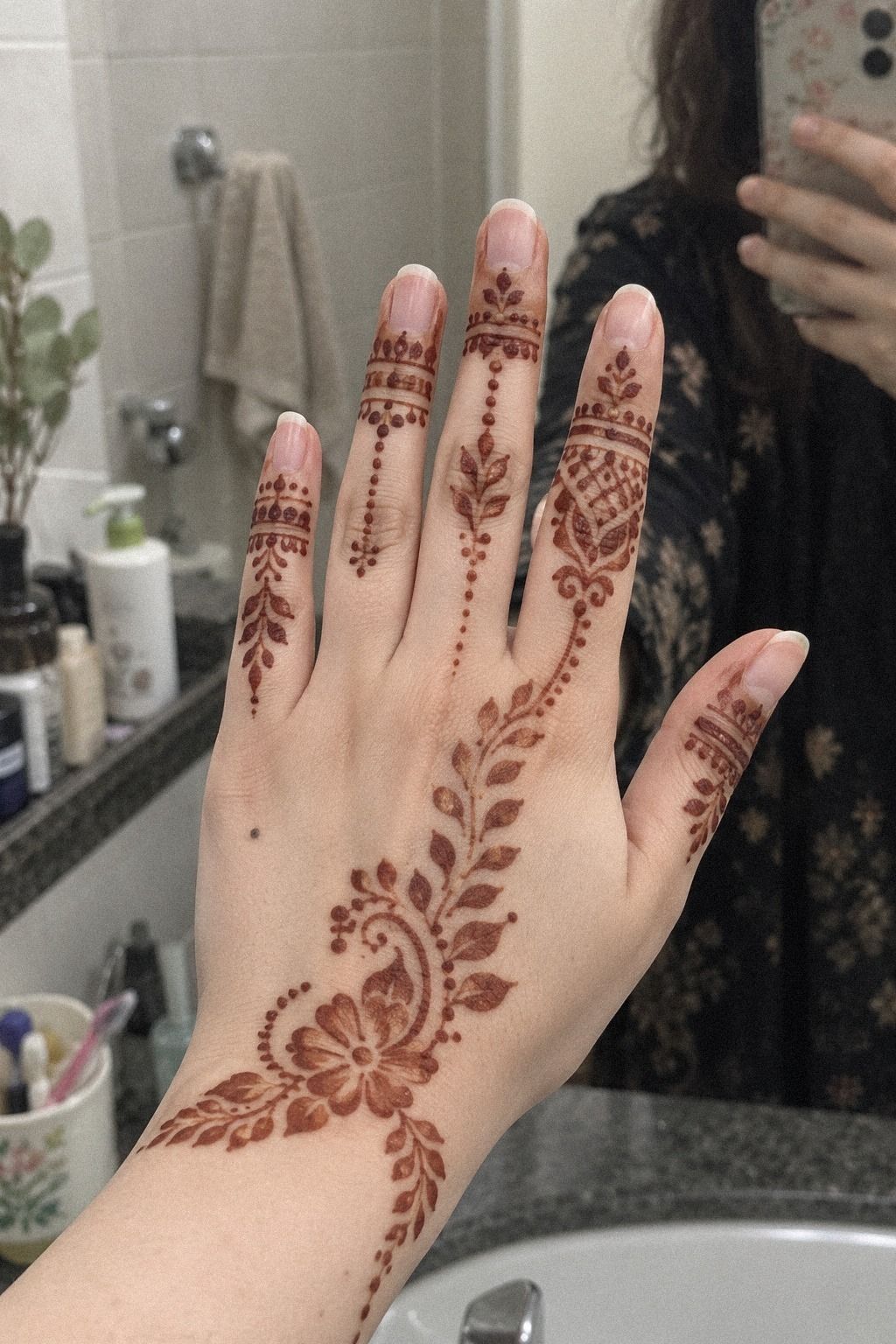
The Finger-Path Rule keeps this minimal linework intentional. Follow one finger with a slim trail of reddish-brown henna paste from the cone, then let two tiny branches cross toward the knuckle. You’ll get an intricate result without covering every inch of skin.
Your best version has a delicate rhythm: one dot, one leaf, one short curve, then a pause. That pause matters when you’re typing or holding a pen. Single-cone detailing works best when the lines have visible space between them, so ask the mehndi artist not to pack every mark together.
For a work-friendly placement, keep the trail along the side of your index finger or the outer edge of your hand. You can hide it beneath a slim watch strap, but don’t press a watch against wet paste for long. Let the design dry fully first, then gently scrape the paste away rather than washing it off.
The line should look crisp from a distance and expressive up close. That balance is powerful!
I’d skip a heavy wrist band here. It shifts the design from understated to loud, and your fingers already carry the visual movement. If you want a stronger finish, ask for one darkened anchor dot near the base of your thumb.
If you’re comparing references, start with these simple very simple mehndi designs for a clear direction.
2Can a Delicate Mandala Stay Discreet?

The Palm-Window Method places one delicate mandala in the center while your fingers stay mostly open. The pattern works because the lines are ornate around the middle and lighter near the edges. Ask the artist to measure your palm’s natural center before preparing the cone.
An oversized circle may look impressive in a reference, but it can swallow the hand once the design is placed. A fine-paste outline with four or six repeating petals gives you a graceful shape with enough breathing room. Your skin moves when you flex, so every point needs space around it.
Use tiny scallops, short spokes, and one darkened center rather than layered shading. Layered paste shading can add depth, although it should support the structure instead of competing with it. Compare the spacing in these simple stylish mehndi designs for front hand before your appointment.
The result can feel symbolic without becoming generic. A sacred circle might represent balance, family, or a private promise, and you don’t have to explain it at work. Place the mandala slightly below the palm’s center if you want your natural creases to interrupt the design when your hand is relaxed.
3Build a Vine Frame Along the Hand

The Vine-Frame Principle follows the hand’s outline. Begin near the outer wrist, let the vine curve toward the base of the thumb, and finish with two leaves near the index finger.
Keep the main stem flowing and spare. One larger leaf can create a focal point, while three smaller leaves give the composition a personal rhythm. A vine that follows your natural movement will feel more polished when your hand opens and closes.
This idea suits someone who wants an expressive border with limited coverage. Use open-skin planning around the palm creases, then test the curve with a washable marker before choosing the final paste design.
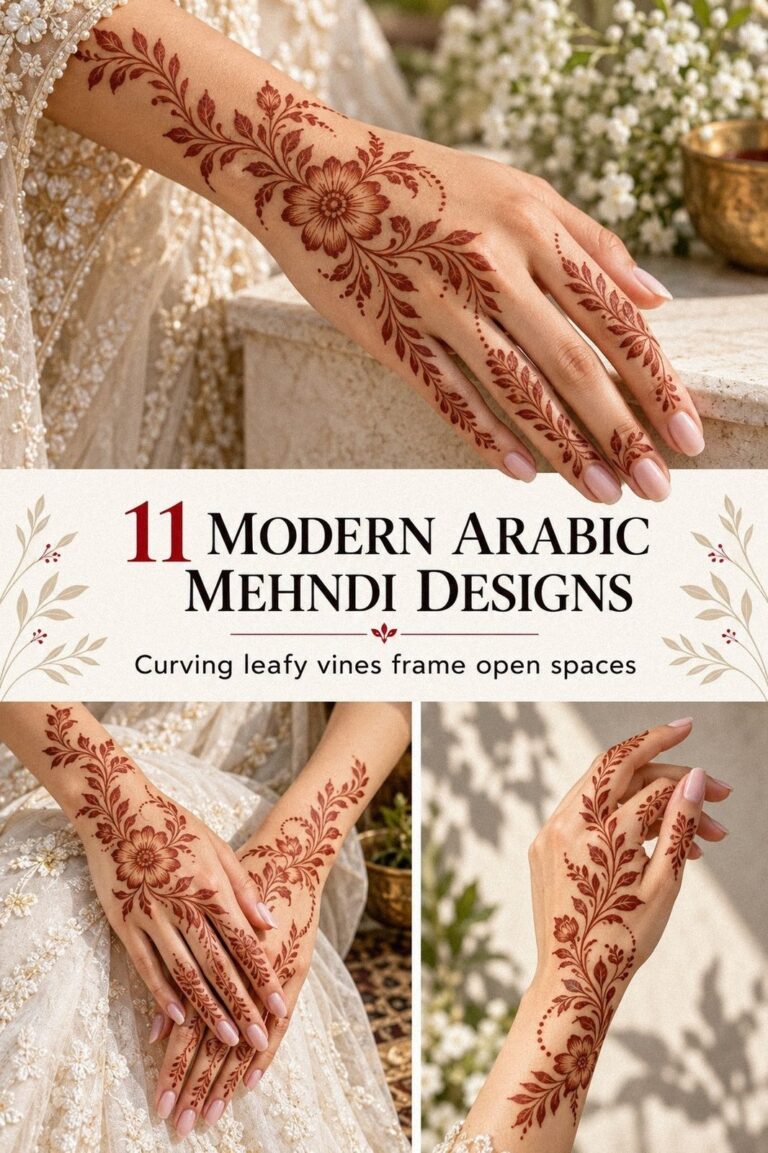
4Anchor Bold Arabic Mehndi Across Palm and Wrist

The Arabic Sweep moves diagonally from the lower palm toward the wrist. It feels striking because the pattern isn’t evenly distributed. One side carries the visual weight, while the other remains open.
Ask for bold floral pastework with smooth edges and clear gaps between the flowers. The traditional direction can be simplified, and the artist can keep the silhouette sharp. Micro-detail inside every bloom may lose clarity once the paste is removed and the stain begins to soften.
A narrow wrist finish usually gives the composition somewhere to land without boxing in the hand. Compare the coverage in these simple full hand mehndi designs, then ask the artist to reduce the scale for your placement.
The strongest version doesn’t need the darkest stain everywhere. Use one solid flower or leaf cluster as the visual anchor, then let the surrounding lines soften.
Your hand can look powerful when open and discreet when relaxed. Exactly!
Choose a flower connected to your family, a curve that echoes an older mehndi tradition, or a symbol only you recognize. The Arabic influence gives the design structure, while your story gives it meaning. A single anchor flower may feel more empowering than a larger application.
5Jewelry-Link Mehndi for Fingers
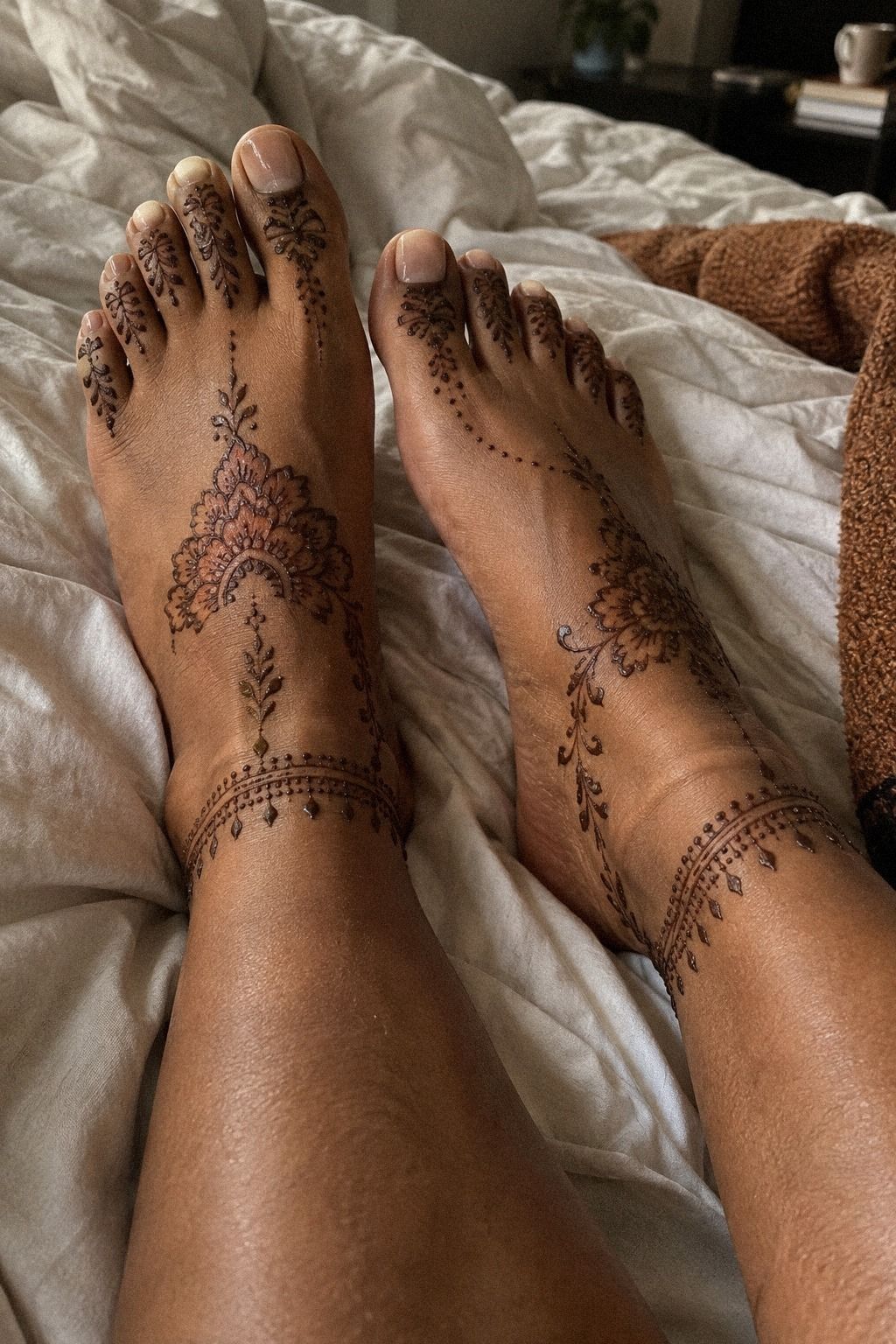
The Jewelry-Link Method treats each finger as part of one dainty chain. A slim line can cross the knuckle, pause above the crease, and connect to a tiny charm near the base.
Use open spacing around every link. Fingers face friction from typing, washing, and gripping objects, so compact marks usually stay more readable during the one-to-three-week stain period. Ask the artist to check the design from the side as well as from above.
A small charm can be symbolic, playful, or personal. A star feels whimsical, a leaf feels classic, and a geometric mark feels sharp. The strongest charm is usually the one with a reason behind it.
If you’re unsure whether the idea is worth the cost, ask to see the artist’s recent finger mehndi first. These simple Pakistani mehndi designs can help you compare linked fingers with more open arrangements.
Bring two or three references, but let the artist combine the strongest spacing from each. A small charm motif often gives better value than covering every finger.
6Why Intricate Floral Linework Holds Up
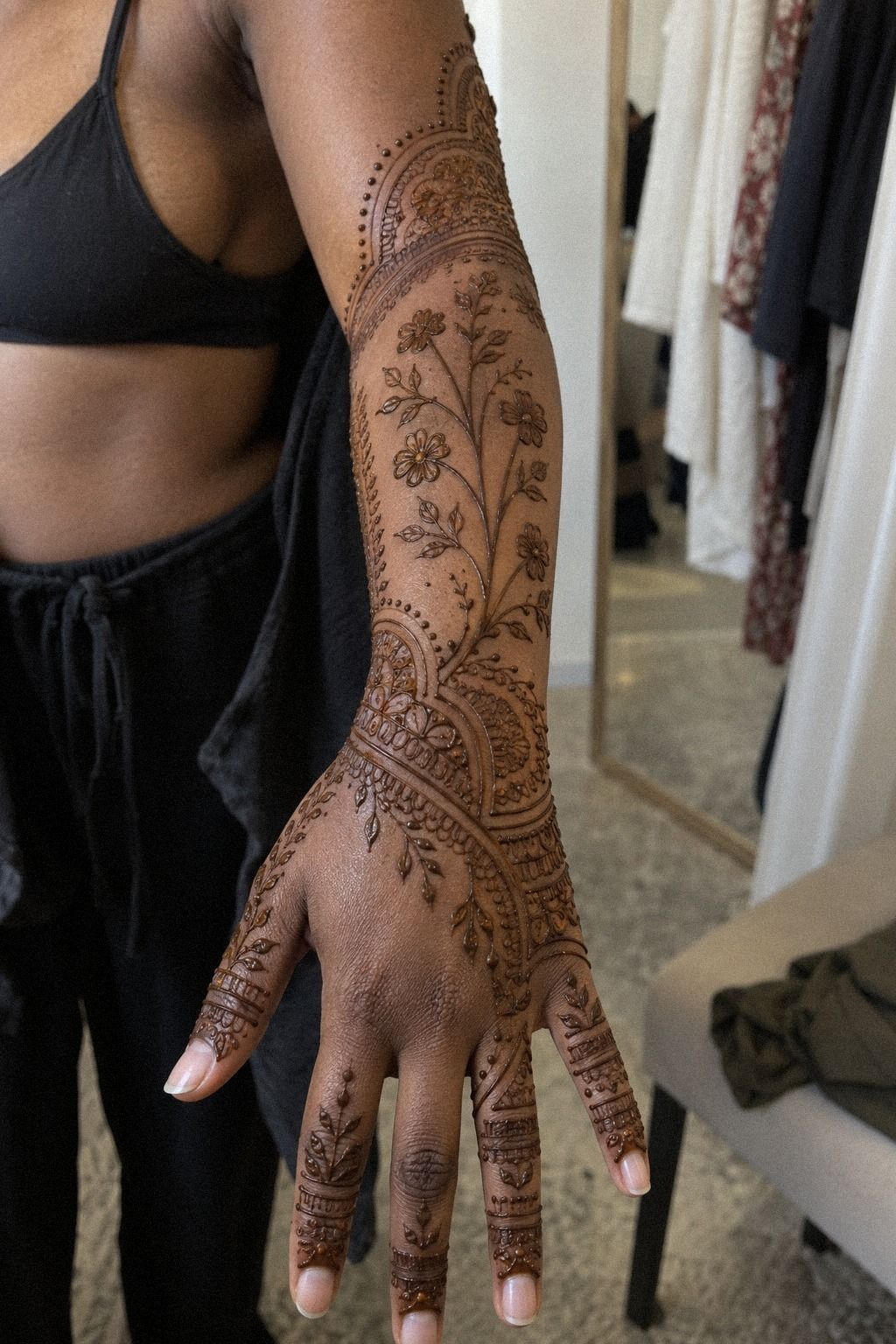
This layout stays intricate without feeling heavy because the flowers are separated by narrow channels of clear skin. Those channels help each petal remain readable as the stain develops.
Choose two flower sizes and repeat them with slight variation. A larger bloom can sit near the palm, while smaller buds lead toward the wrist or finger. That structure feels ornate while keeping the design legible.
Ask the artist where the skin moves most during your usual day. A floral arrangement with clear paste separation will usually remain more readable than a dense field of tiny petals.
7Negative Space Peacock Mehndi on Palm
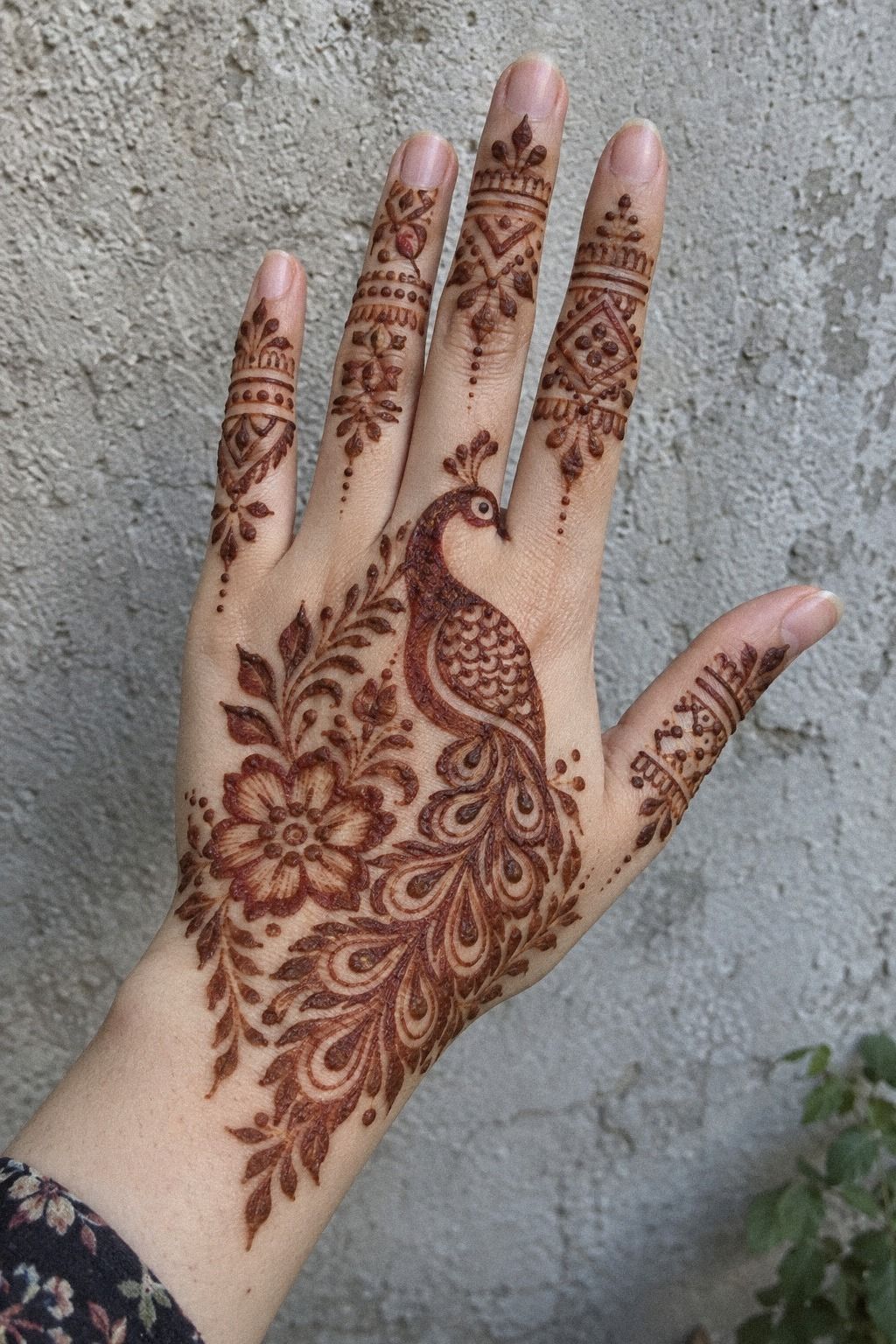
The Peacock Window is built around a clear palm shape, with the bird formed by crisp outlines around it. This is a symbolic and expressive option if you want a recognizable image without a solid palm fill.
Ask for peacock feather detailing with a defined eye, curved neck, and restrained tail. Three or four larger feathers will usually remain clearer than a tight fan of tiny strokes.
Negative space does the structural work here. Keep the clear skin between the bird and your palm creases, especially if you’re choosing a temporary palm design. These simple peacock mehndi designs can help you compare open-tail and compact-tail arrangements.
Keep the darkest mark near the peacock’s eye or tail center. A solid feather eye can stay readable longer than several tiny interior strokes, giving the design a bold focal point without making the palm feel crowded.
This style can feel meaningful if you connect the peacock with renewal, pride, or family tradition. A temporary henna stain lets you test whether that feeling remains personal after several days.
8Build Stylish Geometry With Crisp Detailing
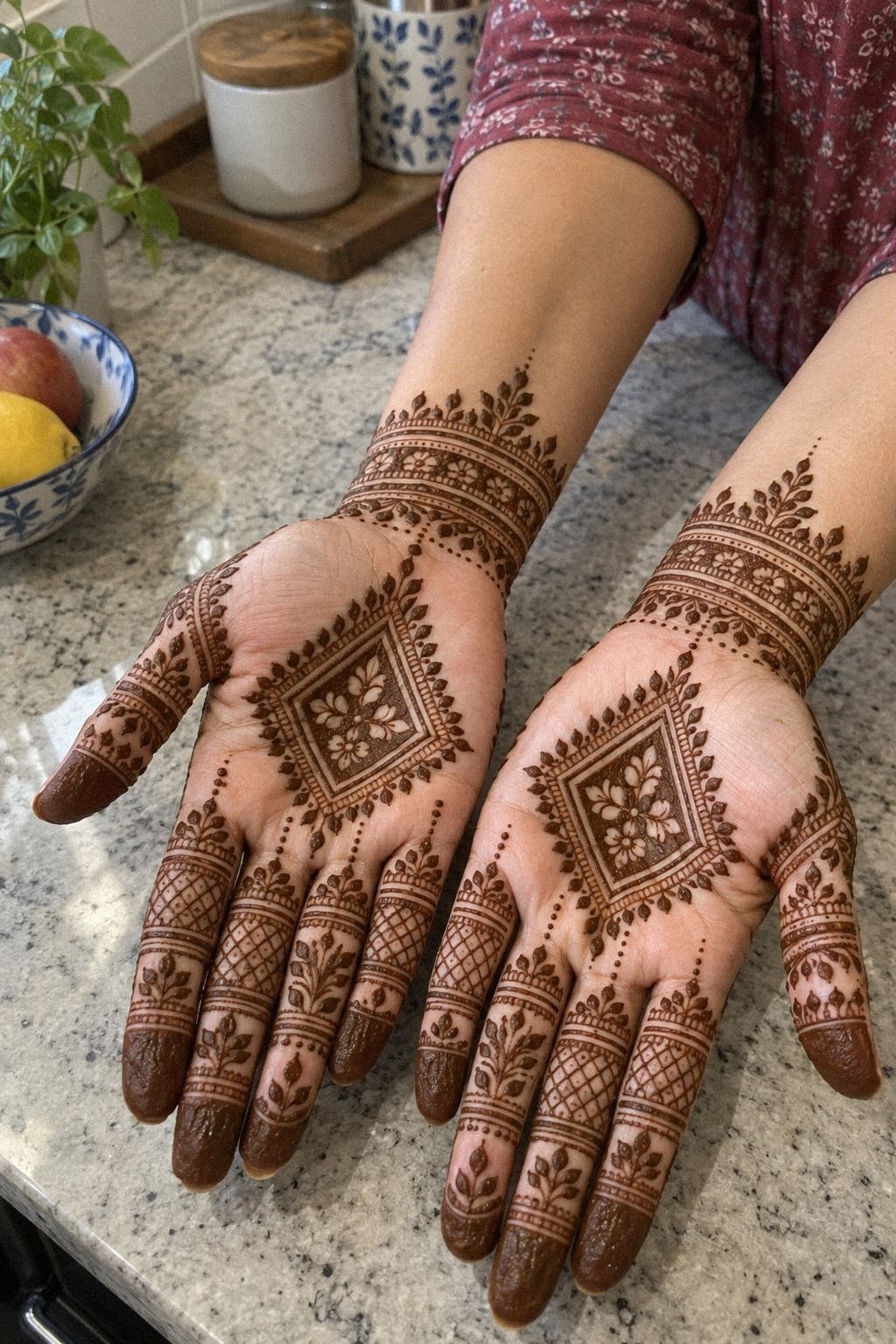
The Three-Line Geometry Rule uses three repeating elements, such as a diamond, a dot, and a short parallel line. Your hand will look polished because the pattern has a clear system.
Choose crisp geometric marks with enough distance for each shape to remain visible. Tiny grids across the entire palm may look striking when freshly applied, but they can become difficult to read when the design is too dense.
For a modern direction, pair one angular motif with a thin curved line near the wrist. That contrast keeps the piece from feeling rigid. Compare these simple mehndi designs front hand easy before deciding how much open skin you want around the geometry.
A diagonal row across the palm can look dynamic when your fingers open, while a vertical row may feel more understated at rest. Test both directions with a washable marker test before the application.
Don’t let symmetry control every decision. One interrupted diamond or slightly larger center shape can make the pattern feel personal. A slightly irregular center diamond may look more expressive than a flawless grid!
9Graceful Jaal Pattern for the Front Hand

A Jaal pattern creates a net of lines, but the most successful version leaves several areas open. Begin with a loose lattice across the outer palm, then allow the pattern to thin near the fingers.
Use graceful spacing between the intersections. If every opening is identical, the design can feel mechanical. Small changes in scale give the pattern a more natural rhythm.
A Jaal motif works well when you want ornament without a solid block of paste. Keep the densest section away from the deepest palm creases, where friction and frequent washing can soften the finer marks.
10Can Playful Heart Motifs Stay Readable?
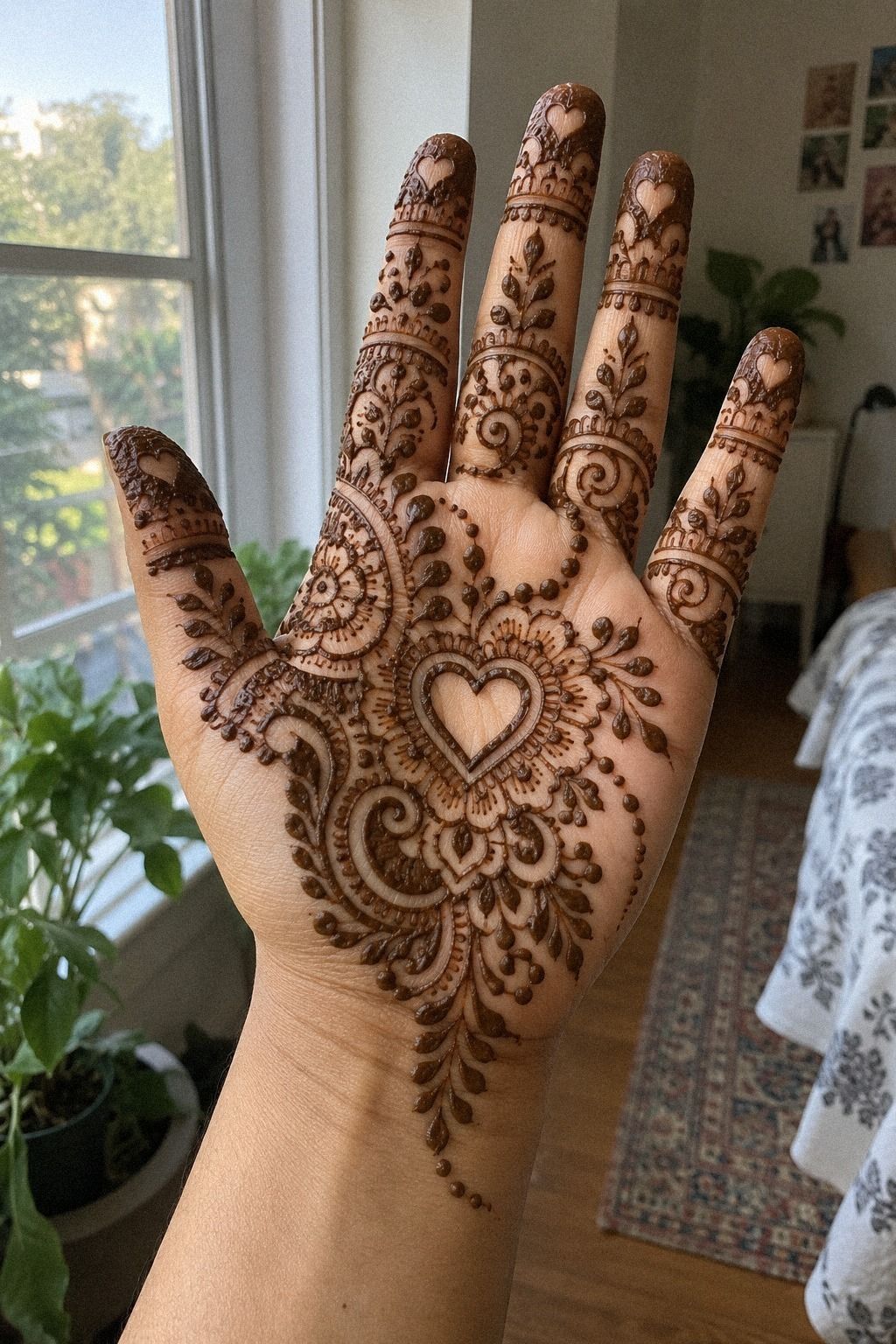
The Heart-Path Method follows one natural palm line and places tiny hearts beside it. The pattern feels playful because the symbols don’t sit in a rigid row.
Use tiny heart motifs sparingly. Three readable hearts will usually have more impact than twelve crowded ones, particularly if the design crosses a crease. Ask the artist to check whether each heart remains clear when your hand closes.
A heart motif can be romantic, empowering, or quietly personal. If you want an understated design for work, keep the symbols near the outer palm and leave the center open.
You can compare softer references through these simple trendy mehndi designs. Look for designs where each symbol has visible space around it. That detail makes the result feel intentional.
The strongest version uses one meaningful variation, such as a slightly larger heart for a family member or a tiny initial hidden inside a curve. Keep the reference clear, but let the symbolism belong to you. That little break matters!
11Bracelet-Inspired Mehndi for Front Hands
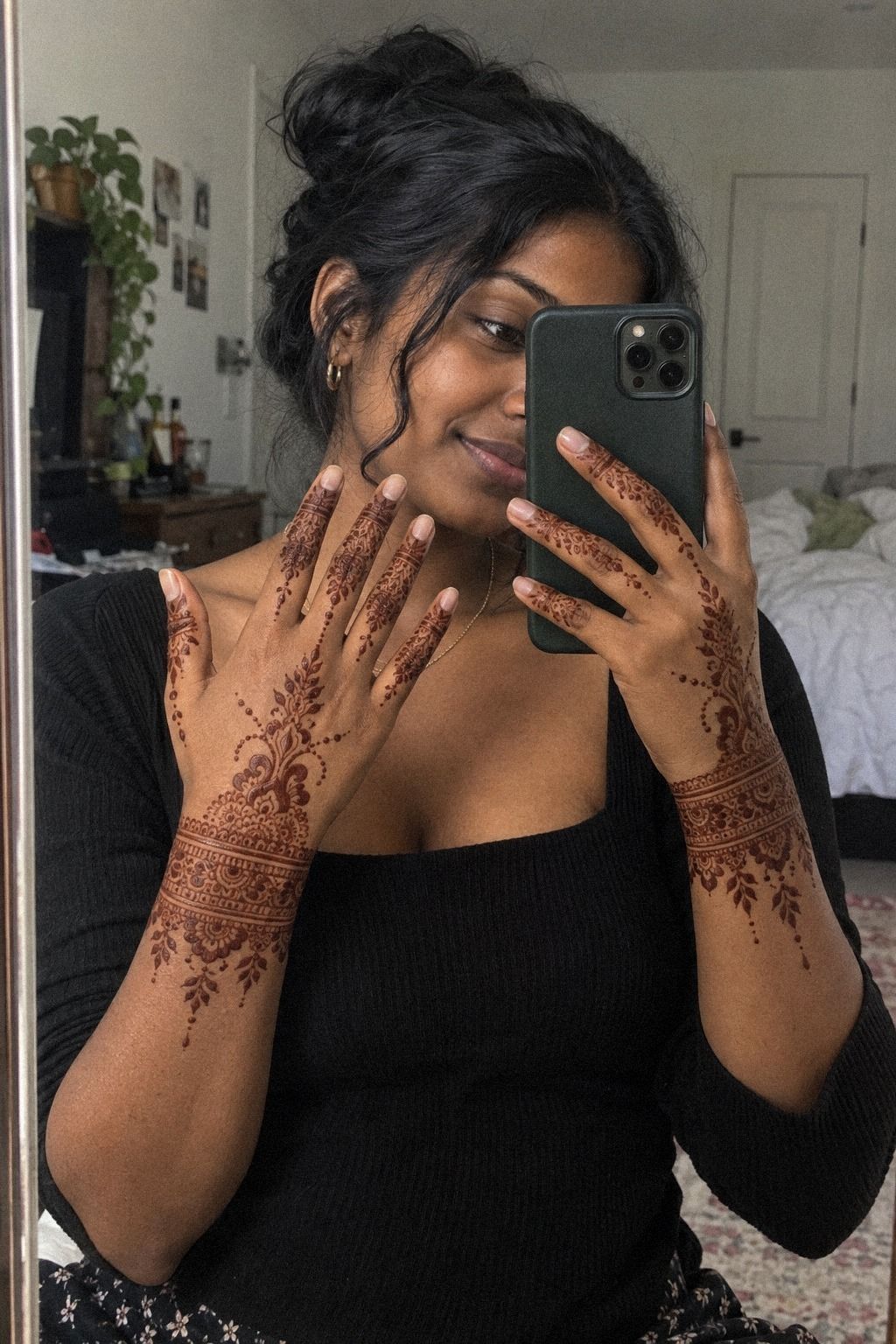
The Bracelet Loop gives the front hand an elegant border near the wrist, with slim lines extending toward the palm. It can suggest jewelry without requiring a thick band.
Keep the main loop slightly irregular so it follows your wrist instead of sitting like a rigid ring. Two fine extensions toward the palm can create movement, while one small charm gives the pattern a personal point.
This design works well for someone who wants a visible detail that can still sit beneath a sleeve or watch after the paste has dried. Ask for a tapered wrist finish if you want the bracelet to fade naturally into the hand.
12The Placement Rule I Trust
I trust a design more when it survives three positions: open hand, relaxed hand, and closed hand. Ask the artist to mark the three-position stencil before you commit to the paste.
The outer palm gives you more control over visibility, while the center palm creates a stronger statement. The front wrist offers a clearer surface for flowing lines. Fingers can look bold, but friction and frequent washing affect them quickly.
Bring references such as the earlier full-hand examples, then explain what you want removed. A thoughtful mehndi artist should be able to reduce coverage without losing the design’s identity. That conversation is part of the artist consultation.
Ask how the design may change as the paste dries, the stain darkens on day two, and the color gradually fades. A friction-aware composition can use thicker focal lines on the fingers and finer detail where the skin is less exposed.
13What Costs More: Detail or Coverage?
Mehndi pricing depends on the artist, region, occasion, application time, and amount of detail. A smaller design isn’t always cheaper if it requires delicate precision. Fine-detail mehndi pricing can reflect the artist’s experience as much as the number of marks.
A simple front-hand design may cost around $15 to $60 in the US, while a more intricate custom application can range from $50 to $150 or more. Bridal, festival, and group bookings may use separate rates. Ask whether the cone, design consultation, lemon-sugar seal, and travel are included.
The best value usually comes from a strong portfolio, clean tools, and a design adapted to your hand. Don’t choose the lowest quote automatically. A crisp meaningful motif can be worth paying more for when the artist has proven results.
14Choose the Finished-Stain Portfolio First
Fresh paste can look striking on almost anyone. Photographs after the paste has been removed tell you much more, especially for fingers, palms, and wrists. Look for examples taken after the stain has darkened on the second day.
Ask whether the artist has worked with finished-stain mehndi and how they manage fading or uneven color. A confident answer should include drying time, lemon-sugar sealing, realistic color changes, and the one-to-three-week duration.
You’ll also want to review the artist’s hygiene practices. Cones should be fresh or hygienically handled, surfaces should be prepared properly, and the artist should explain aftercare without rushing you. Those basics matter more than a dramatic social-media photograph.
A portfolio is useful only when it shows the stain after paste removal. These simple back hand mehndi designs can help you compare ornamental directions before asking which details are likely to remain readable on your skin.
15Temporary Stain or a Longer-Lasting Choice?
Henna is a temporary paste applied with a cone, not a tattoo. It dries on the skin, leaves a warm reddish-brown stain, usually darkens during the second day, and fades naturally in one to three weeks.
For a deeper result, natural henna paste can remain in place for about 1 to 2 hours before you gently scrape it away. Lemon-sugar sealant may help keep the dried paste attached, while warmth and patience can support a richer stain.
Try the design while typing, washing your hands, and wearing your usual watch. You’ll learn whether the placement catches on clothing or disappears exactly as you hoped. These simple new bridal mehndi designs can provide references for a temporary test before you simplify the pattern.
Use safe natural paste only, and avoid “black henna” products that may contain harmful dyes. A small patch test is sensible, especially if you have sensitive skin. If the design still feels meaningful after the stain develops, keep the motif for your next occasion.
16The Palm Placement Decision I’d Make
I’ve changed my mind about front-hand mehndi designs after watching too many lovely sketches lose their shape during daily use. The most important choice isn’t whether your motif is bold, delicate, or symbolic. It’s whether the placement respects friction, movement, sunlight, and the way you naturally hold your hand.
For you, the palm may feel meaningful, but it also bends and gets washed often. The fingers are visible and expressive, yet fine lines there can fade sooner. The front wrist gives you more room for a flowing composition, although a bracelet-style piece may show more easily at work.
I’d rather see you choose a smaller, crisp design that fits your habits than a dramatic one you’ll keep covering. That can still feel daring when the focal mark has a clear reason behind it.
I learned that lesson after choosing detail before asking how the design would develop. The artist’s finished-stain portfolio mattered more than the fresh paste. Look for crisp edges, balanced negative space, and photographs taken after the second day.
Cost deserves an honest look too. Typical US pricing varies by artist, region, occasion, and detail, and a minimum booking may apply even when your motif is small. A clean cone, hygienic setup, and polished application are worth more than a bargain that leaves you with rushed work.
17The Workday Visibility Check
Before booking, wear your usual watch, type for a few minutes, and hold a pen with your hand relaxed. This discreet work placement test shows whether the design stays private when you need it to and expressive when you want it visible.
Ask the artist to place the design guide while your fingers are naturally curved. A keyboard-friendly placement should avoid the spots that rub most against keys, tools, or handles.
Think about your workplace honestly. If the policy is strict, a smaller outer-palm motif may be more practical than a central design. A visibility check can protect your choice from becoming an awkward daily negotiation.
18The Refresh Budget I’d Keep
Henna fades naturally, especially on fingers and palms. Set aside room for a refresh application if you want the design again after the first stain disappears. That doesn’t mean the original application failed; high-friction skin has limits.
Ask how long the artist expects the color to remain visible in your usual routine. A color-retention check after several days gives you a clearer answer than judging the paste while it is still drying.
If you’re planning a budget, prioritize finished-stain work, hygiene, and design adaptation before extra ornament. A smaller, polished piece can be a better investment than a crowded design that becomes difficult to read.
The Questions Worth Answering First
How much does an easy stylish mehndi design for front hand usually cost?
A simple front-hand mehndi design commonly falls around $15 to $60 in the US, depending on detail, placement, artist, and region. More intricate custom work may cost $50 to $150 or more, while bridal and group bookings can use separate rates.
Ask for a quote after sharing the reference and your intended placement. Artist experience matters more than choosing the lowest number, especially with fine lines and detailed pastework.
Are easy stylish mehndi designs for front hand a good choice for a first application?
Yes, they can work well as a first henna application if you choose a manageable size and understand that the stain is temporary. A clear, meaningful motif lets you test visible decoration without committing to a large composition.
Start with simple placement, open spacing, and a portfolio showing the stain after paste removal. You’ll also want to consider how visible you want the design to be at work.
How do I choose a mehndi artist for easy stylish mehndi designs for front hand?
Choose an artist with finished examples of clean linework, hand applications, and ornamental or mehndi-inspired designs. Ask about paste ingredients, cone hygiene, drying time, lemon-sugar sealing, and how the design will be adapted to your hand.
Don’t rely on fresh paste alone. Look for clean ornamental work that remains readable after the paste is removed and the color develops.
Does applying an easy stylish mehndi design for front hand hurt?
Applying natural henna paste should not involve needles or a painful procedure. You may notice the cone touching your skin, and some people dislike keeping the dried paste on while they wait, but the experience is generally gentle.
Tell the artist if your skin feels irritated or uncomfortable. Avoid products marketed as black henna, since added dyes can cause serious reactions.
How long does an easy stylish mehndi design for front hand last?
The paste usually dries for about 1 to 2 hours, and the stain often becomes deeper during the second day. Depending on placement, washing, friction, and skin type, the reddish-brown color generally fades in one to three weeks.
Keep the dried paste on as directed, scrape it away gently, and avoid washing the area immediately afterward. A clear aftercare plan makes the color-development process easier to manage.
Where I’d Start First
If I had to pick one, I’d start with the negative-space peacock. Its open palm keeps the design readable, while the feather eye gives it a strong focal point that doesn’t depend on dozens of fragile lines.
Pin these references for later and show your mehndi artist the spacing you like. The final choice should feel personal, practical at work, and polished after the stain develops.


3 responses to “Easy Stylish Mehndi Designs for Front Hand, Hidden at Work”
[…] Easy Stylish Mehndi Designs for Front Hand, Hidden at Work […]
[…] the cost. For a smaller budget, this motif gives you a meaningful result with less paste. These easy stylish mehndi designs for front hand offer more placement […]
[…] more variations, compare these simple Pakistani mehndi designs and easy bridal mehndi designs before you […]