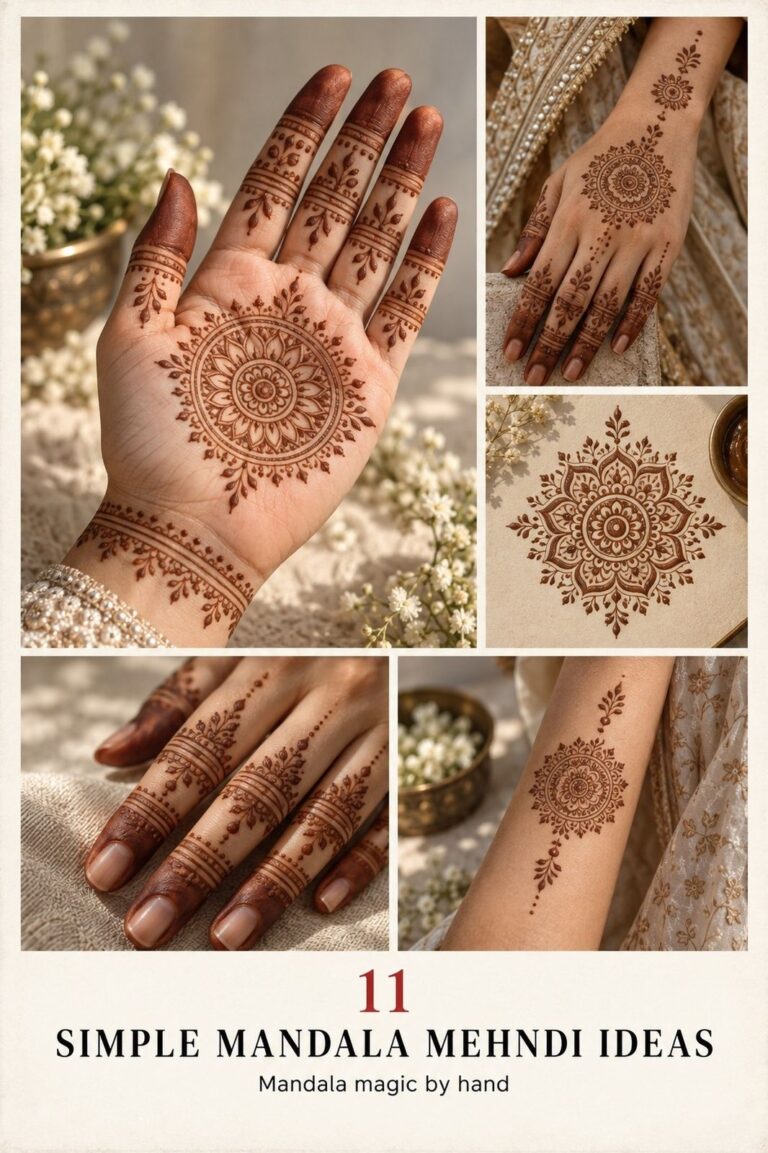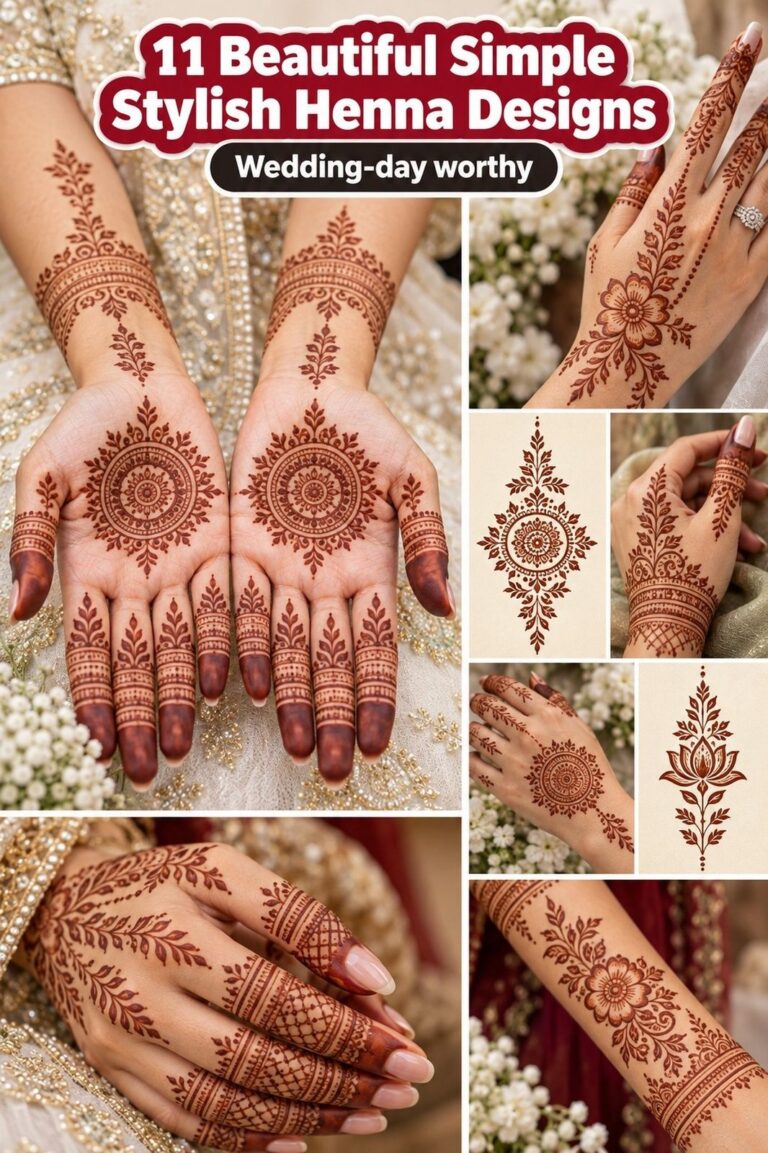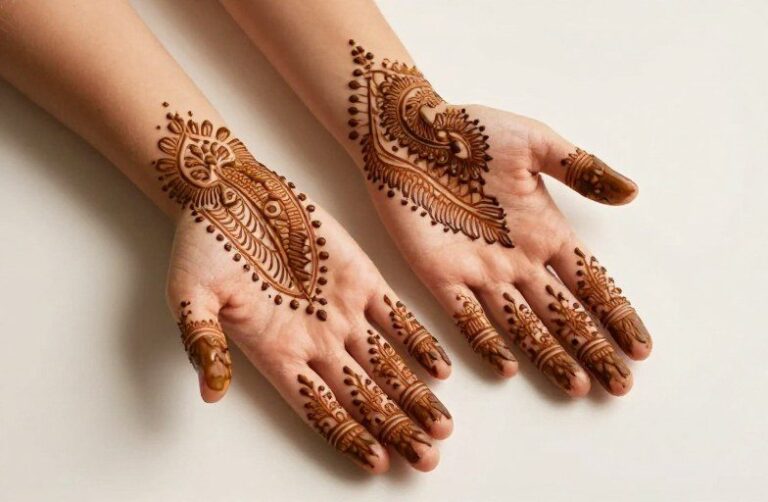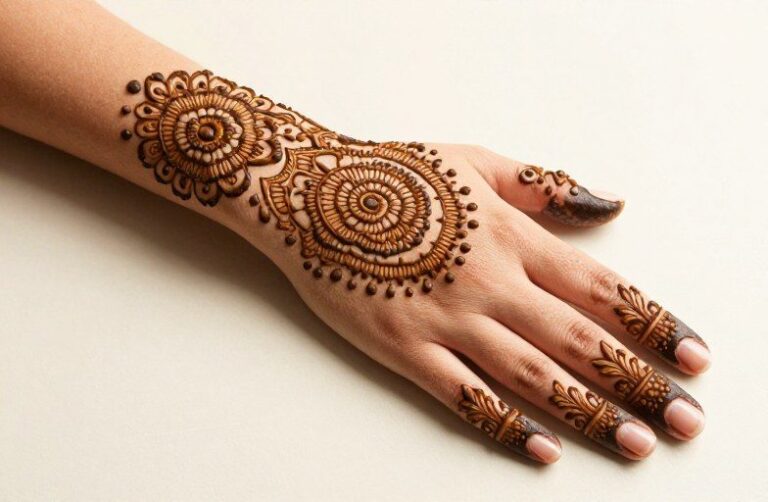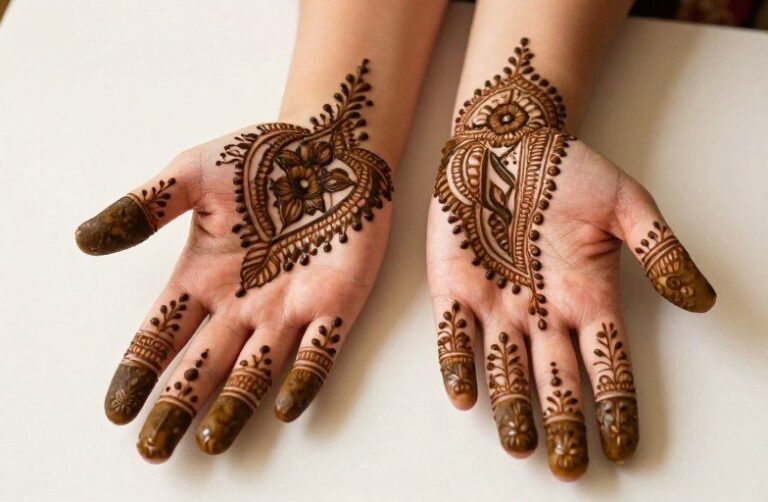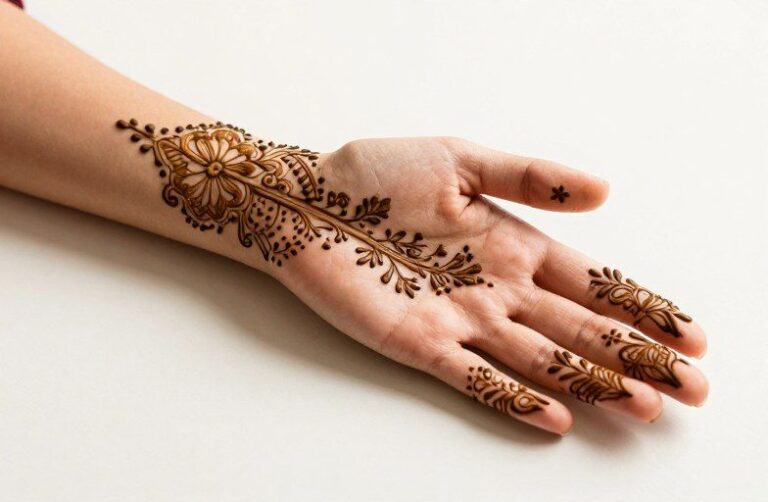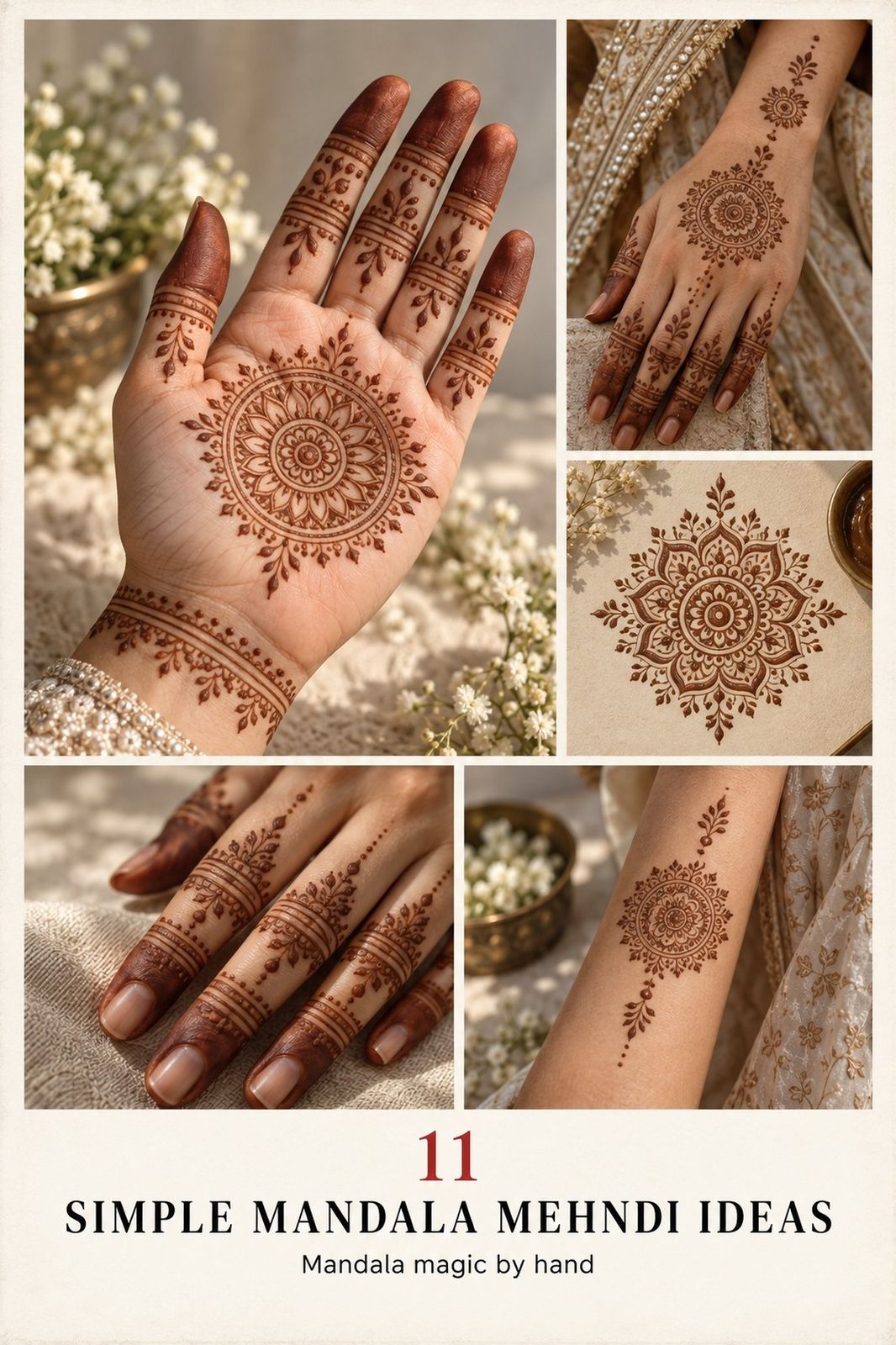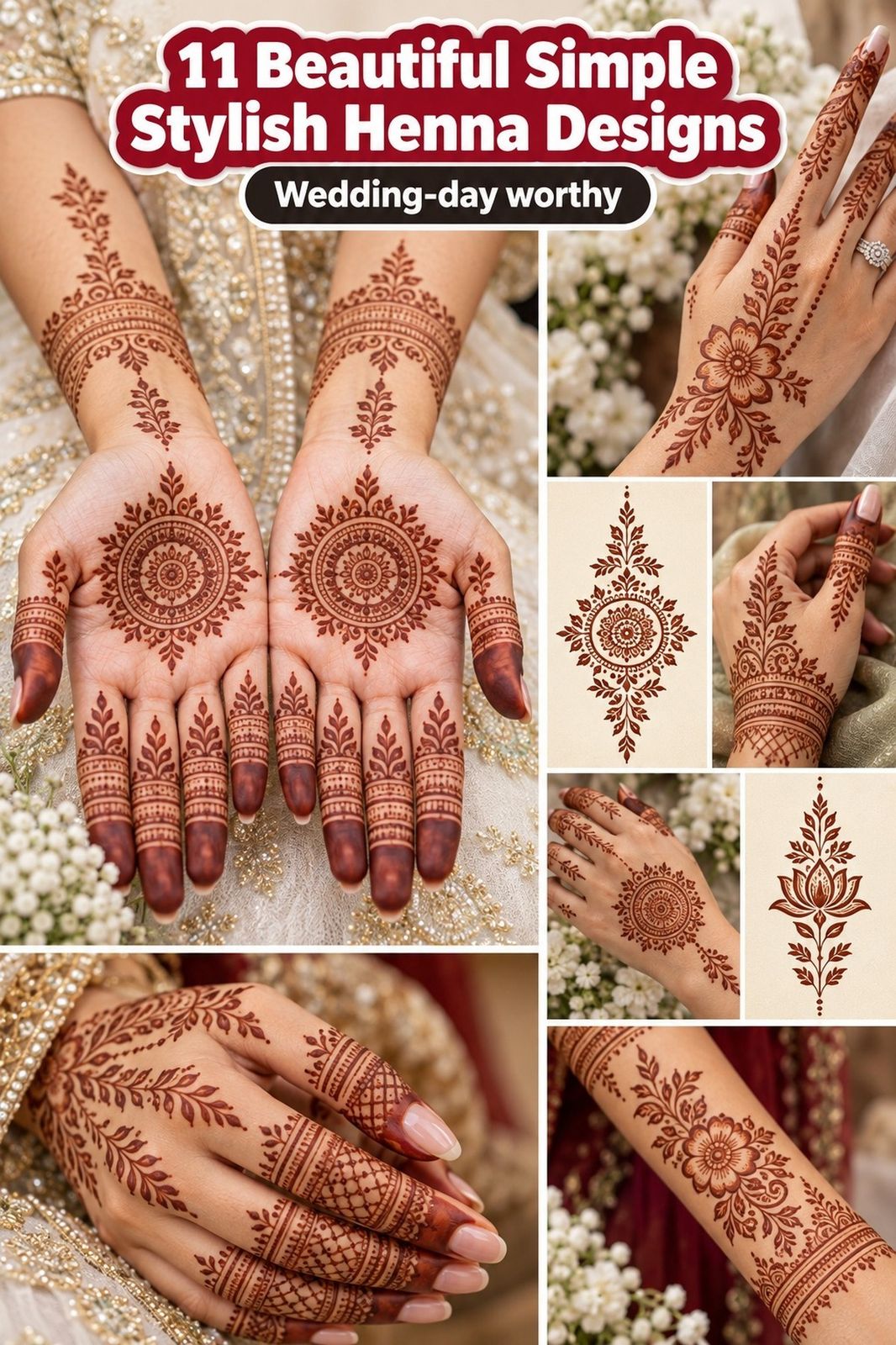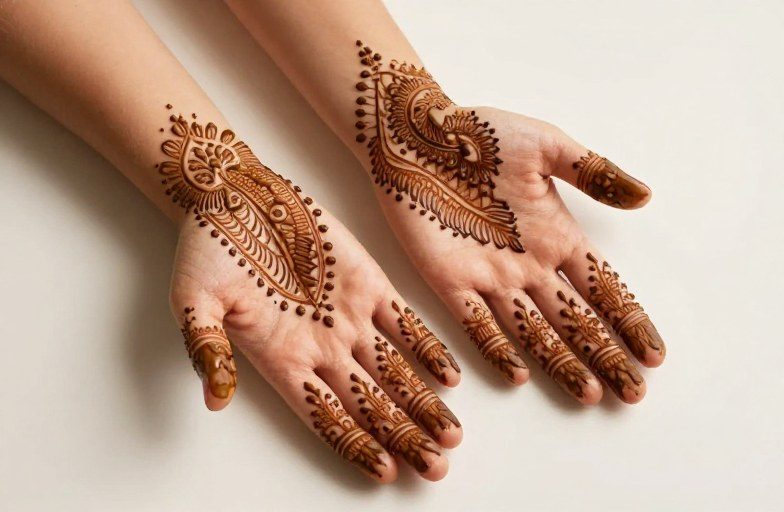
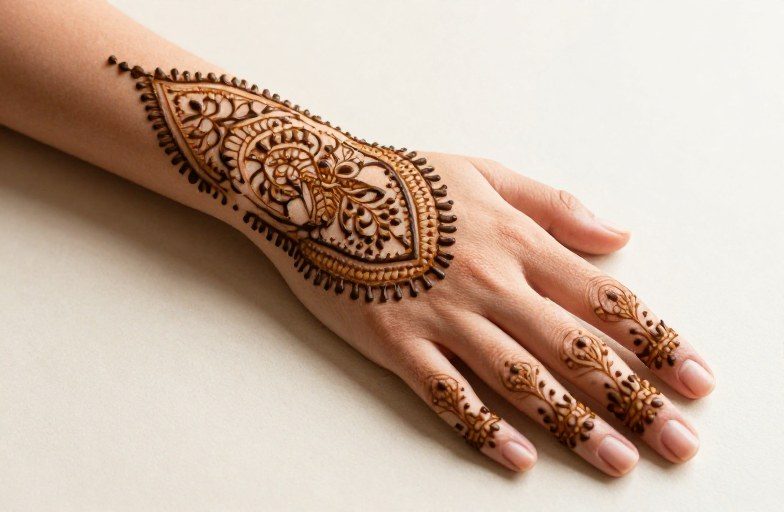
Front hand mehndi tattoos strip the traditional full-palm henna session down to its most wearable lines. The appeal is immediate: visible without being loud, decorative without covering the whole hand, and forgiving of how ink actually ages on high-movement skin. What separates a good simple mehndi tattoo from a forgettable one is restraint in the linework and understanding how the design anchors to your specific hand structure.
Standout Design Ideas
The strongest simple front hand designs borrow from mehndi vocabulary but adapt it for permanence. Henna fades; tattoo ink stays. That difference matters for what you choose.
Finger-to-Wrist Flow
Running a single vine or geometric band from the base of the middle finger down to the wrist crease creates natural movement. The eye follows the line without effort. This placement works because it mirrors how mehndi traditionally frames the hand, but the simplified version avoids the dense fill that would blur as the tattoo ages. Keep the line weight consistent, too thin and it falls apart in two years; too heavy and it loses the delicate quality that makes mehndi distinctive.
Negative Space as the Design
Some of the most effective simple mehndi tattoos are defined by what they leave empty. A partial mandala centered on the back of the hand, with petals extending toward the knuckles but stopping short, uses the skin itself as part of the pattern. The un-inked areas stay bright against the linework, which helps the tattoo read clearly even as the lines soften slightly over time. This approach also ages better than solid black fill on the hand, where ink spread is more common due to thinner dermis and constant motion.
- Single unbroken vine trailing from ring finger to wrist
- Small mandala at the base of the middle finger
- Geometric finger bands with a connecting line across the knuckles
- Floral cluster at the wrist with minimal stem extension
- Dotted patterns framing the sides of the hand
How to Personalize It
Personalization in mehndi-inspired work comes from placement specificity and motif selection, not from cramming in more elements.
Anchoring to Your Hand Structure
Longer fingers carry vertical designs well, lines that draw the eye up. Wider palms suit centered motifs that ground the composition. A knuckle-heavy hand benefits from finger bands that acknowledge the bone structure rather than fighting it. The tattoo should feel like it belongs on your specific hand, not like a sticker transferred from a template. Bring reference images of designs you like, but expect a good artist to redraw the flow for your proportions.
Motif Variation
Traditional mehndi pulls from paisley, florals, peacocks, and geometric Islamic patterns. A simple tattoo might isolate one of these, just the paisley curve, just the peacock feather eye, just the repeating geometric unit. Someone with family ties to South Asia might choose a motif that carries specific regional association. Others simply respond to the visual rhythm of a particular pattern. Either approach is valid; the key is choosing one element and letting it breathe rather than layering multiple motifs into visual noise.
Size & Scale
Hand tattoos demand size honesty. Too small, and the detail collapses. Too large, and the design fights the hand’s natural architecture.
Most successful simple front hand mehndi tattoos occupy a zone between two and four inches in their longest dimension. A finger-to-wrist vine typically runs about three inches. A wrist-centered mandala might span two inches across. These sizes hold line integrity while respecting the hand’s limited real estate. Going smaller than an inch and a half risks blowout turning fine lines into fuzzy channels within a few years. Going larger than the hand’s natural focal points, the knuckles, the wrist center, the finger bases, creates a design that the eye can’t rest on.
Scale also affects pain and healing. More coverage means more sessions, more swelling, and more aftercare vigilance. Simple designs keep the commitment manageable.
For First-Timers
Hand tattoos are not gentle introductions. The skin is thin, the nerves are dense, and the visibility is total. But a simple mehndi design mitigates some of these challenges.
Commitment Level
A minimal linework piece requires less time in the chair, often under an hour, and heals faster than heavy blackwork. The pain is concentrated but brief. For someone testing whether they can tolerate hand placement, this is a lower-stakes entry than a palm piece or full-knuckle coverage. The visibility still matters: this tattoo will be seen in every professional and social context. Simple mehndi reads as decorative rather than aggressive, which softens the impact in conservative settings.
Aftercare Reality
Hands heal in use. You can’t immobilize them. Expect some ink loss in high-friction zones, between fingers, along the wrist where sleeves rub. Simple designs with open spacing handle this better than dense ones. A line gap here or there in a vine pattern matters less than a gap in a solid geometric fill. Keep the aftercare routine strict for the first two weeks: minimal submersion, no picking, thin layers of recommended ointment. Sun exposure later will fade hand tattoos faster than covered areas; SPF becomes non-negotiable.
Color Choices
Traditional mehndi is reddish-brown from henna paste. Tattoo ink offers more range, but not all colors perform equally on hands.
Black linework remains the most reliable choice. It stays readable, ages predictably, and carries the graphic quality that makes simple mehndi tattoos successful. Dark brown can approximate henna’s natural tone, but it often heals slightly purple or green depending on skin undertone and ink formulation. Reds and oranges, the obvious henna color match, fade fastest on hands due to sun exposure and cell turnover. If you want color, consider it as small accent points rather than the main design structure.
White ink and hand-tanning skin tones create a subtle effect that almost always disappears or turns yellow-grey within months. Not recommended for this placement.
Matching & Pairing Ideas
Simple front hand mehndi tattoos connect naturally to other placements without requiring full sleeve commitment.
Wrist and Forearm Continuation
A wrist-centered mehndi piece can extend into a forearm band or trail upward into a larger floral or geometric composition. The transition works because mehndi traditionally flows from hand to arm anyway. Keeping the hand portion simple and letting complexity build toward the forearm creates visual hierarchy, the hand remains readable, the arm carries detail.
Dual Hand Balance
Matching designs on both hands create intentional symmetry. This reads differently than a single hand piece: more ceremonial, more committed. For simple work, consider mirrored placement rather than identical design. The dominant hand might carry a vine that flows toward the thumb; the non-dominant hand mirrors the direction. The variation keeps the pairing from feeling mechanical.
Pairing with other jewelry-style tattoos, fine line rings, bracelet bands at the wrist, extends the decorative language without competing. The mehndi motif becomes part of a larger system of adornment rather than an isolated statement.
Final Word
Simple front hand mehndi tattoos succeed when they respect both tradition and the physical reality of tattooing. The best designs don’t try to replicate a full henna session in permanent ink. They isolate one gesture, one flowing line, one centered pattern, one repeated motif, and let it hold space on the hand’s complex surface. Choose an artist who draws fluently in this visual language, not one who works from generic stencil libraries. The hand shows everything. Make sure what’s shown was worth the commitment.
Frequently Asked Questions
How long does a simple front hand mehndi tattoo take to heal?
Expect 2-3 weeks for surface healing, with full settling around 6-8 weeks. Hands heal slower than arms or legs because you use them constantly, and some ink loss in high-wear areas is normal.
Will the fine lines blur over time on my hand?
Some spreading is likely due to thin dermis and constant movement. Keeping line weight moderate, not too delicate, helps, as does avoiding heavy black fill that can feather outward.
Can I get a henna-colored tattoo that actually looks like real mehndi?
Red and brown inks exist but rarely match henna’s organic warmth. They often heal with unexpected undertones. Black linework is the most reliable choice for longevity and readability.
Does a simple design hurt less than a complex one on the hand?
Less time in the chair means less total pain, but the hand itself is sensitive regardless of design complexity. Simple work finishes faster, which is the real advantage for comfort.