Henna tattoos and henna hair dye both come from the Lawsonia inermis plant, but they serve completely different purposes. Hair dye uses processed, often chemically altered henna primarily for color coverage or conditioning. The tattoo paste, by contrast, is a specific formulation meant for skin staining, and it carries layers of cultural and personal meaning that hair dye simply doesn’t hold. Understanding this distinction matters if you’re considering henna body art and want to honor its roots.
Common Variations & Styles
Not all henna tattoos look the same. The style you choose shapes how the design reads on your skin and what cultural conversations it enters.
Traditional Indian Mehendi
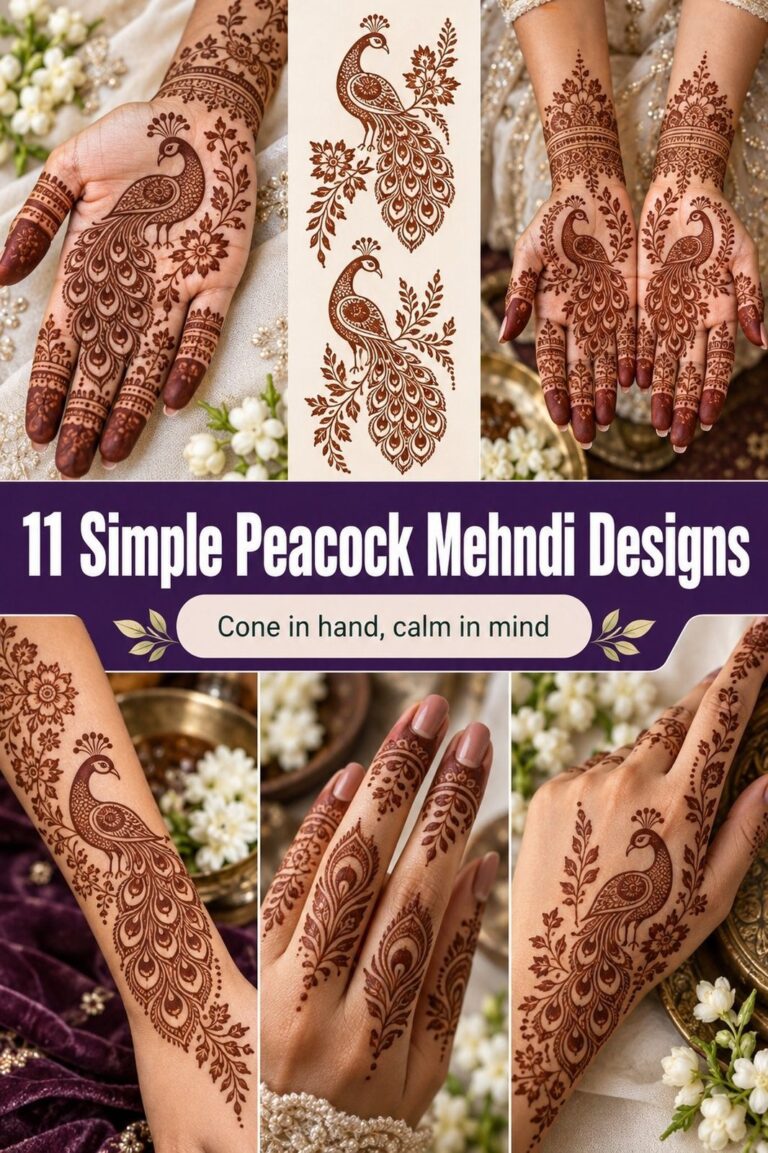
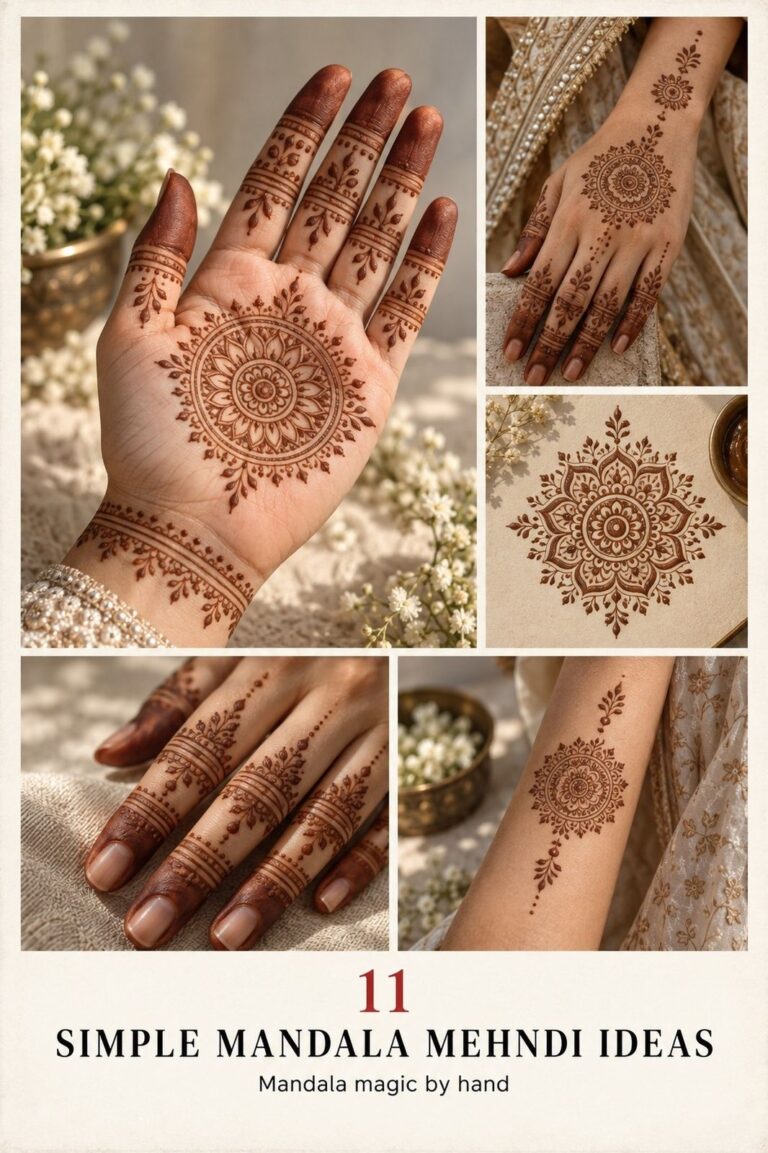
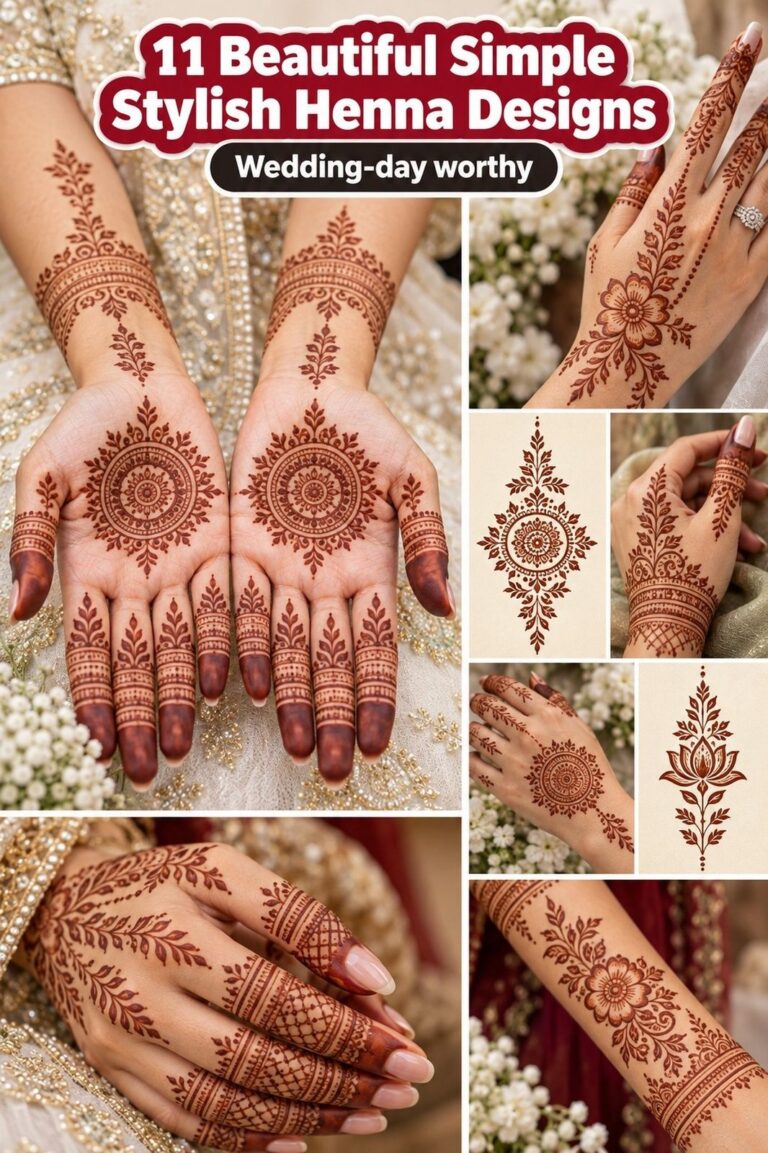
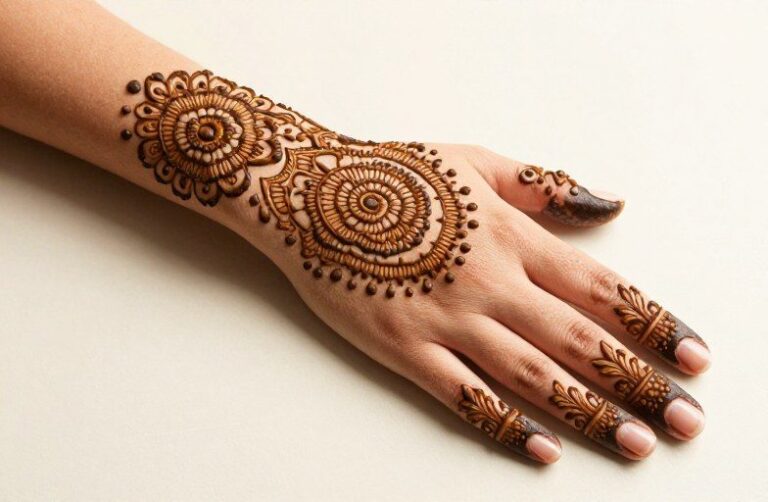
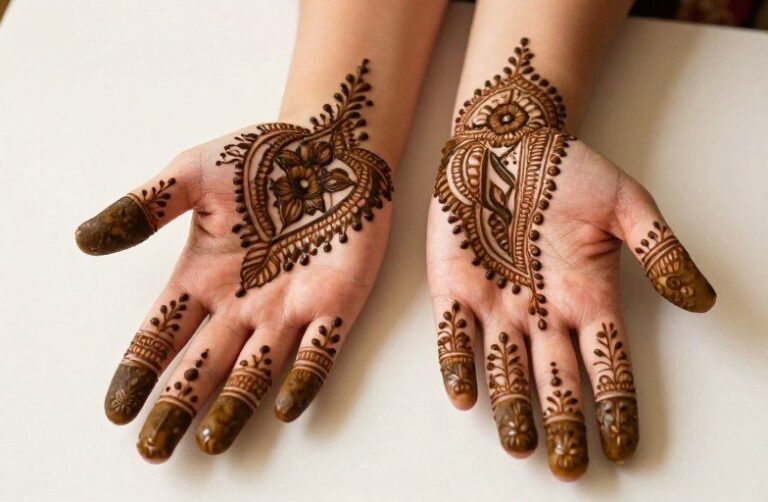
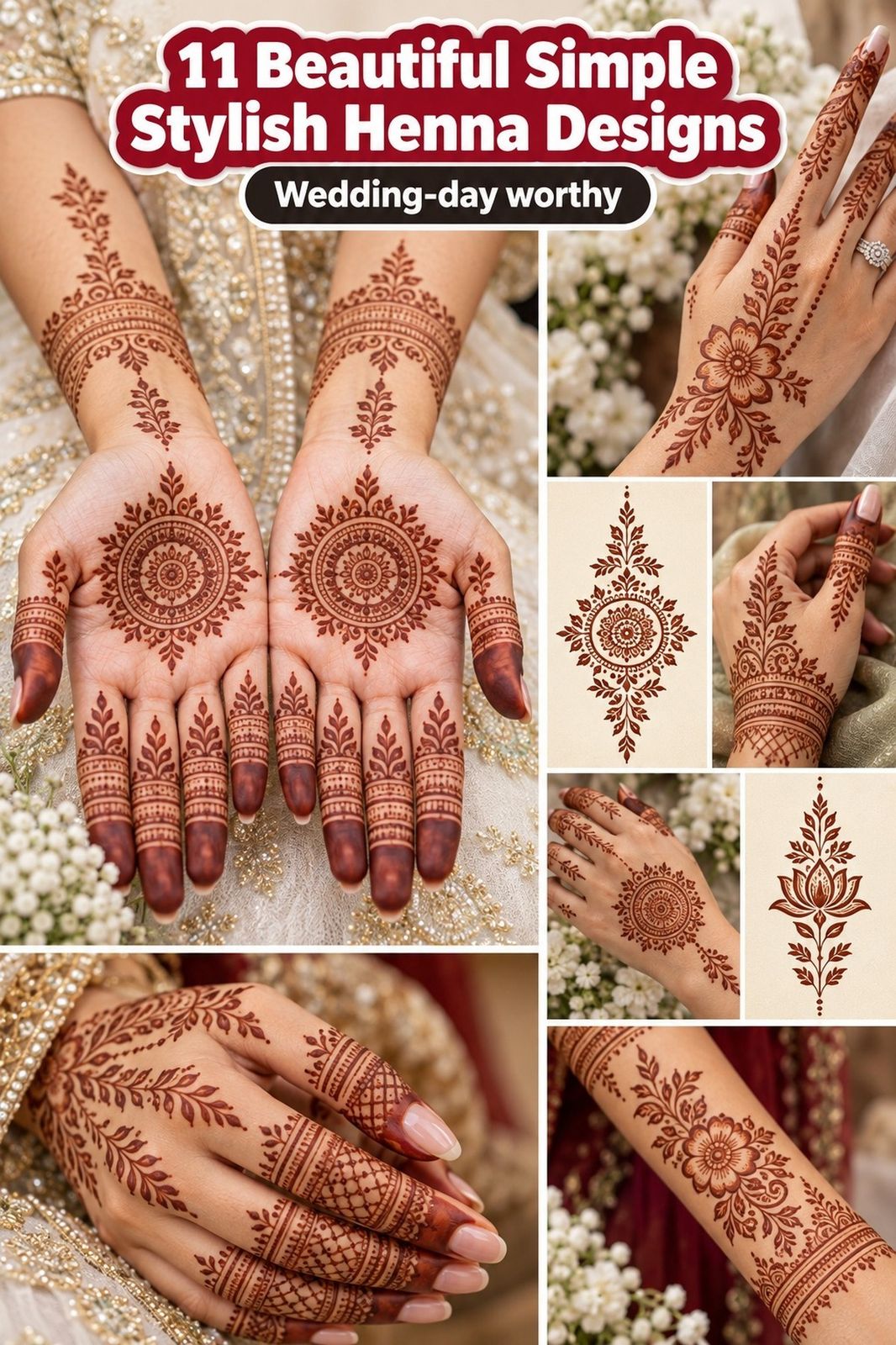
This is the dense, highly detailed style most people picture. Flowing paisleys, lotus motifs, and fine mesh patterns cover hands and feet, sometimes extending to the forearms. The fingertips get saturated dark, creating a gradient effect as the stain fades. Bridal mehendi can take hours to apply and often hides the groom’s initials within the pattern. The visual weight comes from repetition and negative space, not from bold outlines.
Arabic and Moroccan Styles
Arabic henna tends toward larger, more open floral designs with bolder strokes and more skin showing through. Moroccan henna often incorporates geometric Berber patterns, diamonds, and abstract shapes that differ from the curvilinear Indian approach. These styles stain differently too, Arabic work sometimes uses a lighter, more orange-toned paste that doesn’t darken as dramatically as Indian formulations.
- Indian: dense, fine-line, bridal-focused, deep maroon-black stain
- Arabic: open, floral, flowing, lighter orange-brown tones
- Moroccan: geometric, angular, often placed on feet and shins
- Modern Western: simplified motifs, single elements, sometimes mixed with non-henna elements
Color vs Black and Grey
Here’s where the hair dye comparison gets complicated. Natural henna tattoo paste produces a brownish-orange to deep maroon stain depending on your skin chemistry, how long the paste sits, and what aftercare you use. “Black henna” is not the same plant product. It’s typically henna mixed with paraphenylenediamine (PPD), the same chemical in permanent hair dye, and it can cause severe allergic reactions including scarring. Some hair dyes labeled “black henna” contain PPD; the tattoo version almost always does if it stains black.
What Natural Henna Actually Looks Like
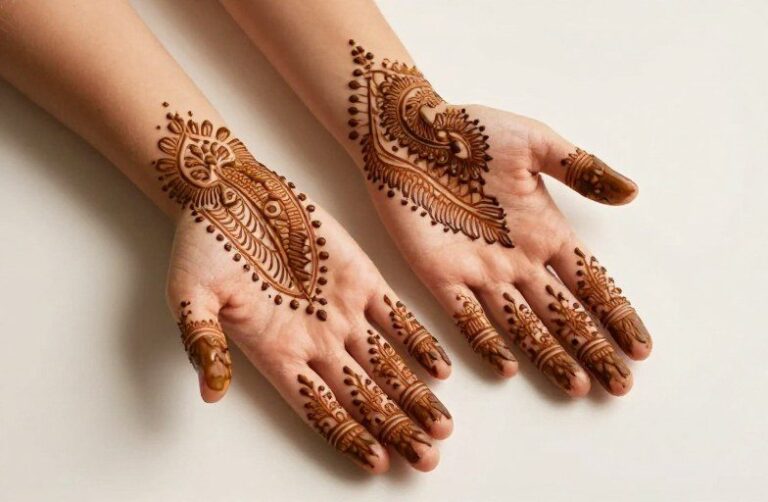
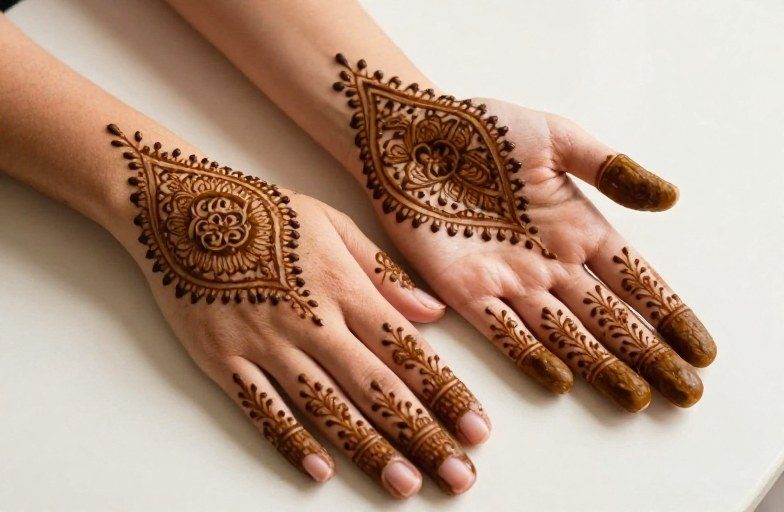
Fresh paste goes on greenish-brown. The stain develops over 24-72 hours, starting orange and deepening to reddish-brown. Palms and soles stain darkest due to thicker skin layers. Arms, backs, and shoulders get lighter, more coppery results. There’s no true black in safe, traditional henna tattooing. Anyone promising jet-black temporary tattoos is using something else, and that something else has sent people to emergency rooms.
Religious & Spiritual Angles
Henna’s spiritual associations predate its cosmetic use in many regions. Some trace henna application to pre-Islamic Middle Eastern and North African traditions where it was used in rites of passage and protective ceremonies. In Hindu practice, mehendi is deeply woven into wedding rituals, with the darkness of the stain sometimes interpreted as an indicator of the depth of marital love or the mother-in-law’s affection. The night before the wedding, the mehendi ceremony brings women together in a specifically female social space.
Islamic Cultural Practice
While not religiously mandated, henna is often linked to the Prophet Muhammad, who reportedly used it to dye his beard and encouraged its use. This gives the practice a sunnah-adjacent status in many Muslim communities. You’ll see it at Eid celebrations, after childbirth, and during Ramadan. The spiritual dimension here is about blessing, purification, and marking sacred time, not about the design itself carrying fixed religious meaning.
Modern Secular Adaptation
Contemporary Western henna use is frequently stripped of religious context, which creates tension. Getting a random henna design at a beach boardwalk or music festival isn’t inherently disrespectful, but the aesthetic borrowing without cultural understanding has drawn valid criticism. The meaning shifts with context: a henna tattoo applied during Diwali by someone who celebrates it carries different weight than the same design applied by a tourist in Goa.
Symbolism & Core Meaning
At its root, henna tattooing symbolizes transition, protection, and joy. The temporary nature is the point, not a limitation. Unlike permanent ink that declares permanence, henna marks a specific moment, pregnancy, marriage, recovery, a new year, and then releases it. The fading is part of the meaning.
Specific Motif Meanings
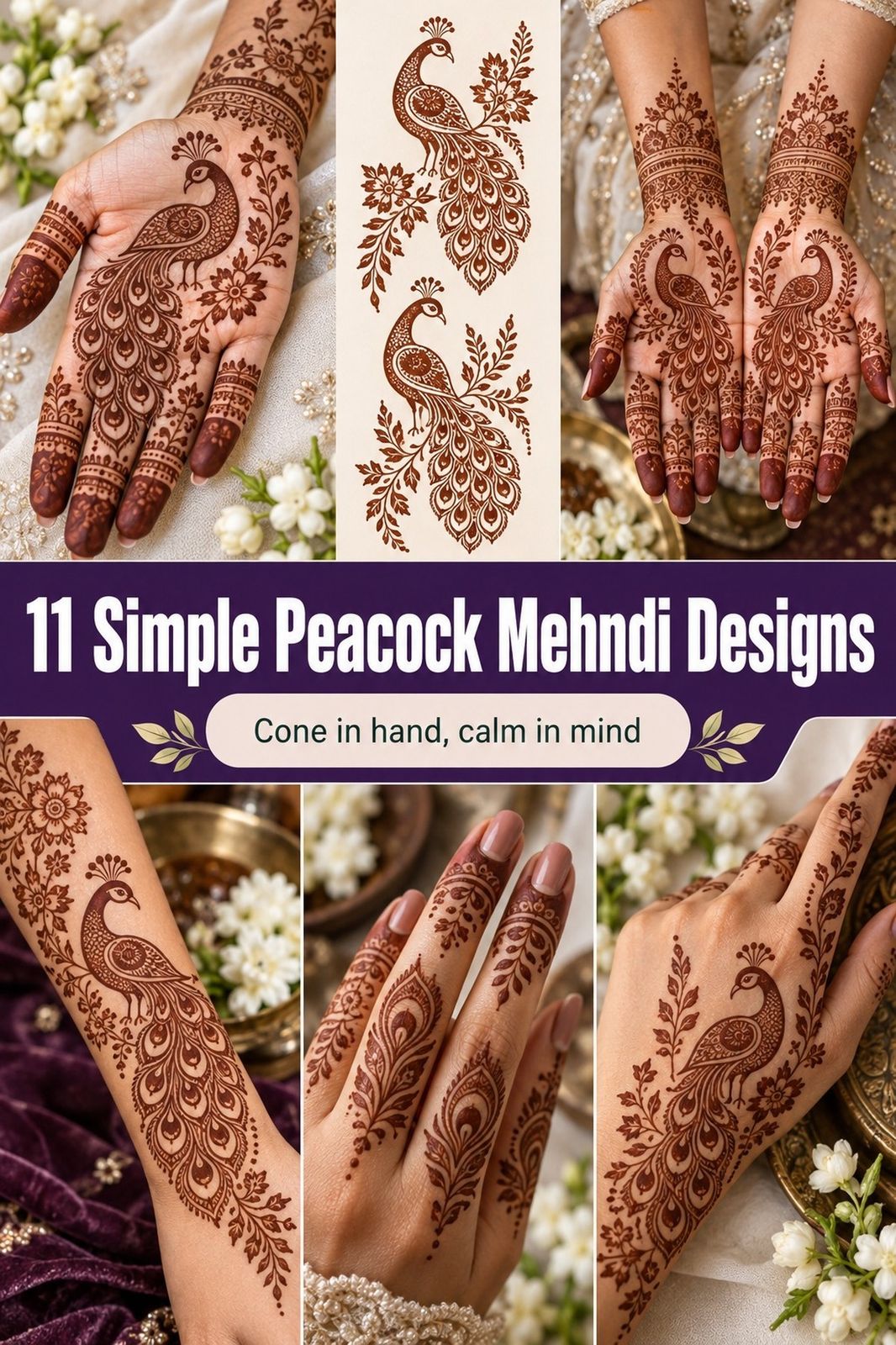
Traditional designs carry recognizable symbolism. The lotus represents beauty emerging from difficulty. Paisleys, often called mango motifs, signify fertility and abundance. The sun or eye patterns serve protective functions, echoing the ancient use of henna as a ward against evil spirits. Vine and leaf patterns suggest growth and connection. These aren’t universal, meanings vary by region and family tradition, but they offer a visual vocabulary that has accumulated significance over centuries.
Placement as Meaning
Where you place henna matters. Hands and feet are traditional because the stain lasts longest there and because these extremities were seen as vulnerable entry points requiring protection. The palms, especially, show the stain most dramatically. A henna design on the upper arm or back reads differently, more decorative, less ritually grounded. Some contemporary practitioners place small designs near the collarbone or behind the ear, placements that have no traditional precedent and signal modern aesthetic priorities over cultural ones.
Design Tips & Pairings
If you’re getting henna as a tattoo-adjacent experience, a few practical realities shape the result. Fresh paste made from sifted henna powder, lemon juice, sugar, and essential oils stains best. Pre-made cones from reputable suppliers work; the cheap ones at tourist spots often contain stale powder or chemical additives.
Working With the Stain Timeline
Apply to clean, dry skin. Let the paste dry until it cracks, then keep it on as long as possible, 4-8 hours minimum, overnight ideally. Avoid water for the first 24 hours. The color keeps developing for two days. Planning a henna tattoo for an event means applying it three days prior, not the morning of. The stain peaks around day two or three, then gradually fades through exfoliation.
Complementary Permanent Tattoos
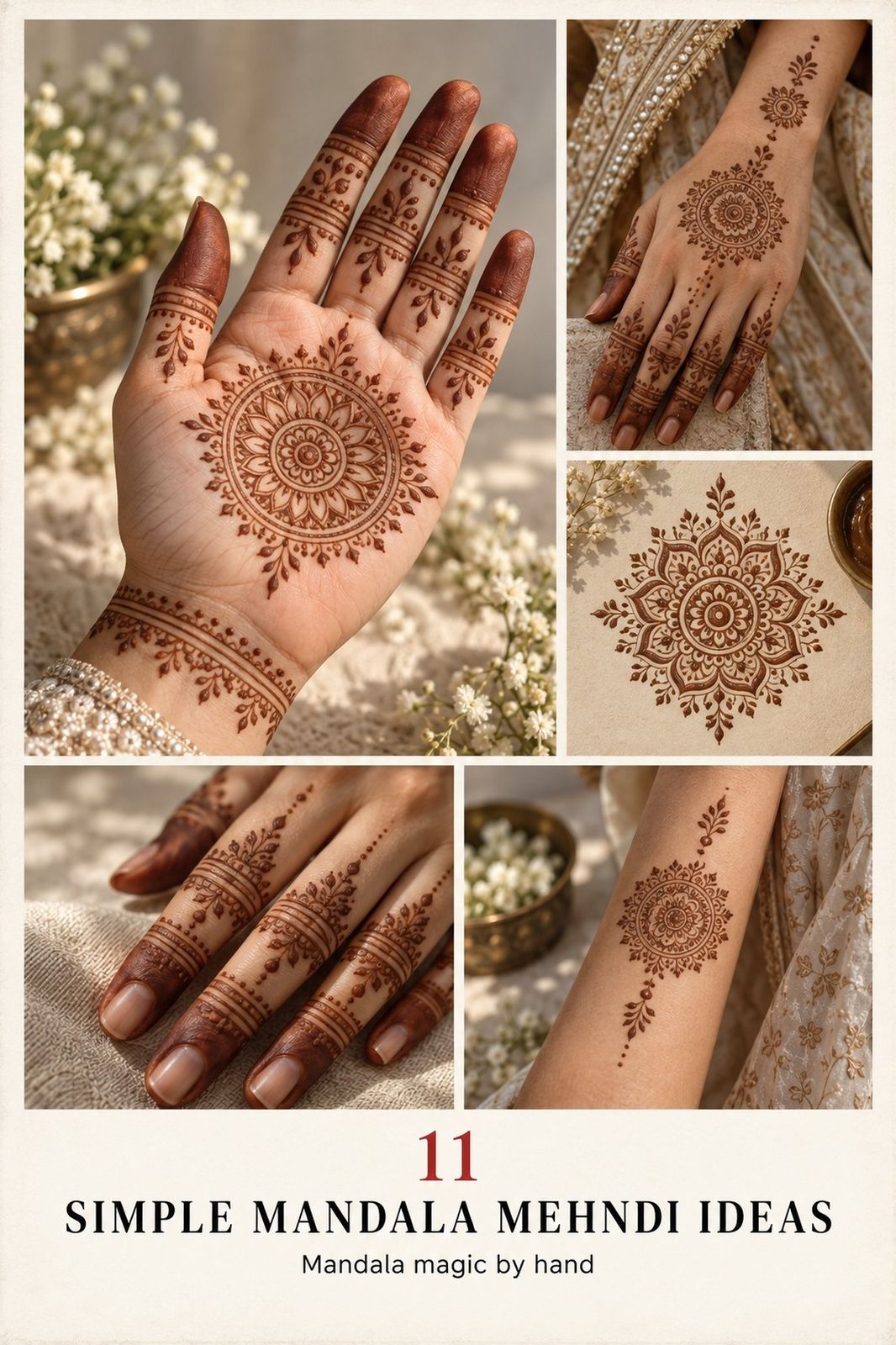
Some people use henna to test placement for permanent ink, though the visual effect differs significantly. Henna’s reddish tone and soft edges don’t simulate black linework. Better pairings: henna near existing floral or ornamental tattoos creates interesting temporary-permanent interplay. Mandala-style permanent pieces and henna patterns share visual DNA. Avoid placing henna directly over fresh tattoos, wait until fully healed, and even then, the exfoliation from henna aftercare can affect newer ink.
Similar & Related Symbols
Henna sits within a broader family of body marking practices. Jagua, from the Genipa americana fruit, produces blue-black temporary stains and is sometimes marketed as “black henna”, it’s a different plant with its own indigenous Amazonian origins. Henna also connects to the history of kohl, another plant-derived cosmetic with protective symbolism across North Africa and the Middle East.
Permanent tattoo traditions share conceptual ground. Japanese irezumi uses similar all-over ornamental coverage. Polynesian tatau marks social status and transition. The Mehndi tradition’s specifically female, often domestic application context distinguishes it from many male-dominated tattoo histories. Contemporary ornamental tattooing, fine-line florals, ornamental frames, lace patterns, draws direct visual influence from henna, sometimes acknowledged, sometimes not.
White ink tattoos and henna share a certain ephemeral quality, though white ink is permanent and notoriously unpredictable in how it ages. UV-reactive inks offer another point of comparison: visible only under specific conditions, like henna’s visibility shifting over its two-week lifespan.
Final Word
Henna hair dye and henna tattoo paste share a source plant and little else. One is a cosmetic utility; the other is a practice layered with meaning about time, transition, and cultural identity. The temporary nature of henna body art isn’t a lesser version of permanence, it’s a different philosophical statement entirely. If you’re drawn to henna tattoos, respect the distinction. Learn whose tradition you’re borrowing, understand that the stain’s fading is integral to its purpose, and choose your paste carefully. The best henna work honors both the visual craft and the cultural weight it carries, whether applied in a centuries-old wedding ritual or a contemporary studio adapting ancient patterns for new skin.
Frequently Asked Questions
Can I use henna hair dye for a temporary tattoo?
No. Hair dye formulations contain different additives, conditioning agents, and sometimes metallic salts that aren’t safe for skin application. Tattoo-grade henna paste uses sifted powder, lemon juice, sugar, and skin-safe essential oils. The consistency and staining chemistry differ significantly.
How long does a real henna tattoo last compared to hair dye?
Henna tattoos typically last 1-3 weeks depending on placement, skin type, and aftercare. Hand and foot tattoos last longest due to thicker skin; areas like the upper back fade faster. Hair dye penetrates the hair shaft and lasts until the hair grows out or is chemically treated.
Why did my henna tattoo turn orange instead of dark brown?
Natural henna always starts orange and deepens over 24-72 hours. If it stays pale, the paste may have been too old, left on too briefly, or washed too soon. Some skin types simply don’t take dark stains. Immediate dark color usually indicates chemical additives, not pure henna.
Is getting a henna tattoo culturally appropriative?
Context matters. Applying henna within its cultural traditions, or with genuine understanding and respect, differs from treating it as a disposable exotic accessory. Avoid sacred bridal patterns for casual use, learn the origins of specific motifs, and support practitioners from the tradition when possible.