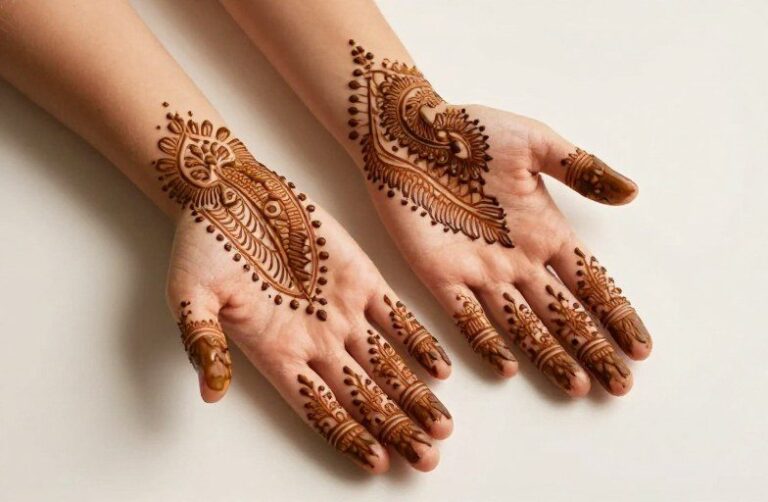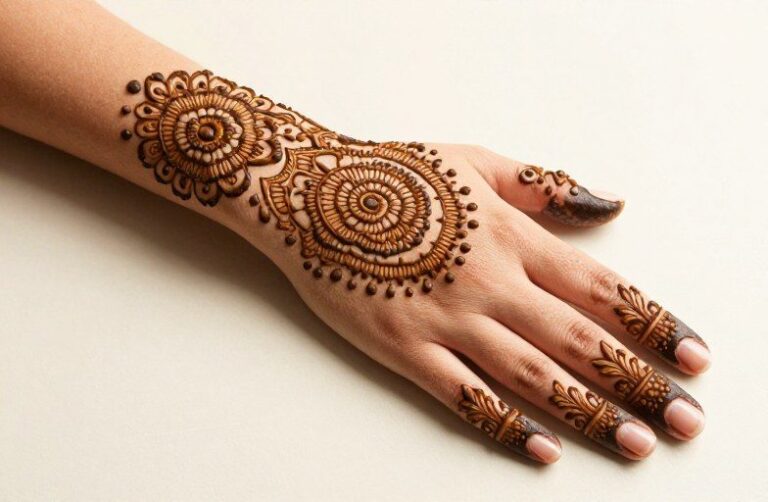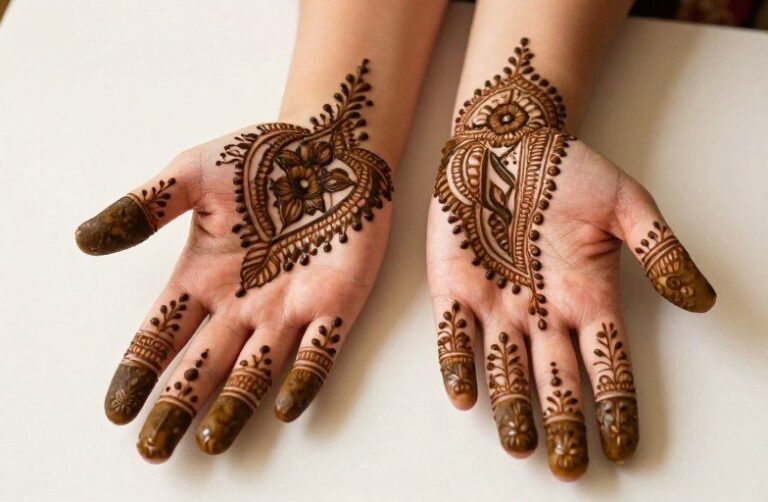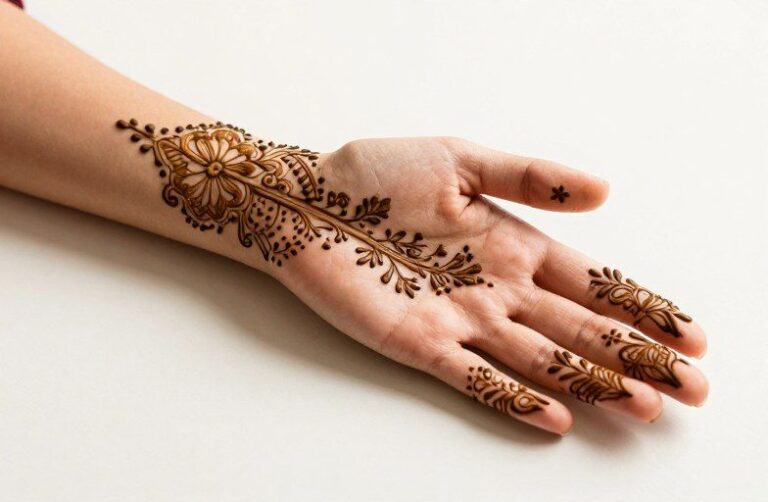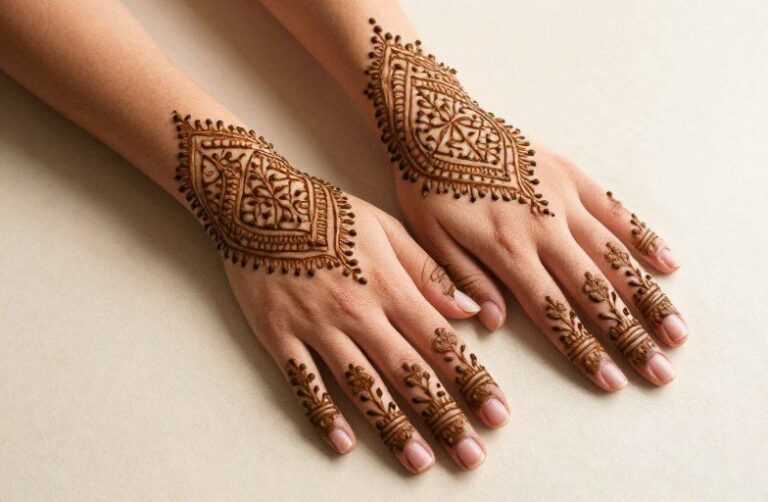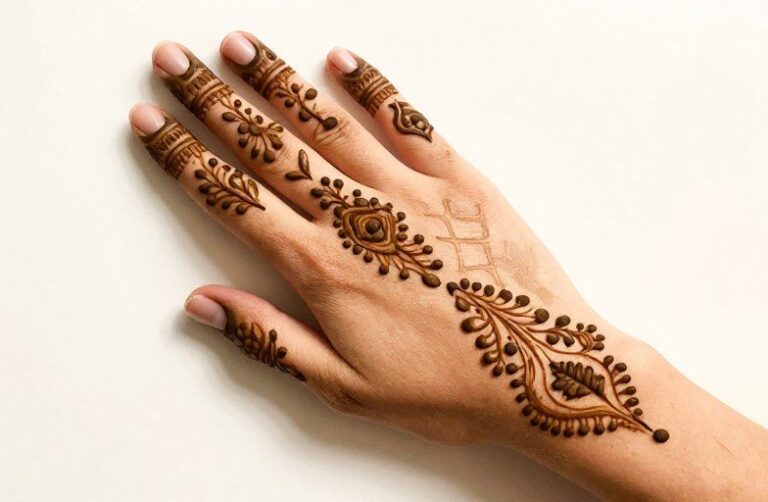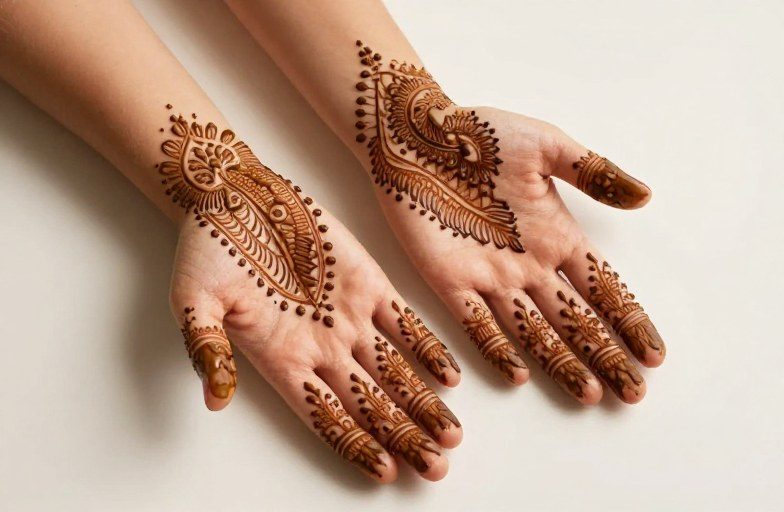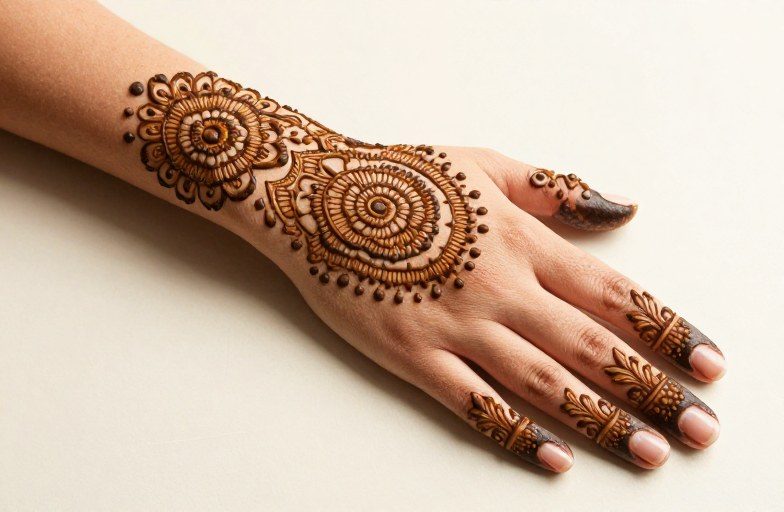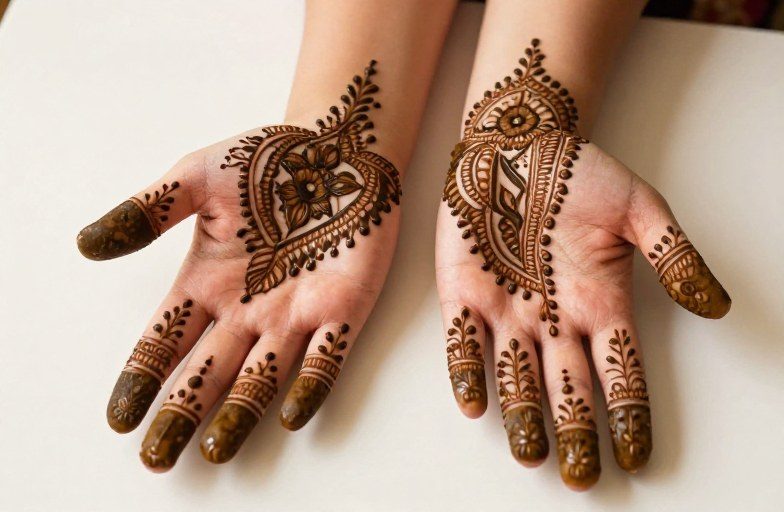
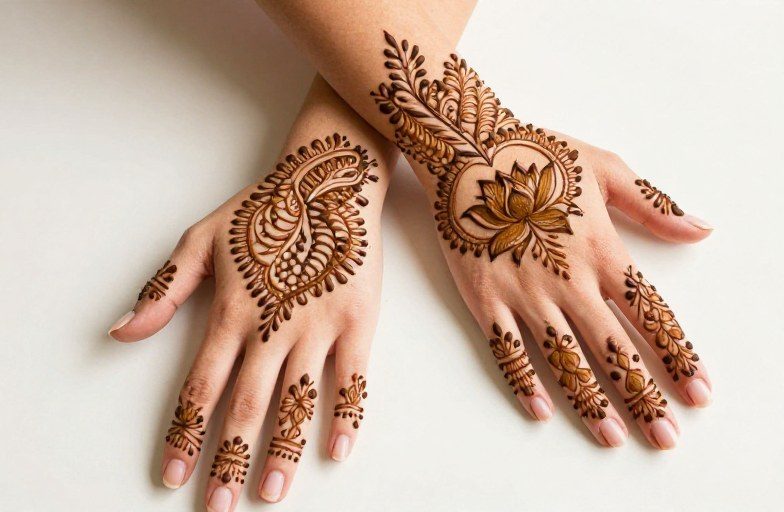
A henna lotus flower tattoo holds layered meaning. The lotus carries its own weight: rising unstained from mud, blooming above the surface. Henna adds the quality of temporary, sacred marking, something applied with patience, worn for a moment, then allowed to fade. Together, they suggest growth that doesn’t claim to be permanent, transformation held lightly. If you’re drawn to this design, you probably want something personal without borrowing a heritage that isn’t yours.
What the Lotus Actually Means
Spiritual Roots, Not Universal
In Hindu tradition, the lotus is the seat of creation, Brahma emerges from one springing from Vishnu’s navel. Lakshmi stands upon one. The unstained bloom from murky water becomes a metaphor for the soul’s capacity to transcend suffering. Buddhist practice often links the lotus to the eightfold path and the gradual unfolding of enlightenment. Different colors carry distinct associations: white for purity of mind, red for compassion and love, blue for wisdom.
The henna styling does not change these meanings. It adds a layer of human ritual: the hours of stillness during application, the paste drying and cracking, the eventual fade. If you choose this combination, you are selecting a devotional mood rather than a doctrinal statement.
Other Symbols That Travel Similar Ground
The lotus frequently pairs with the unalome, that curling spiral leading to a straight line and dot. Both trace spiritual journey, but the lotus emphasizes what emerges rather than the wandering itself. Mandalas offer another natural pairing; their geometric centers echo the lotus’s layered petals as a focus for attention.
Other rooted-growth imagery overlaps in meaning:
- Tree of life: interconnectedness and grounded growth, but lacks the lotus’s specific mud-to-bloom narrative
- Phoenix: rebirth through destruction, more violent and singular than the lotus’s daily renewal
- Ouroboros: cyclical return, but without the upward, aspirational movement
- Water lily: visually similar, yet culturally distinct, associated more with pleasure and creation in Egyptian contexts than Buddhist or Hindu transcendence
Mehndi traditions offer their own symbolic flora. The paisley (kairi or mango shape) represents fertility and joy. Floral vines suggest continuity and connection. Choosing a lotus within henna styling specifically signals spiritual intent rather than purely decorative or celebratory purpose.
Color Choices and What They Cost You
The Henna Palette
Traditional henna stains skin in reddish-brown tones from lawsone, the dye molecule in henna leaves. Tattoo artists replicate this with warm sepia inks, creating a look that reads immediately as mehndi-inspired. These brown tones soften faster than black ink. On high-exposure areas like hands or forearms, expect visible fading within five to eight years.
Some clients push toward jagua blue-black, a fruit-based temporary dye sometimes mimicked in tattoo ink. This cooler tone shifts the cultural reference; jagua is often linked to Amazonian and Caribbean traditions rather than South Asian mehndi. The meaning stays intact, but the visual lineage changes.
Black and Grey, Full Color
Black and grey lotus designs strip away the henna color association entirely, focusing on form and shading. This works better for large pieces where intricate linework needs contrast to hold. The lotus’s layered petals actually benefit from greywash; each petal recedes naturally with soft shading, creating dimensional bloom without color. The “henna” aspect becomes stylistic (lace-like linework, paisley fillers) rather than color-based.
Color saturation affects longevity:
- Warm browns and reds: fade fastest, blur earliest, require more frequent touch-ups
- Black linework with brown wash: compromise between authenticity and durability
- Full color (pink, magenta, white highlights): departs from henna reference entirely but preserves lotus symbolism; whites yellow within two to four years
How It Ages
The Problem with Fine Lines
Henna-inspired tattoos rely on fine, repetitive lines, exactly what blurs most predictably. Skin’s collagen shifts, ink particles migrate, and those delicate paisley curls inside lotus petals become muddy smudges. After ten to fifteen years, a highly detailed henna lotus on a shoulder or thigh often resolves into a soft brown-grey shape where the original intricacy is suggested rather than visible.
Placement matters enormously:
- Fingers, palms, tops of hands: fastest fading, two to five years to significant degradation; also culturally sensitive as these are traditional mehndi application sites
- Inner forearm, calf, ribcage: moderate aging, eight to twelve years before major blur
- Upper back, outer thigh, upper arm: slowest change, fifteen or more years with crisp lines possible if well-executed
The Fading Paradox
There is an odd authenticity to this decay. Real henna lasts one to three weeks; the tattoo’s gradual softening echoes that impermanence. Some collectors specifically embrace this, choosing lighter brown inks and fine lines knowing the piece will “live” like its inspiration. Others counteract it with bolder linework around the henna detailing, creating a hybrid that ages more legibly.
Where This Design Actually Comes From
Henna’s Many Uses
Henna body art is often claimed to span roughly five thousand years across regions from the Levant to South Asia, though specific evidence varies by region and period. Its uses vary enormously: wedding celebrations, Eid observances, pre-battle blessing, cooling skin in hot climates, marking mourning periods. The paste’s temporary nature makes it inherently event-bound rather than identity-bound in traditional contexts.
Permanent tattooing of henna-style designs became visible in Western tattoo culture during the late twentieth century, often linked to broader trends of spiritual tourism and aesthetic appropriation. The current approach, more mindful of origin, less casually exoticizing, reflects evolving conversations about who can wear what symbols and how.
The Lotus’s Geographic Spread
The lotus as cultivated plant and symbol traveled the Silk Road and maritime trade routes, embedding in Chinese, Japanese, and Southeast Asian visual cultures. Each adaptation shifted meaning slightly. Japanese tattoo tradition (irezumi) uses the lotus less centrally than cherry blossom or peony, but Buddhist-influenced full-body suits often incorporate it near religious figures. The henna-lotus fusion is a more recent, diasporic creation, less a single tradition than a contemporary intersection.
The blue lotus, Nymphaea caerulea, held significance in ancient Egyptian culture, often linked to rebirth and the sun’s cycle. This is a different species than the Asian Nelumbo nucifera, and the symbolism, while overlapping, is not identical. Henna itself has North African and Middle Eastern roots extending far beyond South Asia. The combined design can resonate with multiple cultural streams, though you should understand which you are referencing.
Style and Placement
Where the Body Meets the Design
Hand and finger placements mimic traditional mehndi most directly but face functional constraints. Tattoo ink does not stain palm skin well due to rapid cell turnover, and finger tattoos require frequent refreshing. The compromise is often a lotus on the back of the hand with henna-style filigree extending toward knuckles, stopping where wear accelerates.
Spine placements allow vertical lotus composition with trailing vine work, echoing the mehndi “bracelet to fingertip” flow but adapted to a different body landscape. Sternum pieces center the bloom with radiating petal-shapes, often incorporating dotwork to simulate henna’s stippled textures.
How Artists Execute This
Artists currently work henna lotus designs across multiple approaches:
- Strict linework: single needle or tight grouping, replicating the drawn-line quality of fresh mehndi; highest detail, fastest aging
- Dotwork/stipple: using pointillism for shading and texture; holds better than fine lines, reads as henna from distance
- Watercolor wash: color bleeding beyond linework; departs from henna’s controlled precision but captures its organic warmth
- Geometric framing: lotus centered in hexagon or mandala structure; adds structural longevity to organic detail
Some collectors add script, Sanskrit mantras, Arabic calligraphy, personal phrases, within the negative space. This risks visual clutter if the lettering competes with the filigree. The best integrations treat text as another organic line, flowing with rather than against the henna rhythm.
What to Remember
A henna lotus tattoo works best when you hold its contradictions: permanent ink evoking temporary paste, personal meaning borrowed from collective tradition, intricate beauty that time will soften. Choose brown tones if you want the cultural reference clear; choose black and grey if you want the form to last. Place it where your life will not rub it away too quickly, or choose to let it fade as henna itself does.
Most importantly, know what you are wearing. The lotus is not a generic peace symbol. Henna is not a style divorced from practice. The intersection deserves your attention, not just your aesthetic preference.
Frequently Asked Questions
Is a henna lotus tattoo culturally appropriative?
It depends on context. The lotus spans multiple religious and cultural traditions; henna has roots across North Africa, the Middle East, and South Asia. If you understand which streams you are referencing, avoid claiming sacred meaning you do not practice, and work with artists who respect the form’s origins, the design can be worn thoughtfully. If you treat it as generic ‘exotic’ decoration, it becomes appropriative.
How long does a henna-style tattoo last compared to real henna?
Real henna fades in one to three weeks. A tattoo in brown ink mimicking henna will last years but fade faster than black ink, five to eight years on exposed areas, longer on protected skin. The paradox is that this faster aging can echo the temporary nature of actual henna, which some collectors find meaningful.
Why do finger and palm placements fail?
Palm skin turns over rapidly, so tattoo ink does not settle well. Finger skin is thin, constantly moving, and heavily exposed to sun and abrasion. These placements blur and fade fastest, often within two to five years. Traditional mehndi is applied to hands precisely because it is temporary; permanent ink struggles in the same locations.