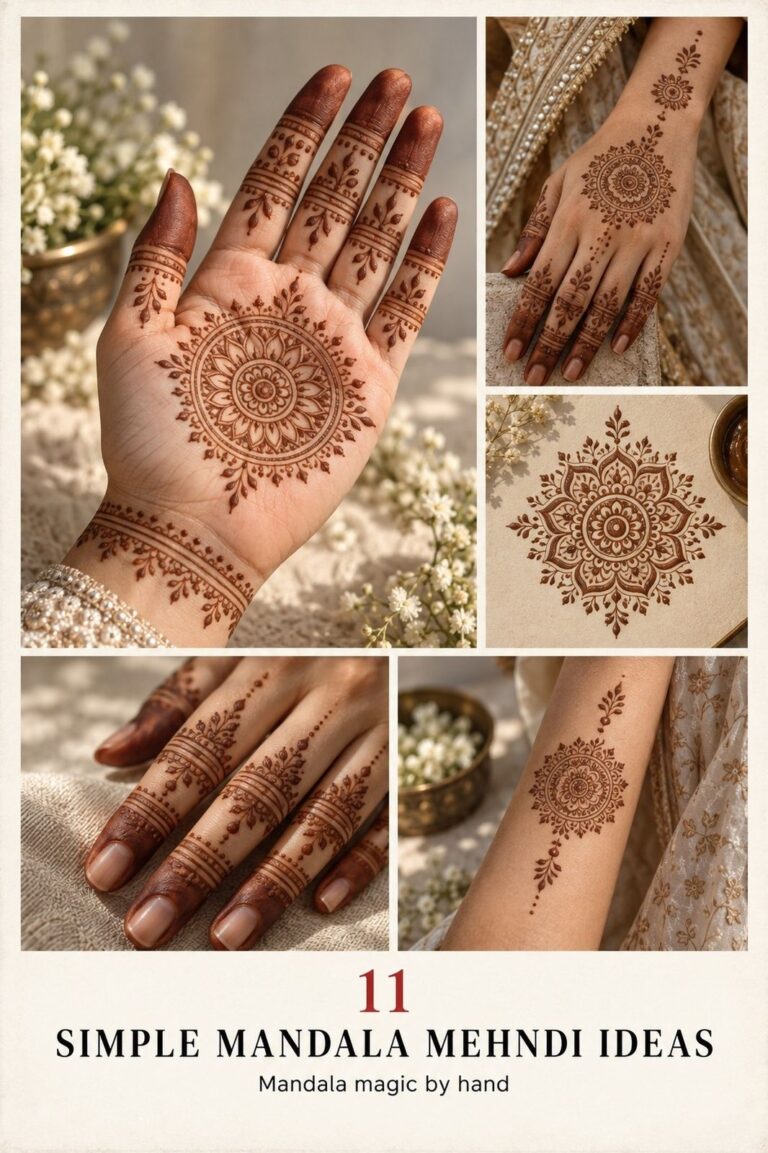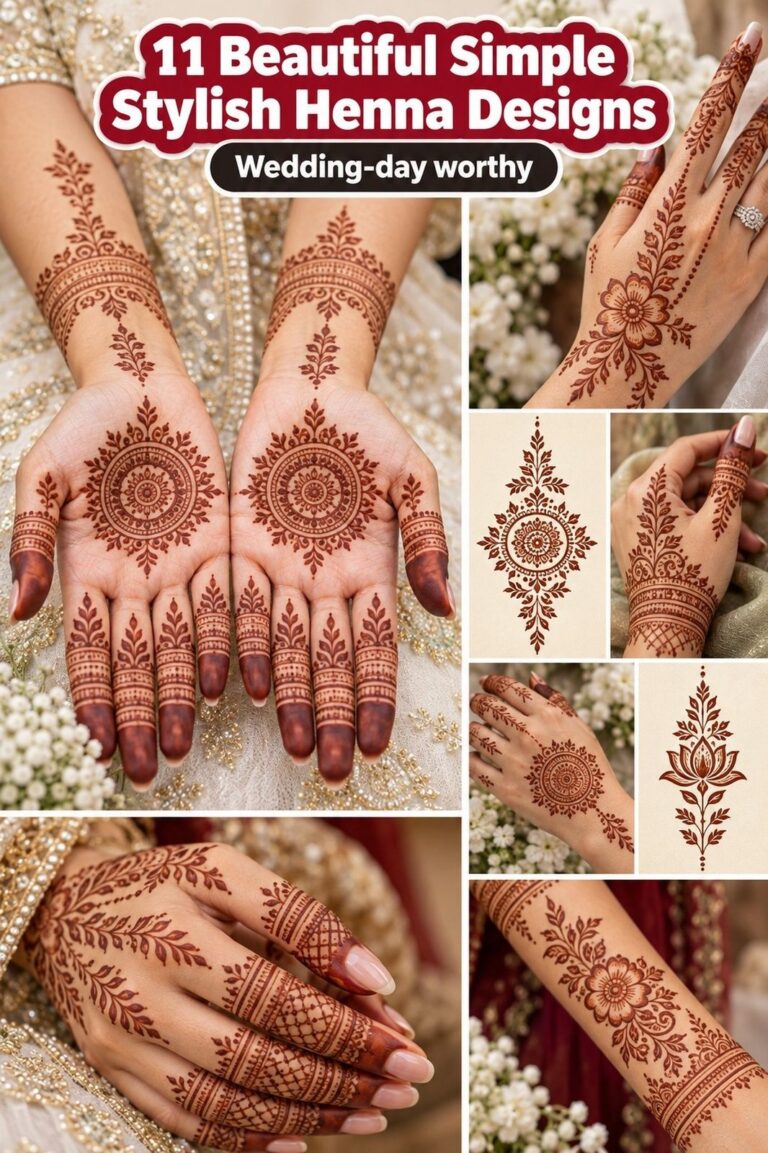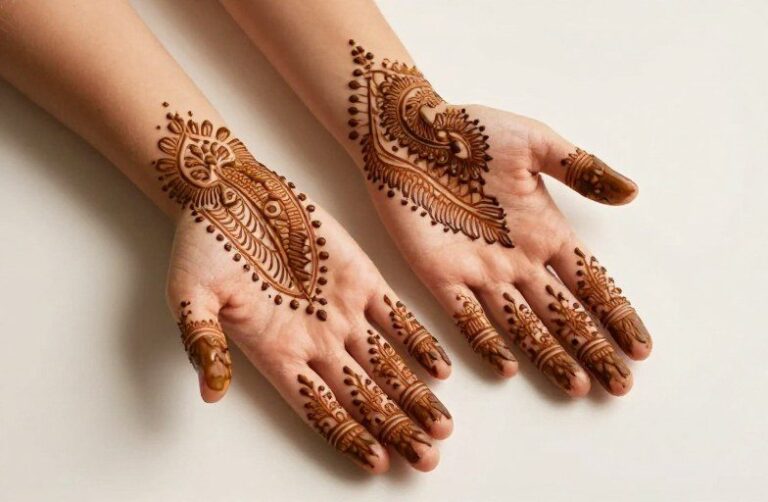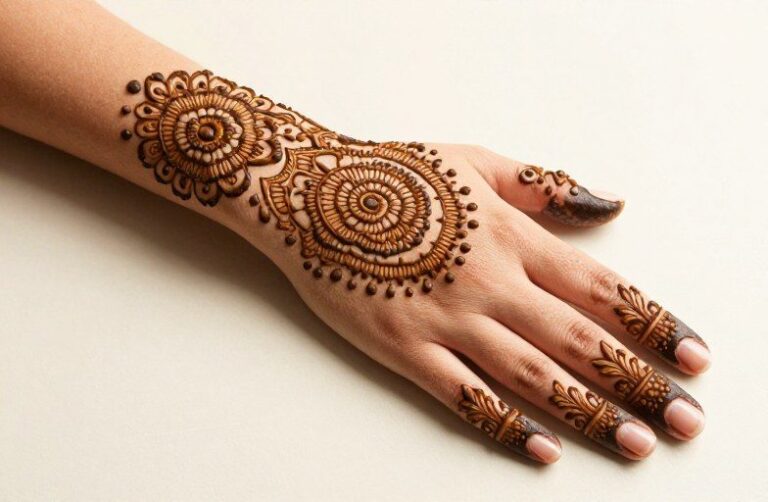
Henna tattoo meaning centers on blessing, celebration, and transformation. Unlike permanent ink, this temporary stain on skin marks transitional moments, weddings, births, religious observances, while carrying protective and auspicious symbolism across cultures. The meaning shifts between contexts: bridal henna in South Asian traditions differs from Eid decorations or modern festival body art, yet all share the common thread of intentional, sacred marking.
Best Placements
Placement carries specific meaning in henna traditions, not just aesthetic preference. The hands and feet remain the most significant locations, rooted in practical and spiritual reasoning.
Hands and Palms
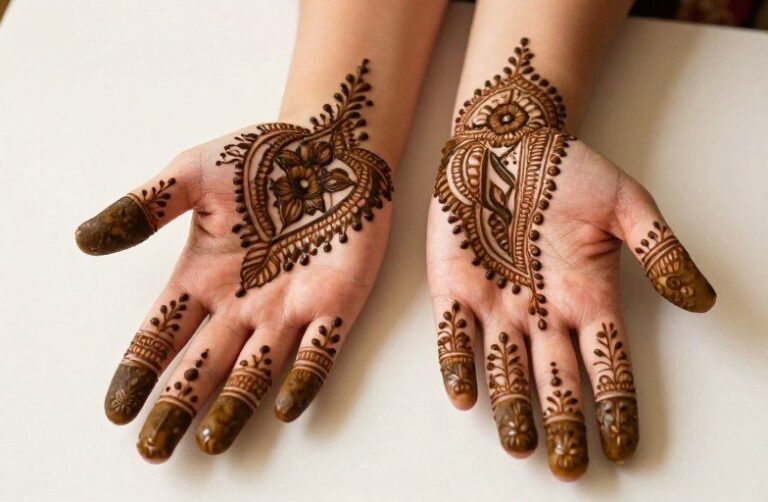
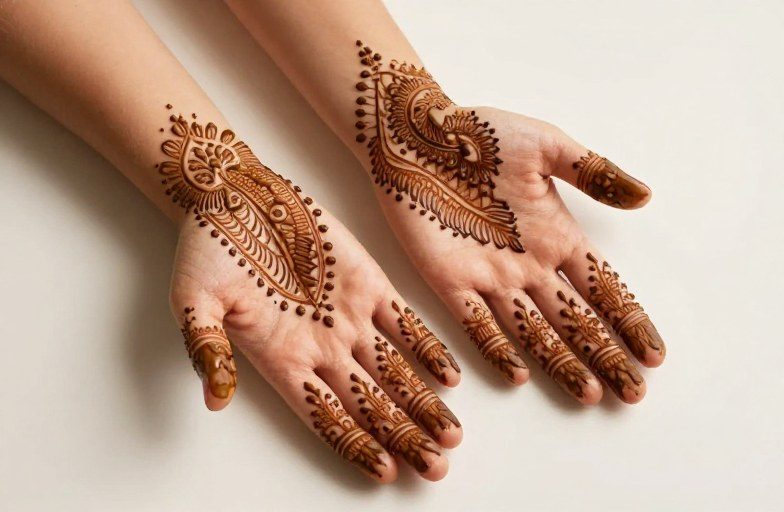
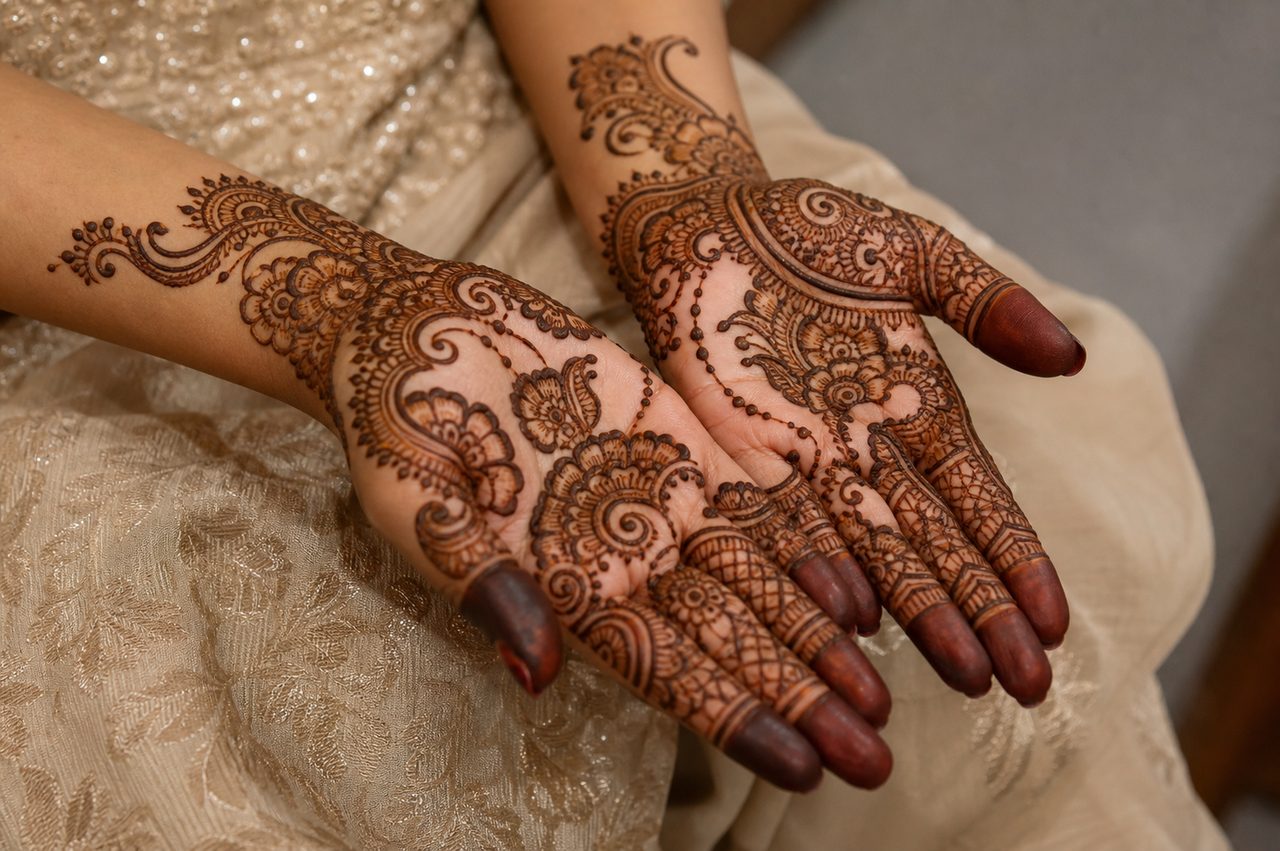
Palms absorb the darkest stain due to thicker skin layers, creating the most visible and lasting design. In bridal traditions, full-hand coverage up to the wrists or elbows signifies abundance and the bride’s active role in her new household. Fingertips stained deep red or brown indicate a well-done application and are considered highly auspicious. Modern festival-goers often choose partial hand designs, back of hand only, or single fingers, for quicker application and less interference with daily tasks.
Feet and Ankles
Foot henna traditionally grounds the wearer, connecting design to earth and stability. Ankles and tops of feet allow for flowing vine patterns that complement sandals or bare feet in warm climates. The stain here develops lighter than palms, often orange-brown rather than deep mahogany, which affects design choice, artists typically select bolder, less detailed patterns for feet.
- Upper arms and shoulders: increasingly popular for modern events, allows larger single motifs
- Upper back: chosen for private symbolism or designs meant to be revealed selectively
- Behind the ear: discreet placement, short duration due to skin oils and hair contact
- Neck and collarbone: high visibility, requires careful aftercare to avoid clothing friction
History & Cultural Roots
The henna plant, Lawsonia inermis, grows across North Africa, the Middle East, and South Asia, and its use for body decoration spans millennia. Archaeological evidence often links henna to ancient Egypt, where mummies show hair and nail staining. Some trace it to the Bronze Age Levant, though definitive dating remains debated among scholars.
Regional Traditions
Mehndi in South Asia evolved into elaborate artistic tradition with specific regional styles, Rajasthani, Pakistani, Arabic, Indo-Arabic fusion. Each carries distinct pattern vocabulary: Indian work favors dense paisley and peacock motifs filling entire hands; Arabic style uses larger floral elements with more negative space; African traditions, particularly Sudanese and Moroccan, emphasize geometric patterns and symbolic shapes.
In Jewish communities, henna ceremonies often linked to wedding celebrations in North African and Middle Eastern diaspora communities. The henna or hinna night precedes the wedding, with paste applied to bless the couple. This practice persists in some Israeli and diaspora communities, though participation varies by family tradition.
Who Chooses This Tattoo
The wearer profile spans cultural practitioners, spiritual adopters, and aesthetic experimenters, three distinct groups with different relationships to the form’s meaning.
Cultural and Religious Practitioners
For South Asian brides, Muslim observers before Eid, and participants in Moroccan naqsh traditions, henna maintains active religious and cultural function. These wearers typically understand pattern symbolism implicitly, select artists trained in traditional methods, and observe specific timing and application rules. The meaning here is communal and inherited, not individually constructed.
Modern Adopters and Tourists
Festival culture, particularly Coachella and Burning Man, popularized henna as temporary aesthetic without cultural obligation. These wearers often prioritize visual appeal over symbolic content, though many develop genuine appreciation for the craft. The rise of “henna bars” at events and tourist districts in Morocco, India, and Turkey serves this demographic, sometimes creating tension around cultural appropriation versus appreciation.
- Spiritual seekers drawn to henna’s association with blessing and protection
- People testing tattoo concepts before committing to permanent ink
- Individuals with professional restrictions on visible tattoos
- Children and teens exploring body decoration without parental conflict
Personal & Modern Meanings
Contemporary henna wearers assign individualized significance that departs from or layers onto traditional symbolism. The temporary nature itself becomes meaningful, commitment without permanence, presence without lingering consequence.
Transformation and Transition
The two-week lifespan mirrors natural cycles: growth, peak, fading, disappearance. Some wearers choose henna during life changes, job transitions, relationship endings, recovery milestones, using the fading as metaphorical processing. The visible daily change reminds of impermanence in ways permanent tattoo cannot.
Agency and Reclaiming
For those with limited body autonomy, minors, individuals in restrictive environments, people with medical conditions affecting permanent tattoo safety, henna offers controlled, reversible self-expression. The choice to reapply or let fade represents active decision-making about one’s own appearance.
Modern symbolic additions include zodiac constellations, personal mantras in various scripts, memorial dates, and abstract patterns representing specific experiences. These hybrid designs merge traditional application with individual narrative content.
Similar & Related Symbols
Understanding henna’s meaning requires distinguishing it from visually similar but culturally distinct practices, and recognizing its symbolic neighbors in body art tradition.
Jagua, derived from Genipa americana fruit, produces blue-black temporary stains resembling permanent tattoo ink. Originating in South American indigenous practice, it carries different cultural weight and is often marketed to tourists seeking “temporary tattoo” realism without the commitment.
White henna contains no actual henna plant material; it’s typically cosmetic adhesive or body paint sitting on skin surface rather than staining it. Popular for weddings and photography, it lacks traditional symbolic associations and lasts hours rather than weeks.
“Black henna” deserves warning: this often contains para-phenylenediamine (PPD), a hair dye chemical that can cause severe allergic reactions and permanent scarring. It is not traditional henna and carries no authentic cultural meaning, only health risk.
Permanent tattoo equivalents with related symbolism include:
- Mandala patterns: shared sacred geometry, permanent commitment to spiritual focus
- Mehndi-inspired permanent tattoo: direct translation of temporary form into lasting ink
- Paisley motifs: originating in Persian and Indian textile and henna tradition, now universal decorative element
- Flowing vine and floral work: shared visual language, different temporal relationship
Common Variations & Styles
Style choice significantly affects both visual result and symbolic reading. Traditional artists train for years in specific regional methods; modern practitioners often blend techniques.
Traditional Regional Styles
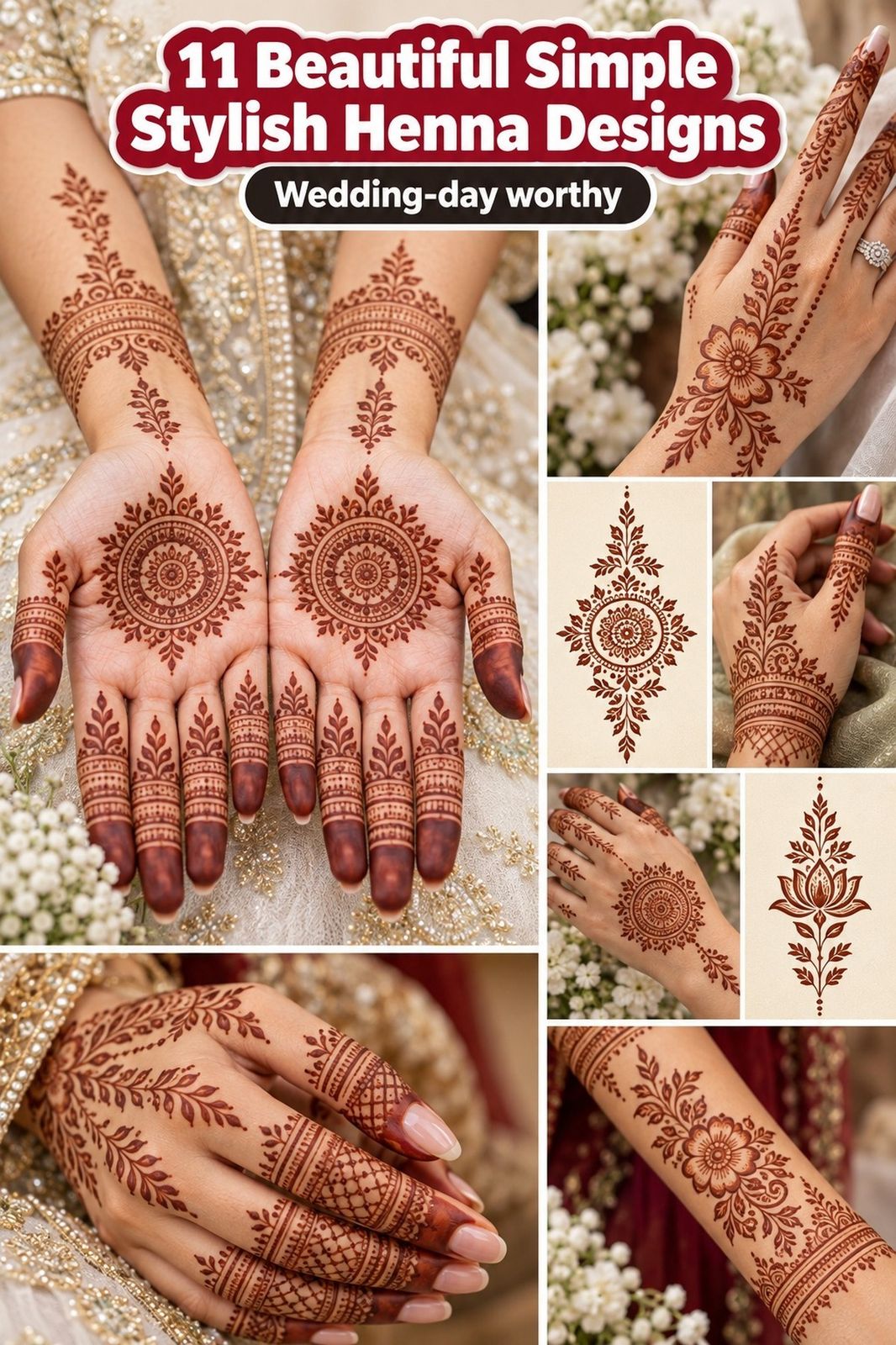
Indian/Pakistani mehndi builds dense, intricate patterns from the wrist outward, covering skin completely. Motifs include peacocks (beauty, grace), lotus (purity, rebirth), mango leaf (fertility), and bride-groom initials hidden within pattern for the wedding night search tradition.
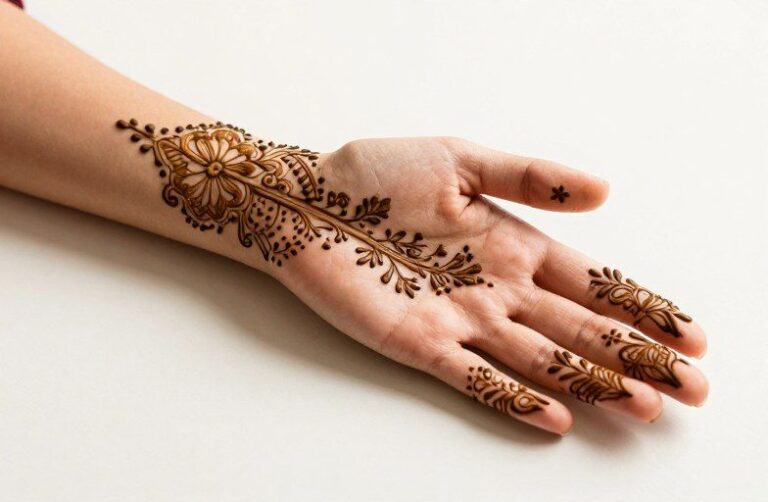
Arabic mehndi uses bolder outlines, larger flowers, and significant empty space. Vine trails often extend from a single central motif, creating flowing asymmetry suited to modern minimal aesthetics while maintaining traditional roots.
African patterns emphasize geometry, triangles, diamonds, lines, with specific protective symbolism in Berber and Sudanese traditions. Less floral, more architectural, these designs connect to older symbolic systems.
Contemporary Adaptations
Glitter overlay, applied before paste dries, adds celebratory flash for parties and photography. Crystal embellishment, pressed into drying paste, creates three-dimensional jewelry effect for special occasions. These additions carry no traditional meaning but extend henna’s decorative function.
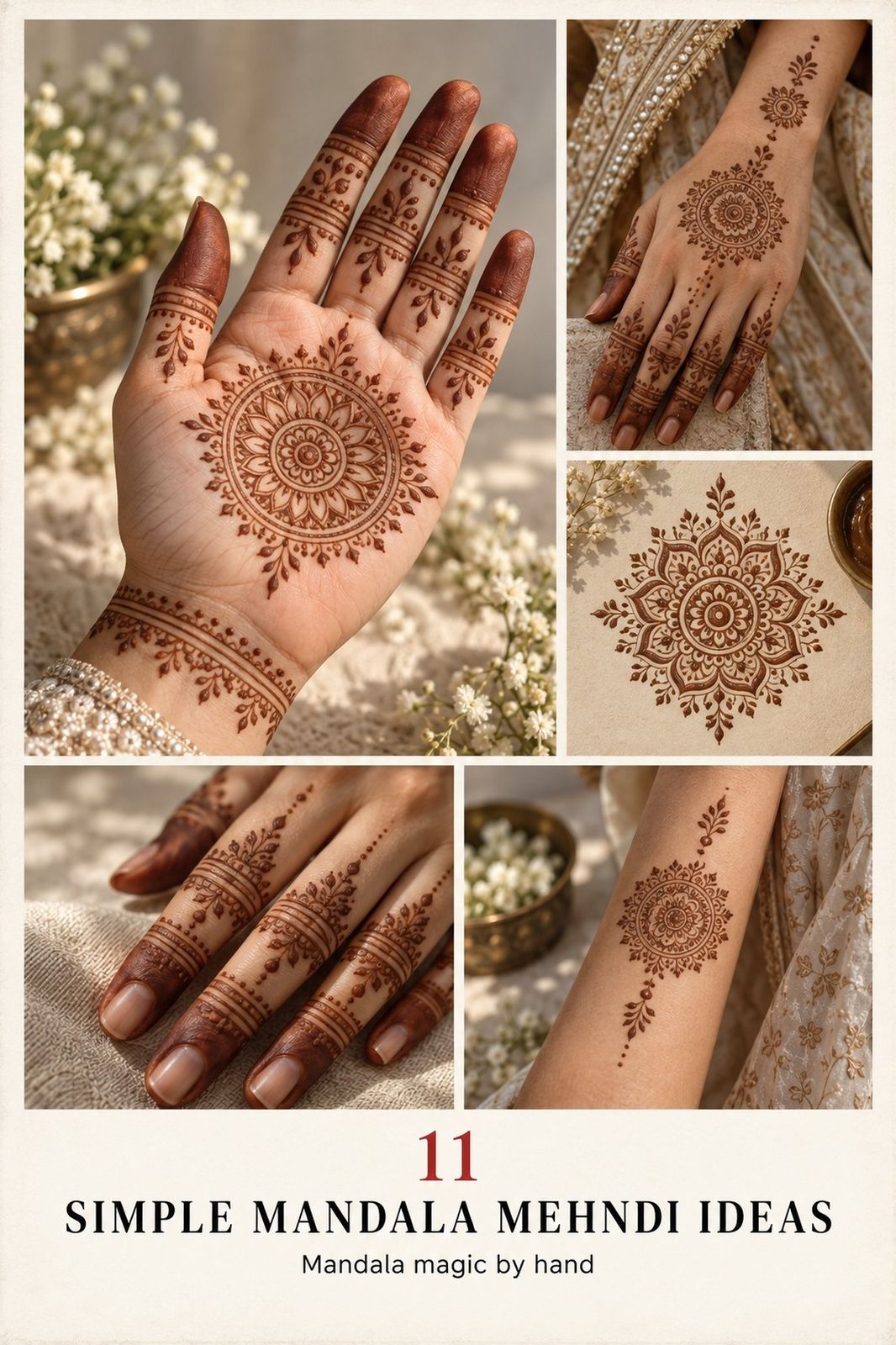
Single-element designs, one large flower, one geometric mandala, one phrase, represent modern time constraints and minimalist preference. They sacrifice traditional complexity for accessibility and speed.
What to Remember
Henna tattoo meaning operates on multiple registers simultaneously: cultural inheritance, personal intention, and social context. The same design on a bride’s hands in Rajasthan, a tourist’s shoulder in Marrakech, and a teenager’s wrist at a music festival carries radically different significance. Respect for the form’s origins matters, not as rigid gatekeeping, but as accurate understanding of what one participates in.
The temporary nature is not deficiency but defining characteristic. The fading, the daily visible change, the eventual clean skin, these are the experience, not failed permanence. Choose henna when the meaning suits transience: marking moments, not monuments; blessing passages, not declaring eternal fixed identity.
Quality paste matters for both result and safety. Natural henna smells earthy, stains orange-brown initially, darkens over 24-48 hours. Anything claiming instant black results risks PPD contamination. The authentic experience, including its full two-week lifecycle, belongs to the meaning.
Frequently Asked Questions
Does henna have religious significance in Islam?
Henna carries cultural rather than obligatory religious status in Islam. Many Muslims apply it before Eid and weddings following the Prophet’s documented appreciation, but it is not required practice. Some conservative interpretations discourage it, while others embrace it as sunnah.
How long does henna meaning last compared to the stain?
The visual stain fades in 1-3 weeks depending on body location and aftercare, but ceremonial significance, particularly for bridal henna, extends far longer in memory and family narrative. The temporary mark often gains meaning precisely through its disappearance.
Is it appropriate to get henna if I’m not from a culture that traditionally uses it?
Context and approach matter. Attending a henna artist in a cultural setting where it’s offered to visitors differs from copying sacred bridal patterns without understanding. Research specific designs, credit origins, avoid religious symbols without invitation, and prioritize learning over consumption.
Can henna designs be customized with personal symbols?
Absolutely, and this practice grows increasingly common. Artists regularly incorporate initials, dates, zodiac signs, and abstract personal motifs into traditional pattern structures. The key is collaborating with a skilled artist who can integrate your elements while maintaining visual coherence and respecting the form’s aesthetic roots.