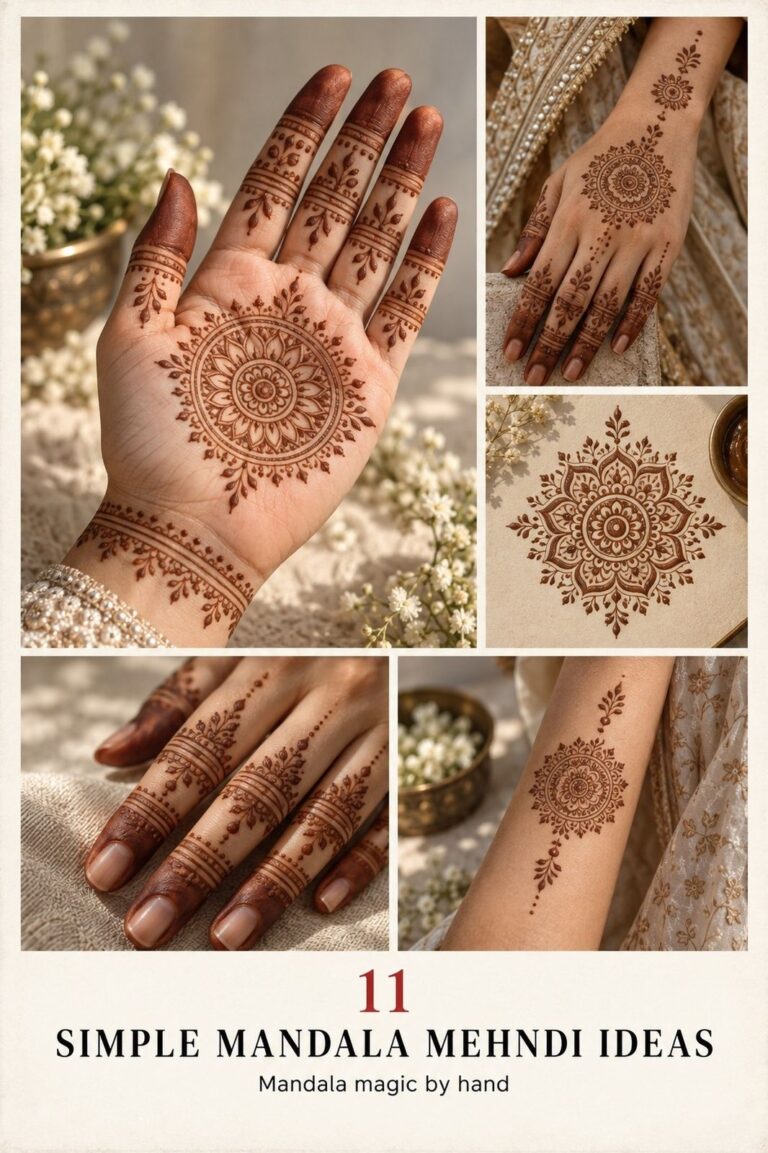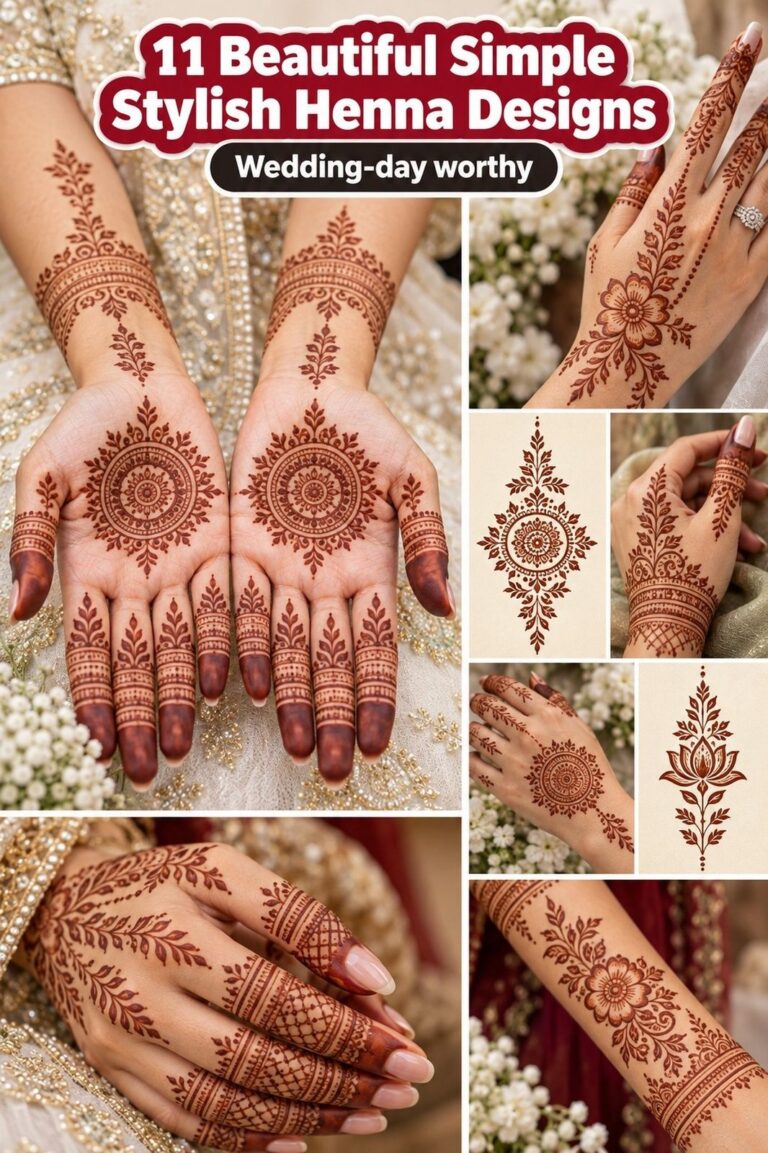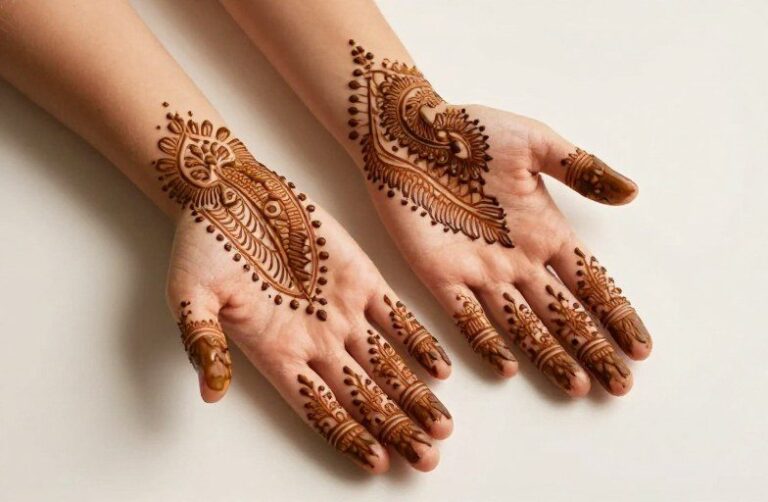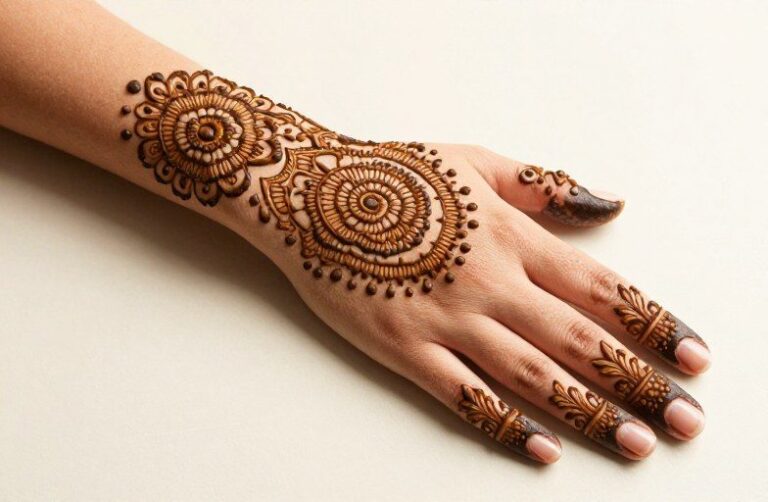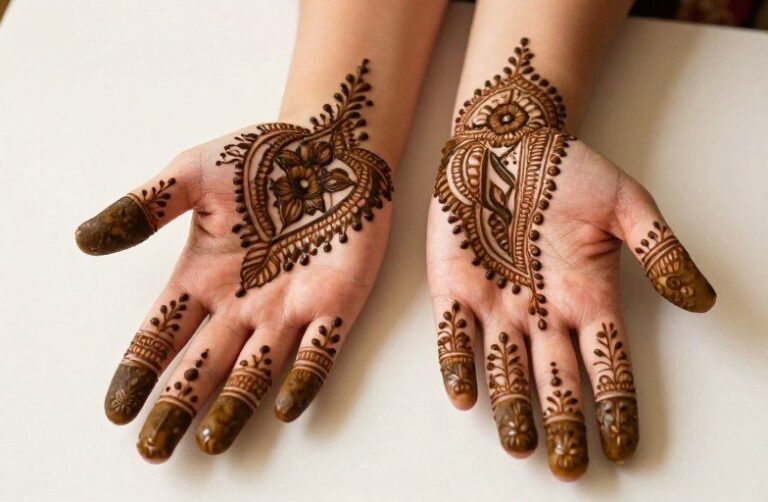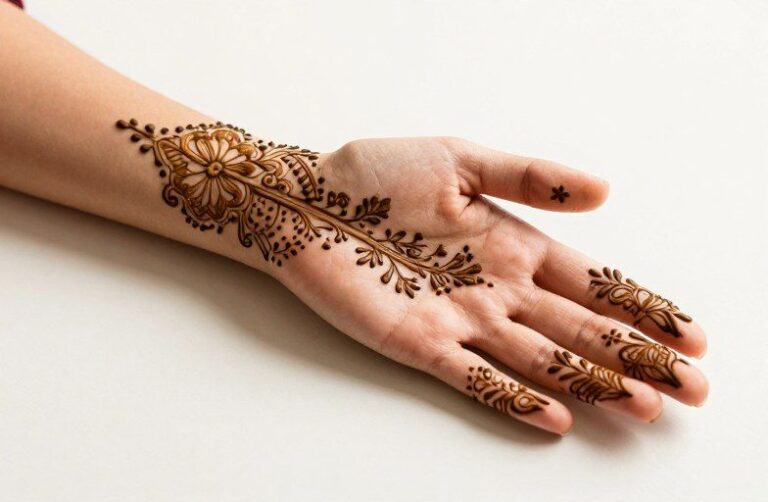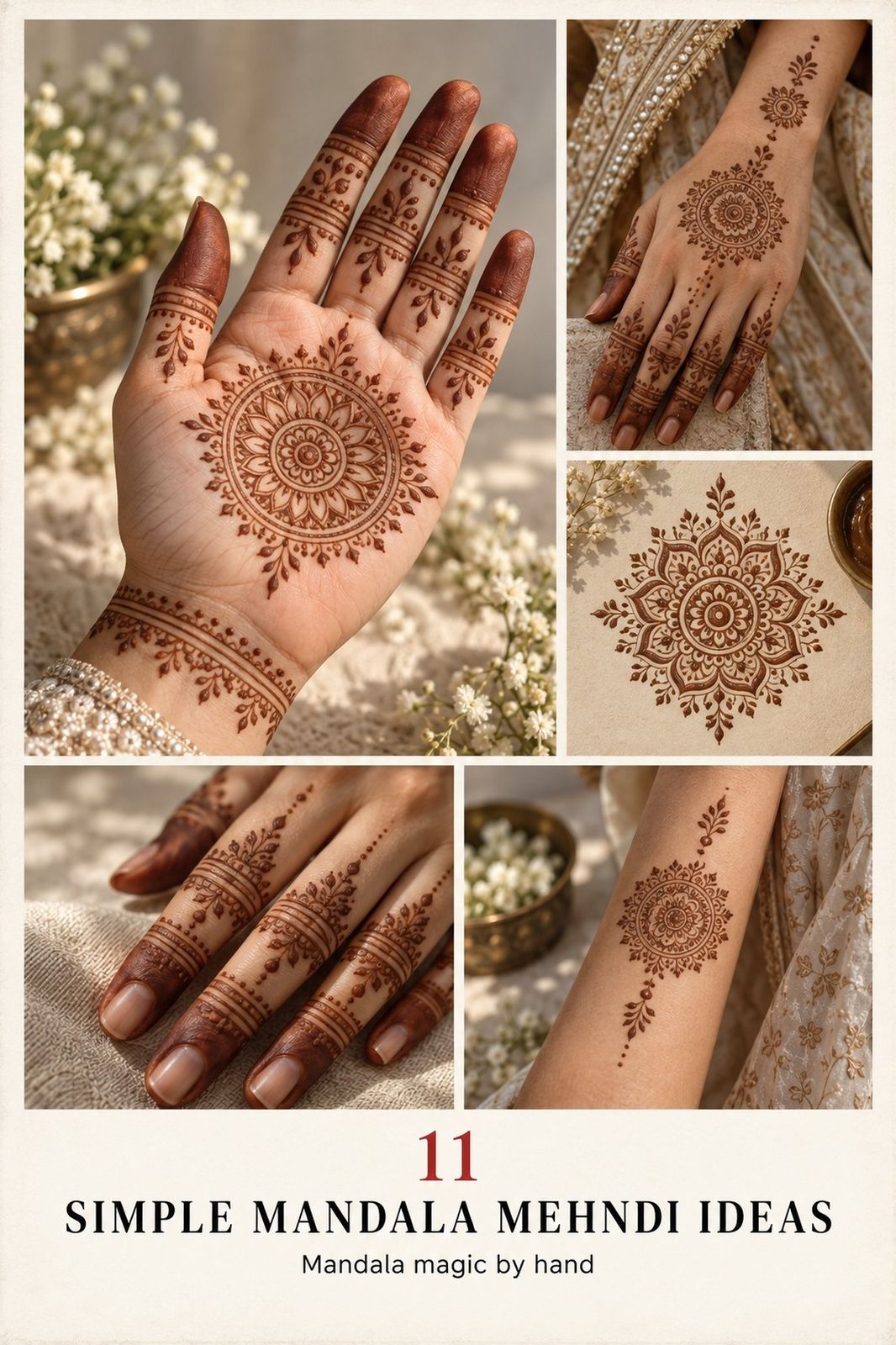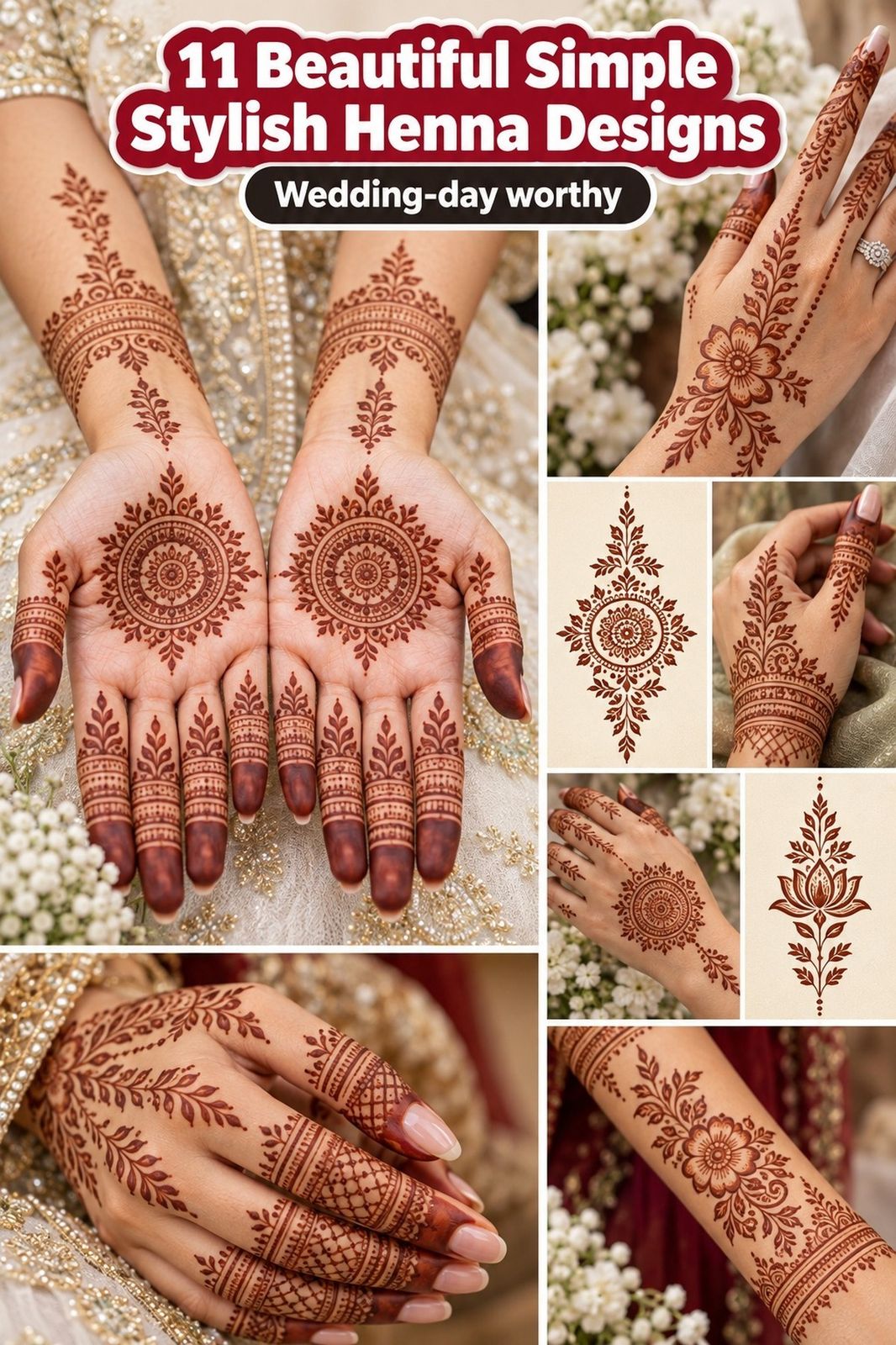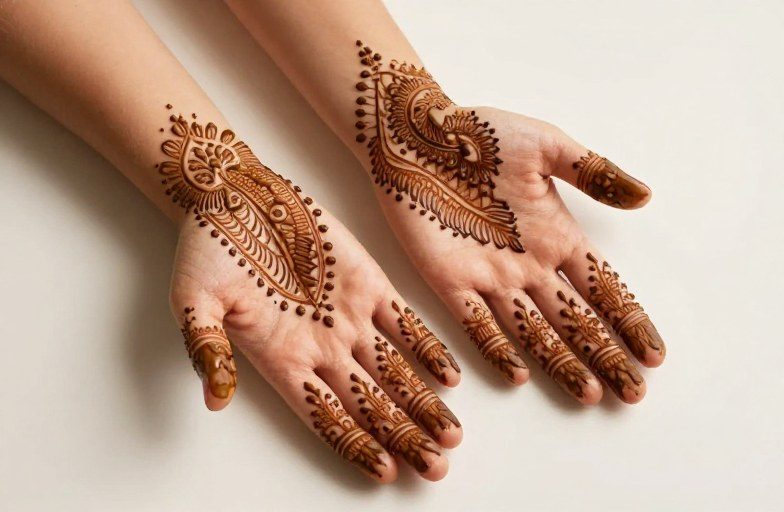
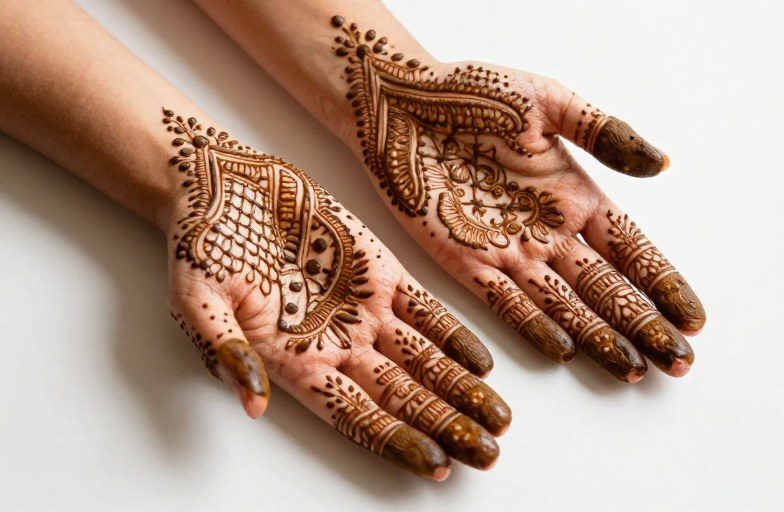
An Indian henna tattoo carries meanings rooted in blessing, protection, and transitional joy. The dark stain itself is considered auspicious, a visible mark of divine favor, most famously worn by brides but also applied for festivals, pregnancies, and major life thresholds. Unlike permanent ink, henna’s temporary nature shapes its symbolism: the fading mirrors the passage of sacred time, and the darkest stains are read as the deepest blessings.
Religious and Spiritual Foundations
Hindu Ritual Context
In Hindu practice, henna application, mehndi, often precedes sacred moments. The hands and feet receive priority because they connect the body to the world: hands do work and give, feet carry you forward. Covering these extremities with protective patterns creates a temporary spiritual shield. The night before a wedding, the mehndi ceremony gathers women to apply designs while singing blessings; the paste itself contains cooling properties that calm pre-ceremony nerves, and the resulting stain marks the bride as blessed and set apart.
Specific religious symbols appear repeatedly. The lotus, associated with Lakshmi and spiritual unfolding, crowns many bridal designs. Peacocks, linked to Kartikeya and Krishna, signal beauty and watchful protection. The sun and moon pair as cosmic balance, often tucked into finger webs or wrist bands. These are not decorative filler. They are active prayers rendered in paste.
Islamic and Syncretic Traditions
Indian Muslim communities, particularly in Rajasthan and Hyderabad, developed their own henna vocabulary. Arabic-influenced designs favor flowing calligraphy and negative space over the dense Indian fill. The night of the henna before Eid mirrors the Hindu bridal sequence, suggesting shared roots in South Asian celebration rather than strictly doctrinal origin. Sufi traditions in some regions use henna to mark the palms of devotional singers, the stain recording hours of rhythmic hand-clapping, though this practice is localized and not universal.
Mythology and Folklore
Origin Narratives
Multiple origin stories circulate, functioning less as historical record and more as cultural shorthand. One narrative often linked to Rajasthan traces henna’s red color to the blood of a sacrificed demon, with the stain now worn as protective mimicry. Another common story holds that Parvati decorated herself with henna to win Shiva’s affection, establishing the practice as feminine sacred adornment. These tales share a common thread: henna marks transformation, desire, and the crossing from one state to another.
The Hidden Name Tradition
In some North Indian bridal customs, the groom’s name hides within the intricate pattern. The wedding night becomes a search; finding the name proves attentiveness and initiates intimacy. This practice transforms the design from passive decoration into active puzzle, with the henna serving as temporary boundary and bridge simultaneously. The name’s concealment also reflects broader Indian attitudes about visible and hidden knowledge: the sacred often hides in plain sight.
Protective Folklore
Dark henna stains were traditionally read as strong protection against the evil eye. Newborns received small fingertip applications. Pregnant women wore belly patterns to safeguard the unborn child. The logic runs that the eye, drawn to the beautiful stain, reads the marked person as already blessed and therefore not a target for envy. This protective function explains why henna appears at moments of vulnerability: marriage, birth, illness recovery, departure for travel.
Reading the Visual Language
Core Motifs and Their Resonance
Understanding Indian henna means learning its vocabulary of recurring symbols. Each carries specific weight:
- Paisley (mango/boteh): Fertility and abundance, shaped like the mango, India’s fruit of plenty. The teardrop curl echoes the natural henna leaf, creating self-referential botanical symbolism.
- Flowering vines: Growth, connection, the unbroken line of family. Vines wrapping fingers or climbing forearms suggest continuation and entanglement with others.
- Checkerboard or mesh: The net that catches blessings, or the threshold between worlds. Dense fill patterns create visual weight that reads as spiritual armor.
- Single large flower: The self in bloom, often placed at the wrist or ankle as a focal point. Size signals importance; centrality claims space.
- Domed arch or gateway: Transition, the threshold of marriage or spiritual passage. Common in bridal palm centers.
The Body as Symbolic Map
The hand itself matters. Right hand: giving, action, solar energy. Left hand: receiving, emotion, lunar. Full bridal coverage often balances both, while festival wear might emphasize one. Feet carry humbler symbolism, touching earth, groundedness, yet receive the most elaborate bridal work because they too need blessing and protection. Palms and soles stain darkest due to thicker skin, making them both practical canvas and spiritually significant surface.
Adjacent Traditions and Permanent Equivalents
Related Cultural Practices
North African henna (Morocco, Sudan) uses bolder geometric patterning and different symbolic vocabulary: less floral density, more protective angular lines. Middle Eastern khidab and gall ink traditions share the temporary-adornment function but use different materials and cultural frames. Within India, alta, red dye from lac, serves similar purposes in Bengal and Odisha, particularly for married women, with its own distinct visual language of bold red palms and fingertips. These parallels highlight how temporary body marking universally addresses transitional moments, while specific motifs remain culturally coded.
Permanent Henna-Style Tattoos
Those seeking permanent Indian-inspired ink often reference henna’s visual language. Paisley patterns translate well to fine-line permanent work, though the flowing, organic quality requires skilled linework to avoid stiff reproduction. Mandala tattoos borrow henna’s radial symmetry but lose the temporal dimension; the permanent mandala does not fade, does not require renewal, and therefore carries different spiritual weight. Some artists specialize in permanent tattoos that mimic henna’s raised, organic edges through careful line weight variation.
This choice carries friction worth acknowledging. South Asian diaspora members sometimes choose permanent paisley or mandala work as cultural reconnection, particularly second-generation individuals who never had childhood mehndi ceremonies. The permanent mark claims what was temporary, fixing identity in a way the fading stain cannot. Spiritual seekers without South Asian heritage sometimes select henna-inspired designs for their perceived exoticism or generic positive associations. Wearing these motifs without grounding in their specific religious contexts can read as appropriation, particularly when sacred symbols (deity names, specific ritual patterns) appear decontextualized. Context shapes meaning more than pattern.
What Happens on Skin
Natural Henna’s True Lifecycle
Natural henna (lawsonia inermis paste) stains the stratum corneum, not living skin cells. This produces a specific lifecycle: orange-brown at paste removal, darkening to deep reddish-brown over 24-48 hours, then gradual fading as skin exfoliates. Palms and soles stain darkest due to thicker keratin layers; upper arms and backs may barely hold color. The fade is uneven. Fingertips and high-contact areas go first, creating a lived-in patina that some find beautiful and others find frustrating.
Quality varies dramatically. Fresh-mixed paste with lemon juice, sugar, and essential oils performs differently from pre-made cones containing chemical additives. “Black henna” containing PPD (para-phenylenediamine) is not henna at all. It is hair dye marketed for skin application and carries genuine health risks including scarring and sensitization. The authentic article never stains black; that deep burgundy-brown is the honest ceiling.
Aging of Permanent Henna-Style Ink
Permanent tattoos in henna visual style age according to standard tattoo physics: linework spreads slightly over years, fine details blur, and sun exposure fades all pigments. Henna’s characteristic delicate linework, thin vines, tiny dots, hairline paisley curls, does not age gracefully without strategic design. The best permanent henna-style tattoos build in slightly heavier line weights, simplified forms, and larger negative spaces that accommodate natural spread. Attempting to reproduce true henna’s microscopic detail in permanent ink usually disappoints within five to ten years.
Before You Decide
If you are considering wearing henna or a henna-inspired permanent tattoo, ask yourself what relationship you are claiming with the tradition. Temporary henna applied at a South Asian wedding, with community blessing and contextual understanding, carries meaning that the same pattern at a music festival does not. The stain is identical; the surrounding ritual is not.
For permanent work, research your artist’s understanding of the motifs. Ask whether they know why paisley signifies abundance, or whether they simply reproduce shapes. The best practitioners of henna-style permanent tattooing study with mehndi artists or spend time in South Asian communities learning the visual grammar before translating it to ink.
If you seek the authentic experience of Indian henna’s meaning, find a practitioner who mixes fresh paste, who asks about the occasion, who knows which symbols suit celebration versus mourning versus simple beauty. The meaning lives in the application as much as the pattern. A machine cannot replicate the pressure of a cone held by someone singing the old songs, nor should it try. The temporary nature is the point. The fading is the teaching.
Frequently Asked Questions
How long does a natural Indian henna tattoo last?
Natural henna typically lasts one to three weeks depending on body placement, skin chemistry, and aftercare. Palms and soles hold color longest due to thicker skin layers; areas like upper arms or backs may fade within days. The stain darkens over 24-48 hours after paste removal, then gradually lightens as the stained skin cells exfoliate.
Is black henna safe?
No. So-called black henna usually contains PPD (para-phenylenediamine), a hair dye chemical not intended for skin contact. It can cause severe allergic reactions, blistering, permanent scarring, and lifelong chemical sensitization. Authentic henna never stains black; the deepest natural color is a dark burgundy-brown on palms and soles.
Can I get a permanent tattoo that looks like henna?
Yes, but with important caveats. Henna’s delicate linework (thin vines, tiny dots, hairline details) does not age well in permanent ink without modification. Seek artists who specialize in this style and understand the cultural symbolism behind the motifs. Simplified forms with slightly heavier lines and strategic negative space will look better for longer.
What does it mean if my henna stain turns out very dark?
In traditional Indian interpretation, a dark stain signals strong blessings and protection. Practically, darkness results from high skin temperature, thick paste application, longer paste contact time, and natural skin chemistry. The cultural reading and physical cause coexist: the darkest stains appear where the body is most receptive, which tradition reads as spiritual favor.
Are certain henna designs only for brides?
Yes. Full hand and foot coverage with dense, complex patterns is traditionally bridal. Specific motifs like the domed gateway (representing the threshold of marriage) and concealed groom’s name are specifically wedding-associated. Festival wear and casual application typically use lighter coverage and more general blessing symbols like flowers and vines.